stand-out event planning from tom wolfe

Legendary journalist and novelist Tom Wolfe—of Electric Kool-Aid Acid Test fame—died on May 14 at 88, but his legacy lives on, especially for event planners. From his bespoke outfits to his break-the-mold writing for The New York Herald Tribune, Esquire and in his books, here are three lessons in standing out (in a good way) all planners can appreciate.

Dress to Impress Yourself

Almost as much as for his wordplay, Wolfe was recognized for his personal style. The Virginia-born writer was known for his immaculate white suits, which he wore with a silk shirt, bright handkerchief and white shoes. I know what you’re thinking: white?! While a bright three-piece might not be the best call for running around at an event all day, it’s okay to add personal flare. Wear a pin; sport a unique nail color; or opt for a different fit than what’s popular. What’s important is you keep it clean, keep it professional and be confident in your style.

“You could certainly cut a striking figure by wearing a royal blue caftan everywhere you go, but you would remove yourself from most transactions of life. If you want to have any fun with it, it really has to be rather marginal. But the interesting thing is that marginal things seem outrageous at first.” Tom Wolfe, Rolling Stone, 1980

Crowdsource Your Content

No doubt Wolfe’s literary prowess skyrocketed him to stardom, but even his classics—including The Bonfire of the Vanities and The Right Stuff—are thoroughly grounded in reality. Even in his fiction, his characters were modeled after real people he observed during months, sometimes years, of research on the ground.

Follow in his footsteps by crowdsourcing your event content. Have attendees submit their favorite recipes for your menu or create a contest for the best event theme. No matter how you crowdsource, the benefits are clear: You gain ideas from a diverse group of people, actively engage participants before your event and ensure you’re covering what your attendees want to know.

“There’s more good material out there than in any writer’s brain. A writer always likes to think that a good piece of work he has done [is] ninety-eight percent genius and two percent material. I think that it’s probably seventy percent–thirty percent in favor of the material.” –Tom Wolfe, Rolling Stone, 1980

Stay Fresh

Free yourself from the constraints of industry standards. Wolfe was a pioneer of New Journalism—a style of feature writing that uses elements of fiction, such as character development and narrative, to report factual stories. This was not commonplace in the 1960s, but Wolfe and writing contemporaries Gay Talese, Truman Capote and Joan Didion broke from convention, and the generations of journalists were hooked.

Don’t be afraid to stray from the expected at your next event. Switch your foldable chairs to bean bags and plush leather couches; host a meeting doing a volunteer activity; or dare your attendees to do something out of their comfort zone, such as eating unfamiliar food or rock climbing.

And don’t fear learning from younger generations. For example, take a cue from the wildly popular Museum of Ice Cream and Color Factory and stage your event with colorful, selfie-approved stations, or incorporate VR headsets into your event space—the result will be fun for all.

airplane missteps

Event professionals, like everyone else across the corporate spectrum, are finding out the hard way that brand intimacy is more important than ever. MBLM’s recently released Brand Intimacy 2018 Report showed that by almost any measure—price resiliency, loyalty and level of FOMO (fear of missing out)—one industry, travel, is coming in dead last when it comes to connecting with people in a meaningful way.

Is it really that surprising? In the aftermath of a wave of recent mechanical mishaps—poor customer service stories that went viral, long TSA lines, delays and cancellations—worry has come to replace giddiness over the chance to look at the sky 36,000 feet above the ground.

Each of these failings is an important lesson for meeting planners working to create an atmosphere that will leave attendees feeling as if they just opened the best birthday present ever (as opposed to feeling as if they had been tied in knots trying to get from point A to point B).

Eliminate Queue Fatigue

We’ve all been there. There’s only one line for the buffet and it is crawling slower than L.A.’s famed 405, or the human chain anxiously awaiting entry to the girl’s room is around the corner and no other options are in sight. No one likes waiting around. If the stat is correct that attendees today have sustained attention spans of 8 minutes—shorter than the amount of time a goldfish can focus on one thing—then something has to be done about “queue fatigue.” Often the solution is as simple as installing proper signage. Mixing up food options to create islands for exploring can also shorten meal wait-times. Or, take a tip from Walt Disney and make anticipation part of the experience. Arrange for performers, passed trays to whet the appetite and networking activities to make chatting with fellow line-standers more fun.

Cater to Their Dietary Needs

Dietary restrictions may feel like a fad, but some people have strict food restrictions that they must adhere to, be it due to health, conscience or a combination of the two. Airline food has earned a reputation for a reason and now isn’t even included in the price of the ticket any more. Ask attendees for their special requests in advance and work with the venue to make sure the gluten-free, vegan meals are delivered just as quickly and as satisfying as the ones they will be eyeing at the table next to them.

Another way to elevate moods during mealtimes is to have something available to eat the moment guests set foot in the ballroom. This will eliminate the challenge of “hangry” guests while they wait for their main course.

Space it Out

After folding into airline seats, most passengers will be itching to stretch. Sitting theater-style, shoulder-to-shoulder at an event can bring on post-flight flashbacks. Space out chairs so attendees can spread out. In fact, giving them control over where they place their chairs and how and when they sit is one of the most effective antidotes to jet-rage.

To further compensate for the hustle and bustle of airports, consider setting aside a room in the venue that can be designated for those looking to escape the madness. Even a minute away from the noise can feel refreshing.

Be SM Savvy

Airlines have gotten better about responding to complaints via social media, but there’s still a long way to go before they begin noticing tweets that haven’t gone viral. Get ahead of the curve by setting Google alerts and listening to how people are talking about your event and brand. If you’re busy juggling 10 other tasks, consider hiring someone to manage social media. Attendees who feel heard are the happiest.

Outlets, Outlets, Outlets

Some airplanes do feature chargers, perfect for those looking to plug in while they move on. Unfortunately, many do not. Install a charging station so attendees can charge phones and equipment in between speeches. They’ll appreciate not having to sit on the floor in a crowded hallway.

Similarly, in-air Wi-Fi still leaves many spinning, so in addition to working with the venue to provide adequate high-speed bandwidth for all attendees and their devices, make it easy for them to log in by providing instructions early and often.

Keep it Clean

Airplanes are full of germs, and some research has shown that cleaning between flights does not include full sanitizing of seats, tray tables and armrests. Offer wipes and hand sanitizers around the venue for those looking to clean up after shaking hands with strangers for an hour. Nobody wants to get post-event sickness.

post event

Every planner knows that participant engagement is a vital part of every meeting and conference, but all too often, the focus is heavily placed on engagement before and at the meeting itself, rather than after the gathering. A thoughtful, comprehensive approach to post-event engagement can strengthen relationships with participants and improve every aspect of future events.

Post-event engagement can take many forms, and one of the most common is surveys completed by participants. Here are some of the main ways that these surveys can be improved.

1. Distribute surveys not only to attendees, but also to sponsors, exhibitors, presenters and others directly involved in the event, including staff members. Getting feedback from people in all roles will help you to better understand the success of all facets of the event, and how they can be strengthened.

2. Send the surveys out immediately after the event. This is critical because the event is still fresh in the minds of participants. They are likely to have many thoughts and feelings about the event, and most likely are eager to share them.

3. Explore whether expectations were met. Sometimes, planners can get in the habit of focusing much more on their own goals for a meeting than those of participants. Ideally, planners devote time in preconference planning to make sure that participants’ needs will be met. So, it’s critical to find out if this actually happened—and, ideally, if the event exceeded their wildest dreams.

4. Be sure that your surveys are comprehensive, but not overly detailed. Everyone is busy, so time is at a premium. It’s likely that your post-event survey won’t be high on participants’ priority list, and it will be even less so if it’s extremely lengthy and time-consuming. Cover all the major bases in your questions so you will have plenty of meaningful feedback, but don’t go overboard.

This seemingly problematic situation can be at least partially resolved by not asking everyone to fill out the same survey—tailor them to the roles of your participants. Also, spend sufficient time honing your questions so that each question directly and specifically addresses a compelling matter. This enables you to eliminate overlap and less important questions, thereby, saving participants considerable time.

5. Eliminate leading questions. You want honest, direct feedback—both positive and critical—so it is important to design neutral questions. It’s fine to ask such questions as, “What was the most exciting presentation at the event?” However, it’s also good to ask something such as, “What was your overall impression of the presentations at the event?”

6. Rather than signifying the end of your relationships with event participants, a survey can be considered one important step in your ongoing connection with them. Keeping in touch with attendees, exhibitors and sponsors is a way to keep them informed of your subsequent events. It also enables you to expand your relationship with them in many other ways that can be beneficial to both parties.

Building your event budget can be a daunting task. With details changing daily and even more unknown elements, it can be hard to know where to begin. But begin you must. Your event budget becomes your guide throughout the event planning process to help you make key decisions. Creating a detailed and realistic budget template goes hand-in-hand with a successful event. All good event professionals know the first step to making sure nothing gets left out is to start with a checklist.

More: Hack Your Event Budget with Smart Meetings

☑ Income Estimate

To figure out how much money you can spend, first you need an estimate of how much income you have to play with. Does your company have money allocated for the event or are you solely relying on the income brought in by registration fees and sponsorship dollars? Determining your income estimate will also help determine the profitability of your event.

Now that your income is estimated, let’s look at various line items to consider building into your budget.

☑ Venue Fees

The event venue is one of the most important—and most expensive—factors of the event budget. Be as detailed in your goals and vision as possible so there are no hidden fees or surprises later.

☑ Marketing

Telling people about the event is a big portion of the budget to consider. Websites, registration apps, email campaigns, and advertising can all impact your budget, so plan accordingly.

☑ Credit Card Fees

Credit card fees can be factored into the registration price so that the guests are responsible, or need to be accounted for in your budget.

☑ F&B

In addition to your venue minimum, you will want to keep a separate, more detailed F&B budget where you break out each individual meal function to factor in taxes, service charges and quantities of each item.

☑ Audio/Visual

If you just need basic A/V such as screens and projectors, you will be on the lower end of an A/V line item continuum. Costs start to increase significantly once you start adding programmable lighting, stage design, high-res projectors, and sound systems.

☑ Power/Rigging/Internet

Many people overlook these costs when planning their budget, but these will need to be factored in from the beginning, as these costs can vary dramatically from venue to venue.

☑ Signage and Event Branding

Traditional signage is a great and functional option for branding. There is also room for creativity with elevator/escalator clings, video mapping and unique ways of event branding as budget allows.

☑ Printed Materials

Printed materials can include name badges, lanyards, menus, program guides or agendas, logoed napkins, and even different promotional giveaways with your logo on it such as water bottles, lip balm, or notebooks.

☑ Entertainment

Whether it be a live band, aerial artists or fire dancers, keynote speakers or moderators, entertainment is an important part of any event to wow your audience and keep them engaged.

☑ Mobile App

More events are including a mobile app to give their attendees access to all event information at their fingertips.

☑ Security

Whether they’re checking IDs for a 21-plus event, patrolling your event space overnight, or keeping your attendees safe during the event, contracting a security company is a must. Once you know the level required, you can estimate costs.

☑ Shipping

Factor in any shipment of supplies that you need to send to the event, and anything that you may need to get home after wrap up!

☑ Travel

Between parking, mileage, airfare, taxis, hotel room nights, meals, and per diems—travel expenses can add up.

☑ Emergency Fund

Always set aside money in your budget for emergencies. Live events can be unpredictable. Things will always come up, so it is pertinent to have extra money set aside for the unexpected!

Planning your budget ahead of time can help you throw your event as efficiently as possible, while still achieving your goals and executing your vision.

Tim Altbaum is CEO of Vario, a San Diego based, internationally traveled planning, production and technology company.  He has more than 20 years in the events industry and is a former board member of the San Diego Chapters of NACE and MPI, and actively contributes to other professional organizations, as well as holds a CMP and CSEP designation.

Site selection often focuses on the things we can see—ballroom size, architecture, even how well the carpets match the theme. But some cities are going the extra mile to engage all the senses. From scent vaults to firepits and accordion riffs, these places create multisensory memories not soon forgotten.

Sights, Sounds and Smells of Indy

Visitors to Indianapolis may envision the smell of burning rubber and the sound of revving engines at The Brickyard, but in reality the city is a multidimensional, multisensory destination. Bikers along the 8-mile Indianapolis Cultural Trail are greeted by an interactive art experience at the Swarm Street underpass. Motion sensors activate LED lights as pedalers make their way through the space. Those who continue on with the group tour to Chatham Passage in the Mass. Ave. Cultural District will be delighted with the aroma of an English rose garden as they glide over a sunken concrete scent vault embedded in an ornate steel grate in the alley.

And soon the city will speak to visitors, as well.

Indianapolis Airport Authority and Downtown Indy recently partnered with local audio marketing technology company Vibenomics to create Project High Note, custom welcome announcements at the airport and for those walking along Georgia Street, adjacent to Indiana Convention Center. Imagine announcements about your event as passengers deboard the plane or approach the meeting space. Vibenomics CEO Brent Oakley boasted that the new software platform gives voice to the city’s personality, helping it speak to residents and visitors in a way no other platform can.

Surf City Scents

The unofficial scent of Huntington Beach, California, is wood smoke. It’s renowned for its 500 concrete fire rings, which are available for free along the city’s 10-mile stretch of Pacific beach. Hotels in the HB Collection—Hyatt Regency Huntington Beach Resort & Spa, Pasea Hotel & Spa, Kimpton Shorebreak Hotel and The Waterfront Beach Resort, A Hilton Hotel—offer beach kits with wood, chairs, blankets and s’mores-making kits for groups.

Watertable in Hyatt Regency even offers the Holy Smoke, a smoked-to-order platter of a craft cocktail with peppercorn-infused Grey Goose vodka and smoked truffle salt rim that is paired with iberico ham, peppato cheese, oysters and olives.

Another way to taste the bounty of Surf City USA’s sea, fire and salt tradition is at local restaurateur Alicia Whitney’s SeaSalt Woodfire Grill. The owner of Sea Legs Wine Bar and four upscale concession stands at Bolsa Chica State Beach—if you can call a live music and Adirondack chair-bedecked lounge for 2,000 people a concession stand—serves up “farm to fire” slow-grilled meats and vegetables topped by house-blended sea salt flavors, such as Meyer lemon and thyme salt, and “craft rim” cocktails.

Big Easy on the Ears and Tongue

Photo credit: Joey Gil

The best way to appreciate New Orleans might be with your eyes closed. For 300 years, this destination has been curating jazzy adventures. After dark, the streets of the French Quarter are filled with the scents of night-blooming jasmine and the notes of horns, pianos, bass drums and the occasional electric guitar.

From the cozy, red-lit platform at Spotted Cat on Frenchmen Street in the Marigny neighborhood and the marching bands and street performers who traverse Bourbon Street to Loyola University’s Roussel Hall, where The Louisiana Philharmonic Orchestra holds sway and the jazz brunch at Brennan’s, the birthplace of bananas Foster, this city serenades your group at every turn.

Get attendees involved by taking them to a Cajun dance hall, such as Mulate’s, for French-inspired gumbos and accordion-fueled zydeco.

Sea Air Capital

destin florida

The Emerald Coast escape of Destin in Northwest Florida capitalizes on Gulf of Mexico breezes with a beach sanctuary and Destin Harbor Boardwalk to make breathing in the fresh air easy. As home to Big Kahuna’s Water & Adventure Park and a Jimmy Buffett’s Margaritaville, the tastes of Destin are decidedly sweet and tropical.

But to really soak in the coastal bounty, sign VIPs up for a personalized massage at The Henderson, A Salamander Beach & Spa Resort. Warm bamboo spatulas are used to spread salt-of-the-sea body scrub over tired muscles, followed by eucalyptus aromatherapy—a treat for body and mind.

Smartphones

As a society, we’re a continuously connected bunch. We’re constantly on our phones and tablets, checking email and browsing the web. With so many devices vying for our attention, it’s easy to see how our dependence on these electronics can be viewed as a hurdle for presenters, especially as they are confronted with a sea of bowed heads distracted by other content.

How can planners help presenters compete with the ubiquity of handheld devices?

One answer is to not demand attention. One presenter at a recent conference made the mistake of scolding her audience to turn phones off and put them under their seats. She was met with groans; about a third of the audience left, and the rest ignored her command.

The reality is, devices are here to stay, and even the most engrossing presentation won’t get audiences to set those devices aside.

So, why not capitalize on these second screens? Instead of viewing devices as a challenge, consider them an opportunity.

Why Phones Aren’t as Bad as Show Organizers Think

Rather than being a distraction, mobile devices can be the surprising key to increasing audience engagement.

People use their devices these days to discuss, share, and augment all kinds of experiences—from TV shows and sporting events to conferences and meetings. In fact, according to an Accenture report, 87 percent of consumers use a smartphone as a second screen when they watch television. During high-profile events, such as football games and awards shows, many shift their attention between the TV screen and the online conversation generated by the event, sharing their thoughts in real time and following trending hashtags on platforms like Twitter.

The same phenomenon occurs during a conference or meeting. After observing hundreds of presentations and interviewing attendees, researchers have found that when a presentation is captivating, attendees don’t want to put away their phones. Instead, they use their devices to:

  • Share slides, quotes, and interesting facts on social media
  • Take notes
  • Dig deeper into the ideas and concepts presented.

Conversely, when a presentation is boring or the speaker’s off-putting, attendees may use their devices to share criticism with one another.

Either way, the era of listening placidly to a “sage from the stage” is over. Mobile devices have become intrinsic to how most attendees experience presentations—and for the better. When attendees can use their devices to navigate slide decks, ask questions, take notes and respond to polls and quizzes, retention rates can skyrocket by much as 60 percent and higher.

If presenters try to discourage this interactivity, attendees rebel—as that unfortunate presenter mentioned above discovered.

Instead of fighting a losing battle against second screens, show organizers can give presenters the tools to harness this new way of engagement, enhancing and augmenting their presentations. The result is a win-win: Attendees have richer experiences and presenters and organizers gain data-driven insight into how attendees react throughout a talk.

So, what are these tools?

How Today’s Technology Turns Phones into Allies

Rather than simply leaving attendees on their own to figure out how to take notes or share information, organizers can provide an application specifically designed for event audiences. Ideally, these applications should:

1. Allow attendees to ask questions through their devices

Research has found that the number of questions asked per session can jump significantly when attendees can ask them anonymously via their phones.

Often, of course, this results in too many questions for presenters to answer. It does, however, give presenters the option of choosing the best among the questions, following up with attendees after the session, or using the questions as a basis for new webinars or FAQs.

2. Allow attendees to access slides through their devices

This is, perhaps, the simplest way to engage attendees through their devices. Attendees’ retention increases by around 40 percent when slides are pushed to their devices. Slides on a handheld device have an interactivity that slides displayed on a large up-front screen lack. Attendees can zoom in on information that catches their eye and can later review it, as the slides are automatically emailed to them after the show.

3. Allow attendees to take notes on their devices

Note-taking during a presentation often involves hastily scribbling down or typing quotes or data points before a presenter moves on to the next slide. When attendees have the slides in front of them on their devices, they don’t have to worry about copying down information. Instead, they can focus on digesting the content, as they’ll only need to add as many notes as needed for context or to spark ideas.

4. Use gamification to up the ante on audience engagement

The competitive impulse is hard to resist. Show organizers and presenters can use second screens to turn quizzes and polls—which usually suffer from low participation—into friendly competitions. For example, show organizers can run presession trivia games to engage attendees with their housekeeping slides and their sponsors.

A recent gaming conference turned multiple-choice training questions into a quiz show that attendees could participate in with their smartphones. Over the course of 12 presentations, 84 percent of audience members who logged into the second-screen platform submitted at least one answer.

5. Continue the after-show momentum

Second screens can boost engagement after a show, as well. For example, if organizers and presenters have access to the names and email addresses of people who submitted questions, they can continue the conversation. This represents a huge opportunity for follow-up marketing and for developing new content based on the feedback received through second-screen platforms.

One emerging use of second screens is to extend presentations to audiences who missed the live experience. With this technology, viewers can access on-demand recordings of presentations, follow along and take notes, and participate in quizzes and polls as if they had been in the conference room. It’s more engaging than a recorded video because it’s interactive.

6. Provide access to data and insights

Finally, organizers should make sure the application they choose can track comprehensive data, as well. For example, when audiences engage with a presentation on their devices, data can pinpoint the exact points during the presentation when the audience was riveted and when their attention wandered.

In addition, presenters can incorporate engagement data from on-demand participants into their post-presentation analysis.

From Distraction to Engagement

Smartphones and other personal devices are not problems for show organizers and presenters to solve. The truth is, attendees rely on their devices to engage more deeply with experiences and the people around them; so, as a presenter, why not capitalize on these second screens? By taking a positive view of second screens, organizers and presenters can turn devices into powerful tools that will change the way audiences engage with presentations, while also providing valuable data for improving, refining, and continuing event experiences.

Ken Holsinger is vice president of digital solutions at Freeman Company in Eagle, Idaho. For additional insights on how to captivate your audience, visit Freeman’s Industry Insight or to see what digital tools can help increase engagement at your next event or presentation, visit Freeman’s conference solutions.

tower-bridge-and-downtown-sacramento

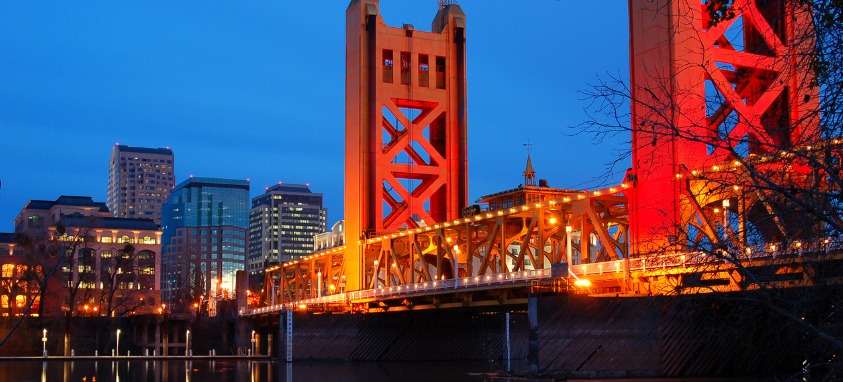
On a sunny evening in September, Visit Sacramento shut down the bridge over the California capital’s namesake river for a very special event—the sixth-annual Tower Bridge Dinner—a locally sourced foodie adventure for 800 people to cap a week of celebrating the bounty of the agricultural area. The city, which bills itself as America’s Farm-to-Fork Capital, embraced its roots by capitalizing on what it does best—culinary, community and charity excellence. What can event planners learn from a national celebration and local fundraiser marked by two parallel, flower-strewn tables running down the center of a 737-foot bridge that connects Yolo and Sacramento counties? A lot.

Food Forward

Sacramento’s first settlers were farmers, and the Central Valley is still the most prolific agricultural producer in the country; the city is also home to one of the largest California Certified Farmers’ Markets. It supplies 80 percent of caviar produced in the United States and 80 percent of the almonds processed in the world. From grapes to tomatoes, the country relies on the bounty of this river town.

In recent decades, internationally acclaimed chefs have discovered the quality of ingredients and life there and expanded the definition of what it means to eat fresh. As Tower Bridge Lead Chef Jeremiah Tower of Chez Panisse fame explained while standing shoulder to shoulder with local chefs Ed Roehr of Magpie, Kathi Riley Smith of The Oak Cafe at American River College, Ravin Patel of The Selland Group and Brad Cecchi of Canon, sourcing some of the best produce in the world so close to the iconic Berkeley restaurant made it possible for him to successfully deliver an innovative take on fine dining back in the 1990s.

Lesson: No matter where your event is staged, look in your backyard to see what the destination does best, and make that a central theme. Whether it is food, music, art or widgets, bring that into your event so the meeting becomes a statement.

Give Back

The Tower Bridge Dinner has become a highly coveted ticket near and far—two lucky guests won their tickets from a Food Network promotion. Funds from ticket sales pay for a free Farm-to-Fork Festival on Capitol Mall that educates—and feeds—80,000 people over two days. Filled with local craftspeople, food demonstrations and creative food trucks, it showcases the region’s year-round offerings. Tickets also pay for scholarships for children of migrant farmworkers at nearby Sacramento State.

Lesson: The memories of an event don’t have to fade with the centerpieces. Funds raised can extend the goodwill shared over Upper Crust Baking Company bread and Clarksburg wines beyond the evening to benefit those who could not be there in person.

Place Making

The Sawyer Sacramento
Kimpton Sawyer Hotel

The gold-ingot hue of the bridge wasn’t the only color on display. The city has become known for public art celebrating its sense of place. An annual Wide Open Walls Festival brings in 40 artists over 10 days to build on the tradition of wall-sized expression that began in the 1970s with the Royal Chicano Air Force. Walking tours by Sac Tour Company of a new DoCo (Downtown Commons) highlight vivid statements about everything from environmental waste to historic symbols rich with California poppies and mind-boggling trompe l’oeil.

Even the new Kimpton Sawyer Hotel is filled with nods to the earth tones and rolling, geometric patterns of the surrounding fields visible to travelers approaching Sacramento International Airport (SMF). Pops of purple and a generous supply of extra-long mattresses are a wink at the new Golden 1 Arena for the NBA Sacramento Kings team on the other side of the plaza. The hotel’s 22,000 sq. ft. of meeting space is filled with natural light and catered with the best of local fare—peppercorn-crusted, strip-steak lollipops and pear and candied walnut salad being two popular options.

Lesson: An authentic meeting space makes it possible for attendees to get a taste of where they are the minute they open their eyes in the morning—even if they don’t make it out onto the Revival at the Sawyer pool deck for a Royalty craft cocktail—gin with yellow chartreuse, coconut puree, pineapple, lime and butterfly (sugar) syrup.

Limo

Meeting coordinators and convention and visitors bureau representatives often enlist the services of limo companies to assist in transporting visitors to and from the airport and between activities on the itinerary. The fatal crash that tragically killed 20 people (driver, 17 passengers and two pedestrians) earlier this month in Upstate New York presents an opportune time to discuss questions that need to be asked when sourcing a livery service.

Don’t just open the ole-fashioned phone book and play “eeny, meeny, miny, moe,” because people’s lives are at stake. Sally Snead, executive vice president and chief development officer for Carey International, a global chauffeured transportation company, provides some helpful advice.

“Planners can mitigate this risk by choosing suppliers that have proven track records for safety and can demonstrate through records and performance a dedication to the safe carriage of their clients,” Snead says. “Carey has maintained a 99.99 percent global safety record for more than 10 years across an average of 2 [million] trips per year. We mitigate our own risk through the disciplined application and enforcement of a codified set of operational standards, [which] minimizes risk to our clients.”

License to Drive

Licensing requirements for livery drivers varies by country, state, city, vehicle type and business categorization, Snead explains. Limo companies that have a fleet of stretch limousines, mini-buses and motor coaches require drivers to possess a commercial driver’s license (CDL) to operate large vehicles on public roads. Often, drivers are required to obtain a chauffeur certification in addition to the CDL. Black-service-car operators of sedans and SUVs also must have this chauffeur certification, which is earned by passing written and operational exams.

Although limo companies cannot release personal information about employees, it is your right as a potential customer to be provided with the list of criteria they use when conducting a background check. These checks should occur prior to employment and on a recurring basis in case status changes.

According to the New York Times, Gov. Andrew M. Cuomo said that driver Scott Lisinicchia, who also perished in the crash, “did not have the appropriate driver’s license to be operating that vehicle.” He was reportedly not licensed to drive a vehicle with a capacity exceeding 15 passengers. There were 17 passengers in the crashed limo. People magazine confirmed Lisinicchia was charged for drug possession in July 2010 and was allegedly charged for a second drug offense in November 2013.

“It is ultimately the responsibility of the planner to vet the ground supplier you choose,” Snead says. “Do not be scared to ask questions, scrutinize policies and procedures, or request documentation to back up marketing bullet points. There are literally thousands of ground transportation providers to choose from—write your criteria, do the research and find the right match for your clients.”

Insurance Policy

Snead says insurance coverage minimums are also not regulated federally, but rather by local jurisdictions. In most cases, livery companies carry the lowest policy required by law. This may be below what your meeting client requires, especially for high-net-worth executives. Find a limo service that meets the travel policies of who you are planning for.

The Fleet

 limousines limo

The condition of the vehicles in the fleet also needs to be taken into consideration and scrutinized. Snead says Carey guarantees their sedans and SUVs are younger than three years old and vans and specialty vehicles are no older than five. Additionally, each vehicle is thoroughly inspected every six weeks, with spot checks in between. A vehicle should be never go more than eight weeks without being looked over.

Overly cautious planners should be allowed to personally see the vehicle before signing a contract. Even though planners may not actually be available to do so, seeing the limo company’s reaction to this request could be a tell-tale sign of a potential problem it’s trying to hide. Planners can also request to be provided with records of the vehicle’s service and inspection reports, or at the very minimum the age of the vehicle and when the vehicle was last serviced and for what purpose.

Before a limo becomes a limo, it starts out as a normal-length car purchased from the original equipment manufacturer (OEM). The vehicle is sent to a coach-builder to be customized and elongated. Not every car is designed to be safely stretched; only select models are. Although OEM’s are not involved in the modifications, most coach builders follow a set of industry-approved methods. Furthermore, Ford Motor Company Qualified Vehicle Modifier Program offers a certification method and creates parts and kits for coach builders to use.

Snead wants planners to be aware that some limo companies find coach-builders to pimp their rides for novelty purposes, using methods or vehicles that are unsafe. Since many local jurisdictions can’t inspect every vehicle or enforce laws, this can go undetected. Planners can contact a coach-builder to confirm that the stretch limo they are considering renting is safe to stretch, and to what length.

ABC News obtained inspection results from the State Department of Transportation that show the limo involved in the Oct. 6 fatal crash, owned by Prestige Limousine, faced multiple citations recently for un-fixed issues involving its brakes, although a lawyer for the livery company says only minor nonbrake-related problems were detected and everything had been fixed.

“The assertion that the limousine was cleared to be on the road following the September inspection is categorically false,” a spokesperson for the state department of transportation said. “The vehicle was subject to inspections and the owner was warned not to operate the vehicle; the vehicle was placed out of service.”

A spokesperson for the Lisinicchia family told ABC News that the driver’s wife said her husband had previously expressed concerns over the vehicle’s operating condition. Additionally, The New York Times reports one of the victims sent a text message saying she was worried the limo was unsafe, because the motor was making a loud, deafening sound.

ABC News also reports that Nauman Hussain, who operates Prestige, was arrested on Oct. 10 for criminally negligent homicide, but pleaded not guilty and was released on bail that night.

Buckle Up


National Highway Traffic Safety Administration spreads awareness about seat-belt usage through its “Click It or Ticket” campaign. For some unexplainable reason, many passengers tend to feel invincible when riding in a limo or on a bus, often neglecting to buckle up.

Actor and comedian Tracy Morgan was severely injured in a June 2014 crash that killed his friend when the limo they were riding in collided with a Walmart truck. National Transportation Safety Board (NTSB) discovered in its investigation that the men were not using the vehicle’s safety harnesses, according to NBC News.

NTSB recommends everyone wear seatbelts, but laws vary state-by-state, Snead says. However, seat belt usage in the livery world is not regulated at a federal level, as it is for air travel. The most a chauffeur can do is remind passengers to buckle up, but it is up to the passenger to comply. Planners should confirm with limo companies that the vehicle they’re hiring comes equipped with functioning seat belts.

Accountability

Snead also recommends planners check a livery company’s references and record of past performance. She says if they’ve been in business for a long period of time, they’re likely safe.

“An important part of safety for the operation is who is overseeing the transportation,” she adds. “Is there a human being sitting at a desk that can tell you in real time that Passenger A is being chauffeured by Driver B and in Vehicle C—and that they are 15 minutes from their destination? This kind of real-time monitoring provides an extra layer of accountability if there is some kind of incident.”

Essentials for Screening Limo Drivers

Sally Snead, executive vice president and chief development officer for Carey International, recommends that meeting and convention organizers make sure that limo companies collect the following background information from prospective limo drivers.

  • Third-party criminal background check going back at least seven years
  • Department of Motor Vehicle record check going back at least three years
  • Drug and alcohol screening
  • U.S. terrorism watch list check
  • National Sex Offender registry check
  • Legally able to work in jurisdiction
  • Verify identity
  • Legally authorized to operate the vehicle they’re assigned to
  • Licenses and certifications are current and valid
  • Completion of defensive driving and highway safety training

planners reduce risk

Event planning is a risky business. Recent natural disasters, labor strikes, even a massive data breach that may have compromised the identities of 500 million Starwood guests, have illustrated the number of things that can go wrong in the event professional world. How liable are planners when disaster strikes? What can planners do to protect themselves? And what should they do when the worst-case scenario is reality?

For answers to those questions and more, there are meeting and events legal experts such as Jonathan T. Howe, president and senior founding partner of Howe & Hutton, a Chicago law firm that specializes in the event industry. “The way things are today, when something goes wrong, someone is always going to be sued,” Howe says. “You want to minimize your exposure and think about where your defense is going to come from.”

That is why he strongly recommends planners include indemnification clauses in their contacts, ensuring hotels and third parties take on as much of the risk as possible. Beyond that, the best way for planners to protect themselves and their events is to take preventative steps before the event begins.

Do Your Homework

The most common mistake Howe sees planners make is that they don’t read their contracts. “Contracts are self-inflicted wounds,” he says. “You have no rights or responsibilities unless they are in the contract.” And as a result, every planner needs to know exactly what they are signing on for.

In the same fashion, planners need to do their research when hiring vendors. Too often, planners end up footing the bill for mistakes and mismanagement on the part of vendors, all of which could have been avoided beforehand. “You hired the vendor. It’s your responsibility to know their record and exactly how they are going to affect your event.”

And finally, planners have to take responsibility for knowing and following rules for creating a safe environment. Too many planners don’t adhere to a venue’s guidelines. “You need to be in compliance with safety codes,” Howe says. “It’s that simple.”

Ask the Hard Questions

First and foremost, planners need to protect the integrity of their events. Ensuring an agenda runs smoothly can preempt costly legal complaints.

“It’s difficult to have a plan B without knowing what will happen to plan A, but good planners keep themselves up to speed,” Howe says. “You can’t insure against everything. The best practice is to instead have a back-up plan.” That can apply to something innocuous such as an outdoor event facing the prospect of rain, to a hotel that doesn’t finish its renovations on schedule and can’t accommodate your event on the contracted date.

“Keep yourself—and your suppliers—informed,” he says. Don’t be afraid to probe venues on potentially uncomfortable subjects such as construction delays, labor contracts, strikes and any other business issues that could have an adverse effect on an event.

Prepare for GDPR

Perhaps the most prescient issue in the minds of modern planners, data security, has become linked with the European Union’s General Data Protection Regulation (GDPR), but it’s important regardless of the nationality of the people involved.

MoreIs Your Event Marketing Plan Ready for GDPR?

“It’s going to be a major, major, major issue,” Howe says. “When you are dealing with a vendor, you need to make sure that vendor knows they are responsible for the security of the data they collect and use.”

One of the troublesome trends Howe has seen is hotels placing clauses in their contracts requiring organizations to get consent from every attendee for data to be collected and used. That effectively puts all the data privacy risk on the shoulders of planners and the organizations they work for.

“That’s where the big word ‘no’ comes in,” Howe says. “You need to compromise and work it out with the hotel. There is a back and forth, but something like that should be unacceptable.”

On the heels of multiple studies showing that event professionals are increasingly being asked to do more with less, Smart Meetings asked a veteran planner for tips on how to create “wow” on a budget. Doug McPhee, Experient senior global account manager, recently spoke at CMP Conclave in Birmingham, Alabama, on this very topic and shared the 10 things that can trim the bottom line without sacrificing the end-product.

Contracting

1. Consider multi-year contracts: Finding new venues every year can be time consuming for all parties involved. Most properties will negotiate for a lower price if they can lock in the business for two or three years. In addition to reducing costs for additional site visits, it allows the team to fine tune the relationship and find efficiencies only experience reveals.

2. Include a GDPR clause: Protecting your attendees’ right to data privacy is crucial. Drafting a General Data Protection Regulation clause to disclose how international attendee data is being stored and used could save you massive fines in the future.

3. Be flexible: Accommodating availability at venues could result in more money at the bottom line and access to properties you might not otherwise be able to afford. It could also mean more attendees at your event, if you are able to work around the calendars of other things that might demand their time.

Related: GDPR Redefines Industry Privacy Practices on a Global Scale

Preplanning

4. Pre-plan during your FAM: Familiarization trips are a great way to get an overview of a possible space while being treated like royalty, but make the most of the time by taking measurements, asking pointed questions, meeting staff and using it as a chance to pre-plan.

Food and Beverage

5. Modify your menus: It’s sad but true that food is often wasted at meetings. Meeting professionals and hotels err on the side of more to ensure no one goes hungry. McPhee suggests working with the chef to cut portion sizes and limit buffets so you are serving exactly what attendees need.

6. Never announce “last call.” There’s nothing that’ll get people rushing to the bar like the announcement that the bar will be closing. For planners who prefer their attendees to have a slow exit, McPhee recommends going for a soft close.

On-Site

7. Always pre-con: Before the official event date arrives, smooth out any potential hiccups with the heads of the venue. This can save costly last-minute scrambles and hurt feelings.

8. Review accounts daily. Planning a daily review of your accounts is critical. “After coming back from an event, spending two weeks going through 250 documents can waste a lot of time,” says McPhee. Daily analysis will help to spot discrepancies in the moment.

9. Tap your speakers’ bureau. Rather than contacting speakers individually, save time by negotiating with multiple speakers using an expert familiar with their style to determine a good fit for your event’s purpose.

10. Partner with the local CVB. Convention and Visitors Bureaus are a great resource for gathering information about a destination. After all, their purpose is to market their respective destination to its visitors. CVBs can also offer access to planners within their destination, arrange site inspections and check for meeting and hotel space availability—all for free.