PalmettoCarriageWorks-Charleston friendliest cities for meetings and events

There’s a lot to be said for readers’ surveys about travel even if those surveys aren’t specifically about the meetings and events industry. In one of its latest reports, Conde Nast Traveler has identified its top 10 friendliest cities. We’re proud to say that some of our favorite meeting cities made the cut.

The survey included input from 128,000 readers, who were asked to rate cities based on criteria such as ability to get around and interaction with locals.

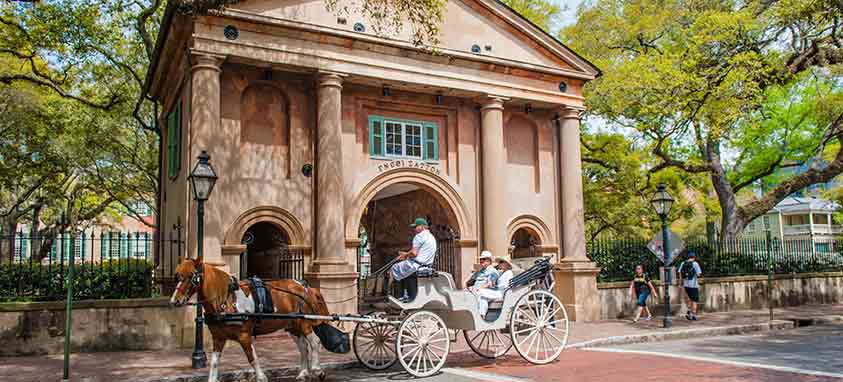
Coming in at No. 1 was Charleston, South Carolina, which was just featured in the July issue of Smart Meetings magazine as part of our feature story on Emerging Meeting Cities. One of the things that our story mentioned is that Charleston has historically been considered welcoming, dating to the 1669 Carolina Colony charter that granted “liberty of conscience.”

The No. 2 friendliest city was Park City, Utah, a four-season town outside Salt Lake City. Smart Meetings has had this mountain enclave on its radar for a while. In fact, our January issue featured the last media interview with Olympic gold medalist Stein Ericksen before he passed away on Dec. 27. The former ski instructor for Deer Valley Resort was a key influencer in modern-day, luxury ski resorts.

No. 3 Savannah, Georgia, was also included in our Emerging Meeting Cities article in July. To learn about one of the biggest hospitality/entertainment projects in the South, read our Q&A with Richard Kessler, who is overseeing a $250 project on Savannah’s historic riverfront.

While seven of the top 10 friendliest cities are considered medium or small markets, No. 4 Nashville, No. 5 Austin, Texas, and No. 9 New Orleans made the cut to represent the major convention cities. Music and party scenes no doubt helped push these cities into the Top 10. And regarding meetings, all have stellar convention cities to match their friendly dispositions.

Top 10 Friendliest Cities

Charleston, South Carolina

Park City, Utah

Savannah, Georgia

Nashville, Tennessee

Austin, Texas

Santa Fe, New Mexico

Asheville, North Carolina

Jackson, Wyoming

New Orleans

Burlington, Vermont


Trade Show Swag

Promotional products adorned with logos are an affordable way for businesses to increase brand awareness and create memorable impressions during meetings, trade shows and events. According to the 2016 Global Advertising Specialties Impressions Study reported that those who own a promotional desk accessory typically keep it for about 14 months.

With so many options and various budgets to consider, exhibitors should decide which branded items make the most sense for use at upcoming trade shows. Lauren Melnick, customization solutions manager at Poppin, a modern office supply company, has helped businesses customize branded items that exhibitors can pass along to attendees. She suggests these five tips for choosing appropriate trade show swag:

-Impact: Create a branded item that an attendee will use well beyond their time at the trade show by giving away useful items. There is a better chance that people will remember and associate your company with a positive experience.

-Quality: Invest in quality, personalized goods to show that you’re serious about your brand so that potential partners and clients take your brand seriously, too.

-Relevance: Trade show giveaways should be relevant to your company and audience. For example, Teachers Pay Teachers, an online resource, made custom pens and notebooks for a conference that was both relevant to the brand and useful for the audience.

-Transportation: Most attendees travel to trade shows, so cumbersome swag that’s difficult to bring home often gets left behind. Consider asking your provider about bulk packaging. This way, attendees can avoid the extra step of unwrapping individual products.

-Budget: Make wise purchases within your budget to ensure a high ROI while enhancing your brand. Whether you have $3 or $10 to spend per person, choose an item that will represent the company best versus buying something cheap or flashy.

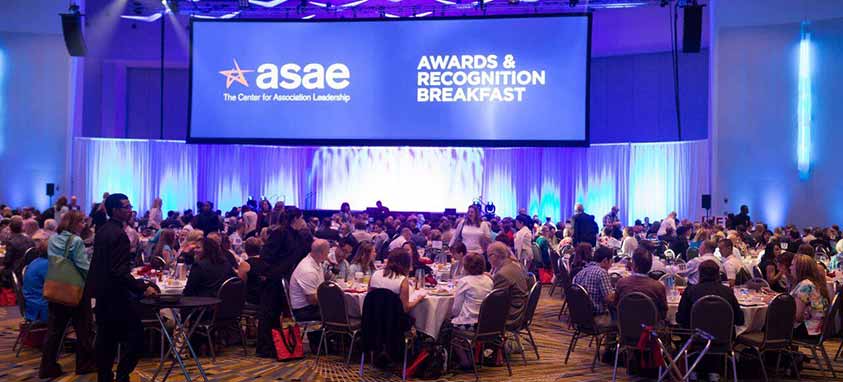
asae-2016-headerPhoto from @asaeannual

The American Society of Association Executives (ASAE) is in the midst of a period of enhanced activism that includes an emphasis on new learning tools.

“Prior to 20082009, we may have been getting better at executing, but we were doing the same things,” says CEO and President John Graham. “Since then, our industry has been trending more toward an engagement model, so ASAE has been emphasizing that more in things like modern technology.”

Graham points out that the new tools and services offered by ASAE represent a broadening of options rather than an elimination of those that traditionally have been available.

“We’re really not taking anything away from anyone,” he says. “We are adding to what we already had, to engage more of our members.”

Some of the new options, including express learning apps, are particularly well-suited to millennials.

“We’ve added options for short-term learning,” Graham says. “Among other things, a new app will enable attendees to spontaneously organize meetings at our conferences.”

Anyone who wants to focus on a topic that isn’t included in the agenda can invite others to come to a pod for discussion.

“Some people prefer this type of platform, while others like all-day sessions,” he says. “We want to include a number of different platforms.”

At the ASAE press conference on Monday and in a subsequent interview with Smart Meetings, Graham discussed another significant developmentthe organization’s new stance on discriminatory practices.

“Our board decided that anyone who attends a meeting anywhere should be free of experiencing discriminatory practices,” he says. “We don’t take positions on political issues such as gun control and abortion, but intend to be more proactive about people needing to feel welcome when they go to any destination.”

Regarding widespread protest of restrictive human rights legislation in North Carolina, Graham said, “We probably would not hold a meeting in North Carolina.”

He acknowledges that sometimes, ASAE walks a “fine line” when trying to simultaneously discourage discriminatory practices while respecting different cultural practicesespecially in foreign countries.

Graham alluded to Saudi Arabia’s custom of having women cover their faces and walk behind men.

“That’s their culture, and we need to be respectful of other cultures,” he says.

snacks-for-meetings

Editor’s note: We published the following story in May 2016, and it was so popular with our readers that we decided to provide an update about the seven super snacks we featured. We found that there are a multitude of possibilities—some fairly ordinary, others delightfully strange—for providing each of these snacks at your gatherings.

All of the content of the original story is provided, and the updated information is highlighted at the end of each listing.

Coffee breaks provide an often-needed respite for attendees to absorb and digest presented information. Meeting planners can make coffee break time more fun with these 7 super snack ideas from Carlos Collado, executive director of catering at MGM Grand Hotel in Las Vegas.

1. Stick it to ‘em. Serve your snacks on a stick. Small morsels presented on sticks are quick and easy for attendees to eat, especially when they are on-the-go. They also lend themselves to attractive displays, as they can be pushed into anything from cakes and watermelons to decorated Styrofoam blocks. Foods that translate well to sticks include chicken teriyaki, coconut macaroons and chocolate dipped strawberries.

2017 Update
 
Snacks on a stick don’t need to be small morsels. Some more substantial options include chef salad on a stick, with lettuce tomato, meat, cheese and a dip or dressing; cupcake on a stick; breaded, deep-fried mac and cheese on a stick; mocha on a stick, a frozen treat made with sweetened coffee, cream and chocolate; and stuffed almond and strawberry French toast kebabs.

2. Own a cone. Bring back childhood fun by serving snacks in cones. Edible cones are easy for attendees to pop into their mouths and eliminate the need for plates and silverware. Desserts obviously lend themselves to cone presentations, but instead of ice cream, try filling them with pudding or bite-size pieces of cake. Create savory cones by wrapping seared ahi tuna or thin strips of beef in nori seaweed.

2017 Update
 
These creations only tap the many possibilities. Treat your group to cones filled with fruit salad, apple chips and cereal, flavored popcorn, peanut butter and jelly, trail mix—or even breaded chicken. And rather than the standard cones, make them using churros or donuts.

3. Give it a shot. Shots are popular in bars because they are quick, colorful and pack a punch. Early in the day, try serving alcohol-free shots of fruit-flavored yogurt or green smoothies. Appealing dessert shots could include tiny root beer floats or mini churros served in a shot glass with a caramel dipping sauce.

2017 Update
 
The potential of shot glasses can’t be over-estimated. Typically used for beverages, they can also easily accommodate French fries and ketchup, cheesecake, shrimp with cocktail sauce, strawberry shortcake, chicken satay and much more.

4. Make it mini. People adore cute, mini-size versions of their favorite foods. Apply the concept to breakfast burritos, tacos, corn dogs, sliders, muffins or small cups of popcorn.

2017 Update
 
By mini, we mean VERY small. Mini burgers, pizzas, chicken pot pies, quiche, tacos, grilled cheese sandwiches and pancake stacks are among the exciting possibilities.

5. Beignets are big. A favorite in New Orleans, these lightweight donuts can be filled with sweet or savory additions. One flavor that seems to be trending is Nutella.

2017 Update
 
Some of the most interesting fillings popping up are spinach and artichoke, blue crab, gruyere and parmesan, peach and lobster.

6. Ice is nice. Italian ice is refreshing any time of the year. Perennial favorites include lemon, strawberry or mango, but try experimenting with other taste sensations such as cappuccino or vanilla.

2017 Update
 
Some more unusual flavors have emerged, including peanut butter and jelly, cotton candy and Swedish Fish.

7. Wet ‘n wild. Providing water during meeting breaks is a given, but why not infuse some fun into the beverage? Water infused with fresh cucumbers, basil, orange slices or berries is all the rage. An added bonus is that infused water served in pitchers is more eco-friendly that individual plastic bottles of water.

2017 Update
 
Artichoke, maple, bacon and cactus are also being infused in water. And the trend isn’t limited to human consumption—K9 Water was specifically formulated to provide dogs with essential vitamins that contribute to overall good health and provide hydration. K9 Vita Water is available in chicken, beef, liver and lamb.

improve-panel-discussions

Although panel discussions are ubiquitous at meetings, Kristin Arnold, MBA, CPF, CSP thinks they could be more inspired. The Scottsdale, Arizona-based consultant, facilitator, public speaker and founder of Quality Process Consultants, Inc. published Powerful Panels: A Step-By-Step Guide to Moderating Lively and Informative Panel Discussions, in 2013. Around the same time she also launched a survey about the subject, receiving 539 responses. Sixty-seven percent of respondents were meeting planners, speakers or thought leaders; 48 percent self-identified as executives and managers who regularly attend conferences and conventions. Nearly all (98 percent) said they had attended a panel discussion in the past year.

Arnold was surprised to discover that 63 percent of survey respondents rated the typical panel discussion format as okay, poor or very poor, while just 37 percent viewed it as good or great.

“Considering panels are a pervasive meeting format that aren’t going to go away anytime soon, this indicates that there is much room for improvement,” Arnold says.

Her insightful 27-page report, which can be downloaded for free, strategically examines the subject.

Arnold notes that planners like panel discussions because they are easy to produce. “The meeting planner picks the topic, finds a moderator and selects the panelists. Then the planner doesn’t have to worry about it; it’s a self-contained conversation. That time slot has been filled so the planner can focus on the more important aspects of the conference,” she says.

Arnold, who laments that audiences generally walk into panel discussions with low expectations, thinks meeting planners can make panel discussions more effective. She offers the following suggestions.

10 Tips to Improve Panel Discussions

1. Carefully choose moderators and panelists. Skilled moderators bring out the best in panelists. “Unfortunately, moderators and panelists are often selected for political reasons and not necessarily for their talents,” Arnold says. She warns planners to vet moderators in advance, making sure they are knowledgeable about the industry. In her survey, 72 percent of respondents said what they find most frustrating about panel discussions are moderators who don’t ask good questions, talk too long or drone on with lengthy introductions.

2. Interesting and articulate panelists are also important. Build a diverse panel in terms of gender, age, background and viewpoint. Keep the panel to four participants or less, and make sure they are prepared. Two-thirds (66 percent) of survey respondents said what they dislike most are panelists who wander off topic, dominate the conversation or shamelessly promote themselves.

3. Get rid of the long, draped table. Arnold believes it creates a barrier between panelists and the audience. She recommends seating speakers in a shallow semi-circle with a small cocktail table in front or to the side. The can sit in director chairs, which are stylish and can be branded with the company logo or the speakers’ names.

4. Stress preparation. The moderator and panelists must do more than simply show up. The moderator should develop an agenda and prepare welcoming remarks, introductions and some initial questions. Panelists should do background research on the topic, and formulate their key messages and talking points.

5. Formal rehearsals are unnecessary; however the moderator should brief panelists on the process and ground rules for the session. Spontaneity will be lost if the discussion is rehearsed in advance.

6. Structure the discussion to be more like a conversation. Emphasize that the panel should not be a series of presentations, but instead a lively discussion among experts sharing their thoughts and opinions.

7. Limit the number of slides. Use them only to grab audience attention or make an abstract concept more understandable. Make detailed information available in a web link or printed handout.

8. Engage the audience early. Create a catchy title for the event, and make sure the topic is trendy and fun. Create a buzz, even before the event. Use email marketing or social media to ask attendees to submit three questions they would like to hear discussed.

9. Encourage participation. Don’t wait for a Q&A at the end of the presentation to engage the audience. Today’s attendees want to participate. Use technological tools to encourage participation.

10. Make it entertaining. People today have short attention spans. Every six minutes, do something interactive to stimulate the audience, such as a poll or a game.


Meeting growth is expected to continue, especially with regards to small meetings, according to a key report released this week by IACC.

The international nonprofit association has revealed results from its annual Trends in the Conference Venue Industry report, which provides insights to help its 400 member properties enhance meeting experiences. The comprehensive study takes a deep dive into trends among small meeting venues and factors that are spurring meeting growth.

“For the second year running, significant strong performance was seen from IACC’s corporate meeting venue operators,” says Mark Cooper, CEO of IACC. “IACC members have improved revenue, occupancy, rate and profit over the previous year. ”

Meeting Growth Trends

1. Corporate conference venues experienced the strongest results, suggesting an increase in training and other meetings for large organizations operating their own conference venues for internal gatherings.

2. Complete Meeting Packages (CMP) are a key differentiator between IACC venues and non-IACC meeting venues.

3. The Average Daily Rate (ADR) for corporate conference venues rose 4.5 percent to $108.23.

4. Direct bookings vs. third party-initiated bookings were slightly higher at 86.5 percent compared to 83.3 percent reported last year.

5. Aggregate conference business increased from 59.6 percent to 69.9 percent, with meetings displacing commercial transient business and other strategies relied on to fill inventory during previous periods of lower meeting demand.

6. Digital and online marketing were the most productive sources of qualified leads for IACC venues.

The trend toward an increase in corporate training is particularly noteworthy, according to Cooper.

“We see this as an encouraging trend that will benefit the wider industry, suggesting greater business confidence and future growth with commercial venues,” Cooper says. “As the meetings industry continues its recovery for the fourth year, IACC is seeing increased investment in new-build, meetings-focused venues as well as capital investment in existing venues looking to be at the forefront of meetings innovation.”

how-to-plan-international-events

When planning international events overseas, event professionals must take into account a host of important legal and cultural considerations.  Attorney John S. Foster of Foster, Jensen & Gulley, LLC in Atlanta, and Joshua L. Grimes of Grimes Law Offices, LLC in Philadelphia, spoke at MPI’s WEC 2016 in Atlantic City, New Jersey, about planning international events. Below they share some insights:

In Advance

Cultural stereotypes and habits influence international business negotiations. Learn as much as you can about the culture of the country where you are planning your meeting in order to understand how they prefer to do business. For example, Germans value punctuality, while arriving late is acceptable in Mexico. Consumption of alcohol is often part of sealing a deal in China, but is inappropriate in most Muslim countries.


Do you plan international meetings? Complete this short survey for a chance to win 1 of 3 $100 gift cards!

To avoid committing a potentially fatal faux pas, consult with a locally-based destination management organization or convention and visitors bureau. They will help you avoid cultural taboos such as booking an event on a major holiday in Thailand (which celebrates many holidays unfamiliar to Westerners), or serving beef at an event in India (which Hindu custom eschews.)

The U.S. Department of State can be a helpful partner. Check its website for detailed information about passport and visa requirements for individual countries. It also issues regular travel warnings and alerts about dangers or threats around the world.

Foster notes that meeting planners have a fiduciary responsibility to pass along relevant information about known hazards, and can be sued if they fail to warn meeting attendees about them. He recommends meeting professionals link official Department of State warnings to their websites or the landing pages attendees visit to register for an international event. Grimes suggests meeting planners create a digital or printed primer to be distributed with registration materials that includes a release for attendees to sign, stating that they take personal responsibility for their behavior.

Business Negotiations

In some countries (such as China, India and the Philippines), business matters must be presented to a group, which discusses the details and arrives at a consensus. Everyone must be present when negotiating, as individual decisions are frowned upon. In other countries (such as Germany), an autocrat who might not even be present at the negotiations could be responsible for decision-making. Know what to expect before entering the boardroom.

While it may be the way things are done in America, a blunt and straight forward business approach does not go over well in China, where long process of negotiation is both expected and respected. In many Asian cultures, it is traditional to begin by negotiating a single objective. This allows both parties to establish trust with each other.

Americans traditionally get right down to business, but some friendly chit chat is an important icebreaker in Latin America. In China, it is imperative to establish a personal relationship before launching into business. This may entail learning the history and background of each member of the team. It is traditional to ask about their personal life and inquire about the well-being of family members before moving on to business issues. The Chinese may pose personal questions that Americans find offensive, such as: How much money do you earn? However, it is important to openly answer such questions in order to demonstrate trust.

On the flip side, the French do not like to get personal. They rarely invite business acquaintances to their homes, preferring to keep their private lives private. They do not expect (and generally feel uncomfortable) socializing with clients.

Business negotiations usually begin with introductions. It is always better to be more formal than casual. Introduce colleagues with their full titles, using Mr. or Madam before their names. In China and Japan, seniority and age is highly respected. In these countries, the presentation and exchange of business cards is taken very seriously. Those who do a lot of business in China may want to have cards printed up with one side in Chinese and the other side in English. The Chinese appreciate ornate business cards, with features such as gold seals. Use two hands when presenting your business card; when receiving a business card, carefully study  it. Shoving a business card into your pocket without looking at it is a sign of disrespect.

The process of negotiation varies globally. The French do not necessarily negotiate sequentially. Germans want to have agendas in advance, and are generally not flexible about deviating from them. You may think you have finalized a deal in Russia, only to discover that they are also negotiating with a competitor. In Japan, saving face is valued, so make sure to disagree without being disagreeable.

Some cultures are uncomfortable saying “no.” In China, ambiguity is an art and negotiators use silence to their advantage. In India, negotiators that don’t want to say “no” avoid doing so by stating that they need to research a particular point, and then never mention it again.

In some countries, it is expected that business be conducted face-to-face. In others, such as tech-loving Scandinavia, email or Skype is an acceptable form of communication.

In the United States, verbal agreements are traditionally followed up with written documents. European contracts tend to be much shorter than the highly detailed American contracts. If a European contract seems too vague, don’t hesitate to add details. Negotiators in some countries, such as Russia, may attempt to re-negotiate written terms that were previously agreed upon, or may disregard them.

When negotiating contracts, Foster notes that you should never make assumptions. Everything should be clearly defined, even if it seems painfully obvious. To illustrate this point, he shares a story about how a planner orchestrating a meeting in Spain requested a “typical American breakfast.” She was shocked when cold fried chicken and coleslaw was served.

Likewise, be careful of nomenclature when describing rooms and accommodations. In Europe, a single room may be defined differently than in America.

Specify what currency payment will be in. Grimes notes that this is especially important in countries where fluctuations are commonplace. To assure a fixed rate, pay in U.S. dollars. He also notes that it is important to inquire about necessary permits and licenses. In some foreign countries, you must actually secure a permit to hold a meeting in the hotel you have booked.

Force majeure is defined as unexpected and unforeseeable circumstances that might prevent someone from fulfilling a contract. This might include a hurricane, terrorism or a disease outbreak. While it is common in America to have a force majeure clause in a contract, this may not be the case in other parts of the world. Make sure protection is included in the contract.

Some Other Tips for Planning International Events

Grimes points out that behavior acceptable in one country could be illegal in another. Kissing in public is commonplace in Italy, yet you could be arrested for public displays of affection in the United Arab Emirates. In Thailand you can be jailed for making negative remarks about the King, while in Singapore you could be taken into custody for jaywalking, spitting or not having your passport with you. To sidestep the chance of attendees engaging in embarrassing or potentially illegal acts in a foreign country, he recommends staging most social events onsite at the hotel, where behavior can be more contained.

Grimes also believes it is prudent to engage local legal counsel in advance—just in case. It may not be desirable to bring that attorney to the negotiating table, however. In Japan, for example, this would be  perceived as a sign of bad intentions. When negotiating international contracts, establish a mutually-acceptable protocol for dispute resolution. Arbitration is always preferable to going into court internationally.

Finally, don’t assume that other countries will provide special access or accommodation for those with disabilities or special needs. While this is expected and even protected by law in America, it is not the case globally. Make sure to write special requests for accommodations into the contract.
 

structured-debriefs

Why host an event? Why attend an event? Whether it’s an education conference, a social networking reception or a days-long trade show, you’re there for a reason—or likely, several reasons. There is a lot of planning and build-up leading up to such an event, but the real work comes when it has come to a close and everyone is back at the office.

Planners, hosts and attendees must assess: was it a success? If you’ve distributed a post-event survey or follow up with an email marketing campaign encouraging feedback, some of the data is already in your lap. But there’s more to a debrief than reviewing the data.

For improved decision-making and stronger events, everyone on your team should be involved in a structured debrief. Here are the steps to make that happen:

1. Schedule your debrief when you’re scheduling everything else. Get it on the calendar so that everyone knows when it’s occurring. This also prevents the debrief from being significantly delayed, which can negatively impact the effectiveness of the meeting when too much time has passed. If it’s on the calendar, it will happen. Resist the urge to reschedule for a later date.

2. Set expectations with each member of the team when the date for the debrief is set so that each person has a clear idea of the things they should be expected to prepare for the meeting (and can be gathering that info, even mentally, during the event). It may be helpful to come up with a list of the things you want to know from attendees that won’t be reflected in your post-event survey, and then assign those items among your team.

3. Bring the post-event survey data to evaluate if your debrief occurs after the data has come in. Do the results reflect the comments and observations of your team?

4. Structure the meeting so that there is a specified flow that touches on every aspect, from registration to F&B to technology to keynotes to logistics to budget. Leave time for each member speak about anything that falls outside of these categories, too.

5. Assign a scribe that is recording what went well and what needs improvement. Assign the areas of improvement to the appropriate team members so that there are plans in place before the next event. Review these notes again before the next event if there is a large gap in time between them so that the team can be reminded of what attendees enjoyed and what they didn’t.

Attendees Should Debrief, Too

As for attendees who invested time and money in an event, a debrief is useful to determine if the event provided a worthwhile return on investment. Consider how many people from your team attended—was it enough or too many? What lessons can you apply to your job and share with your team? Should the same people or a different mix of people attend the next one? How could you have gotten more value out of the event?

med/pharma-meetings

Maritz Travel continues to expand its offerings in the med/pharma meetings arena by launching Maritz Travel Healthcare Solutions this week. Earlier this year, Maritz added Pat Schaumann to its staff as senior director of health care compliance.

Schaumann’s impact in the hospitality industry is far-reaching. She has authored several health care compliance policy books, including Breaking the Code to Healthcare Compliance. She served on the Convention Industry Council Healthcare Certification Governance Committee, helping develop the rigid CMP-HC certification. As director of professional development for the Meeting Professionals International health care sector, she founded its Healthcare Meeting Compliance Certificate (HMCC) program, which helps med/pharma meetings planners understand basic compliance principles.

“I’ve trained more than a thousand medical meetings professionals through the HMCC program, and heard first-hand about the challenges these companies face,” Schaumann says. “Now, I’m proud to help bring the industry’s most comprehensive solution to market.”

Maritz’s new healthcare-oriented product is designed to introduce new technology and processes, which will help life science companies deliver better, more compliant med/pharma meetings and simplify reporting processes. In 2015, Maritz managed more than 2,000 domestic and global healthcare meetings, including product launches, advisory boards, investigator meetings and speaker trainings.

Maritz Travel Healthcare Solutions provides the following assistance for those managing med/pharma meetings:

Aggregate Spend Reporting: Maritz Travel partnered with Polaris, a leading compliance software company, to develop a user-friendly HCP reporting system for medical meetings management. The system consolidates all HCP expense and event data to provide a user-friendly compliance report for planners to upload into their company’s reporting system.

Compliance Expertise: Led by Schaumann, Maritz Travel has a team of more than 35 people who have earned the HMCC, providing expertise to deliver a compliant medical meeting. This compliance expertise complements Maritz Travel’s years of experience serving the healthcare market.

Comprehensive Processes: The Maritz Travel Healthcare Solutions event process starts by understanding a company’s business and regulatory requirements and includes multiple compliance checkpoints throughout the event lifecycle.

“We developed Maritz Travel Healthcare Solutions in direct response to the most pressing challenges facing medical meeting planners today,” says Steve O’Malley, president of Maritz Travel. “We’re committed to helping pharmaceutical and medical device companies navigate a complex regulatory climate to deliver better healthcare provider (HCP) experiences and drive results for their companies.”

event-registration-page

Today’s analytical tools have incredible ways of monitoring online behavior of individuals, so much so that these tools can show you how someone jumps from page to page within your website, how they got there, how long they stayed, and when they left. You can do some incredible things with that data, but the most important part is finding out why: Why did they click? What made them click? What made them stay or bounce around? And finally, why did they leave?

When your site is promoting an event, these details are even more valuable. If your registration platform has multiple steps, many analytics tools can show you how far into the process people are getting before they drop off.

When the ratio of visitors on your registration page to attendees signed up isn’t where you want it to be, there are several things to consider:

1. Is Your Registration Process Too Long or Complicated? 

Attention spans are at an all-time low–it’s the reason articles are short, to the point and full of pictures. Take a hint from online content, and be as precise as possible. If you stats are telling you your interested visitors are trailing off after page three of the form they need to fill out to register, maybe there shouldn’t be a page three. Get the information you need, and if possible, use a program that offers automatic data-fill for existing attendees. (i.e. if they’ve filled in this form before, the program will recognize the name and only require they fill in new fields or ones that need updating.)

2. Are You Marketing to an Unengaged Audience?

Of course you’re going to see a drastic difference in site visitors versus registrants if your event is targeted toward a niche audience but your advertising of the event is not. Be strategic about how and where you’re promoting your event, and be sure the verbiage of the promotional content is as clear as possible about what and who the event serves.

3. Is Everything in Working Order? 

If you’re marketing to the right crowd, and registration numbers still aren’t where they should be, it might be the registration experience that’s deterring people. Make sure you or someone on your team is testing the registration process by going through all of the steps using a test account. By doing this you can spot flaws such as pages failing to load. You should also run the test using different devices.

If your data tells you a large majority of registrants used desktop to sign up when your day-to-day site visitors are typically using a combination of desktop, mobile and tablets, thats a good indication that you need to see what the registration process looks like on mobile.  If the platform you’re using isn’t mobile-responsive, it may be creating an unpleasant experience for potentially interested attendees that are dropping off, frustrated.

4. It’s Not Your Fault (and You Can Still Help)

Lastly, there will always be interested attendees who cannot attend due to schedule conflict or distance to the event. If you host multiple events each year, be sure that the other events are visible. And, if the content from the event will be available online, either after the event has taken place or in real time, be sure that that information is visible upfront or that the information is given in a follow-up email.