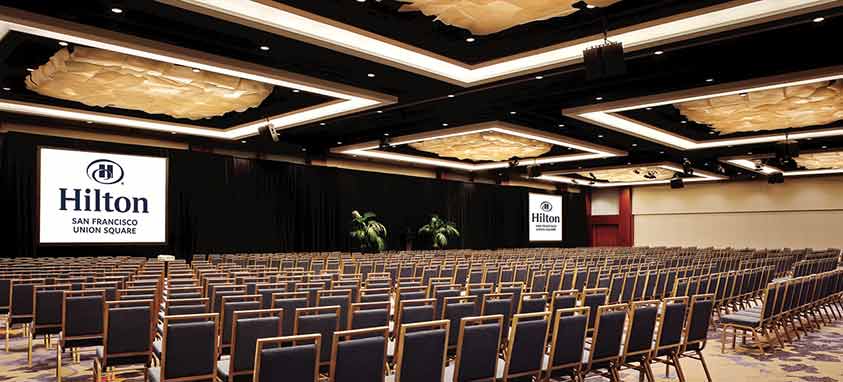
Hilton SF Meeting SpaceHilton San Francisco Union Square and its incredible meeting space will be on display this weekend when the U.S. Conference of Mayors (USCM) holds its 83rd annual meeting.

Among the luminaries who will be speaking during the conference, which runs June 19-22, is President Barack Obama, who is scheduled to speak on the opening afternoon. Former U.S. Secretary of State and Democratic Presidential Candidate Hillary Rodham Clinton will address the group of 300 mayors on Saturday morning. Martin O’Malley, former Baltimore mayor, Maryland governor and Democratic presidential candidate, will speak on Sunday afternoon.

As you can imagine, the top cities in the country will be represented on panels by their prominent mayors, including Chicago’s Rahm Emanuel, Los Angeles’ Eric Garcetti and Boston’s Martin J. Walsh. The U.S. Conference of Mayors is the official nonpartisan organization of cities with populations of 30,000 or more. There are nearly 1,400 cities of that size in the United States.

The event will also draw business executives who will be participating on various panels. Airbnb CEO Brian Chesky, Kaiser Permanente CEO Bernard Tyson and Salesforce Executive Vice President Vivek Kundra are expected to speak.


Discover the Secret of an “All-Inclusive” Meeting in our FREE Webinar – Earn CEU Credits

The Hilton is a magnificent meeting property. The opulent Grand Ballroom takes over an entire floor of the hotel and offers 30,000 sq. ft. of space. The property features 134,500 sq. ft. of event space spread out among 73 meeting rooms. Of equal important is that Hilton’s events team has more than 80 years of experience in the meetings industry and can help planners with everything from catering to audio-visual equipment.

One of the largest hotels on the West Coast, the Hilton features three towers and 1,908 total guest rooms and suites. There’s a 2,800-square-foot fitness center, an outdoor pool and Urban Tavern restaurant.

The Hilton is near Moscone Center, which is undergoing a $500 million renovation. Other nearby attractions include San Francisco’s famous cable cars, shopping at Union Square and the Theater District.

Even if your convention lineup doesn’t include the likes of a  president or presidential candidate, the Hilton San Francisco Union Square offers amazing meeting space that will measure up to the highest standards.
Michael-Dominguez

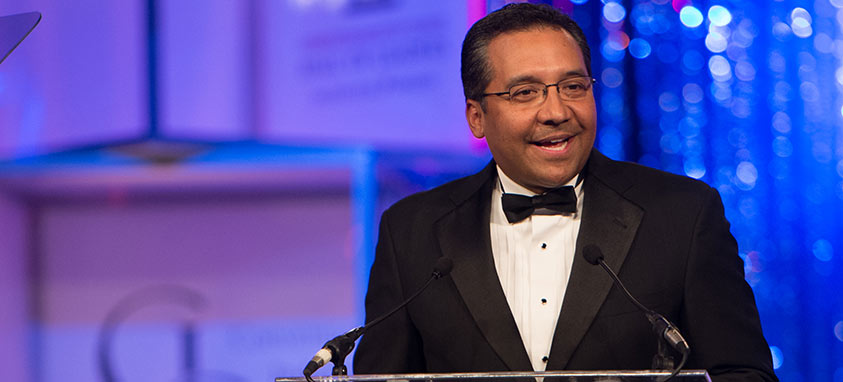
Michael Dominguez, one of the hottest figures in the meetings industry, was sitting on the hot seat on Monday night as he was roasted by colleagues during the President’s Dinner held in conjunction with Meeting Professionals International’s World Education Congress in San Francisco.

Dominguez, senior vice president and chief sales officer for MGM Resorts International, actually was honored, but he also collaborated with others to turn the evening into a fundraising roast that included friendly barbs from Roger Dow, president and CEO of the U.S.Travel Association; David Dubois, president and CEO of the International Association of Exhibitions and Events; and Brian Stevens, president and CEO of Conference Direct. An estimated $200,000 was raised.

“I’m looking forward to it─and I have some good-natured responses ready,” Dominguez says.

He put his awards streak into perspective.

“As I view it, I only have a short period of time to contribute to the industry,” he says. “The awards mean a lot to my staff members. I give them a lot of credit for the awards.”

Dominguez is a very busy man, but took time on Monday to reflect on what he regards as two of the main recent developments in the meetings industry.

“First, face-to-face meetings are a necessity, so they won’t disappear,” he says. “Also, the older millennials, the 28- to 34-year-olds, are starting to look like any other generation. They thought they would change the world, and there has been a huge shift, particularly with technology. But as (the late UCLA basketball coach) John Wooden said, ‘It’s important to move fast, but not hurry.’”

Dominguez emphasized that rather than latch onto all the newest tech, it’s important to use some discrimination and implement tools that help to constructively build upon existing foundations.

For more on Dominguez, check out our April Cover Story.

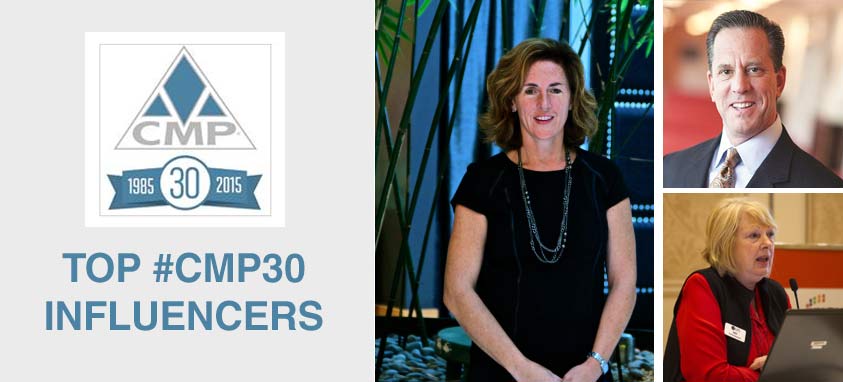
Smart Meetings offers our warmest congratulations to the Certified Meeting Professional (CMP) Program, which is celebrating its 30th anniversary this year. The big birthday bash will take place Sept. 26−28 in Reno, Nevada, at Grand Sierra Resort and Casino.
As the only annual event exclusively for CMPs, Conclave gives meetings professionals a chance to earn continuing education credits, network with peers and schmooze with industry leaders.

A special anniversary tribute will take place this year when CMP recognizes 30 influencers who are being honored for their impact on colleagues and contributions to their communities.

CMP recognizes 30 influencers as voted on by their peers:

Corbin Ball, CMP, CSP, DES, Corbin Ball Associates

Terri Breining, CMP, CMM, Breining Group LLC

Carolyn Browning, CMP, CMM, MEETing Needs, LLC

Dr. Amanda Cecil, PhD, CMP, Indiana University

Eduardo Chaillo, CMP, CMM, CASE, Maritz Travel Company

Tahira Endean, CMP, QuickMobile

Howard Feiertag, CMP, CHSE, CHA, Virginia Tech

Dianna Fuller, CMP, CMM, HelmsBriscoe

Deborah Gardner, CMP, DG International LLC

Karen M. Gonzales, CMP, Destination Marketing Association International

La Tayna Greene, CMP, Purdue University Conference

Tyra W. Hilliard, PhD, JD, CMP, Hilliard Associates

Joanne Joham, CMP, CMM, International Congress and Convention Association

Carol Krugman, Med, CMP, CMM, Metropolitan State University of Denver

Loretta Lowe, CMP, Loretta Lowe, Meeting and Event Management

Dave Lutz, CMP, Velvet Chainsaw Consulting

Mary Jo MacDonald, CMP, Maritz Travel

Mariella McIlwraith, CMP, CMM, MBA, Meeting Change

Lisa J. Mikita, CMP, CAE, American College of Occupational and Environmental Medicine

Kelly Peacy, CAE, CMP, Professional Convention Management Association

David Peckinpaugh, CMP, Maritz Travel Company

Kati Quigley, CMP, Microsoft Corporation

Richard Rheindorf, CMP, Accor Hotels

Adrienne Six, CMP, Visit Orlando

Pat Schaumann, CMP, CSEP, DMCP, HMCC, Meeting Professionals International (MPI)

Christine “Shimo” Shimasaki, CMP, CDME, empowerMINT.com, Destination Marketing Association International (DMAI)

Janet Sperstad, CMP, Madison Area Technical College

Nick Topitzes, CMP, pc/nametag®, Inc.

Aaron Wolowiec, MSA, CAE, CMP, CTA, Event Garde LLC

Karen Zimmerman, CMP, Maritz Travel

It’s very cool to have a relationship with some of the people on this list. I have reported on medical meetings for several year now, so to see Pat Schaumann among the honorees reinforces that I’ve been talking to the right person. Pat has been very helpful not only to me, but to the industry, guiding us all through reporting regulations for medical meetings. It’s very complicated and we are all lucky to have Pat to lean on.

Eduardo Chaillo is a valuable resource when it comes to meetings and events in Latin America. In fact, he’s a key source in our upcoming story on Central Mexico in our September issue.

David Peckinpaugh is well known throughout the industry and was actually featured as a Smart Meetings Industry Leader in April 2013. Kati Quigley was among our Industry Leaders in April 2014. Corbin Ball has spoken at Smart Meetings’ own events and is an industry leader for all things tech.

So congratulations to all the CMPs and the 30th anniversary of the program. Smart Meetings is thrilled that so many of our connections are being honored and we look forward to getting to know a few new influencers as we provide comprehensive coverage of the meetings and events industry.

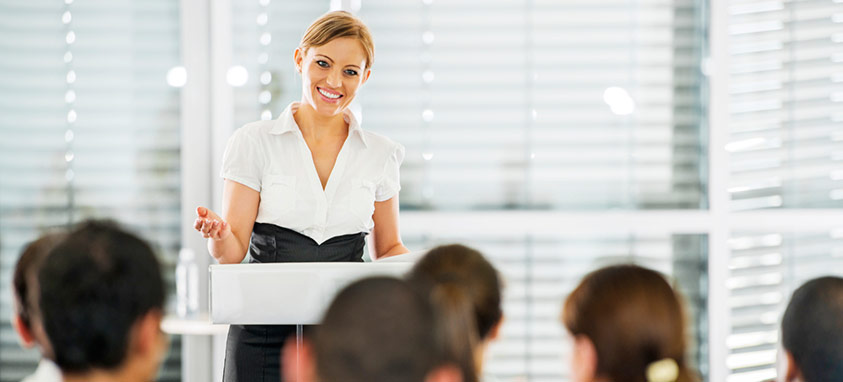
epic-speaker-qualitiesMeeting planners have no doubt heard it time and time again that minimizing risk is a key goal when choosing a speaker.  Of course, no one wants to look like a dummy with a poor choice.
Having selected speakers for my own industry conferences, I know that you rarely get 100 percent of it right, but here are some qualities to look for when selecting your keynote speakers. Coming from the speaking side of the world, I offer a little bit different perspective for seeking an epic speaker that can help create an epic event.

1. They make it about you.

The great ones are more interested in learning about you and your organization than talking about themselves. You know how some speakers “show up and throw up” all of their qualities onto you in the first 20 minutes of a call? An epic speaker interviews you and brings people from your audience into their presentations. They make them the heroes. Sure, they may have a strong personal story, but they turn it around and relate it directly back to your audience.

2. They have a phrase that pays.

Have you ever left a room after hearing a speaker that you really loved and tried to remember the key ideas? They were entertaining, yes, but it was difficult to retain the message. An epic speaker has a phrase that resonates (Doug Stevenson calls it a “phrase that pays”)─something they leave with you and language that takes on a life of its own. It might be an action oriented term such as Nike’s “Just Do It.” Perhaps it becomes the theme of your conference and months down the road your people are still using the speaker’s lingo. Long afterward, it’s producing a memory and inspiring an action.

3. They are funny.

At the beginning of a keynote, you are often holding your breathe right up until that first laugh occurs. And when it happens, you relax. And so does everybody in the room because the energy in the room has changed right down to the molecules. It’s the first signal to your audience that this is not going to be some boring waste of time. Speakers don’t have to be great joke tellers, some of are just goofy, or self-deprecating, some have effective body language or facial cues.

Even the most serious speakers can incorporate humor into their talks. I recently witnessed an amazing woman named Immaculee Ilibagiza talk about being trapped in closet for 90 days while her family was killed during the civil war in Rwanda. And guess what? She had the most gracious humor in her presentation. So unexpected, so memorable.

4. They balance teaching and storytelling.

Have you ever sat thru an entire speech that was basically someone telling you that you needed to do things differently? They were speaking at you, rather than having a conversation with you. When you attach stories to each point, you give people an opportunity to lock in the learning and relate to what you are saying. Mark Sanborn says that stories are the “mental coat pegs” upon which listeners hang ideas.

My client Ryan Estis is one of the hottest speakers on the circuit. He knows that in today’s market you must give loads of takeaway, but he wraps his ideas in relevant stories to drive home his key points.

5. They have killer current content.epic speaker

In today’s high-tech, high-touch, get information at the drop of a hat world, our speakers talking about things that happened years ago can be old news really fast. I typically steer speakers away from historic references and using companies like Enron as an example of what not to do in business. There is someone on the cover of the Wall Street Journal today who is going to be a better “ripped-from-the-headlines” example. If they are talking about business, they’d better be current.

6. They understand your vision.

This really goes hand in hand with point No. 1. When a speaker has asked you enough pertinent questions, they can help forward your message. This leads to a question…have you ever tried to plan an event that served too many masters? One of my speakers recently had a bad experience where the planner asked her to do a topic that they knew the big bosses (who would be onsite) would like. But guess what? The audience hated it, again serving too many masters. Maybe I’m naive, but I’d like to think that if the audience has their needs met, then the C Suites are happy, too.

When you have a clear vision of who your event is for, and what the outcomes are, your speaker can help you achieve that goal. By sharing the big picture with them early on, and again closer to the event, you’ll have a partner in the process.

7. They push the boundaries.

In the world of professional speakers, some of us have been given a set of rules: Don’t have too much interaction with your audience if you are doing a keynote; Women don’t wear a certain type of shoe. Baloney! I love to see someone do what feels right, not what the rules say─someone who challenges the audience by doing something unexpected. We’ve already seen squeaky clean, polished speakers who play by the rules. Show me something different.

8. They don’t pack too tight.

When putting together a presentation, think of it like packing a suitcase. You need a little room in there to breathe and to play with the audience.  When you see a speaker who has crammed too much into a program, it becomes more about getting it all in than being in the moment. Of course your goal is to finish on time, but it’s better to do it in a relaxed state.

9. They embrace technology.

There are so many fun tools out there that allow the audience to “play” with the speaker during a presentation. One of my clients, Scott Klososky, uses “Join Speaker” to throw questions straight from the audience’s cell phones up onto the screen during the presentation. There’s no reason to fight what is already going on. People have their handheld devices, so speakers might as well use them for good.

10. They show up as themselves.

One of my clients just posted a photo of Brene Brown from the stage of a large conference just last week. She was wearing a jean jacket. OMG, I love that! Someone who can be themselves, rather than some version of what others expect them to be is so refreshing. Being human, dropping your notes on stage once in a while or saying “um” is a sign of a normal person giving a talk. Isn’t that what we’re after…relatable?

An epic speaker is relevant, relatable and responsible to your vision and goals. And they also reduce the other R-word…risk.


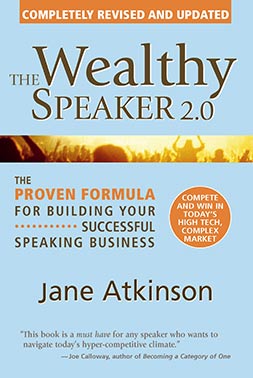
Jane-AtkinsonJane Atkinson is the author of The Epic Keynote: Presentation Skills and Styles of Wealthy Speakers and The Wealthy Speaker 2.0. Her consulting company, Speaker Launcher, provides online training and private coaching to seasoned and emerging speakers. For information to speakerlauncher.com 
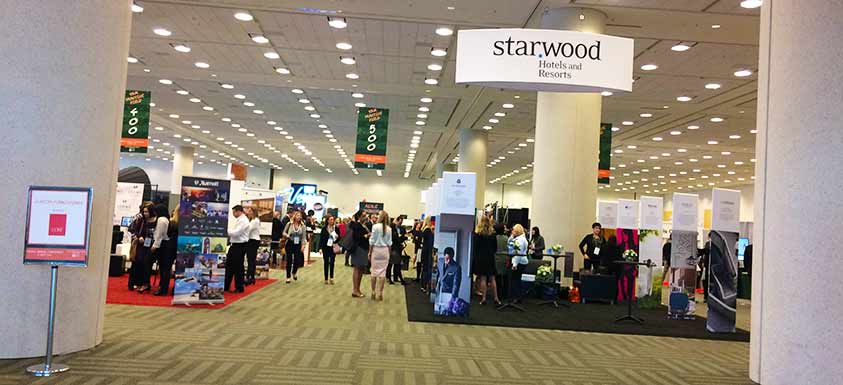
meeting-attendeeA podium front and center; row after row of theater-style seating; the welcome page of a PowerPoint presentation projected onto a giant pull-down screen. Sound familiar? A workshop held at the 2016 Meeting Professionals International Northern California chapter started out just like any other. But that’s where the monotonous routine ended.
Titled “Devices Down! Engaging Today’s Audience Differently,” the hour-long education session led by Spin Planners Chairwoman Shawna Suckow covered so much more than setting aside smartphones and tablets at meetings. Attendees were up, walking, talking, sharing, listening, laughing, and above all, engaging.

Workshop Highlights

Debunking the learning theory. “Generation Z is coming,” Suckow warned. “Think of your audience as a bunch of 13-year-old boys. They can and plan to do many things at once. Talking at them for an hour at a time doesn’t work.” She’s talking, of course, about the next generation of planners, who are already tech-centric and were practically born multitasking.

Suckow then recollected a time when tradeshow tables were adorned with Slinkys and bouncy balls, based on the logic that adults needed a tactile experience in order to better absorb the information they were being given during conferences. “Yes, adults learn differently, but there’s no longer one adult learning theory,” she explained.

Today’s speakers and event planners must cater to a wide range of audiences at once. The different “types” so to speak, include the veterans and the newcomers, which encompass a huge range of generations, the right-minded versus left-minded thinkers (i.e. creative learners and analytical learners),  introverts and extroverts, morning people and night owls, and the list goes on.

How do you please all of these types? You start by changing up the traditional agenda to provide options. Every talk and every activity might not appeal to everyone, but by offering various activities, you increase your chances of broadening your appeal. Start by considering changing up the 8 a.m. start time to appeal to those who don’t do their best creative learning and thinking early in the morning.

Remember the Four Cs. Community, collaboration, celebration, and changing lives. These, according to Suckow, are the reasons attendees are coming to events.

“Notice that none of the Cs are ‘content,’” she noted. “The content is nothing if you’re not engaging your audience. If the only thing people came for was the content, they’d stay home and read books and articles.”

Audiences should feel like a part of the event. They should be given the opportunity to discuss the topics that are important to them. And everyone attends an event with the hope that it will change some aspect of their life, whether that means growing their understanding of a topic or growing their network.

Suggestions for Your Next Event

1. Pair up newcomers with veterans. Do you ever notice that the industry vets are the ones hugging and greeting familiar faces, while the newcomers make a beeline for their seats and quietly wait for their session to start? Making connections is what your event is all about. If a seasoned attendee takes a rookie under their wing, they can make countless connections, but more importantly, they’ll have a better overall experience and will be that much more likely to come to the next event.

2. Create hubs with visibly assigned topics so attendees can make decisions about where to go and who to talk to based on the topic that interests them the most. Not everyone needs to brush up on contract negotiating, the same way not everyone is interested in talking about food and beverage.

3. Encourage your attendees (and your speakers) to think outside the box when it comes to introductions. As Suckow pointed out, you don’t leave many options for conversation when you start with, “Hi, my name is Shawna. I work for Spin and I’m from Minnesota.” At her session, Suckow asked attendees to share personal stories about themselves with strangers. First, to tell someone about their first memory. Then to brag about themselves in their jobs. Then to reveal a work struggle they’re dealing with. These intimate, human topics allowed attendees to see each other beyond their name tags and made lasting impressions.

Smart-Woman-Summit1

Does your work or personal life need a jolt of outside-the-box thinking and decadence? Do you have everything you’ve ever wanted, but find happiness is still fleeting? What does your body language say about your happiness?

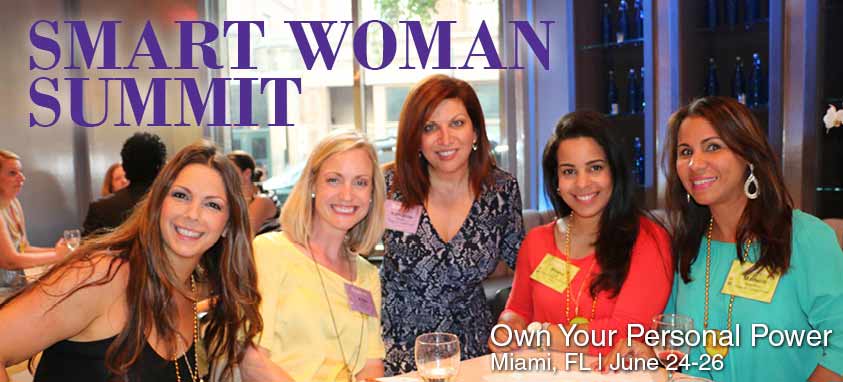
Maybe you need a vacation or a pep talk or possibly some serious me-time. The first annual Smart Woman Summit June 24−26 will offer all of the above growth opportunities, plus luxury accommodations at the Forbes Four Star Trump National Doral Miami, creating a well-balanced program for women seeking inspiration and wellness.

“I love talking to women who live by check-list lives,” says keynote speaker Christine Hassler. “We’re going to bust through this myth that as soon as you get the job or the guy or the body or the friend, you’ll be happy.”

Hassler’s presentation is entitled “The Myth of Having It All.” The life coach and author has appeared on The Today Show, CNN, ABC, CBS, Fox, E!, Style and PBS, often discussing how to turn one’s personal quest for fulfillment into an opportunity to clarify what is truly important and thus uncover the keys to happiness.

“We can all relate to having this idea of the way we think our lives were supposed to go, and pushing and pushing ourselves to achieve it, and then when we don’t, what happens? Or even when we do and we’re still not happy, then we’re really left grasping for what to do next.”

Hassler’s keynote address is designed to sway women away from the pressure to have it all and replacing that drive with learning to “be your all, instead. I assure you it will be a lot more fulfilling.”

An expert on millennials in the workplace, Hassler’s latest book is Expectation Hangover: Overcoming Disappointment in Work, Love and Life. The premise for this book is that when life does not live up to expectations, many people experience an expectation hangover. Hassler’s insights serve as a road map to negotiate obstacles and disappointments in efficient and empowering ways while achieving personal growth.

Janine Driver
, who will conduct a workshop on “Body Language Secrets,” has been called a human lie detector. As president and lead instructor for the Body Language Institute (BLI), Driver has become well known for elite communications training program that helps executives, sales people and other professionals have “more wins in the game of life.”

Driver is the author of the New York Times best-seller You Say More Than You Think. She developed her body language expertise as an operations investigator with the Bureau of Alcohol, Tobacco, Firearms, and Explosives (ATF). She had top-secret clearance during her 16 years with the Bureau, including an assignment with the FBI. She has trained the ATF, CIA, FBI, FAA, DIA, more 5,000 chiefs of police, and more than 20,000 special agents, police officers, lawyers, and judges.

Dr. Starla Fitch
, a best-selling author, professional speaker and certified life coach, will conduct an afternoon workshop on “From Burnout to Balance.” She writes at StarlaFitchMD.com, where her eBook─ The 7 Day Happiness Challenge: A Smart Plan to Reclaim Your Spark─can be accessed for free.

Steve Sisgold, a specialist in body-centered psychotherapy and business coaching, has appeared on PBS TV and Oprah Radio, and blogs for The Huffington Post, Psychology Today and Mind Body Green. His workshop is entitled “Awaken Your Spark.” Sisgold’s newest book, Whole Body Intelligence, launched at No. 1 on Amazon.com in several categories. For more information, visit wholebodyintelligence.com

The inaugural Smart Woman Summit is the brainchild of Marin Bright, Smart Meetings founder and CEO who has combined her love of events with her passion for female empowerment to create this enlightenment opportunity. Bright has set the pace for female meetings industry entrepreneurs and leaders, with more than 20 years of experience directing successful teams in the male-dominated B2B publishing industry.

“Now that I am in a position to help other women, I want to give back and offer an experience that I didn’t have, a place where women can come together to learn, but also to enjoy themselves and take a moment to breathe,” Bright says.

Smart Woman Summit
Agenda

At Trump National Doral Miami
Friday, June 24
5−7 p.m. Welcome reception at Living Room

Saturday, June 25
9­−10:30 a.m. Christine Hassler presents keynote on “The Myth of Having It All”
11 a.m.−1 p.m. Janine Driver presents workshop on “Body Language Secrets”
2:15−3:30 p.m. Dr. Starla Fitch presents workshop on “From Burnout to Balance”
3:45−4:45 p.m. Steve Sisgold presents workshop on “Awaken Your Spark”
6:30−9:30 p.m. Smart Women Awards Dinner

Sunday, June 26
Special discounts available to enjoy Trump National Doral Miami’s amenities, including spa treatments, golf and tennis. Poolside cabanas create private getaways.

*Following Smart Woman Summit, Smart Meeting East National will take place at Trump National Doral Miami June 26−28.


most-influential-meeting-professionals-1

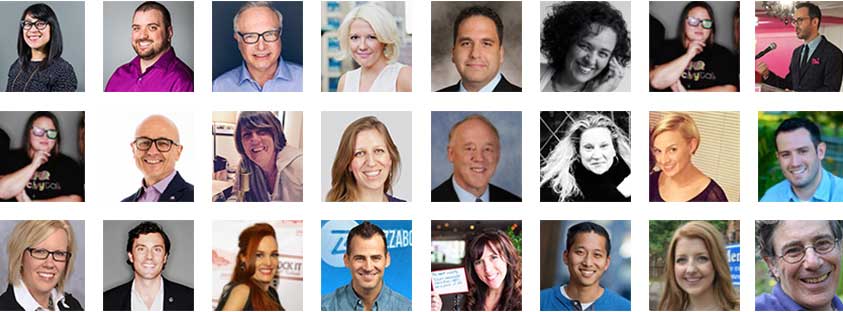
Bizzabo recently published a list of the top 60 event professionals to follow on Twitter based on event coverage and overall digital presence—and we’re happy to see that lots of familiar faces within the Smart Meetings family made the list.

According to Bizzabo contributor Stephanie Schutz, the list was compiled using Klout scores, Moz Page Authority, Twitter follower-to-following ratio and qualifications (i.e. professional role).

To have these individuals recognized by one of the leading event platforms reaffirms that our partners and colleagues are in the know when it comes to meetings, events, trade shows and more. Here are some of the event professionals who made the list who are closely connected to Smart Meetings:

49. Issa Jouaneh

Jouaneh is senior vice president and general manager of American Express Meetings & Events. With a track record of successfully leading global business, he is a respected and trusted leader with broad international experience in global B2B. With an astounding 85,300 Twitter followers, he shares tourism, events/meetings industry, and American Express Meetings & Events updates.

Jouaneh is a meetings expert who regularly contributes to Smart Meetings news. He’s quoted in our August issue about American Express Meetings & Events’ recent medical meetings report. He was also a featured writer in our January issue with a technology column on mobile strategies.

More of his work can be found here:
Smart Talk: Q&A with Issa Jouaneh
Mobile Apps to Interact, Engage & Measure

44. Christy Lamagna CMP, CMM, CTSM

Lamagna was identified as one of the top 25 Smart Women in the meetings industry in our April issue in the Entrepreneurs category for her work launching her own event planning firm, Strategic Meetings and Events, in Greater New York City. We’re thrilled to see her hard work is continuously recognized. Lamagna was also recently featured in an American Express Open business owner spotlight, where she shared her story and experiences as a business owner.

41. Shawna Suckow, CMP

Also named a Smart Woman in the meetings industry in the Industry Leaders category, Shawna Suckow has done it all. She is the founder and chairwoman of Senior Planner Industry Network (SPIN), an organization that works with planners to provide strategic networking and alternative audience-engagement strategies. She’s constantly traveling and speaking just about everywhere. She was a featured keynote at our East National event in Miami in June, and is often a reliable source or even the subject of Smart Meetings articles.

More resources on Suckow:
MPI Recap: Engaging Every Type of Meeting Attendee
Cancel the Keynote, Toss the Agenda: Rise of the Unconference
The Evolving Role of Speakers

21. Dahlia El Gazzar

El Gazzar is a longtime friend of Smart Meetings and valuable resource when it comes to all things tech. She was the founder of The Meeting Pool and has launched her own events agency, DAHLIA+, to create the next generation of the meetings and events industry. She can often be found quoted in tech-centric articles talking about the future of events.

Further reading on El Gazzar:
Tech Center Boosts Hands-On Learning at PMCA Convening Leaders

8. Dan Berger

Dan Berger, founder and CEO of Social Tables, presented very valuable information during MPI World Education Conference earlier this summer in Atlantic City, New Jersey. We love the research-backed insights Social Tables is providing to the meetings industry.

More reading on Berger and Social Tables:
Survey Pinpoints Trends Among Modern Meeting Planners
Tech Behind the Scenes: How Technology Enhances Events

5. Corbin Ball

Rightly so, at the top of the list is Ball. With 20 years of experience running global tech meetings at his own tech consulting group, Ball has been named one of “The 25 Most Influential People in the Meetings Industry” five times. Ball is a major resource for Smart Meetings, and even hosts webinars on the website.

Watch one of his past Smart Meetings webinars on meeting and trade show automation here.

Additional reading on Ball:
A Discussion with Technology Expert Corbin Ball

30. / 56. Holly Woolard / Loraine Burger

We were thrilled to see that in addition to many of our colleagues and contributors,  two of our own made the list. Coming in at No. 30 and No. 56 are content manager Holly Woolard and content chief Loraine Burger, respectively. Woolard, Burger and the rest of our editorial team are constantly on the road—whether exploring properties on press trips, attending industry trade shows or attending our own Smart Events—to stay in the know about all-things meetings and events and to share what’s new via blogs and social media platforms.

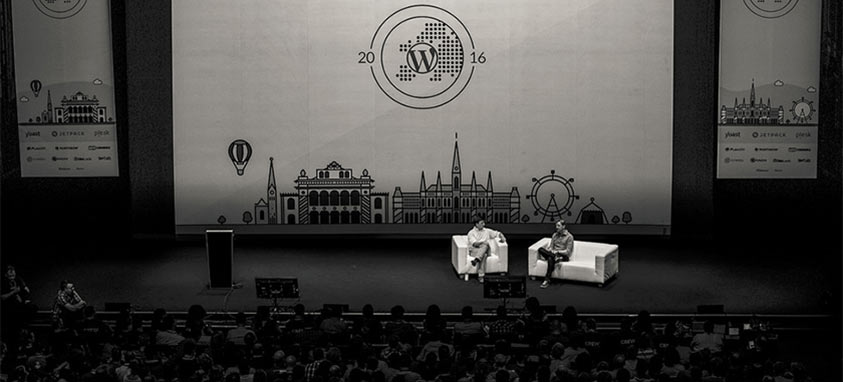
Editor’s Note: Mario Peshev is a WordPress developer and architect at DevriX who has worked on the back end of Smart Meetings for several years. As an organizer of WordCamp, Peshev went from event organizer to event speaker at this year’s WordCamp Europe event, presenting on a very relevant topic in an industry: remote employees. The event was hosted at  MuseumsQuartier Wien, Museumsplatz, Vienna. This is his experience as he prepared for the event.

wordcamp-2016Q&A with the co-founder of WordPress (Photo courtesy Florian Ziegler/ Flickr)

WordPress is the most popular platform powering over 26 percent of the Internet. In other words, statistically speaking, every fourth website online is built on top of WordPress.

The popularity and large adoption of the platform brings together a diverse group of people specializing in different areas—from developers to marketers, designers, agency owners, site builders, hosting companies specializing in WordPress, content producers and small DIY business owners.

What is WordCamp Europe?

WordCamp is the official event for all things WordPress. The first WordCamp was organized in San Francisco by Matt Mullenweg, the co-founder of WordPress, and nowadays one could pick between close to one hundred annual WordCamp conferences on six continents. WordCamp Europe 2016 was organized in Vienna, Austria, with 2,200 attendees, which made it the largest international WordCamp to date.

WordCamps organized in various countries follow different formats depending on their local communities. The lead organizers of WordCamp Europe had to identify the main fields of interest among their audience. As an active WordPress contributor over the past several years and a co-organizer of WordCamp Europe 2014 and 2015, I’ve been involved with the speaker selection process and the challenges of sifting through hundreds of applications, picking the most suitable talks and crafting a “story” between relevant titles whilst complying with various regulations and best practices.

One of my talk submissions was accepted this year, and I was honored to present alongside the two co-founders of WordPress, many of the platforms’ lead developers and contributors, renowned business owners, and numerous experts in the field.

Training Courses vs. Event Keynotes

My second development job was in a training academy, and public speaking was an important part of my day-to-day. With over 10,000 hours on stage over the past 12 years I’ve had the chance to present in different formats on various subjects in front of different audiences.

However, presenting at a conference is extremely challenging and far different than teaching a course for two, four, or even eight hours. WordCamp Europe 2016 (WCEU2016) chose the 20+5 model: 20 minutes of presentation and 5 minutes for questions.

Being able to engage the audience and cover a certain topic in 20 minutes isn’t an easy task. Most speakers err on the safe side by submitting inspirational talks that could be more spiritual or philosophic without having to dig deep into a matter, but hands-on, practical talks require a certain amount of aptitude.

Remote Culture

My topic was “Managing a Remote WordPress Team.” Our agency was founded in late 2010, currently 25-people strong with employees across eight different countries. “Remote Culture in the New Era” is a trending topic that is emerging in the startup world, but larger enterprises have a harder time grasping the concept and applying the old-school managerial strategies to a new model of work.

Since most of the management books cover the corporate way of running business or mostly theoretical principles of building remote teams, I shared some personal experience on building a remote team and key differences in the hiring process, communicating on a regular basis with remote employees, maintaining motivation and dedication from distance.

Organizers of #WCEU 2016 formed several focused tracks in order to satisfy the largest groups of attendees specializing in different fields, such as development, running a business and building a community. Our business track combined several talks that covered different steps of running a business, such as:

Building a smart and measurable email strategy
Creating a successful product business plan
Project management and working with clients
Working with non-profits
Cultivating happy teams

Being aware of the other selected topics, helped ensure that my talk focused on aspects that weren’t covered in any of the other talks in order to avoid overlaps, yet including hooks that I could use to refer to the talks presented before mine. This helped to create a flow that connected each talk.

My three goals were:
1.
Stress that remote working isn’t a myth and is, in fact, very successful for certain businesses
2. Create an actionable model that makes sense and can be applied by anyone interested (and fit within the time slot)
3. Reflect on the main challenges and concerns that most people have when thinking of working in a remote environment

I met a medical professional on a flight who worked in a lab facility specializing in surgery. They used groundbreaking technology in the field, but one of the things that stuck in my mind was that they use 3D cameras that allow surgeons to perform remote surgeries. Think about it: critical operations that could only be performed by the most renowned surgeons in the world can happen at all times and anywhere across the world, and having doctors who can perform numerous surgeries from a room with a large screen in different continents every couple of hours is simply revolutionary.

I contacted a friend and learned a bit more about that technology. Then I used a photo of a surgical room early in my presentation claiming that remote work isn’t applicable in some fields, including that industry which was more or less “common sense”. Using my recent knowledge of medical equipment, I did counter my initial theory and proved that remote working is successful, reasonable, saves lives and is very much applicable even in industries that are assumed to require physical presence where minor mistakes would be fatal. That was a good start that allowed me to continue with the other two goals of my presentation.

business-growth-plan

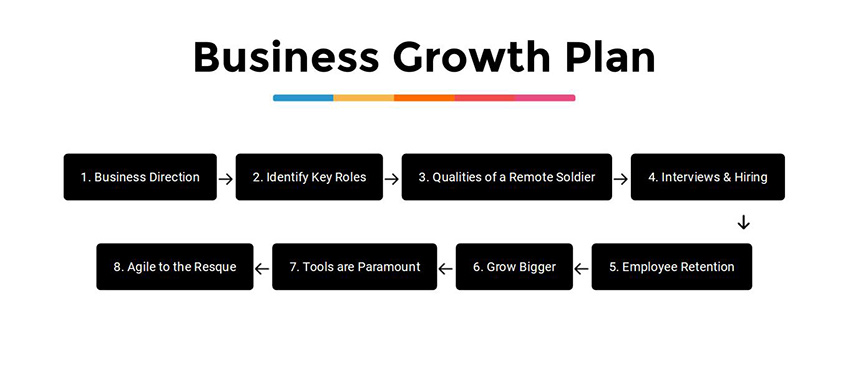
I broke down our business model to eight specific areas from building a new business to applying a flexible business model repetitively on a weekly basis that gets the work done, and using it as a framework for the rest of the talk.

While sharing actionable steps and practical tips based on experience, I also shared certain challenges with hiring remote personnel (and key attitude traits or soft skills to look for that are far less important for on-site workers), communicating and identifying motivation issues among remote employees, as well as building a friendly culture between team members sharing videos of memes online, playing online games or bonding between team members. Based on the follow-up feedback after my talk, those were the key bottlenecks for many agency owners trying to tackle new strategies with dated advice.

psychology-of-meetings

If you’re heading to IMEX in time to catch Smart Monday, you might want to pop into Jon Bradshaw’s Meetology education session–you’ll likely be leaving with some invaluable tips that will boost your company’s communication and presentation skills.

In fact–if you’re heading to IMEX–you’ve already proven Bradshaw’s theory.

“You go to face-to-face meetings because they’re a deeper connection. It’s a fundamental desire as a human being,” says Bradshaw.

Research from the world of neuroscience suggests that we are wired to be social and that the need to connect, interact and communicate lies at the heart of what it is to be human. That is the foundation of The Meetology Lab.  As part of Meeting Professionals  International: Northern California Chapter’s (MPI NCC) October Education Program, his interactive workshop explored his company’s rich archive of behavior research to uncover science-based insights, as well as practice tips, tools and techniques, on how to maximize your performance professionally and personally by interacting more effectively with suppliers, customers, colleagues and friends.

“There is no other skill that relates directly to your success like interpersonal communication,” Bradshaw told the group of meeting planners.

He began his presentation by illustrating the irony of his public speaking role: He had introverted tendencies growing up with a fear of public speaking. A fear which, while incredibly common, is really a fear of social pain and public judgement. The workaround to becoming a more confident public speaker is multifaceted.


Steps for a Better Presentation (Meetology’s Interaction Model)

1. Prepare – How do you improve your confidence and manage thoughts and feelings that could get in the way of you connecting with others effectively?

Preparation was perhaps the largest focus during the MPI course: from mental attitude adjustment to ensuring you’re dressed for success and aren’t heading to a presentation on an empty stomach.

2. Connect – Yes, there really is scientific research (and an arsenal of tools and tricks) for making an instant connection with someone.

Did you know standing too far or too close to someone can give off the wrong impression? Or that talking negatively about someone that isn’t in the room can actually make those negative comments work against you?

3. Interact – What techniques can you use to make sure you have impact and come across clearly and confidently?

The physical environment in which a meeting takes place can have a significant impact on the meeting’s result, and encompasses everything from the temperature of the room to the amount of natural sunlight, greenery, chair set up, colors and artwork.

4. Resolve – What approaches and tools can you use to build trust, overcome conflict and resolve disagreements?

5. Influence – How can you tap into your values and beliefs to influence and persuade?

Corporate Masterclass Training

The Meetology Lab, whose staff is heavily populated by psychologists, offers day-long corporate training courses that get to the core of a company’s communication skills.

Group sizes range from 10 to 50–but Bradshaw says a group of about 30 is ideal. The group takes a deeper look at the above five steps and applies them to daily interactions.

When asked what most groups are hoping to solve by taking the class, Bradshaw responded, “We often find that they [the company] are overcomplicating things. It isn’t rocket science; at the core of their conflicts are simple communication issues.

Research-based, Yet Bizarre

Here are some of the fun–albeit weird–facts Bradshaw presented that illustrate how the environment affects people’s perceptions and social interactions:

In a test, people who were asked to donate money at the top of an escalator were more generous; a literal take on feeling a moral high-ground.

Walking through a doorway to present something new to someone can have a “clean slate” effect, as if past issues have been left behind. It’s called Event Horizon and can best be described the common phenomenon of walking into another room and suddenly forgetting your purpose.

Sitting at middle of long table rather than the head of the table is more more effective.

It’s no surprise that music affects mood, but consider this: In a study where music played over a speaker in a liquor store, purchase patterns for wine reflected the type of music playing.

ted and tedx talks

Looking for some inspiration on your morning commute? TED talks and TEDx talks (independently organized TED events presented in TED format) are a brilliant way to get your morning dose of inspiration.

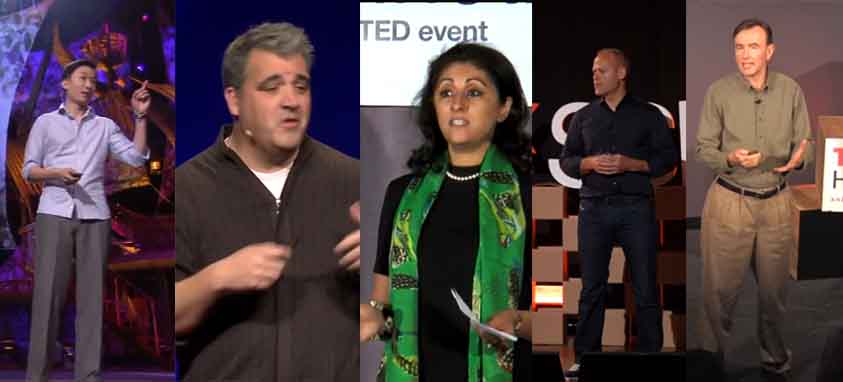
There are countless best practices TED talks for general workplace improvements, but some are ideal for meeting planners’ particular pain points and needs. Here are five of our favorites:

1. How to save the world (or at least yourself) from bad meetings, by David Grady

David Grady is an information security manager who believes that strong communication skills are
a necessity in today’s global economy. He has been a print journalist, a “PR guy” and a website producer, and has ghostwritten speeches and magazine articles for Fortune 500 company executives. His talk calls attention to an epidemic of bad, inefficient, overcrowded meetings and how to stop them from bringing down company morale.

2. Design for all five senses, by Jinsop Lee

Jinsop Lee is an industrial designer who believes that there is more to event design than seating charts and floral arrangements. “Five-sense design” inspires event planners to consider smell, touch, sight, sound and taste in order to execute a memorable and satisfying experience.

3. The power of meetings by Henric Ehrenblad

Henric Ehrenblad is the cofounder of global tech company Wisepsace and former employee at Ericssson in numerous roles. In his Tedx Talk, Ehrenblad dissects how meetings kept his company’s energy going during tough times.  What makes or breaks a meeting, according to Ehrenblad, is the energy level. So how do you keep the energy up?

4. The Art of facilitation: Changing the way the world meets, by Jay W. Vogt

Jay W. Vogt is founded Peoplesworth, a private practice in organizational development. In this talk, he discusses the relationship between group meeting structures and the results we get from those gatherings.

5. The Personal and Professional Joy of Networking by Raheela Anwar

Raheela Anwar is an engager and facilitator on numerous boards, who talks about being a connector of people – whether it’s for a professional or personal benefit, and how to start becoming an active networker.