As an Amazon affiliate, Smart Meetings earns from qualifying purchases. We appreciate your support.

Some of the best managers I’ve had during my career were the ones who gifted their teams books—usually self-help titles. The first book I ever received from a boss was Who Moved My Cheese. It was given to our team right before we transitioned from having individual offices to working in cubicles (we consolidated from five buildings on a campus to just two). A couple of years later, the team was given a copy of Dale Carnegie’s famous book, How to Win Friends and Influence People. Another memorable gift was a book on emotional intelligence. My son, who was in middle school at the time, chuckled when he saw it and asked, “What the heck is emotional intelligence?” The last book recommended to me was about five years ago, during my first tenure at Smart Meetings. Marin Bright suggested Words That Sell to help improve my copywriting skills. I still have that book—it’s under my bed with a stack of old Smart Meetings magazines.

With that in mind, I decided to search Amazon for event planning and management books with at least 100 reviews and a rating of 4 stars or higher. It turns out there are a ton of options. If you’ve ever done a similar search and felt a bit overwhelmed by all the choices, here’s a list of the top six event planning books on Amazon with more than 125 reviews and ratings of at least 4.2 stars. Who knows? You might find something useful for yourself or your team.

Sign up for the Smart Marketplace Monthly Newsletter

The Art of Event Planning: Pro Tips from an Industry Insider by Gianna Cardinale Gaudini

The Art of Event Planning

The Art of Event Planning: Pro Tips from an Industry Insider” by Gianna Gaudini is an excellent book for anyone interested in learning how to plan and manage events. Gaudini, who has worked for major companies like Google and Amazon Web Services, shares her insights through practical advice and personal stories, making the book both informative and enjoyable. It covers everything you need to know about event planning, including finding venues, building a team, negotiating contracts, and even measuring success after the event is over. Her real-life examples and relatable style make the topics easy to understand and engaging for readers of all levels.

Readers have praised the book for its clear instructions and actionable tips, saying it’s an inspiring and motivating guide for both beginners and experienced planners. While some wish the book gave more advice on dealing with last-minute challenges, most agree that it’s a valuable resource for mastering event management. At just 204 pages, it’s packed with helpful information without being overwhelming. If you’re looking for a mix of inspiration and hands-on strategies for planning amazing events, this book is definitely worth checking out.

Event Planning: Management & Marketing For Successful Events by Alex Genadinik
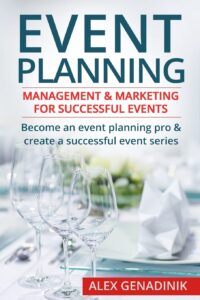
Event Planning: Management & Marketing

Event Planning: Management & Marketing For Successful Events” by Alex Genadinik is a great introduction to planning and promoting events, particularly for beginners. The book offers clear and practical advice that can help readers organize successful and profitable events. It covers essential topics such as marketing, management, and planning, and includes a handy checklist to guide readers through the process. The author’s personal experiences and strategies make the book engaging and relatable, which is especially helpful for new event planners or business owners looking to promote their services in creative ways.

While the book is insightful, it has some limitations. At just 74 pages, it may feel too basic for experienced professionals, and some readers have pointed out grammar mistakes. Additionally, the content seems more suited for planning niche events rather than large-scale occasions like trade shows or weddings. Despite these drawbacks, many readers find it a useful starting point for understanding the fundamentals of event planning, thanks to its concise and straightforward approach.

You Should Become an EVENT PLANNER: How to Start a Home-Based Event Planning Business Step-By-Step from Scratch – Get Paid to Plan Weddings, Birthdays, Parties & Gatherings by Rebecca Nowak

You Should Become an Event Planner

You Should Become an EVENT PLANNER” by Rebecca Nowak is an excellent guide for anyone interested in starting their own event planning business. The book breaks everything down into simple steps, covering topics like market research, creating a business plan, and managing finances. It also highlights the challenges of the industry while encouraging readers with practical tips and resources, such as lists of certifications, helpful websites, and loan programs. The author’s honest and relatable style makes it easy for beginners to follow and feel inspired.

Readers appreciate how the book emphasizes finding your niche and ideal clients to stand out in this competitive field. While acknowledging the hard work and high stress that come with event planning, the book encourages readers to turn their passion for organizing into a fulfilling career. With clear explanations and plenty of guidance, it’s been described as both informative and encouraging. This 216-page resource is a must-read for aspiring event planners who are ready to take the leap.

Event Management For Dummies by Laura Capell
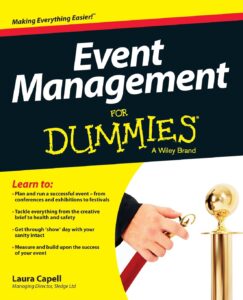
Event Management for Dummies

Event Management For Dummies” by Laura Capell is an excellent guide for anyone looking to learn about planning events, whether professionally or as a hobby. The book takes readers through all the essential steps, like creating a budget, choosing a venue, and navigating health and safety regulations. Written in a simple and friendly style, it’s great for beginners and even includes helpful checklists and tips to stay organized and avoid common mistakes. The advice it offers on how to make events unique and successful is especially useful for aspiring event planners.

Readers enjoy the book’s straightforward approach, practical advice, and even its funny tone, which makes learning enjoyable. One review described it as a “great starting point” for those entering the field. However, some financial information might not apply to all regions, which is something to keep in mind. Still, at 336 pages, this book is packed with helpful information and is a valuable resource for anyone wanting to plan stress-free events.

Professional Event Coordination by Julia Rutherford Silvers
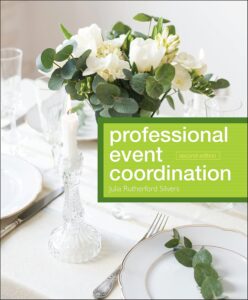
Professional Event Coordination

Professional Event Coordination, 2nd Edition” by Julia Rutherford Silvers is a must-read for anyone interested in event management. The book covers every step of planning successful events, from choosing a venue to coordinating food, entertainment, and vendors. It provides practical advice, checklists, and real-world examples that make event coordination easier for beginners and professionals alike. The author, an experienced event planner, ensures the information is clear and useful for readers at all levels.

Readers love the book for its attention to detail and its focus on modern event trends, including technology and sustainable practices. It’s been praised by students and seasoned professionals, helping both groups sharpen their skills. With a 4.6 out of 5-star rating from 141 reviews on Amazon, this comprehensive guide is a valuable resource for anyone looking to plan events of any size, from small parties to major corporate gatherings.

The Event Manager’s Bible 3rd Edition: The Complete Guide to Planning and Organising a Voluntary or Public Event by D.G. Conway
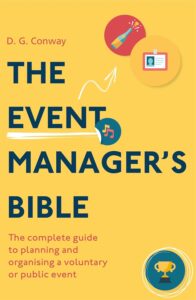
The Event Manager’s Bible

The Event Manager’s Bible” by D.G. Conway is a highly detailed guide for event organizers, covering everything from planning and health and safety to audience engagement and financial management. With 336 pages, the book provides practical advice for both large and small events, but it seems to focus more on complex, large-scale events. Readers have praised its thoroughness and the author’s 30 years of experience in event management, though some sections, like those on cash transactions, might feel a bit outdated since the book was published in 2020.

This book is an excellent resource for those who want comprehensive event planning advice, including details on traffic management, security, and insurance. However, with changes in the industry over the years, readers may need to supplement it with more current resources. Despite its age, “The Event Manager’s Bible” is still a well-regarded tool for aspiring and experienced event organizers alike.

Your Next Chapter in Event Planning Success

Books can be a powerful source of inspiration and knowledge for both personal and professional growth. The six books highlighted here offer a variety of insights, from practical tips and motivational guidance to strategies for starting your own event planning business. So, why not pick one up?

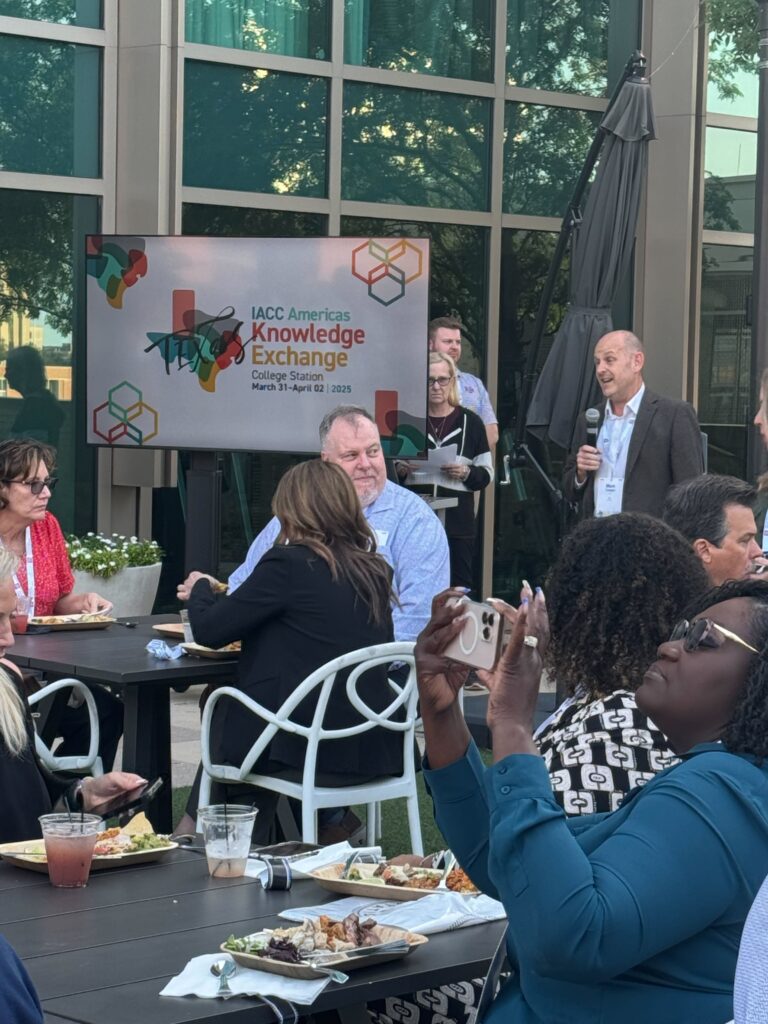
Inside IACC’s vision for a smarter, greener future in meetings and hospitality

Attendees at this year’s 2025 IACC Americas Knowledge Exchange in College Station, Texas, were in for an exciting experience. The annual event offered a wide range of education sessions on sustainability, connection, F&B, leadership and so much more.

Mark Cooper

Smart Meetings Compared to last year, what made this year’s event different? What were you trying to do that hadn’t been done before?

Mark Cooper Two big things: rebuilding knowledge and increasing efficiency through automation. Rebuilding knowledge is crucial now that we’ve spent the last few years rebuilding the workforce. We’re doing that through educational channels and by fostering openness—like our global innovations session, where members share what worked for them and what didn’t.

On the efficiency and automation side, it’s not about removing hospitality—far from it. It’s about automating behind the scenes, where the guest doesn’t see it. With staff shortages and rising costs, automation lets us maintain quality. Tech companies are bringing in incredible innovations—robotic pizza makers and conveyor belt systems that cook a steak to perfection without a human flipping it. These kinds of tools improve consistency and cost-efficiency.

SM How do you decide on the themes and sessions for the conference?

Read More: Trending Insights: 3 Key Trends Shaping the Meetings Industry in 2025

MC We take inspiration from multiple sources—our leadership teams, volunteer groups and our own research. Last year, we saw AI becoming a trend for meeting planners, but nobody was talking about its role in venue operations. So, [this year] we focused on AI and built out keynotes, breakouts and white papers [around that topic].
This year, sustainability continues to be huge. We brought in Eco Products and created an education track around climate and sustainability. Basically, we look at the problems the industry is facing and design sessions to meet those needs.

And IACC is always about openness and knowledge exchange. We attract the best of the best—certified venues that offer a gold-standard meeting experience. When our community comes together, it’s about sharing ideas, not competing.

SM During your opening remarks, you talked about “Meeting Room of the Future.” Can you expand on that concept?

MC Ah, yes! That was a bit of an April Fool’s joke, but there’s truth behind it. Even if something feels out of reach today—like meetings on the moon—things are moving fast. Once people are hanging out on the moon, you better believe they’ll need a meeting space that’s not just a capsule.

We stretch ourselves to imagine: What’s possible in three years? That’s our window—long enough to innovate, but close enough to be tangible. If we want richer, more immersive experiences, we ask: What aren’t we doing yet? And what can we borrow from best practices elsewhere?

But none of that innovation means anything without strong leadership and foundational knowledge. That’s why we include speakers on negotiation, influence and professional development. It’s all connected.

Food at IACCSM Food has played a big role in this event. Where does sustainability factor into that?


MC Food waste management is a core focus. During our study tour, for example, we dined in a way that emphasized small plates and responsive service—food was only brought out as needed, not overproduced.

Read More: Food Waste Management: Ditching the Dump

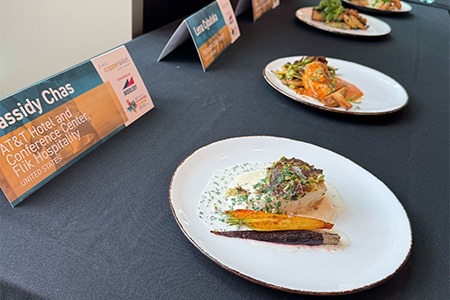
You’ll notice our break stations follow that philosophy—smaller, efficient portions that reduce excess. In our Copper Skillet competition, chefs are judged and penalized on food waste. They’re encouraged to use every part of an ingredient—even tomato peels.

We also avoid food and beverage minimums at our conferences. Those minimums tend to promote overordering, which goes against our sustainability goals.

SM Is free Wi-Fi becoming a standard expectation at IACC-certified venues?

MC  Yes, and it should be. Most IACC venues offer complimentary guest Wi-Fi. While it’s not a formal requirement, we strongly advocate for it—it’s part of our culture. I always say that Wi-Fi should be like hot water in a hotel room. You shouldn’t pay extra for it.

We also focus heavily on internet infrastructure and security, especially for smaller venues. It’s essential.

When policies close doors, technology opens windows

In a beautiful garden under the soft Portland sun in 2009, I stood in my wedding dress, exchanging vows with my soon-to-be husband. The ceremony was perfect in many ways – unusually sunny and warm for Portland weather—yet profoundly incomplete. Missing from the gathering were some of the most important people in our lives—our parents from Romania and Spain, denied visas to enter the United States for this once-in-a-lifetime milestone.

What should have been a devastating blow became instead our first lesson in technological inclusion. We set up a livestream—rudimentary by today’s standards—bringing our ceremony and reception into living rooms across continents. As we exchanged rings, tearful parents watched from thousands of miles away, connected through pixels and perseverance.

Sixteen years later, this personal experience resonates with uncomfortable relevance as our industry faces a rapidly shifting landscape under the current administration. New border restrictions, visa policies, and international perception challenges are creating barriers reminiscent of what my family experienced, but on an industry-wide scale. What was once my personal workaround has become an essential strategy for maintaining global connections in an increasingly restrictive environment.

The Current State: March 2025

The political climate of early 2025 has created a challenging environment for international participation in U.S.-based events:

  • Visa appointment wait times have reached unprecedented levels, with 849 days in Mexico City, 640 days in Bogotá and 499 days in Mumbai—timeframes that make meaningful planning virtually impossible.
  • The State Department recently removed its online visa wait time tracker, eliminating transparency for applicants and creating additional uncertainty for event planners trying to forecast international attendance.
  • In February 2025, an executive order introduced measures affecting public sector travel, requiring centralized approval for non-essential travel including conferences and professional development.
  • Several countries including Canada, the UK, Germany, Denmark, and Finland recently issued updated travel advisories after incidents of travelers being detained or denied entry at U.S. borders.
  • Proposed policies affecting travel from over 40 countries are under consideration, creating a hesitancy that extends far beyond the directly impacted nations.

These aren’t just policy abstractions—they’re already reshaping attendance patterns. Canadian inbound travel experienced a 4.4% year-over-year drop this February. European countries show similar trends, with travel from Switzerland down 10.3%, Slovenia down 8.6%, and Belgium down 7.9%.

Read More: Weaponization of Travel: Navigating Cultural Obstacle Courses

Industry associations emphasize these concerns represent practical challenges to our sector’s global reach rather than political positions. As Nicola Kastner, CEO of Event Leaders Exchange, recently noted, This is not a political statement. It’s a call to awareness. After spending years rebuilding from the pandemic, we now face a new set of obstacles that threaten the stability and international character of U.S.- based events.

The Dual Attendance Crisis

For event professionals in 2025, we’re witnessing a dual attendance crisis:

  1. Federal and Public Sector Attendees: The February 2025 executive order has significantly curtailed government employee travel. Some agencies, including the Department of Health and Human Services, have suspended nearly all travel for their staff. When public sector attendance drops, events lose crucial regulatory perspectives and subject matter expertise, particularly in sectors like healthcare, education, defense, and infrastructure.
  2. International Attendees: A combination of visa processing delays, symbolic policies, and travel advisories are contributing to reduced global participation. The U.S. Travel Association warns that a 10% drop in Canadian visits alone could result in 2 million fewer visitors, $2.1 billion in lost spending, and 14,000 U.S. jobs lost.

At CES 2025 in Las Vegas, Chinese exhibitors were denied U.S. visas despite invitations. While about 1,300 Chinese companies exhibited, this was down from the record 1,551 in 2018. The Consumer Technology Association publicly urged the U.S. government to expedite visas for legitimate business travelers, stating that visa woes are “disappointing and costly” for global trade shows.

My 2009 Wedding: A Relevant Parallel for 2025

In 2009, when my parents and in-laws couldn’t attend our wedding due to visa issues, we faced a similar challenge: how to maintain meaningful connection across boundaries that weren’t of our making.

Our solution then feels eerily prescient now. Using the limited technology available, we created a bi-directional experience. Our families didn’t just watch; they participated. They dressed formally, gathered with extended family and friends, ate meals timed with our reception, and even made toasts that we played at our venue.

This wasn’t just about transmission—it was about creating agency and inclusion despite physical absence. We didn’t view streaming as a lesser experience, but as a different, parallel way of being present.

From Personal Solution to Industry Imperative

In 2025’s political climate, this approach has evolved from personal workaround to industry imperative. The current challenges require us to view hybrid solutions not as pandemic-era necessities but as strategic inclusion tools in response to policy-driven barriers.

Modern technology allows us to go far beyond what was possible in 2009:

  • Multi-language support with real-time AI translation addresses language barriers
  • Sophisticated engagement platforms create meaningful interaction rather than passive viewing
  • Virtual networking spaces simulate the serendipitous connections of in-person events
  • Content accessibility extends beyond the live event, creating ongoing value
  • Regional satellite hubs allow for physical gatherings that connect to the main event virtually

These aren’t just technical features – they’re diplomatic bridges across newly erected barriers.

Strategic Adaptation: Innovative Approaches for 2025’s Realities

While industry groups continue advocating for policy changes, event professionals need immediate strategies that address current realities:

  1. Attendance forecasting matrix: Develop a multi-variable projection system that accounts for geographic factors, visa processing timelines, and sector-specific travel restrictions. This allows for more nuanced planning than simple percentage reductions.
  2. Visa navigation resources: Create dedicated support systems for international registrants with country-specific guidance, estimated processing timelines, and direct connections to expediting services where available.
  3. Experience equity planning: Rather than treating virtual attendance as a lesser option, approach programming with a “digital-first” mentality that ensures every meaningful in-person interaction has a compelling virtual counterpart.
  4. Ambassador programs: Establish regional representatives who can facilitate local gatherings that connect to your main event, creating physical touchpoints for those unable to travel to the U.S.
  5. Contractual flexibility: Renegotiate venue and vendor contracts with specific clauses addressing international attendance fluctuations, reducing financial exposure to policy-driven attendance shifts.
  6. Content stratification: Design programming that distinguishes between what must be experienced synchronously versus what can be accessed asynchronously, maximizing flexibility for international participants across time zones.
  7. Diplomatic channels: Partner with international chambers of commerce and industry associations who may have established pathways to facilitate business travel even amid broader restrictions.

Looking Forward While Acknowledging the Present

The visa and travel challenges our industry faces in March 2025 are not temporary inconveniences – they reflect fundamental policy shifts. Waiting for a return to “normal” isn’t a viable strategy.

Instead, we must acknowledge the reality of these new barriers while innovating ways to maintain global connection despite them. As event professionals, our responsibility isn’t just to produce gatherings; it’s to ensure that meaningful connection happens regardless of political context.

When I think back to my wedding day, I remember both the joy of our ceremony and the bittersweet knowledge that our parents were watching from afar. Technology didn’t solve the visa problem, but it created a pathway for presence and participation that wouldn’t otherwise have existed.

Today, as our industry navigates similar challenges on a larger scale, we have an opportunity to demonstrate the same resilience and creativity. Yes, joining online is not the same as joining in person – but joining online is better than not joining at all. And with today’s technology, we can make that online experience far more meaningful than my wedding livestream in 2009.

The tools have evolved dramatically. The principle remains the same: when policies close doors, technology opens windows. And sometimes, those windows provide views we wouldn’t otherwise have seen.

Black and white image of Anca Platon TrifanAnca Platon Trifan is a senior manager of strategic event technology and AI partnerships for Meetings & Incentives Worldwide and the host of Events: Demystified Podcast with 20 years of experience in the event technology and AV production industry 

They bring a unique perspective on technical solutions for human connection challenges based on both professional expertise and personal experience.

As a hotel sales manager, your goal is to fill rooms, book meeting spaces, and bring in new clients. But with so many options in today’s market, how can you stand out and attract more business? Below, we’ve broken down some simple strategies to help you increase bookings and build stronger relationships with your clients.

Sign up for the monthly Behind the Bookings newsletter here

1. Focus on Personalization

People love when things are tailored to them. When you’re working with a potential client, take the time to understand their needs. Are they booking rooms for a group? Do they need meeting spaces or events catered? Don’t just send a generic offer. Instead, customize your proposal so it fits exactly what they’re looking for.

For example:

  • If you’re pitching to a company for their corporate retreat, mention how your hotel’s conference rooms are tech-friendly and offer great Wi-Fi.
  • If they’re traveling with family, highlight nearby attractions, kid-friendly activities, or flexible dining options.

By showing you care about their unique situation, you make it easier for them to book with you.

2. Use Technology to Your Advantage

Technology plays a huge role in how people book hotels today. Many clients want quick, easy, and instant answers. Consider using tools and platforms to speed up and improve the booking process.

Here’s how you can do it:

  • Instant Quotes: Use online tools that allow clients to see pricing or availability quickly, rather than waiting for you to email back.
  • Live Chat: Set up a chat option on your hotel’s website so clients can ask questions and get answers in real time.
  • Email Automation: Create automated, friendly emails to follow up with clients who’ve inquired but haven’t booked yet.

Using tech not only makes the process smoother but also shows you’re on the cutting edge, which clients love.

3. Offer Flexible Packages

Flexibility is a big deal these days! People appreciate options that let them customize their stay. Instead of offering just one package, think about creating multiple ones to fit different needs.
For example:

  • A “Weekend Getaway” package could include a discounted room rate, breakfast, and free parking.
  • A “Business Travel” package might bundle meeting space, a discounted group room block, and complimentary coffee.
  • A “Bleisure” (Business + Leisure) package could combine weekday hotel stays with fun weekend perks, like spa discounts or sightseeing passes.

The more options you offer, the more likely someone will find a package that works for them.

As an Amazon affiliate, Smart Meetings earns from qualifying purchases. We appreciate your support.

4. Highlight Your Hotel’s Unique Features

What sets your hotel apart from the competition? Whether it’s a rooftop pool, amazing views, or a chef who creates incredible meals, make sure you’re promoting these features to your clients. People like to know they’re getting something special.

Think about the type of client you’re reaching out to and highlight the features that would matter most to them. For instance:

  • A business group might love your fast internet and spacious conference rooms.
  • A wedding planner might appreciate your beautiful event spaces and catering options.
  • Families might be excited about your kid-friendly amenities, like a pool or play area.

Take great photos of these features and include them in your emails, presentations, or sales pitches. Remember, a picture really can be worth a thousand words!

5. Go Green and Talk About Sustainability

More and more travelers care about sustainability. They want to know that the hotel they’re booking is eco-friendly. Sharing how your hotel embraces sustainability can help you stand out and win their trust.
Does your property use energy-saving lights? Offer recycling bins? Source ingredients locally? Make sure to mention these things when you’re pitching to groups or clients. Some companies, especially large ones, prefer to do business with hotels that share their values around going green.

6. Build Local Connections

Don’t overlook opportunities in your backyard! Sometimes the best way to fill rooms and book events is to connect with local businesses and organizations in your area.

Reach out to companies, schools, or event planners near your hotel and let them know what you offer. For example, you could partner with a nearby university to host visiting professors or offer deals for wedding guests from a local venue.

Also, joining your Chamber of Commerce or attending local networking events can help you meet people who might need your services.

7. Follow Up Every Time

Not all bookings happen right away. Sometimes clients need more time to decide or want to compare options. That’s why following up is so important. A friendly email or phone call can remind them why your hotel is the best choice.

Here are a few tips for effective follow-ups:

  • Keep it casual but professional. Something like, “Hi [Name], I just wanted to check in to see if you had any questions about your quote or if there’s anything else I can do to help.”
  • Highlight anything that adds value, like special promotions or limited-time offers.
  • Don’t overdo it. Bombarding someone with too many emails can come across as pushy. Keep it balanced!

Final Thoughts

Being a hotel sales manager means you get to connect with all kinds of people and help create memorable experiences. By focusing on personalization, using the right technology, and promoting what makes your hotel special, you can attract more bookings and grow your business.

Remember, the little things—like great follow-ups and tailored packages—can make a big difference in convincing clients to choose your hotel. So, get creative, stay proactive, and continue building strong relationships.

Contact Smart Meetings today to get started.

Plus: Other GMID celebrations from around the U.S.

This year’s Global Meetings Industry Day (GMID) was one to remember. Meeting Professionals International (MPI) and the Society for Incentive Travel Excellence (SITE) teamed up for a lively, eight-hour livestream packed with fresh insights, emerging trends and meaningful discussions around the future of meetings and events. Couldn’t tune in? Don’t worry—we’ve got the highlights for you.

1. Don’t Let Uncertainty Lead the Way

Rob Adams, president of Bishop-McCann, offered wise words during an interview on how to navigate the unpredictable global landscape. “We can only control so much. Make decisions based on what you know, not what you don’t know,” he said. His advice? Stay rooted in facts and avoid stalling or making decisions based on fear or speculation. In a time when headlines can shift by the hour, meeting professionals can stay empowered by focusing on what’s within reach and within reason.

2. Wellness Took Center Stage

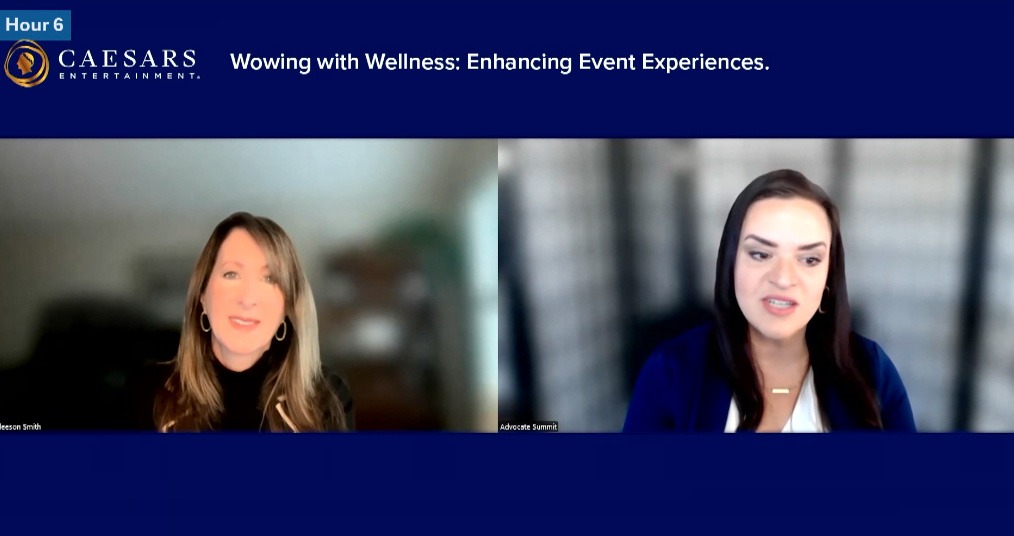
Caesars wowing with wellness screenshot.png

Wellness wasn’t just a buzzword—it was an experience. The eight-hour livestream wove moments of calm, clarity and self-care throughout the day. Visit Galveston led viewers in a gentle yoga flow surrounded by the peaceful underwater ambiance of the Moody Gardens Aquarium. Dorsey Standish, CEO of Mastermind Meditate, shared tips for developing healthier sleep habits—something every road warrior and planner can benefit from. Caesars Entertainment supported a breathwork session with Sepideh Eivazi, giving attendees tools to reset and recharge. These experiences weren’t just refreshing—they were reminders that a healthy mindset leads to better meetings.

3. 2025 Trends to Watch

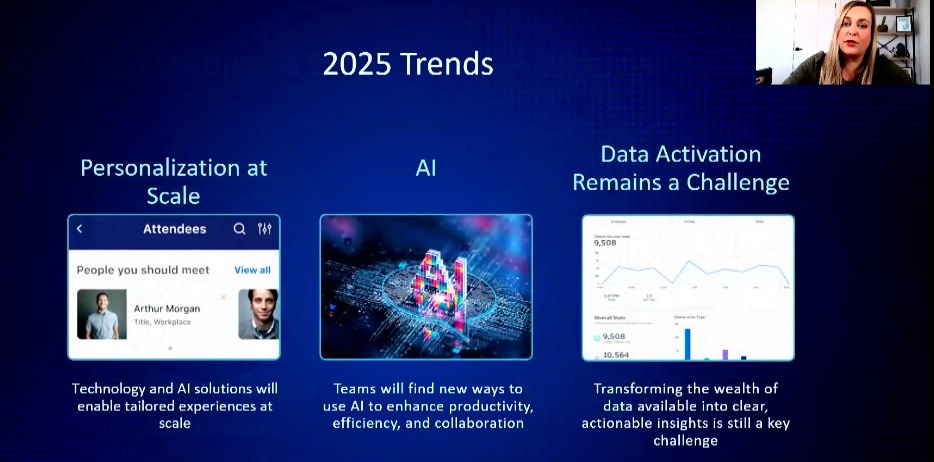
2025 AI trends screenshot

Rachel Andrews, global head of meetings and events at Cvent, delivered a fast-paced and future-focused forecast. Here’s what’s coming into view for next year and beyond:

  • Personalization at Scale: Thanks to smarter event tech and AI, planners can deliver tailored experiences to large audiences without sacrificing the personal touch.
  • AI Boosts Productivity: Expect more creative uses of AI to handle everything from scheduling and content creation to attendee engagement and follow-ups, freeing teams up for more strategic work.
  • Data Activation Remains Tough: We’re swimming in data, but turning it into meaningful insights remains one of the industry’s biggest challenges. Getting this right can be a game-changer.
  • Return on Relationships (ROR): Beyond ROI, relationships matter more than ever. Measuring the impact of connection and community is becoming a priority metric for event success.
  • Field Marketing Events Are on the Rise: Smaller, localized events are gaining popularity for their agility and relevance. This trend is driving the need for more self-service tools and streamlined planning options.
  • Year-Round Content Strategy: What happens at your event shouldn’t stay there. Smart planners are repurposing event content for ongoing campaigns, keeping audiences engaged long after the last session ends.
  • Unique Venues and Destinations: Flexibility, affordability and creating unforgettable attendee experiences are driving demand for off-the-beaten-path spaces and lesser-known destinations.
  • Tech for Accessibility: With new regulations like the European Accessibility Act coming in June 2025, tech is helping ensure events are more inclusive and accessible for all attendees.
  • Renewed Focus on Data Privacy: As privacy laws evolve, venues and planners are doubling down on compliance. Transparency and trust with attendee data are becoming essential.

4. Cultural Intelligence is a Superpower

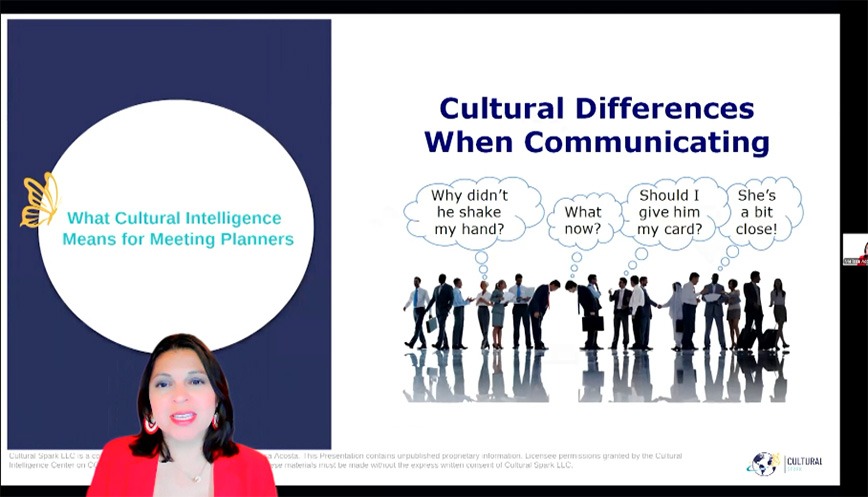
Melissa Acosta, CEO of Cultural Spark, delivered a standout session on the power of cultural intelligence (CQ) in planning more impactful and inclusive meetings. She emphasized that the biggest missed business opportunities often stem from simple cultural misunderstandings. Building cultural fluency isn’t just nice—it’s necessary. Her tips?

  • Research before you plan: Understanding your audience’s culture, values and preferences is the first step in creating an event that truly resonates.
  • Adapt your approach: Use that research to shape everything from your agenda and speakers to food choices and communication styles.
  • Commit to continuous learning: Cultural awareness is not a checklist—it’s a lifelong learning journey that evolves with every meeting and every audience.

5. Incentive Travel is Evolving

    Annette Gregg, CEO of SITE, shared current data on incentive travel and how it’s adapting to the new world of work. Key trends included:

    • Resilience Amid Disruption: Despite global uncertainty, businesses are adapting and surviving. The incentive space continues to thrive as companies look for meaningful ways to motivate teams.
    • Workplace Demographics Are Shifting: A new generation of employees, many in hybrid or remote roles, is influencing how and why incentive programs are designed. Planners are being called to rethink goals and delivery models.
    • Sustainability is Top of Mind: More programs are being built with environmental and social impact in mind. From carbon offsets to local sourcing, sustainability is no longer optional.
    • Generative AI is Here to Stay: AI tools are reshaping how incentive travel is planned, personalized and delivered. Learning how to use them effectively is becoming a critical skill.
    • New Destinations Are Trending: While inflation is prompting some to keep programs closer to home, others are getting creative with lesser-known destinations that offer fresh experiences at lower cost.
    • Company Culture Drives Program Design: More incentives are being crafted to strengthen internal culture, build community and reinforce brand values—not just reward performance.
    • Incentives Remain a Key Motivator: Recognition still matters. Companies see incentive travel as a powerful way to inspire, engage and retain top talent.

    Bonus: Cities Around the Country Joined the Celebration

    While MPI and SITE were leading the charge online, destinations across the U.S. showed up in full force to mark Global Meetings Industry Day in their own meaningful ways—spotlighting the economic power of meetings, building community and rolling out innovations.

    New York City Lit Up Blue and Introduced a New AI Tool

    New York City reminded us why it’s called the business capital of the world. NYC Tourism + Conventions pulled out all the stops by hosting its largest-ever Tristate Meeting Planner event at The Glasshouse. Over 300 business event professionals and 120 local businesses gathered with help from partners like The Manhattan Center and Ink48 Hotel—and were even treated to a live performance from Hamilton through Broadway Plus.

    In a bold show of support for the industry, the New York City skyline lit up blue for the night. Iconic landmarks including One World Trade Center, Rockefeller Center and the Javits Center joined the celebration. But NYC didn’t just look back—it looked ahead. The city unveiled Ellis, the first-ever AI-powered chat platform built specifically for business event professionals by a convention and visitors bureau. With 45 languages supported, Ellis aims to simplify planning across all five boroughs.

    With 13 million business visitors projected in 2025 and a full recovery of business travel expected by 2026, New York City is charging forward while commemorating 400 years of NYC history in 2025 and America 250 in 2026.

    Denver Showcased the Power of Meetings in Dollars and Impact

    In Denver, GMID served as both a celebration and a rally cry. Visit Denver highlighted that the meetings industry brought over $845 million to the local economy in 2024 alone, with $66 million tied directly to the recent expansion of the Colorado Convention Center. This development opened the door to large-scale events that previously wouldn’t have been feasible—and there’s more on the way. With 19 future meetings already booked, the expansion is expected to generate another $310 million in economic impact and fill more than 200,000 hotel room nights.

    Richard Scharf, CEO and president of Visit Denver, said, “The meetings industry does more than support gatherings—it is a powerful economic engine that drives revenue to local businesses, creates jobs and fosters innovation.”

    Las Vegas Gave Back with a Day of Service

    Hospitality professionals packing groceries

    Las Vegas took a heartfelt approach to GMID by turning its celebration into a community service event. About 40 hospitality sales team members from resorts across the city came together at The Just One Project, a local food pantry, to pack grocery bags, distribute meals and lend a hand in the warehouse. This Day of Service reflected a deep connection between the city’s vibrant meetings industry and the local community it supports.

    “[The Just One Project] delivers the food to a lot of different resources in town,” said Rebecca DeLuca, vice president of sales for Las Vegas Convention and Visitors Authority. “It could be senior citizens who live at home, or a facility, schools or just high-need areas.”

    Outside of GMID, DeLuca also talked about The Just One Project’s food impact reports their team can produce for a meeting organizer. “They will show the direct impact to the community how much food was rescued from their meeting, they’ll also show the water conservation that was saved,” she says. “Food doesn’t pig farms are fine, but when you go to a pig farm and you send your food there, there’s a lot of water that’s used. In Las Vegas, water conservation is huge for us, so the fact that there’s water conservation efforts in alignment with Food Rescue is just incredible and inspiring.”

    According to the Las Vegas Convention and Visitors Authority (LVCVA), business travelers brought nearly 6 million visits to Las Vegas in 2024. The convention sector generates over $15 billion in annual economic impact for the region and supports more than 67,000 jobs. In a city built for events, GMID was a reminder of the powerful ripple effect meetings have—not just on business, but on people.

    After the Trump administration announced $2.5 trillion in tariffs on imports of items used at conferences such as aluminum, paper and copper, events industry organizations issued statements pleading for relief based on the importance of conferences and events.

    The message coincided with Global Meetings Industry Day on April 3 and the build up to U.S. Travel Association’s Destination Capitol Hill annual advocacy push for modernization to unlock a new Golden Age of Travel in advance of the 2026 FIFA World Cup and 2028 Summer Olympics.

    Concern About Rising Event Costs

    Tommy Goodwin, executive vice president with Exhibitions & Conferences Alliance (ECA), released a statement saying the executive order introducing new reciprocal tariffs on U.S. trading partners has led to “significant concern” within the U.S. business and professional events industry.

    “These tariffs will increase costs for business and professional event organizers, exhibitors and attendees alike. They also send a signal to international exhibitors and attendees that the U.S. is closed for business.”

    Read More: A Q&A with Fred Dixon on the Enduring Importance of Hospitality

    He pointed out that tariffs will particularly harm small businesses, which account for 99% of industry companies and 80% of all exhibitors. Then he shared the economic impact of the events industry—2.63 million American jobs and $426.1 billion in spending estimated for 2025 in the United States. “That’s why the ECA opposes these new tariffs, which will negatively impact our collective ability to drive economic growth, support job creation, empower small businesses and help to solve our most urgent societal challenges,” he said.

    Read More: Essential! Support the $1 Trillion Meetings Industry, Restart America

    A Plea to Consider Big Picture Impacts

    The Live Events Coalition (LEC) that came to life during the pandemic to advocate for the wellbeing of all parts of the industry, including corporate events, sporting events, fairs and festivals and performances, has been reanimated to address recent threats to all of the above.

    Reached the day after GMID, LEC President Nancy Shaffer stressed the importance of working together to support the message LEC VIC Chair and Government Affairs Wendy Porter is doing along with Marketing and Communications Director Al Mercuro, Government Affairs Chair Dwayne Thomas and Treasurer Russ Callahan.

    LEC released a statement putting a face to the 12 million people working to keep 1.2 million small businesses alive. “These aren’t faceless numbers—they’re the planners, producers, AV techs, stagehands, riggers, exhibit houses, lighting designers, scenic builders, show callers, rental companies, decorators, caterers, transportation teams, translators, musicians, photographers, florists and thousands of freelancers who bring events to life every single day,” the statement read.

    It called the newly announced tariffs “yet another blow to the live events ecosystem”—an industry already grappling with a 38% increase in costs since 2019.

    It pointed out that tariffs on imported goods drive up the cost of everything from staging and signage to food, entertainment technology equipment and travel. “When those costs rise, we see a domino effect: corporate travel freezes, marketing budgets tighten, sponsorships shrink and internal and external events are the first to go.”

    The statement stressed that those business losses don’t just hurt the meetings industry. It hurts every industry that relies on events to drive brand visibility, thought leadership, lead generation, employee engagement and revenue. “The downstream impact is real. Events aren’t a line item to slash—they’re a critical lever for growth,” according to Shaffer.

    “We urge policymakers to understand the full reach of this decision. Undermining the live events industry doesn’t just threaten jobs—it threatens the very platforms that help American businesses grow, connect, and thrive,” the statement concluded.

    What Individual Planners Can Do

    Goodwin vowed to work with member associations, coalition partners and other stakeholders in Washington, D.C., to advocate for trade policies that will strengthen the competitiveness of the U.S. business and professional events industry going forward and allow us to continue to serve as a growth engine for the U.S. economy.

    He suggested aligning with ECA Advocacy Network’s email action center and following the ECA Tariff Resource Center on the ECA website with the latest news impacting the industry.

    The U.S. Travel Insights Dashboard is a real-time source for travel trends and intelligence about where the economy is heading.

    Think all-inclusives are old news? Wait until you see what’s blooming on the Dominican Republic’s quiet coast. Is it possible to bet on basketball, sip craft beer and tee off—all before dinner? In New Hampshire, it’s not just possible. It’s bookable. How do you combine Japan’s cherry blossom season with heritage sites and hidden gems? A new boutique cruise by Heritage Expeditions might be just the trick.

    In this edition of Smart Travel, we’re highlighting a fresh batch of destination updates and hotel happenings—from a historic Parisian landmark joining Mandarin Oriental, to United’s global expansion at SFO, to new cruise itineraries timed perfectly with nature’s showstoppers. Whether you’re scouting your next meeting locale or just daydreaming of your next getaway, here is what you need to know:

    New Resorts Coming to Playa Esmeralda in 2025

    The Dominican Republic’s Playa Esmeralda is getting a major hospitality boost in summer 2025 with the debut of Secrets Playa Esmeralda and Dreams Playa Esmeralda, two new all-inclusive resorts set along the region’s coastline. These properties are part of Hyatt’s Inclusive Collection and are managed by AMResorts, a subsidiary of Apple Leisure Group. The developments are in collaboration with Inversora Playa Esmeralda and Fuerte Group.

    Playa Esmeralda, located near natural attractions like Montaña Redonda, Samaná Bay and Los Haitises National Park, is still relatively under the radar—but that’s likely to change. The area’s lush scenery and uncrowded beaches make it a promising location for both leisure travelers and incentive groups looking for a laid-back alternative to more developed destinations.

    Read More: The Caribbean: Crystalline Dreams

    Secrets Playa Esmeralda will offer an adults-only experience with 500 suites and a focus on privacy, spa services and elevated dining. Expect 10 restaurants, six bars and a mix of activities from yoga to themed events.

    Dreams Playa Esmeralda is built for families, with its own set of 500 suites, three pools, a waterpark and dedicated kids and teens clubs. Dining spans nine restaurants and seven bars, with entertainment and activities designed to keep all ages engaged.

    These two openings follow recent additions to the Dominican Republic like Zemi Miches and Marriott Miches Beach, and with a Four Seasons slated to arrive in 2026, Playa Esmeralda is quickly becoming a destination to watch.

    The Nash Casino Taps UrVenue for Seamless Sports Entertainment Bookings

    New Hampshire’s largest charitable gaming venue, The Nash Casino, has partnered with tech company UrVenue to simplify how guests book everything from premium game-day seating to golf simulator bays. Just in time for the busiest sports betting season of the year, the venue is rolling out online booking capabilities for several of its key attractions, including the DraftKings Lounge, Stadium Social Sports Bar & Grill and the Topgolf Swing Suite.

    With UrVenue’s commerce and booking technology, guests can now reserve seats at specific times, book golf sessions and other experiences—all in one go. The system also features a dedicated microsite where fans can browse upcoming games and events, including high-demand matchups like College Hoops Madness.

    The Nash, which boasts New Hampshire’s largest wall-mounted video screen at 60 feet wide and 22 feet tall, is looking to elevate the guest experience by making it easier to plan an evening out without the hassle. The move also marks UrVenue’s continued growth in the gaming and hospitality space as it expands its footprint with integrated, guest-friendly solutions.

    Mandarin Oriental Adds Iconic Hôtel Lutetia to Its Paris Portfolio

    Paris just got a little more luxurious. Mandarin Oriental has officially taken over management of the historic Hôtel Lutetia, now rebranded as Mandarin Oriental Lutetia, Paris. Located on the city’s Left Bank, the property becomes the only Palace-designated hotel on that side of the Seine and complements Mandarin Oriental’s existing address on Rue Saint-Honoré.

    Originally opened in 1910 by the founders of Le Bon Marché, Lutetia has long held a reputation as a hub for artists, writers and political figures—past guests include Picasso, James Joyce and Charles de Gaulle. Following a major restoration completed in 2018, the hotel blends its Art Nouveau and Art Deco roots with contemporary design and amenities.

    Under Mandarin Oriental’s management, the hotel maintains its classic Parisian identity while benefiting from the group’s signature style and service. Highlights include Brasserie Lutetia, the Akasha wellness space and suites that reflect a mix of tradition and modern comfort.

    “Today marks a new chapter for Mandarin Oriental as we officially welcome this legendary Parisian landmark Palace into our portfolio,” said Laurent Kleitman, group chief executive of Mandarin Oriental. “With Mandarin Oriental Lutetia, Paris, we celebrate not only the rich heritage of the Left Bank but also our vision for the future of luxury hospitality.”

    United Expands at SFO with New International Routes and Major Terminal Upgrades

    United Airlines is scaling up at San Francisco International Airport (SFO) in a big way. The carrier plans to increase its flight capacity by 20% in 2025, offering nearly 300 daily flights to more than 100 destinations—its largest SFO schedule since 2019 and the most of any airline in the Bay Area.

    With a focus on global connectivity, United is rolling out several new international routes from SFO this year, including the only U.S. carrier service to Bangkok, Ho Chi Minh City and Adelaide. A second daily flight to Manila is also coming in December. The expansion strengthens United’s position as a leading West Coast gateway to Asia, Australia, Latin America and Europe.

    Read More: APEC and Dreamforce Showed Off Forward-looking San Francisco

    “SFO is key to our global strategy,” said Scott Kirby, CEO of United Airlines. “We’re winning more Bay Area travelers because of our investments in the product, the experience and the places we fly.”

    The airline’s growth is supported by a $2.6 billion modernization project underway at Terminal 3, which includes new gates, upgraded security checkpoints, expanded retail and dining, and new United Club locations. Once complete in 2029, the updated terminal will give United room to grow and improve the overall traveler experience.

    The expansion isn’t just about flights. United is also adding to its workforce—more than 1,600 new hires in 2024, with another 1,200 planned for 2025—making it one of the Bay Area’s largest employers. With industry-leading tech partnerships, including Starlink Wi-Fi, Apple-powered tools for employees and a future electric air taxi service with Archer, United is also betting big on innovation.

    Heritage Expeditions Launches New Japan Cherry Blossom Cruise for Spring 2026

    In response to growing interest from travelers, family-owned Heritage Expeditions has announced a new Cherry Blossoms of Japan voyage for spring 2026. The 12-day small-ship cruise will sail from Tokyo to Osaka, timed to coincide with Japan’s beloved Sakura season and the vibrant Hanami celebrations.

    Read More: Japan Guide: Your Ultimate Know-Before-You-Go

    The itinerary features a mix of well-known highlights and off-the-beaten-path destinations, including Mount Fuji, Hiroshima, Miyajima’s floating Torii gate and the contemporary art haven of Naoshima Island. Guests will also visit Busan, South Korea, while cruising through the scenic Seto Inland Sea and along the coastlines of Honshu, Shikoku and Kyushu.

    “Japan is rightly famous for its cherry blossoms and the incredible celebrations and festivals that surround Sakura season,” said Aaron Russ, commercial director and expedition leader. “Our guests really wanted to experience this with us.”

    The cruise departs from March 31 to April 11, 2026, and pricing starts at just under $9,000 per person (with early booking discount through April 30, 2025).

    Heritage Expeditions also announced new dates for its Kimberley Explorer voyages in Australia, running from Darwin to Broome in July and August 2026, following a surge in demand for the company’s growing lineup of authentic expedition-style journeys.

    Whether on the world stage or within our own industry, negotiations are everywhere—and their outcomes matter more than ever. In a time marked by geopolitical tension, fragile supply chains, and economic uncertainty, the ability to negotiate effectively isn’t just a business skill—it’s a survival tool. Within the meetings and events industry, where relationships are the foundation of success, negotiation has evolved far beyond rates and contracts. It now demands strategic thinking, empathy, flexibility, and a commitment to building trust and long-term value.

    At Teneo Hospitality Group, we don’t just watch these shifts—we engage with them directly. In recent conversations with our Client Advisory Board, a group of leading seasoned event professionals, we explored how today’s negotiations must address far more than pricing. From navigating inflation and contingency planning to aligning around shared outcomes, the dialogue has become more nuanced—and more collaborative. These insights, combined with my own experiences, confirm that modern negotiation is about creating resilient partnerships that can weather any change.

    Over the course of my career, I have learned that the most successful negotiations in meetings and events aren’t defined by hardball tactics or rigid bottom lines—they’re built on transparency, clarity, creativity, and partnership. I’ve seen firsthand how shifting the lens from “winning” to “solving” can change the entire dynamic. In one case, when a planner’s budget constraints seemed immovable, we pivoted toward value-adds the hotel could provide—delivering more meaningful impact without altering the rate. And during the chaos of the early pandemic, when a contract crumbled overnight due to travel restrictions, it was our pre-negotiated flexibility, mutually acceptable resolution discussions and opportunities, and trust-based relationship that allowed us to pivot gracefully.

    “The best negotiations are not transactional—they’re transformational. They build trust, solve problems, leave both parties stronger, and hopefully create long lasting partnerships.”

    Below are a few key principles I’ve found essential in navigating high-stakes conversations in the meetings and events industry.

     5 Principles for Stronger Negotiation

    1. Know Your Value & Objectives

    Planners: Be clear on your event goals, must-haves, and where you’re flexible. Is it better terms, added concessions, or rate relief?
    Suppliers: Know what sets you apart and how that supports the planner’s vision—go beyond pricing to highlight service, partnership value, or exclusivity.

    2. Lead with Collaboration, Not Confrontation

    Planners: Frame your asks as collaborative problem-solving. “How can we make this work within budget?” opens more doors than demands.
    Suppliers: If you can’t adjust pricing, explore what you can do—hotel specific added values like VIP upgrades, comp Wi-Fi, or reduced or waived fees can go a long way.

    Read More: The Authenticity Effect: How Being You Sparks Collaboration & Success

    3. Leverage Data & Insights

    Planners: Bring historical spend, pickup, and comp set research to back your asks. Data gives leverage.
    Suppliers: Share seasonal trends, comparable insights, or historical booking patterns to explain rates and set expectations.

    4. Value-Adds, Allies, and Outside-the-Box Thinking

    Planners: If pricing is firm, get creative—flexibility with F&B commitments, longer room block cutoffs offers, transparency with “must-have” concessions can make all the difference. Representation companies like Teneo Hospitality Group can also be powerful allies—lean on them to help move conversations forward and leverage their deep relationships with their key hotel partners to facilitate discussions with you and decision-makers to unlock added flexibility or enhancements that might not be offered outright.
    Suppliers: Offer enhancements like bonus loyalty points, VIP perks, altering the resort fee to accommodate what the group values, hotel specific value add-ons, or added marketing exposure to meet planner needs without lowering rates.

    5. Keep It Professional, Always

    Planners: Be transparent and respectful. Let suppliers know if you’re exploring other options and provide key decision factors and realistic timelines.
    Suppliers: Deliver on what you promise, when you promise it. Professionalism, transparency and follow-through build trust—and earn business. Keep in constant contact because even no update is an update.

    Negotiations can unlock incredible opportunities—but they can also go sideways fast if handled without care. I’ve found that some of the most common pitfalls stem from being too aggressive, not fully listening, or making promises that can’t realistically be kept—each of which can quickly erode trust. When conversations become adversarial or overly positional, it’s often a sign that the process needs a reset. Emotional intelligence and cultural awareness aren’t just nice-to-haves—they’re essential tools for reading the room, building rapport, and keeping talks on track. Avoiding these common missteps is the first step toward meaningful, mutually beneficial outcomes and creating lasting partnerships.

    Read More: Mastering Event Contracts: Essential Negotiation Strategies for Meeting Planners in 2025

    Pitfalls to Avoid in Meetings & Events Negotiations

    1. Being Too Aggressive or Unrealistic

    Planners: Pushing for deep discounts or excessive concessions without offering something in return—like possible multi-year commitments or transparency around your business needs including concessions—can erode trust and damage long-term relationships.
    Suppliers:
    Holding firm on inflexible terms in a buyer’s market can push planners toward competitors who show more adaptability.

    2. Failing to Listen and Understand

    Planners: When a supplier explains their limitations, pause and listen. Understanding their perspective can reveal opportunities for a solution that benefits both sides.
    Suppliers:
    Avoid one-size-fits-all responses. Customize proposals to each program’s unique goals, constraints and planner preferences.

    3. Overpromising and Under-Delivering

    Planners: Don’t commit to more than you can confidently fulfill. Overestimating room blocks or other deliverables can lead to financial risk and credibility loss.
    Suppliers:
    Resist the urge to overpromise. Be honest about availability, inclusions, and service levels—and aim to exceed expectations, not fall short of them.

    4. Overlooking the Fine Print

    Planners: Read every clause—especially around penalties, cancellation, and minimum spend. Negotiating these upfront avoids costly surprises later.
    Suppliers: Ensure contracts reflect every agreed-upon detail to reduce misunderstandings and protect relationships.

    5. Making It Personal

    Planners & Suppliers: Negotiation is about outcomes, not egos. If talks get tense, take a step back and realign around shared goals. And rememberdon’t hide behind technology. A quick phone call or in-person conversation can build rapport, resolve issues, and move negotiations forward faster and more effectively than any email or text.

    Final Thoughts

    At its core, negotiation in the meetings and events industry is a strategic dance that requires both empathy and efficiency, with long-term success hinging on trust, transparency, and shared purpose. Whether you’re a planner advocating for you or your client’s needs or a supplier balancing service and profitability, the most impactful outcomes arise when both sides feel heard, respected, and aligned. In a business built on relationships, approaching negotiations with intention, creativity, and collaboration will always open more doors than a hardline stance ever could.

    Gary Murakami, GTP, GLP, CMP, CMM, DES, is vice president of sales and industry relations for Teneo Hospitality Group.


    Hotel sales directors face increasing pressure to demonstrate measurable returns on their marketing investments, particularly in the meetings and events sector. With tightened budgets and heightened expectations, the ability to maximize Return on Investment (ROI) is a strategic imperative that can differentiate successful hotels from their competitors.

    This article explores proven strategies for hotel sales directors to enhance their meeting and event marketing ROI. From leveraging data analytics to embracing personalization, sustainability, and optimized campaign techniques, these approaches will help you capture more business while demonstrating clear value to stakeholders.

    Sign up for the monthly Behind the Bookings newsletter here

    The Importance of Data in Event Marketing

    When you track ROI, you can see which marketing efforts are working and which ones aren’t. This helps hotel sales directors prove that marketing is worth the money, and it helps them use data to make smarter choices. Some of the tools that can help with ROI tracking are CRM systems, attribution models, and analytics platforms.

    Why ROI Measurement Matters

    The meetings and events segment can represent 30-60% of a hotel’s total revenue, yet many properties still rely on outdated methods to track performance. Without proper measurement, it’s impossible to determine which marketing efforts drive bookings and which merely consume resources.
    ROI measurement enables sales directors to:

    • Justify marketing expenditures to ownership and management
    • Allocate resources to the most effective channels
    • Identify underperforming initiatives before they drain budgets
    • Make data-backed decisions rather than relying on intuition

    Key Tools for ROI Tracking

    Effective ROI measurement requires the right tools. Consider implementing:

    • Customer Relationship Management (CRM) Systems: Modern CRM platforms like Salesforce or HubSpot allow you to track the entire customer journey, from initial inquiry to final booking and post-event feedback.
    • Attribution Models: Multi-touch attribution helps identify which touchpoints influenced booking decisions, allowing for more accurate ROI calculations across complex marketing campaigns.
    • Analytics Platforms: Tools like Google Analytics 4 provide insights into website visitor behavior, conversion paths, and campaign performance.
    • Marketing Automation Software: Platforms like Marketo or Pardot can track email engagement, content downloads, and other digital interactions that precede bookings.
    • Post-Event Surveys: Structured feedback collection helps quantify the intangible aspects of ROI, including client satisfaction and likelihood of rebooking.

    Building a Data-Driven Culture

    Technology alone won’t transform ROI; you need organizational buy-in. To foster a data-driven culture:

    • Establish clear KPIs that align with business objectives
    • Train your team on data collection and interpretation
    • Create regular reporting cadences to review performance
    • Celebrate data-driven successes to reinforce positive behaviors
    • Use insights to continuously refine your marketing approach

    The most successful hotel sales teams make data analysis a daily habit rather than a quarterly exercise.

    As an Amazon affiliate, Smart Meetings earns from qualifying purchases. We appreciate your support.

    Personalization: Delivering Exceptional Experiences

    Personalization will help you get more bookings. You need to make sure that each person feels like you know what they need and want. Research shows that people are more likely to open and click on personalized emails and messages.

    Why Personalization Drives Results

    Meeting planners and corporate event organizers face tremendous pressure to create memorable experiences. Generic proposals no longer suffice in this environment. Research over the past 10 years from various groups show that personalized marketing communications receive higher open rates and higher click-through rates than generic messages.
    Personalization drives ROI by:

    • Demonstrating your understanding of client needs
    • Differentiating your property from competitors
    • Building stronger emotional connections with prospects
    • Increasing conversion rates at every stage of the sales funnel
    • Fostering loyalty that leads to repeat business

    How Hotels Can Personalize at Scale

    While personalization sounds labor-intensive, modern tools make it achievable even with limited resources:

    • Segment Your Database: Categorize clients by industry, event type, budget range, and past booking behavior to deliver targeted communications.
    • Create Industry-Specific Content: Develop proposal templates, case studies, and marketing materials tailored to key verticals like pharmaceutical, technology, or financial services.
    • Leverage Dynamic Content: Use email marketing platforms that automatically customize content based on recipient attributes and behaviors.
    • Personalize Site Inspections: Move beyond the standard property tour by showcasing spaces configured specifically for the client’s event type.
    • Utilize Video Personalization: Create custom video messages for high-value prospects that address their specific needs and demonstrate your attention to detail.

    There are several personalized proposal systems available that hotels can utilize to enhance their sales processes and improve client engagement. These systems enable hotels to create customized, visually appealing proposals tailored to individual client needs. Here are some notable options:

    • Cendyn: Offers a platform that allows hotels to tailor each sales proposal based on the recipient, incorporating native language and compelling video content to stand out from competitors.
    • Cvent: Provides a custom proposal tool designed to help hotels differentiate their property with unique branding and engaging content, including images and videos.
    • Q9 Digital: Specializes in simplifying group sales for luxury, resort, and convention hotels by managing proposals, presentations, floor plans, catering menus, and RFPs.
    • ProposalPath by SalesAndCatering.com: Enables hotels to quickly select the right content, photos, and sales collateral, transforming them into winning presentations.
    • MICE Operations: Offers powerful quotation software that allows hotels to create beautiful, personalized proposals matching their own identity and style.
    • Tripleseat: Provides an all-in-one software solution to streamline the booking and planning processes, enhancing productivity and boosting event revenue.
    • SendSites: Allows hotels to quickly customize unique and high-quality proposals for clients, delivering exactly what they need.

    Implementing such systems can significantly enhance a hotel’s ability to respond to client inquiries with personalized, professional proposals, thereby increasing the likelihood of securing bookings and improving overall client satisfaction.

    Sustainability as a Value Proposition

    Meeting planners view sustainability as a primary factor when planning events. Companies are demanding it, and younger people really do care about the environment. Hotels can use this to their advantage to bring in new customers.

    Why Sustainability Matters in Meeting & Event Marketing

    Sustainability has evolved from a nice-to-have feature to a critical decision factor for many organizations. According to a 2022 report by American Express Meetings & Events, 80% of event planners consider sustainability in their planning processes. Additionally, a September 2024 survey revealed that 60% of event professionals include sustainability criteria in their request for proposals (RFPs) for venues. These findings underscore the growing emphasis on environmental considerations in venue selection and event planning within the industry.

    This shift represents both an opportunity and a challenge for hotel sales directors:

    • Many corporations have established sustainability mandates for their events
    • Younger generations of decision-makers prioritize environmental responsibility
    • Sustainable practices can create cost savings that benefit both hotels and clients

    Genuine sustainability initiatives provide compelling content for marketing campaigns

    Tips for Incorporating Sustainability

    To effectively leverage sustainability in your marketing:

    • Document Your Green Initiatives: Create comprehensive materials outlining your property’s sustainable practices, from energy efficiency to waste reduction.
    • Obtain Certifications: Pursue recognized sustainability certifications like LEED, Green Key, or EarthCheck to provide third-party validation.
    • Create Sustainable Meeting Packages: Develop turnkey solutions that bundle eco-friendly practices like paperless registration, plant-based menu options, and carbon offset programs.
    • Quantify Environmental Impact: Provide post-event reports that calculate the reduced carbon footprint resulting from sustainable choices.
    • Highlight Local Connections: Showcase partnerships with local, sustainable vendors and community initiatives that enhance your property’s environmental story.

    The Javits Center in New York City effectively markets its 7-acre green roof and other sustainability features, which has helped increase event bookings by organizations with strong environmental commitments.

    Optimizing Marketing Campaigns for More Bookings

    Hybrid events, repurposed content, and strategic retargeting are transforming how hotels engage with clients and drive revenue. This section explores how innovative approaches—such as virtual site tours, content recycling, and targeted marketing campaigns—can maximize conversions and enhance return on investment in the hospitality industry. Learn from real-world success stories that showcase the power of these strategies in action.

    Leveraging Hybrid Events to Reach More Clients

    The pandemic accelerated the adoption of hybrid events, creating new marketing opportunities for hotels. By embracing this model:

    • Host virtual site tours for planners unable to travel
    • Create hybrid showcase events that demonstrate your property’s capabilities
    • Develop content from in-person events that can be repurposed for digital audiences
    • Partner with technology providers to position your property as hybrid-ready
    • Use virtual events as lead generation tools for future in-person bookings

    Here are examples of hotels seeing increased conversions after implementing virtual tours:

    These examples demonstrate that virtual reality tours can significantly increase site inspection conversions, overall booking rates, and revenue for hotels.

    Repurposing Content to Maximize Marketing Impact

    Content creation can be resource-intensive, making repurposing essential for ROI maximization:

    • Transform Client Events into Case Studies: Document successful events and create multi-format case studies for different channels.
    • Convert Webinar Content to Multiple Formats: Extract key insights from webinars to create blog posts, social media content, and email campaigns.
    • Create Content Ecosystems: Build comprehensive content packages around core themes relevant to your target markets.
    • Utilize User-Generated Content: Encourage clients to share their event experiences on social media with branded hashtags.
    • Update Evergreen Content: Refresh successful past content with new data and insights rather than creating everything from scratch.

    Retargeting Leads for Conversions

    Not all prospects convert immediately. Effective retargeting strategies include:

    • Implement Pixel-Based Retargeting: Use digital advertising platforms to reconnect with website visitors who didn’t complete inquiry forms.
    • Create Segmented Retargeting Campaigns: Develop different messaging for prospects at various stages of the decision journey.
    • Utilize Email Nurture Sequences: Build automated email campaigns that provide increasingly specific information based on prospect engagement.
    • Leverage Remarketing Lists for Search Ads: Target past website visitors when they conduct related searches on Google.
    • Deploy Cross-Platform Retargeting: Coordinate messaging across social media, display advertising, and email to create consistent experiences.

    Contact Smart Meetings today to help you get started.

    Here are some hotel retargeting success stories:

    These sources confirm that strategic retargeting and segmented marketing approaches do significantly improve conversion rates in the hospitality industry.

    Next Steps

    As the meetings and events continue to evolve, hotel sales directors must embrace data-driven strategies that maximize marketing ROI. By implementing robust measurement systems, delivering personalized experiences, highlighting sustainability initiatives, and optimizing campaigns through hybrid approaches, content repurposing, and strategic retargeting, you can drive more bookings while demonstrating clear value to your stakeholders.

    The most successful sales directors view ROI as a mindset that permeates every marketing decision. By consistently asking “how will this drive returns?” before allocating resources, you can create a more efficient, effective approach to meeting and event marketing that delivers measurable results in today’s competitive hospitality environment.

    Remember that maximizing ROI is not about doing more with less—it’s about doing more of what works and less of what doesn’t. With the strategies outlined in this article, you’ll be well-positioned to make those critical distinctions and drive sustainable growth for your property’s meeting and event business.

    Contact Smart Meetings today to help you get started.

    Past Smart Start guests share insights for Global Meetings Industry Day 2025.

    It’s Global Meetings Industry Day (GMID), once again! And what a special day it is. Amid rapidly developing technology, trends that you’ve seen start as buds growing into full blossoms and networks that never stop growing, today is a day to celebrate meeting professionals everywhere and their contributions that make the world go round.

    To celebrate, the hosts behind the Smart Meetings podcast, Smart Start Radio: Fuel for the Purpose Generation of Meeting Planners, reached out to planners who have spoken on past episodes to hear what they had to say.

    And over here at Smart Start Radio, what are we proud of this GMID? Well, what is now Smart Start Radio used to be called Meeting of the Minds. One warm summer day in 2024, Eming and I locked ourselves in the conference room to hunker down and figure out how we could bring our podcast to the forefront of the meetings industry. We ended up with a new name, a new look and a new energy—and since then, Smart Start has grown and grown. For more on this fun origin story, you can check out our first ever episode following the rebrand, Smart Start: Bright Ideas from the Planner’s Toolbox.

    If you’re a regular listener, we are forever grateful that you are part of this community. If you haven’t listened yet, now is your chance to join us on this amazing journey. Why not celebrate GMID with some good old-fashioned learning? You can hear from past guests themselves below to get a sense of the incredible industry professionals who come on to share their expertise with every listener.

    Tyra Dyson, CMP, DES

    Tyra Dyson headshot for GMID 2025 Smart Start
    Chief Events Strategist, TCD Events & Hospitality

    See her speak in Smart Start: Better Together: Championing Women in Events.

    What makes the meetings and events industry special?

    The meetings and events industry is remarkable for its substantial economic impact and its sensitivity to global occurrences. Major world events invariably influence our sector, highlighting the critical role tourism plays on the international stage.

    What does GMID mean to you?

    GMID is our opportunity to share our story. The hospitality and tourism sector is instrumental in driving the global economy. While the mantra “Meetings Mean Business” holds true, it’s equally true that “Meetings Mean Money.”

    Our contributions to a city’s economy—impacting transportation, lodging, dining and retail—are immense. Yet despite this, our industry often lacks the recognition it deserves. GMID serves as a crucial time to advocate for our rights, especially amidst the current challenges we face under new governmental policies.

    What are you doing to celebrate?

    I plan to attend my city’s local GMID event, joining industry colleagues and partners to discuss current challenges and explore potential solutions together.

    How do you see the industry evolving over the next few years? What are you most excited about?

    I anticipate meetings and events becoming increasingly experiential, extending beyond traditional venues like hotels and convention centers. Travel empowers attendees, and by immersing them in the local culture and community, we can offer a comprehensive conference experience that truly embodies the essence of the destination.

    I’m most excited about attendees forming deeper connections with a city’s community and culture. This personal engagement enables them to see the tangible difference their participation makes in the lives of local residents.

    Spencer Glazer

    Spencer Glazer for GMID 2025 Smart Start story
    Event Management Specialist II, Wolters Kluwer


    See him speak in Meeting of the Minds: Balancing Act: Navigating Event Work-Life Balance.

    What makes the meetings and events industry special?

    The meetings and events industry brings people together in meaningful ways, fostering connections that drive business, innovation and community. It’s a fast-paced and ever-evolving field that requires creativity, adaptability and problem-solving to craft memorable experiences.

    During the pandemic, we all realized just how much in-person connection truly means, making the return of live events even more powerful. To play a role in bringing people back together and creating those shared experiences is incredibly rewarding. Ultimately, it’s about more than just logistics—it’s about bringing ideas to life and creating moments that leave a lasting impact.

    What does GMID mean to you?

    GMID highlights the significant role that meetings and events play in driving collaboration, innovation and growth across industries and communities. It’s a day to recognize the power of face-to-face connections and their ability to foster meaningful relationships. By celebrating the work of event professionals, GMID underscores the lasting impact that well-executed events have on individuals and businesses alike. It’s a time to reflect on how the industry shapes and connects people, creating opportunities for success and growth.

    What are you doing to celebrate?

    I’ll be celebrating GMID while wrapping up a large user conference, and it’s the perfect opportunity to reflect on all the hard work that goes into creating meaningful events. It’s a chance to appreciate how much collaboration, planning, and dedication go into every aspect of the event. Working alongside my colleagues on this conference has been an incredible experience, and GMID allows me to pause and recognize the true value of our industry. It’s a reminder of how the work we do shapes connections and leaves a lasting impact.

    How do you see the industry evolving over the next few years? What are you most excited about?

    In the next few years, I see the industry evolving with an even greater emphasis on technology and sustainability.

    Hybrid events will continue to thrive, allowing for wider reach and flexibility while maintaining the value of in-person connections. We’ll likely see more use of artificial intelligence to streamline planning and personalize attendee experiences, making events more efficient and engaging. Sustainability will also play a larger role, with event planners focusing on eco-friendly practices, from venues to materials.

    What excites me the most is the endless potential for innovation—whether it’s through virtual reality experiences, AI-driven engagement or new ways to reduce the environmental impact of events. The future of the industry feels incredibly dynamic, and I’m excited to see how these trends will shape how we create and experience events.

    Alexis Dick, CTA

    Alexis Dick for Smart Start GMID story 2025
    Event Planner, HARDI

    See her speak in Meeting of the Minds: Discover Professional Growth Secrets.

    What makes the meetings and events industry special?

    The meetings and events industry is ever-changing, and I love embracing that change. As a kid, I was always rearranging my room, experimenting to find what worked best and made the most sense within the space I had. That mindset perfectly mirrors the event industry: constantly innovating within the “walls” of budgets, venues and goals to deliver something unique and impactful.

    What does GMID mean to you?

    GMID is a powerful reminder to shine a spotlight on the individuals behind the curtain. These are the planners checking details while others sleep, ensuring every element of an event goes off without a hitch. It’s a day to celebrate the unseen efforts that make every meeting and event a success.

    What are you doing to celebrate?

    In true planner fashion, I’m thinking years ahead! This GMID, I’ll be conducting a site visit at a potential host hotel in Texas—prepping to create an experience that aligns with everything GMID stands for: collaboration, innovation and connection.

    How do you see the industry evolving over the next few years? What are you most excited about?

    Continuing education and career growth remain at the forefront of professional development, and events uniquely deliver these opportunities hand-in-hand with networking.

    I’m excited to see how AI will transform the industry by creating personalized agendas for attendees. This technology can help participants maximize their time by tailoring schedules to their preferences, timing and career goals. It’s a game-changer that could redefine how we approach events and ensure attendees leave with not only meaningful connections but impactful takeaways.