At this point in the digital age, it’s not if you’re going to get hacked, it’s when. Still, you should be doing all that you can to make your meeting a little less hackable. Here are five things you might want to reconsider.

1. Posting your Wi-Fi password all over the event.

Yes, it’s an easy and convenient way to make sure everyone participating in the event knows the code, but you’re also giving complete strangers access to the code. Try instead including the password in registration papers. Make it something easy to remember so that guests can easily share it among themselves, but discourage them from sharing it with people outside the event. And whatever you do, don’t just make it an open Wi-Fi network—anything is better than an open network.

2. Letting speakers plug in unknown flash drives into your system.

Again, we know this is a major inconvenience, but flash drives could potentially pass along malware that disguised as legitimate software. Be up front with your speakers about the situation and ask that they clear their flash drives of any materials that aren’t pertinent to their presentations. You can also set up a virus scanner in a back room before the presentation begins.

3. Allowing staff to download new software.

No excuses. Even if it is only Spotify or something innocuous, your staff members should refrain from downloading software onto your systems. Avoid the potential passing of malware at all costs. Worst case, put an administrator password on your devices to ensure that no downloads can be made without your permission.

4. Not educating yourself on the issue.

There are hundreds of conferences solely dedicated to teaching meeting organizers the importance of cyber security at their events. Put it in your budget to go to one.

5. Thinking it will never happen at your event.

It’s easy to think that the odds of your event being hacked are low, but sadly in today’s world you just never know. So better safe than sorry—do all that you can to protect your event. Understand what sensitive materials need extra protection. Have a plan in place in case something does happen. You’ll be happier when nothing does.

event management software

If you plan events, the Technavio 2017-2021 market research report on global event management software will definitely catch your eye.

According to the tech research and advisory company, the market’s seven key players are:

1. Cvent
2. EMS Software
3. etouches
4. Eventbrite
5. Lanyon Solutions, which merged with Cvent late last year
6. XING Events
7. Ungerboeck Systems International

The report forecasts that these companies will continue to maintain their top positions chiefly through acquiring smaller firms. Case in point: etouches’ recent addition of smartwear startup Loopd.

So, if you’re already using these companies, it looks like you’re in good company.

“Event-management software is used for the management of academic conferences, exhibitions, and trade shows,” Amit Sharma, Technavio’s lead analyst for enterprise application research, says in the report. “The global event-management software market size is projected to grow to USD 1.64 billion by 2021, driven by the rise in the number of corporate events and the rising prominence of social networking sites.”

Cloud-based event-management software has grown to become an important tool for those in the event-planning industry, offering planners a full-circle, end-to-end system that often includes registration, ticketing, booking, mobile resources, gamification, social media, real-time analytics and CRM data flow.

“Some of the major factors responsible for the increasing adoption of cloud [event-management software] solutions is the benefits associated with it such as its ability to function without additional hardware or software, inexpensiveness, and easy to access even from remote areas,” Technavio says in its report. “In addition, since the cloud model reduces the upgrading and maintenance costs related to the on-premises technology, the cloud solutions is gaining popularity on a global level.”

In addition to the big seven, other leading software companies are Bizzabo, CadmiumCD, Certain, Constant Contact, Profit Systems, iRez Systems, KweekWeek, Lyyti, Member Solutions, MIE Software, PlanetReg, PlanningPod and TPNI.

The report also predicts steady global market growth with a 10 percent compound annual growth rate through 2021 due in large part to increasing demand for online registration and online payment methods, which not only automates the process, but can also source suppliers.

Technavio cites “increasing comfort and satisfaction of attendees, reduction in the cost of an organization, and availability of options to understand the spending patterns of customers” as the factors driving this demand.

Over the past year, many have speculated on Google’s possible plans to build a business communication tool. The debut of Google’s new programs, Hangouts Meet and Hangouts Chat, confirms this undertaking. The programs were designed to accommodate two frequent consumer demands—a more seamless video connection during virtual meetings and a more collaborative experience. Accordingly, Google’s goal is to optimize remote communication, making it comprehensive, compatible and readily available anytime, anywhere. So how exactly will Google’s new tools improve virtual communication?

Hangouts Meet: Streamlining the connection process

Hangouts Meet aims to simplify the process of setting up a virtual conference, ultimately saving time and increasing productivity through use of a speedy interface and an intelligent engagement system. On the platform, meetings are initiated with a sharable link inviting members to join via Google Calendar. Within a few clicks, members can enter a conference without the trouble of installing plugins or creating an account. Meet also has the capacity to integrate with G Suite, so Calendar information is automatically synced. Wi-Fi and data are no longer potential obstacles either, as enterprise customers enjoy a provided dial-in phone number.

Hangouts Chat: Enhancing virtual group communication

Direct messaging on Hangout threads will now enhance internal communications. Each team or project group can have a conversation that is held in a designated “room.” The conversation threads can also include materials from Google Drive, permitting direct content-, photo- and video-sharing.

Chat aims to enhance digital team communication while offering an option for project integration. By teaming up with popular platforms such as Asana, Zendesk and Prosperworks, Google supports a streamlined experience. Third-party applications and other features, such as bots and simple scripting (via Google App Script), can be integrated as well. Chat also features a smart bot, @meet, which is able to process natural language and apply machine learning to directly sync scheduling with Google Calendar and Meet.

A Dynamic Duo?

Scott Johnston, Google’s director of product management for Drive, explains the function of the two different programs, telling TechCrunch, “One is: just get me into the meeting—I want to jump on and have a conversation. And they want to respond quickly to conversations that are going on within their team. So there are two app entry points, but they are the same family.”

Google plans to ultimately have Chat and Meet overtake Hangouts entirely. The combination of these services will compete with platforms such as Slack and the newly launched Microsoft Teams. Hangouts Meet has been released and is now available to all G Suite users. Hangouts Chat is not available to the public yet, but G Suite customers may test the program through the Early Adopter Program.

Last week, GES, a full-service event provider, announced its acquisition of Poken, a leading engagement technology company. Poken is expected to fit right into GES’ culture of event services and technology.

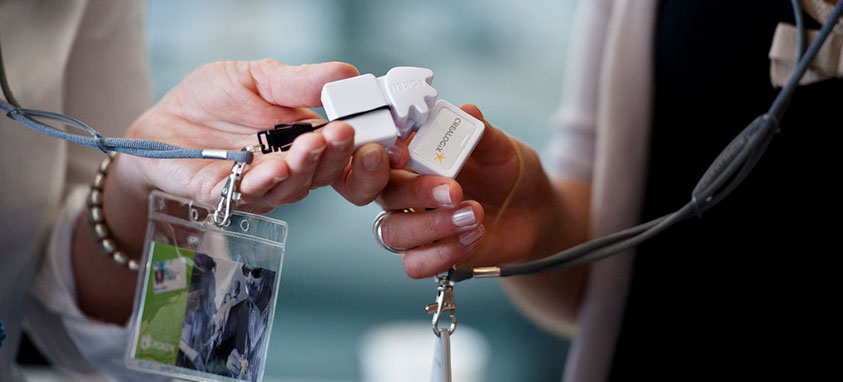
Poken, a long-time partner at Smart Meeting events, offers a cloud-based service used to increase engagement and improve data analytics by combining digital and physical event spaces. The product is used at trade shows and exhibitions as well as sporting, youth, corporate and association events. The flexible platform provides registration, name badges, lead generation devices, access control, meeting scheduling, mobile apps, even matchmaking and much more. Attendees can optimize their schedule at an event by using Poken to create a profile which identifies them and matches them with the best potential networking and business opportunities and meeting time slots. Product and service information can also be obtained digitally on the platform.

Another Poken product, Poken 360°, is a unified system of tech tools which supports event engagement through smart badges and digital document collection. The digital collection is created by using a combination of Poken’s “Touch and Glow” technology, gamification, visit-to-visitor engagement and full-metrics reporting. Poken 360° will preserve its name as it joins the N200|GES event intelligence team.

“This acquisition demonstrates our commitment to being the preferred global live events partner offering the most comprehensive breadth of technology and services,” says GES President Steve Moster in a press release. “We know our clients want engagement and concrete metrics from their events. They will benefit from the technology and insight capabilities that Poken and our existing Visit solution offer together.” GES EVP of International, Jason Popp, adds, “The addition of Poken is a game-changer in providing a truly intelligent event for organizers, exhibitors, brands and attendees.”

GES and Poken already have a strategic partnership that enhances measurable technological solutions for event registration, streamlined management and visitor engagement. N200|GES and Poken are furthering the integration to offer greater customer benefits; the addition of Poken will improve GES intelligent event services. The Poken team, along with founder and CEO Stéphane Doutriaux, will merge with the GES team in offices in London, New York City and Laudanne, Switzerland. Currently, Poken’s product and service collection can be purchased independently or as an integrated GES product or service.

Event ROI

Cloud event management software provider Etouches has been acquired by HGGC, a private equity firm. Etouches’ cloud platform makes event planning easier by bringing together all of the many aspects of organizing an event, including  venue sourcing, marketing, registration, logistics. Etouches also allows planners to analyze their event’s performance with data-driven features that provide real-time statistics, measure engagement and analyze return on investment (ROI).

Etouches’ long list of happy customers includes Lufthansa, Dell, IKEA, NPR and many other multinational corporation. The company has won several industry accolades over the years, including being ranked one of the top three global event management software companies by Technavio in 2017. Etouches has also been recognized by several publications as one of the best places to work.

Etouches is a rising star in the event technology sector. Over the past 12 months, the company has served an impressive 46,000 events with a total of 5.8 million registrants

“We are very excited to partner with HGGC as we continue to enhance our offering and capitalize on the large whitespace in the market,” said Oni Chukwu, CEO of etouches. “The HGGC team’s experience in marketing technology gives them a very sophisticated understanding of the opportunity in front of us as enterprises transition from single-point solutions to a suite of solutions that manage the entire event lifecycle.”

“Most people don’t realize that event management is an enormous business expense, accounting for up to 3 percent of total revenue and nearly a quarter of all B2B marketing budgets—approximately $14 billion,” said Farouk Hussein, Principal at HGGC. “Organizations are hungry for a broad solution set that can be used by multiple stakeholders to address all event management needs, as well as a centralized data source that is critical for event analytics. etouches provides that solution, which tracks real-time customer engagement, drives overall lower event costs and increases ROI and productivity.”

event search

Between juggling open tabs on Eventbrite and endlessly scrolling through Yelp events, many have come to view searching for an event as a cumbersome time drain. On the other side of the coin, planners are often concerned about not getting proper exposure and budgeting for overpriced ad space on social media networks.

Google’s new event search feature, which was announced on May 10, aims to make this process more simple and seamless. By using the search engine on the app or mobile site you can search for specific types of events and access a web page of summarized activities.

For instance, if you search for “live music in San Francisco this weekend,” a listing of events fitting the bill will appear instantly. Important information such as event title, time, date and location are all included. And if you don’t find what you’re looking for, there’s a “more events” option. Times can easily be adjusted during the search, filters such as “today” and “next week” can easily be toggled, and there is also an “events near me” feature.

Many of the events are pulled from platforms such as Meetup. But event planners and promotors can easily take advantage of the new service as well. Event pages with only a few events can use Google’s Data Highlighter tool to ensure that their events are included. This feature allows you to tag your event, and Google takes care of the rest by shaping the listing summary appropriately so that it appears on the search results.

Web pages with many events will probably need to create the event snippets themselves. When you opt out of using the Data Highlighter, there is a specific set of rules to follow when posting. Google’s developer guidelines outline the technical and content requirements.

For the event content, all details must be accurately stated and a “non-event,” such as a sale, cannot be depicted as an event. Business hours and short-term promotions or purchase opportunities are not permitted. Lastly, a multi-day event must have the details for each day included. For example, a music festival spanning several days must specify the performances occurring during each one.

As for the technical guidelines, planners should consult their web development team, as the technical guidelines stipulate that each event is required to have a URL and markup on that URL. Additionally, event creators need to follow structured data items, based on those specified by schema.org.

delta self-service bag drop

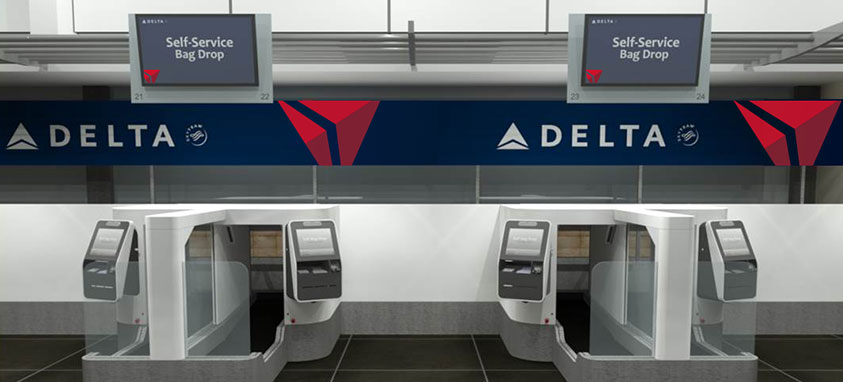
To save precious time at the airport, you’ve already checked in online or used a speedy check-in kiosk. Then…argh! Time slows to a glacial pace as you stand in that long, snaking line to check your bag. There is good news on the horizon: Baggage gridlock may soon be a thing of the past. Delta Airlines is about to begin testing four self-service bag drop machines at St. Paul-Minneapolis International Airport.

The airline says it has invested $600,000 in these machines because studies have shown they can process as many as twice the number of customers per hour.

One machine will be a dramatic first for a U.S. airline. It will use biometric facial recognition to match passengers with their passport photos. This technology is used in security systems and can be compared to other biometrics such as fingerprint or eye iris recognition systems.

“We expect this to save customers time,” said Gareth Joyce, Delta’s senior vice president of airport customer service and cargo. “And, since customers can operate the biometric-based bag drop machine independently, we see a future where Delta agents will be freed up to seek out travelers and deliver more proactive and thoughtful customer service.”

Other Delta tech innovations to enhance customers’ experience include working with the Transportation Security Administration to create the first automated screening lanes in the United States, at Hartsfield-Jackson Atlanta International Airport, and the first app to help pilots avoid turbulence for smoother flights.

The airline will closely monitor customer feedback during the testing of the new self-service bag drops.

Boarding a jetliner is now as easy as stepping in front of a camera. Paperless and deviceless self-boarding is what Jet Blue calls it in announcing that the airline will be the first to partner with U.S. Customs & Border Protection (CBP) to use biometrics and facial recognition technology to verify customers at the gate during boarding.

“CBP looks forward to engaging closely with air travel partners like JetBlue to better understand how CBP’s biometric exit program will support their efforts to streamline the travel process,” said John Wagner, deputy executive assistant commissioner in CBP’s office of field operations.

The test program will start in June on flights from Boston’s Logan International Airport (BOS) to Aruba’s Queen Beatrix International Airport (AUA). Customers can participate without any prior enrollment or registration.

“We hope to learn how we can further reduce friction points in the airport experience, with the boarding process being one of the hardest to solve,” said Joanna Geraghty, JetBlue’s executive vice president of customer experience. “Self-boarding eliminates boarding-pass scanning and manual passport checks. Just look into the camera and you’re on your way.”

A custom-designed camera instantly connects to CBP to match a customer’s image to passport, visa or immigration photos in the CBP database and verify flight details. With a positive match, a screen above the camera then flashes the OK for boarding.

JetBlue will issue iPad minis to crew members, allowing them to monitor and manage the boarding process while interacting with customers.

Self-boarding is the latest of JetBlue’s efforts to reinvent the airport experience. At John F. Kennedy International Airport (JFK) in New York City, JetBlue debuted new interactive kiosks last year that feature self-bag tagging and self-bag drop. Based on positive customer response, JetBlue has since expanded the new lobby design to airports in Boston; Atlanta; Fort Lauderdale-Hollywood, Florida; Newark, New Jersey; and San Juan, Puerto Rico, with more coming later this year.

glastonbury music festival pee power

This year’s Glastonbury Music Festival in Pilton, England, is using urine to power display screens throughout the event. Yes, you heard that right—power from pee.

Bristol Bioenergy Centre (BBiC) at University of West England has developed a technology that can use human urine and convert it into energy. This is not the first time Glastonbury has made use of this technology on its festival grounds, but it will be the first time it will be powering displays that provide important information to attendees.

A special 40-person urinal will be situated near the headline Pyramid Stage and will collect the urine to be turned into electricity. At peak times, it is expected that more than 265 gallons of human urine will flow through the system. Scientists use microbial fuel cells to generate the pee into energy. The fuel cells house bacteria which eat the urine and create biochemical energy as a by-product. Once in this stage, the urine is converted into electricity, offering power to festival-goers.

Glastonbury is a music and performing arts festival located on 900 acres in the Vale of Avalon. It includes pop music, dance music, jazz, theater and poetry. As a festival of massive proportions, more than 1 1/2-mile across and with a perimeter of 8 1/2 miles, sustainability is a top priority for the event crew. Glastonbury participates in many sustainable efforts and continually encourages attendees to do their part to preserve the land.

Not only are they using human urine to power display screens: They also have “compost loos.” After one year, the 1,200 toilets produce a compost that will be brought back to the festival site and used in the permaculture field and other areas. Glastonbury’s sustainability practices take place in small forms, as well, including use of stainless-steel water bottles; only allowing compostable or reusable cutlery; reducing road delivery; and recycling as much as possible.

Glastonbury is proof that enormous events can become a sustainable practice. While it requires the participation of many people, setting the stage for preserving land helps reduce waste from events.

ARKit for planners

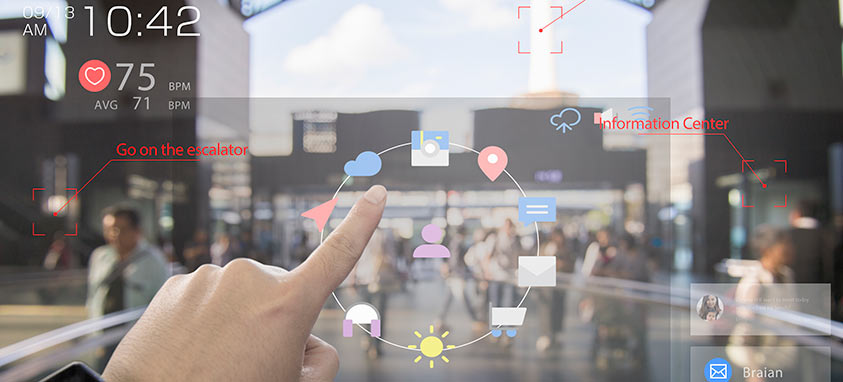
At its annual WWDC event last week, Apple showcased its brand new augmented reality (AR) development tool called ARKit. For most, this is very big, and unexpected, news. Apple’s ARKit uses cameras, processors and motion sensors in iPhones and iPads to establish a new standard for the AR experience. Apple’s iOS 11 tools will facilitate developers in building in-app AR experiences.

From the looks of it, Apple just introduced the largest AR platform in the world. Apple ARKit demos are circulating, but the official release is scheduled for fall. Since its announcement, though, there’s already been a lot of buzz around how different industries will make use of the groundbreaking technology. Considering the various applications of augmented reality, the meetings and events industry will definitely see some benefits. Here’s what planners can look forward to:

Décor and Floor Plans

IKEA’s demo shows how Apple ARKit will support interior decorating, mainly by using Visual Inertial Odometry, a technology that can track an iPad or iPhone’s surroundings. The size and overall set-up of a room is analyzed automatically. This allows ARKit to paint a realistic picture of how items fit into a room.

So how can meeting and event planner take advantage of this? For starters, visualizing a meeting or event space will be much easier and more sophisticated. It will also answer basic configuration questions without the hassle of having to get out the measuring tape.

Virtual Attendance

Attending a meeting or event in real life is always the ideal. However, travel can sometimes be inconvenient, especially for high-profile individuals. Thanks to advanced 360-degree cameras, remote visualizations are going to be extremely realistic. Real-time manipulations and person-to-person interaction will be featured as well. You could even have a speaker appear in hologram form.

Event Games

Augmented reality is going to transform gamification. One example is this enterprising user’s manipulation of Microsoft’s AR headset. Developer Abhishek Singh created a way to play Super Mario Bros. in the real world as an AR experience.

Imagine the enjoyment attendees will get from this kind of interactive play. It doesn’t have to be limited to video games either. An AR scavenger hunt could be a fun option for team-building or ice-breaking games.

Showcasing Products

Volvo has already picked up on the tremendous potential of augmented reality. The car brand is working on technology that would offer virtual car engagement to potential customers. And since there are many product demonstrations at events, especially trade shows, this will certainly be useful. When opting for virtual product demos and displays, event space could be conserved and the burden of transporting large items eliminated—not to mention the high potential for cost cuts.