holoportation-virtual-reality-meetings

These days, virtual reality and teleportation are becoming less science fiction and more science fact. Development of these futuristic technologies has been ramping up, and tech leaders like Facebook’s Mark Zuckerberg have commented on what that may mean for the future of virtual reality tourism, meetings and events.

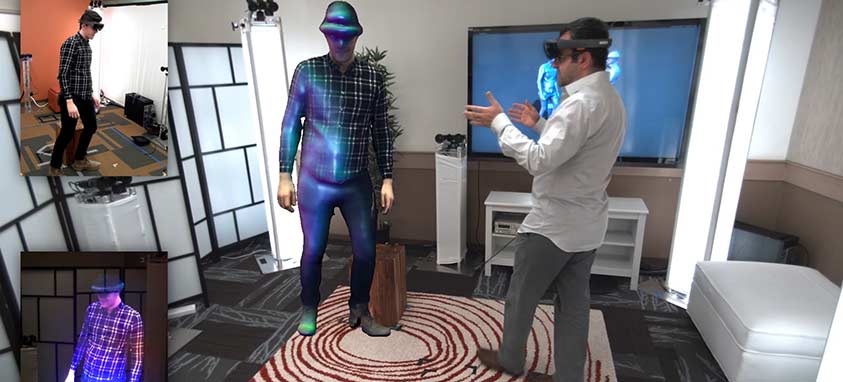
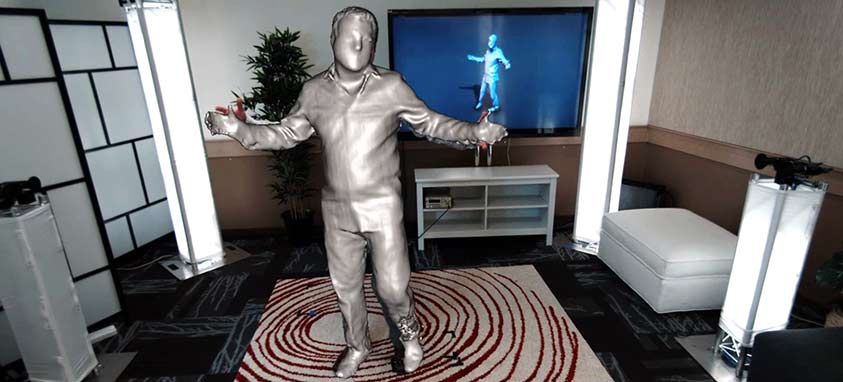
Microsoft is the latest to get involved in this market by presenting its groundbreaking holoportation technology, which the company claims will radically change the way we communicate. According to Microsoft, “holoportation is a new type of 3D capture technology that allows high-quality 3D models of people to be reconstructed, compressed and transmitted anywhere in the world in real time.”

What makes holoportation truly remarkable is that users will be able to see, hear, speak to and interact with each other as if they were in the same room, having a normal face-to-face conversation—even if they are separated by oceans and continents. The technology uses multiple 3D cameras to capture footage of the remote user from different angles. The images are instantaneously combined to create an accurate real-time 3D model of the user. While wearing a headset, the subject’s partner will be able to see the subject as if they were standing in the room with them. In addition to being used for real-time communication, Microsoft’s holoportation technology allows users to replay previous interactions—making Star Wars-type holograms a reality.

holoportation

Although nothing beats a face-to-face meeting, it’s easy to see what this technology can do for meeting planners. People who are unable to attend a seminar, keynote speech or press conference in person will be able to experience it as if it were happening right in front of them. Meeting planners and other business travelers who are constantly on the road can also use the tech to stay connected with headquarters.

Below is a video demonstration of holoportation:

Facebook-Live-Video2

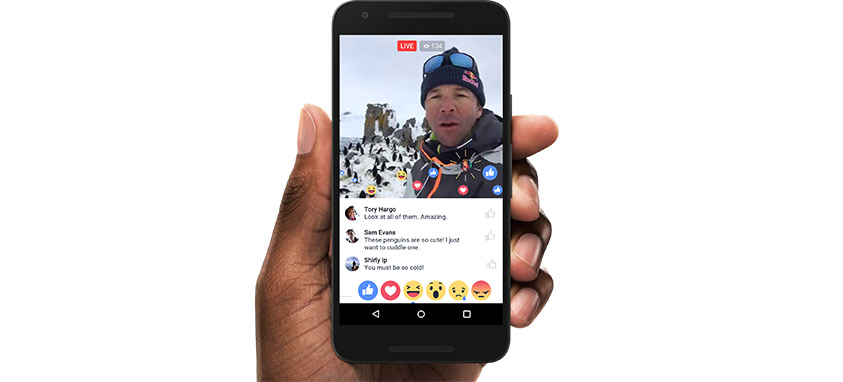
Live streaming is quickly becoming the next big thing in meetings and events, with planners taking full advantage of the benefits of having live video of speeches, activities and even behind-the-scenes goings-on. Facebook recently updated its live video streaming app, Facebook Live, with features that make it even more exciting for planners and attendees. Here are five reasons you should give Facebook Live a try at your next event.

1. Live video boosts engagement for both attendees and those who are missing the event. Live streams are a great way for those not physically at an event to participate. Live video can also improve engagement with attendees, as VIPs can use it to provide teasers for upcoming schedules and a unique glimpse of behind-the-scenes action. Facebook also makes videos available for replay after streams have ended.

2. Facebook Live allows planners to respond to viewers’ reactions and comments in real time. Facebook has added Reactions, which lets users display their feelings through emoticons. Viewers can also make comments, which video casters will be able to read and respond to in real time. For example, speakers can do post-speech Q&As to answer any lingering questions. Organizers can use Reactions to measure engagement and gauge how much attendees are enjoying a panel.

Facebook-Live-Video1

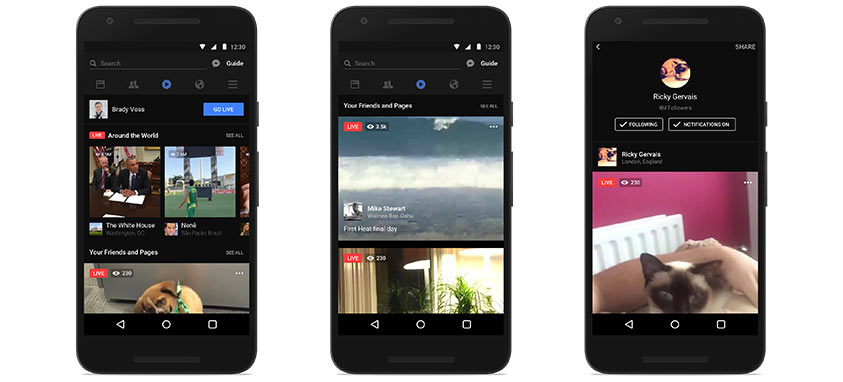
3. New updates to Facebook Live can help you expand your reach and boost event impact by making it easier for potential viewers to discover your videos. In the past, live streams were only available to followers and friends through notifications and News Feed updates. Now, Facebook has made videos much more accessible by creating a page that displays current live streams and allows users to search for live videos.

4. Facebook Live makes it possible to stream live video from just about any device. At Facebook’s F8 global developer conference this week, the company announced that it is releasing an API that will enable third-party developers to integrate Facebook Live streaming into other devices. Previously, Facebook Live could only be used through iOS and Android apps. During his keynote speech, CEO Mark Zuckerberg showed off a DJI drone that streamed the conference live to audiences around the world.

fingerprint system

Japan has always been at the forefront of new technology. Carrying on in that tradition, visitors to Japan will be able to check into hotels and make tax-free purchases at stores and restaurants using a new high tech fingerprint system that the government is launching just in time for the summer tourism boom. It is hoped that the state-of-the-art system will eliminate credit card-related theft and make it safer for tourists, who will not have to carry large amounts of cash with them. Ultimately, Japan hopes to have the system perfected and in place for the 2020 Olympics and Paralympics, which will take place in Tokyo.

How the New Fingerprint System Works

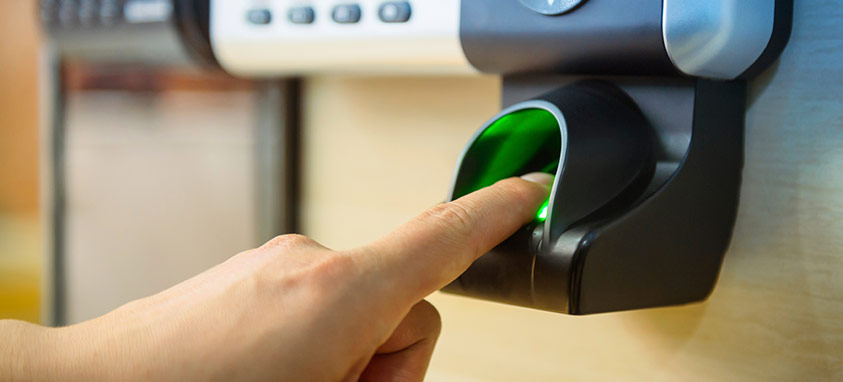
To participate in the voluntary program, tourists would register two fingerprints, as well as their credit card information, upon arrival at Tokyo’s airport. (They would also be able to register at other public verification centers that have not yet been established.) Once in the system, visitors could check into their hotels or make purchases by simply placing two fingers on special readers at facilities participating in the program.

According to Japanese newspaper Yomiuri Shimbun, the system is part of the government’s efforts to increase the annual number of foreign tourists to 40 million by 2020. It is also designed to demonstrate the country’s advanced technology.

Currently 300 souvenir shops, restaurants and hotels in areas popular among foreign tourists such as Hakone, Kamakura, Yugawara in Kanagawa Prefecture and Atami in Shizuoka Prefecture have been selected to participate in the initial launch. If it proves successful, the list will be increased by spring 2017.

The idea of using fingerprints to make purchases is not new, at least in Japan. Last October the Huis Ten Bosch theme park in Sasebo, Nagasaki Prefecture, introduced a system that allows guests to make payments using their fingerprints at about 30 stores and restaurants within the park. In addition to being quick and convenient, the system offers foreign travelers unaccustomed to using yen an attractive option.

The biometric system in place at Huis Ten Bosch was developed by Liquid, a Tokyo-based startup that is expanding the technology to department stores, hotels, fitness clubs and restaurants. An article posted on biometricupdate.com points out that the Liquid system is particularly useful at public bathhouses, beaches and other places where people are typically concerned about their wallets being stolen or lost.

Concerns About New Fingerprint System

Although many believe the Japanese government has touched upon a good idea, not everyone is sold on this new fingerprint system. While Japanese law requires tourists to authenticate their identities by showing their passports when checking into hotels, it is unclear whether foreign visitors will cooperate when it comes to also divulging personal data such as their credit card numbers.

Yet it is true that interest in (and familiarity with) using fingerprints as a method to verify identity and authenticate payment is growing worldwide. Apple Pay, Samsung Pay and Android Pay all allow smartphone owners to link their credit cards to their phones in order to make payments or transactions using a touch ID fingerprint scanners. And Tokyo’s Aeon Bank recently agreed to become the first bank in Japan to institute a fingerprint ATM system.

Perhaps the biggest concern surrounds the security of the data. Yomiuri Shimbun reports that the anonymous data will be managed by a consultative body led by the government. Not everyone is comfortable with that idea. The government wants to assure foreigners that the data will be safely stored in the cloud, and that information garnered from it will be used to improve infrastructure and procedures in preparation for the 2020 Olympics. After carefully analyzing the patterns and spending habits of foreign visitors, the government says it will use the information to devise policies and management strategies for the tourism industry.

supersonic jet

Many bemoaned the demise of the Concorde, which whisked passengers, at twice the speed of sound, from New York to London. The journey took a little more than three hours. Although the futuristic-looking, supersonic jets officially disappeared from the skies in 2003, they may be making a comeback.

Aviator extraordinaire Richard Branson is working with a Colorado startup called Boom to resurrect the supersonic airplanes. The Guardian reports that the new plane would fly at speeds of up to 1,451 mph, reducing the time of a transatlantic flight to 3.5 hours.

Round-trip fare from New York to London would cost approximately $5,000, a relatively reasonable price for business and leisure travelers for whom time is of the essence.

In contrast, in its heyday, seats on the Concorde cost up to $20,000 each.

Boom founder and CEO Blake Scholl believes his airline will be successful precisely because of its affordability. As he told The Guardian, “Concorde was just too expensive to fly, and to fill 100 seats at $20,000 each. You have to bring the ticket price down, and make the airplane the right size so you can fill the seats.”

Design of the Supersonic Jet

As fastcompany.com reports, the Boom will have two rows of 20 seats on either side of the cabin. That means everyone will get a window seat and be able to see the curvature of the earth since the plane will be flying at 60,000 feet, which is 20,000 feet higher than most commercial flights.

Scholl is able to cut the cost of the flight because carbon fiber technology makes the aircraft 30 percent more fuel efficient than the Concorde was.

While promising, the Boom is not yet ready for takeoff. Testing is projected for late 2017. Nevertheless, Branson’s Virgin Group has optioned the rights to buy the first 10 Booms. Eventually, the plane is expected to make regular scheduled flights from New York to London; San Francisco to Tokyo; and Los Angeles to Sydney.

For Scholl, the motivation for the invention was deeply personal. “I started this because I was sad that I never got to fly on Concorde,” he told the Guardian. His ultimate goal is to get people “anywhere in the world, in five hours, for $100.”

That’s an idea that will surely fly with meeting planners!

disney meetings

In a move designed to entice meeting planners, in June all Walt Disney convention resorts in the United States will begin offering budget-friendly, high-capacity Wi-Fi and hard-wired services for groups.

Disney announced the new services at its Awaken Summer event in Orlando last week. The services, which will be available in all meeting rooms and exhibit halls, will maximize the time attendees can spend at a meeting or convention by enabling them to use their digital device to stream video, share content and connect socially—all at no or low cost, depending on the options selected by the planner. The services also will provide dedicated connectivity to keynote speakers and presenters.

This new offering supplements the standard Wi-Fi currently available in guest rooms and common areas at Walt Disney World Resort in Orlando; Disneyland Resort in Anaheim, California; and Aulani, a Disney Resort and Spa in Kapolei, Hawaii.

An advanced technological offering also will be available at Shanghai Disney Resort, set to open June 16. Rather than providing MagicBand bracelets that facilitate access to parks and purchase of ride tickets, food and souvenirs, guests will be able to use their smartphones to perform the same functions at the new resort.

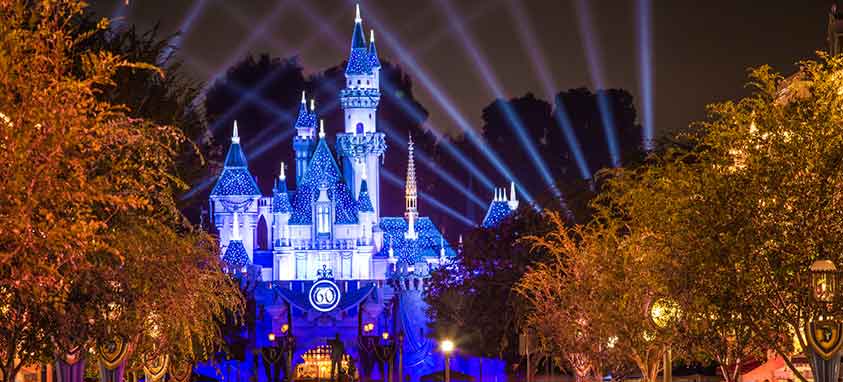
Shanghai Disney Resort  will include Disney’s 12th theme park, Shanghai Disneyland, which will feature Disney’s largest castle, Star Wars Launch Bay, Tron Lightcycle Power Run roller coaster, Roaring Rapids raft ride and Treasure Cove, an innovative new ride system for the Pirates of the Caribbean attraction.

Another top attraction, Soarin’ the World, will make its world debut at Shanghai Disneyland. Guests will be able to “fly” above some of the world’s most breathtaking sites, including The Great Wall of China, the Matterhorn in Switzerland and Sydney Harbor in Australia.

The property will feature two hotels: Shanghai Disneyland Hotel, with 420 guest rooms, and Toy Story Hotel, with 800 guest rooms.

lawrence_Coburn_doubledutch_CEO vista & cvent

DoubleDutch CEO Lawrence Coburn shares his thoughts about Cvent’s acquisition by Vista Equity Partners in a blog post.

Vista’s pending acquisition of Cvent is an important milestone in the evolution of event technology, and the largest event technology transaction in history. It’s a clear bet by some very savvy investors – Vista Equity Partners – on the event technology category. And the fact that Vista paid nearly a 70% premium on the public market’s price shows the strength of their conviction.

It also feels a bit like the end of an era. Is event registration officially dead as a driver and center of gravity for event technology innovation? It may be. Not many companies acquired by PE prioritize technology innovation.

After taking a few days to reflect, here are some of my initial reactions:

1. Respect. Congratulations to Reggie and the Cvent team. Their survival of the first dot-com crash is the stuff of legend, and it’s hard not to admire an entrepreneur who is able to guide his company to such a substantial exit over such a long period of time. Any entrepreneur knows that it’s a grind. And these guys have been grinding for 17 years. Respect. Silicon Valley could learn a thing or two from this crew.

2. The Boldness of the Bet. Vista is a serious group, with serious technology investment chops. The stunning premium they paid to acquire a direct competitor of their own fairly recently assembled portfolio company – Lanyon – is nothing if not bold. Clearly they are believers that technology is going to reinvent the biggest marketing spend in the world. We agree with them.

3. Segmentation? Combining Lanyon and Cvent under one owner (regardless of the company structure that shakes out) presents some interesting opportunities for segmentation in how the combined entity thinks about the market for event technology. Lanyon is quite strong at large events. Cvent is very strong at meetings. In one fell swoop, each company’s primary competitor has been eliminated, clearing lots of white space for each. This should eventually pay back their investors due to increased pricing leverage. I’m not as bullish about the impact on customers, whether they be event owners or hoteliers.

4. Mergers are very hard. It’s still unclear if Cvent and Lanyon will be merged, but you have to expect that this is the eventual play. I’ve been through several mergers, and there will certainly be a period of paralysis for both companies. People will be worrying about their job security as Vista runs their playbook of eliminating duplication, and seeking efficiencies. Cultural differences and geographic differences will need to be overcome. And a longstanding and intense rivalry will need to be put to rest. As I said, these things are hard, and the combined entity will face substantial execution challenges for the immediate future. Can the combined company continue to serve their customers at a high level during the transition? If history is a guide, it will be a challenge.

5. Farewell, innovation? Part of me is quite sad about this news, particularly around the potential negative impact on innovation in event registration. The typical (though in fairness, not universal) Vista playbook is well known, and Lanyon can probably attest. They buy an asset, typically one that they view as underperforming. They eliminate duplication, slash R&D, optimize for financial performance, and raise debt to pay for the deal. It’s financial engineering at a major league, world class level, as few other firms are capable of. Don’t get me wrong – these guys are respected operators, and they run their playbook extremely well. But technology innovation is not typically part of the equation, which means that two of the most formidable technology companies in the world of events now face a future guided by financial engineering, not technology innovation. This is a loss for the industry.

It’s clear that I am far from an unbiased observer. I am the CEO of DoubleDutch, a growth stage startup in event tech. We have a horse in this race.

And we do not believe that now is the time to stop innovating. For the first time, the infrastructure and ecosystem is at a point where digital principles and methodologies can be applied to a physical world event. Event engagement can be tied to business outcomes, and real-life signals can be digitized and quantified.

If there is a silver lining here, it’s that the window is wide open for more modern entrants like DoubleDutch to gain momentum, taking advantage of the innovation void within the market leaders. Companies where technology innovation, and not financial engineering, is still the primary reason we exist. And there are hundreds of us, digitizing workflows and experiences, engaging attendees and exhibitors, and starting to make real progress in instrumenting the ecosystem.

Cvent and Lanyon have done a marvelous job digitizing what was previously a painful event manager workflow, and connecting event planners to vendors. But the real fun starts now, and a much larger prize awaits the companies that can truly bring the power of digital to an analog world.
gaylord-opryland meeting industry trade shows

Memorial Weekend is upon us, which means the major meeting industry trade shows are just around the corner.

IBTM America will convene in one of the hottest meeting cities on the planet June 15−17, when Gaylord Opryland Resort & Convention Center in Nashville hosts Reed Travel Exhibitions’ U.S. business travel event. The resort boasts 600,000 sq. ft. of meeting space, which is divided among 152 rooms.

The Nashville trade show will feature expansive learning opportunities, including an area that will offer live tech demonstrations by some of the leading event suppliers. TechCollective is a partnership between IBTM America and Dahlia+ and will feature more than a half dozen suppliers such as  Meetoo, a live polling app, and event-planning software provider EventCollab.

“Technology is one of the fastest growing sectors in the meetings and events industry right now, and at IBTM events we believe that start-ups are the wave of the future,” says Jaime McAuley, event director for IBTM America. “We aim to always have a spot for these companies at our events, and the TechCollective is the newest opportunity we have created for our emerging tech suppliers to not only show the industry what they can do, but gain support and exposure from us.”

Season of Meeting Industry Trade Shows

Meeting Professionals International (MPI) World Education Congress (WEC) has been moved up in the calendar to avoid the heart of the convention season in August. The 2016 event will take place June 11−14 at Harrah’s Atlantic City Waterfront Conference Center in New Jersey. The new venue, which opened last September, is expected to help Atlantic City develop its meetings and events industry.

DMAI Annual Convention is Aug. 1−4 at Minneapolis Convention Center, which always draws quantity and quality convention and visitors bureau representatives. CVBs are our best friends!

One of the best parties of the year everywhere it’s held, ASAE Annual Meeting & Exposition is scheduled for Aug. 13−16 at Salt Palace in Salt Lake City.

Smart Meetings loves meeting industry trade shows. We hope to see you this summer.

etouches-acquires-zentila

Cloud event management software company Etouches announced today their acquisition of enterprise software company Zentila, which provides venue sourcing and booking for corporate and third-party meeting and event planners. The acquisition will significantly expand etouches’ mission of providing clients with smart event planning solutions.

Zentila’s award-winning platform streamlines the process of sourcing and booking venues and capturing data to increase meeting ROI. In addition to handling requests for proposals for venues, Zentila provides several tools to help planners get meetings booked, including an interactive bid summary and a targeted online advertising model.

Etouches’ end-to-end software assists with registration, mobile apps, event marketing, onsite, logistics, event data and ROI. The software has assisted over 20,000 event professionals in planning and executing their events.

“Our clients are in constant communication with the hospitality market, adding Zentila to our offer will further strengthen that bond and meet our clients’ expectations,” said Oni Chukwu, CEO of etouches, in a statement.

Zentila CEO Mike Mason will join etouches as Vice President, Sourcing and Hospitality Solutions.

Just last month, etouches announced it had closed $20 million in growth funding from new and existing investors, which helped accelerate its global growth. At the time of the announcement, Chukwu stated that the company would continue to put significant investments towards their product, new innovations, and personnel. This new acquisition undoubtedly has done just that.

event-tech android instant apps

Every meeting planner knows that one of the biggest challenges with event apps is getting attendees to download them. Some users are reluctant to download an app that they’ll only use for a few days and others are worried about using too much storage space on their phone.

But what if meeting and event attendees didn’t have to download an event app to use it? What if they could simply click a link and get the full app experience without having to visit an app store or download anything? Google is making that possible.

At its annual developer conference, Google I/O, held May 18–20 in Mountain View, California, the tech giant announced an exciting new feature, Android Instant Apps, that lets users experience an app without having to install it. Here’s how it works: Users click on a URL, which opens an Android app instead of a web page, even if the user doesn’t have that app on their device. Because it is a small, temporary download, Android Instant Apps opens just as quickly as webpages do. In spite of this, users get full app functionality. If they like what they see, they can press a button in the corner to download the app.

It’s not only easy for consumers to use: Google is also helping developers by making it easy to implement Android Instant Apps. If you have already created your event app, there’s no need to build a separate application to get this feature; all you need to do is update your existing Android app. It’s a small change that makes a big difference for meeting and events.

How exactly will this change affect events? Of course, Instant Apps makes it incredibly simple for planners to promote an event app just by sharing a URL. Most importantly, it eliminates the need for attendees to download the app. By removing this barrier to entry, planners should see an increase in app usage, participation, engagement and even downloads.

pod-hotel

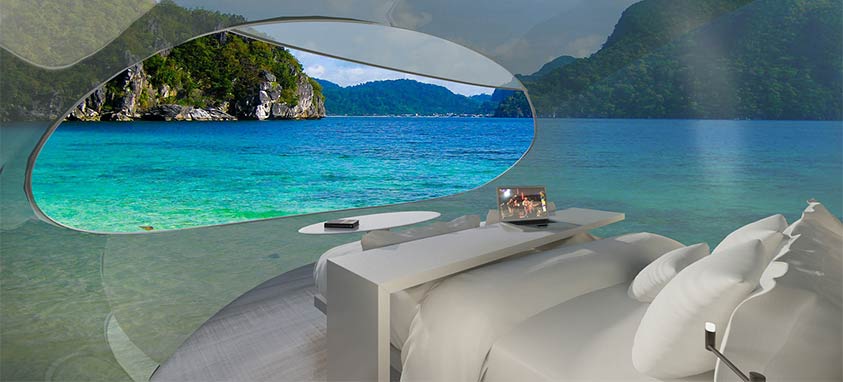
HOK, a global design, architecture and engineering firm, envisions the hotel room of the future as a flying pod powered by drone technology that can disconnect from a stationary hub in order to allow guests to explore the outside world. The fanciful concept, christened Driftscape, would allow hotel guests to fly over the Great Wall of China or zoom through the fjords of Norway while safely ensconced in their glass-enclosed rooms.

As Leanna Garfield of Tech Insider notes, Driftscape is a finalist for this year’s prestigious Radical Innovation Award, beating out nearly 50 other hotel design submissions from around the world. The decision will be announced October 5.

Driftscape Details

pod-hotel1

At this point, Driftscape is just a concept because drone technology is not sophisticated or powerful enough to build an actual prototype. However, pundits believe that Driftscape could become commercially viable in the not-too-distant future.

HOK designers envision a core hotel with a main lobby, bar, lounge and restaurant. Surrounding it would be 10-15 200-square-foot mobile pods (called driftcraft) that would connect to the stationary hub. Each glass-enclosed pod would hold two adults, a queen-size bed, a desk and a private bathroom. For larger families or groups, several pods could be attached together.

When they want to go out exploring, the guest would develop a flight plan in partnership with a hotel staff member. At take off, the driftcraft would separate from the hotel hub and the unit’s artificial intelligence system would automatically guide the flight, allowing the guest to just enjoy the trip. A camera mounted on the pod could record the journey.

At the conclusion, the pod would return to the hub where it would reconnect. Driftcraft would be specially designed to leave a light carbon footprint on sensitive environments.

If it gets off the ground, Driftscape holds great possibilities for planners interested in out-of-this-world meetings.