corbin-ball-QAOn Nov. 10, technology expert Corbin Ball presented a Smart Meetings webinar where he discussed the explosive growth of the Internet of things. He talked about how technology is changing the meetings and event industry, and provided tips on recent trends and applications. His articles have appeared in hundreds of national and international publications, he has been quoted in The Wall Street Journal, The New York Times and USA Today, and he has been named one of “The 25 Most Influential People in the Meetings Industry” four times by industry publications. The webinar was sponsored by Aria.

To hear an archived transcript of the presentation, click here.

Since Ball did not have the opportunity to answer all the questions posed from the audience during the webinar, he is happy to provide those answers below.

corbin-ball-circle-shot Corbin Ball
General Manager
Corbin Ball Associates


Sponsored By

aria-resorts

Q&A

 I’ve been hearing that mobile apps for educational meetings are causing more problems than they are helpful. What’s the best way to determine if a mobile app is going to be successful at your event? 

I think there can be a case to use an app for nearly any event. They reduce paper, increase engagement and can provide new ways of connecting never before possible. The challenge can be to find the best fit, as the quality, features and ease of use vary considerably. Nearly everyone is carrying around a smartphone. One way to narrow it down is to ask your peers what apps they like.

Besides mobile apps for participants, what other technology or apps can you recommend for planners?

The list is nearly endless. See www.corbinball.com/bookmarks for a start.


Register for Our Next Webinar on Advanced Hotel Contracts Now


Is the iBeacon technology you talked about tied into the mobile app?

In most cases it is. There are, however, standalone wearable beacons such as www.loopd.com and www.limefy.com

Any suggestions on getting a slow-to-change-with-the-times company to adopt mobile apps?

A cost/benefit analysis can oftentimes do the trick. Stress the reduced printing costs and increased engagement. Also, look at smartphone adoption statistics (90% of business travelers are carrying around smartphones. Also, by the end of this decade, millennials will be the largest segment of the work force. They are mobile natives.)

Any tips on how to get attendees more engaged with using your mobile app at events?

A key step is to advertise before and during the event. Let them know the benefits. Also, depending on the event, gamification/mobile contests/social media amplification can increase usage.

Is there pricing on the wearable beacons?

Yes. This ranges from about $10/person-$40/person (with the pricing coming down)

What technology is needed to use a heatmap for an event? Is it only beacon technology, or is there other software that need to be involved?

There are several methods, but beacons tied to mobile event apps seem to be the most promising. This is still in its infancy, but one of the most developed products is: http://www.sherpa-solutions.com/

With so much data available, do you see any developments on protecting people’s data/mobile security with mobile devices?

Yes. It will be a constant battle between the good and bad forces. Hackers will continue to get more sophisticated, but so will the protection programs.  We are increasingly carrying around large amounts of personal data. I see that biometrics will be used in the future to help protect.
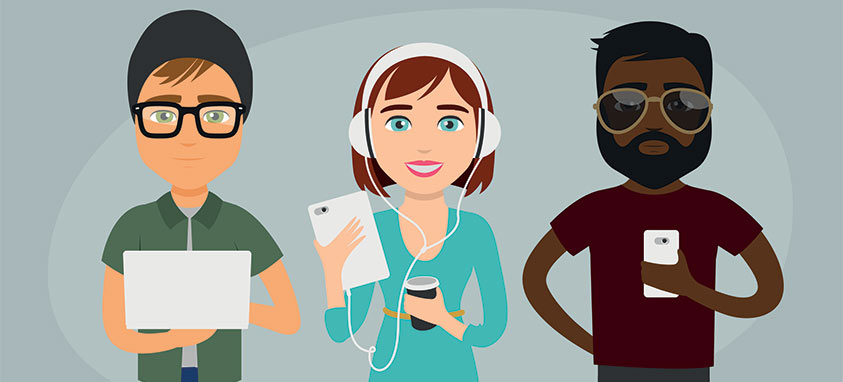
Top Technology Stories

Technology leapfrogged perhaps every other topic in 2015. From wearables and helpful gadgets to drones to holograms, technology stories were everywhere—including the pages of Smart Meetings magazine! Here are the 15 most interesting tech stories we ran in 2015, divided into four categories: General Tech, Tech Business Tools for Planners, Tech to Make Meetings Easier and Travel Tech.

General Tech Topics

leverage-technology-to-engage-millennials

Leveraging Technology to Engage Millennials

Millennials—people between the ages of 18 and 34—are different from Generation X (ages 35–50) and baby boomers (ages 51–69) in how they think about and utilize technology. They grew up with the Internet, social media, smartphones and texting, and technology is integral to their lives. Here’s how meeting planners can make their events more millennial-friendly in order to capture this important demographic group.

wearable-tech

Wearable Tech: Dressed for Success

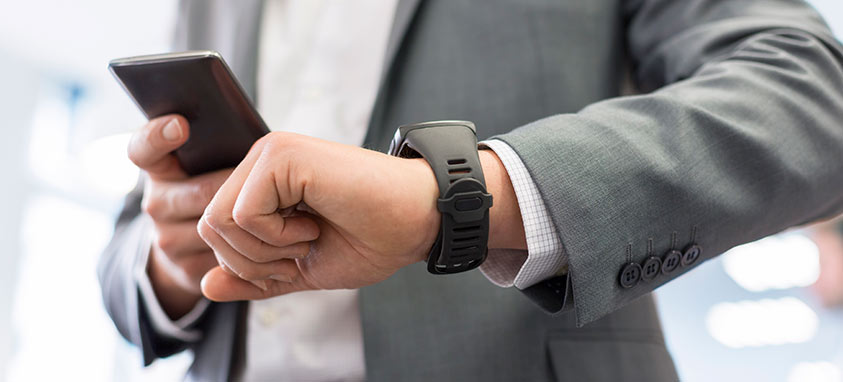
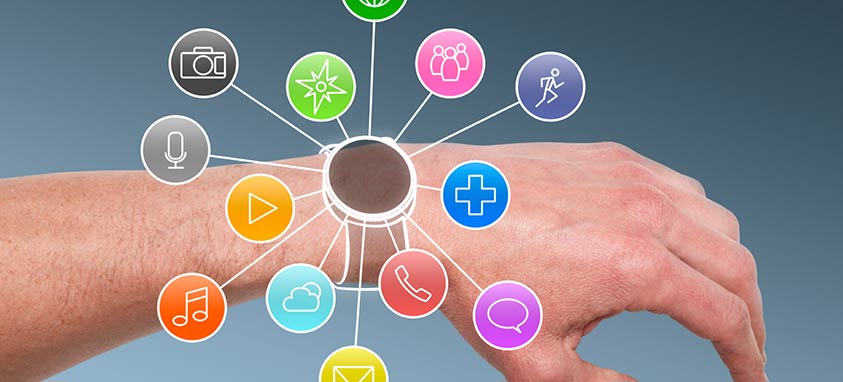
Attendees today are checking their watches not just for the time, but for texts, emails, directions and messages. Wearables are not only found on wrists, but are arriving in the form of glasses that add information to your environment and clothing that tracks fitness. Even flight crews are donning smart wearables embedded with LEDs that display gate information and can illuminate the cabin in the event of an emergency.

linked-in-tech

Gift Ideas for Techies

A laser projection device that can turn any flat surface into a keyboard, or flash drives that are hidden inside shiny silver cufflinks? Those are just two clever gift ideas that will make tech-crazy attendees and VIPs at your next event smile. Most importantly, they’ll help attendees remember you and your event.

Tech Business Tools For Planners

Low Cost Tech Tools

14 Great Low-Cost Tech Tools for Planners

Beth Ziesenis, an author, public speaker and technology guru, illuminates which program can instantly transform company data into a professional quality infographic, or what free app can help schedule a virtual meeting time convenient for workers scattered across the globe. Here are 14 of her favorite free or low-cost tech tools.

Share & Share Alike

The Sharing Economy

Companies such as Uber, Airbnb and Task Rabbit have taken the consumer world by storm, and the wave is slowly making its way to the B2B marketplace. Here are 6 sharing economy sites that  event planners should know about.

Karma Wifi

Gadgets for Planners On-the-Go

From meetings with clients to property site inspections, busy event planners are constantly rushing from airports to hotels to conference centers. Liz King, founder of founder of TechsyTalk and PlannerTech, illuminates five gadgets that she believes are essential to remain productive while on-the-go.

Tech to Make Meetings Easier

HumaGram

Human Holograms

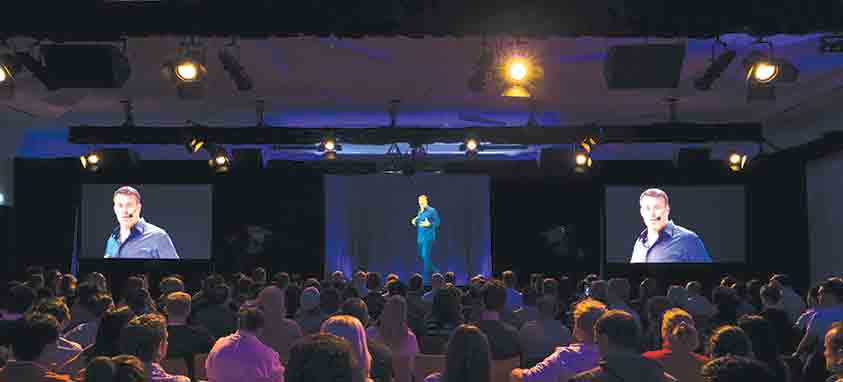
Technology can now beam full-body, 3-D images of people across the world, in real time. Human holograms enable companies to invite high-profile speakers to meetings without the cost or time involved in flying them to the destination. The technology also permits corporate CEOs to simultaneously address groups in different locations. In airports, human-looking holograms can stand for 24 hours, telling passengers how to proceed through security in a variety of languages.

maximizing-meetings-technology

Tips to Maximize Meeting Technology

From video mapping and custom Wi-Fi branding to SocialWalls, hotel experts offer practical tips to maximize meeting technology.

Technology and Meetings

Meeting Rooms of the Future

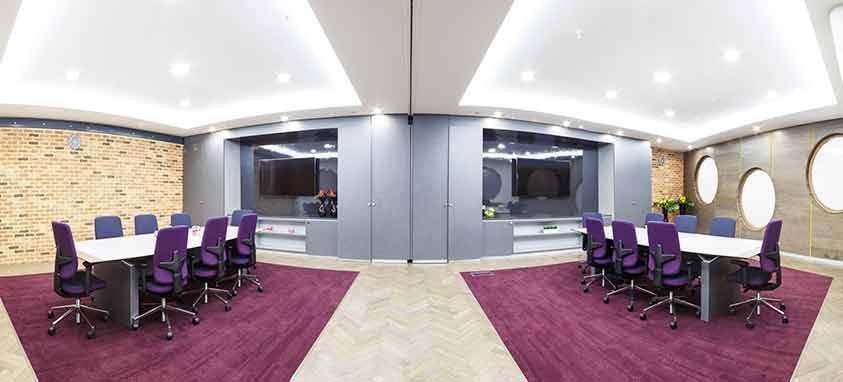
The typical meeting space has changed very little over the past few decades, however new technology will help make meetings more immersive and interactive. Here are seven ways tech will shape the meeting rooms of the future.

wearable technology

Incorporate Wearable Tech at Your Event

Wearable devices that include an event app can bring excitement and buzz, as well as improved functionality, to your event. Learn more in this article.

Travel & Hotel Tech

Long-Haul Flights

Tech Tips for Frequent Fliers

Busy event professionals spend hours in airports and on planes. From noise cancelling headphones to apps you can fiddle with on the flight, here are six ideas to help you tolerate a long-haul flight.

mobile-tech

Mobile Tech Changes the Face of Business Travel

Mobile tech has had a profound impact on business travel, according a recent study by the Global Business Travel Association. Wi-Fi and apps aid productivity while on-the-road.

hotel-irvine-technology

Hotels Embrace Technology

In our tech-centric world, upgrading technology is just as important to hotels as renovating guest rooms and meeting space. From portable charging stations and touch screen electronic reader boards in lobbies to increased outlets and USB ports in guest rooms, hotels are on it.

lighting-technology

Shining a Light on Lighting Technology

Lighting tech is moving at the speed of light, and the future is bright for hotels and meeting venues that want lighting that will lead guests directly to their rooms, and turn themselves off when they sense that participants have left a meeting room.

Minibars are going high tech

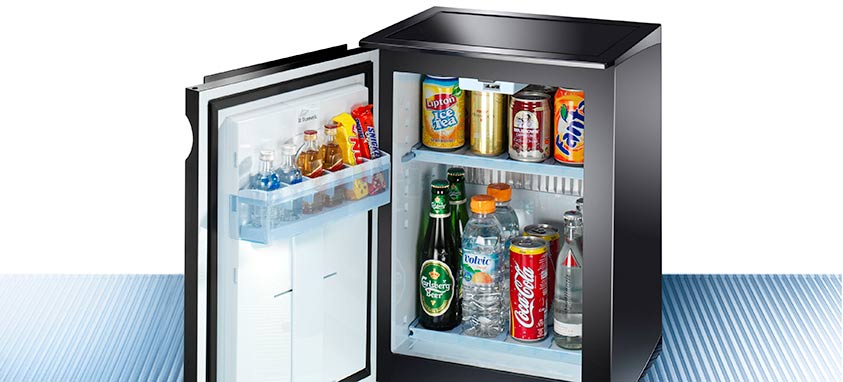
Minibars are Going High-Tech

Automated minibars in hotel guest rooms can now digitally monitor guest consumption and track product movement, providing detailed reports that optimize the restocking process for hotels.

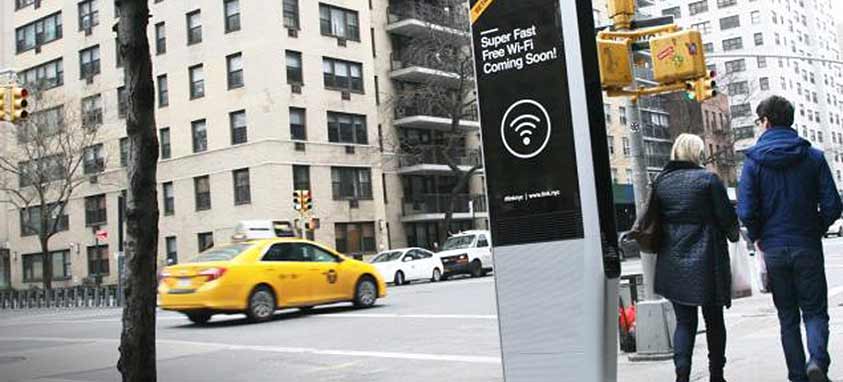
wi-fi-kioskNo one uses pay phones anymore due to the proliferation of cell phones. In an innovative project, New York City is converting obsolete pay phone booths into powerful, multi-purpose Wi-Fi  kiosks that passersby can use to charge their cell phones, browse the web, get maps or directions, contact emergency services or make free phone calls to anywhere in the United States.
The project, named LinkNYC, was developed by the City of New York and CityBridge, a consortium of technology and media companies that have invested $200 million into the idea. The project is expected to bring in $500 million, primarily via advertising displayed on 55-inch electronic screens located on either side of the kiosks.

The first two kiosks will debut next week on 3rd Avenue. LinkNYC hopes to unveil 500 of kiosks by July. Ultimately, the goal is to have 7,500 of them scattered throughout Manhattan, the Bronx, Queens, Brooklyn and Staten Island. Since it is estimated that 11,000 pay phone booths still stand in the Big Apple, the project could grow even larger.

Lightning Fast Wi-Fi

The nearly 10-feet-tall gray kiosks will act as hot spots, delivering lightning fast broadband speeds of 1,000 megabits per second. To put that in context, the Wi-Fi will run more than 100 times faster than the typical speeds provided by wireless carriers. Hundreds of individuals within an approximately 200-foot radius of the towers will be able to access the Wi-Fi at the same time. To protect privacy, users can join a private, encrypted network and can clear their sessions after using the kiosk.

Android tablets mounted within the system will allow users to make phone calls and browse the Internet using the touchscreen technology. USB ports will enable them to charge their portable devices.

medical-pharmaceutical-meetingsDoubleDutch and American Express Meetings & Events have partnered to create a new app aimed at medical and pharmaceutical meetings. HCP Mobile Connect was designed to be a key tool in assisting pharmaceutical companies meet complex compliance regulations when hosting health care providers (HCP) at events.
The app is powered by DoubleDutch technology. It will allow those hosting meetings to accurately confirm and register attendance. It’s also features international customization to provide local languages and legal messaging.

“Pharmaceutical companies are facing increasingly complex obligations from a regulatory and compliance perspective, both within the United States and internationally,” said Issa Jouaneh, senior vice president and general manager of American Express Meetings & Events. “With this in mind, we offer a suite of services for the health care industry to assist in providing full visibility of meetings and events attendees and associated spending.”

Jouaneh points out that health care industry meetings and events vary greatly in size from large international conventions to lunches and dinners. The goal of the app is to help provide transparency on attendance records and deliver value to those who are required to keep track of this information in order to remain compliant.

“The events industry is witnessing a digital and mobile revolution, with solutions such as DoubleDutch designed to digitize the offline experience and bring more data and insight to help event organizers track, measure and optimize their events,” said Lawrence Coburn, founder and CEO of DoubleDutch.

DoubleDutch has become quite the player and partner of meetings industry elite. Last month, it was announced that Freeman Digital Ventures has invested in the San Francisco-based mobile event technology provider through a new division. The partnership calls for Freeman’s customers to integrate the company’s online exhibitor interface with the new DoubleDutch for Exhibitors product. This integration will allow event exhibitors and sponsors to launch digital campaigns that can target the best attendees for what they are selling.

personal-digital-devices-in-meetingsLong before actor Jennifer Lawrence scolded a member of the foreign press for using a smartphone during a Golden Globes interview, there was buzz about personal device etiquette. Should meeting attendees feel free to use their personal digital devices during meetings or is it just plain rude?
Device or no device? According to a survey conducted by IMEX America in conjunction with Meeting Professionals International, 40 percent of those surveyed agreed with the following proposition:

To maximize attention, delegates should be banned from using personal devices during conference sessions and meetings: they should be told to switch them off and put them away before the meeting starts.

The IMEX Group survey was part of MPI’s quarterly Meetings Outlook research last fall. With pressures and habits to respond immediately to emails, Carina Bauer, CEO of the IMEX Group, suggests that event leaders and speakers show flexibility and limit distractions.

“Perhaps a more sensible approach is to give delegates space and time within every event to check and respond to important messages, so that they can be fully focused on the content when actually in a session,” Bauer says. “Ultimately, the investment of time and money in attending an event should hopefully ensure that delegates want to stay focused on the content, as much as they wish to keep up to date with their emails.”

According to Francesca Gino, a professor at Harvard Business School, multitasking is overrated, with tasks taking 50 percent longer to complete when juggling several agendas. Of course, some speakers and event coordinators are using various tools to capitalize on our addictions to personal devices, so a ban is highly unlikely and downright impossible.

“There are a number of apps, such as audience response apps (Sli.do), or even apps that turn your phone into a microphone (crowd mics) that make mobile devices a genuinely useful part of the meeting session or event  when used in the way that the speaker or organizer intends,” Bauer says. “And, the harsh reality in a business context is that, in practice, it would often be very difficult to implement a ban that sticks.”

Device or no device? Maybe this discussion should really be about the impact of multitasking and how to maintain focus in a digital age.

The convention space at Disney World Swan and Dolphin Hotel
(Photo courtesy Walt Disney World Swan and Dolphin Hotel)

The Walt Disney World Swan and Dolphin Hotel is one of the first convention hotels in the country to introduce high-density Wi-Fi technology in its convention space, which is capable of providing more than 15,000 users with fast and reliable internet service.

Event internet service provider XpoNet installed the system after the technology was successfully tested among some of the world’s leading technology groups. A full back-up system employs the use of multiple internet providers so any outages from one particular provider will go unnoticed by users.

“Streaming broadcasts of keynote speeches, video conferencing and multiple personal internet devices used by every attendee has made the need for a fast and smooth internet an absolute must among today’s meeting planners,” said Gino Marasco, director of sales and marketing for Walt Disney World Swan and Dolphin Hotel.

High-density environments are most often found in convention centers, auditoriums, hotel meeting rooms, concert halls, and other venues where hundreds to thousands of people are accessing the internet on a wide range of devices. The capacity and throughput requirements of high-density wireless environments demand a more intelligent solution to traditional thin AP networks. A more flexible solution is needed that can scale to support hundreds or thousands of simultaneous users and wireless devices.

Walt Disney World Swan and Dolphin Hotel’s adoption of Xponet’s Wi-Fi solution makes it largest convention hotel in Florida to offer the technology.

“We introduced high-density Wi-Fi to get out in front of the industry so that we can provide planners with the latest and best available,” said Marasco.

Located in the heart of Walt Disney World Resort, the hotel offers 2,267 guest rooms and over 329,000 sq. ft. of meeting space, including 84 meeting rooms—two of which are executive ballrooms—and 110,500 sq. ft. of contiguous convention space.

The Gartner Symposium—an annual expo that brings together CIOs and IT executives—was the first group to test the new technology, when they convened at Walt Disney World Swan and Dolphin Hotel at the end of 2015.

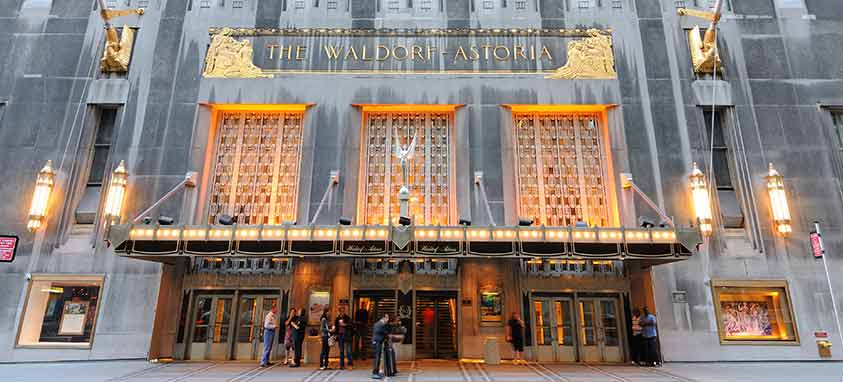
waldorf-astoria-nyc-hotels-go-greenNYC hotels are uniting in a pledge to go green. The New York Times reports that 17 properties, representing a combined total of more than 11,000 guest rooms, have joined the NYC Carbon Challenge, a program launched in 2007 by former Mayor Michael R. Bloomberg to reduce greenhouse gas emissions. Participants include high profile properties such as Waldorf Astoria New YorkGrand Hyatt New York1 Hotel Central Park, Loews Regency New York, The Westin New York at Times Square and the Peninsula New York, all of which are committed to trimming greenhouse gas emissions by at least 30 percent over the next decade.
New York’s Go Green initiative originated with city universities, followed by hospitals, commercial office buildings and multifamily residences. In late 2015, current Mayor Bill de Blasio announced that hotels would join the crusade. The ambitious goal is to reduce citywide greenhouse emissions 80 percent by 2050.

According to Nilda Mesa, director of the Mayor’s Office of Sustainability, buildings are responsible for nearly 75 percent of greenhouse gas emissions in the Big Apple. Getting the cooperation of the hospitality industry could help reduce emissions by more than 32,000 metric tons and save $25 million in energy operating costs.

To gain support, Mesa’s office worked with the Hotel Association of New York City, a trade group that represents 275 hotels in the city. The association hopes to encourage more hotels to join the program.

NYC Hotels Make Strides

According to the New York Times, many of the hotels that signed on to the Challenge are actively meeting sustainability goals.

The Grand Hyatt New York, which has 1,306 guest rooms, is spending $150,000 to install 16,000 LED bulbs in guest rooms and public areas. The work should be completed by late March. It has also invested $150,000 in exhaust controls for its four kitchens, and is sinking $2.3 million on a new building management system to control air-conditioning and heat. Combined, the three projects are expected to reduce Grand Hyatt’s carbon emissions by 2,400 metric tons annually.

The Peninsula New York, which has 235 guest rooms, is spending a quarter of a million dollars to install LED lighting throughout the hotel. The conversion should be complete by the end of 2017. It is also investing $1.1 million in eight new more energy-efficient elevators.

The 1,415-guest room Waldorf Astoria New York will begin a facelift within the next 18-24 months. The restoration will include more energy-efficient windows. The hotel has already cut its emissions by 20 percent since 2005 by switching to biodegradable packaging materials, among other initiatives.

Likewise, The Westin New York at Times Square completed a three-year renovation late last year that emphasized energy conservation. All 873 guest rooms were retrofitted with low-flow showerheads, and old boilers and coolers were replaced with more energy-efficient units. The property will be retrofitted with LED bulbs, and sensors designed to switch off lights after 30 minutes of inactivity will be installed in bathrooms.

And although 1 Hotel Central Park, members of the sustainability-driven boutique brand 1 Hotels, already had LED lights, an energy-conserving air-conditioning system, recycled materials and a fleet of electric house cars manufactured by Tesla, the Challenge encouraged it to hone in on their boiler. Upon investigation, they discovered that powering it with natural gas instead of diesel fuel could reduce the hotel’s emissions 27 percent, a goal they are currently pursuing.

uber-for-business

Uber can be a great tool to get planners and business travelers to meetings on time. With Uber now available in 69 countries around the world, business travelers can use it nearly anywhere their meetings take them. The company has announced a new feature that will make it much easier to keep track of the costs of your rides.

Late last year, Uber launched Business Profiles, which allows business travelers to keep work trips and personal trips separate. Just two months after launch, nearly 1 million riders had signed up for it. Now Uber is looking to offer even greater convenience to business riders with the announcement of a powerful new feature: Auto-Expense. Similar to competitor Lyft’s partnership with Concur, Auto-Expense streamlines expensing by linking Uber with leading expense management companies.

Created in cooperation with Concur, Expensify, Certify and Chrome River, Uber’s Auto-Expense makes it easier than ever for business travelers to file expense reports. Users must first sign up for Business Profiles before activating Auto-Expense. Then, each time a user takes a ride using their Business Profile, a copy of the receipt will automatically be sent for reimbursement. Riders will no longer have to waste time organizing receipts and manually filing them. With Auto-Expense, you’ll save time and won’t have to worry about lost receipts.

Barry Padgett, chief product officer at Concur, says, “We pay close attention to the behavior and needs of our 32 million end users around the world—and take steps to provide the best customer experience. Our integration with Uber is an example of this as we saw business travelers using Uber grow by 220 percent from 2014 to 2015. That’s a lot of receipts. We’re pleased to continue our partnership with Uber to make reimbursement of rides a simple experience for Concur customers globally.”

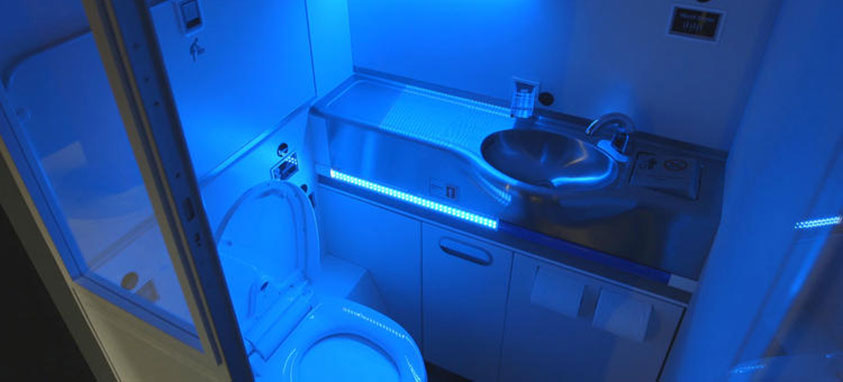
boeing's-self-cleaning-lavatoryFor frequent fliers, one of the least pleasant aspects of travel is using the airplane lavatory, especially as it grows progressively grimier throughout the course of a long flight. Boeing has developed a prototype bathroom that can clean itself after each use, thanks to a three-second zap of ultraviolet (UV) light that reportedly destroys 99.99 percent of all surface bacteria, viruses and germs

The technology utilizes the power of far UV light, which Boeing engineers point out differs from the UV A or B light found in tanning beds or grow lights, or the harmful UV rays responsible for sunburns and skin cancer. Boeing engineers and designers have added touchless components such as faucets, soap dispensers, trash flaps, trash cans, hand dryers and door latches to their pathogen-free lavatory of the future. The prototype sink faucet even features a separate UV system built into the tip so one could safely brush their teeth with the traditionally non-potable water dispensed from it. A vacuum vent system will clean up the bathroom floor, and the system reportedly eliminates all odors.

Boeing has filed for a patent on its revolutionary concept; which is one of three finalists being considered for an international Crystal Cabin Award to be announced April 5 in Hamburg, Germany. If Boeing chooses to move forward with the cutting edge technology, the germ-free lavatories could be installed on new as well as existing aircraft.

During the three-second cleaning cycle, which occurs when the lavatory is unoccupied, blue-tinged UV lights sanitize the sink, countertop and toilet seat, which is automatically be lifted so that both sides can be cleaned. Boeing stresses that its system is not designed to replace regularly scheduled deep cleanings by airlines; rather, the primary purpose is to keep the restroom fresh and pristine while in flight.

Below is a video of Boeing’s self-cleaning lavatory:

The Lavatory is Actually Not as Germy as You Might Think

Although they have a bad reputation, airplane bathrooms are actually more hygienic than they may appear. Travelmath.com dug up the dirt on the dirtiest place on an airplane. While the common supposition is that the most germs lurk in the toilet, a microbiologist found that not to be true. Travelmath had a microbiologist take samples from four airplanes and calculate the number of Colony Forming Units (CFUs) per square inch on various surfaces. The company then ranked them in terms of bacteria count.

The tray table was the filthiest. It contained an average of 2,155 germ colonies per square inch; almost 10 times more than the flush button on the plane’s toilet, which measured 265 CFU/sq. inch. The overhead air vent had 285 CFU/sq. inch, while the seatbelt buckle weighed in at 230 CPU/sq. inch. In comparison, the average kitchen counter contains 361 CFU/sq. inch and the average home toilet seat has 172 CFU/sq. inch.

hospitality trendsSavioke’s Relay robot

From smartphones to self-driving cars, new technology is improving nearly every aspect of our lives. Thus, it’s no surprise that the hospitality industry is also making the most of the latest innovations. Every day, cutting-edge technology is being developed that can simplify planners’ lives, enhance guest experiences and even virtually transport us to distant destinations.

wearable-tech

Sensory data: According to a panel of experts, sensory analytics will be the next great tool for improving attendee experience. Using wearable tech to track guests’ reactions to temperature, noise levels, lighting and even air quality makes it possible for planners to adjust these factors in real-time to maximize attendee engagement and enjoyment, as well as overall meeting productivity.

Hilton-robot-concierge

Artificial intelligence and automation: You might not realize it, but a robot revolution is taking place in hotels and resorts from California to Virginia. Rising start-up Savioke has already introduced its robot butler to several leading hotel brands, including Marriott International and Starwood Hotels and Resorts. The robot is used to deliver small items such as toiletries and snacks to guest rooms. Hilton has also developed its own robot concierge, powered by artificial intelligence technology from IBM’s Watson.

Smartphone room keys and check-ins: The days of lost and demagnetized keycards may soon be behind us. Major hotel brands such as Starwood and Hilton Hotels & Resorts are leading the charge by offering keyless entry and digital check-in options. The response from planners has been overwhelmingly positive, with many welcoming these smoother, more streamlined processes.

renaissance-midtown-ny

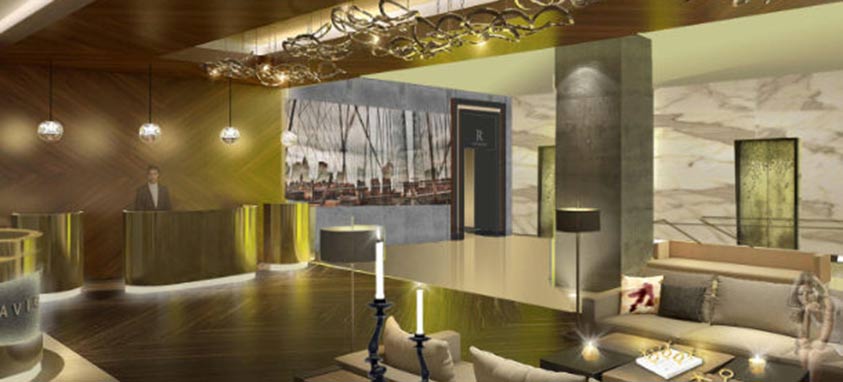
Digitally enhanced hotels: New York City’s first “living building” is Renaissance New York Midtown Hotel, where each visit is different from the last. The hotel’s corridors, which showcase local art on digital displays, continually change in response to visitors’ movement. A futuristic virtual concierge system allows guests to explore nearby points of interest with just a tap.

Virtual reality: Whether it’s for leisure travel or corporate meetings, virtual reality is set to revolutionize the way we see the world. As Facebook CEO Mark Zuckerberg said, “Imagine holding a group meeting or event anywhere in the world.” The rise of virtual reality technology could completely revolutionize the way we hold events, making meeting planning easier than ever.