Social media continues to be one of the greatest marketing tools. From your company to yourself, social media allows not only for promotional materials, but the ability to track how well that promo is performing. But even before you can get there, you need an audience and followers to track how they’re interacting with your accounts and content.

With all these different avenues, and some new apps that cater to niche markets, it can be difficult to pinpoint what strategies are the most effective to help you grow your following. If you want a better ROI on your posts, follow these six social media marketing strategies.

1. Set Goals

This may seem obvious, but it’s easy to get caught up in the content you want to create and post rather than the goals you have for the accounts in the first place. Instead, be SMART. Or, in other words, have your content or goals be Specific, Measurable, Achievable, Relevant, and Time-bound or Timely.

For example, let’s say you set a goal to gain 50 followers on Instagram in a month. This is specific because of the parameters you have set. You’re measuring your success by whether you gain that many followers in the time allotted. Looking at data from previous months will be a helpful indicator if this goal is realistic or not. Being SMART is one of the easiest ways to get organized and on track to gain more followers and can be applied to any platform.

2. ME: Metrics & Engagement

Social media can be used to entertain, inform, and publicize, but most importantly it’s meant to allow people and brands to be social. This means you should be avidly interacting with your audience. Not only does this show that the account is active, but it also sheds a layer between you and the person or people, making for a more personal experience on both ends.

Now that you’re active, you have content to track. As mentioned, social media is so dynamic and useful because of the ability to monitor engagement. Having a good grip on your analytics lets you see what is working and what isn’t. In turn, you can push out content or replies that get better engagement rates so you can appeal to and rack in new followers.

3. You Feat. Influencers

A great way to garner publicity and keep content fresh is to bring in influencers or prominent figures of the industry. This also plays into name recognition, which helps grow a following. To help with this is an app called Tribe. It allows you to connect with influencers at scale.

4. Different Platform = Different Types of Content

Although there are a lot of cross-platform opportunities, some content types are better suited for specific platforms.

Facebook is good for longer posts, but also for archiving event photos that your audience can engage by liking and commenting. Twitter is one of the best platforms for direct communication; most social platforms offer direct messaging, but Twitter allows a person or brand to have conversation threads out in the open, offering more publicity or simply answering the questions of others. Instagram is great for photosets, individual photos, and short-form videos. Your best asset when it comes to Instagram is your ability to make someone feel like they are missing out on something. Understanding what belongs where is one of the best ways to maximize your content and have followers pour into each account.

More: 5 Steps to Gain More Instagram Followers

5. Content Scheduling

There are more ways than ever to schedule your content. Queuing content not only lessens the workload but allows for consistency. And being consistent ties back in with being active for your existing and new followers to see.

One of the biggest drop-offs in terms of followers and engagement is when content is sparse or sporadic. There are several social media management tools, but two free options are Hootsuite and Buffer.

6. Bang for Your Buck Advertising

Last, but certainly not least, social media has become so valuable because of all the advertising opportunities, which includes paid for ads. Paid advertisements on social are beneficial through your ability to choose which demographics see the ad, and then you can also see things like the click-through rate (CTR) and other types of engagement.

Test promotions regularly to see which helps you gain the most followers. It is recommended that you abide by an 80/20 split, with 80 percent of your content focused on providing value and 20 percent promotional. That way, your audience, and those you’re bringing in, won’t feel inundated with sales-driven content.

This post was selected as one of the top digital marketing articles of the week by UpCity, a B2B ratings and review company for digital marketing agencies and other marketing service providers.
With the scariest holiday of the year coming up, go beyond bat window decals and witch’s hats at your next Halloween-inspired event. Host it instead in one of the country’s creepiest venues: a mortuary-turned-restaurant. That’s right—eat, drink, entertain and…um, be merry…in a building that once housed countless dead bodies. Ghosts are not guaranteed, but these venues are sure to send a chill down guests’ spines even if the event has a “must be breathing” entrance policy.

The Pine Box, Seattle

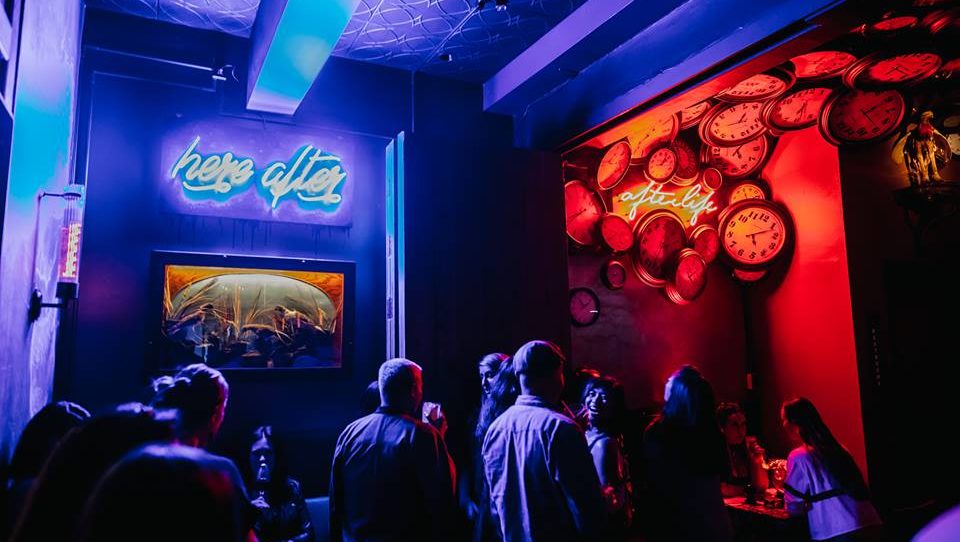
The Pine Box is a bar and restaurant run out of a building built in 1923 for E.R. Butterworth & Sons Family Funeral Business. The main restaurant area was once the mortuary’s chapel, and the bar (and many of the venue’s tables) are repurposed oak coffin cabinets. The venue has multiple spaces available for private events, from a mezzanine to a beer garden, so you can be joined by as many of your attendees as are willing to get in the Halloween spirit (we think it just might be all of them!)

Linger, Denver

Photo credit: Linger

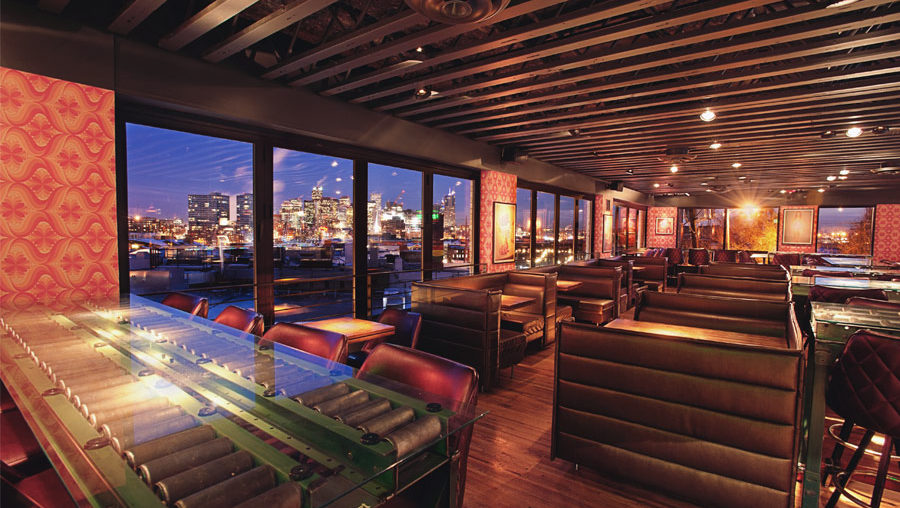
Whether the owners at Linger named their restaurant in a sly nod to Olinger Mortuary, the building’s previous tenant, or because something else is lingering in the building (ahem, ghosts?), we’re not sure. However, chances are your guests will want to take their time at Linger. With a menu offering a mashup of cuisines—think Boa Buns, BBQ Ribs, Potato Masala Dosa, Taiwanese Snow Ice and Watermelon Gazpacho—and a venue with a drop-dead history, your guests will have plenty to take in. Just make sure no one gets too comfy—many a previous “guest” never left alive.

Curio, San Francisco

Photo credit: Curio

Curio in San Francisco prides itself on celebrating the, well, curious. Not only was the restaurant once a mortuary, the current owners draw inspiration from the building’s past life to create an eclectic and mystical vibe. This is evident throughout the many event spaces that can hold from 20 to more than 500 people—and these are perfect places for a spin-tingling October event. Bonus: You won’t even need to decorate!

Phoenix Brewing Company, Mansfield, Ohio

Photo credit: Phoenix Brewing

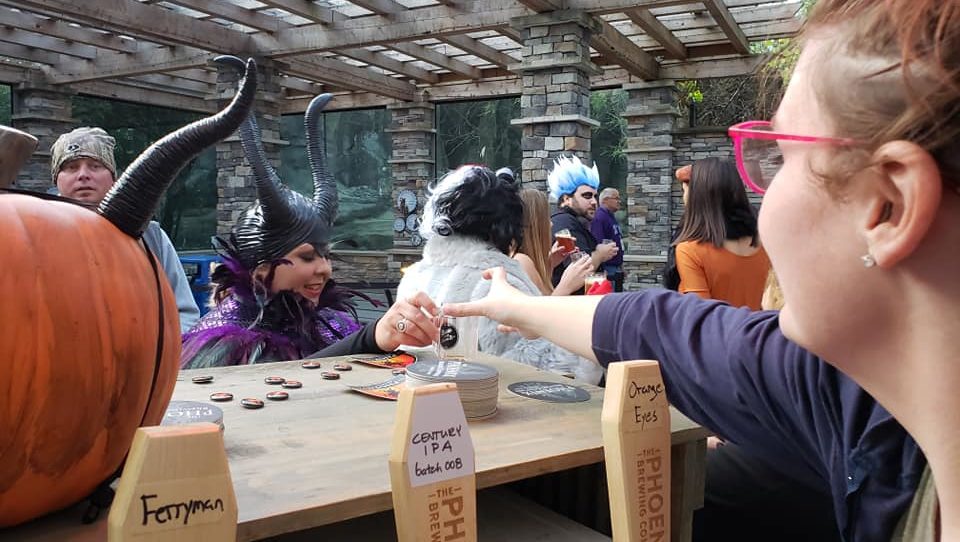
Phoenix Brewing Company brings together two of the most important things October has to offer: beer (Oktoberfest, ja?) and spookiness. This mortuary-turned-brewery, taproom and event space has much more than beer and old caskets, however. It doesn’t serve food, so cater it yourself or take advantage of food trucks available seasonally.

Brewery Vivant, Grand Rapids, Michigan

Photo credit: Brewery Vivant

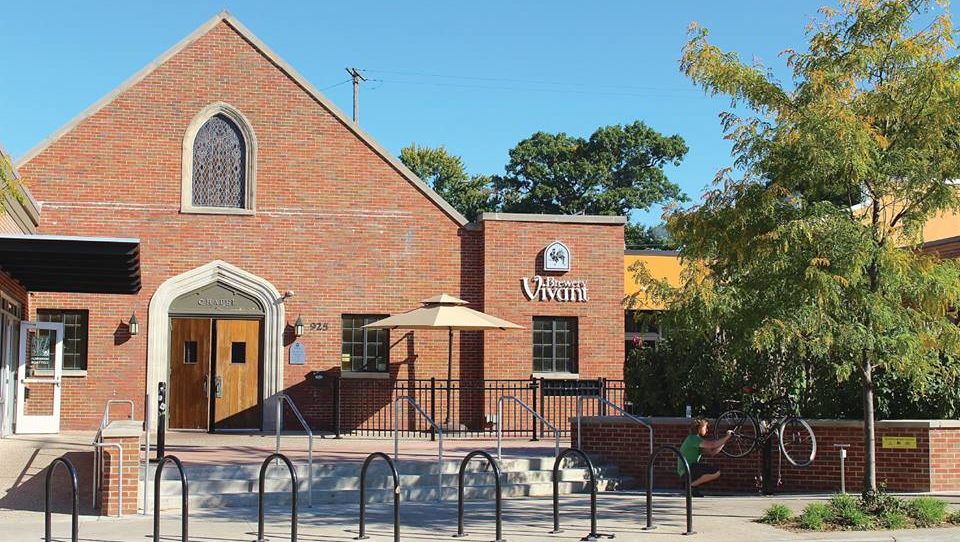
Brewery Vivant has three things to offer your guests this month: suds, sustainability and scary vibes. This LEED-certified microbrewery is housed in what was once—you guessed it—a mortuary. The current brewery lies in what used to be the mortuary’s chapel, but you can be sure that the space is much livelier now than it once was. While Vivant doesn’t typically do reservations, they can accommodate private events. Despite being a great place for one of America’s biggest holidays, the brewery has an international feel—it was inspired by a trip to France and Belgium and boasts sustainable, small-scale, practices inspired by the micro-breweries the founders encountered in Europe.

Elements of the famed Japanese omotenashi hospitality, traditional philosophy, authentic culture, and innovative spirit can be felt throughout all regions of Japan, imbued in everything from accommodations to cuisine. Here are 6 of the most sought after experiences within easy access that you can incorporate into your next program that will inspire new ideas to foster the ultimate team building outcome.

1 . Take in Japan’s Otherworldly Landscapes by Luxury Train

Known for high-speed bullet trains, Japan can also slow it down a notch with its fleet of luxury trains such as the Twilight Express and Seven Stars, which arguably provides the best experience the rails have to offer. With luxurious Japanese style interiors, complete with all the trimmings of Western amenities – even private bathtubs – comfortably ride and take in Japan’s scenic coasts and landscapes, stopping at key sightseeing spots and indulging in unsurpassed dining experiences.

2. Experience Omotenashi and stay in a Ryokan

The Ryokan is potentially the oldest form of hotel in the world, dating back to the 8th century. These accommodations are imbued with Japanese tradition, making staying at one a memorable and cultural experience. Take your Ryokan experience to the next level with a night to remember on the floating Guntu or Asaba Ryokan on the breathtaking Izu Peninsula.

3. Experience a Japanese Fish Market & Sushi Making

Japan is filled with fish markets, and from the famed bustling Tokyo Tsukiji Market to the charming local Takamatsu Market, situated on the idyllic island of Shikoku, options are endless. Let a guide take you through the premise and learn about its history, witness exhilarating auctions, and taste fresh sashimi and even dabble at making your own sushi with the best teachers and ingredients at the world famous Tsukiji market.

4. Aunthenic Geiko and Teahouse experience in Historic Kanazawa

Host an unforgettable evening at Kaikaro, a Michellin-starred teahouse in the heart of the historical Higashi Chaya-Gai district of the Kanazawa. A geiko will welcome you into their world as you embark on a night filled with traditional entertainment and party games. Immersing in Japanese traditions is the perfect catalyst for team building.

5. World Heritage Koyasan: introduction to Buddhist culture and rituals

Koyasan (Mount Koya) was founded 1200 years ago as a place for Buddhist meditation. Just over an hour drive from Kansai International Airport, here you can experience meditation and shakyo (handwriting Sutras), enjoy Shojin Ryori (Buddhist-developed vegetarian cuisine), and reach zen and revive your energy via “Forest therapy” surrounded by serene wilderness.

Visit the Japan National Tourism Organization’s website to learn more about the New Ideas Start Here Campaign, and for inspirational itineraries that can heighten your programs.

U.S. Department of State officials could soon be rejoining United Nations’ World Tourism Organization (UNWTO), the leading international tourism organization in the field of tourism.

The UNWTO said in a statement Tuesday that meetings with the United States have been productive, as terms are being finalized. During a UNWTO executive council meeting in June, the United States expressed interest in rejoining the organization, stating that it has the potential to fuel U.S. tourism, create new jobs for Americans and showcase the United States’ long list of travel destinations.

This could be a positive move for tourism in the United States, which has seen a slowdown since 2016, partially attributed to the “Trump slump.” In 2017, the United States had the third-most international long-haul flights, behind Europe and Asia Pacific, and saw only a 0.1 percent increase from the prior year, compared to Europe as well as the Middle East and Africa region, which saw 13.3 and 11.5 percent increases, respectively, according to Forward Keys, a “big data” and business intelligence company.

In 2018, international arrivals to the United States rose 2 percent, but Europe and Asia Pacific increased 6 percent and the Middle East rose 10 percent. By rejoining the UNWTO, the United States could see an increase in international foot traffic.

“It is extremely encouraging that the United States has clearly signaled its intention to rejoin UNWTO and support tourism as a key driver of job creation, investments and entrepreneurship, and safeguarding natural and cultural heritage the world over,” said Zurab Pololikashili, UNWTO secretary general, in the statement issued today.

The UNWTO promotes tourism as a driver of economic growth, inclusive development and environmental sustainability, and offers leadership and support in advancing knowledge and tourism policies worldwide.

A study conducted by Expedia in July 2019 surveyed over 1,200 hoteliers to compare spending on technology between chain hotels and small independent properties. They found chain hotels nearly twice as willing to spend on tech investments as independents, with complexity of integration cited as the group’s foremost reservation about tech spending. Such properties favored directing funds to room renovations instead.

“We’re witnessing chain hotels place significant investments in technology, which opens the potential for a greater divide between properties that are not able to match those investments” observed Ait Voncke, senior vice president for Expedia Group.

Tech-Forward Benefits

Telecommunications company Mitel shared a list of top communication technology trends in hospitality, with overarching tendencies including mobile guest options, service automation, tech-enabled meetings spaces and “social listening”—engaging with platforms to monitor and interact with authentic guest feedback.

Streamlining simple services such as check-in for guests is a surefire way to increase satisfaction, provided tech is well-integrated and intuitive. The clear tool for centralizing guest experiences is, of course, the mobile phone, making a well-designed app prospective for everything from loyalty program access to keyless room entry.

With more options to customize your experience via your devices, free Wi-Fi is no longer a boon—sitewide, high-speed internet is an absolute requirement. Mitel listed expanding bandwidth capacity as a necessity to support everything from personal devices to multi-tool presentations.

On the same note, keen hoteliers are updating their offerings of communal, tech-integrated gathering areas. Guests want options to work, connect and meet outside of their rooms. Venues that offer stylish semi-private and communal spaces with updated tech capabilities and curated creature comforts to boot may be a requirement in the future.

Keeping the Humanity in Hospitality

Given the numerous advantages inherent in tech solutions, from simplifying operations to enhancing guest experience, does Expedia’s study spell trouble for independent hotels that aren’t investing in advancements?

Maybe, maybe not. Another Expedia study found a 72 percent likelihood that guests value hotels with high-rated guest reviews over brand, signaling that value and consumer ratings are still the first point of interception when booking. While guests may come to expect efficiencies such as digital check-in, friendly service and stellar upkeep are still the prevailing factors in positive reviews.

“In general, technology should be giving hoteliers more opportunities to be hoteliers and show their guests hospitality,” says Shayne Paddock, vice president of product development and innovation for TravelClick. At least for the present, technological additions are game-changers only to the extent that they boost capacity to focus on the interactions that matter most.

Every industry comes with unpredictability and uncertainty, but the meetings and events space continues to see positive growth every day. This is reflected by AMEX M&E’s 2020 Global Meetings and Events Forecast. The survey of meeting professionals predicted bigger budgets in the industry, a shift in demand for experiences over logistics, increased policy compliance adoption and an optimistic outlook on tech.

1. Bigger Budgets

The report projected an increase in spending on events around the world. Although a modest increase, North America could see a 1.6 percent increase in spend. Central and South America lead the way, though, with a projected increase of 2.6 percent. And while total meeting spend is predicted to increase across all regions next year, Asia pacific will see the most modest increase at a mere 1.3 percent.

More: CWT Meetings & Events Project 8% Growth

Overall meeting spend is predicted to increase by 2.1 percent, and cost per attendee per day is expected to increase by 1.9 percent for incentives and special events. When asked about a hypothetical budget increase, 30 percent of those surveyed said they’d focus on improving the onsite experience, up 5 percent from 2018.

2. Experiences > Logistics

It’s no secret that experiences are trending across the board in the meetings industry. Another report found that young travelers and attendees are traveling not to escape, but to gather experiences and perspectives. It’s projected that next year 54.5 percent of meeting planners will prioritize attendee experience instead of logistics. Planners are aware of the changing landscape, and those surveyed for the report indicated that hands-on experiences would be prioritized over logistical elements to drive better engagement.

3. Policy Compliance Adoption

Two out of three organizations have implemented formal approval processes. The report reported how this will only increase. Essentially, meetings management policies will become increasingly robust next year, and compliance levels are predicted to reach 85 percent across regions. After years of promoting policy compliance to protect data, it is actually being implemented at a steady rate and will be done globally.

While attendee engagement is valued globally, in Europe meeting professionals face specific challenges relating to the General Data Protection Regulation, GDPR, and the political instability caused by Brexit.  Planners must be mindful of “how” they deliver an event experience while remaining GDPR compliant. Safety, security and preferred suppliers are the components most likely to have explicit language in meetings management policies. And in a time with GDPR, planners are addressing growing compliance and data privacy demands in their policy updates.

4. Optimistic Tech Outlook

Technology and technological advancements in every industry continue to increase and won’t be going away anytime soon. Planners are integrating different tools that in turn mirror how attendees interact with tech in their daily lives, all in hopes to foster memorable event experiences. Earlier this year, Ashley Case, director of client services, meetings and incentives at Cadence in San Diego said, “Whether you’re using event tech for data management, personal preference tracking, appointments and personalized agendas, decrease conference check-in lines, event security, live polling, social networking, gamification and engagement, surveys, or any other fabulous functionality, it is a win!”

Related: Tech Conferences That Wow Attendees

In North America, 59 percent of the meeting planner respondents are optimistic about their ability to incorporate tech to enhance the attendee experience. Central and South America are the most optimistic about planners’ abilities to incorporate tech to enhance meeting experiences, which was reported at 82 percent. Survey respondents in the regions are predicting a stable year for the meetings and events industry, and this is the only region where projected budget increases could match the expected rate increases.

Marriott International provided a boost to planners and other meeting professionals last week by announcing the launch of Marriott Bonvoy Events.

If you’re familiar with Marriott’s Meetings Imagined, the new platform builds off that concept. Marriott Bonvoy Events provides planners with detailed information about the brand’s portfolio of more than 5,700 participating properties.

The platform may also foster inspiration for planners. Articles will be provided on topics such as industry developments, and tips and trends from meeting experts. The experts will also share success stories, destination highlights and promotions from hotels around the world.

The site also touches on other aspects of planning to help the workload of event professionals. An interactive map feature allows planners to easily conduct a filtered search to find the perfect hotel to host an event. Acting as a dynamic resource for planners, the site will provide hotel details such as number of guest rooms, total meeting space, largest meeting space and floor plans, and facilitate submission of RFPs for participating hotels.

“With the launch of Marriott Bonvoy Events, planners can easily navigate the depth and breadth of the Marriott International portfolio to select the property that best fits their meeting or event needs,” said Tammy Routh, senior vice president of global sales at Marriott International. “The website was designed to offer the facts and figures our clients need alongside inspiration to execute dynamic events, all in one user-friendly experience.”

The platform’s Points Calculator enables meeting professionals to estimate the number of Marriott Bonvoy points earned for each meeting or event held at participating hotels. Marriott Bonvoy Events takes the resources of Meetings Imagined and heightens the value of the platform that could make any meeting or event professional’s life easier.

Making your way to an event can be stressful. One of the most stressful things can be making sure you get there on time­—sometimes, this is out of your control. United Airlines knows this, so they’ve created a tool to alleviate some of that traveling stress. Although the airline has had some mishaps in the past, they took a step in the right direction when they created ConnectionSaver this past summer.

In a press release on June 10, Toby Enqvist, chief customer officer at United said, “ConnectionSaver only works if it allows us to care for as many customers as possible—without inconveniencing others—and that’s exactly what this technology has shown it can do. We’re determined to capitalize on as many opportunities as possible to better serve and care for our customers and that’s part of what sets United apart from our competitors.”

Through advanced technology, flights are automatically scanned for customers who are making tight connections to determine whether a flight can be held or not. Now, this is done along with ensuring already-boarded passengers arrive at their destination on time. ConnectionSaver also sends every connecting customer (who opted to receive text notifications) directions to the gate of the connecting flight and an estimated time of arrival to the gate. According to USA Today, flights held were delayed an average of six minutes.

Anika Gupta, United’s vice president of domestic network planning, has said that United has saved the connections of roughly 40,000 travelers thus far. Initially, the tool was pushed out through Denver International Airport (DEN) and Chicago O’Hare International Airport (ORD), two of United’s busiest hubs. ConnectionSaver tech is set to expand to United’s other hubs this fall.

Millennials want to change business travel. The norm of having meetings from 9­­ a.m. to 5 p.m., followed by other work obligations that flow deep into the night, for example, is being rejected by the generation born between 1984–1996. These young professionals expect more flexibility and free time to explore the city they’re visiting.

These insights were among the findings of a recent study by Hilton Hotels & Resorts, in a follow-up to one conducted last year that found that business travel is seen as a major perk by 74 percent of millennials. This year’s study went a step further and looked at what millennials seek when traveling on the company’s dime.

RelatedTo Draw Millennial Attendees, Pick a Tech-Savvy Hotel

Of the many findings, one of the most significant was discovery that, despite their desire to work in social environments, 84 percent of respondents prefer to spend their evenings of free time alone, rather than with colleagues; 74 percent reported having a better overall experience when spending free time alone.

What millennials like doing during time alone varied, with most preferring to experience local restaurants (69 percent). Other favored solo activities included:

  • Exploring the city/neighborhood (59 percent)
  • Sleeping or relaxing (56 percent)
  • Enjoying happy hour (38 percent)
  • Working out (35 percent)
  • Experiencing the lobby/hotel bar (32 percent)

“We’ve all had over-scheduled business trips, and the result is pure exhaustion. We applaud this next generation of travelers for highlighting a tension point many of us have dealt with for years,” said Vera Manoukian, senior vice president and global head for Hilton Hotels & Resorts.

MoreGenerational Differences Can Be an Asset in the Workplace

In-person interactions still reign supreme, as 81 percent of those surveyed preferred to have face-to-face meetings. The workspace still plays a vital role in productivity, it found, but 63 percent of respondents said they would rather be in a busy, social environment when working alone.

A vast majority of respondents (92 percent) would rather work in a setting with windows and natural light. Colorful spaces and meeting rooms with advanced technology that goes beyond Wi-Fi were favored by most of those surveyed—80 and 82 percent, respectively.

News of the tragic shooting in Las Vegas that left more than 50 dead and hundreds wounded is doubly chilling for event planners. On top of the pain of hearing about senseless loss of life is a nagging question. “What would I have done if that had happened at one of my events?” More important, “What can I do to make sure it doesn’t happen at one of my events?”

The security of attendees is at the top of the list of responsibilities for every event planner and risk management is part of the job description. That requires asking some difficult questions and putting precautions in place that hopefully will never have to be used.

Luckily, suppliers have made it part of their job to raise the level of security at venues around the country. “With today’s increased threat of terrorism, we have brought the industry together to harden the target our venues and events create when we gather people together,” Brad Mayne, president and CEO of International Association of Venue Managers told Smart Meetings when we asked about the state of security in the industry in March. As a member of the Exhibitions and Meetings Safety and Security Initiative Council—which includes insurance brokers and Department of Homeland Security (DHS) representatives—he works to ensure that the program is successful and that the meetings and exhibition industry is safer.

“We have a need to protect our $280 billion economic impact through stronger safety and security programs,” Mayne said. The alliance includes International Association of Exhibitions and Events and Exhibition Services Contractors Association.

After Sunday’s attack on a country music festival, some have already suggested installing airport-style scanners at convention centers and hotels to keep people from bringing arsenals of firearms into guest rooms as the gunman at Mandalay Bay Resort and Casino reportedly did.

Vicki Johnson, principal at Vicki Johnson & Associates in Washington, D.C., hopes it doesn’t come to that. “Our responsibility as planners is to educate attendees about what to look for so they can report suspicious behavior,” she said the day after the attack. “This incident changes everything when it is someone you can’t even see.”

Extra Security Measures

Although venues have made it their business to be as secure as possible, sometimes hiring private guards is prudent. The National Gay and Lesbian Chamber of Commerce (NGLCC), for example, uses the services of OPS Security Group.

“As a diverse organization serving the LGBT community, we must always be prepared to respond to the unique needs of our constituents and to prevent disruption from those who may not agree with our mission,” said Rick Fowler, NGLCC’s vice president of meetings and education.

Whether independent security is brought in or not, coordinating with local police and fire officials, medical professionals and EMT providers is essential.

Fowler’s plan incorporates a seamless combination of visible, uniformed security professionals and nonuniformed security professionals that blend into the crowd. “Our emergency action plan comprehensively covers any type of disruptive event, should it be a protest, weather event, medical emergency or physical safety incident,” Fowler said.

Simple Safety Steps

Alan L. Kleinfeld a consultant and public safety officer, offered this checklist for putting together a safety plan for each event.

1. Require attendees to wear name or registration badges while at the meeting (and have them take them off when not at the meeting).
2. Make sure hotel staff has a list of attendees and knows what registration badges look like.
3. Train staff to know what to do or whom to contact when they see someone who doesn’t belong.
4. Use polygraph or psychological evaluations when hiring new staff and employees.
5. Hire off-duty police officers to roam venue space and create a police presence.
6. Provide active-shooter training for your staff (and confirm that hotel staff have been trained, too).
7. Create evacuation plans for your staff members in case they need to get attendees out in an emergency.
8. Make first-responders aware of your presence.
9. In your request for proposal (RFP), ask what other groups will be in-house during your meeting dates.
10. On your registration forms, ask for attendees’ emergency contact information.
11. Keep abreast of news and weather so that you can plan and prepare.