When you think of wine country, Connecticut and Rhode Island may not immediately jump to mind. But, surprisingly to some, both states have a flourishing wine industry, featuring a wide spectrum of vitis vinifera and hybrid grape varieties—especially Riesling, chardonnay, cabernet franc and vidal blanc. Some sweet wines are produced, but usually for local consumption.

See also3 New Ways to Plan a Holiday Meeting in Wine Country

Connecticut: The CT Wine Trail is one of the fastest-growing wine regions in the country. It features 26 vineyards and wineries, scattered throughout the state, in two designated American Viticultural Areas. Each winery has a tasting room (tours are free and most charge a tasting fee). Most are open year-round, with varying seasonal hours, and many have meeting and event facilities that can be booked for your group. Every July, Connecticut Summer Wine Festival takes place at Goshen Fairgrounds, and includes food and live music.

Rhode Island: The industry’s history has very early roots—dating to 1663, when King Charles II included winemaking as an approved use of the land when he established the royal charter that created Rhode Island as an English colony. Today, 16 wineries can be found spread throughout the Ocean State, and they have tasting rooms and event space.

It’s also important to note another wine trail—New England Coastal Wine Trail, which encompasses wineries in Connecticut, Rhode Island and Massachusetts.

Read more about the many highlights for groups meeting in Connecticut and Rhode Island in Carolyn Koenig’s story, “City, Countryside, Coast: Connecticut and Rhode Island Match Your Destination to Your Meeting” in the upcoming January issue of Smart Meetings.

From savory-comfort food to fresh fish from the dock, food is not only a preferred item to talk over, but in the age of the foodie, is something that is constantly talked about. OpenTable, a leading provider of online restaurant reservations, revealed the Top 100 Restaurants in America for 2019, according to OpenTable users. From one-of-a-kind dining experiences to local favorites, the list highlights top restaurants across the country based on verified reviews submitted by diners. 

“Whether a restaurant has received national accolades or is built on local fanfare, our Top 100 reflects diners’ favorite culinary experiences across the country,” said Andrea Johnston, chief operating officer at OpenTable. “What ultimately ties these restaurants together is their excellent hospitality paired with incredible dishes, which is why diners are applauding them with rave reviews.”

Related: Portland Ranked No. 1 Foodie City

Last year California had the second-most restaurants, but this year the Golden State took first with 22 featured restaurants. Florida, New York and Pennsylvania tied for second with seven restaurants each, and Illinois followed closely behind with six. And with that, here are five restaurants that were voted “Best Overall” in their respective state.

Artisan (Elkhart, Indiana)

Artisan offers a reimagined take on Midwestern cuisine, showcasing farm-fresh ingredients to create a menu both classic and utterly approachable. Guests can indulge in timeless steakhouse fare, richly flavorful ribeyes, classic side dishes, and house made desserts, paired with strong cocktails and a well-curated wine list. 

Bites at The Ritz-Carlton, Naples (Naples, Florida)

Bites at The Ritz-Carlton, Naples offer diners more than just a table and food. The lobby lounge offers live music every night, and an ambiance that adds to the experience. Guests can sample smaller portions of cuisine inspired by The Grill menu, including mini crab cakes, beef short rib sliders and shrimp pot stickers along with an award-winning wine list and cocktails.

Geronimo (Santa Fe, New Mexico)

Geronimo was not only on OpenTable’s list, but was ranked fifth in TripAdvisor’s Travelers’ Choice 2019 Best Restaurants in the United States. Geronimo is also New Mexico’s only Mobil 4-star and AAA 4 diamond rated restaurant. It’s elegant fine dinning, from sweet corn and lobster chowder to charcoal-roasted beet salad, Geronimo offers an experience to diners. Not to mention, the restaurant is housed in a 1756 Adobe-style home.

Le Yaca (Virginia Beach, Virginia)

Rich in history, Le Yaca first came to the states in the 1980’s and has been a favorite ever since. The French-style cuisine allows guests to feel at home, all the while offering a dining experience meant to transport diners to France through the food.

Table 128 Bistro and Bar (Clive, Iowa)

Table 128 is a neighborhood restaurant that welcomes locals and travelers alike, featuring eclectic, modern American cuisine with local, seasonally inspired ingredients. Their seasonal menus are focused on flavor, and balance, all while being served in a warm, comfortable, casual atmosphere.

Jeff Perkins

Perkins is general manager of The Portofino Hotel & Marina, a Noble House Hotel in Redondo Beach, California. He was previously general manager of Queen Kapiolani Hotel in Honolulu and before that, he served as hotel manager of The Kahala Hotel & Resort in Honolulu. His hospitality career has also placed him in positions at The Ritz-Carlton properties in Puerto Rico and Hawaii, The St. Regis in Puerto Rico and Hotel del Coronado in California.

Tamie Smith

Smith is director of sales for Omni Dallas Hotel. Boasting more than 23 years with the brand, she has experience in global sales, sales and convention services. Before taking on her new position, Smith served as director of global accounts; prior to that, she was director of sales for Omni Corpus Christi Hotel in Texas.

Justin Evans

Evans is area director of sales and marketing for Hyatt Regency Portland at Oregon Convention Center and Hyatt Centric Downtown Portland. Evans has spent 13 years with the brand at various properties across the United States, most recently working as director of sales and marketing at Hyatt Regency Columbus in Ohio.

Abe Liao

Liao is general manager for Kimpton Hotel Palomar Washington DC. He has spent considerable time with the brand, having served on the opening team with Kimpton Rowan Hotel in Palm Springs, California, as general manager. Before working in Palm Springs, he was general manager of Kimpton George Hotel in Washington, D.C.

Kayla Donahue

Donahue is manager of national sales for Atlanta Convention & Visitors Bureau. She recently worked with Hyatt Regency Atlanta, where she served as group sales manager. Before her promotion to group sales manager at Hyatt Regency Atlanta, she was the event sales manager and prior to that, event manager.

Richard Maxfield

Maxfield is area managing director for a handful of Omni properties: The Omni King Edward Hotel in Toronto; Omni Oklahoma City Hotel; Hotel Omni Mont-Royal in Montreal; Omni Interlocken Hotel in Broomfield, Colorado; Omni Severin Hotel in Indianapolis; and the forthcoming Omni Viking Lakes Hotel in Eagan, Minnesota. Before joining Omni, Maxfield served as senior vice president of operations for Wyndham Hotel Group in Parsippany, New Jersey. He will be based in Chicago.

Mike Hubnik

Hubnik is director of sales and marketing at Omni Viking Lakes Hotel. He has experience in the Minneapolis-St. Paul area, having worked at Graduate Minneapolis Hotel as regional director of sales and marketing, as well as for Wischermann Partners, Inc., where he held the same position.

It’s that time again: prepping for the airport. You lug your suitcase and carry-on out from the back of the closet. It’s the same closet you’ll sloppily pull clothes from and—just as sloppily—stick into your suitcase. But, no matter the arrangement, you did it. You feel as though you have everything you need, from TSA regulated bags for your liquids to that pair of sunglasses you always manage to forget. Your ride-share is about to take off without you, but by some miracle you make it out of the house in one piece. Everything is going to plan, you get through security and to your gate, luggage and all, only to be hit in the face by reality: the gate just closed, and you missed your flight.

Now, what went wrong? And more importantly, how early should you be getting to the airport? Here are some things to consider when gauging the perfect time to leave and get to the airport.

1. Be Organized

This may sound self-explanatory, but among the chaos clutter accumulates and leaves you scattered. Most people can admit to procrastinating sometimes, and it’s not necessarily a bad thing. However, when getting ready for a trip it can be detrimental to travel plans. Try to jump onto packing a few days before your flight, and make a list of all the important things you need:

  • Passport
  • Visa
  • Luggage
  • Clothing
  • Shoes
  • Toiletries

Once you’re packed and ready to go, you’ll have a better grip on when to arrive at the airport.

2. Domestic or International?

Typically, there’s some leeway when it comes to domestic flights, however, international flights need to be taken seriously. Airlines will often recommend that passengers show up two to four hours before an international flight, depending on the airport you’re departing from.

When flying domestic, and from a U.S. airport, showing up 45 minutes prior to departure for solo travelers works well.

Related:8 Stressors of International Travel (And How to Cope)

3. Checking Bags?

Another thing to consider is whether you plan on checking bags. If you are planning on checking a bag, familiarize yourself with your airline’s checked baggage policies, especially the cutoff time past which checked bags are no longer accepted.

Average time, prior to a flight, airlines stop accepting checked bags:

  • Domestic Flights within North America: 45 minutes prior to departure
  • International Flights from or to the U.S.: 60 minutes prior to departure

If you miss these windows, you will still be able to make your flight but will not be allowed to check any luggage.

The only time-consuming airport activities, when flying domestic, are checking in for the flight and security screening. Though, it’s commonplace that airlines allow you to check-in through their app or online 24 hours before your flight.

 For some international flights, there are additional steps that you’ll need to take.

4. Holidays are Hectic, Plan Accordingly

USA Today curated a list of the worst travel days of the year, which includes the day before Thanksgiving, Christmas Day, and a few others.

With an increase in travelers, you could run into more traffic on your way to the airport and longer lines once you arrive. As a rule of thumb, it’s best to arrive two hours early for domestic and three hours for international. This will give you plenty of time to check your bag and make it through security. Plus, a little extra time, when traveling, isn’t a bad thing; it can be instrumental to a pleasurable travel experience.

5. Extra Time?

After all that planning, you might have some extra time on your hands. If you find yourself at the airport with time to spare, nowadays there’s plenty to do for entertainment and relaxation.

Not only has free Wi-Fi and a plethora of power outlets become the norm at most airports, but there are also airports that go above and beyond. Changi Airport in Singapore has a butterfly garden, movie theater, gym, pool and more.

Many airports are stepping up their game when it comes to shopping and dining. So, check out airport websites ahead of time, and scope out amenities to kick off your trip.

Final Thoughts

The airline rule-of-thumb has been 90 minutes prior to departure for domestic flights and up to four hours for some international flights. These are reasonable recommendations, but if you are familiar with an airport, can bypass the check-in counters, and are enrolled in expedited security programs like TSA PreCheck, you may be able to show up later than that.

Remember, though, that while it might not be ideal to spend more time in an airport than you need to, you should never press your luck to the point that you miss your flight.


At any corporate conference, attendees’ schedules are packed with breakaways, keynote speeches and all kinds of business presentations. From the main ballroom to adjacent conference rooms, as business professionals shuffle from one presentation to the next, they’re checking their emails and touching base with the office to make sure everything is running smooth at their actual jobs. Of course, they’re at the conference to learn from the industry’s best, but with so much going on, it can be tough to concentrate and retain all the information. That’s why meeting professionals need to help presenters and encourage conversation-driven, interactive presentations, so that attendees leave your event knowing they gained valuable insight.

When setting your presenters up for success, consider the following strategies:

More conversation, less lecture

Be like Oprah, talk with your audience, not at them. Get the conversation started from the very beginning instead of waiting until the end to invite questions and feedback. When you talk directly to your audience, they get involved and pay attention instead of resting their eyes as you tediously click from one slide to the next. The conversation is what drives the presentation, not pre-planned bullet points. Kick off your presentation with a direct question to your audience, and let your presentation follow the conversation.

Go beyond simple stock photos

They’re boring, stodgy, outdated and, most of the time, feature too many people wearing suits. They don’t convey any sort of real message. Presenters use them as quick filler that doesn’t bring much value to the presentation.

Today, more than ever, we have access to an endless amount of content on all kinds of mediums. Instead of some generic picture of a business-type sitting behind a desk, staring at a computer, use a meme or a gif. After all, no one adds humor to the office setting quite like Michael Scott. Whether it’s humor, anger or surprise, it’s emotion that sticks with audiences. As presenters, we’re so conditioned to add some stock image, when instead, we can use a pop culture reference that not only delivers our message, but also leaves an imprint with the audience. Then, when audience members are back at work, they’ll remember the meme and what they learned at your presentation.

Recycle!

To be seen in today’s business world, we need to deploy an endless amount of content across social platforms, websites and newsletters. Businesses invest millions of dollars developing content that drives action, so it only makes sense that these crucial communication assets end up in business presentations. Presenters don’t need to reinvent the wheel. They can use content that’s already proven to convert—such as graphs, case studies and one-pagers that are already approved by marketing and compliance. Whether it’s through a simple folder structure or a more sophisticated presentation management app, all of this content should be easily accessible to the presenter so they can present it to an audience easily and efficiently.

The way we communicate is constantly changing, and it’s important that our business communications adapt. Gone are the days of outdated PowerPoint presentations, and their monotonous slides filled with bullet points. Instead, presenters should take a more personal, less formal approach that engages their audience. No presenter should be reading, word for word from some a deck of slides. Instead, talk to your audience right from the beginning. Go beyond stock photos and find images that evoke emotion.

Finally, use the content that’s already proven to convert. With these tips, you’ll give a presentation that follows the conversation, keeping your audience focused so they walk away feeling smarter with the information they need to solve their problem.

AlexAnndra Ontra is co-founder and president of Shufflrr and author of Presentation Management: The New Strategy for Enterprise Content.

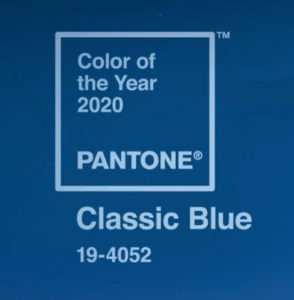
Classic Blue has been chosen as Pantone’s 2020 Color of the Year, signalling that it’s likely to be increasingly turning up at meetings and events during the coming year.

That’s because planners often make a deliberate effort to incorporate the fashionable and trendy—whether it be colors, food or hashtags—into their gatherings to stay current and relevant.

The Color of 2020

Pantone is best known for its Pantone Matching System, a proprietary color-space system used in a variety of industries—notably graphic design, fashion design, product design, printing and manufacturing—and for supporting the management of color, from design to production. 2019 saw Living Coral as the Color of the Year and in 2020 Pantone kept with an under-the-sea theme by choosing Classic Blue (19-4052).

Ahead of the announcement, Laurie Pressman, vice president of Pantone Color Institute, disclosed in February that the 2020 color is inspired by the sea. She mentioned blues can be backed by browns and greens to represent driftwood, seaweed and white-sand-tinted hues.

Photo credit: Pantone

Texture and Layering

In addition to using the sea to inspire a color palette, Pressman also touched on the importance of texture and layering in 2020. The mysteriousness, fluidity and countless different textures found in the ocean can be portrayed through combining and layering colors on objects of varying textures.

How to Use It

Every event needs a color scheme, and while planners can stick to company colors, they can also draw inspiration from Pantone by having a sea-inspired 2020 event. For a subtle nod to fashion and design trends, planners might opt fora blue-green-based aesthetic. Classic Blue is sleek and elegant, and some greens and whites can be mixed in for a fun, colorful vibe; or, planners can choose navy blues and silver for a dignified, luxurious aesthetic.

When incorporating color into your events, everything from linens to flowers, to decorations should be considered. Naturally colored food, such as blueberries or blue potatoes, and colorful blue cocktails is another way to go above and beyond with blues while sticking to your color palette.

Tight, cramped seat. Nonexistent leg room. Pricey snacks. What felt like a four-hour nap was actually 30 minutes. When prepping, or even thinking about long-haul flights, you might groan with despair.

In better understanding the frequent flyer and long-haul traveler, J.D. Power released the results of its 2019 Airline International Destination Satisfaction Study. It measures passenger satisfaction with the entire air travel experience on flights from North America to Asia and Europe, from reservation to in-flight services, based on a recent flight experience.

Specifically, the basis on performance is split into nine factors: in-flight services, cost and fees, aircraft type, flight crew, check-in, boarding, immigration, baggage and reservation. The study is based on responses from 6,287 passengers from September to October 2019.

Related: Airlines Turn Focus to In-Flight Wellness Programs

“A low fare may be the best way to attract a first-time international passenger, but retaining passengers on routes to Europe and Asia is all about delighting customers with great in-flight experiences.” said Michael Taylor, travel intelligence lead at J.D. Power. “One of the most powerful ways to do that is with food-and-beverage offerings that are unique to the airline’s culture and that manage to deliver flavor at altitude, where it has been proven that taste buds grow less sensitive.”

Stomach Over Wallet

In-flight services—especially food and beverage—are key to passenger satisfaction. These services, which also include in-flight entertainment, are the primary drivers of passenger satisfaction among international travelers; price was actually one of the lowest drivers.

MoreNew Malaysia Restaurant Features Airplane Food—No Kidding!

On flights to Europe and Asia, more than half of the overall in-flight passenger experience is dictated by food and beverage. In-flight services are more important to passengers bound for Asia or Europe, whereas passenger satisfaction with long-haul flights within North America is more of a value proposition, primarily driven by cost and fees.

Staying with a Good Thing

First impressions really are long lasting; one of respondents’ primary reasons for choosing an airline was past experience with the airline. Following this was good customer service, then convenient scheduling; second to last was reputation and lowest was lower ticket price. Other variables that weigh heavily on airline selection among domestic travelers—such as availability of a direct flight, no luggage fees and Wi-Fi access—play a much less significant role in airline selection among international travelers and were not reported in the study.

So, who is performing well?

To fly across the pond, Turkish Airlines ranked the highest in passenger satisfaction, with a score of 833. Four points below it was Virgin Atlantic, while British Airways and Delta Air Lines tied for third.

For flights that are a little bit longer, namely North America to Asia, respondents ranked Japan Airlines highest in passenger satisfaction, with a score of 869. Delta Air Lines ranked second and Korean Air was third.

The new year is upon us—a new decade with new possibilities. Just think for a moment about all the technological improvements that emerged over the last 10 years. In 2010, social media was considered a fad, the Blackberry was still the most popular phone, and we used our desktop computer as a primary source for online information.

As we move forward, smart planners will embrace innovative ways of communicating with attendees. If you’ve been procrastinating because you’re uncomfortable with new things, make a New Year’s Resolution to try one or more of the latest technologies listed below.

Meeting Type Research

According to the 2020 Global Meetings Forecast Report by American Express Meetings & Events, here is the breakdown of the types of meetings and the percentage of time they take place in North America.

Meeting Type Percentage
Internal Meeting or Training 25%
Senior Leadership or Board Meeting 17%
Client Advisory Board 15%
Incentives 15%
Product Launch 14%
Conference or Trade Show 13%

Let’s take a closer look at each one of these.

Internal Meetings, Ongoing Training and Onboarding

If your organization is of a specific size, you probably dedicate meeting time to train existing employees on new products, procedures and policies. Similarly, acclimating new employees is a recurring activity. How can technology improve this ongoing meeting category?

Try using Virtual Reality. Why? If your company has a lot of products and services, VR can cement the training like no other method. Here are two actual case studies:

Farmers Insurance has tens of thousands of scenarios a claims person can encounter. With limited training talent and highly skilled mentors ending their careers, they were faced with a choice: either extend the training cycle for new and existing employees or find a better way. VR is their way.

Walmart reports a 10-15 percent improvement in test scores with VR as compared to traditional methods of teaching. They have also reduced training costs. VR eliminates the need for instructors and the requirement that employees gather into crowded classrooms for hours or days on end.

Leadership Board Meetings and Retreats

Whether your board is large or small, regional, or international, there are always a few key individuals who cannot make it to your meeting. Their flight was grounded. Their travel budget was cut. Or…they are just swamped at work.

Bring in those members with live streaming. With a faster, more reliable Internet and better bridging software, remote members can participate in your meeting without worries or buffering or dropping the call.

The collaborative monitor Microsoft Surface Hub 2 can connect up to ten virtual members, show presentations and allow for the use of a whiteboard—all in one unit—and more importantly, everyone sees the information at the same time.

Incentives

Planning an incentives program is much like orchestrating a large VIP event where every expense is covered. Most incentive programs have an educational component as well.

How do you track everyone and everything precisely? Use RFID wristbands that must be scanned for every education session your guests go to, drink they order (even by the pool), or adventure they take. The benefit to your organization is that you have complete documentation when comparing it against the master bill. The side benefit: It will make budgeting for next year’s event a piece of cake!

Product Launch

When rolling out new products and services to the public, its vital to get real-time, honest feedback from your employees, clients and prospects.

By asking each person to take a few moments to install a smartphone polling app on their device, you will be receiving instantaneous, anonymous feedback that can determine if your product needs a few tweaks or a major overhaul.

Conference or Trade Shows

Large conventions and trade shows are manpower intensive before and during the event. Attendees ask many questions, many of which are the same.

Consider installing a chatbot on your website or event page—you’ll free up valuable staff time plus the bot never rests—it’s available 24/7!

De-de Mulligan is a regular blog contributor for Rentacomputer.com. As a former meeting planner who has received Ohio MPI’s Planner of the Year award twice (2006 & 2012), she brings a unique perspective.  You can find her on Twitter @DedeMulligan.

Southwest Airlines will extend its cancellation of Boeing 737 Max flights through April 13, 2020, costing the company more than $435 million, as it awaits Federal Aviation Administration (FAA) certification of the aircraft, based on software enhancements and new training requirements, the timing of which is uncertain.

See alsoSouthwest Pilots Union Sues Boeing Over 737 MAX

In a press release, Southwest, which is the United States’ largest Boeing 737 Max customer, stated it will be pulling 300 flights a day during its peak-day schedule out of its weekday total of 4,000 flights; the company had planned to terminate its flight cancellations by the end of March. Customers who have booked flights that were scheduled to use the 737 Max will be notified and assigned another flight.

Last week, American Airlines extended its cancellation of the aircraft as well, following the FAA’s decision to prohibit the flight of the aircraft for the rest of 2019.

“Taking planes out through April means you’ll miss the spring break hump, which is a peak period of flying,” said David Vernon, a senior analyst for Sanford C. Bernstein. “When you think about the revenue implications of missing spring break and flying a lower schedule, that’s not great.”

MoreAn Update on the Grounding of Boeing 737 Max Flights

The 737 Max has been grounded globally since March, following two crashes that occurred within five months that resulted in the deaths of 346 people. Since then, Boeing still produced the aircraft, costing the company nearly $1.5 million per month, although it had reduced the aircraft’s production from 52 in April to 42 before an indefinite suspension, beginning in January, was announced on Wednesday.

A Southwest spokesperson clarified that the company’s decision to extend cancellation of the 737 Max had nothing to do with Boeing’s decision to stop producing the aircraft.

Southwest’s pilot union filed a lawsuit against Boeing in October for $115 million, claiming that the company had been dishonest about the safety of the aircraft. The suit also claims that the cancellation of the 737 Max resulted in the cancellation of 30,000 flights and the loss of more than $100 million for more than 9,700 pilots, a loss that could have a huge negative impact on the greater economy.

After two decades in San Francisco, Oracle’s OpenWorld conference, a five-day citywide that annually hosts 60,000 attendees, has cashed in its chips and is betting on Las Vegas. The move will cost San Francisco an estimated $64 million.

An email sent by San Francisco Travel Association (SFTA) to its members, as first reported by CNBC, blamed feedback from this year’s participants that the city’s hotel rates were too high. “Poor street conditions was another reason why they made this difficult decision,” the email stated.

OpenWorld will try out the soon-to-be-opened Caesars FORUM in Las Vegas for the next three years. The business represents 62,000 hotel room nights each year, the SFTA said.

OpenWorld features keynotes and more than 2,000 education sessions and demos for business owners, IT managers and other business decision makers.

“Oracle is excited to offer a modern, state-of-the-art experience for attendees at Oracle OpenWorld and Code One 2020 [a developers conference] in Las Vegas,” an Oracle spokesperson told San Francisco Business Times.

“Oracle continues to enjoy a strong relationship with the City of San Francisco and partners such as the San Francisco Giants and the Golden State Warriors. We look forward to working with our longstanding counterparts in San Francisco on future events,” the spokesperson added.

Oracle Corporation, headquartered in nearby Redwood City, sells database software and technology, cloud engineered systems and enterprise software products.