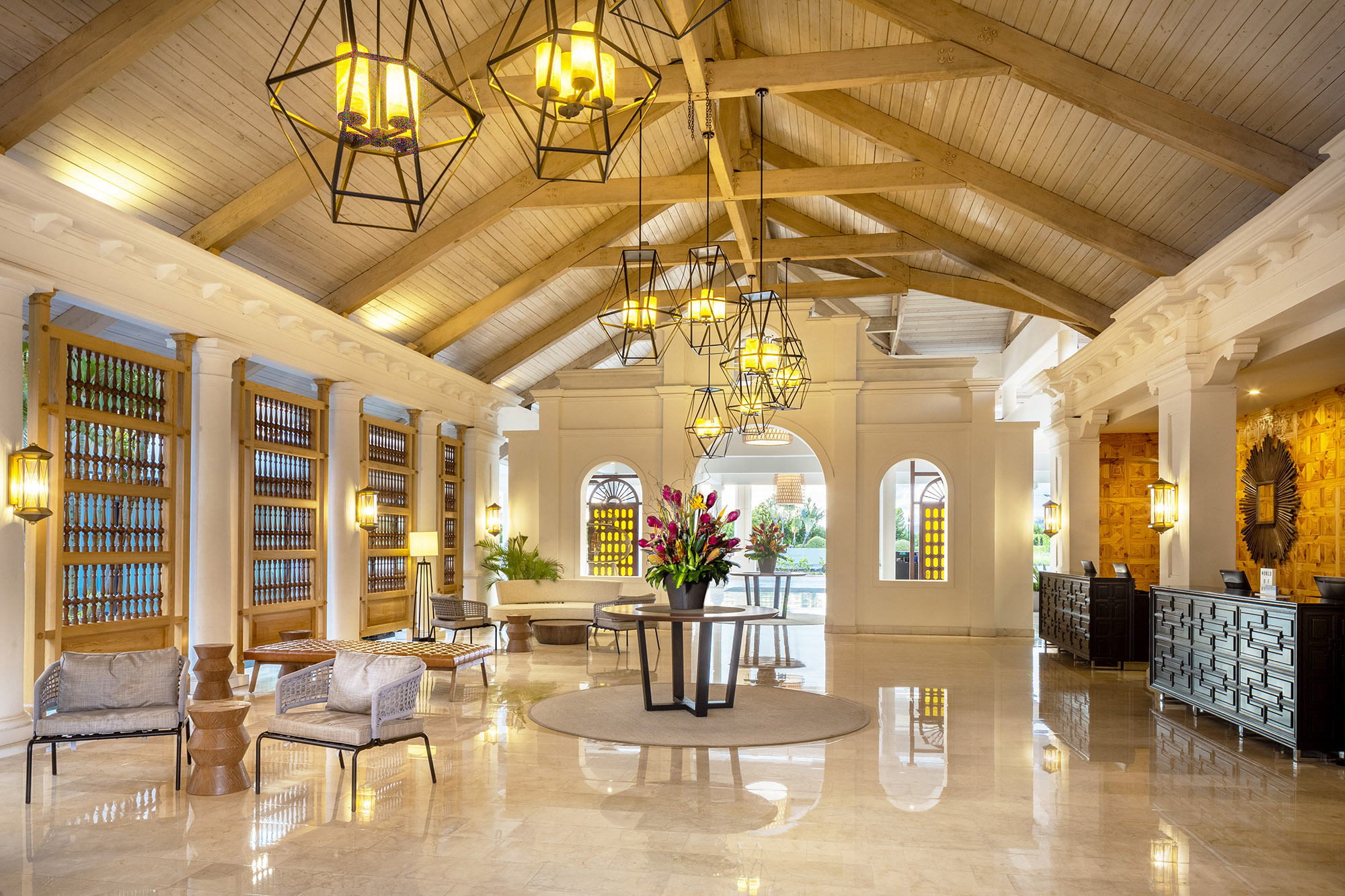
Puerto Rico is open and wants your business. That’s the clear message from Discover Puerto Rico, the island’s DMO, which assures planners and other potential visitors that all the island’s main meeting venues and visitor attractions are fully operational.

As recently as Jan. 11, the latest aftershock, at 5.9 magnitude, rattled the earthquake-rocked island and did further damage to the southern coast, where previous quakes in recent weeks had destroyed many structures. But authorities are emphasizing that no major damage was reported elsewhere, and that power is now restored to 98 percent of the island.puerto rico

“One of the best ways that people can show their support for Puerto Rico at this time is to keep their upcoming vacations, work trips, meetings, conferences and events,” said Brad Dean, CEO of Discover Puerto Rico. “We are a resource for their questions. Tourism is vital to the local community and to keep the economy recovering, Puerto Rico needs to maintain the record-breaking tourism boom it experienced in 2019, which fueled the local communities.”

This past week, nearly 56,000 cruise passengers disembarked at the San Juan Cruise Port. All flights are reported to be operating normally to and from the San Juan, Ponce and Aguadilla airports. Puerto Rico Convention Center and major attractions, such as El Morro, El Yunque, San Cristobal Fort, and all areas around San Juan, continue to be open.

The DMO advices that planners visit its website update page for the latest information.

John H. Graham IV

The Center for Association leadership (ASAE) announced today that the organization’s president and CEO and longtime advocate for the industry John H. Graham IV passed away after a long battle with cancer. He had been in the role since 2003, during which time membership doubled.

Graham came to ASAE from American Diabetes Association in Alexandria, Virginia, and was at Boy Scouts of America before that. He served on the Association Committee of 100 with U.S. Chamber of Commerce, was chair of the Mobile Giving Foundation Board, was on the board of Lambda Chi Alpha Foundation and was president of National Capital Area Council of Boy Scouts of America.

He was revered as a mentor and proponent of the power of associations. In his acceptance of the 2013 Association TRENDS’ “Association Executive of the Year” award, Graham said, “Whatever our personal journeys have been—however we came to embrace associations as our life’s work—we can take great pride in the advancement of this profession. Our organizations comprise an incredibly innovative, vibrant and diverse sector, and we see innumerable examples every day of how associations effect positive change—not just for the industries or professions they serve, but for society at large.

“America is quite simply a better place to live and work because the association community is leading the way in areas like professional development and credentialing, standard setting, community assistance, research and volunteerism.”

U.S. Travel President and CEO Roger Dow released a statement describing the loss. “John was a visionary who guided and shaped the work of associations to the benefit of thousands of workers and organizations around the country,” he said. “John was a close, trusted partner of U.S. Travel for many years, lending invaluable support to the American travel industry.”

Dow added, “While we will miss John’s leadership, it is his friendship and inimitable compassion that will be missed most of all.”

As ASAE enters its centennial year, Susan Robertson, executive vice president, will continue to serve as interim president and CEO.

The leading specialty food show in the country returns to San Francisco, Jan. 19–21, to give visitors a mouthwatering glimpse of the latest in cuisine and culture. This year, The Winter Fancy Food Show will feature a taste of Italy, an expanded Incubator Village and a Mediterranean Diet Roundtable—all great places for meeting professionals to get ideas for spicing up their menus.

Countless connections, discoveries and deals are made,” says Bill Lynch, vice president of engagement and events with Specialty Food Association, which puts on the event in San Francisco each winter and New York City each summer. Attendees include buyers, makers, distributors, importers, influencers, global thought leaders and, this year, a delegation from the Fine Chocolate Industry Association.

Education sessions and special events fuel attendees for the coming year. Lynch notes that the newly expanded Moscone Center allowed his group to add more experiential features to this year’s show. His was the first group to move in when the facility cut the ribbon on renovations in 2019.

Smart Meetings asked the experts showing off their creativity about trends planners can look forward to seeing in ballrooms in 2020.

Made in Italy

The Italian Trade Agency (ITA) will promote “authentic Italian creations made in unique places by dedicated people who use centenary traditions to obtain the products we all know and love,” says Antonio Laspina, executive director with ITA for the USA. He is eager to help find a an even bigger place for real Italian cucina in the largest market in the world.

Look for Lounge Italia, where delicacies will be prepared on the spot by renowned Italian chefs with authentic Italian ingredients. Vinitaly will offer wines paired with the daily cooking show’s menus. And a coffee bar will boost everyone’s energy with a strong espresso made in the Italian way. Taste It Live will showcase Italian cheese and meats—13 types in all—with a professional speaker to conduct guided tastings. A specialized mixologist will offer cocktails built with Italian liqueurs and cordials and explain the properties of each drink.

“Aside from the fact that Italy could not be absent from these occasions because Italian food has a special—and sizable—place at everybody’s table, we have been participating at the Fancy Food show for many decades,” Laspina says.

Trend Watch

Predicting food trends is a challenge in the best of times. Now, with “all the emerging cuisines, traditions, cultures and tastes, it may be even more challenging,” cautions Laspina. Organic and natural foods will be at the top of today’s preferences due to our desire to stay healthy, he observes. That leads to ever more “free” foods (dairy-free, MSG-free, etc.).

He sees Americans as extremely price conscious when it comes to food. Therefore, he predicts that products with a good ratio of price to quality will win over the biggest audiences. “We think Italian products comply with all the above, have a long history of being healthy and keeping people healthy, and, most importantly, they taste amazing,” he says.

Susie Timm, a food events publicist working with Traina Foods, also points to healthy eating as the trend for 2020. The Patterson, California-based dried food company will be testing new items “not quite ready for retail,” she says. That includes Pasta Toss to replace traditional pasta sauce. Look for the concept products in stores by mid-year.

Natalie Shmulik, CEO of The Hatchery Chicago, is seeing more products in the cannabis space, as recreational use is legalized in more areas. She also has noticed a focus on cognitive health and ingredients that encourage that—including tonics and shrubs with natural ingredients. One of the companies she is traveling with, Nature’s Nosh, produces CBD products such as Peanut Better & Jolly.

Only in SF

Delegates flock to the show almost as much for the destination as the exposition. Traina uses the event to bring together the team, many of members of which are remote, to experience the foodie city of San Francisco.

This will be the first time Shmulik is bringing her Incubator Village to San Francisco, though she has been to the summer event at Javits Center three times with emerging companies. “The best thing is the experience of traveling together to reinforce the family dynamic and startup mentality we share,” she says, adding that each of the female-led companies showing with her promote a mission in addition to a great product.

“So much great food will be there, but will try our best to get out after the show and connect with partner companies,” she says. “Plus, the weather is better there than in Chicago in January.”

Stephen Cullen

Cullen was promoted to regional vice president of operations by Benchmark in Houston. Before the promotion, Cullen was area general manager for Benchmark, where he oversaw operations at Copley Square Hotel and Ames Boston Hotel, both in Boston. He previously served as general manager of Copley Square Hotel in Boston and director of operations for Carlton on Madison Hotel in New York City.

Jennifer Bradshaw

Bradshaw is now corporate sales manager at The Benson Hotel in Portland, Oregon. She recently worked at Wild Bills NW, Inc., in Portland as event, marketing and sales lead coordinator. Bradshaw previously worked as intake specialist at Western Psychological, project handler at Underwriter Laboratories and human resources manager at IBM/Seterus.

Ashlee Barton

Hyatt Regency Lake Tahoe Resort, Spa and Casino in Incline Village, Nevada, appointed Barton director of sales and marketing. She comes from Hyatt Regency San Francisco, where she served as associate director of sales. Barton’s career began as event coordinator at Redmond Marriott Town Center Hotel in Washington. She then climbed the ladder to corporate sales manager, and later to senior sales manager, where she was responsible for sales at all Renaissance, JW Marriott and other Marriott properties in Washington, Oregon, Utah, Colorado and Northern California.

Natalie Wise

Wise was appointed hotel manager at The Ritz-Carlton Coconut Grove, Miami. The Australian native began her career with Starwood Hotels at Sheraton Brisbane, Australia. Her first experience in the United States was as assistant front office manager at The Ritz-Carlton, San Francisco. Wise later worked at The Ritz-Carlton, Phoenix, where she served in multiple roles, including director of guest services, director of housekeeping, assistant director of the rooms division and executive assistant manager of the rooms division.

Jose Carlos Fernandes

Fernandes is now general manager of Pestana Park Avenue in New York City. He has spent the last seven years with Pestana Hotel Group, most recently serving as hotel manager of Pestana Cidadela de Cascais & Art District Hotel in Cascais, Portugal. Fernandes has also worked as hotel manager for Pestana Casino Park Hotel and hotel manager for Pestana CR7 Lifestyle Hotel, both in Madeira, Portugal.

Jeannette Vasquez

Vasquez is the new director of sales and marketing at Hotel Amarano in Burbank, California. Before joining Hotel Amarano, Vasquez worked as director of sales for Hyatt Regency Valencia in California and Hyatt Place Glendale/Los Angeles, which she helped open. She previously was director of sales and marketing for Dimension Development and Interstate Hotels & Resorts, as well as national sales manager for Visit Newport Beach in California.

Jorge Landa

Landa was selected as the new general manager at InterContinental Houston-Medical Center. He has served in many roles since his stint with InterContinental began 10 years ago, most recently working as area general manager for InterContinental Cleveland, InterContinental Suites Hotel Cleveland and Holiday Inn Cleveland Clinic. Landa has also served as general manager at InterContinental Chicago Magnificent Mile, Holiday Inn Resort Aruba-Beach Resort & Casino in Aruba, Antilles and InterContinental Maracaibo in Zulia, Venezuela.

More7 Smart Moves at LBA Hospitality, W San Francisco and More

Event professionals of all types—corporations, associations, vendors and agencies—around the world are “very optimistic” about the outlook for the events industry in the coming year. That’s one of the key findings from the just-released 2020 Global Meetings and Events Forecast from American Express. Following are four of the most important takeaways from the survey.

1. The Industry Outlook is Positive
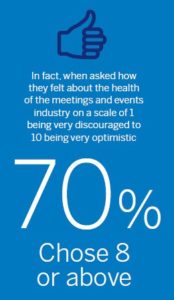
As noted above, the survey found that event pros are strongly optimistic about the industry in 2020. Though there are (always) challenges, planners and others believe events have “cemented their place” as drivers of communications, growth and engagement with customers, prospects, employees and influencers.

In the words of the report’s authors,” With so much possible upheaval looming in the near future—Brexit later in 2019, the U.S. federal election in 2020, ongoing global trade wars, to name just a few—it would be understandable if industry professionals were nervous. But they are notably more optimistic than they have been in recent years.”

Respondents from all regions predict growth, with confidence that the events industry is “mature enough to weather any temporary storms” and offers “an abundance of opportunities.”

2. Planners Focus on Attendee Experience

Given that the most important measure of event success is attendee satisfaction, it’s no surprise that, per this report, “The attendee experience continues to grow in focus with meeting owners and planners.”

While getting the logistics right is essential, “theming and content are beginning to take on more of the planner’s mindshare, which is great news for attendees,” according to the study.

As the industry expands, there’s more competition for attendees. Prospective guests will attend events based on the quality of the networking (who else is likely to be there), the content and learning, and the overall experience. That has event planners increasing their focus on:

  • Personalization—giving attendees not just a choice of sessions and tracks, but the ability to customize an itinerary aligned with their individual objectives and interests.
  • Unique venues—destinations and structures that are distinctly different from the standard big city hotel or convention center.
  • Interactive technologies—games, visuals and activities that expand on and enhance the live event experience.

And of course, the biggest buzzword in the industry: “engagement.” During events, planners are incorporating more local food and culture, offering unusual offsite activities and redesigning sessions to be more participatory and less passive.

Post-event, organizers are keeping attendees engaged with their content through mobile apps, chat channels and content—videos, podcasts, blog posts—that extends the value of the event.

3. Event Technology Continues to Expand

Though the event technology landscape now encompasses hundreds of solutions, the report speaks broadly of two categories of technology: logistics and experiential. There’s some overlap, of course; for example, an online registration form is clearly in the “logistics” bucket, though it is also the first element in the event experience.

See also2020 Offers New Thinking on Technology For These 6 Meeting Types

Per the study, event pros are “excited to make use of new technologies, from back-end systems that make bookings easier to client-facing software that enhances the onsite experience.”

Event organizers have a choice of core management platforms at multiple levels and a wide array of best-of-breed point solutions that can be connected to automate common tasks while optimizing the attendee experience.

Event mobile apps are now ubiquitous. Per the report, “one meeting professional referred to them as ‘the new lanyards.’ Survey respondents across the globe value them for many reasons, but the top reasons are their ability to improve communication and engagement, facilitate networking and deliver documents electronically.”

Although the conference agenda remains the most popular function, event mobile apps are being used in increasingly creative ways.

4. Cost Challenges Persist
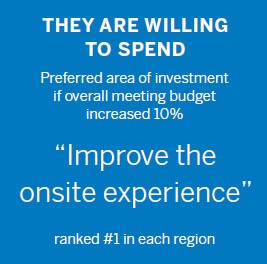
Though the industry is expanding and budgets are generally increasing, most of those extra dollars are expected to be consumed by rising costs among venues and suppliers. Consequently, planners will be challenged to “do more with less” while also meeting increasing attendee expectations for unique event experiences.

In response, planners are utilizing a number of tactics, including:

  • Changing the perception of events and meetings within the corporate marketing function and the organization more broadly. ” When stakeholders such as marketing, HR and security are included in the planning process, it helps meeting planners get buy-in on budgets, improve communication and increase policy compliance,” write the report authors.
  • Contracting for standard event elements at the beginning of the planning process. This means not just the space, but also all internal services, travel and supplies. According to the study, “The goal is to optimize all of those costs in one part of the meeting to free up money to increase the experience in other parts.”
  • Making greater use of non-traditional venues and “B-locations” (second-tier cities). Warehouses, event centers, stadiums and universities are interesting alternatives to hotels and convention centers. And costs for almost everything from travel to food to space to services are generally lower in up-and-coming destinations like Minneapolis, Indianapolis, Austin and Charlotte than in the big coastal cities and Chicago.

As the report notes, “With new (air travel) routes being added domestically and internationally, planners have more options to try new meeting locations without necessarily requiring attendees to increase their travel time to get there.”

A key barrier to increased event budgets is the lack of industry benchmarking data. While planners have dozens of ways to measure event value, they lack standard industry metrics for comparison. For example, a company may measure the ROI of event marketing activities or total financial return and compare those to preset objectives or prior years performance—but there’s no way of knowing how their performance compared to competitors or industry peers.

In conclusion, event professionals are optimistic about the year ahead. Costs and attendee expectations may be rising, but so are budgets and the capabilities offered by evolving event technology. Budgets remain a challenge, but hardly a new one, and planners have developed tactics to address that. In short, the 2020 Global Meetings and Events Forecast from American Express offers a wealth of insights and statistics that paint a bright picture of the coming year.

Tom Pick is a digital marketing consultant who works with event management platform developer G2Planet to share the company’s insights and knowledge with corporate event marketing professionals.

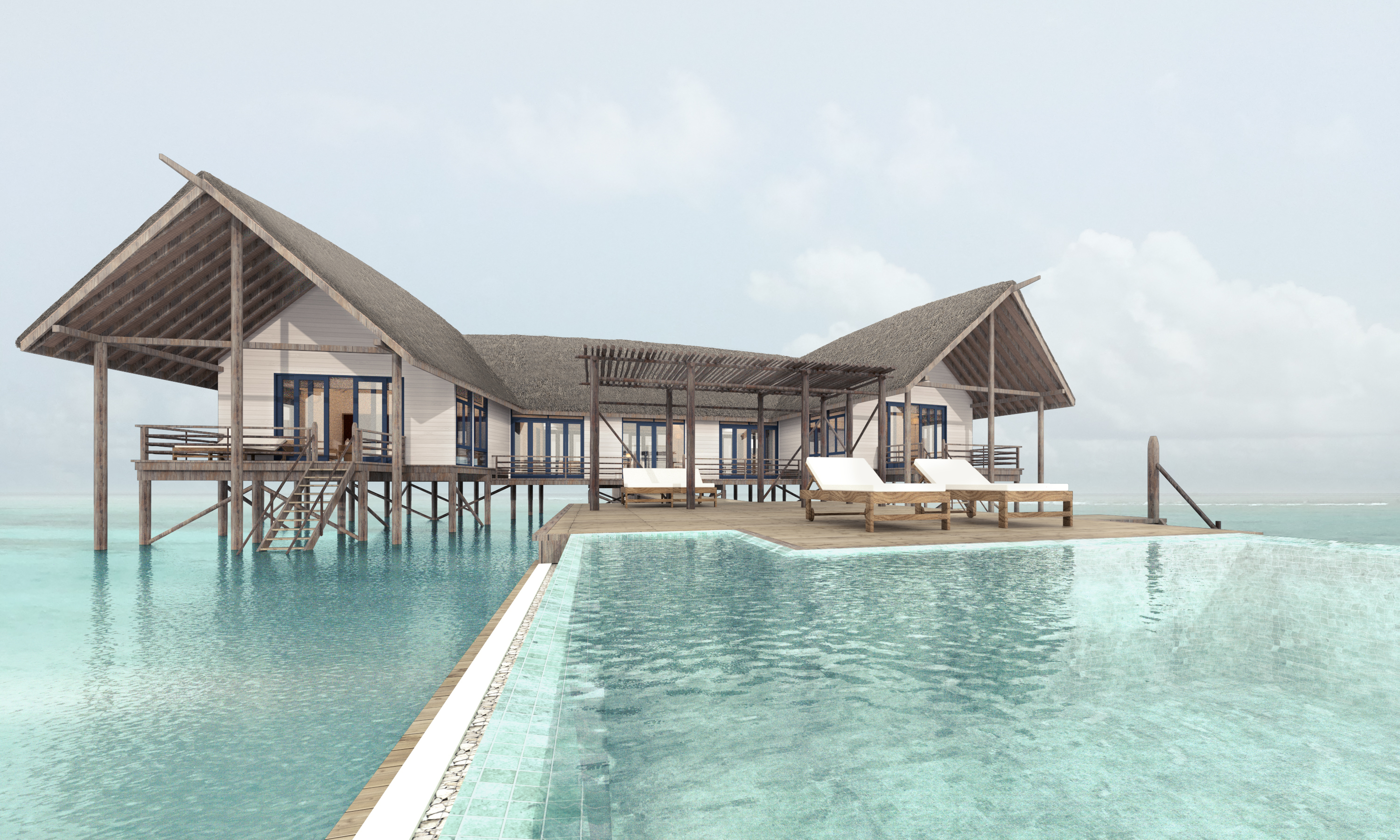
Como Cocoa Island, Maldives

This private island resort is an intimate sanctuary with 34 overwater villas. A recent renovation emphasizes the property as an extension of the island, offering luxurious simplicity while showcasing the natural beauty of the ocean and offering in-depth wellness-related services. The resort will internally arrange your event or celebration with an intimate feel, as its largest event space accommodates 80 guests.

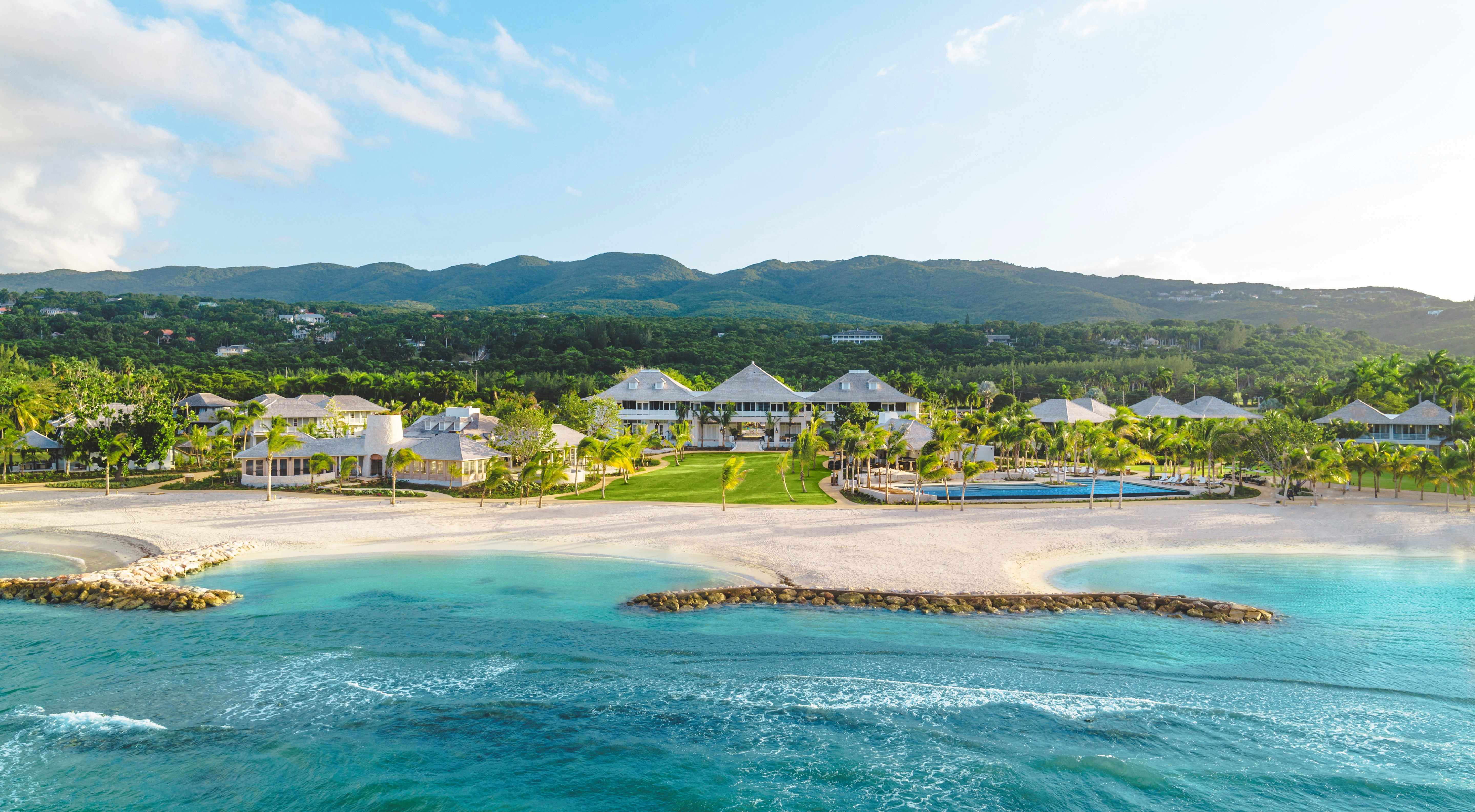
Eclipse at Half Moon, Jamaica

Half Moon offers 215 guest rooms and suites across three accommodation experiences—Eclipse, Founders Cove and Rose Hall Villas. Eclipse is the newest addition, with 57 luxurious guest rooms and more than 27,000 sq. ft. of meeting space, including a stylish conference center that seats up to 600. A plethora of activities, ranging from water sports to yoga, are available to guests, though you may want nothing more than to indulge in the private swimming cove.

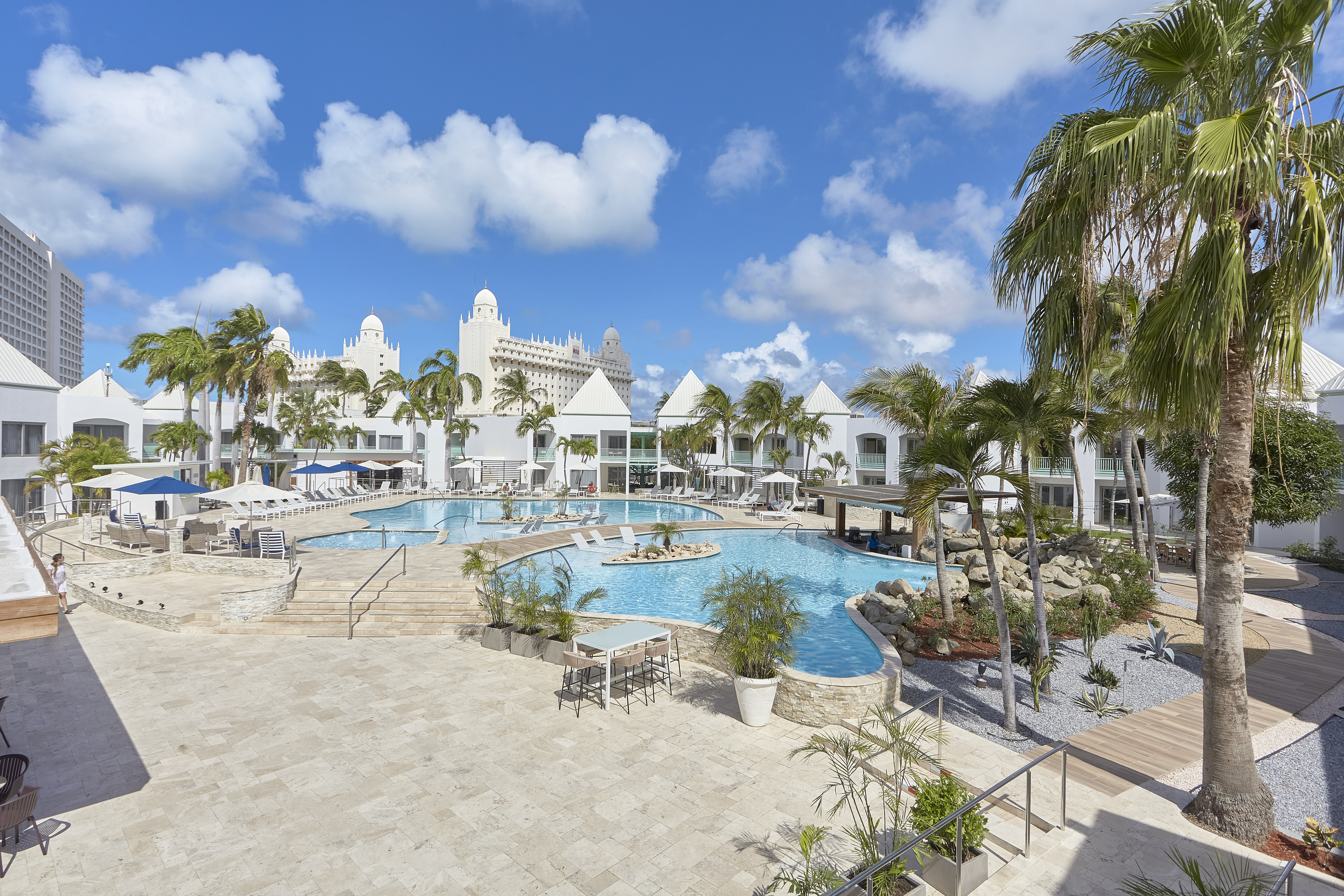
Courtyard by Marriott Aruba Resort

This property recently underwent renovations and rebranding to debut as a Marriott resort. The 148 comfortable guest rooms provide a place to hang your hat and smartphone. Groups can take advantage of internal tech and event support offered with intimate meeting space for up to 90 guests. Then they can make the breakout a beach-out, given that the hotel is within a couple miles of Aruba’s most appealing shores.

Hyatt Regency Grand Reserve Puerto Rico

This recently renovated resort sits on a mini-peninsula just north of El Yunque National Forest. An expansive property, it offers 579 spacious suites and guest rooms, along with more than 40,000 sq. ft. of event space, including a tall-ceilinged ballroom awash in natural light. For refreshment of all the senses, explore five dining concepts offering local Caribbean flavors, fresh seafood and inventive mixology in settings ranging from casual to white-tablecloth. It also has largest lagoon-style pool on the island—and who doesn’t love a swim-up bar?

Island Meetings

Planners seeking an all-inclusive, island paradise for their events can choose from a plethora of attractive properties that function as worlds unto themselves.

One option is Hilton Rose Hall Resort & Spa, which occupies an 18th-century tropical estate on Jamaica’s Montego Bay. The setting imparts a welcome historical ambience, but amenities are thoroughly modern. The property includes the island’s longest white-sand beach, a championship golf course and more than 44,000 sq. ft. of indoor and outdoor event space.

Sheltered within the confines of the Caribbean, The Westin Grand Cayman Seven Mile Beach Resort & Spa is a lush, colorful luxury resort with a 30-year pedigree. The resort maintains its appeal by regularly updating and upgrading its facilities. Earlier this year, public spaces—the lobby, pool area, retail shops and more—received a refresh. By mid-August, additional features such as 55-inch smart televisions and marble vanities will arrive in all 343 guest rooms. With 8,877 sq. ft. of meeting space, it is a memory-making destination for groups of up to 400.

It takes a special property to stand above the crowded luxury market in Punta Cana, Dominican Republic, but Barcelo Bavaro Palace is up there. Immersed in island idyll, attendees can bond while taking in a show at the 1,400-seat theater, trying their luck in the 24-hour casino, dancing in the onsite nightclub or swinging for the fences on the semi-pro baseball field. Attendees looking for a more serene activity can snorkel the coral reef offshore, sample Dominican flavors and international cuisines at 11 restaurants, and surrender to hedonistic pampering at U-Spa.

The immense five-star resort also contains the largest convention center in the Dominican Republic. With nearly 124,000 sq. ft. of event space, the property can accommodate groups of up to 5,000. The flexible facility’s 13 multipurpose halls are divisible into 24 rooms.

Middle Eastern Laptop Ban Lifted

Reinforcing security has paid off for nine out of the 10 African and Middle Eastern airports affected by the laptop ban on U.S.-bound flights as of Monday.

The Department of Homeland Security (DHS) approved the security measures put forth by most airports on the laptop ban list, which required passengers to check any electronics larger than a mobile phone. The last airport remaining, King Khalid International Airport (RUH), is expected to be on the approved list this week after security measures have been verified, according to the agency.

Since March, when the ban went into effect, airlines, and the airports associated with them, improved security measures per the requirements given by DHS. Earlier this month, Etihad Airways was the first approved for its passengers to again bring laptops on-board.

Lisa Farbstein, the Transportation Security Administration spokeswoman, said that TSA will oversee and observe “compliance at the location.”

DHS has also said if airlines do not upgrade security, new restrictions could be implemented. Upgraded security means enhanced passenger screening at international airports overseas, along with improved and increased explosive-trace-detection screening. Other security measures have a 120-day deadline.

“As we look to stay ahead of the evolving threats, we’ll be working with global aviation stakeholders to expand security measures even further,” Farbstein told Reuters.

People most often remember special moments or experiences based on an impression. For planners, leaving a lasting impression on meeting participants isn’t always easy to do, though, and can require some important strategizing.

Holding an event at an interesting museum, theater or sports facility offers a unique experience that makes for a very memorable meeting. Planners can creatively design an exceptional environment that boosts the excitement of attendees before, during and after the event. Here are five of the main benefits of holding meetings at unique venues.

  1. Memorable meetings: Attendees are more likely to remember a meeting if they are fascinated by where it was held. When you look back on your favorite memories, I’m sure you can recall the surroundings. The same applies to producing memorable meetings: The setting of your event is crucial in crafting a memorable experience.
  2. Up your planning game: It’s not always easy to hold your event at an alternative venue. You need to think outside the box and may be challenged to pull it off. Do you accept the challenge? If so, going with a unique venue will not only please attendees, but also up your planning game. Such a venue will typically cost more than a traditional meeting space and there will be speed bumps in the road, but it will all be worth it in the end.
  3. Refreshing change of pace: Planners need to go off the beaten path and stray from the sameness of traditional events. Environment plays a key role in the experience your attendees will have. Switching up the type of venue will create a refreshing change of pace and even increase attendance.
  4. Visually pleasing: Unique venues generally have outstanding architecture and stunning interior elements. Attendees need to be excited to know they will be surrounded by beautiful visual elements.
  5. Value: Cost will come into question and could possibly scare away prospective attendees. The value of what attendees can gain should outshine any budget concerns.


Tips for Alternative Venue Selection

What type of event are you holding? What is your top priority? If it is based around food and beverage, a museum may not be your first choice. Find out the restrictions of the venue. Is food prohibited in certain areas, will Wi-Fi be difficult to access and is your event centered around speakers or does if mainly offer networking opportunities?

Embrace the venue by keeping with the theme and take advantage of built-in decor. Choose a venue that will allow you to give attendees something to do, such as tour through art exhibits or explore the venue through a self-guided tour or with docents.

Venue Ideas 

  • Art museum or art school
  • Performing arts center or theater
  • Movie theater
  • Military-ship-turned museum
  • Historic hall
  • Sports facility
  • Nightclub during the daytime
  • Airport hangar
  • Brewery

Hilton has announced it will enforce a 48-hour room cancellation policy beginning July 31. The company’s decision has been met with criticism from some media and consumer advocates. For many professional meeting planners, however, the policy makes good business sense.

Hilton’s announcement follows Marriott’s decision on June 15 to charge a full-night’s stay if people cancel their reservations with less than 48 hours’ notice. InterContinental Hotel Group, which owns Holiday Inn, also imposes a mandatory charge for cancellations made less than 48 hours before check-in.

A recent Business Travelers Coalition poll found 59 percent of respondents believe the policies will be negatively received by business travelers. For professional meeting planners, however, the decision to require a two-day cancellation notice prior to check-in (72 hours in select locations) has upsides:

  • The policy is unlikely to impact meeting planners, who typically book multiple rooms months in advance and are not prone to cancelling reservations.
  • Stricter requirements mean cancellation costs are less likely to be passed on to businesses and associations that sign contracts with hotels in advance.
  • The enforcement of stricter cancellation policies indicates hotels currently are prospering, which bodes well for the entire meeting-and-events industry.

Hotels rely on reservations to calculate occupancy rates. When travelers cancel reservations at the last minute, hotels are stuck trying to fill empty rooms, often at below-market prices. Cancelled reservations drive up room costs for reliable customers—including meeting planners.

In fact, meeting planners are legally bound to honor contracts with hotels after negotiating room rates. Private companies, government groups and associations that book rooms months in advance of events are effectively subsidizing leisure travelers who overbook rooms and then price-shop for lower rates, often online.

By enforcing stricter cancellation policies, Hilton and Marriott are inadvertently addressing a challenge from hotel-booking websites that encourage consumers to reserve rooms at multiple hotels, and then cancel their reservations at venues with higher rates a few hours before check-in.

A Hilton spokesperson explained to travel industry website Skift that its policy gives hotels time to rebook the rooms for committed guests. “Business travelers, leisure travelers, and hotel owners will all benefit from access to rooms that would previously have gone unused,” the spokesperson said.

Hilton’s decision comes a few months after the Global Business Travelers Association (GBTA) released a study comparing the rising popularity of home-sharing properties, such as Airbnb. Ironically, GBTA’s study found that business-travel professionals still prefer hotels by an overwhelming margin, in part because home-sharing property owners tend to enforce stricter cancellation policies.