Three upcoming attractions draw on Los Angeles’ dynamic diversity of cultures and nationalities, offering immersive experiences that celebrate their history and present. Stay tuned for more details as the year progresses.

LA Plaza Cocina

Scheduled to open this spring is LA Plaza Cocina, on Olvera Street in downtown. This new venue is a project of La Plaza de Cultura y Artes, a museum and cultural center dedicated to the history and culture of the Mexican-American experience in Los Angeles.

See alsoDowntown Los Angeles Has It All for Planners

The 2,500-square-foot facility is an exciting combination of museum, retail space and teaching kitchen that will showcase the deep culinary heritage of Mexico, from its indigenous roots to today’s modern interpretations. Among its programs will be cooking classes, workshops and culinary festivals that will further enliven Olvera Street’s colorful atmosphere as “the Birthplace of Los Angeles.”

Destination Crenshaw

Tied into the construction of Metro Crenshaw/LAX Line, which extends the existing Metro Expo Line at Crenshaw and Exposition boulevards, Destination Crenshaw is a 1.3-mile long outdoor art and culture experience celebrating black Los Angeles. Los Angeles, and Crenshaw Boulevard specifically, have been home to one of the largest black communities west of the Mississippi River for more than two centuries, and this project celebrates both the historical and contemporary contributions of its residents.

This jubilant open-air space will provide a cultural and social hub for the neighborhood with 100 works of public art, hundreds of new trees, small parks and a community amphitheater. It’s expected to debut in October, when the metro line is completed.

Korean American National Museum

The buzz has already begun for Korean American National Museum, set in the heart of Koreatown, the first permanent location for this museum that aims to “preserve and interpret the history, experiences, culture and achievements of Americans from Korean ancestry.”  Construction on the 15-story building begins this year, with a bold futuristic design that features a rooftop garden and embossed exterior walls similar to those of royal palaces in Korea.

True to form, the interior will incorporate the various elements of a hanok, a traditional Korean house, with high ceilings and a central courtyard surrounded by spaces for galleries, meeting rooms and offices. The estimated opening is 2022.

Read more in Carolyn Koenig’s story, “LA: A City of Contrasts: Select Your Group Style or Mix and Match,” in the April issue of Smart Meetings magazine.

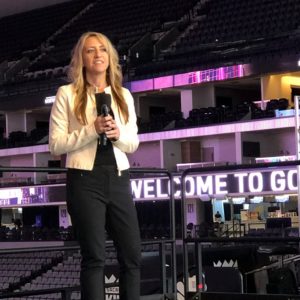
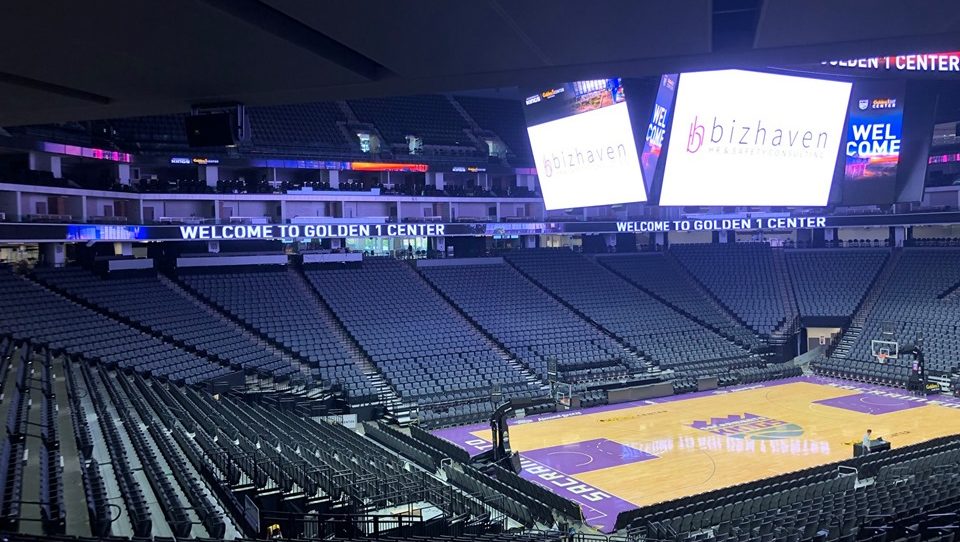
The inaugural Smart Meeting California Summit brought together top event professionals in the state at Golden 1 Center in Sacramento. The focus was on connecting efficiently and meaningfully.

To that end, the day started with TED Talk phenom Amy Vetter, who shared her secrets for mindful technology and ended with a toast at Sierra Nevada Draught House. Couldn’t make the landmark gathering? No FOMO; here are some of the lessons learned.

Visualize a High-Tech Human Touch

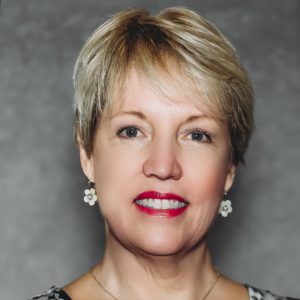
Amy Vetter

Technology and human interaction are not mutually exclusive. In fact, keynote speaker Vetter advocated for embracing technology and making it do the heavy lifting to create greater human connections. “Often, all the technology in our hands can make us feel alone,” she said. But that doesn’t have to be the case. Instead, she suggested letting innovations such as chatbots, communication apps and social media do the heavy lifting in the interaction department.

The trick to successfully overcoming objections is to select new platforms in a wholistic way. “If you adopt tech without thinking about human interaction, you are just creating stress,” Vetter said.

She suggested thinking first about the problem that needs to be solved and whether a particular solution is the optimal choice. Then, put parameters in place about how to use it and verbalize what results you hope to see so you can later evaluate whether it is doing the job. And tell the team that you plan to test it for 30 days before measuring, to overcome resistance.

The CPA and owner of a yoga studio used the example of adopting the communication tool Slack in her business. She started by explaining what messages are best sent through the new platform versus email or text. Vetter said that if people blindly send to all three, this increases the number of messages she has to read, rather than simplifying her inbox.

A month later, she asked for honest feedback about whether it had the effect of increasing camaraderie and reducing time spent returning emails. She knew it was a hit when the biggest objector in the group started suggesting taking conversations to Slack.

In the end, “you need to communicate with clients and employees in the way that is most convenient for them,” Vetter said. That is why she adopted Google Translate to reach new audiences and transcription services to make her videos more accessible.

Ideally, technology will allow event professionals to focus on what is mission critical and less on what is “nice to have,” and leave extra time to plan for the future. That is part of Vetter’s secret formula: Business + balance = bliss.

“Bliss requires disconnecting sometimes to be present with the people we are with; that is how you build stronger relationships,” she said.

Front and Center

A winning attitude is easier in an iconic environment, and nothing wows like your company logo on a 4K, ultra high-definition video screen. Golden 1 Center, home of the NBA Sacramento Kings, is a LEED platinum-certified facility with a roster of fun spaces for meeting. The court served as a backdrop to fast-paced meetings, with an assist from Legends catering, which treated attendees to the fruits of the Farm-to-Fork Capital.

MoreDMA West Delivers Awesome Education Sessions, Signature F&B

Tara’s Tech Tips 

Having trouble doing it all? Tara Thomas, co-founder of The Meeting Pool, has some suggestions for cool apps that could make you more effective in and out of the ballroom.

  • RescueTime: Tracks and shows you your schedule in a visual format so you know where you are spending the most time—and where you can save it.
  • SweetProcess: Documents processes so others can easily take on tasks.
  • Smartsheet: The snuggly feel of a spreadsheet with the efficiency of an integrated project management tool.
  • Basecamp: An easy way to share only the things you want to share.
  • IFTTT: If This Then That is a cookbook of recipes for doing everything better.
  • ai: A digital personal assistant for scheduling instant messages.
  • Fuze: Collaborative communications across channels.
  • HelloSign: A limited-free alternative to DocuSign.
  • me: Manage—and easily unsubscribe from—newsletters and company emails.
  • Eisenhower Method: This nontech approach allows you to visualize what you need to do immediately, what you should schedule for later, what you can delegate and what doesn’t really need to be done.

Melissa Woodley

Woodley is director of events for Hyatt Regency Lake Tahoe Resort, Spa and Casino. Her career began as administrative assistant for Hyatt Regency Santa Clara in California. Throughout her time with Hyatt, Woodley has held various management positions, including associate director of events at Andaz San Diego and Andaz Maui at Wailea Resort in Hawaii.

Kathleen Bernesby

Bernesby is director of sales for The Walt Disney Swan and Dolphin Resort; she’s returning to the company after being with them from 1998–2008. Bernesby has worked with various other brands, including Earl Enterprises, Westin Diplomat Resort and Loews Miami Beach. She is a former committee member for the Greater Miami CVB, Greater Fort Lauderdale CVB and Visit Florida.

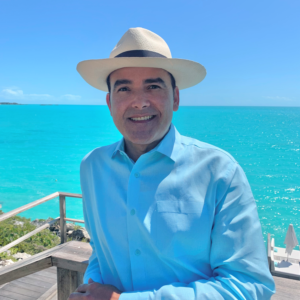
Jorge Collazo

Collazo is general manager for Grace Bay Beach Resort in Providenciales, Turks and Caicos. He previously served on the opening team for Silversands Grenada. Collazo was also director of sales and marketing for Canyon Ranch Hotel & Spa and The Setia, both in South Beach, Florida.

Jaime Stuyck

Mr. C Miami-Coconut Grove in Miami appointed Stuyck general manager. Stuyck most recently worked as resort manager for Gurney’s Star Island Resort & Marina in Montauk, New York. Before this, he was director of rooms for The Miami Beach Edition. He has held positions for several properties around the globe, including ME Madrid in Spain and Marriott Grosvenor Square Hotel in London.

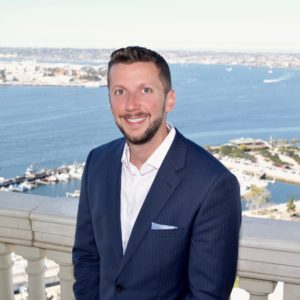
John Yeadon

Yeadon’s 14-year stint with Hyatt has led to his promotion to hotel manager for Manchester Grand Hyatt San Diego; he previously worked as director of sales and marketing. He’s recently been recognized by San Diego Business Journal as 2019’s Next Top Business Leaders Under 40.

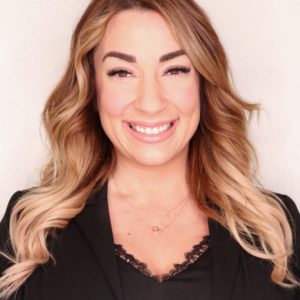
Ashley Jacobs

Jacobs is area director of sales and marketing for Somerset Hills Hotel in Warren, New Jersey. Before joining the Somerset Hills team, Jacobs worked as area general manager for Interstate Hotels & Resorts in Tampa, Florida. She’s also held leadership roles at various other properties in Texas.

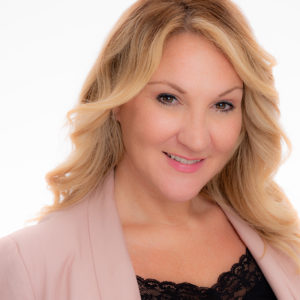
Gina Genna

InterContinental Miami named Genna director of marketing. Genna recently worked as director of marketing for Elegant Hotels Group in Fort Lauderdale, Florida; before this, she was director of advertising for Resorts World Bimini in the Bahamas. Genna has received multiple accolades, including Best of Direct Media Campaign and Leader of the Park—President’s Award.

Editor’s Note: Smart Meetings asked Adrian Segar, author of Conferences that Work, to share his vision for the upside of the disruption now in the events industry.

Despite the terrible impacts of the coronavirus on the meeting industry, there’s a silver lining. Hear me out! There is no question times are hard. The coronavirus pandemic has already devastated lives and businesses globally, and we don’t know how much worse things will get. The meeting industry is reeling under a wave of cancellations, postponements and uncertainty. All my short-term facilitation and on-site training engagements have been cancelled—and I’m lucky in comparison with colleagues who are struggling with the significant financial impact of the loss of work, deposits and income that a few months ago looked secure. Consequently, in the short term, the situation looks bleak.

In addition, no one knows what “short term” means right now. In the long-term, however, the current turmoil caused by the spread of COVID-19 is likely to subside. The development and introduction of an effective and affordable vaccine may bring the virus under control. Or, enough people may get COVID-19 and develop an immune response, leading to herd immunity. Eventually, the coronavirus is most likely to either burn out, or return seasonally, like influenza.

So what’s the coronavirus silver lining? I believe there are three silver linings that are long-term positives for the meeting industry.

  1. Virtual meetings will replace many broadcast-style meeting sessions. The dramatic cancellation of face-to-face events has led to an immediate focus on replacing them, when possible, with virtual meetings. This focus is welcome, because online technology can and should replace the lecture-centric components of conventional meetings.
  2. Virtual meetings process technology will improve. The pressure to find a replacement for face-to-face meetings may speed the development of technology process for connection that current platforms lack. All major online platforms support broadcast-style meetings. In small meetings, any meeting participant can become the broadcaster of the moment by speaking. As in face-to-face large meetings, this speaker-switching mechanism doesn’t work with a large group without central control over who, or how many, can speak at any moment. What virtual meeting technology currently ignores or implements poorly is participant-initiated small group voice or video chat discussions of the kind that happen at face-to-face meetings. Although some platforms implement breakout groups, they are generally limited in number, and platform facilitators initiate them rather than participants on an as-needed basis. Hopefully, a pressing demand for virtual meetings that can provide the spontaneous interaction and connection possible at face-to-face meetings will spur development of connection-centric online meeting technology features.
  3. We will better understand the true value of face-to-face meetings. Right now, the human race is responding to the short-term devastating effects of coronavirus by implementing physical separation, also known as social distancing. We are rapidly curtailing the ways we get together for entertainment, education and the thousands of other reasons we meet. But human beings do not thrive long-term on social distance; rather, we want and need social existence.

See alsoBounce Back Higher by Thinking Big

Over time, restricting meetings to online modalities will make us aware of what they lack: personal connection and engagement around pertinent content. Consequently, the meeting industry will better understand the unique possibilities that face-to-face events can provide. And, perhaps, we will become increasingly open to the value of human process technologies that allow meetings to become what participants actually want and need.

Adrian Segar is the author of Conferences That Work: Creating Events That People Love and Event Crowdsourcing: Creating Meetings People Actually Want and Need.

Sometimes our troubles bury us. We get bad news followed by more bad news. We reach our limit and can’t tolerate any more disappointments, rejections or failures. Right now a lot of meeting professionals are feeling helpless in the face of cancellations caused by measures outside their control—mandated social distancing to slow the spread of COVID-19 (coronavirus). If we don’t take intentional action, life can look distortedly dismal.

We ask ourselves, Why me? Why is this happening? Our spirits spiral downward and depression deeply sets in. Motivation flees. How do we bounce back? What can we do to recover? How can we imagine our lives restored to happiness? What does it take to turn things around so we can be happy and successful?

Aim High

Changing our state of mind is part of the key to coming back. We need to focus on hopeful thoughts and on a future that is bright and full of promise. As we change our thoughts, we need to think big. What do you want to achieve? What obstacles are in your way? How can you take advantage of this downtime to move your life forward toward achieving what at first appears to be impossible? Remove the filter in your mind that is limiting you from seeing the possibilities.

As we gear our lives for recovery, we might as well win big at this game called life. As long as we are bouncing back, let’s bounce back high! Imagine a rubber ball that has been thrown on the ground. See how high it soars as it bounces.

Thinking big is a creative process where ideas come to mind that will lead to big victories. The brainstorming process yields ideas and solutions that may at first examination seem absurd. Then the possibilities that come out of these ideas become attractive. This is the time to boldly internalize that these ideas can become realities.

It’s time to think, Why not me? This idea can work!

Plan for Action

I continue to discover in my life that after adversity comes opportunity, and after the opportunity, comes personal growth. Sometimes circumstances allow you to accomplish more than you would otherwise have accomplished if the adversity hadn’t hit.

Life takes twists and turns, forcing us to change our course of action and adapt to situations that are beyond our control. I have found that by consistently thinking big and dreaming about grand outcomes, I bounced back and my life has changed for the better.

It’s not enough to expect that great things will happen in our lives. We must do something to make these events happen. We have to make connections with other people and strategize a plan of action.

We need to spring into action and not depend on others to take charge of our lives. Too often we expect others to come through for us or take charge and do things on our behalf. It’s time to do what needs to be done and move forward by taking action to achieve our dreams.

Rosemarie Rossetti, Ph.D. is an agent of change who works with organizations and corporations to help them embrace change, improve performance and achieve goals.

large event negotiation

While some event professionals may gleefully embrace the prospect of negotiating contracts for large events, many would rather run for the hills. To make the process less daunting, here are six tactics to strengthen your hand at the bargaining table:

1. Consider multi-year agreements

In many instances, event professionals can land sweet deals if they consider a multi-year agreement for annual events. For instance, if you like a certain hotel chain, consider approaching them about a yearly commitment. It can save time and effort, but just make sure you understand the value of your event for better negotiations, and include protection clauses in case you’re not satisfied with the first years’ experience.

2. Obtain multiple bids

It’s important to get bids from at least three vendors to ensure you’re getting the best value. This will help you understand how the vendor will enhance your event, and what additional items you may need to negotiate. For instance, one vendor might include certain amenities, while another might charge you for them. Do your due diligence to secure the best overall service.

3. Read the fine print

You would be surprised at how many people do not actually read every line in a contract. That’s where many items are missed such as additional fees, one-sided protections, and inadequate security, among other terms. While time consuming, but it’s worth it to ensure your event is properly protected.

4. Secure the prior year’s pricing

One thing you can expect is for prices to increase each year. However, you might consider negotiating the prior year’s rates for services such as food and beverage. Just make sure the vendor doesn’t overcompensate in other areas, such as rental fees, to cover these costs.

5. Take your time

Some vendors give unreasonably short time frames to review a contract. Don’t be pressured into a quick review. Let the contact know the amount of time you and/or others in your organization need to review the terms. If they do not budge, then reconsider whether it’s in your best interest to pursue this vendor. Why is it that they are making you sign so quickly? Could this be a foreshadowing of what it would be like to work with them? This should be a mutually-beneficial relationship, so be careful when it’s all about them.

6. Remember…everything is negotiable!

The old adage remains true…you don’t ask, you don’t get. Whether working with a venue, caterer, rental company or other vendor, know your program and understand what you need. Don’t assume, just present your case and work with the vendor on the best way to make it happen.

Negotiating event contracts is a great exercise in compromise. There’s something in the negotiations for both parties, and working collaboratively toward that goal will yield the best results.


Jennifer D. Collins, CMP is the President & CEO of JDC Events, an award-winning Washington, DC area event design company, and author of the book, Events Spark Change, scheduled for release in early 2018.


The social and business rollercoaster of the last few weeks has left a record number of people jobless and even more wondering how they could have prepared for such an unpredictable event. Surely, the effect that coronavirus (COVID-19) has had on the events industry, and the hospitality industry more widely, is a curveball for the history books. But that doesn’t mean it is time to throw your hands in the air in despair.

Carol Davis, owner of CPER Productions & Incentives specializes in contingency planning for experiential events and incentives and she has some suggestions that could make the next black swan a little bit less jarring.

According to Davis, there are four types of events meeting planners need prepare for: force majeure, literally acts of God; man-made interruptions, such as car crashes; continuity of operations plans, such as internet interruptions and street closures; and medical issues.

Think Like a Pessimist (Even if You Aren’t)

“Planning and designing for the unknown means understanding the very basic structure, then round tabling with anyone and everyone to get their wildest ideas of what could go right and what could go wrong. Understanding and accepting that only a small percentage of things can be controlled means having an understanding that there is a great deal and high percentage of things that can go wrong. It is part of the structure of planning anything,” Davis said.

More#HospitalityStrong Your Coronavirus Resource Guide

She recommends keeping a log of everything you and your team has thought of that could go wrong and making it part of your contingency plan. Nothing is off limits.

No “What If” Is Too Small

When it comes to the world of contingencies, there is no “what if” too small. The key is thinking that literally anything can happen, that is a surefire way to always be prepared.

Davis recalled a time where she mapped out a plan for an indoor mall. This mall had a small airport nearby, so she wrote an exercise for a small plane crash landing on top of the roof. Eight months later, a car veered off the freeway, that was just a bit taller than the roof of the mall and crashed into the store below. Although it seems like an unlikely scenario and it wasn’t a plane, the mall was ready for this man-made situation.

Quite literally anything can happen in the world of events and you can only be so ready. Even the most thorough contingency planner could miss a possibility, as there is virtually no limit to what could happen. But the more protocols you have thought out in advance, the more likely you will be able to deal effectively with what occurs.

Last year, Davis had an event in Italy, during which there was a hiccup. “Even though prep was very thorough, information from the country and its citizens was not exactly forth coming, therefore it was not until I was there during the 2nd week that I learned all banks in Northern Italy operate under Communistic Banking Concept and that to get money I either had to work with 200 Euros per day or travel 2 hours from Italy to France to get funds.”

What to Consider in Your Plan

There are several things Davis recommends you keep in mind when coming up with your contingency plan.

  • Always consider Murphy’s Law. Even the best plans can go wrong so prepare for it.
  • Even if you think it can’t happen, include it in your list.
  • Learn to appreciate and enjoy thinking of the diabolical.
  • Ask questions, ask questions, ask questions!
  • The time to be afraid is when you don’t have a contingency plan.

“It’s still on,” is the message of the Meetings Mean Business (MMB) Coalition. It refers to one of the biggest days of the year—celebrating the impact of the meetings industry, on April 14. In fact, you could say that, this year, marking Global Meetings Industry Day (GMID) is more poignant than ever. Because now the world knows what it feels like—financially, emotionally and creatively—not to be allowed to meet.

Several groups have stepped up to bring everyone together, in spirit and shared mission, at least. The best news is that you don’t have to choose. You can support the industry through any of these ways, or by participating in all of them.

  • #GMIDGoesVirtual: A grassroots movement of meeting professionals is making sure the date doesn’t go by without marking it in a dramatic way. On March 13, Anh Nguyen, founder of Spark Event Management in Calgary, Alberta, posted a challenge to fellow meeting professionals: Use the day to share a favorite thing about working in the industry—and, in the process, break the world record for largest virtual meeting ever held. The cry went viral and is now a movement to bring together 15,000 people from all over the world for a 30-minute virtual event at 9 a.m. Pacific Time, noon Eastern Time. “I can’t think of a better way to show the strength of our industry than smashing this record!” said Nguyen in an article posted by Smart Meetings.
  • Participate in Meeting Professionals International’s 12-hour broadcast, GMID Virtual. It will include sessions on mindfulness, tips for virtual-event experience design, crisis communications and updates from IMEX Global. It also includes a time-out to participate in the GMIDGoesVirtual challenge. See, we told you that you could do it all.
  • Finally, the MMB coalition encourages planners to take action in the community. Donate supplies, funds, space, whatever is possible—and then share it on the Commit 2 Community page. “As a coalition, we are committed to bolstering April 14 as an opportunity to unite around the common goal of serving our cities,” was the call to action in MMB’s statement to ambassadors.

It’s a new reality. While the slowdown to prevent the spread of COVID-19 (coronavirus) is challenging everyone, it has also presented a new opportunity to reflect and find out what works best for you mentally and physically, personally and in your career. The first in a series of “Slaying the Quarantine” webinars featured insights from industry professionals from many different perspectives on making the most of our situation.

Kate Patay, chief strategy officer for Patay Consulting, moderated the discussion along with Michele Polci, CMP, CPCE, director of citywide sales for Caesars Entertainment; Evan Carbotti, partner and designer for Carbotti Experiences; his wife, Ingrid Adolphs, director of creative marketing and business strategies for Carbotti Experiences; and Thuy Diep, CGSP, DMCP, CSEP, co-host of Event Brew podcast. You can experience the discussion for yourself on-demand, but here are some of the take-aways.

Find Out When You’re Most Productive

Scheduling is everything. Patay shared that when laying out her tasks for the day, she places her hardest tasks first. “I know that I’m most productive if I get out of bed and I just start working, where some people find that they’re happy spot might be middle of the day or later in the evening.”

Others may be more like Carbotti, who has a young child at home, resulting in a schedule that is more nocturnal. “[Ingrid and I] find that oftentimes we’re productive at night…it’s a time where we don’t have distractions and we can sit down and focus on tasks,” he said.

It’s the Best Time for Self-Care

Workout. “You can’t control everything, especially now, but you can control how you treat your body,” Carbotti said. “You can control the steps that you can take toward leading a healthy lifestyle. It’s really important for us to take care of ourselves so that we can better take care of our clients.”

Be your own cheerleader. “We event professionals struggle with our own self-care because we’re so willing to sacrifice that for our careers,” Diep observed.

“You’ve always had the time for both [self-care and your career], whether it was before COVID (BC) or after it (BC), so really use that time to disconnect yourself if you need that and of course use it to reevaluate and to shift and keep accountability on all those things. Your time is valuable,” she stressed.

Diep mentioned that while being willing to support others and cheer them on is admirable, we also need to remember to be our own cheerleaders. “Staying healthy both physically and mentally can stem from mindfulness, that can be just being nice and kind to yourself, giving yourself the credit and the love that you need and really deserve,” she said.

Eat well. Patay is big on repurposing meals. “Prep ahead that way and think of how you can use things multiple times over.

“Your diet is your fuel,” Patay said. But at the same time, don’t shame yourself when you aren’t eating 100 percent clean. “Just chalk it up to your cheat meal when you go through a bag of Cheetos and get back to eating right.”

Sleep. Polci is focusing on being fresh for her team. “I’ve always struggled with my sleep patterns and getting enough. I have taken the time without the commute and doing hair and makeup every morning to getting an extra hour and a half sleep. I’m still starting to work at the same time in the morning, but I find that I’m fresher,” she said. “I’m able to get after it a little bit quicker because I’ve had that that extra hour and some change of sleep.”

Setting Boundaries

Social media and news. Patay found it necessary to set up strict boundaries on her screen time, not only because the outpouring of information can be overwhelming, but also so she can set time aside for human interaction.

“Yes, we want to be informed and we want to know what’s going on. But I think you can fall down this dark hole. You can get the news, be well-informed and then you can step back into the positive. I think that’s really a key to getting through this,” Patay said.

And when it’s time to talk to others in person, that is her cue to shut everything off. “I’m alone all day and when [my husband] comes home and we sit down to have dinner, that’s my hard stop. It doesn’t matter what call I’m on, which happy hour, who I’m talking to, that’s my boundary that I set, that this is my connection time,” she said.

Flexible working hours. “I realized that the key to flexibility is having a team that you can trust,” Polci said. Having someone run their job as if it’s their own business is the kind of person you want on your team, the kind of person you know is getting the job done.

“It isn’t a time to micromanage because [I’m not] seeing them every day in the office.”

When working remotely, workdays aren’t going to look the same for everyone. “I want this for myself and especially for the team to be the best daughters and mothers and wives [they] can be and still have time for [themselves],” she said.

Non-negotiables. “Maybe we can apply the same ‘postpone, don’t cancel’ mentality to a healthy lifestyle as well,” said Carbotti. This has resulted in setting up strict boundaries around his fitness schedule, so that even his clients know about it.

“They’ll call you and ask, ‘Hey, are you busy now? I don’t know if you were in class or not.’ They know our lifestyle. They know we have a small child. They know that we value taking care of ourselves and go into the gym and things like that. We don’t hide it from them, and they value and respect that,” he said.

Finding New Opportunities

“I’ve had to reach out to people for support, for information, for advice, for reassurance during this crazy time. I think that surrounding ourselves with like-minded people that understand you, your family, your industry, all of those different dynamics has been really important for me personally as well as our company,” Adolphs said.

“We’re trying to maintain an ‘ahead mentality.’ We’re taking this time to strengthen our relationships and connect with our Circle at different levels. It’s definitely a time that we’re taking to evaluate if we are being the best version of ourselves.

“Where do we want to be after all this is over?” Adolphs asked.

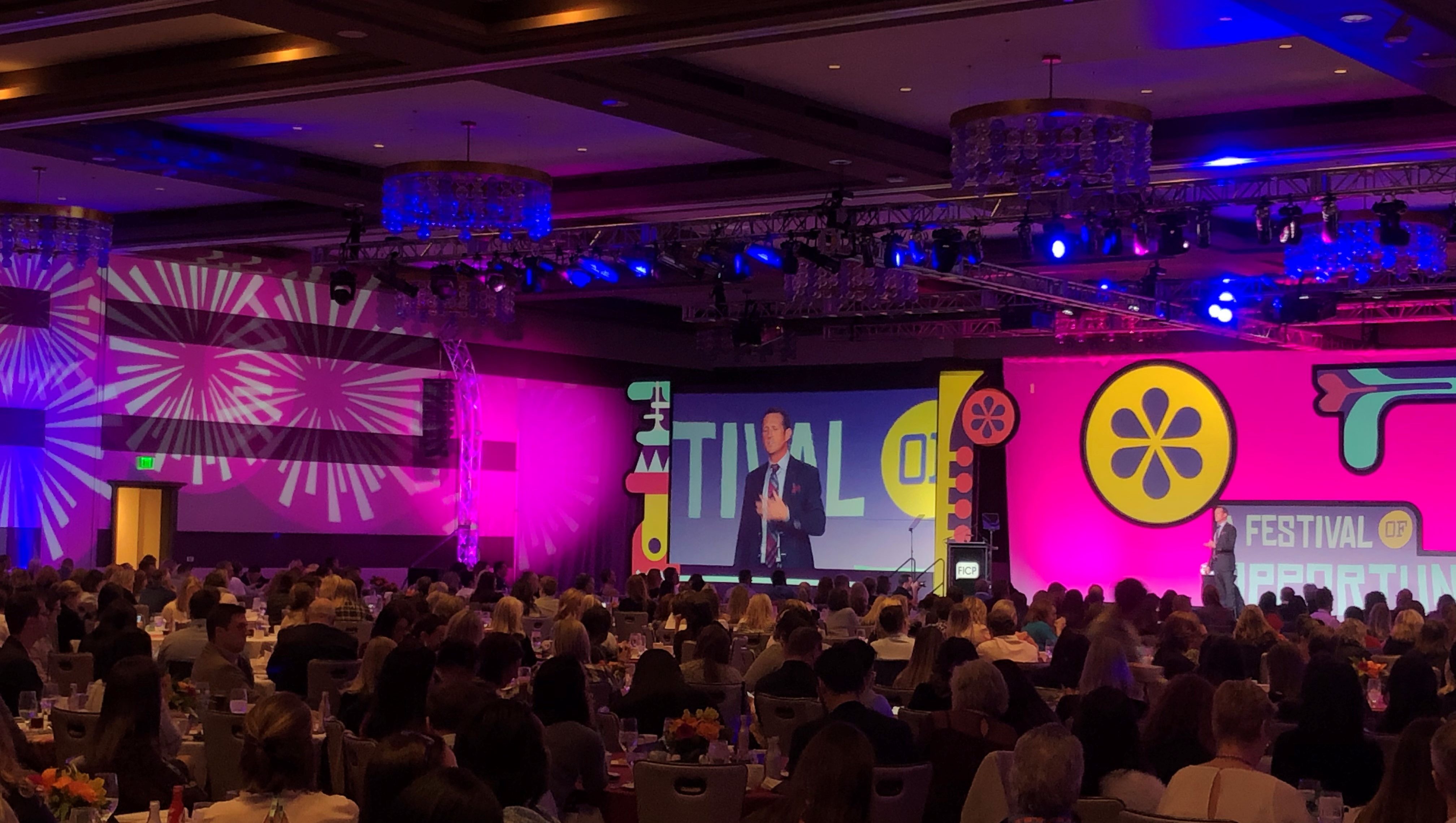
If every meeting is an opportunity, a gathering of financial and insurance conference professionals must be a festival of opportunities. That is exactly what FICP delivered at the organization’s annual conference at Austin Fairmont Hotel this week. The 265 meeting planners and 475 hospitality providers learned new ways to deliver the unexpected in unexpected places, so that attendees and bosses will say those magic words: “Do it again” (in the words of master of ceremonies and magician Jon Petz).

The unexpected included an evening reception at ACL Live (home of the television show Austin City Limits) with two live bands, three levels of discovery and lots of temporary tattoos. It also included a surprise visit from a marching band and a “taco ‘bout awesome” food station.

For those not able to attend the three days at the one-year-new AccorHotels property, here are some lessons learned.

Mean It

Keynote speaker Ben Nemtin shared his personal journey from college student struggling with depression to author and a star of the television show, “The Buried Life,” where he and cohorts make their mission to cross items off an impossible bucket list and help others do the same. His secret to bouncing back? He surrounded himself with people who inspired him and set his life on a course of doing things that mattered.

More#FICP Just Pulled Off a Masterclass in Creating Meaningful Connections

He encouraged meeting professionals to take the time to appreciate the positive influence they have on people’s lives. The day to day can bury the impact, and you don’t often see the results of your hard work on attendees after they return—but it is enormous, he said, adding, “You create inspiration through action.”

Breakout speaker Roy Spence, CEO and co-founder of The Purpose Institute, echoed this assessment. “You are not in the business of conventions; you are in the business of preserving and scaling the lost art of human connection,” he said.

Break-Out Education

The conference was filled with breakout sessions where veteran meeting planners shared best practices for everything from more inclusive meetings to better risk management plans and road warrior health.

To wit:

Inclusion: To help everyone to feel welcome, start with diverse planning teams.

Risk management: It isn’t enough to ask if a property has backup generators; you need to know if they can run the entire property, when they were last tested and how much fuel is on site to run them (Ben Tutt, general manager at Condado Vanderbilt Hotel, can answer all of those questions after living managing Hurricane Maria).

Staying healthy: To sleep through the night when traveling, you need to eat fruits and vegetables in the right proportions and drink water throughout the day.

Christy Lamagna, CEO at Strategic Meetings & Events, mapped out the journey from the ballroom to the boardroom and event tech consultant Corbin Ball shared secrets for doing more with less by leveraging free and low-cost web tools.

Give Back

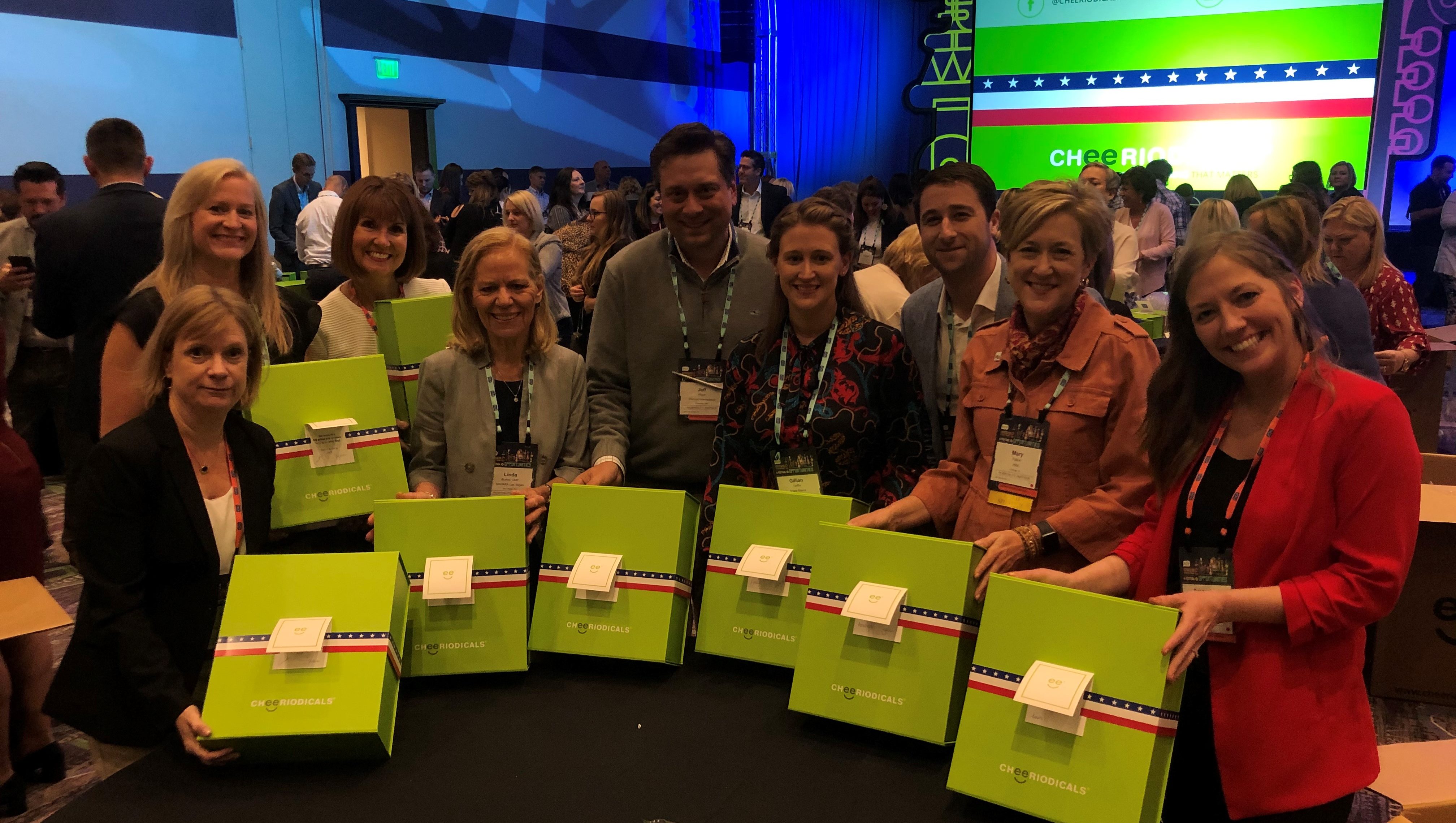
The conference fell over Veteran’s Day weekend, and the occasion did not go unmarked. A silent auction and CSR activity benefitted veterans. With help from the nonprofit Cheeriodicals, teams built gift boxes to deliver to two local veterans organizations.

Work the Nets

Though the agenda was packed, it still left time for making new connections in strategically located meeting spots via appointments made through the conference app. A networking lunch integrated planners and hospitality providers to facilitate cross-pollination. And evening events brought people together around one of the things Austin does best—live music.

Next year the group will meet at Washington Hilton in Washington, D.C., followed by JW Marriott Phoenix Desert Ridge in 2021 and Omni Boston Hotel at the Seaport in 2022.