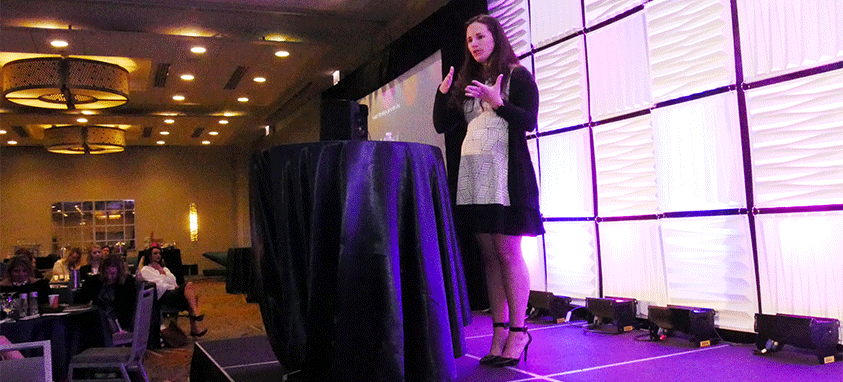
Sarah Moshman speaks at the Smart Women Summit in Chicago.

At the Smart Woman Summit in Chicago, up-and-coming female producer Sarah Moshman debuted clips of her groundbreaking Nevertheless, a documentary due out in October with the goal of ending sexual harassment. And the crowd went wild.

Moshman, already an Emmy-winning documentarian at the age of 31, produced The Empowerment Project, a 2014 documentary that was the result of five female filmmakers driving across country in a minivan to capture the stories of 17 women in traditionally male careers—private pilot, three-star general, bodybuilder, you get the idea.

It asked the question, “What would you do if you were not afraid to fail?” The goal was to help women feel inspired, validated and less alone. The reaction from attendees at Wyndham Grand Chicago Riverfront was proof that she was on the right track.

Kiki Fox, president of Association for Women in Events (AWE) and senior manager of national sales at Core-Apps, reacted in a tweet, “Getting to listen to Sarah Moshman, producer of the Empowerment Project, and see clips of the incredible women in her documentaries is MEGA inspiring. I want to make these women proud of, and inspired by, what I am doing, too.”

Moshman also produced Losing Sight of Shore, a 2017 film that shared the journey of four women who named themselves The Coxless Crew and rowed 8,000 miles across the Pacific Ocean—from California to Australia—in nine months. The revealing, psychologically moving experience underscored that everyone who dedicates themselves to a task can do what might have been considered impossible. As one rower said at the emotional end of the journey, “I thought it was about finishing, but really it was about the journey.”

Moshman’s new project was funded by a Kickstarter campaign launched weeks before allegations of sexual abuse directed at producer Harvey Weinstein resulted in a flurry of similar stories coming forward. She was pregnant at the time. When a neighbor made a comment about what some guy would do to this baby, eventually, if it was a girl, that shook Moshman and her husband. His comments about her unborn child as a passive victim pushed her over the edge.

She raised almost $58,000 with 610 backers and plans to release the film, which she describes as “a documentary that examines the sexual harassment crisis in the American workplace through interviews and personal stories that recount experiences and reveal truths about the intricacies of the issue as a whole. It also shines a critical light on tools and solutions for everyone to use inspired by this watershed moment in our country’s history.”

At Smart Woman Summit, Mosman stressed, “We need to teach men to be empathetic and give them tools to be part of the solution, so they have words to use to speak up and be champions of women.” She added, “It comes down to empathy.”

Women also need to learn how to be assertive, she said. She defined assertiveness as “being strong about how people treat you.”

Her message for the women in the room? “Don’t wait for permission.”

Moshman ended by saying, “You are all extraordinary. You have a story to share and a voice and the power to take action. How you spend your dollar determines what is shown. Demand inspiring content that is respectful of women.”

As meeting professionals pivot to virtual during the coronavirus slowdown, traditional streaming technology is delivering some aspects of the face-to-face meeting more effectively than others. Record the keynote? Check. Poll and ask questions? Sure. But what about the important business function of connecting buyers and sellers in a series of one-on-one meetings? A new solution is on the way.

Laura Welsh, CEO at Conference Software Solutions (CSS), has long helped meeting professionals with the logistics of connecting people during hosted-buyer events. Now, when the event industry literally can’t do what it does best—bring people together—she decided to enable that dynamic in the virtual environment.

“Zoom is fine when you already know the people you are working with, but how do you get a warm introduction?” Welsh asked herself. Her answer: a pair of products that will allow the industry to gather in new ways via a seamless end-user experience that replicates many of the features of the speed-dating-format of a F2F hosted-buyer meeting.

A Meeting Continuum

Conventus, the first product, facilitates “relaxed scheduling.” It is the bridge between a webinar that offers educational components and serendipitous networking, where attendees are given contact information for others in the group and then empowered to set up conversations.

The second innovation is Algo, an algorithm-driven tool (get where the name came from). It will be debuted at Virtual Smart Meetings Experience on April 28 and May 19, and it brings the best of high-impact business events to the desktop—so that even when meeting professionals can’t leave the house, they can continue planning for the future. Mutually beneficial meetings are realized with an assist from video chats and integrated app software.

Welsh calls this “extreme networking,” and she built in organizer controls to let the host monitor and “tap people on the shoulder” if they need to move on to the next meeting.

Algo also takes into account the human element of people sheltering at home, including the distractions of pets and kids. It starts with a virtual check-in and a training, so everyone is comfortable on the intuitive software, even if they aren’t techies.

The tool also tracks whether people actually show up for a meeting and allows the host to sub in someone else if another attendee steps away.

Welsh suggests incentivizing attendees to participate with a chance to win a compelling prize if the person is present. “That way we are not punishing, but rewarding people,” she explains.

“It won’t replace face-to-face, but it will help drive business when we can’t meet,” Welsh says.

How will meeting professionals address risk post-COVID-19? In our latest Smart Meetings #HospitalityStrong webinar, “Preparing to Address Meeting Risk When the Industry Resumes: A Guide For Meeting Planners and Hotel Sales Professionals,” Kevin Coffey, senior travel and meeting risk consultant at GoldSpring Consulting, addressed what both meeting planners and hoteliers should be asking when we all begin meeting again.

Why should meeting professionals address risk?

When it comes to risk management, there are two questions Coffey likes to pose to meetings planners:

  • If an emergency were to occur during one of your meetings, do you think your client would expect you to know what to do or at least have an organized course of basic action?
  • If you were a client looking to contract with a meeting planner or a company, which would you want to work with one that did not address risk?

“When I work with corporate clients, I tell them that if they’re working with a meeting planner that doesn’t address risk, they need to work with somebody else,” Coffey said.

According to Coffey, travel risk management has grown substantially over the last 10 years and it’s beginning to gain momentum on the meetings and events front, although there is still much work to be done. In a survey, in collaboration with WorldAware, only 29 percent of event planners said their company had standalone risk management programs in place to support meetings and events.

More4 Contingency Planning Scenarios You Need to Prepare For Today

“Times are changing quickly and I think when we start to see our business resume, a lot of the corporate clients are going to start asking these questions. We need to be prepared and the meeting and event industry to be able to step forward and start addressing risks,” he said.

Why should you address risk?

  • It’s expected of you.
  • It’s likely no one else is doing it.
  • Your client probably assumes that you’ve been doing it.
  • If you’re a CMP, you’ve been trained on it.
  • You’ll stand out from the planners that aren’t addressing it.
  • It’s the right thing to do.

These same questions can be posed to hoteliers as well. When Coffey asks hotel sales professionals why they haven’t addressed risk, they often say because the client hasn’t asked any of these questions, and if they’re not concerned about it, then they don’t address it. “We’re really trying to change this industry from both sides of the coin, we both need to be equal partners within this,” he said.

“Everyone is trying to figure out when they’re going to resume travel and how they will reopen their corporate headquarters and how they will keep people safe on the road,” Coffey said.

Meeting Risk Checklist

A million issues can impact any meeting or event. The savvy meeting professional assesses all the possibilities and identifies all possibilities as a first step to creating a response plan. Coffey offered a sample list:

  • Pandemic (including, but not limited to COVID-19)
  • Medical emergencies and death
  • Natural disasters
  • Criminal activity
  • Disputes/activism/civil unrest
  • Terrorism
  • Evacuation

“Make your risk plan and checklist part of your pre-con and day-of-event walkthrough, including a walkthrough of the hotel facilities emergency plan,” Coffey advised. He also suggests reviewing the facility plan, walking the evacuation route and asking lots of “what-if” questions of staff.

“A good meeting crisis management plan starts with assessing the risks that might occur based on the probability that they will occur,” Coffey said.

If you are afraid right now, that could be a good thing for your future as a meetings professional, according to Judi Holler, author of Fear is My Homeboy: How to Slay Doubt, Boss Up, and Succeed on Your Own Terms. Holler, who heralds from the world of improv acting, speaks at events around the country about how to shift your mindset to manage fear—or at least that’s what she did until mid-March, when the coronavirus pandemic effectively shut down the travel and meeting circuit.

One of her last presentations was at Association of Women in Events’ Elevate! Conference at Caesars Palace in Last Vegas.

Smart Meetings caught up with her in her home office in Hudson, Ohio, this week to ask how event professionals can continue to move forward while sheltering in place. She had some frank—and very instructive—words.

Win or Learn

“There will always be fear, and there will always be change,” Holler says, her gold earrings swinging on the Zoom call. “We will never be able to outrun fear, but we can manage it.”

How? “The best way to manage discomfort in uncertainty is to lean into it,” she replies without hesitation. She suggests asking yourself, “How can I dance with this discomfort?”

The good news, she says, smiling into the laptop’s camera, is that even in this unprecedented time—when the unthinkable is our reality for who knows how long—meeting professionals will do one of two things. She held up two fingers. “You will either win or learn. But you will never lose,” she says.

That mindset, she continues, allows planners to focus on the future, rather than on the fear.

Winning could mean reimagining your event, spending more time with your kids, rethinking how you manage your life and business. A lot of people are learning about virtual events and what really matters in the bigger scheme of the world—people themselves, not the technology, not the “where” but the “who.”

Holler is launching a podcast and doing webinars. She recalled how it went for her almost 3,000 Twitter followers on Wednesday. “So, I woke up that morning and got dressed like I was going onstage to give a keynote. It was fun. It made me feel good. I’ll probably do it again. Small victories.”

https://twitter.com/JudiHoller/status/1247855994467684352

Holler has three suggestions for people feeling overwhelmed by the loss of normalcy right now.

1. Go small to go big

“Take baby steps to create momentum,” she says.

Focus on one hour, one day at a time. Ask, “What can I do today that will help my organization and the people who work for me? You can handle that.”

Holler is learning that she can do improv without a live audience, something she never thought possible before. She committed to trying it, then took the next step of actually showing up. She now thinks there may be more to come. “It has been fun to prove myself wrong,” she says.

In sum, go small to go big—”baby steps” became a refrain in the conversation.

2. Experiment

“Now is the time to do things that make you feel uncomfortable,” she says. “We have been given this gift of time, let’s see it for that.”

Holler notes that for people who always say they are “crazy busy,” this could be the ideal time to try new tools and resources (e.g., the launch of her podcast and webinar). That trade show you have done the same way for the last 15 years? This might be the perfect time to brainstorm how to breathe new life into it.

“Yes,” she says. “Take a day to breathe.” She describes going through the five stages of grieving all in one day and suggests allowing yourself some grace, but stresses the importance of not wasting this crisis. Fear loves to move into a vacuum.

“Take this time to learn and experiment,” she implores. “Become a student.”

3. Watch your inputs

“Seriously audit the information you consume,” Holler advises. There is a balance between being informed and being scared out of your mind. She watches her social media and news intake even in normal times to make sure she doesn’t obsess, and that is even more important now. “I have had to have frank conversations with people I love and set boundaries for the stories they are sending,” she says.

“We don’t have a script,” Holler concludes. “The only thing guaranteed is right now, so start living in the moment. Stop chasing superficial trappings of success.

“You can control yourself and your actions. That knowledge gives us the courage to take chances and do what we always wanted to try—and do it now. Light the good candles, drink the good wine, do what you always put off and do it now. Live in the fire!”

Situated among the highest peaks in the eastern United States, Asheville, North Carolina, offers an ideal location for inspired meetings. It features breathtaking views, a vibrant downtown, top dining options, a buoyant arts scene, a wide array of outdoor adventures, unique tours—and amazing, unique meeting spaces. In fact, it’s sometimes referred to as the “San Francisco of the South.”

MoreBreaking the Mold: North Carolina

“Local arts groups and folks from our award-winning culinary and beer scene, as well as this community’s real connection to the outdoors, have all contributed to the breadth of options for nontraditional meeting spaces,” says Dianna Pierce, vice president of sales for Explore Asheville Convention & Visitors Bureau. “The welcoming and innovative energy here allows people to think outside of the box.”

JuneBug Retro Resort, a 50-acre property that is a 12-minute drive from downtown Asheville, is nestled in a private valley alongside a river, and can be reached via a charming wooden bridge that crosses a river. The property is designed to make guests feel that they have been transported back in time; no modern structures are visible. It provides 3,600 sq. ft. of meeting and event space, and several restored 1950s campers can be rented for use during events.

Located in the Southern Appalachian Mountains, just south of Asheville, The North Carolina Arboretum boasts acres of cultivated gardens and groomed trails featuring some beautiful, botanically diverse plants of the region. It also has eight indoor and outdoor meeting spaces, totaling 1,300 sq. ft.

Smoky Park Supper Club is a restaurant and event space alongside the French Broad River in the River Arts District. Its main event space is the Boat House, an open-air pavilion with a bar that can accommodate up to 200 people. Groups can enjoy the Boat House either indoors or at its outdoor picnic tables, and can customize meals and entertainment.

Another venue along the French Broad River, Salvage Station, located on a former junkyard, features a riverfront bar and restaurant highlighting eclectic Southern and Appalachian-inspired fare. It also has a concert hall, a special-events venue and large outdoor areas for groups.

Featuring stunning mountain views and rustic elegance, Crest Center & Pavilion is located 4 miles from downtown Asheville. It can accommodate up to 250 people for business meetings and conferences, while the entire grounds can host up to 1,000 people. Groups can arrange for banquet services, a stage and a dance floor.

Likely to become one of the city’s most unique spots, Citizen Vinyl—a vinyl-pressing plant that will also offer food, cocktails and immersive music—is emerging in the same historic building that houses Asheville Citizen Times newspaper. The 10,000-square foot space, which is scheduled to open this summer, will include a space for hosting private events.

Read more about North Carolina’s unique meeting spaces in Dan Johnson’s story, “Breaking the Mold: Nontraditional Meeting Spaces are Trending in the Tar Heel State,” in the March issue of Smart Meetings.

Fairmont Dallas

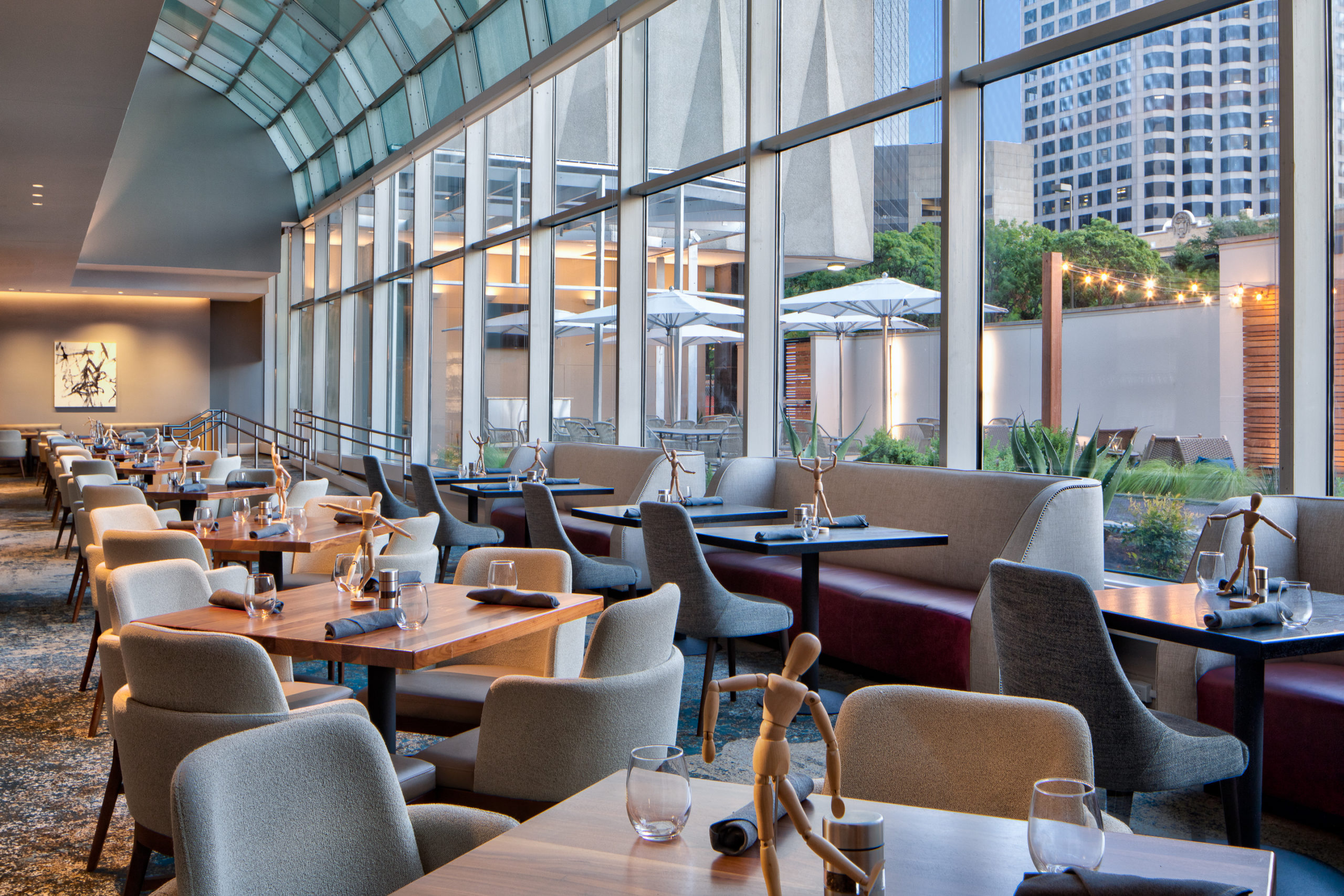
Located in downtown Dallas, this property marked its 50th anniversary with a full refreshment of its 70,000 sq. ft. of meeting space. The 18,000-square-foot Regency Ballroom and prefunction area were styled in soft blues and sparkling golds, with new chandeliers creating warm light throughout. Eco upgrades include recessed lighting and efficient faucets, while prefunction areas now feature comfortable seating and easy-access plug-ins for quick meets, calls or catching up on emails.

Barbary Beach House Key West, Florida

Opening this summer in the Florida Keys, this oceanfront hotel provides a beach-luxe setting for meetings on golden sands. The hotel will provide 184 guest rooms in natural textures with reclaimed wood and pops of marine-inspired colors. It’s set up for meetings of 50 to 100, with one indoor and three lush outdoor spaces. Complimentary shuttle service will ferry attendees to the historic downtown harbor, and it’s just over a mile from Key West International Airport (EYW).

Sheraton Dallas Hotel

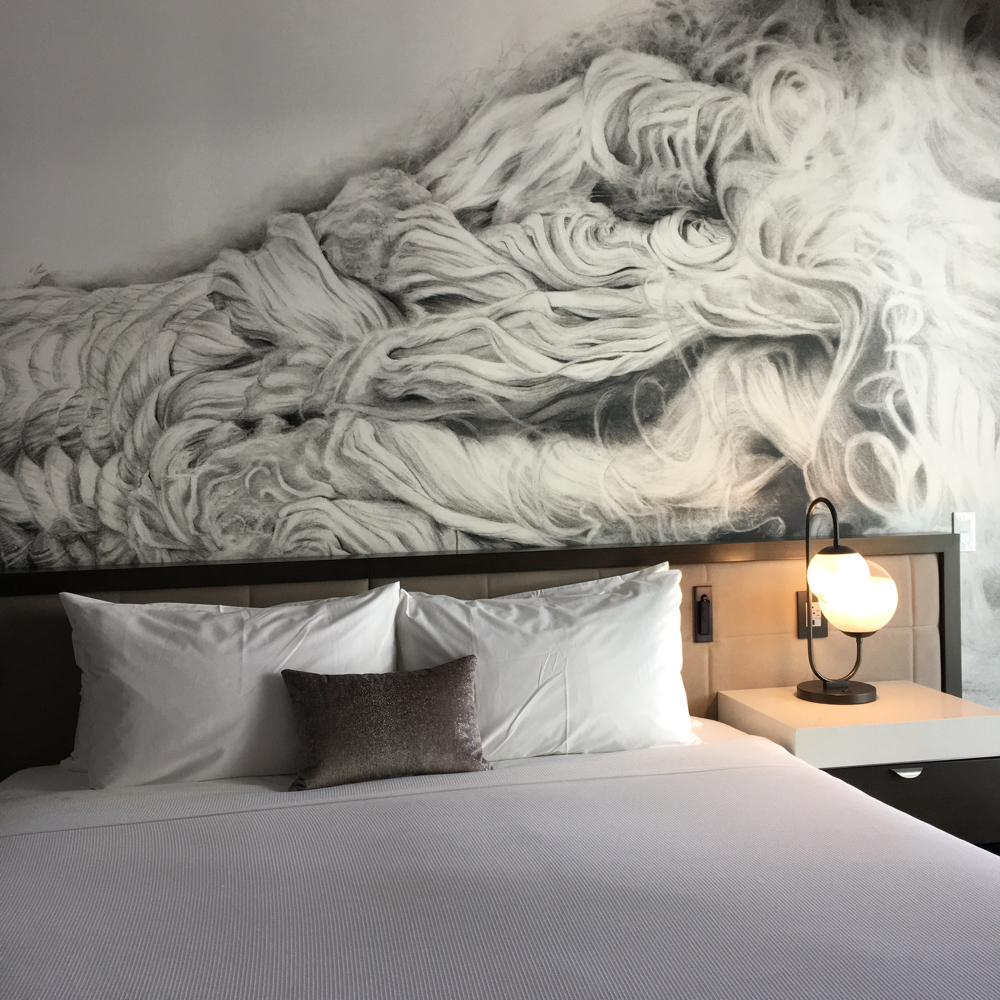
This 70-year-old downtown landmark underwent a full-property makeover, from its 1,840 guest rooms to the 230,000 sq. ft. of event space. The largest venue holds up to 5,000 guests, and meeting rooms all feature high-speed internet and state-of-the-art audiovisual tech. On the social side, the hotel added five new dining concepts, including an intimate cocktail lounge and a redesigned sports bar featuring a menu of fresh ingredients and craft beverages. A rooftop garden provides a respite for guests, featuring murals by a local artist.

Marriott Virginia Beach Oceanfront, Virginia

A new addition to the Virginian coastline, this hotel boasts 305 guest rooms with panoramic water views, and 20,000 sq. ft. of meeting space. It will feature the largest ballroom in Virginia Beach, with seating for 1,155 attendees, while its 3,750-square-foot oceanfront lawn can provide large outdoor events with a view of the water. Follow the wave-gazing with dinner in a private dining space with 360-degree views of the city at Orion’s Rooftop, featuring Asian-inspired fare.

Kimpton Cottonwood Hotel Omaha, Nebraska

Originally opened in 1916 and formerly called the Blackstone Inn, this property counted the likes of Eleanor Roosevelt and Jimmy Stewart among its guests. Reopening summer 2020, it’s ready to revive its heyday following property-wide renovations. The Omaha landmark will boast 205 guest rooms and 13,500 sq. ft. of event space, plus a resort-style swimming pool and solarium. Did we mention the Reuben sandwich was invented there?

The Galt House Hotel, Louisville, Kentucky

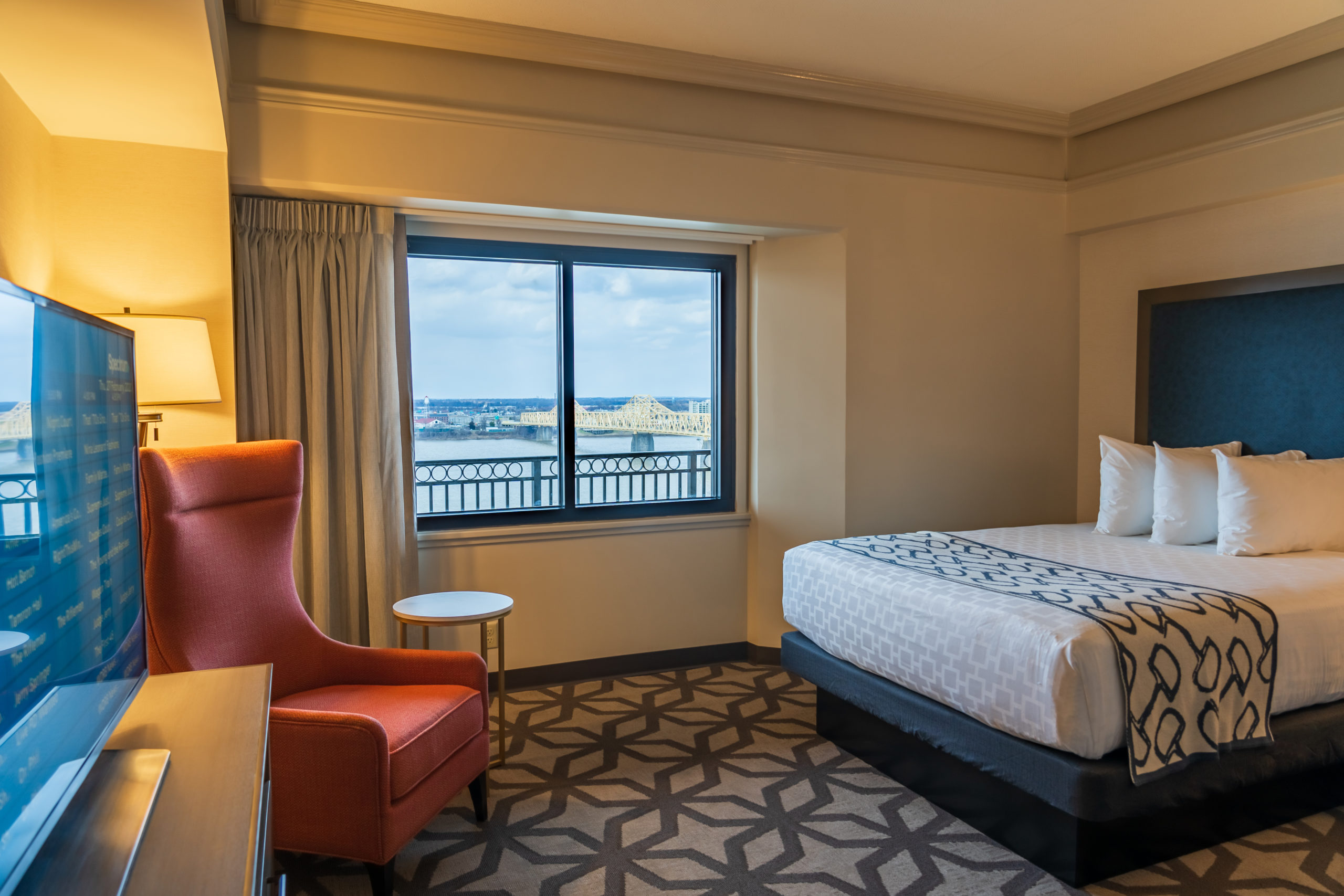
This elegant property sits on the Ohio River and is the official hotel of the Kentucky Derby. The hotel recently completed renovations to its West Tower, including a 15,400-square-foot ballroom, 639 guest rooms and all its meeting space. The hotel has 1,310 guest rooms in all and a total of 130,000 sq. ft. of convention space, with more renovations underway. Recently reopened Jockey Silks bar was an original stop on the Urban Bourbon Trail, so don’t forget to sip on a little local history.

Canopy by Hilton Tempe Downtown, Arizona

Opening in spring with 198 guest rooms and suites, this Hilton property prides itself on epitomizing its surrounding culture by enhancing your stay with locally curated art, food and Southwestern design. The property will offer 5,000 sq. ft. of event space, a 14th-floor pool and bar and Canopy bikes for guests to explore the thriving university area. It’s also a convenient 5 miles from Phoenix Sky Harbor International Airport (PHX).

Hyatt Centric Las Olas Fort Lauderdale, Florida

This towering property opens April 2 with 238 guest rooms and 15,000 sq. ft. of meeting space boasting sky-high views of the riverfront. Interior inspirations come from Fort Lauderdale’s canal systems and yachting culture, extending to Elev8 rooftop pool and bar, where you can peer downtown from eight floors up. A seasonally-driven restaurant opens out onto lively Las Olas Street, which is close by hot spots such as Las Olas Entertainment District and Flagler Art & Technology Village.

The coronavirus (COVID-19) pandemic has suddenly thrust online meetings into the spotlight as some companies and organizations venture into them for the first time while others rely on them much more than ever before. All of them are searching for ways to run the most productive meetings—and to avoid mistakes during a period when time is especially precious.

See alsoVirtual Support and Working From Home

“Remote meetings are inherently different from in-person meetings,” writes Howard Tiersky, co-author, along with Heidi Wisbach, of Impactful Online Meetings: How to Run Polished Virtual Working Sessions that are Engaging and Effective. “If you’re not used to running them, you’re going to make tons of mistakes. And those mistakes can have major ramifications in terms of how well people perform once they log off and get back to work.”

Tiersky is the founder of two companies—From: The Digital Transformation Agency and Innovation Loft—and has worked with many clients to create highly engaging online workshops, seminars, conferences and other collaborative experiences. In his book, he identifies five mistakes specifically made by virtual meetings newbies, but which apply to others, as well. Here are the mistakes, with augmented descriptions.

Mistake No. 1: Neglecting one (or more) of the “big five” success keys of online meetings

Tiersky states that meetings must focus on the following success keys.

  1. Have a clear purpose.
  2. Get participants in the right mindset.
  3. Get them fully engaged behaviorally.
  4. Incorporate high-quality content aligned with the purpose.
  5. Make it easy to participate.

“If you do all of these correctly, you will have high-impact online meetings,” Tiersky writes. “If you don’t, there’s going to be a lot of awkwardness and inefficiency. Worse, bad meetings can lead to bad workplace performance, which is the last thing any of us need right now.”

  • Impact of mistake: Neglecting the success keys can lead to disorganized, nonproductive meetings in which participants are not engaged. This not only results in wasted time, but can adversely impact employee performance.

Mistake No. 2: Holding voice calls instead of videoconferences

During videoconferences, participants are much more connected than during voice calls. Being able to see each other establishes more intimate, human connections, thereby reinforcing team unity. Participants are much more likely to be engaged, because everyone else can see them, and they are much less likely to multitask.

An article in this month’s Harvard Business Review by Strategic Offsite Group’s Bob Frisch and Cary Greene, “What it Takes to Run a Great Virtual Meeting,” emphasizes that it’s important for participants to sit close to the camera to re-create the intimacy of an in-person meeting.

  • Impact of mistake: Voice calls can be productive, but are more limited and generally less efficient than videoconferencing, resulting in less value.

Mistake No. 3: Failing to be strategic about sequencing

In her article, “9 Best Practices for Engagement in Virtual Meetings” on the Nten website, master trainer, speaker and author Beth Kanter suggests starting virtual meetings with an ice-breaker or check-in with participants (if feasible).

To begin, Tiersky recommends stating the purpose of the meeting and then discussing any “elephant in the room” topics so that participants will not be preoccupied with them, and can have clear heads as the meeting proceeds.

If any agenda items potentially can create heated discussion, place them in the middle, after less controversial issues have been presented and participants are settled into the meeting. Frisch and Greene stress that it’s important to not avoid tough issues in virtual meetings and to limit the length of presentations so that more time is available for discussion.

If you have an exciting announcement, Tiersky says you might want to create suspense by letting participants know that a surprise is coming but won’t be revealed until the end of the meeting. Or, you might want to reveal it early on to create a positive vibe from the start.

  • Impact of mistake: Meetings that are not run smoothly often leave participants feeling confused and wondering what the purpose was.

Mistake No. 4: Not giving people an active role

Clearly, not everyone has a specific “job” in most meetings, but It can be very helpful to provide some roles—such as facilitator, presenter notetaker and timekeeper, among others—for extended meetings. This keeps participants more engaged and energized.

In her article, Kanter encourages these roles to be rotated to spark greater engagement.

  • Impact of mistake: Not assigning specific roles can reduce participant engagement, thereby lessening productivity.

Mistake No. 5: Failing to take advantage of breakouts

It is often beneficial to break groups into teams to discuss ideas, prioritize and plan actions. This engages more people and often results in additional valuable input. Zoom, Google Hangouts and other major online meeting platforms offer breakouts.

“We give each team clear instructions for the work they are to do, in writing, and then usually give them a small amount of time to do it, like 20 to 40 minutes,” Tiersky writes. “A compressed time frame forces the group to organize quickly; get to work; and focus on progress, not process or perfection.”

Another option to boost overall engagement, offered by Frisch and Greene, is for the presenter to call on people.

  • Impact of mistake: Without breakouts, a small cluster of people do most of the talking, while the potentially valuable ideas of others are never presented.

“When done correctly, online meetings are an incredibly powerful method of enabling collaborative work,” Tiersky writes. “It’s worth investing a bit of time and effort in learning how to maximize them. Frankly, they have the potential to move the needle for your business, and right now, this is more important than it’s ever been.”

Hand-picked decor and gifts for your attendees­—and you. This month, we’re featuring products that serve as your first line of defense from coronavirus, bad posture, post-happy hour headaches and more. Tweet us your faves or check out last month’s selection here.

Not to be ‘Scoughed’ At

Whether you’re avoiding germy airports or simply grocery shopping during coronavirus, these scarves have you covered, literally. Each one has a hidden activated carbon filter that keeps out toxins, allergens and pollutants. scough.com

The Case for Sustainability

This company cuts plastic waste with phone and AirPod cases that protect against drops, but break down in your backyard compost. It’s also a member of 1% for the Planet. Hello, a case that keeps on giving! pelacase.com

Cold-Roll Therapy

Freeze this portable massage ball to deliver six hours of cold-rolling power. Roll it under feet, on calves, on your back, wherever—the one-two punch of chill and massage eases inflammation, whether post-flight or post-Monday. recoupfitness.com

Posture Perfect

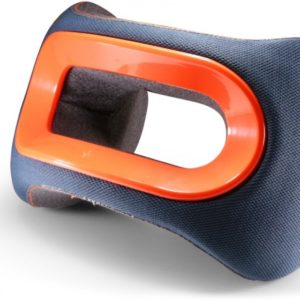
Ever sat in an airplane seat to find yourself suddenly shaped like a banana? Enter this travel pillow, which holds your cervical spine in correct alignment and keeps your head from doing the side-bop as you fall asleep. bullbirdgear.com

Drink Me

Have an event where you know you’ll be imbibing? This probiotic shot is designed to prep your gut to break down acetaldehyde, the by-product of alcohol that leaves you feeling less than great the next morning. zbiotics.com

Take a Chill…Powder

It’s basically calm in a cannister. This CBD supplement delivers 50 scoops (at 10 mg) of flavorless, THC-free powder that can be mixed into literally any liquid for a dose of peacefulness wherever you are. welleryou.com

Swag It Up

Finders Keepers

This tiny little disc can bring you peace of mind, as it’ll keep your phone and another object of choice in your orbit within a 500-foot range, with GPS tracking and a loud sound. Phew.

pebblebee.com

A Cherry on Top

Surprise and delight with a pouch of freshly picked Washington cherries, dried without added sugars or preservatives, enshrined in lightly sweetened dark chocolate. Need we say more?

chukar.com

Meshy, Not Messy

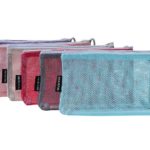
Goodbye to the frustration of feeling every small item in the bottom of your bag except the one you’re looking for. These colorful see-through pouches are a vibrant solution.

walmart.com

The Last Straw

Plastic is an eco no-no, but paper straws go limp halfway through your ice tea. These silicone replacements fold into an attachable case—so if you’ve got your keys, you’ve got your straws.

food52.com

Put a Sock in It

This company mastered sock tech to deliver super-comfy, natural-fiber socks with styles for office to gym wear. Most importantly, it gifts a pair to homeless shelters for every pair sold.

bombas.com

When the going gets tough, the tough cut costs—at least in the financial and insurance conference sector, where budgets often are more likely to come under the scrutiny of regulators. Given the pressure to raise the bar year after year—and especially during crises such as the coronavirus (COVID-19) pandemic—planners have to think creatively to find ways to deliver memorable experiences without breaking the budget.

MoreBudget Financial Meetings: Doing More with Less

“The regulated nature of the industry often handcuffs creatives who tend to present the same thing over and over again,” says Joe Panepinto, senior vice president and strategy director for Jack Morton, a brand experience agency. “We see it as an opportunity to help these clients see their business in a different way.”

According to Fall 2019 Pulse Survey, conducted by Financial & Insurance Conference Professionals (FICP), the majority of planners were keeping their budgets in check and considering a wide range of options for trimming costs. Faced with an economic slowdown—which has since been significantly exacerbated by the coronavirus pandemic—37 percent of planners said they would cut their spending on amenities and gifts; 35 percent would change up their venues; 33 percent would reduce the number of participants; and 20 percent would focus on shrinking their food and beverage costs.

Managing risk is particularly important in the financial and insurance meetings sector, and meeting planners play a key role in this process. The FICP Fall Pulse Survey reported that roughly one-third of meetings professionals lead the development and implementation of risk management protocols related to meetings and incentives, and more than half indicated they play a contributing role.

Developing risk management plans and protocols is a “big and important question,” Panepinto says. “You’re bringing lots of people together, and any time you do that, you need to plan for a wide range of contingencies. The planning team is helpful in this process, but they shouldn’t be in the lead role.

“Operations and risk management should be involved to bring to the forefront the best practices for dealing with outages, disruptions [natural and otherwise], threats and threat preparedness. Production knows the venues, and the processes and procedures they already have in place. Account services needs to convey to the team the client’s expectations on adherence to their policies and more. Risk management is a team challenge and should be approached from every angle.”

Read more in Chuck Kapelke’s story, “Doing More with Less: Meetings in the Financial and Insurance Sector Require Outside-the-Box Thinking,” in the April issue of Smart Meetings.