Frisco, Texas, officiates its reputation as a sports-centric city

Over the last 40 years, Frisco, Texas, has turned itself into a sports city. Just recently though, Visit Frisco has made it official, adding “Sports City USA” to its brand.

“We felt it was time to add Sports City USA into our brand portfolio in a meaningful way to tell the story of how Frisco’s leadership dreamed of building a sports city. We wanted to highlight to meeting planners and sports events rights holders that Frisco is dedicated to sports venues and partnerships that contribute to great experiences and the idea of growing greatness,” says Josh Dill, assistant executive director of Visit Frisco.

Frisco’s Beginnings

In a seven-part docuseries named Where Greatness Grows: The Story of Sports City USA, Visit Frisco highlighted the city’s history as a place where new athletes are born, starting with the Frisco Superdrome, a bicycle racetrack that opened in 1998. Unfortunately, the track closed in 2017; Collin College will repurpose the 5.5-acre area for growth of its Preston Ridge Campus.

The city’s reputation as Sports City USA has been established long before Visit Frisco decided to add the branding, and meeting professionals and their attendees can experience what that looks like. “Being the home of some of the most recognized sports organizations around, like the PGA of America and the Dallas Cowboys, helps draw interest for groups to come experience a meeting or offsite right in the middle of where those brands do business,” Dill says.

Read More: Lone Star Meetings: Texas Venues That Make an Impression

“We also know that meeting planners are focused on the attendee experience, which often extends beyond formally planned activities. In Frisco, attendees can ‘choose their own adventure’ once the meeting breaks for the day and create memorable dining, retail, arts, culture or sports experiences.”

Many of the city’s official sports venues double as locations the community and visitors can use. PGA of America’s headquarters, part of the larger 660-acre PGA Frisco complex that also includes Omni PGA Frisco Resort & Spa, is a training ground for the city’s high school athletes. The complex also offers visitors a chance to play 18 holes on its championship golf course or check out concerts on its lawn in The District, dubbed The Dance Floor.

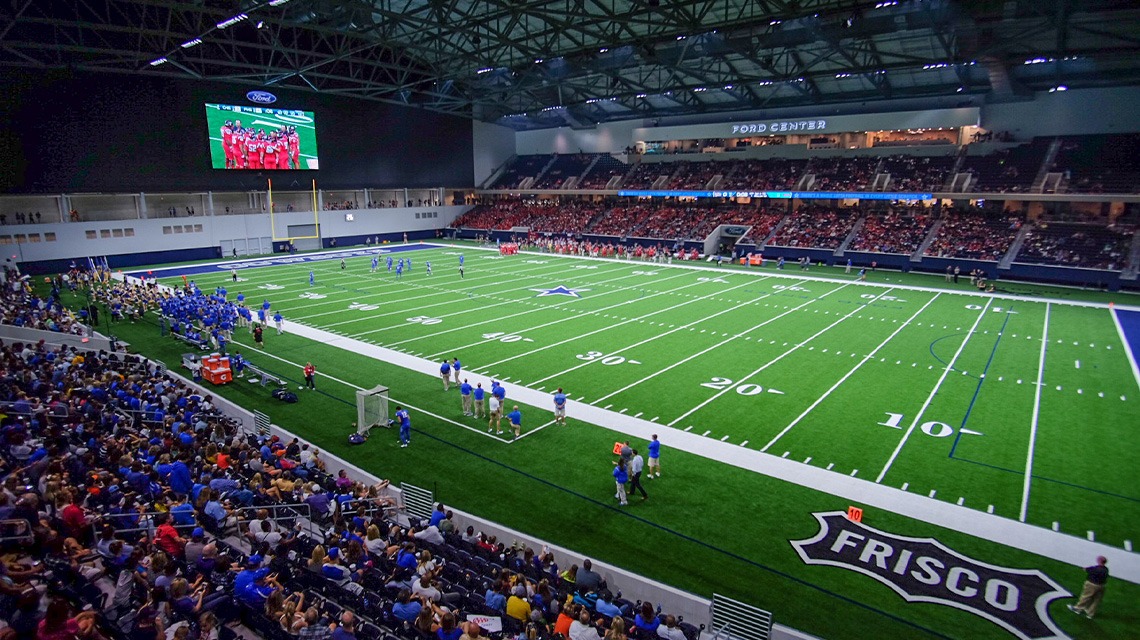
Zoomed out shot of Ford Center at The Star
Ford Center at The Star

It’s football headquarters offers a similar experience, Dill explains. “The Star is not only the world headquarters and practice facility of the NFL’s Dallas Cowboys, but it’s on a 91-acre campus with incredible dining, shopping, medical facilities and entertainment—all opportunities for planners to create unique experiences with the flavor of America’s Team.”

At National Soccer Hall of Fame, groups can compete in interactive virtual games. “Competing in a skills competition or having an authentic sports experience at our wide array of attractions is a great way to build meaningful relationships and network with clients, peers or colleagues,” Dill says.

Frisco’s Future

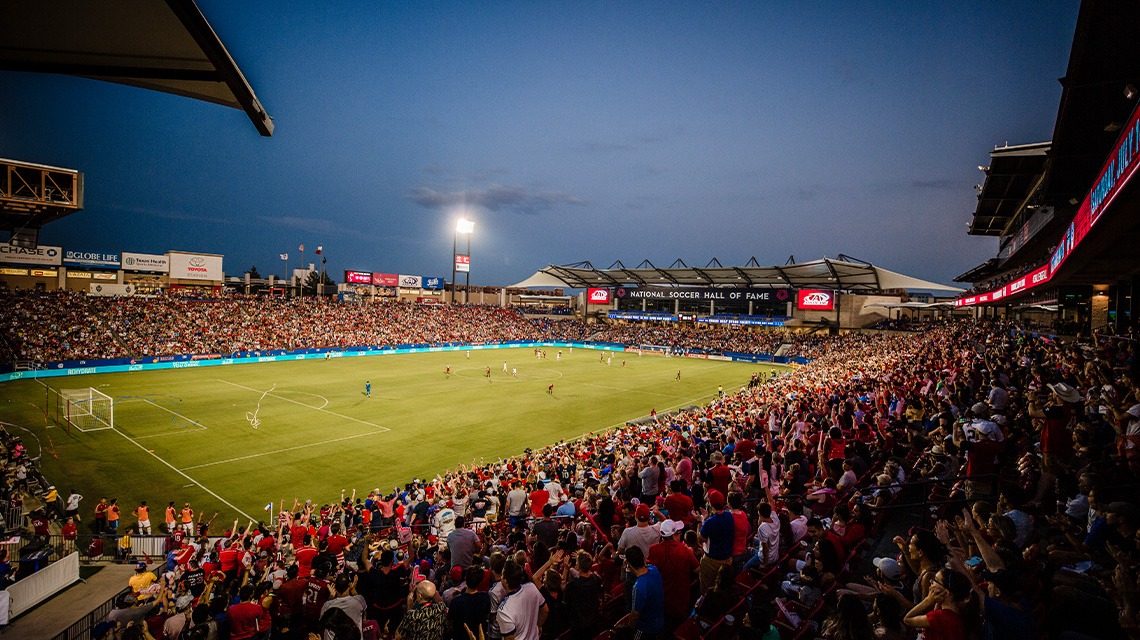
Zoomed out shot of Toyota Stadium
Toyota Stadium, photo: FC Dallas

Looking ahead, the city will soon welcome a renovated Toyota Stadium; scheduled for completion in 2028, the updated stadium will feature a new roof that will provide shade for visitors in the seating bowl, two new suite levels and club spaces on the stadium’s east and west sides.

The stadium also welcomed a new team, United Football League’s Dallas Renegades, who will start playing home games there in spring 2026. Next door, brewery Rollertown Beerworks opens today, which features, Dill says, “an outdoor turfed lawn, stage and two-story taproom for groups big and small and counts Dirk Nowitzki and Dude Perfect among their investors.”

Some good news is in the air. A new OAG report shows average airfares are dipping in key city pairs, meaning planners may have a little more budget to work with for 2026 experiences. And while the skies get friendlier, the U.S. is rolling out a global campaign to boost international arrivals just in time for some major milestones.

American Airlines is embracing its centennial year with retro flair and modern Flagship upgrades, while in Dubai, a hospitality icon is getting the MGallery treatment with a luxe refresh. Meanwhile, Princess Cruises is proving you can have your five-star dinner and pool zone too.

As always, Smart Travel is here to bring you the latest updates shaping the way we move, meet and plan.

Airfare Trends Show Surprising Drops in Key Routes

It may feel like your wallet is bracing for take‑off, but a new analysis from OAG Aviation Worldwide Limited shows that airfares in many major city‑pairs are actually going down this year.

In North America, six of the top ten city‑pairs saw drops in average fares, including Las Vegas to Los Angeles (‑7%) and Dallas/Fort Worth to L.A. (‑6%). In Asia, increased capacity helped domestic routes in Japan fall by around 7 % on average. But in Europe, the story diverges: Some routes, like Dublin‑London, jumped by 24%.

So what does this mean for meeting and incentive travel? It suggests you might be able to reallocate budget—less on airfares, more on experiences, lodging or destination upgrades. And when you spot a fare that feels like a bargain, OAG says it probably is—so strike while the data’s hot.

Brand USA Rolls Out ‘America the Beautiful’ to Draw International Travelers

Brand USA just launched its biggest campaign yet, “America the Beautiful,” during Travel Week U.K. & Europe in London. The goal? To remind the world that the U.S. isn’t just a place to visit—it’s a place to feel, taste and experience.

“Every element, from powerful creative storytelling to AI-powered planning tools, is designed to inspire travelers to see America in new ways,” said Leah Chandler, Brand USA’s chief marketing officer. “We’re not asking people to simply visit America; we’re inviting them to feel it, taste it and carry home experiences that become core memories.”

Read More: Brand USA Focus on MICE and Special Events Could Expand Annual Global Travel Beyond 90 Million in the Future

The timing is no accident: International travel to the U.S. is on the rise, with 2025 projected to generate more than $550 billion in total economic impact. And with 2026 bringing the FIFA World Cup, America’s 250th birthday and Route 66’s centennial, Brand USA is putting out the welcome mat in nine key markets from India to Ireland.

The campaign will show up across streaming, social and out-of-home in cities around the globe, backed by a shiny new digital planning hub and tools to help connect major gateways with regional gems.

This all adds up to a richer mix of international interest—and hopefully, more incentive and meeting groups making their way stateside.

American Airlines Goes Retro-Future with New Livery and Luxe Upgrades

Just in time for its 100th birthday, American Airlines is throwing it back and stepping it up. The carrier just unveiled a special Flagship livery that blends vintage swagger with modern shine, set to debut in November on a Boeing 777-300.

The new look nods to American’s early days, reviving the iconic orange lightning bolt from the 1930s and adorning the plane with “Flagship DFW” as a wink to its largest hub. There’s even a classic eagle roundel on the tail for extra charm.

But this isn’t just a cosmetic refresh. That same aircraft is getting a luxe interior upgrade in 2026, featuring 70 Flagship Suite seats (with privacy doors and wireless charging), 44 Premium Economy seats with new calf rests and headrest wings, and 4K QLED screens in the Main Cabin, the first in the U.S.

“Painting the original Flagship design on our Flagship aircraft is a powerful way to honor that legacy while embracing the future,” said Ron DeFeo, American’s chief communications officer.

Centennial merch is also landing in the airline’s brand store, giving aviation fans a chance to snag vintage-inspired gifts that celebrate a century in the skies.

Dubai’s Hidden Gem Gets a Bold New Chapter

One of the Dubai’s best-kept hospitality secrets is getting a glow-up. Accor has officially signed the Creekside Hotel, a longtime local favorite with ties to tennis royalty and historic views, to its global portfolio, with plans to relaunch the property under the boutique-inspired MGallery Collection.

Set next to Dubai Duty Free Tennis Stadium and just minutes from the airport, the hotel is owned by Dubai Duty Free and will be operated by United Hospitality Management (UHM) under a white-label franchise agreement. A full renovation will precede the official rebrand, with plans to elevate every detail from design to dining, while preserving its sporty soul.

Expect 292 refreshed rooms with creek and city views, two rooftop pools, the expansive Akaru Spa and a fitness complex that includes tennis, squash and paddle courts. A curated collection of more than 480 commissioned artworks will also help channel MGallery’s signature storytelling style, blending modern luxury with cultural depth.

“By partnering with UHM and Accor, we are ensuring that the Creekside Hotel is not only managed with operational excellence but also refreshed with a bold new vision. Guests can look forward to an elevated experience that continues to reflect Dubai Duty Free’s commitment to excellence in hospitality and world-class sporting events,” said Ramesh Cidambi, managing director of Dubai Duty Free.

Royal Princess Ship Crowned World’s Best for Food

If your event diet starts with steak and ends with sushi, Princess Cruises has your ship. The line’s Royal Princess just earned the title of World’s Best Culinary Cruise Ship in the 2025 World Culinary Awards, serving proof that group travel can still mean five-star dining.

The recognition, voted on by industry experts and culinary insiders, celebrates the ship’s elevated menus and wine pairings, onboard partnerships and flavor-forward guest experiences. “This honor is a true testament to the creativity and dedication of our entire food and beverage team,” said Sami Kohen, vice president of food and beverage at Princess Cruises.

Guests aboard Royal Princess can sample everything from hand-cut steaks at Crown Grill to a Tuscan tasting menu at Sabatini’s, created in partnership with legendary winemakers Frescobaldi. There’s also the Champagne-soaked Chef’s Table Lumiere, sushi with a view at Ocean Terrace and pizza by 13-time world champ Tony Gemignani at Alfredo’s Pizzeria, plus wine dinners with Napa’s Caymus Vineyards.

This winter, the ship sets sail from Los Angeles with itineraries along the California coast and Mexico, before heading north to Alaska in summer 2026.

Artificial intelligence (AI) is the buzzword du jour, and planners are clammering to better understand it as a tool that brings values to an event. Smart Meetings welcomed Brittany Fisher, a team lead in product marketing at Cvent, to a recent webinar to break down how to use AI to personalize meetings and events.

The focus is on real-world application, not just hype. Fisher stresses that personalization isn’t just a trend–it’s a rapidly growing expectation from attendees.

“The key word here is ‘expect,'” Fisher says. “It’s no longer a nice-to-have. It’s an expectation from our attendees.” In today’s environment, events must feel tailored to individual needs and interests to truly resonate. But how can smaller teams, without the resources of major corporations, achieve this?

The answer lies in strategically leveraging AI to overcome common obstacles. Many event planners struggle with “data overload,” feeling swamped by information but unable to extract meaningful insights. “Data is important, and we’re drowning in information, and it’s getting really challenging to determine what’s truly important,” Fisher acknowledges. AI provides a solution by quickly analyzing vast quantities of attendee data, identifying patterns and preferences that might otherwise go unnoticed.

Read More: How AI Is Beneficial Before, During and After Events

However, AI isn’t a magic bullet; effective personalization requires a deliberate approach. It’s essential for planners to have a strategic focus, urging organizers to define clear goals before utilizing AI tools. “You don’t want to just use AI to use AI,” she cautions. “You need to make sure that you’re tailoring it to the information that you need.” In other words, personalization efforts should directly support specific business objectives, such as increasing attendance, improving engagement or driving post-event sales.

Underlying all successful AI implementation is data quality. “You’ve probably all heard the term garbage in, garbage out, and I just think that is so true when it comes to AI,” Fisher notes. “Because your AI is only going to be as good as the inputs that you put in.”

This means prioritizing clean, relevant and recent data—and regularly auditing data sources to ensure accuracy. To assist, AI tools exist that can take data and refine it to be the most accurate and useful source.

Integration is equally vital. Creating a unified view of attendees requires connecting various systems, such as marketing automation platforms, CRM systems and event registration data. Through those direct connections, you can ensure a smooth flow between your systems.

Before the event, AI can drive registrations through targeted emails and personalized website content. “You can use AI to help with content, or even just simply personalize with data tags,” Fisher suggested. During the event, recommendation algorithms can guide attendees to relevant sessions and networking opportunities, while AI-powered chatbots provide personalized support.

Read More: How Event Planners Are Using AI in 2025

For sessions, planners can personalize messages, “So you could create emails with videos that say, ‘Hi, Bob, I’d love you to come to our internal event,’ or ‘thanks for coming, Jenny,’’ says Fisher. “Create that personalized touch at every single piece of the journey.”

Post-event, AI can be used to repurpose content, create personalized summaries and analyze attendee sentiment through feedback summarization.

Finally, remember that AI is not a replacement for human creativity and intuition, but a powerful tool for amplifying those qualities. By approaching AI strategically, prioritizing data quality and embracing ethical practices, event organizers can create truly personalized experiences that leave a lasting impression on attendees. As Fisher succinctly put it, the key is to “use your data to understand your attendees, tailor your events and make them feel special.”

In a landscape often governed by spreadsheets and ROI, a fresh perspective is emerging in the world of financial and insurance events. A recent webinar hosted by Smart Meetings dissected a new report from the Incentive Research Foundation (IRF), revealing that when it comes to creating impactful events, the key to success lies not in how much is spent, but how it’s spent.

The report, explored in detail by Andy Schwartz, vice president of content and communications at the IRF, highlights a paradigm shift. Companies that achieve top performance are prioritizing strategic event design, focusing on perceived value, flexibility and deeply understanding attendee preferences. These factors are more significant drivers of success than simply throwing more money at an event.

Experience Trumps Expense: Prioritize Strategic Design

The core message is clear: the era of bloated budgets and extravagant spending is over. Instead, planners should focus on crafting personalized, engaging experiences is taking center stage.

Read More: Neuroscience-Backed Meeting and Event Design: How to Design Brain-Friendly Experiences

“It was really centered around spend,” Schwartz says. “The top-performing companies weren’t spending a whole lot more on their incentive travel events than the competitors. It really was about design and designing for your attendees.”

This means going beyond surface-level planning and delving into the needs and desires of your audience. What are their interests? What motivates them? What kind of experiences will truly resonate and leave a lasting impact? By understanding these nuances, event planners can curate events that deliver exceptional value, even on a constrained budget.

Human Connection Is King: Foster Authenticity in a Digital World

In an era of increasing digital dominance, the unique power of live, in-person events to foster genuine connections and build trust are crucial. In a world where virtual interactions often overshadow real-life relationships, events can offer an opportunity to cultivate a strong company culture and solidify bonds between employees and partners.

“You have to create spaces for people to be face to face, to bond with each other, to bond with the company, to have the company culture reinforced,” Schwartz says.

Read More: Building Connection in a Distracted World

Whether it’s through shared meals, collaborative activities or simply carving out time for informal networking, these moments of human connection are invaluable for fostering loyalty, boosting morale and creating a sense of belonging. In essence, these events can cut through the static and provide genuine opportunity for relationship building.

Strategic Alignment: Incentives as Tools for Broader Goals

It’s also important to align event design with broader organizational goals. Incentives shouldn’t be viewed as isolated events, but rather as strategic tools that contribute to overall business objectives.

From driving sales and motivating channel partners to bolstering recruitment and retention efforts, incentive events can play a pivotal role in achieving various strategic objectives. By structuring these events around core company values—such as sustainability or community engagement—organizations can amplify their impact and strengthen their brand image.

“Cross-departmental support is really important,” Schwartz says. “In-person events, incentives or any benefit outside of the regular benefit box, are really powerful retention and recruitment tools.”

For financial and insurance companies seeking to elevate their performance through incentive events, the message is clear: It’s time to move beyond the confines of traditional budgets and embrace a new approach centered on strategic design, human connection and strategic alignment. By prioritizing these key elements, organizations can unlock the full potential of their events and create experiences that truly drive business success.

Group accommodations will probably cost more next year, but how much more? The good news, according to Oxford Economics, which recently released an analysis titled U.S. Travel Outlook: 2025 and Beyond, is that modest average hotel rate hikes of only about 1% can be expected.

This year, hotel price recovery lost steam but “remains positive,” with an overall price increase forecasted at 0.8%.

RevPAR (Revenue per available room) for hotels will finish this year slightly down—by 0.1%, according to the report. In 2026, it is estimated to increase by 0.8%.

Yet those numbers are nuanced. Through August, luxury and upper-upscale hotels were enjoying higher room rates—at 2.4% and 0.4% respectively. Yet lower-tier properties were all down: economy (-3.2%), mid-scale (-1.2%) and upper mid-scale (-0.6%). Next year may follow a similar pattern.

Group and business hotel demand has still not fully recovered from prepandemic levels, and is down 2.5% through August (almost 8% in upper-tier hotels), driven in part by an 8.2% drop in international attendees. Canadian visitors to the U.S. have fallen by more than 20%, while increasing elsewhere in the world.

‘Tempered Optimism’

Hotel brands, the report says, are expressing “tempered optimism” about group travel. A recent statement from a Marriott International executive, for example, was cited: “[Our group clients are saying]…I need to be with my customers. I need to be with my colleagues…and group meetings are a powerful vehicle to try and achieve that.”

Learn More: What One Thing?—Balancing Uncertainty, Innovation and Humanity: Lessons from IMEX America’s Visionaries

The report also noted that although hotel demand in 2025 has been slightly down, short-term rental and cruise cabin nights are up, continuing a trend toward alternative accommodations for travel. It also asked more than 4,000 survey respondents whether they planned trips to support physical, mental or spiritual well-being. Among Gen Z respondents, nearly half (49.2%) said they “often” or “always” did so. Millennials were next, at 48.9%, followed by Gen X at 42.6%. Respondents who were baby boomers (and older) trailed, at only 35%.

The report concluded by predicting that the economy is “very likely to strengthen” in 2026 and 2027.

From Vienna to Virginia, these newly unveiled properties and reimagined spaces showcase how the world’s top brands are redefining luxury, connection and creativity for today’s travelers and meeting planners

Across the globe, hospitality icons are debuting stunning renovations and new experiences that celebrate design, innovation and a renewed sense of place. In Vienna, Palais Coburg blends imperial elegance with modern refinement, while JW Marriott Reston Station brings mindful luxury to Northern Virginia with its debut property.

Out West, Marriott Sacramento Rancho Cordova’s $33 million refreshes full-service style, and Hyatt Regency Hill Country introduces standalone villas nestled in Texas tranquility. The Ritz-Carlton, St. Louis reopens its grand ballroom with Murano chandeliers and bespoke artistry and Disney Meetings & Events welcomes guests back to a refreshed Grand Floridian convention space alongside imaginative team-building experiences. Together, these transformations highlight the evolving landscape of luxury hospitality—where timeless beauty meets inspired reinvention.

Palais Coburg

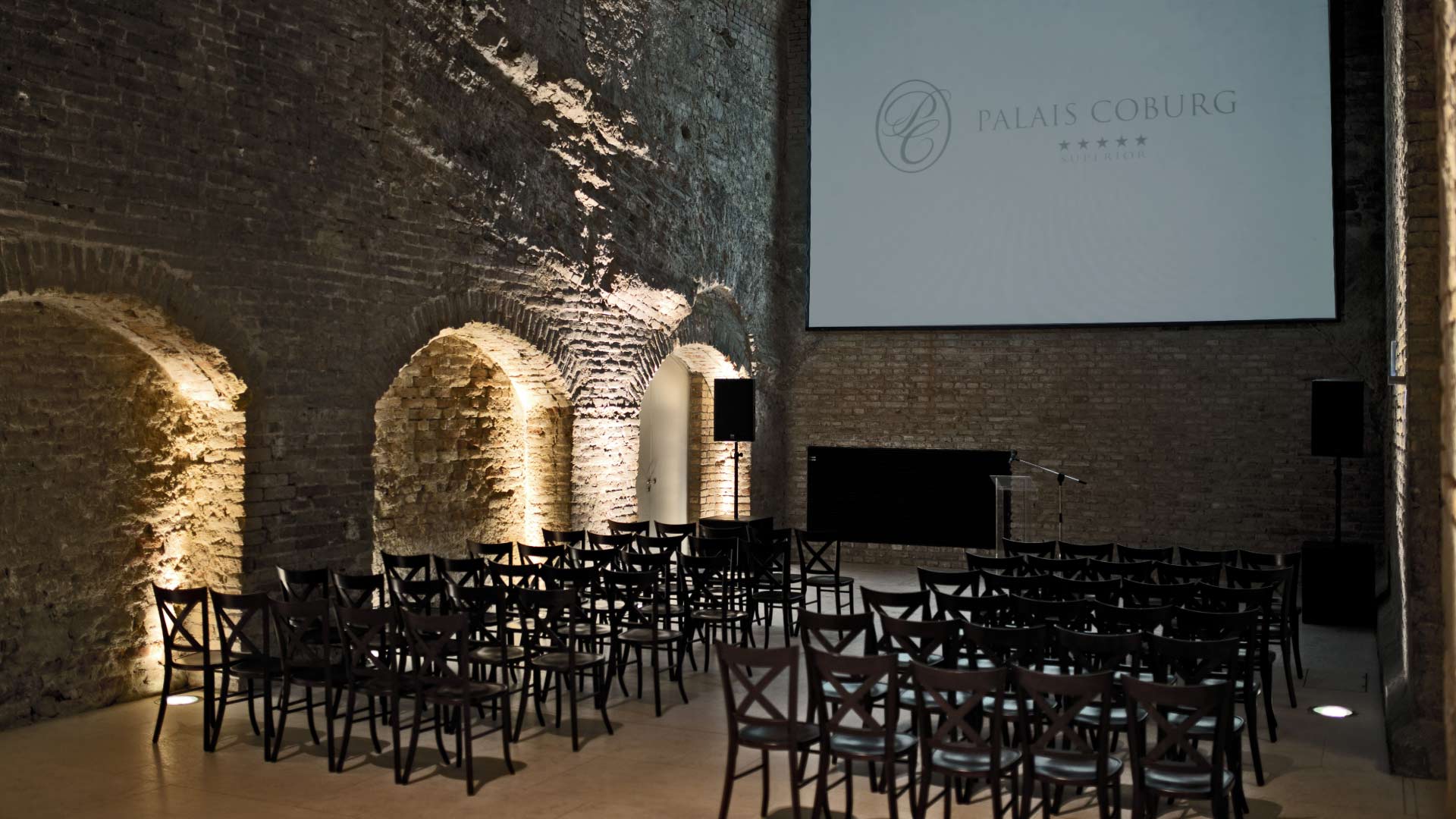
Meeting space at Palais Coburg

Vienna’s storied Palais Coburg is embracing a new era of grandeur with an inspired renovation set for completion in spring 2026. The update blends imperial splendor with modern sophistication, introducing refreshed state rooms, an expanded spa and fitness area and—for the first time—a penthouse offering 720 sq. m. of refined living space, private terraces and sweeping views of St. Stephen’s Cathedral.

Guests can still savor the palace’s signature experiences, from wine tastings in its historic cellars to exquisite dining at the two-Michelin-starred Silvio Nickol Gourmet Restaurant and the charming Clementine im Glashaus.

JW Marriott Reston Station

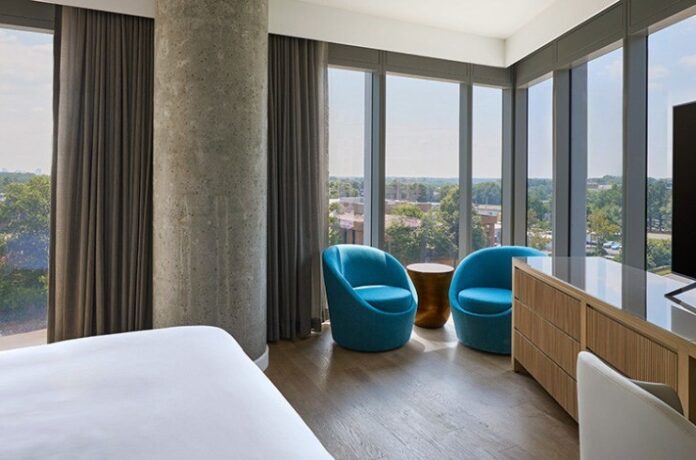
jw marriott reston guest room

JW Marriott Reston Station brings refined sophistication to Northern Virginia as the brand’s first property in the Commonwealth. Located within the vibrant, art-filled Reston Station community, the 247-room hotel blends timeless luxury with mindful design. Guests enjoy floor-to-ceiling views, spa-inspired bathrooms and the debut of JW Marriott’s new Mindful Rooms—tranquil spaces featuring yoga mats, circadian lighting and personalized wellness rituals.

The hotel’s dining lineup includes The Simon, a Mid-Atlantic restaurant with French and Mediterranean flair, the elegant Schar Bar and JW Market café. With more than 40,000 sq. ft. of flexible meeting and event space, including an 11,700-square-foot ballroom, JW Marriott Reston Station is poised to host the region’s most prestigious gatherings. Outside, Lorenzo Quinn’s striking Building Bridges sculpture welcomes visitors, embodying the hotel’s spirit of connection and calm within a bustling urban setting.

Sacramento Marriott Rancho Cordova

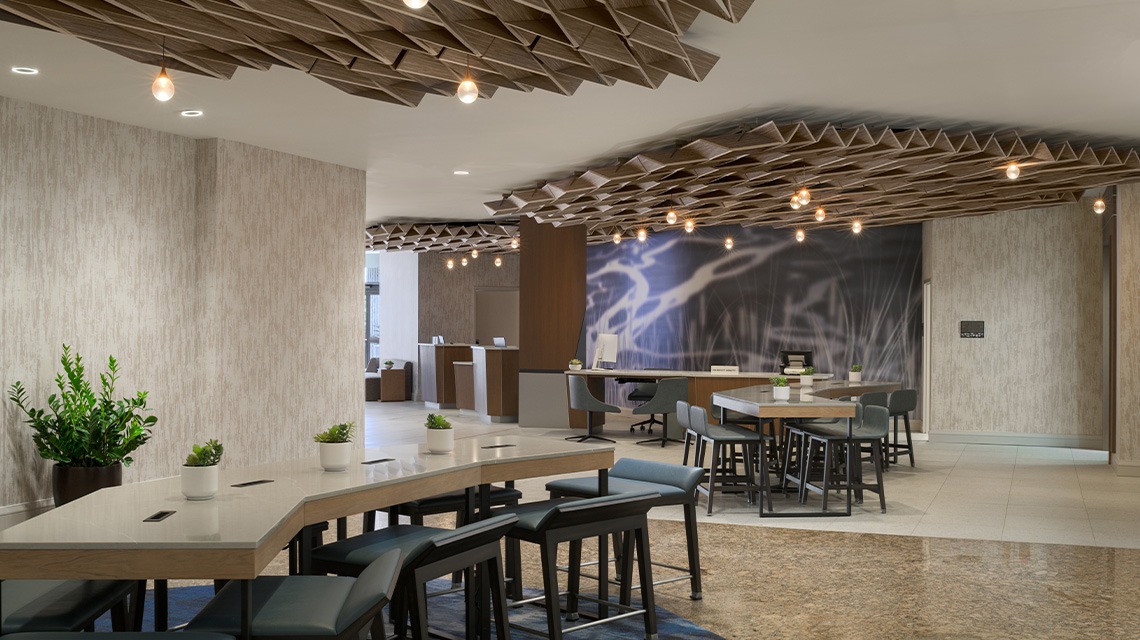
Sacramento Marriott Rancho Cordova lobby

Sacramento Marriott Rancho Cordova has unveiled a $33 million transformation, redefining full-service hospitality in the city. The renovation introduces modern guest rooms with soothing gray and lavender tones, spacious desks and luxurious bathrooms with dual showerheads and walk-in tile designs. Guests can stay active in the refreshed 24/7 fitness center or gather in the open-concept lobby designed for connection and comfort.

With more than 12,000 sq. ft. of reimagined meeting and event space, including the flexible California Ballroom and a garden-inspired Outdoor Trellis, the property is ideal for everything from corporate retreats to weddings. Dining shines at the new Formaggio Restaurant & Bar, offering California-Italian favorites, while a full-service Starbucks keeps guests fueled on the go.

Hyatt Regency Hill Country

Villas Kitchen Bar at Hyatt Regency Hill Country Resort and Spa
Villas Kitchen Bar, Hyatt Regency Hill Country Resort and Spa

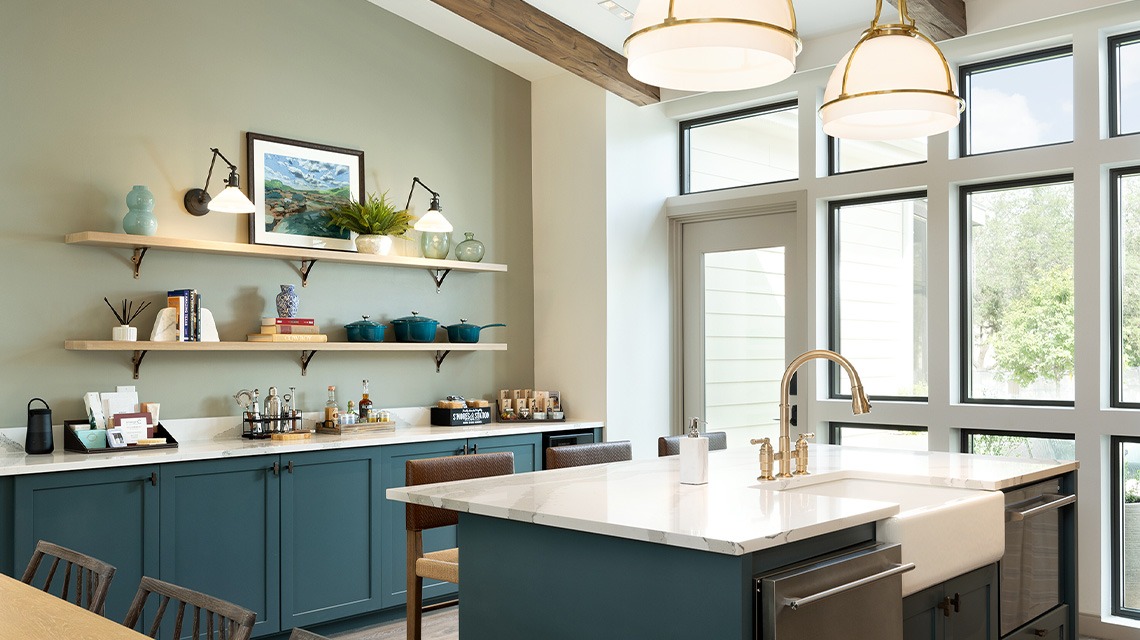
Hyatt Regency Hill Country Resort and Villas introduces a refreshed identity that celebrates its expansive renovation and new luxury villa experience. Nestled on 300 scenic acres in San Antonio’s Hill Country, the resort now features standalone ranch-style villas designed for families and groups seeking space and comfort. Each 2,336-square-foot villa includes four bedrooms with en-suite baths, generous living and dining areas, a fully equipped kitchen and two private patios with a firepit, grill and lounge seating.


The Ritz-Carlton, St Louis

Ballroom at The Ritz Carlton

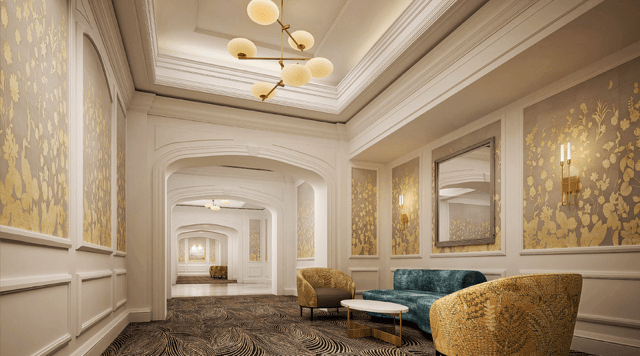
The Ritz-Carlton, St. Louis has unveiled the grand reopening of its historic ballroom, marking a stunning new chapter in the hotel’s 35-year legacy. The 12,200-square-foot venue has been reimagined by design firm BAMO and BSI Constructors, blending timeless elegance with modern artistry.

Bespoke Phillip Jeffries wallcoverings create a luminous garden motif of botanicals, butterflies and metallic textures, while hand-blown Venetian chandeliers from Murano cast a warm, romantic glow. Tailored furnishings and ambient lighting unify the ballroom and foyer, offering an exquisite backdrop for weddings, galas and corporate events. The renovation complements recent upgrades throughout the hotel, including The Cigar Club, The Lobby Lounge and The Solarium.


Grand Floridian Resort & Spa

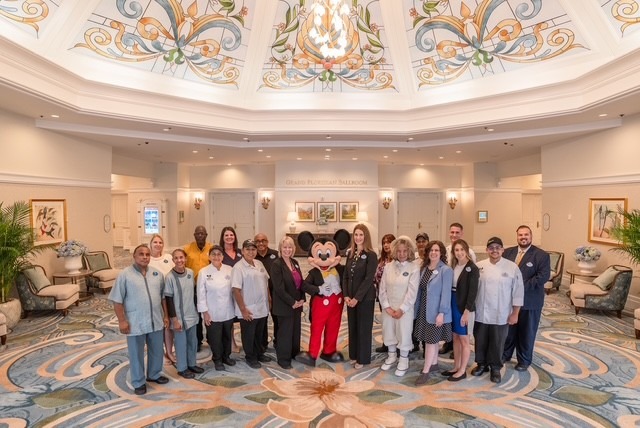
The beloved convention center at Disney’s Grand Floridian Resort & Spa has reopened after a refurbishment, once again welcoming meetings, conventions and social celebrations. Looking ahead, Disney’s Coronado Springs Resort will debut a fully redesigned convention center in 2026, featuring creative elements crafted by Walt Disney Imagineering, the same visionary team behind Gran Destino Tower. Adding to the excitement, “Toy Story–Out of the Box” invites groups to connect through a new team-building experience inspired by the iconic Pixar films.

Marriott staged an activation inspiration event in New York City

What meeting planner doesn’t want to include a memorable experience for guests grounded in the elements that make a place unique and memorable? But who has time to source catering, decor and local experts for a reception?

Marriott Bonvoy Conference and Resort Network tasked its 125 properties with coming up with turnkey ideas to start conversations and featured 13 of them at an Elite Experience Suite at Marriott Marquis New York last week. Smart Meetings was there and came away with these aha moments.

Transformational Experiences Engage all the Senses

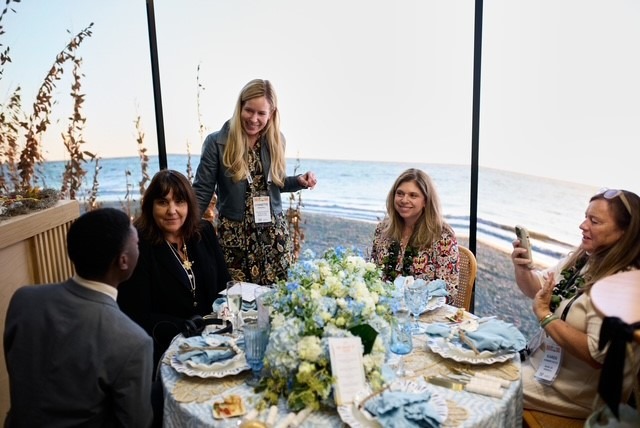
People at table
The Westin Hilton Head Island Resort & Spa

Reaching out to the chef wherever you’re hosting and talking about the possibilities for aligning with the event’s messaging could surface fresh wow moments. Marriott has spearheaded its very own, from The Sound of Taste: A Musical Culinary Experience that pairs regional songs and ingredients for chef and musical concierge-led harmony at The Westin Hilton Head Island Resort & Spa to chromatically crafted dining courses that match the hues in the dusky sky over the ocean from JW Marriott Marco Island Beach Resort.

Read More: Explore Smart Meetings Approved Experiences in SmartMarketplace

To make the experience more personal, JW Marriott Marco Island brought an aura reader to tap into the sense of wonder by interpreting colors triggered by energy from participant hands.

The sense of taste was also in play in the activation from Chicago Marriott Downtown Magnificent Mile, where a blind pizza tasting featuring top deep dish entries from the City of Big Shoulders sparked passionate debate about the best pies.

For JW Marriott Parq Vancouver’s Veuve Cliquot picnic, the iconic orange of the bubbly brand brought immediate smiles.

Along with the flavored salts paired with cucumber and pineapple from Waikoloa Beach Marriott Resort & Spa, a healthy serving of storytelling about the history of salt to native Hawaiians added meaning to the interactive collecting and cooking activation. Trips to Kona Sea Salt Farm highlights the emphasis on local agriculture, culture and sustainable practices and ends with a healing foot soak.

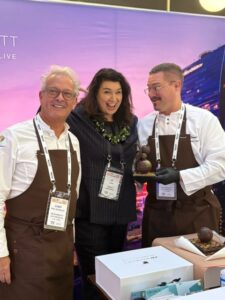
JT Long and two chefs
JT Long and Chef Francois Behuet (right)

The sweet smell of a chocolate sculpting master class from Chef Francois Behuet at JW Marriott Los Angeles L.A. Live brought out the artist in planners creating their own masterpieces.

A sense of humor was on display in a bodega built into the New York Marriott Marquis ballroom right down to the out-of-order ATM machine, signed picture of Danny DeVito and a method actor cat named Georgie in a pink shopping basket.

Transport Them, Literally

Some of the properties showed how they move attendees physically, metaphorically and emotionally.

  • Sheraton Grand Seattle featured a Pacific Northwest Adventure that brought attendees in by floatplane, took them for a cruise on Puget Sound and then offered VIP transportation to the property downtown.
  • JW Marriott Cancun Resort & Spa brought the property’s dramatic speakeasy to New York City for a hidden Mexican Experience of mescal tasting and history. The adventure starts at check-in with a mystery to solve in a glow-in-the-dark ink and ends with a lesson in the finer points of the clear spirits.
  • JW Marriott Scottsdale Camelback Inn Resort & Spa helps usher guests to dreamland with a “sleepeasy” as part of a major spa renovation set to open in January. Targeted massages, sleepy teas, luxury eye coverings and even magnesium patches can be curated to help everyone dream easy and wake up refreshed.
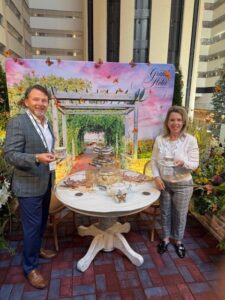
  • Grand Hotel Golf Resort & Spa
    Grand Hotel Golf Resort & Spa

    JW Marriott Tampa Water Street brought the champion experience via words of wisdom from NHL’s Tampa Bay Lightening to sleep, nourish and train like the best athletes—because meeting is a competitive sport.

  • JW Marriott Orlando, Grande Lakes demonstrated how they bring a winter wonderland to Central Florida complete with snow on the hour, an outdoor ice skating rink and s’mores.
  • Grand Hotel Golf Resort & Spa built a fluttery butterfly garden glimmering with finger sandwiches, elegant tea setting, a lush floral garden and real-time pictures of the monarch migration happening in Alabama on that beautiful October day.

Start the Conversation

While the menu of activations in the Event Experience Playbook would be a highlight for any gathering and can be plugged in as-designed, the point is to start a conversation with the convention services manager about what would work for a specific group’s goals, according to Amanda Cox, Marriott vice president of sales, convention and resort hotels, east region.

Live from IMEX America, Smart Meetings’ What One Thing? podcast features candid conversations with three powerhouse leaders shaping the future of events.

Mike Dominguez, president and CEO of Associated Luxury Hotels International (ALHI), offers clear-eyed optimism about the meetings industry and urges planners to stay nimble, disciplined with their time and realistic about global change.

Tracy Judge, founder and CEO of Soundings, shares how she transformed disruption into opportunity, helping freelancers and companies reskill through the rise of AI.

Jessie States, vice president of MPI Consulting, explores how education evolves, emphasizing curiosity, context and empowerment as key drivers of growth.

Together, they reveal what it takes to lead with adaptability, reimagine learning and create meaningful connections in a rapidly shifting world.

Editor’s note: This episode of What One Thing? was transcribed by Otter.ai and edited lightly.

Segment 1: Mike Dominguez

JT Long Welcome back to What One Thing? We’re here live at IMEX America with Mike Dominguez, president and CEO of ALHI. We’ve been talking about how uncertainty is shaping the events world. How do you define the impact right now?

Mike Dominquez The impacts are diverse. The word I keep hearing is “bifurcated” or “fragmented.” Nothing is all in one bucket. Some sectors are thriving, others struggling. Airlines are a good example. Some are posting record years, some aren’t. It’s a mix.

We’re also dealing with political headwinds. Policy changes happen with new administrations, and this one’s moving fast. There’s uncertainty, but it’s not all bad. I’ve said this year feels “partly cloudy.” There are clouds, but there’s also sunshine, and that’s something to be hopeful about.

The back half of the year is strong across the board. Fourth quarter looks solid. Everyone’s eyeing 2026 as a record-breaking year. That gives me optimism. Government business will stay unpredictable, but that’s life. One of my favorite quotes is, “Deal with the world the way it is, not the way you want it to be.” Leaders need to adapt fast and stay nimble. Everyone says the word, but few truly live it.

My big concern is sovereign debt. In the U.S., debt is $38 trillion. Interest payments alone are around $1 trillion. We’re borrowing $1 trillion just to pay that interest. Globally, interest on sovereign debt is about $3 trillion. That’s unsustainable long-term.

Last year, forty countries—representing about sixty percent of global GDP—held elections. Europe has new leaders across the board. We’re basically seeing a global reset. People want change, and that brings instability. As planners, we just need to know the rules. Once we do, we can adapt.

The most valuable resource isn’t money—it’s time. Time poverty is real. Leaders say their teams are their greatest asset, but does the calendar reflect that? Are you spending time with people or just sitting in meetings and emails all day? We have to be intentional. Choose wisely.

For me, I listen to CNBC on my commute—no calls, no emails. It gets my head in the game. Same thing on the way home. I don’t take work calls after I leave. I want to arrive home already in that mindset. That separation helps.

With AI, we need rules of engagement. Don’t just jump in with unprotected tools. Ask what problem you’re solving. Our CFO used ChatGPT to build a 100-tab Excel reconciliation in fifteen minutes—it used to take days. That’s the value: shifting from building to thinking. AI can help us fight time poverty.

Vegas saw a softer summer, but that’s typical. Luxury properties like Wynn and Bellagio performed well, while the value segment pulled back. CBRE data shows Google searches by brand were down nine percent in early spring, which explains the summer dip. Now they’re up seven percent year-over-year, so the rebound is coming.

Globally, it’s mixed. Canada’s in recession. Germany’s been there for months. Italy and Spain are growing. Argentina’s travel numbers are rising. The economy always drives behavior.

The 2026 World Cup will bring over 4.5 million visitors to the U.S. Families will likely skip long trips in 2025 to save for it. It’ll be massive. Combine that with the Olympics, and the U.S. will be on the world stage. Even if Brand USA funding doesn’t return, that exposure offsets it.

JL What’s the one thing that helps you see the big picture clearly?

MD Curiosity. I read across sources, follow data points, and let them connect. I also sleep well—really well. That clarity when you wake up is powerful. I make time for silence—music, nature, no scrolling.

I also have thirty-minute check-ins twice a year with all 140 employees, just to talk. Not about work, about life. That curiosity helps me lead better.

On tariffs, the headline numbers—30 or 40 percent—don’t tell the real story. The effective tariff rate is closer to 10 or 12 percent. The dollar’s also devalued by about 10 percent, which offsets some costs. Back in the spring, I told everyone: breathe. We’ll be fine.

JL Thank you, Mike. Always insightful.

Segment 2: Tracy Judge

JL We’re joined now by Tracy Judge, founder and CEO of Soundings. Tracy, were you always an entrepreneur at heart?

Tracy Judge I think so. I have younger sisters, so I was always organizing things. My CliftonStrengths tell the story—Individualization, Command, Futuristic, Ideation, and Strategic. People always said I’d be an entrepreneur.

Soundings is built on Individualization—matching freelancers’ strengths and personalities with the right work and clients.

We launched before Covid, and when events stopped, freelancers had nowhere to go. We built community with webinars, and it grew. Then came layoffs, so more talent joined. We partnered with companies like Cvent to reskill planners for virtual. That became Soundings Thrive, our talent community.

Now with AI, we’re in another reskilling moment. Our new white paper shows most leaders aren’t planning layoffs—they’re investing in reskilling. The change is that when people leave, companies aren’t backfilling those roles. That’s the real shift.

The advantage that remains constant is soft skills—relationship-building, adaptability, empathy. Those won’t go away. Our industry skews toward Executing and Relationship strengths, less toward Strategic Thinking. But AI requires that mindset: curiosity, comfort with ambiguity, willingness to fail forward.

The biggest barrier to adoption isn’t money—it’s understanding. You don’t train people on AI, you train them how to think about it. What it is, what it isn’t, where it fits. Give them examples, then let them experiment.

When people come to me for mentorship, I always say: bring context. Know what you’re trying to do. The best way to build confidence is to see early wins.

For individuals, the key is self-investment. Don’t wait for your company. Know your values and strengths, do the inner work. The pace of change will challenge your old habits. For companies, invest in people and redefine roles. Build maps for who can thrive next.

JL What’s your one thing that made all the difference?

TJ Resilience. Don’t fear failure. You’ll make mistakes—learn, rest if you need to, then get back up and keep going.

Segment 3: Jessie States

JL We’re here with Jessie States, vice president of consulting for MPI. Jessie, were you always the one leading the group, even as a kid?

Jessie States Actually, I’m an introvert. I started in journalism, writing and editing research papers. But I noticed we weren’t getting engagement. So I turned thousands of pages of data into education—webinars, live sessions, discussions. Adults learn differently from kids. They want to know what’s in it for them and how to use it.

The best sessions mix new learning, peer discussion, and immediate application. It’s about context and connection.

Formats are evolving—it’s not either/or. Big keynotes, small campfires, collaborative workshops. Build across the event, give people choices, and let them control their experience. Engagement is like a dimmer switch—you can listen quietly or dive deep.

JL Any hints for MPI’s next WEC?

JS San Antonio. It’ll be vibrant—Fiesta culture, history, culinary focus. Expect that same layered learning design: peer groups and big moments combined.

JL There’s so much AI buzz on the floor this year.

JS Definitely—right between Asia and Technology! For the record, I’m the sparkliest introvert here. I’ve got glittery earrings and alien socks.

JL What’s your one thing that made all the difference?

JS Positivity—and healthy yes-energy. I try to see everything through a positive lens. Say yes when you can, within healthy boundaries. When things get tough, remember: it’s all learning that leads to the next step.

JL Thank you, Jessie.
Geralyn Krist grew up on Long Island where, as a child, she was enthralled by the grandeur of New York City hotels during holiday visits. “I was fascinated by hotels,” she recalls. The TV show Hotel, starring James Brolin and Connie Sellecca, only fueled her ambition. “To me, working in a hotel looked glamorous and exciting.”

Krist is vice president of global accounts at ConferenceDirect. She earned her CMP in 1999 and became a Fellow in 2022 with the inaugural class of her fellow Fellows.

Her early fascination led her to pursue a career in hospitality. Krist researched colleges with hotel and restaurant management programs, ultimately choosing Johnson & Wales University in Providence, Rhode Island. She was drawn to their “upside down” curriculum, which immersed students in major-related classes from day one while requiring them to work in the industry three days a week. This hands-on experience proved invaluable.

Read More: ConferenceDirect CDX 2025 Led With Wellness and Insight

Krist’s career path took her through various roles within the hospitality sector, each providing unique insights and skills. She started in food and beverage, overseeing room service and hospitality suites. While not glamorous, this role taught her the fundamentals of pricing, cost-conscious menu planning and food handling for hospitality setups. She then transitioned to hotel sales, where she spent eight years with large hotel chains, gaining a deep understanding of contracts, room-to-space ratios and onsite sales processes.

In 2002, Krist joined Visit KC, where she spent 14 years developing relationships with meeting planners nationwide and positioning Kansas City as a premier convention destination. Her background in hotel sales strengthened her ability to understand the needs of meeting planners and strategically target East Coast clients.

Today, Krist leverages this diverse experience in her role at ConferenceDirect, a third-party sourcing and contracting company. Her focus is on building strong relationships with clients, understanding their organizations and finding the best fit for their programs. “In a way, it feels like I’ve come full circle: the little girl enchanted by hotels has built a career centered around them, not just in operations, but in building relationships and creating meaningful experiences for clients.”

Becoming a CMP

A defining moment in Krist’s career was earning the CMP designation. She first heard about the CMP program in 1998 and was drawn to the program by its potential for career advancement. She also observed firsthand the difference it made when planners had their CMP, noting that they were more organized, clear in their RFPs and well-prepared for contract negotiations.

Test Prep Tips

Krist’s path to certification was rigorous. She and her team created smaller study groups, in addition to a weekly MPI Study Group. Flashcards were a staple in Krist’s house, which she carried everywhere. Krist took the exam in 1999 and passed on the first try.

Looking back, Krist emphasizes that the CMP isn’t about memorization, it’s about validating the knowledge, judgment and skills you already use every day. To those considering the CMP, she advises, “The CMP exam isn’t something you take when you’re brand new to the industry. Instead, focus on building your foundation. Immerse yourself in every part of the industry you can….Join an industry association like MPI or PCMA and not only attend monthly meetings but get involved in a committee.”

Fellow Designation

Her journey didn’t stop at the CMP designation. In 2022, Krist became part of the inaugural class of CMP Fellows, a testament to her experience, leadership and contributions to the industry. “I had been a CMP for 23 years when the CMP Fellow designation was first announced,” she says. “It came at a unique time, right as our industry was emerging from the challenges of Covid-19. After spending two years canceling, postponing and reworking meetings, I was eager for a new professional challenge that would reignite my passion for this work.”

For CMPs considering the Fellow designation, Krist’s advice is simple: “Go for it! If you’re qualified, you’ve already proven yourself as a leader in this industry, then the CMP Fellow designation is an incredible platform to take that leadership even further. It allows you to connect with other top professionals, exchange knowledge and play an active role in mentoring the next generation of CMPs who will carry our industry forward.”

The Future

Krist is inspired by the future of the meetings and events industry, particularly the mix of exciting change and the people who will shape it. She has witnessed the transformative power of technology, from faxing contracts to hybrid meetings and immersive VR. However, what truly inspires her is the next generation of hospitality professionals. “For me, that’s very personal. Both of my daughters have chosen careers in hospitality….Seeing them step into this industry after growing up watching my own journey fills me with pride.”

Krist acknowledges the challenges the industry faces but remains optimistic. She tells young adults graduating with a hospitality degree that the industry is more than wedding planning—it encompasses sales, food and beverage, audiovisual, transportation and more. “The opportunity within our industry is limitless,” she says.

Read More: Empowering a New Generation of Association Leaders

Krist’s influence extends beyond her professional achievements. She is an active member of the events community, mentoring emerging professionals and sharing her expertise. Her advice to those starting their careers is to immerse themselves in every aspect of the industry, volunteer for extra assignments, ask questions and build a strong network.

Earning the CMP designation and becoming a CMP Fellow have significantly impacted Krist’s career. The CMP gave her a strong foundation of knowledge and credibility, boosting her confidence and opening doors to new opportunities. Becoming a CMP Fellow elevated her role, allowing her to give back in more meaningful ways and contribute to shaping the future of the industry.

Over the years, Krist has seen the CMP designation evolve to reflect changes in the industry. The application and exam process is much more streamlined and accessible and the perception of the CMP has grown tremendously. Today, it is widely recognized as a gold standard, setting professionals apart and raising the level of respect for the industry.

When asked about her most memorable event, Krist points to the joy she finds in sourcing and securing the right hotel or venue for a client. “What stands out as most memorable for me is the joy I find in sourcing and securing the right hotel or venue for a client,” she says.” For me, the most memorable moments aren’t tied to one specific event, but rather to the countless times I’ve witnessed clients succeed, knowing I had a hand in laying the foundation that made it possible.”

Read More: CMP Spotlight: Get to Know Kyle Jordan

Need a boardroom with a side of boutique luxury? Convene’s new parent company just made venue sourcing a whole lot simpler with full-service flagships and turnkey training spaces under one (stylish) roof.

Meanwhile, Michelin just gave hotels their own shiny rating system, and Tivoli Doelen Amsterdam is already two Keys deep. In China, Jincheng is reviving ancient villages as wellness retreats and in the U.S., the government shutdown is still sending turbulence through air traffic systems. Plus: a Maldives travel advisory that’s worth reading before you book that overwater bungalow.

Convene Hospitality Group Unites Convene and etc.venues

The meeting industry’s hospitality-first disruptor just got a parent. Convene has announced the formation of Convene Hospitality Group (CHG), a new umbrella organization bringing together its flagship premium meeting brand and etc.venues, which specializes in turnkey spaces for small meetings and corporate trainings. The move sets the stage for multi-brand growth across the global meetings and events landscape.

Led by Convene CEO and co-founder Ryan Simonetti, CHG’s mission is to create purpose-driven spaces that support everything from brand activations and offsites to multiday conferences and social events. “We uncovered multiple unique industry segments…and we are committed to serving the full spectrum of the meetings and events market,” Simonetti said.

Already the largest provider of dedicated meeting venues in the U.S. and U.K., CHG counts 38 global locations across nine cities, with more on the way. Whether you’re planning a breakout brainstorm or a high-stakes pitch, expect elevated service, hospitality-rooted design and flexible formats—plus in-house AV, catering and planning support across brands.

Tivoli Doelen Amsterdam Nabs Two Michelin Keys in Global Hotel Awards Debut

The Michelin Guide just checked into hotels—and Tivoli Doelen Amsterdam already has two shiny new Keys to show for it. At the inaugural Global Michelin Guide Hotels Ceremony in Paris, the historic canal-side property was awarded two Michelin Keys, the hospitality equivalent of “exceptional stay” status.

A proud moment for the team and the city, the award celebrates hotels that “go beyond comfort and service to deliver something truly memorable.” With its 16th-century pedigree, riverfront location and history as home to Rembrandt’s The Night Watch, Tivoli Doelen blends timeless Dutch elegance with five-star finesse.

“This recognition is a tribute to our dedicated team,” said General Manager Angelo Vassallo, “who work with passion and commitment every day to deliver a truly memorable stay for our guests.”

Now among the world’s most remarkable hotels, Tivoli Doelen earns its spot not just for style, but for its deep sense of place—creative, intimate, and distinctly Amsterdam.

Michelin’s stamp of approval gives planners a fresh reason to book boutique luxury in the heart of Europe, especially for groups that value artistry, atmosphere and canal views.

Jincheng Breathes New Life into Ancient Villages for a Wellness-First Future

Looking to blend wellness travel with cultural immersion? China’s Jincheng city may have cracked the code. Over the National Day and Mid-Autumn Festival holiday, the city unveiled a bold new model for revitalizing ancient villages.

At the heart of the initiative are immersive red tourism experiences, digital-enhanced museums and living heritage demonstrations that reimagine history for modern travelers. “We’re advancing wellness tourism through a culture-tourism synergy,” said Jincheng’s Municipal Bureau of Culture and Tourism. “Culture shapes tourism experiences, and tourism promotes cultural vitality.”

So far, 18 villages have been transformed into A-level scenic areas, with standouts like the “Huangcheng Five Villages,” Yuchi Village, and Lianghu Village leading the way. Think Ming-era architecture, traditional wedding customs, eco-conscious retreats and even a Spirit Practice Center. It’s not just a vibe—it’s a strategy.

The result is a sustainable ecosystem that links heritage with healing, attracting visitors while boosting local livelihoods. For planners seeking next-gen incentive or retreat locales with built-in soul, Jincheng’s ancient alleyways may be your next frontier.

U.S. Government Shutdown Continues to Add Strain to Airline System

The ongoing U.S. government shutdown is stretching the aviation sector, with air traffic control delays multiplying and airline operations feeling the pinch, according to a report by The Associated Press.

Read More: Smart Travel: Government Shutdown Affects IMEX Travelers, Hilton Releases Trends Forecast, AMEX Shows Business Travel Growth and More

Key impacts include slower gate-to-gate scheduling, increased flight delays and reduced staffing in essential federal agencies. Some airlines are preemptively canceling flights ahead of schedule to manage risk and maintain on-time performance.

For meeting and incentive planners, these disruptions underscore a renewed importance of buffer days, trusted local partners and alternative routing strategies. Venue contracts, ground logistics and guest arrival windows may all need revisiting in light of potential ripple effects across America’s skies.

U.S. Travelers Urged to “Exercise Increased Caution” in Maldives Amid Terror Risk

The U.S. State Department has issued a Level 2 advisory for the Maldives, cautioning that terrorist attacks may occur with little or no warning.

Tourist sites, transport hubs, markets and remote islands are named as possible targets, and authorities note that responses to incidents in outlying areas could be delayed.

To help travelers stay prepared, the advisory recommends enrolling in the Smart Traveler Enrollment Program (STEP), avoiding large gatherings, staying alert to local media and submitting the required traveler declaration via the IMUGA site no more than 96 hours before arrival.

Entry into the Maldives remains possible; visitors receive a free 30‑day visa upon arrival, provided they carry a valid passport, onward ticket and complete the electronic traveler form.

For meeting and incentive planners, this means factoring in extra buffer time, choosing centrally located resorts and having contingency plans in place for guest movement or gathering adjustments.

As always, Smart Travel will keep you posted on updates and travel advisories affecting your next group trip.