Marketing association events has changed dramatically in the last decade. Direct mailers, static flyers and long email blasts have given way to digital-first, experience-driven strategies that must compete for attention in an increasingly crowded marketplace. During a recent webinar, Smart Meetings Senior Editor Gary Diedrichs talked with Sue Marchese, vice president of marketing at the American Society of Association Executives (ASAE), about what is actually working today—and why some associations are seeing outsized engagement while others struggle.

1. Lead With Video—Short, Authentic and Human

If there is one tactic that consistently outperforms the rest, it is video. Not glossy, overproduced promotional reels, but short, authentic clips featuring real people. Attendees, speakers and members want to see themselves reflected in the events they are considering.

Short-form video—ideally 30 seconds or less—has proven to deliver the highest completion rates. Testimonials that focus on what participants walked away with rather than how “great” the event was are especially effective. When attendees describe a skill they’ve gained, a connection they’ve made or a problem they’ve solved, the value of the event becomes tangible.

Associations do not need large budgets to make this work. Smartphone video, simple editing tools and platforms that streamline testimonial collection can dramatically increase engagement. Some organizations report social media engagement increases of several hundred percent after integrating video into event marketing campaigns.

The key is asking the right questions and capturing benefits, not hype.

Read More: Association Events: Trust as the Lodestar

2. Market the Transformation, Not the Agenda

One of the most common mistakes in event marketing is focusing on schedules, session titles and speaker lists rather than outcomes. While those details matter, they rarely inspire action on their own.

Effective event marketing reframes the message around transformation: What will attendees be able to do differently after the event? What challenges will feel more manageable? How will their professional lives improve?

This shift requires intentional storytelling. Instead of saying “Join us for three days of education,” marketers should communicate how the event will change thinking, sharpen skills or elevate careers. Whether through email copy, landing pages or video testimonials, the emphasis should always be on benefits and return on experience—not just return on investment.

In an era when professional development budgets are under pressure, clearly articulating transformational value is no longer optional.

3. Use Content to Move from Brand Awareness to Demand

Associations are increasingly experimenting with a “brand-to-demand” marketing approach—using high-value content to attract interest and nurture it over time.

Rather than pushing immediate registration, organizations offer free resources such as event recaps, checklists, white papers or curated podcast episodes. When someone downloads that content, they enter a targeted follow-up journey that introduces related insights, peer perspectives and eventually, the upcoming event.

This strategy accomplishes two things. First, it allows prospects to self-identify their interests. Second, it builds trust before asking for commitment. By the time a registration offer appears, prospects have already engaged multiple times and see the association as a credible resource.

The result is higher-quality leads and stronger conversions—especially for mid- to senior-level professionals who value relevance over volume.

4. Build Trust Through Real Voices and Credible Expertise

In a world of misinformation and AI-generated content, associations hold a unique advantage: trust. Behind every association event is a community of vetted subject matter experts, peer reviewers and volunteer leaders who ensure the accuracy and relevance of the content.

Event marketing should reinforce that credibility. Featuring speakers as experts, highlighting peer-reviewed content and showcasing member voices helps position events as reliable sources of insight—not just networking opportunities.

Trust is also built by transparency. Real testimonials, unscripted interviews and behind-the-scenes glimpses of event planning humanize the organization and reinforce authenticity.

For associations, reminding audiences that their events are grounded in collective expertise—and not just trends—can be a powerful differentiator.

5. Think Beyond Traditional Channels and Formats

While email and social media remain essential, successful associations are expanding their marketing playbooks. Strategies such as forming barter partnerships with industry media, cross-promoting with host destinations and collaborating with local chapters or volunteer leaders can significantly extend the reach.

Read More: Breaking Tradition and Being Inclusive: A 2024 Meetings and Events Outlook

Peer-to-peer outreach is particularly effective. Personalized emails from committee members or chapter leaders often outperform generic promotional messages, generating higher open and response rates.

On-site strategies also matter. Capturing interest during the current event—through QR codes, drawings for future registrations or exclusive previews—helps maintain momentum while enthusiasm is high.

Finally, associations are rethinking event formats altogether. Hybrid experiences, modular programming and virtual content libraries allow members to engage even when travel budgets or time constraints limit in-person attendance. Marketing should reflect this flexibility and emphasize accessibility alongside value.

The term DEI became a political lightning rod in 2025. Even so, it’s essential to remember how expansive DEI truly is, spanning race, neurodiversity and even drink preference. Smart Meetings rounded up a handful of our best stories that capture what DEI means in the meetings industry and why planners should continue keeping it top of mind as we enter the new year.

DEI at a Crossroads

Paper mache silhouettes

In this piece, Smart Meetings explores how DEI reached a pivotal moment in early 2025, as federal rollbacks prompted many organizations to reconsider their commitments, with some pulling back. At the same time, we spoke with leaders who are doubling down on why inclusion still matters for their people and their business.

Multigenerational Magic: Engaging Diverse Audiences at Events

women of two different generations at event

This article, written by guest author Lisa Ryan, examines how events rely on experiences that resonate across generations, from Baby Boomers to Gen Z. Acknowledging the varying experiences, communication styles and engagement preferences of different groups allows planners to create thoughtful touchpoints that support engagement and spark meaningful connections.

Is Your Event Inclusive? Why Non-Alcoholic Drinks Matter Year-Round

Non alcoholic beer black icon

In this story, Shweta Sharma explores another layer of inclusion: non-alcoholic beverage offerings. Whether for health, religious reasons or personal preference, incorporating creative mocktails and non-alcoholic spirits is an essential consideration. Treating these options as a main attraction rather than an afterthought elevates the experience for everyone.

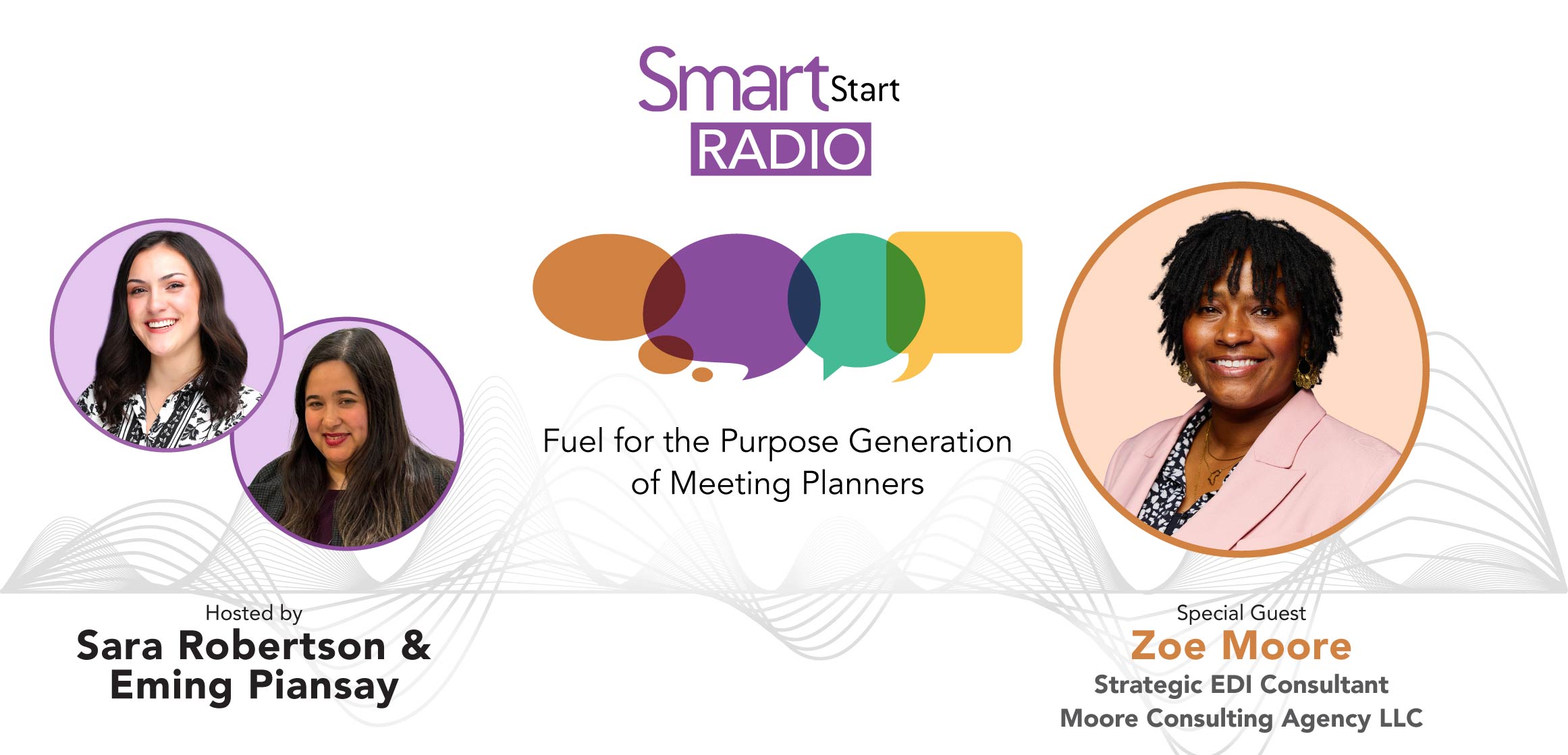
Smart Start Radio—Seen, Heard, Valued: The DEI Wake-Up Call

Eming Piansay, Sara Robertson and Zoe Moore headshots

On this episode of Smart Start Radio, hosts Eming Piansay and Sara Robertson sit down with Zoe Moore, founder of Moore Consulting Agency and a DEI expert in the hospitality and events industries. They discuss why clear communication about diversity, equity and inclusion matters and how intentional planning can turn those principles into measurable impact. Moore shares her personal journey into DEI work and introduces her “Insight to Implementation” framework, designed to help meeting professionals gather data, inform stakeholders and strategically embed equity into supplier networks, leadership and event experiences.

Neuroscience-Backed Meeting and Event Design: How to Design Brain-Friendly Experiences

Animated brain smiling

This piece by Lisa Schulteis focuses on the role of neuroscience in event design and how to successfully engage attendees by supporting attention, memory and emotion. Schulteis highlights that when attendees feel safe and grounded, they are more likely to engage with the content creatively.

Hotels across North America and the Caribbean are redefining modern hospitality with elevated design, thoughtful amenities, and spaces built for connection

A new wave of hotel openings and renovations is transforming the hospitality landscape, blending historic character with contemporary design and guest-focused innovation. Across major destinations, properties are unveiling reimagined guestrooms, expanded event spaces, wellness-forward offerings and elevated dining experiences that reflect the evolving expectations of today’s travelers.

From urban icons and mountain resorts to beachfront retreats, these hotels are investing in sustainability, personalization and design-led experiences that encourage connection and comfort. Together, these debuts signal a renewed commitment to purposeful luxury, where heritage, creativity, and modern living converge to create memorable stays.

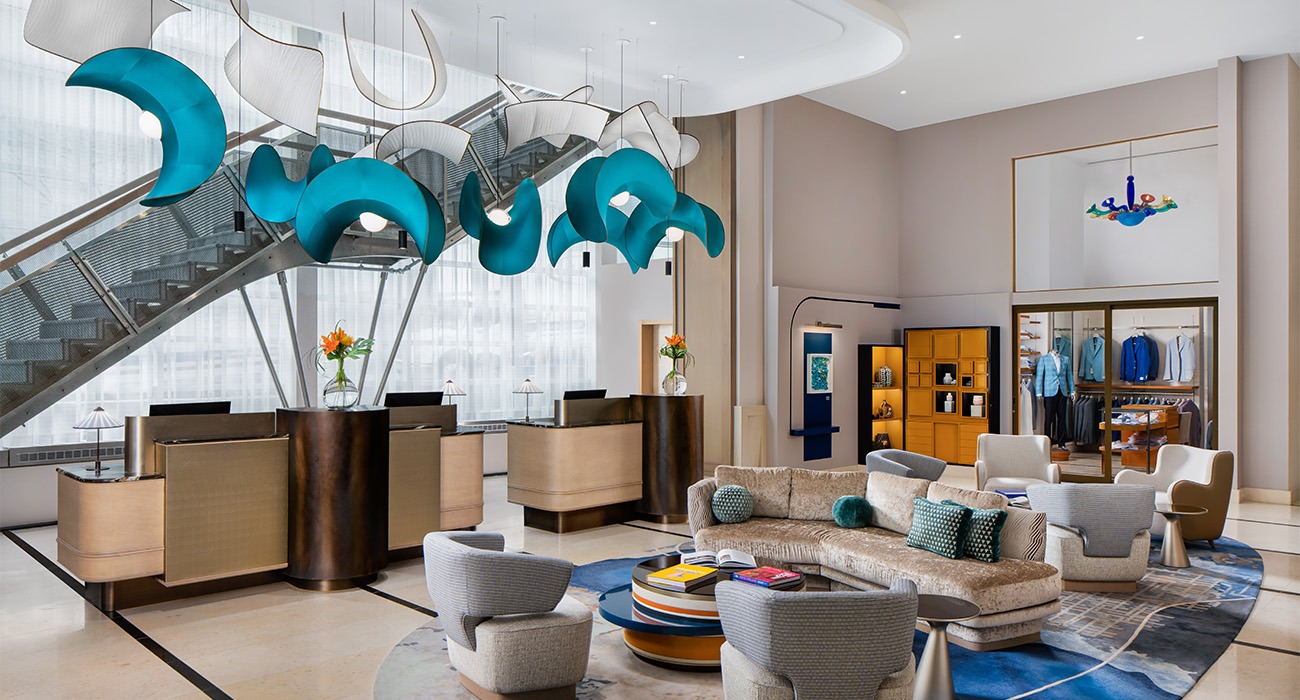
The Clift Hotel

The Clift Royal Sonesta Hotel is redefining meetings, weddings and events in the heart of Union Square with a distinctive blend of historic character and modern energy.

First opened in 1915 during the Panama-Pacific International Exposition, The Clift Hotel has long served as a gathering place for innovators, creatives and cultural icons. Today, its Making History Fun Again campaign invites a new generation of hosts and guests to create memorable moments in a storied setting.

The hotel offers 12,500 sq. ft. of flexible event space designed to encourage connection, creativity and collaboration. Thoughtful layouts, natural light, advanced technology and elevated catering ensure every gathering feels purposeful.

Pendry Mexico City

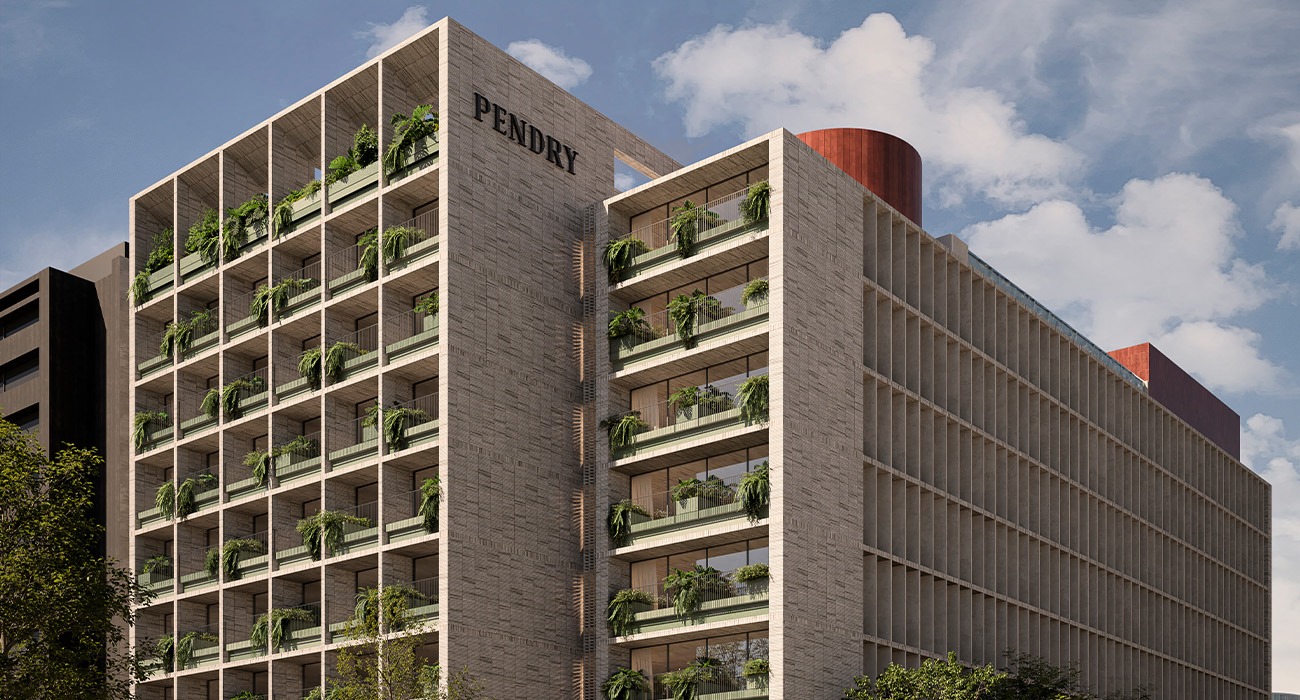
Pendry Mexico City exterior

Opening in late 2026, Pendry Mexico City will mark the brand’s debut in one of the world’s most culturally rich and globally celebrated destinations. Located in the heart of the sought-after Roma Norte District, the hotel will be surrounded by a neighborhood known for its acclaimed culinary scene, vibrant nightlife and architectural character.

Pendry Mexico City will feature 114 guest rooms and suites along with 20 private Pendry Residences. The project is being developed in collaboration with respected local firms Central de Arquitectura and IZ Arquitectos, with interiors designed by award-winning studio AVROKO.

The hotel will offer multiple food and beverage venues, including a morning-to-evening neighborhood café, a signature Bar Pendry and a chef-driven al fresco destination restaurant. Additional amenities will include a rooftop pool and sundeck, Spa Pendry, a state-of-the-art fitness center and flexible indoor-outdoor meeting and event spaces designed to serve both local and international audiences.

Sofitel Los Angeles

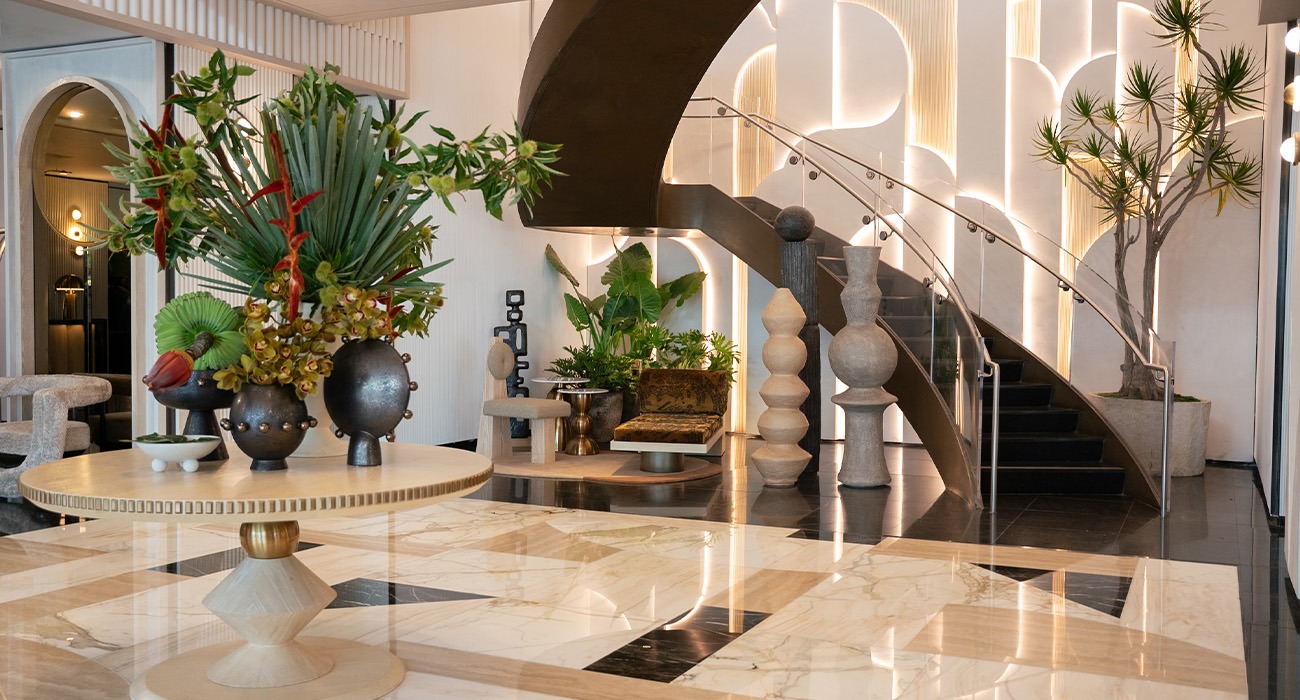
Lobby Staircase at Sofitel LA

Sofitel Los Angeles At Beverly Hills unveiled an inviting and elevated redesign of its lobby lounge and bar, introducing a chic new setting paired with an eclectic globally inspired menu and expanded hospitality offerings.

The arrival experience sets the tone with a South of France inspired aesthetic featuring terracotta olive trees, candlelit lanterns and arched columns. Inside, guests discover a light-filled oasis of monochromatic whites, golden accents and art deco influenced postmodern design by acclaimed Hollywood production designer Charles Infante.

The transformation extends to the bar and Estérel restaurant, where refined French flair meets global cuisine, live music and Sofitel’s signature art de recevoir, creating a destination designed to inspire, linger and connect.

Hotel Du Pont

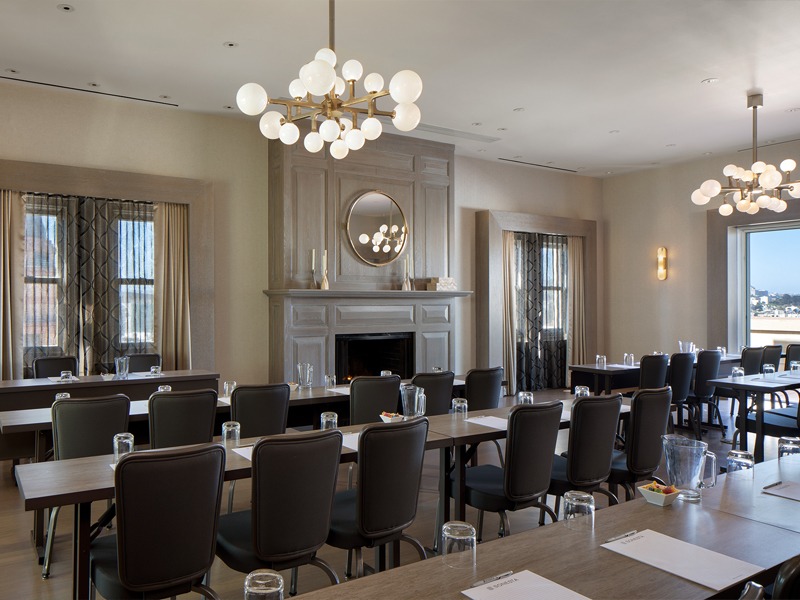
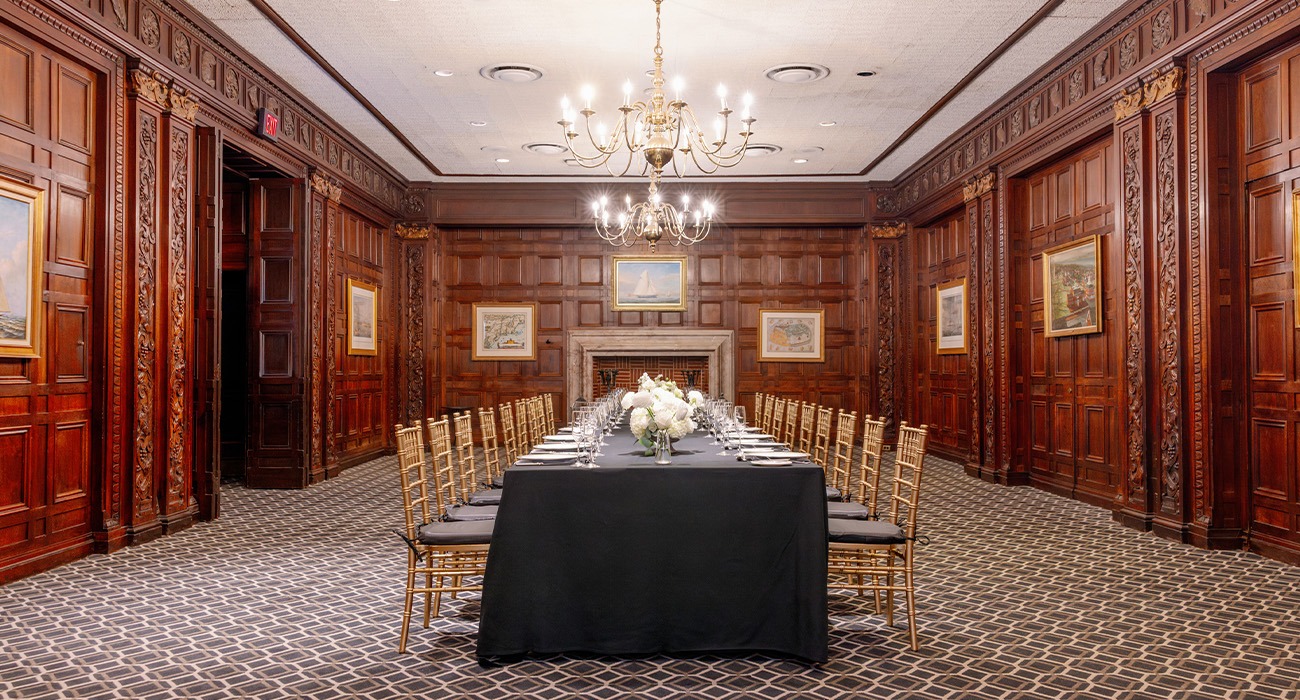
Hotel Du Pont meeting space

Hotel Du Pont, Wilmington’s iconic landmark, is ushering in a new era of hospitality with the debut of reimagined guest accommodations and refreshed meeting spaces that honor the hotel’s historic grandeur while introducing elevated design and modern comfort.

Central to the transformation is the introduction of Signature Suites, a new room category inspired by European salon elegance. Designed by Wimberly Interiors, the suites feature classic moldings, custom built-ins, layered marble and onyx finishes, curated artwork and warm neutral tones accented with burnished gold. Select Legacy guest rooms have also been refreshed with updated furnishings and textiles while preserving their original architectural character.

Across all accommodations, guests will enjoy an elevated sleep experience with upgraded mattresses, premium linens and enhanced climate control.

Meeting and event spaces have been revitalized, including updates to the conference center and restored historic details in the Christina and Brandywine Rooms.

Condado Vanderbilt

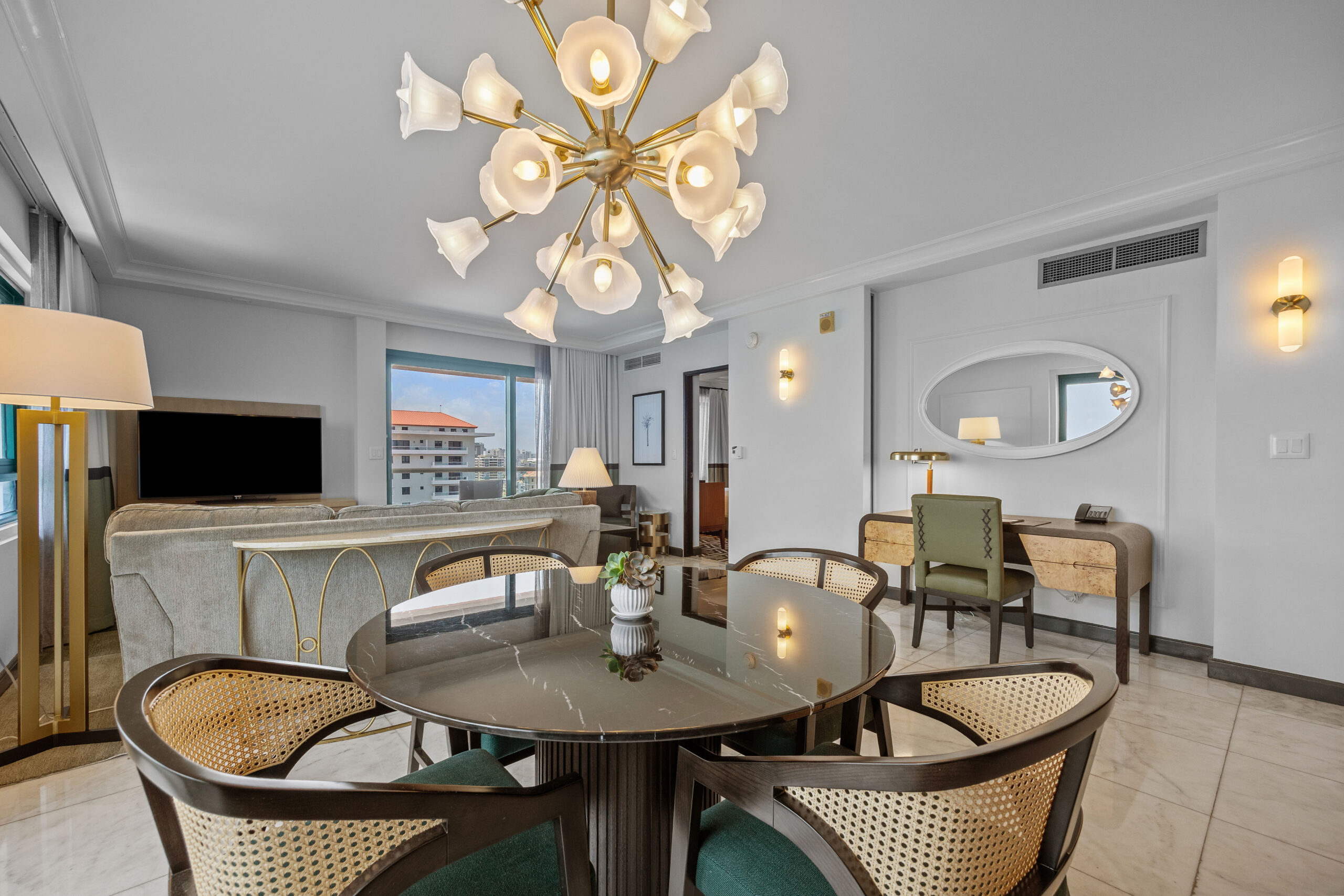
Condado Vanderbilt Commodore Suite dining room

Condado Vanderbilt Hotel, Puerto Rico’s legendary oceanfront retreat originally built in 1919 by Frederick William Vanderbilt, has completed a comprehensive renovation to all guest rooms, suites and corridors, marking a new chapter in the property’s storied legacy. Designed by HBA International, the renovation blends historic grandeur with contemporary sophistication while preserving the hotel’s iconic character.

The refreshed accommodations reflect Spanish Colonial influences and Caribbean artistry through crisp white moldings, soft green tones, polished marble and curated artwork. The hotel now offers 317 guest rooms, including 100 suites, designed to deliver a refined yet residential experience. Additionally, Condado Vanderbilt has introduced an exclusive In-Suite Wellness Package.

Sofitel Montreal Golden Mile

Photo: Citizen North

Sofitel Montreal Golden Mile, the brand’s flagship Canadian property for more than two decades, announces the completion of a comprehensive refurbishment that ushers in a new era of refined hospitality. The revitalized hotel blends timeless Parisian elegance with the creative energy of Montreal, reaffirming Sofitel’s commitment to elevated luxury.

Ideally located on Sherbrooke Street near Mount Royal and the Montreal Museum of Fine Arts, the transformation coincides with Sofitel’s 60th anniversary and reflects the brand’s global repositioning under the leadership of CEO Maud Bailly. Led by award-winning Canadian firm 2pirdesign, the redesign evokes the intimacy of a French home through curated art, sculptural lighting and rich textures.

The hotel introduces reimagined guest rooms and suites, redesigned meeting and event spaces, and refreshed culinary destinations including the newly redesigned RENOIR restaurant and the debut of NINI Cocktail Lounge. Together, these updates create a cohesive experience that celebrates French art de vivre while embracing Montreal’s cultural vibrancy, positioning Sofitel Montreal Golden Mile as a benchmark for modern luxury in North America.

The Westin Riverfront

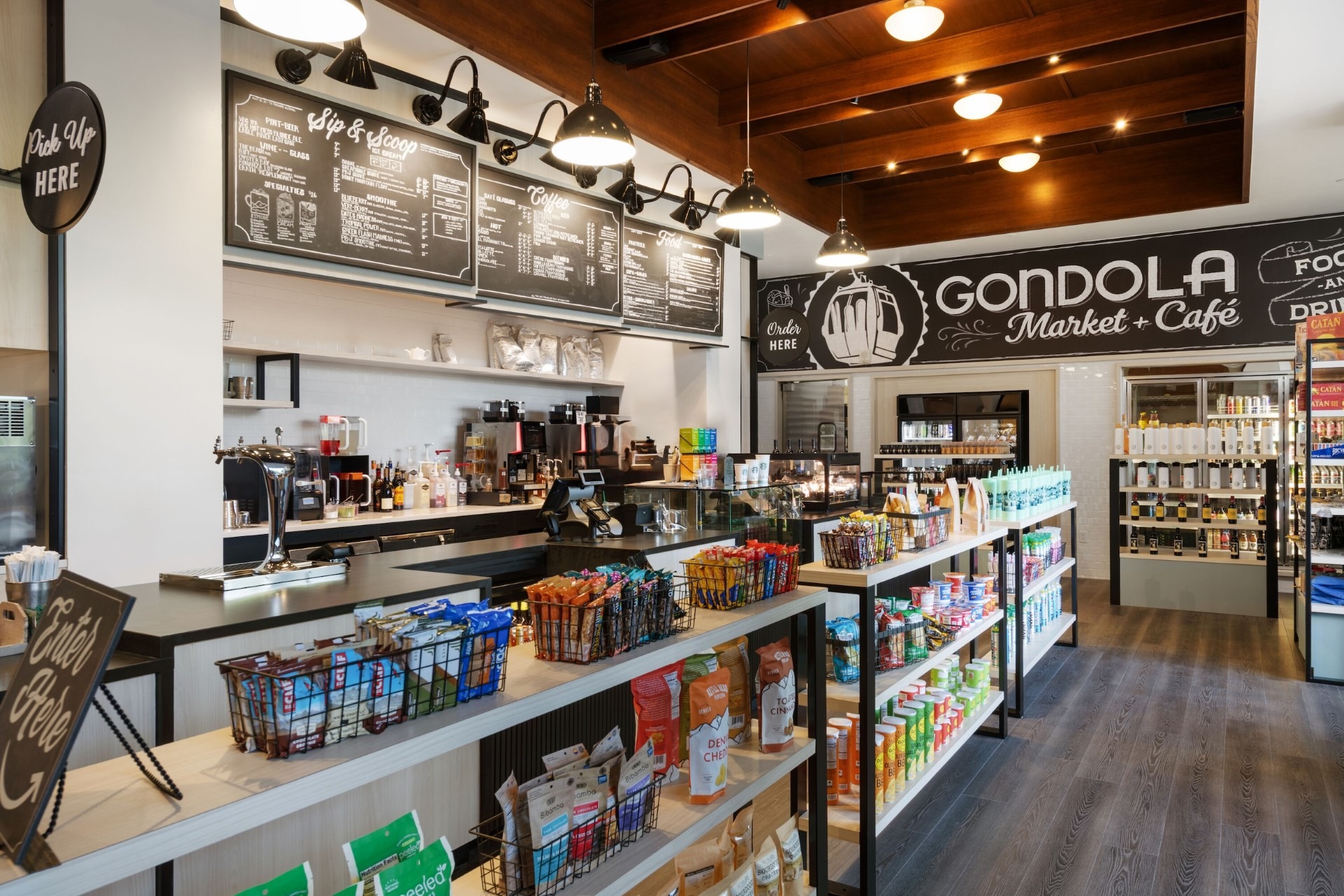
The Westin Riverfront Gondola Market

The Westin Riverfront Resort & Spa Avon, Vail Valley announced a series of enhancements ahead of the 2025–2026 ski season, designed to elevate comfort, convenience and flexibility for winter guests.

Key updates include a newly expanded 4,000-square-foot Ski Valet with fireplaces, enhanced seating, 1,700 boot warmers and direct access to the Riverfront Express Gondola. The resort has also refreshed its Riverside and Gondola ballrooms with new finishes, décor and lighting, offering an updated setting for meetings and celebrations.

New private Work Pods support the growing demand for bleisure travel, while the addition of two all-electric Kia EV9 SUVs reinforces the resort’s sustainability leadership as Colorado’s first Silver LEED-certified hotel. Guests can also enjoy the recently opened Gondola Market + Café, offering grab-and-go dining with a focus on local sourcing and eco-friendly practices.

Together, these upgrades position The Westin Riverfront as a premier base for ski season and year-round mountain experiences.

Cosmopolitan Las Vegas

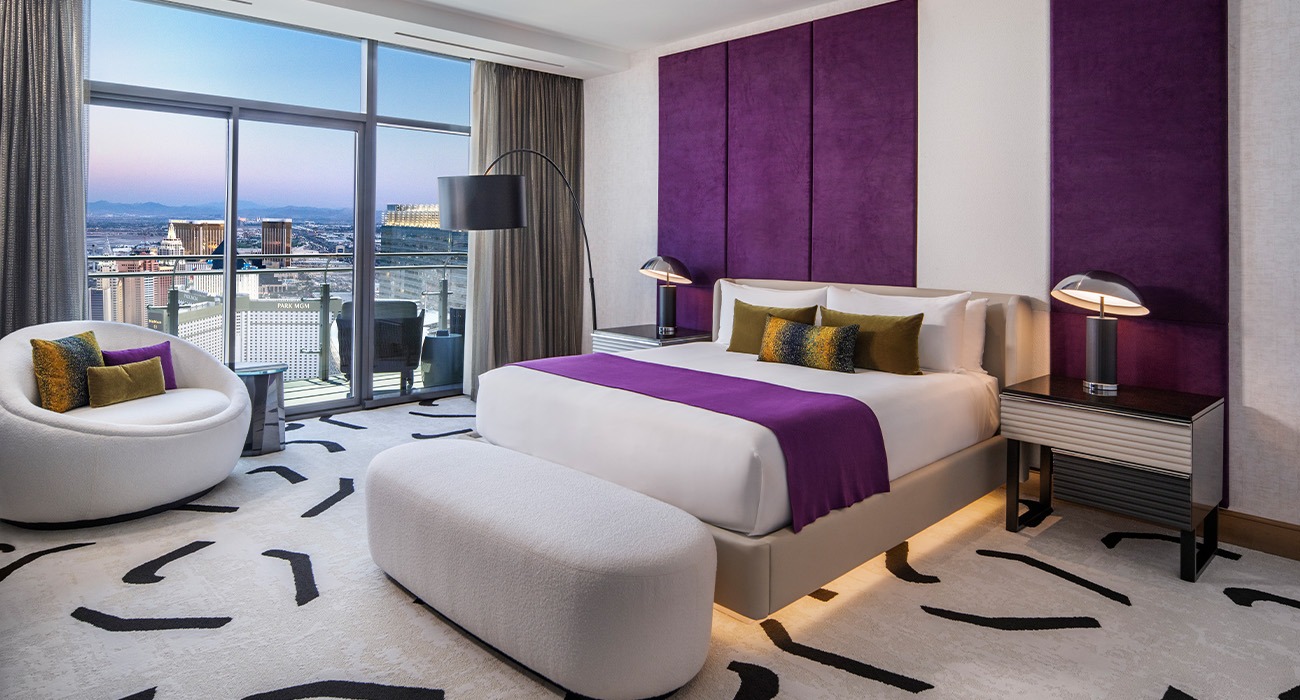
Cosmopolitan Las Vegas Bedroom

The Cosmopolitan of Las Vegas has debuted its Chelsea Tower penthouse collection, unveiling 24 reimagined penthouse suites and 14 entourage rooms across two exclusive floors. Now open for booking, the redesigned accommodations blend striking artistry with modern comfort, creating elevated spaces designed for entertainment, connection and indulgence.

Located on the resort’s top floors, the transformation encompasses bedrooms, bathrooms and expansive living areas, each redesigned with bespoke furnishings, rich finishes and dramatic lighting by Studio Gaia. Enhancing the experience, guests of the Chelsea Penthouses now enjoy dedicated butler service, offering personalized, around-the-clock attention.

Starting at 1,900 sq. ft. and available in two-bedroom, three-bedroom and four-bedroom configurations, each penthouse centers around a 360-degree living room with loft-inspired design, curated art, wet bars and sweeping views of the Las Vegas Valley. Select suites feature unexpected amenities such as private fitness spaces or game areas, reinforcing The Cosmopolitan’s reputation for bold design and unforgettable stays.

M Resort Spa Casino

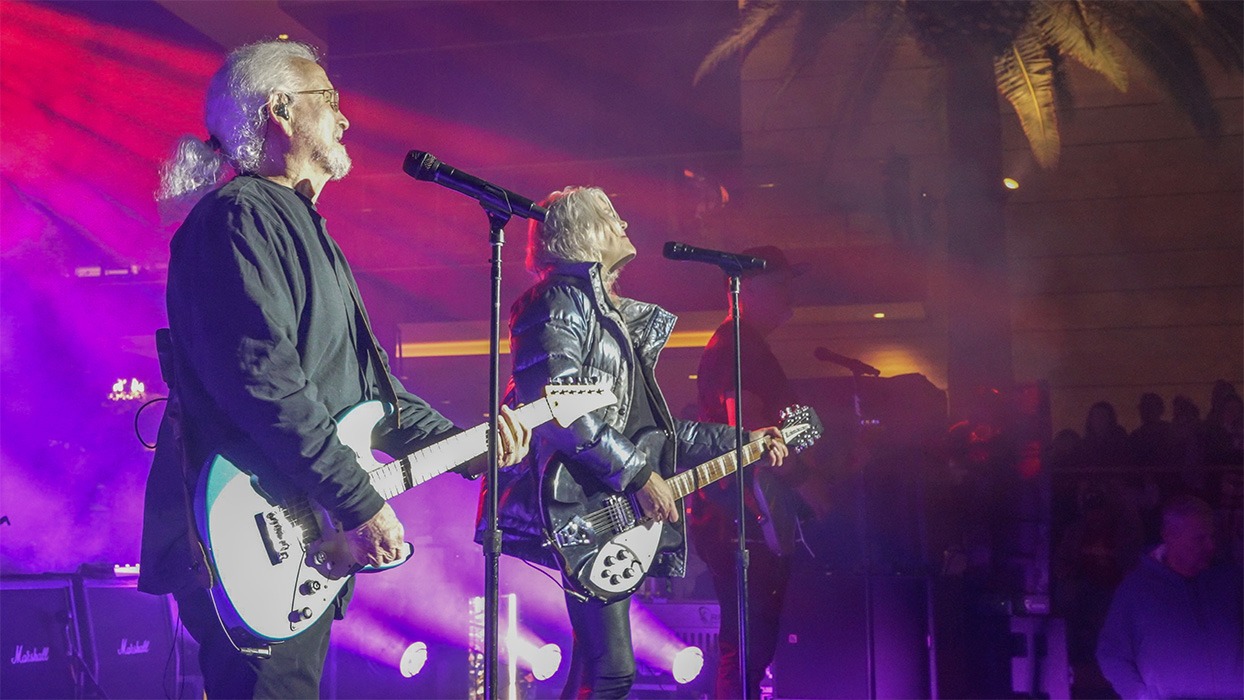
Band playing at M Resort

M Resort Spa Casino, the official headquarters hotel of the Las Vegas Raiders, marked a transformative milestone with the grand opening of its expansion and the official debut of the new LEED Certified East Tower.

The expansion nearly doubles the resort’s room inventory with the addition of 375 new guestrooms, expanded convention space and enhancements to the casino floor.

Last month, in my Events Industry Council article, I introduced the Five Domains of the Human OS™. I expected interest but I did not expect what followed. Event professionals reached out with relief and recognition. Many said they had been carrying exhaustion for years without the language to explain it. They saw themselves reflected in patterns they had always felt but could never articulate.

Their reaction made something clear. The article was not an ending. It was the beginning of naming what our industry has been sensing for a very long time.

Around the same time, I experienced my own moment of truth. What looked like a breakdown in my system was actually a moment of clarity. My body was revealing what it had been holding for years. This was information, not failure. And it confirmed what I had been mapping for almost two years. Events rely on a form of human capacity that has never been recognized or protected.

As a Human Systems Architect, my work focuses on understanding the architecture inside humans that allows them to function under pressure. Events are one of the clearest places to see this. Once you understand the architecture, the patterns across our entire industry become visible. In simple terms, this is the human load we all carry, often without realizing it.

The Hidden Capacity Holding Events Together

There is a type of internal capacity that our industry uses every day even though we have never given it a name.

Read More: Become Unstoppable in Your Work and Life

Some people naturally have

  • fast emotional processing
  • strong pattern recognition
  • high sensory and relational awareness
  • an ability to sense tension before it shows
  • intuitive clarity in moments of chaos
  • the ability to read a room instantly
  • a tendency to integrate information quickly across people and conditions

These are not soft skills. They are internal processing abilities. And events depend on them more than most sectors.

They are why certain planners seem irreplaceable. They are why events hold together even when pressure is high and conditions are unpredictable.

Here is what has been missing from the conversation. The people with these abilities are often the ones burning out and leaving. Not because they lack passion. Not because they cannot handle the work. But because their internal systems have been running at maximum load without protection for years.

People with these strengths also tend to

  • deplete faster
  • carry emotional labor quietly
  • feel responsible for everything
  • push through instead of pausing
  • need structured recovery in order to reset

High capacity without protection does not lead to excellence. It leads to collapse.

These individuals are not fragile. Their systems are often running beyond what the environment was designed to support. When their internal architecture is overused without recovery, it eventually breaks down.

We are not losing people because they cannot handle the work. We lose talent when environments do not support the very capacities they rely on most.

The good news is that human capacity is not fixed. It can be rebuilt and sustained, especially in industries like ours, if we create the conditions to support it.

Attendees feel a similar strain. Many leave early, struggle to focus, or disengage without understanding why. They are not disinterested. They are overloaded.

None of this is about blame. These patterns emerged because our industry evolved faster than our understanding of human capacity.

The Events Industry Functions Like a Collective Neurotype

When you look at events through the lens of human systems, the entire industry behaves like a shared nervous system.

It operates with

  • constant sensory intensity
  • rapid switching
  • heavy emotional labor
  • many layers of relational management
  • unpredictable demands
  • very limited recovery

This helps explain why nervous systems wired for novelty, urgency, and rapid switching often seen in ADHD and other neurodivergent profiles can initially excel here, while many professionals over time begin to show the same signs of overload.

The industry itself is wired for intensity. And right now, that collective nervous system is dysregulated.

This is not a planner problem. It is a system pattern.

The supplier attempting to meet impossible timelines is part of the system.

The venue team turning rooms without pause is part of the system.

The freelancer absorbing pressure alone is part of the system.

The manager shielding a team while burning out is part of the system.

When planners and clients are overwhelmed, timelines shrink. When timelines shrink, suppliers absorb the strain. When suppliers absorb strain, execution carries tension. When execution carries tension, attendees feel it.

These are not isolated issues. They are one system expressing stress through different points.

If you’re downstream in this system, you may be thinking: I don’t control the timeline. I just absorb it. That’s exactly the point. Naming the pattern is the first step toward changing it together.

Seeing it this way helps us realize these challenges are not individual shortcomings but shared system dynamics we can address together and redesign.

Why Pressure Is Increasing

AI is accelerating operations. Budgets are tightening. Expectations are rising. Human bandwidth is shrinking. We are scaling technology but not the humans inside the system.

This creates a capacity gap. Burnout is not a personal failure. It is a design mismatch.

Events are especially vulnerable because they depend on all five domains of the Human OS at once:

  • Wiring: sensory and emotional processing
  • Regulation: steadiness under pressure
  • Energy: rhythms of output and recovery
  • Processing: absorbing and organizing information
  • Belonging: safety and authenticity

Most industries rely on one or two. Events require all five to be functional at the same time. This is why the people who make events extraordinary often burn out first. Their strengths have never been supported by the system.

Designing for Human Capacity

If we want events that elevate rather than overwhelm, we must design with human processing in mind. Each domain gives us practical ways to support both planners and attendees.

1. Wiring—Sensory & Emotional Processing

For planners: Match people to roles based on sensory fit. Reduce unnecessary intensity.
For attendees: Offer choices in pace, intensity, and environment. Choice is the fastest way to create nervous system safety.

Read More: A Demonstration of Extraordinary Event EQ

2. Regulation—Staying Steady Under Pressure

For planners: Build a regulated core team. One calm person co-regulates a room faster than any process.
For attendees: Begin sessions with a steadying cue so people can arrive physiologically before they engage cognitively.

3. Energy—Rhythms of Output & Recovery

For planners: Protect recovery windows with the same seriousness as show cues. Recovery maintains coherence.
For attendees: Replace constant stimulation with structured pauses so the brain can refuel and reconnect.

4. Processing—Cognitive Load

For planners: Reduce decision stack height. Fewer simultaneous decisions increase clarity and creativity.
For attendees: Present information in a sequence the brain can follow. Orientation first, complexity second, integration last.

5. Belonging—Safety & Authenticity

For planners: Make honesty operational. When people do not have to mask, their capacity increases.
For attendees: Build small moments of genuine connection. Belonging stabilizes a room more than any motivational opener.

The Shift Ahead

Our industry is not limited by creativity or talent. It is limited by human capacity.

The next evolution of events is not about bigger production or better technology. It is about better-supported humans.

Capacity is not a personality trait. It is a system outcome. And when we change the system, we change what’s possible for every human inside it.

This is why I created the Human OS. It is the blueprint for understanding, supporting, and rebuilding the human architecture our industry depends on.

The question now is simple. Can human capacity rise as fast as the world around us?

I believe it can. If we design for it.

And there is no industry better positioned to lead this shift than ours. Not because we are more resilient. But because we have always been the architects of human connection. Now we have the opportunity to protect the capacity that makes that connection possible.

Yush SztalkoperYush Sztalkoper, CMP, is the founder of NeuroSpark+, helping the events industry design for human sustainability through neuroinclusion and systems transformation. With almost two decades designing global corporate events at UBS, JPMorgan, and Gartner, she now pioneers neuroinclusion frameworks for the AI era—using the events industry as a laboratory for capacity-first approaches that reshape how we create human connection at scale.

Yush created The Human OS™, Root Reflection™ diagnostic, SHIFT Pathway™, and NeuroDesign™ methodology—a complete system that scales from individuals to entire industries, moving all from surviving to thriving.

Eduardo Chaillo’s career in the meetings and events industry is defined by connection—between cultures, between sectors and between people who may not initially speak the same professional or personal language. Chaillo’s journey to industry leadership was anything but linear. Instead, it reflects the very adaptability, empathy and global mindset that increasingly define excellence in the space today.

Born and raised in Mexico City, Chaillo grew up immersed in cultural duality. With a Syrian-Jewish father and a Mexican-Catholic mother, he learned early what it meant to live between worlds. “I’ve lived my whole life between cultures,” he says, “learning how bridges are built when people listen to and respect each other’s differences.” That lived experience would later become a professional strength, positioning him as a natural connector in a global industry.

Chaillo moved to the United States in 2005, first to Chicago and then, in 2007, to the Washington, D.C., area, where he now lives in Falls Church, Virginia. Today, he serves as a consultant at Global Meetings and Tourism Specialists LLC, and as Global General Manager at Maritz. But his early ambitions pointed in very different directions.

As a young man, Chaillo imagined himself as an entrepreneur. At various points, he also considered becoming a psychologist or a musician—professions that, in hindsight, foreshadow his people-centric approach to leadership. His first major professional chapter unfolded in the restaurant industry, where he opened and operated restaurants, eventually rising to a leadership role within the industry. That experience honed his operational instincts and exposed him to the complexities of managing people, budgets and stakeholder expectations.

His work in hospitality led to a pivotal opportunity: an appointment as Secretary of Tourism for the Mexican state of Zacatecas. It was there that Chaillo’s career trajectory shifted decisively toward tourism and events at both the national and global levels. His work caught the attention of Mexico’s Federal Minister of Tourism, who invited him to join the Mexico Tourism Board. That move marked Chaillo’s first deep immersion in the meetings industry—and, as he puts it, “the rest is history.”

Becoming a CMP

Once exposed to the world of meetings and conventions, Chaillo found a professional home that aligned perfectly with his instincts. He fell in love with an industry built on collaboration, logistics and human connection. Yet he quickly realized that passion alone was not enough. To be effective—and credible—on the global stage, he needed to speak the language of his clients.

That realization led him to the Certified Meeting Professional (CMP) designation. Chaillo first learned about CMP while working at the Mexico Tourism Board and engaging with industry leaders. “I understood I needed to speak the business language of the clients and convert myself into a trusted advisor,” he explains. “The best and fastest way to do it was through getting my CMP.”

Test Prep Tips

He earned his CMP certification 21 years ago, approaching it not as a checkbox, but as a professional transformation. Studying for the exam in Mexico alongside a diverse group—a professional congress organizer, hotel representatives, a DMC executive and a destination promoter—reinforced the value of cross-sector learning. His advice to others preparing for the exam reflects that same philosophy: focus on real-world scenarios, practice constantly and adopt a practitioner’s mindset rather than a purely theoretical one.

Read More: Mexico’s Pacific Coast: Sunsets to Steal the Show

Education, for Chaillo, has never stopped with certification. He credits industry conferences and events as ongoing classrooms, choosing to prioritize learning even when his initial goals might have been promotional or business driven. Over time, he has acquired additional credentials, including CMM, CASE and HMCC, thereby deepening both his strategic and operational expertise.

One of the most defining chapters of Chaillo’s career was his leadership of the Tianguis Turístico de México, the country’s flagship tourism marketplace. For six consecutive years, he oversaw the organization of the event in Acapulco, managing immense logistical complexity while navigating business, communications and political considerations. Beyond scale, the event’s impact on local communities and the national tourism economy made it especially meaningful. More recently, his work with Maritz on the design of the ICCA Congress has offered another global platform to apply his experience.

Fellow Designation

Despite his achievements, Chaillo remains refreshingly candid about professional milestones. He became a CMP Fellow this year, joining a community he describes as respected and influential. While he admits he is still discovering the full value of the Fellow designation, he views it as a sense of belonging—and one that will grow through deeper involvement and commitment over time.

That humility extends to his perspective on the CMP designation itself. While he believes strongly in its value, he is also honest about its limitations. Over the years, he has seen efforts to make CMP more global, strategic and human-centered; however, he acknowledges that it is still often perceived as very American and tactical. Even so, he remains engaged in conversations about how the credential—and the industry—can continue to evolve.

The Future

Looking ahead, Chaillo finds inspiration in the changing nature of meetings and events. He is encouraged by a shift away from purely transactional conversations toward discussions that focus on empathy, emotional intelligence and behavioral science. He sees younger generations embracing social values and recognizing the broader impact of the industry, a trend that gives him hope for its future.

On event days, Chaillo’s energy comes not from caffeine or rituals, but from people. “Whenever I start interacting with industry colleagues who share the passion for this industry, I get fueled,” he says. To keep teams aligned, he relies on practical tools, such as WhatsApp groups organized by function—logistics, strategy and transportation—ensuring clarity in complex environments. And when an event concludes successfully, his instinct is reflective rather than celebratory: a thorough debrief with stakeholders, followed by good food, music and connection.

Perhaps his philosophy is best captured in his favorite quote: “The bird sings even when the branch cracks—because it knows the strength of its wings.” For Eduardo Chaillo, that strength has always come from adaptability, cultural fluency and a deep belief in the power of human connection. As a CMP Fellow and global industry leader, his career stands as a testament to what is possible when technical excellence is matched with empathy and purpose.

Read MoreCMP Spotlight: Get to Know Nancy J. Zavada

Smart Meetings’ podcasts covered a lot in 2025. So much so it was hard to settle on the objectively “best podcast episodes” of the year. But, after some thought, we selected the episodes we thought sparked further thought and discussion.  

From redefining ambition, owning your spark, allyship, AI in events, tips for trip packing and neuroinclusivity, our top picks from 2025 offer a range of information from all areas of our industry.

Whether it is from What One Thing? or Smart Start Radio, we’re confident you’ll take something away from either of these shows.

Stay tuned and subscribe for our new episodes coming to you in 2026!

What One Thing?—Walking Through the Door: Real Talk on Allyship, Mentorship and Sponsorship

What One Thing graphic

On this episode of What One Thing? we spotlight the Smart Allies cohort with candid insights on real-world allyship. Leonard Hoops (Visit Indy), David Stevens (Olympian Meeting) and Mike May (Brightspot Incentives & Events) join host JT Long to explore how leaders open doors through action, whether by championing accessibility, elevating mental health conversations or advancing emerging talent. Through honest stories and practical takeaways, the episode offers clear guidance for anyone seeking to be a stronger mentor, sponsor or advocate.

Smart Start Radio—From Vision to Venue: How AI Is Transforming Event Planning

In this episode of Smart Start Radio, co-hosts Eming Piansay and Sara Robertson are joined by Prismm CEO Yaron Lipshitz, who breaks down how photorealistic 3D venue visualization is saving planners time, money and emissions. Later in the episode, Katie Moser of GoGather offers practical examples of how AI supports marketers and planners through faster content creation, video editing and data analysis. Together, both guests paint a clear picture of how technology is reshaping events with more efficiency, sustainability and collaboration.

What One Thing?—Stop Shrinking: The Power of Owning Your Spark

Devon Pasha next to What One Thing logo

Host JT Long sits down with emcee and event strategist Devon Montgomery Pasha for a conversation about authenticity, impact and the moment she chose to stop shrinking. JT also announces on this episode that Pasha has joined What One Thing as the new co-host.

Devon reflects on stage presence, motherhood, the mentors who shaped her path and the practices that keep her centered. The episode honors courage, belonging and the choice to show up as your full self.

Packing Like a Pro: Coffee Chat on FAM Trip Essentials

Coffee chat logo

In this Coffee Chat episode of Smart Start Radio, host Eming Piansay is joined by Digital Content Manager Malik Anderson and new Senior Editor David Lytle for a lively look at how they pack for FAM trips. From David’s lifelong list-making habits to Malik’s commitment to traveling light, the team trades stories, mishaps and favorite packing hacks. They cover gadgets, shoes, style choices and prep for major events like IMEX. Whether you overpack or keep it minimal, the episode offers practical tips and relatable moments to ease your next business trip.

What One Thing?—Tough as a Mother: Redefining Ambition in Events

Justine Sterling and April Zorskym next to What One Thing logo

In this episode of What One Thing? JT Long talks with Justine Sterling Converse and April Zorsky, co-founders of Brigade Events, a woman-led agency known for producing experiences for presidents, world leaders, Fortune 500 executives and top-tier talent.

They reveal how they built a people-first culture that supports flexibility, maternity leave and true work-life balance, showing that ambition and family can coexist. Their journey spans resilience through the pandemic, deep teamwork and lessons carried from their White House and Bush Center careers into leading their own firm.

Their one thing: Motherhood is a strength that fuels exceptional leadership.

Designing Events for Everyone: Neuroinclusivity with Megan Henshall

Sara Robertson, Eming Piansay and Megan Henshall on Smart Start radio graphic

This episode of Smart Start Radio features Megan Henshall, a visionary leader in neuroinclusivity and former strategic lead at Google. She discusses her work designing environments that honor neurodiverse needs, from sensory-friendly spaces to building rest and predictability into events. Henshall also highlights the NEU Project, an initiative pushing inclusivity beyond buzzwords and into real practice. The conversation offers practical guidance for planners committed to creating spaces where every brain can thrive.

There’s no shortage of reasons to start scouting your next meeting destination or incentive retreat. In Hawai‘i, a wave of fresh offerings from farm tours and new luxury suites to cultural cleanups and omakase dinners is making it easier than ever to pair purpose with pleasure.

In Mexico, international arrivals just hit 16.5 million for the year, with growth across North America, Europe and Asia signaling big momentum heading into 2026. Over in New York, JetBlue is giving travelers a very good reason to show up early: the debut of its first-ever lounge, BlueHouse, bringing a little Art Deco glamour to JFK Terminal 5. And there’s more where that came from.

As always, Smart Travel is here to bring you the latest updates shaping the way we move, meet and plan.

Hawai‘i Announces Culinary, Experiential and Property Updates

The Hawaiian Islands are serving fresh reasons to start plotting that 2026 incentive trip.

New luxury meets local flavor at Grand Hyatt Kauai’s lagoon-side Na Aliʻi cabanas and Hyatt Regency Waikiki’s new mural-filled “Art House” suite. Volcano Village Estates is leaning into family-friendly experiences with an Explorer Pack.

Read More: Qurator: Hawaii’s New, All-encompassing Tourism Certification Program

On the culinary front, Four Seasons Hualalai is showing off its new omakase concept, while Kona Brewing is pouring a limited-edition liliko‘i witbier (a beer variety) across the islands. And for Michelin-minded travelers, Nobu Grand Wailea and Okdongsik Honolulu are bringing international tastes to local tables.

Finally, new guest experiences are heating up, such as cacao farm tours with treehouse lunches on Maui, distillery deep-dives on Oahu and luxe spa dates on Poipu Beach.

Mexico Welcomes 16.5 Million Air Arrivals in 2025

From January through October 2025, Mexico welcomed more than 16.5 million air travelers, marking a steady climb from last year and a 10.2% increase over pre-pandemic 2019 levels, according to the Ministry of the Interior’s latest data.

The top three source markets are the United States, Canada and the United Kingdom. U.S. travelers continue to dominate with more than 11.1 million arrivals so far this year, while Canadian visits jumped 11.4% over 2024. The U.K. saw a 3.2% bump, and additional growth came from Italy (+14.8%), Argentina (+14.3%), South Korea (+11.6%) and China (+10.6%).

Tourism Secretary Josefina Rodríguez Zamora attributed the numbers to Mexico’s combination of hospitality, infrastructure and diverse offerings and said, “These results confirm that Mexico is a reliable destination for the millions of people who visit us each year.” Travelers ages 30–44 led the way, followed by those in the 45–59 and 60+ brackets, affirming Mexico’s wide appeal for everything from family vacations to wellness retreats.

Americans Want Congress to Stop Diverting 9/11 Security Fees

A new U.S. Travel–Ipsos poll reveals that Americans are fed up with clunky airport screening and want their travel dollars used to fix it, starting with the 9/11 Passenger Security Fee. The $5.60 charge, tacked onto every airline ticket to support TSA operations and security upgrades, has largely been diverted to unrelated federal spending since 2014, adding up to more than $1.5 billion per year not going toward safer, smoother checkpoints.

With major upcoming global events including America 250, the 2026 FIFA World Cup and the 2028 Olympics, U.S. Travel President and CEO Geoff Freeman says now’s the time to reinvest in technology that speeds lines and strengthens security. “Stealing 9/11 security dollars is shameful,” he said. “This is a bipartisan fix waiting to happen.”

Travelers overwhelmingly support modernization efforts: 80% want to keep shoes on, 86% are fine with carrying on larger liquids and 81% back TSA’s use of facial biometrics, especially with privacy safeguards in place.

Six in 10 Americans believe the U.S. is falling behind globally on travel efficiency, and nearly 90% say every cent of the 9/11 fee should fund screening improvements. More than 75% say TSA officers and air traffic controllers should be paid during shutdowns.

Royal Caribbean Reveals 2027–28 Caribbean Sailings

Royal Caribbean just dropped its 2027–28 Caribbean lineup, featuring 13 ships sailing from eight ports, including Fort Lauderdale, Miami, New Orleans, Cartagena and San Juan. Headliners include the bold Legend of the Seas and the amped-up Allure of the Seas, with itineraries spanning three to nine nights across the Eastern, Western and Southern Caribbean.

Read More: Royal Caribbean Launches “World’s Biggest Weekend” Cruise with New Mega-Ship Utopia of the Seas

Also on deck? Fan favorites like Freedom, Adventure and Grandeur of the Seas, all offering new ways to hit Perfect Day at CocoCay, Royal Beach Clubs in Cozumel and Paradise Island, and new ports like Samaná, Dominican Republic.

JetBlue Debuts Its First Lounge at JFK

JetBlue is giving its most loyal travelers a reason to show up early for their next flight out of JFK. The New York–based airline just announced the December 18 grand opening of BlueHouse, its first-ever airport lounge.

Spanning 9,000 sq. ft. across two floors in Terminal 5, BlueHouse channels a chic NYC apartment, complete with Art Deco touches, Union Square–curated bites, local beverages and quiet corners to relax or recharge. From draft cocktails to JetBlue-branded chess sets, the space feels like a grown-up clubhouse for travelers who appreciate both comfort and character.

Access is complimentary for Mosaic 4 members, JetBlue Premier Cardholders and Mint transatlantic customers, with limited passes rolling out in 2026 for other frequent flyers. BlueHouse is part of JetBlue’s larger JetForward strategy to bring more premium experiences to both sky and terminal, and a second lounge is already in the works for Boston Logan in 2026.

Planning major trade shows is an epic undertaking. That is why International Association of Exhibitions & Events brought more than 1,700 event professionals together in Houston, Texas, this week for IAEE Expo! Expo! Annual Meeting and Exhibition 2025. George R. Brown Convention Center was filled with discussions about how to rethink sponsorships to drive value and engagement, how Gen Z is shaping the future of tradeshows and AI that wows.

A wellness Lounge boasted BodyWorks massages, a quiet place to rest and refresh. A Sustainability Sanctuary set the stage for greener events with experts on plant-forward menus, zero-waste catering ideas, and tips for cutting travel emissions. Attendees were encouraged to purchase $5 carbon offsets for a positive net effect.

The Learning Zone was filled with event technology innovators sharing strategies for AI-powered registration, marketing and even creating a personalized theme song in minutes. “Tech should create awe, not anxiety,” said Tech Evangelist Dahlia El Gazzar, DES. She shared tips for building a tech stack that creates invisible magic and amplifies human connection.

Smart Meetings was in attendance and brought back these Texas-sized action items.

Start with a Crazy Idea

TikTok sensation Kyle Scheele made a name for himself by printing cheesy T-shirts, planning a viral marathon where no one ran and encouraged everyone he meets to pursue their crazy ideas. “Every person on this planet is born with gifts to give the world,” he said. That is until other people try to kill those crazy ideas. Don’t let them.

You also don’t need to blow up or even think outside the box to be creative. In fact, the box is a vital part of the process. “Constraints are vital.”

Read More: Unleashing Imagination: 5 Essential Steps to Transform Creative Event Design

Why? When you don’t have the team or resources or time, you are forced to find new ways to break through the noise and achieve a task. Many found they were stronger than they believed during Covid when they learned how to work from home overnight because they had no other choice.

In fact, being endowed with too many resources can lead to scope creep. Constraints facilitate focus and require resourcefulness. A lean team may find inspiration to foster collaboration with partners who can help fulfill the goal. “Creativity is a team sport,” Scheele said.

Because you don’t have time or budget to do everything at your citywide, you might dedicate an evening to local food at a ballpark to represent all the fabulous cuisine and venues in a destination. The singular particular experience contains the universal and will resonate more than a tour of five venues with meals at each one.

“Your job is to figure out what the real constraints are, which are constructive and which are constructive. Get rid of ones that don’t make the project better,” Scheele said.

Better often means original and in Scheele’s case, downright crazy. A minotaur bike for two that looks like a horse on wheels, a suitcase full of T-shirts mailed to a product buyer—anything that will surprise and delight.

A savvy meeting professional is always looking for the gaps—the Goldilocks solution that is between the extremes of too many emails and not enough information. Find the sweet spot.

Sustainability matters in the meetings and events industry because these gatherings concentrate people, resources and waste in a short window of time, which means they also concentrate their impacts. Here are five ways Smart Meetings helped you gain a better understanding of how and why to embrace sustainable practices.

Going Beyond Green

The word "Green" on light brown background

Editor Sara Robertson kicked off the year with a deep dive into responsible tourism, examining how sustainable practices in tourism and events impact communities long after the event is over.

Case Study: How One Event Achieved Renowned Sustainability Accreditation

WEFTEC earns EIC platinum-level Sustainable Event Standards certification

A step-by-step look at how the annual conference for the Water Environment Federation achieved Platinum-level certification. Readers will find a lot of practical takeaways to apply to their next planning session.

A Tour of DC’s Sustainability District

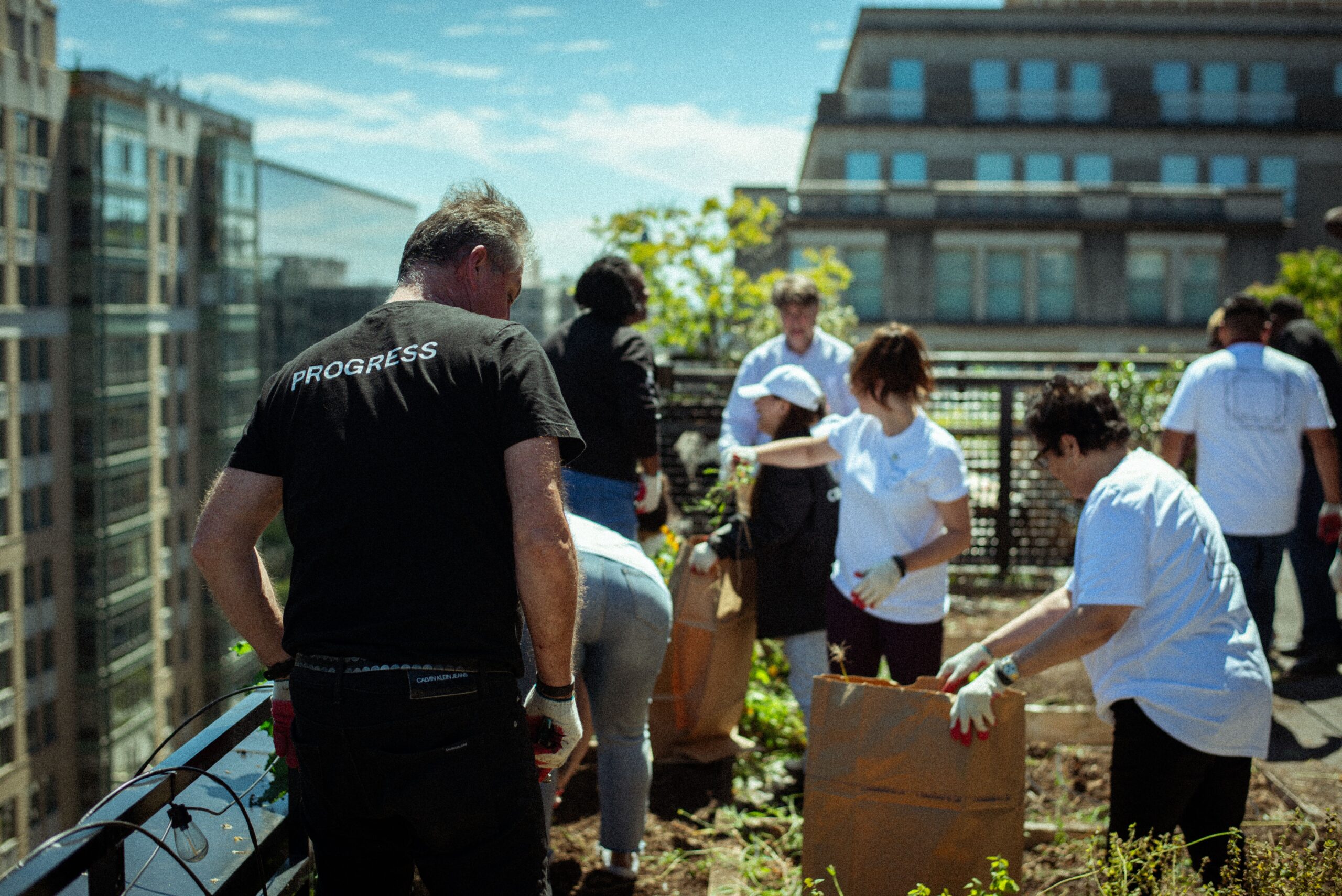
People gardening on rooftop
ETWDC Rooftop Gardening

Content Director JT Long reported on how Washington, D.C., has worked to create good green habits throughout the area that meeting profs can tap into.

The Economics and Sustainability of Trade Show Booth Rentals

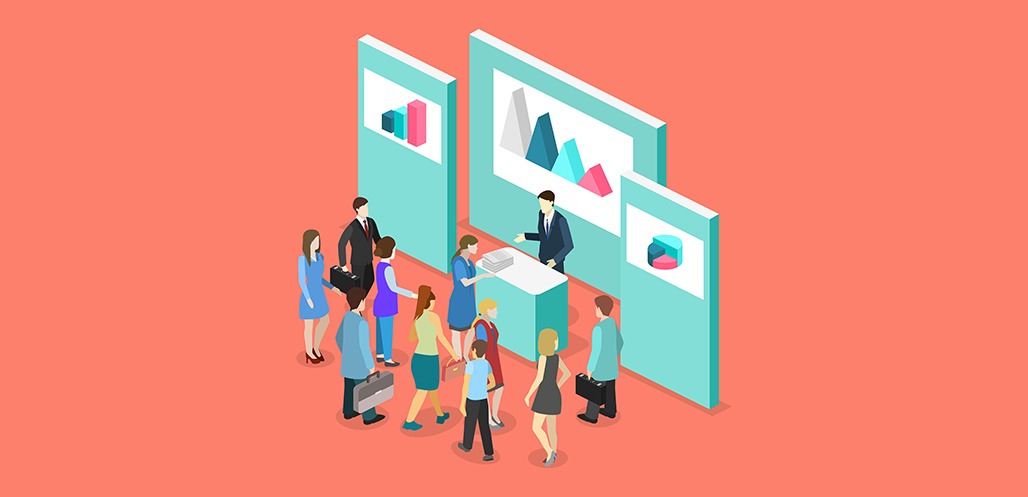
illustration of trade show booth

Editor Malik Anderson examined a mainstay of trade shows: the booth. When should you rent? When should you buy? When should you ship? All the answers are within.

What One Thing?—No Beef, Big Impact: How IMEX is Redefining Sustainable

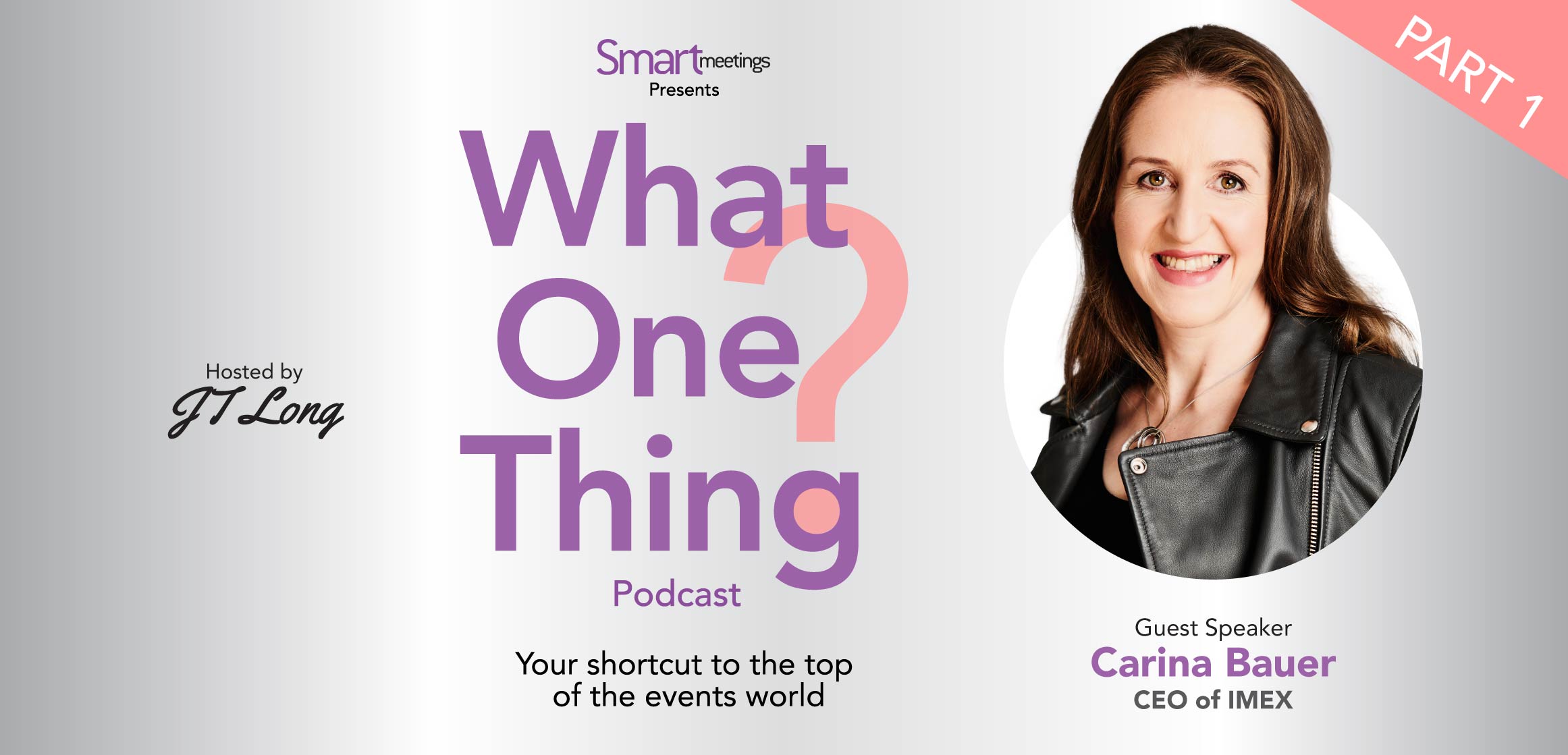
Carina Bauer image on What One Thing graphic

JT Long chats with IMEX CEO Carina Bauer about the choice to remove beef from IMEX’s menus, leaning into more vegetarian options. Read on to learn about savings to both budget and environment—and how attendees reacted.

Incentive travel isn’t what it used to be, and that’s a good thing. Companies are stepping up their game, finding fresh ways to wow their top performers and keep them engaged every single year. More teams are working from home, spread all over the country — or the globe even—so these trips have become prime time for building community, especially when it comes to engaging the next generation of talent, without losing the magic for seasoned achievers. Retention is the name of the game.

And when we talk about destinations, the hottest tickets right now are unique, less-traveled gems that feel like you’ve uncovered a secret. There’s also a big uptick in experiential U.S.-based programs for companies keeping things closer to home, a move that’s as much about convenience as it is about navigating today’s unpredictable travel landscape.

The point is, whether it’s halfway around the globe or a quick hop from headquarters, incentive travel is leaning into experiences that make people feel valued, inspired and ready to chase the next win.

Here are five trends shaping where incentive travel is headed next.

1. Reenergizing the Senses to Strengthen Connection and Celebration

Screens and conference calls don’t exactly create lifelong memories. That’s why incentive programs are doubling down on experiences that wake up every sense—sight, sound, smell, taste and touch—so participants are fully in the moment. Moments like strolling through a sun-soaked vineyard, picking fresh herbs for a cooking class, hearing the sizzle in the pan and tasting a culinary delight that you helped prepare, while overlooking a jaw-dropping view. This is a core memory in the making. These sensory-rich moments pull people out of the daily grind and into something they’ll talk about for years.

2. Supporting Relationship Building with More Flexibility and Free Time

Smart incentive travel programs know that the real magic often happens in the “in-between” moments. The trick is balancing high-energy group activities with enough downtime for people to do what makes them happiest with their plus-one. That could be tackling a morning hike, heading to the spa, or sleeping in and waking up to a panoramic view with room service. When participants can pick and choose, they leave the trip feeling energized instead of needing a vacation from their vacation.

3. Deepening Cultural Connection and Recognition

A great incentive trip reflects a company’s personality and values. The best programs weave culture into every detail, from the activities to the way top achievers are recognized.

Read More: Mindful Moments for the Full Mind: The Power of Human Connection in a Disconnected World

Maybe it’s an intimate workshop with a master craftsperson whose story ties back to themes such as sustainability, inclusion or leadership. Maybe it’s a surprise celebration on a cliffside under the stars where accomplishments are toasted in front of peers. These moments say, “We see you. We appreciate you. And we’re proud you’re part of this team.” That recognition, paired with a one-of-a-kind cultural connection, is what keeps people striving for a spot year after year.

4. Making Destination Experiences Local, Authentic and Transformative

Top performers aren’t looking for cookie-cutter itineraries. They want the kind of experiences that make them feel like insiders. These are the ones you can’t just Google and book yourself. That might be exploring an indigenous village in Panamá, dining with a chef who redefined a region’s cuisine or uncovering a hidden architectural gem.

Read More: Destination Management Companies: Good to Great

Authentic, local and a little bit exclusive — that’s the sweet spot. These experiences create connections to the destination, while strengthening the bonds between attendees. Sharing something extraordinary together makes the trip feel like a once-in-a-lifetime opportunity, not just a line on the company calendar.

5. Navigating Tight Budgets and Constraints with Creativity

Yes, budgets are sometimes tighter. Yes, travel costs keep climbing. But sometimes, limitations can be the best catalyst for creativity. The right partnerships, smart timing and clever design can stretch dollars without sacrificing the “wow” factor.

Maybe that means finding destinations with all-inclusive perks, booking during shoulder seasons or using unique onsite amenities to cut costs without cutting impact. Sometimes it’s about tweaking qualification criteria, so the program essentially funds itself through increased performance. Whatever the approach, the goal stays the same: deliver an experience that makes attendees feel like VIPs, no matter what the budget looks like behind the scenes.

All in all, the core of incentive travel hasn’t changed. We’re bringing people together, celebrating wins and lighting a fire for the future. What’s changing is how it’s done, with more sensory engagement, built-in flexibility, authentic cultural immersion and fresh thinking to make every dollar count. The best programs send participants home with unforgettable memories and a stronger connection with the company and the people in it. That connection is the real prize and the reason they’ll be working to be part of this experience every time.

Valerie Mortimer is vice president of strategic events, meetings and incentives for MCI USA. With more than three decades of experience in hospitality, travel and global event strategy, Mortimer has been passionately advocating and leading event strategy for an array of industry organizations, ranging from startups to Fortune 500 companies.