In uncertain times, association events point the way forward
LODESTAR. It’s a term you may know without knowing its origin. In the 14th century, navigators on the high seas and even on vast empty deserts began using it to refer to Polaris, the North Star, which guided their way to safe harbors. More generally, it can mean a person, a principle, an activity that leads or inspires.
In today’s VUCA—Volatility, Uncertainty, Complexity, Ambiguity—world, we need our lodestars more than ever.
So, what is the lodestar for associations and their millions of members?
It’s almost impossible to overstate the importance of this community to our way of life. In excess of 60,000 trade and professional associations exist nationally, where they are the primary source of post-college education and skills training for America’s workforce. And nearly 52 million of us gather for the events mounted by associations yearly.
According to the American Society of Association Executives (ASAE)—better known simply as ASAE—the association lodestar is trust.
In Associations We Trust
The first trade association—the Philadelphia House Carpenters—was formed in 1724, notes an ASAE history. French political thinker and historian Alexis de Tocqueville observed in 1835, “Americans of all ages, all conditions and all dispositions constantly form associations. Wherever at the head of some new undertaking you see the government in France, or a man of rank in England, in the United States, you will be sure to find an association.”
In these fraught times, when public polling shows declining trust in institutions, when AI and social media are not dependable tools for seeking expertise and factual information, ASAE has launched the Trust Associations campaign, a national initiative designed to reinforce the vital role associations play in industries, communities and the economy.
Read More: Empowering a New Generation of Association Leaders
The campaign underscores “what we know to be true,” says ASAE President and CEO Michelle Mason, FASAE, CAE. “That associations are an essential and trusted force in our society, it’s more important than ever to remind policymakers and the public that associations unite people around shared purpose, elevate professional standards and strengthen our democracy. This campaign is about reaffirming that trust — and amplifying the positive impact our community delivers every day.”
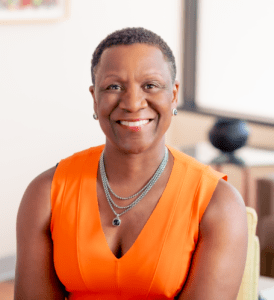
Mason continues: “We really need to tell the ‘why’ behind associations…. This campaign allows us to translate the vision behind associations, the purpose of associations, into something tangible. It’s about the good work that associations do, whether it’s standard-setting or breakthrough research [or more]. We want members to tell the stories of the association community, why they serve, the impact their members are having on society.”
Starting early last month, the campaign is rolling out a series of weekly themes. The very first, called “Trusted Conveners,” asserts that associations actively counter the social isolation of professional lives lived too much on screens instead of in person. “We build community across a profession by convening our members to facilitate the exchange of trusted information and strengthen relationships,” an ASAE presentation declares. “The face-to-face exchanges we convene promote clearer understanding and drive stronger commitments.”
In other words, events can be the surest way to build trust.
“It’s more important than ever to remind policymakers and the public that associations unite people around shared purpose, elevate professional standards and strengthen our democracy.”
-ASAE President and CEO Michelle Mason, FASAE, CAE
Without question, associations’ impact on the meetings industry is outsized. Most states and organizations’ bylaws mandate an annual meeting, of course, and many associations sponsor educational or other industry-specific gatherings on top of that. Nearly 52 million participants in association events across the country directly support 342,000 jobs and generate nearly $43 billion in spending, according to ASAE. The organization says its own annual meeting injects $16 million into local economies, on average.
Despite this economic clout in communities in every state, their citizenries may not be well aware of it. “So my sense is that the more we tell our story, the more we are engaged with the general public, the more we will heighten the awareness of the importance of our impact, and of associations being a trusted resource in building meaningful relationships and strengthening collaboration—in creating community—which is now more important than ever before,” Mason says.
“We’re empowering our members to tell their stories,” she continues. “Associations are trusted resources in terms of content validation. We have researchers, we have scientists, so we need to elevate an understanding that this sector has been around for a very long time. We need to lean into our superpowers at this moment in history.”
She also sees an opportunity to “tap into the next generation,” to motivate young professionals to participate in associations. “They are driven by purpose. They are driven by connection. They’re driven by something bigger than themselves, and to that sense of belonging.”
Read More: How to Nurture Future Leaders
To that end, the Trust Associations campaign elaborates on the association story by highlighting other trusted roles in subsequent themes. These include the following.
Innovators: fueling advances in the industries they represent; acting as futurists to identify and analyze emerging disruptive forces and trends and addressing challenges created by disruption, as well as laying the groundwork for scientific breakthroughs.
Standard setters: developing “consensus-based product and service standards” to ensure safety and other benefits without the need for taxpayer-funded government involvement.
Educators: setting certifications for core and specialty competencies that serve as career benchmarks and help workers upskill to meet evolving market needs.
Advocates: influencing public policy to shape how laws affecting member communities are written and interpreted.
Neighbors: embracing a responsibility for having a positive impact beyond their core memberships through volunteering, fundraisers and charitable work.
The Threat

Why is this message particularly vital to the associations sector now? The answer speaks to the other primary audience beyond the general public for this campaign—policymakers.
Nonprofit associations have been exempted from federal tax since the first permanent U.S. income tax was established. The modern federal tax exemption was formalized with the Revenue Act of 1913, and the Internal Revenue Code of 1954 formalized these rules under Section 501(c) of the Internal Revenue Code, which remains the core statute for tax-exempt organizations today.
If we’ve learned anything about the body politic recently, however, it’s that we can’t trust that anything will be unchallenged.
Alarm in the nonprofit world has stemmed largely from fears that their nonprofit status could be stripped away for certain types of speech or activities. NPQ, a publication covering nonprofits, reported earlier this year that nonprofits could face IRS scrutiny for their support of diversity, equity and inclusion (DEI). Other observers worry that the Trump Administration’s aim is to punish organizations that do not align with its domestic policies.
So far, however, ASAE has gained, not lost, ground on the policy front. A Community Impact Coalition, launched by ASAE in January, successfully persuaded Congress to preserve the current tax treatment of nonprofit organizations—and even to drop two measures that would have taxed nonprofits on specific fringe benefits and royalties. Then, the big ASAE victory: As part of the broader overhaul of the tax code, a bill named the Freedom to Invest in Tomorrow’s Workforce Act was successfully incorporated into the so-called One Big Beautiful Bill Act that was signed into law on July 4. It expanded Qualified Tuition Programs (529 Plans) to include “qualified postsecondary credential expenses” like the certifications, licensing and training offered by associations.
ASAE heralded this change, calling it a transformation of 529 Plans from college savings vehicles into more flexible “career savings” plans. Associations are the primary source of post-college education and skills training for America’s workforce, according to ASAE. Fifty-seven million adults in America take formal work-related courses or training each year, and more than 69% of them receive this instruction from either a private business or a professional association.
“The investment by our members and other nonprofit organizations in ASAE’s coalitions was critical for ensuring that the voices of the association community were heard in the 2025 tax reform debate,” Mason said at the time. “We thank Congress for its engagement with association leaders in shaping this tax bill. Coalitions like these will continue to be essential in educating members of Congress about the important role associations play in our economy.”
Trust Associations is designed to build on the momentum of ASAE’s tax reform advocacy “amid ongoing scrutiny of the tax-exempt sector and a broader climate of declining institutional trust,” as the press release announcing the effort puts it.
More fundamentally, though, it positions trust as a welcome, even vital, lodestar for associations, their members and all of us who benefit from their expertise and services. As Mason puts it, “Trust is not a new concept. We’re simply going back to the basics of why we exist. To remind our audience, to remind our members, of the fundamentals and what’s important to associations, why we exist, why we were formed, sometimes you have to take a step back to step forward.”
Citywides in Divided Times
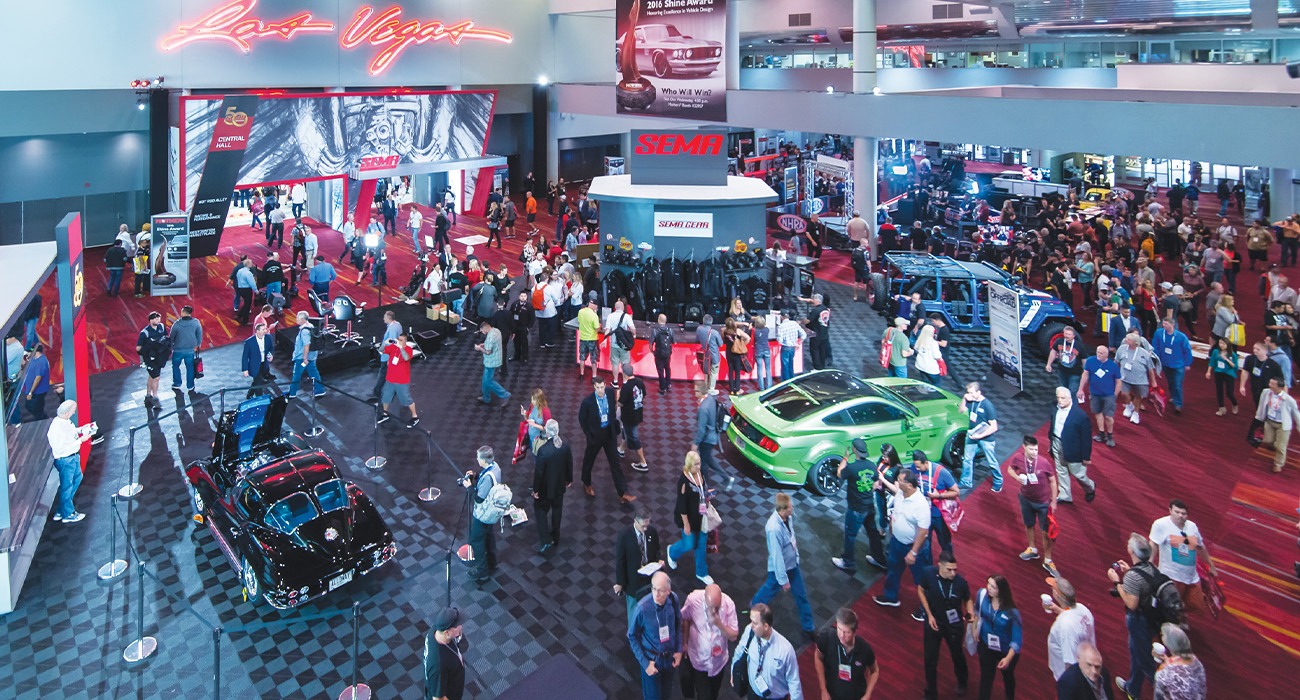
The Specialty Equipment Market Association, a major trade and professional association in the automotive industry, typically hosts some 160,000 attendees to its annual SEMA Show. The Radiological Society of North America draws 50,000 to its annual meeting, the largest medical conference in the United States. ASAE’s own four-day annual meeting typically hosts 5,000 professionals—and so Michelle Mason, its CEO, is no stranger to the mega-meetings commonly called citywides.
Because these huge gatherings are typically limited to an association’s own members or users of a particular company’s products, they may not have to explicitly design into their risk management plans ways to build trust and unity amid today’s political and cultural divides. Yet citywides still present challenges. In particular, how to create settings that feel intimate enough that attendees don’t feel lost in an impersonal crowd.
Asked for her tips, Mason says having a clear sense of purpose—specific objectives and expected outcomes—is the first principle of successful citywide design. For a medical conference, for instance, sharing the latest research and medical advances might be the organizing purpose, and how that information is presented in a variety of formats and settings, including virtual outreach, may be the key to keeping it accessible and relevant to all learning styles. Setting aside specific times for attendees to voice their opinions and concerns is a key feature as well.
“I think, second, champion the resources that the local destination marketing organization has available because they know that community,” she says. The combination of local intelligence and the planner’s knowledge of what will resonate with attendees can make for a “powerful connection.”
Sometimes, she says, “we just need to go back to the basics.”
This article appears in the November/December 2025 issue. You can subscribe to the magazine here.