Rescue groups have been working around the clock in an effort to find survivors after a 7.8 magnitude earthquake devastated Syria and Turkiye (Turkey) early Monday morning. The death toll has risen to over 7,700 across both countries, AP reports. Multiple aftershocks, including a 5.7 temblor have created a dangerous situation for rescuers looking for survivors.
An estimated total of 23 million could be affected throughout the entire region hit by the quake, according to Adelheid Marschang, a senior emergencies officer with the World Health Organization, saying it’s a “crisis on top of multiple crises.”
As the hospitality community reacts to the unfolding reports of devastation, Smart Meetings gathered initial reports about what is happening and what you can do to support organizations around the world offering immediate crisis relief.
The latest releases by the government of Turkiye shows that at least 3,381 people have died and another 20,000 have sustained injuries as a result of the pre-dawn quake. The epicenter of the quake near the southern city of Gaziantep where nearly 6,000 structures have collapsed, according to Jens Laerke, spokesperson for the UN Office for the Coordination of Humanitarian Affairs (OCHA).
Turkish President Recep Tayyip Erdogan said that an estimated 18 million of the country’s 85 million citizens have been affected with a state of emergency declared in 10 provinces. Approximately 380,000 have taken refuge in government shelters or hotels.
The death toll in the region of Syria currently held by the Syrian government has reached 812 with another 1,400 injured, according to the country’s health minister. In the rebel-held northwestern region of Syria, roughly 1,020 people have died with another 2,300 injured. The devastation in Syria left in the wake of the quake was compounded by the U.N. losing access to the Bab al-Hawa border crossing, which is one of the only terminals the U.N. is permitted to use to reach the rebel-held territory, due to damage. Turkiye is home to millions of refugees from that conflict.
The region sits atop major fault lines and is known for frequent earthquakes. Northwestern Turkey was hit by a massive quake in 1999 that left 18,000 dead.
How to Help
Local Marriott hotels in the area have already begun creating tents equipped with mobile kitchens, volunteer chefs, and supplies from local vendors to get food and water where it is needed most, according to a spokesperson. They are also collecting necessities like food, blankets, towels, hygiene supplies, and tents and will donate these items to local organizations working in the impacted areas, as well as organizing blood drives. The company’s Marriott Disaster Relief Fund is providing funds to four organizations working on the ground: World Central Kitchen, the International Federation of Red Cross and Red Crescent Societies, the International Rescue Committee and UNICEF. Marriott will also encourage its community of Marriott Bonvoy members to donate points to any of these organizations. Marriott is also working with local teams to assess the impact on associates and their families and will be leveraging our Marriott Disaster Relief Fund to provide support as needed.
For individuals interested in supporting the people impacted by the earthquakes, these international organizations are accepting donations:
Project Hope, a Washington, D.C.-based healthcare nonprofit, set a $75,000 goal to help the affected region and also accepts tax-deductible cryptocurrency donations.
International Rescue Committee is temporarily doubling monthly donations that will support emergency kits, temporary shelter and mobile clinics.
Molham Team, a Jordanian-based refugee aid group founded by university students, has launched a “Earthquake Response” campaign.
Oxfam, a U.K.-based poverty-relief organization, is raising funds with local partner organizations for individuals impacted by the earthquakes.
Concern Worldwide US, based in New York City, is opening a community center deemed safe for families as the cold weather worsens.
The White Helmets, Syria civil defense volunteers who provide emergency response in the area’s ongoing conflict, is seeking to support the 3,000 volunteers searching for survivors among the collapsed buildings.
Zakat Foundation of America, a Bridgeview, Illinois-based group conducts humanitarian assistance programs in more than 50 countries. They are distributing food, medical supplies, hygiene kits, tents and mats.
Many professionals attend two or more conventions, or trade shows, a year in various locations throughout the United States and the world. These events usually last three to four days, and when you add on travel time, attendees may be gone from their families for a week or longer.
This can mean each attendee must find someone to care for their children or ask their spouse to do double duty while they are gone. On top of the ask, that exact meeting participant may miss telling their children bedtime stories, attending their soccer games, or being present for milestone events like their child’s first steps or words.
For some, the solution may be to bring the family along. If that is the case for your attendees, here is a checklist of things to look for from a venue and the benefits of traveling this way.
Ask attendees to determine how many would like to bring their families. This will help narrow down the venue. Be sure to ask about the ages and interests of the children, so you can tailor experiences to wow them.
Choose a family-friendly destination. This could mean places with fun attractions such as theme parks, zoos or historic sites.
Select a hotel or conference center with family suites. Look for multiple bedroom options, a kitchenette and a living area.
Ask about licensed childcare. When completing site visits or going on a FAM trip, determine if the hotel provides a childcare service onsite or can offer a listing of sitters who can come to attendees’ rooms. Ensure the caregivers work for licensed organizations.
Create a kid’s camp. There are all types—tech, soccer, rope climbing camps—to name a few. Kids can feel they are learning, just like their parents. You can also sync the times so everyone starts and ends their sessions together.
Sponsor a talent show. Hire a local drama teacher or coach to allow the children to be the last night’s entertainment and give a prize to all participants.
Allow the family to attend social events. Provide a movie room showing of the latest animated movie, or move your opening reception to a pool, park or outside venue to accommodate.
A Winning Combination
Families can pair a vacation with the event. If your association members or employees were already planning to go to the meeting destination for a family vacation, this is an easy sell.
Attendees can get to know each other on a different level. Employees and association members may find their children go to the same school, have similar interests, or may forge new friendships. Same with their respective spouses.
This is a win-win for all parties. The parent gets the education they need, while the family enjoys what they want.
—
De-de Mulligan is a regular blog contributor for rentacomputer.com, a nationwide provider of laptop rentals for meetings and events.
As a former meeting planner who has received Ohio MPI’s Planner of the Year award twice, she brings a unique perspective to the events industry. You can find her on Twitter and LinkedIn, where she welcomes followers and connections.
Big dreams require a big helping hand. Luckily for hospitality entrepreneurs attending New York University, there’s a lot to go around. Funded through gifts and sponsors like Atento Capital, a Tulsa, Oklahoma-based investment firm, the NYU School of Professional Studies (NYU SPS) and Jonathan M. Tisch Center of Hospitality (HI HUB) aim to support business savvy entrepreneurs.
Smart Meetings sat down with Dr. Richie Karaburun, clinical assistant professor and director of HI Hub Incubator of NYU School of Professional Studies, to explore the entrepreneurship hub designed to support up-and-coming hospitality business ideas.
What Is the HI Hub?
Richie Karaburun
The three-month HI Hub Incubator program consists of two components: an experiential learning lab and incubators developed around the three pillars of strategy of Tish Center of Hospitality, which consists of a global network of 19 campuses, entrepreneurial-based courses and experiential internship opportunities.
Dr. Karaburun, who is responsible for the incubators, explains the process. “If [the students] make the cut, they apply to be part of the incubator. We have phenomenal mentors,” Karaburun said. Mentors
and investors are international business executives sourced from Google to Hilton Hotels. They refine, develop or scale their ideas.
At the end of the three months, participants will take part in the Tisch Center Incubator 2023 “Pitch Your Passion & Seal the Deal” event in Tulsa, Oklahoma. The program’s mentors and investors will select the winners. The first-place winner will receive $5,000 and second and third-place winners will receive $2,500. On top of that, the investors can further invest in the business ideas adding an infusion of creativity into the industry. Through the program, Karaburun hopes the entrepreneurs will revitalize the hospitality industry.
“We create new opportunities and efficiencies for our industry,” Karaburun said. “[The students] can easily think of what their generation needs…and offer it to the industry with our programs.”
Innovating for the Future
The long-term hopes for HI Hub focus on the innovation of technology and hospitality for the future. Covid-19’s impact on the hospitality industry has pushed the industry to get creative.
As a member of the 2022 cohort, Aviva Wolf a HI Hub Incubator program finalist created Shred, a fast casual eatery that serves healthy menus with fresh ingredients made to order using state-of-the-art food processors in order to eliminate food waste. The idea emerged as a way to “minimize food waste in the hospitality industry.”
During the 2021 cohort, Bernardo Zorrilla founded Hotel+, an organization that offers “day-use” passes, food and beverage options and other hotel amenities. For meeting planners on the go who don’t want to stay at the airport for hours, they can work in a hotel room.
“[Covid] pushed people to innovate more, especially in our industry, which is one of the most resilient industries anyway. We’re coming back, and numbers are showing that travel and tourism is coming back, almost pre-pandemic level for most of the areas.”
From Students to Founders
One of the most exciting aspects of the program for Dr. Karaburun is seeing the trajectory of the students. “Students are becoming [business] founders before they even graduate. There’s nothing more exciting for me to see than my students becoming founders, managers and entrepreneurs before they even graduate from NYU.”
“This is more of an experiential learning process,” Karaburun said, pointing to how the process is structured. “There’s nothing more exciting for professors like us to basically see a student’s idea turned into a company, making money and gaining employment.”
Who Can Apply?
Currently, only NYU students and alumni are able to apply for the HI Hub. But Karaburun hints that the Hub could be open to non-NYU students in the future.
“We’re still discussing whether we should open this up to other schools or, or non-NYU students. But currently, as long as one of the founders is an NYU affiliate, then they’re eligible to apply. But we’re flexible, so we’ll see where that program takes us in the future.”
Karaburun sees great possibility in those who successfully apply to HI Hub and their potential impact on the industry. “Students can make their dreams come true. If they have any ideas, they can graduate with that idea of founding a company with our help.”
For more information on the Hospitality Innovation Hub visit sps.nyu.edu.
It’s easy to understand why SunRiver Resort has been a treasured destination for meetings for more than 50 years. Beyond its array of accommodations and spaces available, the 3,300-acre outdoor playground, located in the foothills of the Cascade Range just outside Bend, Oregon, offers countless adventures for guests to enjoy amidst a breathtaking wilderness landscape. It’s the ultimate change of scenery, where teams can come together and find renewed energy and motivation amidst an awe-inspiring environment.
There are kayaking and float trips down the Deschutes River, guided horseback rides amidst pine forests, stargazing through a high-powered telescope at the Sunriver Observatory, and pickleball action at the Sage Springs Spa & Fitness Center. With over 40 miles of paved bike paths on the property, exploring all that Sunriver Resort has to offer to two guests is a guest’s favorite. Equally popular is golf, with the resort featuring 63 holes across four distinct courses, including the award-winning Crosswater, named one of ‘America’s 100 Greatest Courses’ by Golf Digest.
When you’re ready to fuel up or get social between adventures and meetings, The resort Sunriver resort has ten restaurants and cafes that cater to every taste and occasion. The highly-celebrated Lodge Kitchen, Sunriver Resort’s signature dining experience, offers a fresh take on Pacific Northwest cuisine with ingredients from local ranches and an impeccable wine selection from Oregon’s Willamette Valley and beyond. And if you’re craving an après-adventure cocktail, head to Owl’s Nest, a neighborhood tavern with a commanding patio view of Mt. Bachelor’s peak.
When it’s time to get down to business, Sunriver Resort offers the highest level of service to customize retreats and experiences. The meeting venues at Sunriver Resort are just as varied as the things to do, ranging from intimate lounges to grand pavilions, and historic banquet halls to sprawling event lawns with spectacular mountain vistas. With over 44,000 square feet across 20+ indoor and outdoor venues, the possibilities here are as vast as the incomparable Pacific Northwest surroundings.
You can be the best event planner in the world and have wonderful clients who love you, but none of that will matter if you don’t have a solid team of vendors to work with. Vendors and planners need each other.
A planner without a vendor cannot produce an event. Period. We each play our role to bring an event to life so we need to be on good terms and work well together for the sake of the client’s event and our industry as a whole.
Here are my top five tips for ensuring you have great relationships with your vendors for mutually beneficial success.
1.Stay true to who you are. It’s important to be genuine in the way you interact with vendors and show you real personality versus trying to be someone you are not for the sake of “networking.” If they truly like you and respect who you are they will push beyond to make things happen for your event, which can be necessary when/if things go awry or we have shorter deadlines like now and still need to make an event happen.
2. Be honest and make them feel they are a real partner and member of your team, not just a hired hand. Show them you are a professional who knows the event industry, see their role in your overall production and you are someone who will make their workload easier by working together. They need to feel like you are there to be their advocate towards the client if the latter goes around you at any point directly to the client. As the planner you are there to manage the show and stand up for your vendors as part of the team.
One of the ways I do this is by adding them to ClickUp, a project management software my team and I use to keep everything straight for an event. I can track all vendor statuses and deliverables and then I can invite each of them to see where they fit into the event and update their section accordingly.
3. Include them in your pre-event meeting schedule. A kickoff meeting is very important to set that bar and expectations from the very beginning as well. Then you can have your regular check-ins throughout the process and update them accordingly on both where their role stands, then how it fits into the whole (if they have the time available) so they can see they are truly part of a larger team and production.
4. Always be sure to pay on time! That will help solidify that relationship for the future. We all have shorter deadlines but the better you can keep on top of things the more they’ll want to work with you again and go out of their way when needed.
And finally, if things do not go to plan onsite and it seems a vendor may have made an error or failed to deliver on something they promised…
5. Gather information before pointing fingers if things go wrong. Ask them what has happened that affected their performance and try to understand rather than point the finger. Based on what they tell you, you can make the decision to either stop the relationship if you don’t understand each other, or you can come up with a plan together to fix it and move forward if it’s a one-off instance.
The key is not to try and blame but truly attempt to understand what failed in the process overall. There may be, or have been if it’s over, a circumstance at play you didn’t know affecting them either from your team or an outside source. By asking and trying to understand first you are able to show again you see them as part of the team and are trying to work through it. You may not be able to but it’s worth trying.
—
Valerie Bihet is director for VIBE Agency, producer of in-person, virtual, hybrid and metaverse events, and a 2021 Smart Women in Meetings Award winner.
Derrick Erwee
Erwee is general manager for Danfords Hotel & Marina in Port Jefferson, New York. Erwee comes from Sound View Greenport on the North Fork in Long Island, New York, where he worked as assistant general manager. The South Africa native has also worked as clubhouse manager for Muttontown Club in New York, New York, and restaurant manager for Boca West Country Club in Boca Raton, Florida, after working at restaurants and private clubs in Cape Town.
Leo Percopo
Percopo is area general manager for JW Marriott Scottsdale Camelback Inn Resort & Spa in Paradise Valley, Arizona. Before this, Percopo worked with Starwood Hotels & Resorts, where he was resort manager for The Phoenician, a Luxury Collection Resort in Scottsdale and general manager for Sheraton Phoenix Downtown. In his most recent position, he worked with Omni Hotels & Resorts as vice president of operations and area managing director.
Audrey Huttert
Huttert is Amangiri’s general manager. Now stationed in Canyon Point, Utah, Huttert comes from Amanera in the Dominican Republic, where she worked as general manager. She has also worked with The Ritz-Carlton, Abama in Tenerife, Spain; Langkawi in Malaysia; Abu Dhabi Grand Canal, Auberge Resort Collection in Guacalito, Nicaragua; Amanyara in Turks and Caicos, among others.
Mario J. Bass
Visit Orlando named Bass chief operating officer. He most recently worked as chief sales officer for Visit San Antonio. Before working with Visit San Antonio, Bass worked with Marriott International in several roles, such as director of sales and marketing and director of corporate sales with properties such as New York Marriott Marquis in Times Square and Gaylord Texas Resort & Convention Center in Grapevine.
Laurie Frank
Sandestin Golf and Beach Resort in Miramar Beach, Florida, named Frank executive director of sales. Frank most recently worked as director of sales and marketing for Hilton New Orleans St. Charles Avenue. She has also worked with a long list of other hotel properties and brands, including Destination Hotels & Resorts, Melrose Hotel Company, DoubleTree Hotel, The Ritz-Carlton Hotel Company, Sheraton Premiere and Royal Sonesta Hotel.
Candy Iannucci-Guay
Iannucci-Guay is director of national accounts for Connecticut Convention & Sports Bureau’s SMERF markets. Iannucci-Guay recently worked with Sheraton Hartford-South Hotel in Rocky Hill, Connecticut, as sales manager. She also spent nearly 15 years with Waterford Hotel Group Inc., where she worked in event management, and later, corporate sales. While with Waterford Hotel Group, she was given numerous accolades, including two President’s Awards, a Crystal Award and two Sales Champion Awards.
Alex Morales
Photo: Explore Cabarrus
Morales has been named sales manager for Cabarrus County Convention & Visitors Bureau in North Carolina. Prior to this new role, Morales worked with Chetola Resort in Blowing Rock, North Carolina, as director of group sales and new business development. She has also worked as membership experience manager for professional networking organization Charlotte Business Group in North Carolina.
Nour Laasri
Photo: Marriott Marquis Houston
Laasri is Marriott International’s area general manager for the city of Houston and general manager for Marriott Marquis Houston. As area general manager, Laasri will work as a member of Houston’s community, bridging partnerships between the hotel team and local officials and businesses.
Laasri has been with Marriott for nearly four decades, most recently as area general manager for Pennsylvania and general manager for Philadelphia Marriott Downtown. He also worked as general manager for Dallas/Fort Worth Marriott Solana, Dallas Marriott City Center and Marriott St. Louis Grand.
Robin A. McClain and Melissa A. Riley
Robin McClain (left) and Melissa Riley (right)
McClain is chief marketing officer and Riley is senior vice president of convention sales and services for Destination DC.
McClain joined Destination DC is 2011 as director of communications and was promoted to senior vice president in 2017.
When Riley joined Destination DC, she began as national sales manager and was promoted to senior sales manager and later director of convention sales. In 2014, she became vice president of convention sales and services, her most recent position. She has also worked with Marriott International as a sales representative.
John F. McPartlan
McPartlan is general manager for New York Marriott at the Brooklyn Bridge; he previously worked at the property as director of operations from 2011 to 2017. Most recently, McPartlan worked at Bridgewater Marriott in Bridgewater, New Jersey, where he worked for four years as general manager. He has also worked as complex director of operations at Renaissance New York Times Square and W Times Square.
McPartlan is a member of the mentorship program at Marriott, helping managers in their career growth within the company.
Advances in technology and operations make California a leader in earth-friendly gathering
California innovators are actively inventing a more sustainable future in and out of the ballroom. At a time when many are reacting to changes in climate and attendee expectations, the golden state’s hospitality sector is leading the way to a future that will continue to welcome change-makers for decades to come. Optimizing for minimal inputs and emissions is not a fad in one of the few states where the economy is thriving while greenhouse gas emissions are shrinking. It is a model for a sustainable economic future.
At Stanford Woods Institute for the Environment in California’s Silicon Valley, some of the world’s leading researchers are creating climate models for economic impact studies and energy and environmental policymaking. Some 30 miles away, meeting professionals at the ubiquitous customer relationship software company Salesforce have taken a net-zero pledge and are brainstorming ways to keep business moving forward while prioritizing sustainability as a core value in everything from partnerships to customer data tracking and at its annual Dreamforce citywide event.
In Southern California, “ecopreneurs” are innovating the fueling of sprinter vans, alternatives to single-use plastics and much more. And convention centers have gone deep green to make it easier for events to do good while doing business.
Let’s look at the legacy of sustainable innovation, where it is going next and what it means for meeting professionals.
A Green Legacy
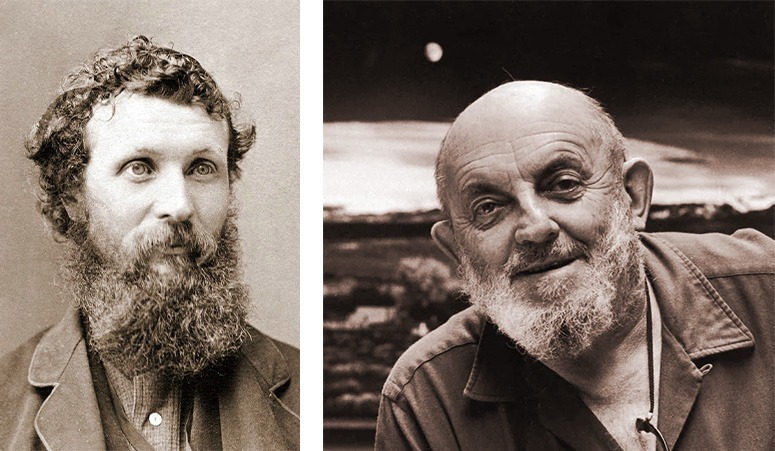
The Golden State has a stories history of bold, green-centric leadership. Dating back to 1892, The Sierra Club helmed by naturalist John Muir was formed to host wilderness outings and eventually succeeded in establishing the National Park Service and the California State Park Commission. The group worked tirelessly to open the eyes of visitors and bureaucrats to the responsibility a community has to protect natural beauty while we still can.
In his book, “The Yosemite,” Muir wrote this stunning description of California’s enduring charms: “Looking eastward from the summit of Pacheco Pass one shining morning, a landscape was displayed that after all my wanderings still appears as the most beautiful I have ever beheld.
At my feet lay the Great Central Valley of California, level and flowery, like a lake of pure sunshine, forty or fifty miles wide, five hundred miles long, one rich furred garden of yellow Compositae. And from the eastern boundary of this vast golden flower-bed rose the mighty Sierra, miles in height, and so gloriously colored and so radiant, it seemed not clothed with light but wholly composed of it, like the wall of some celestial city… Then it seemed to me that the Sierra should be called, not the Nevada or Snowy Range, but the Range of Light.
And after ten years of wandering and wondering in the heart of it, rejoicing in its glorious floods of light, the white beams of the morning streaming through the passes, the noonday radiance on the crystal rocks, the flush of the alpenglow, and the irised spray of countless waterfalls, it still seems above all others the Range of Light.”
John Muir (left) and Ansel Adams (right)
The state is still a place where many come to get lost and reconnect to nature. In Newport Beach where finback, blue and gray whales cruise with dolphins in one of the largest protected marine parks in the world, marine-spotting is a popular group excursion via catamaran yachts.
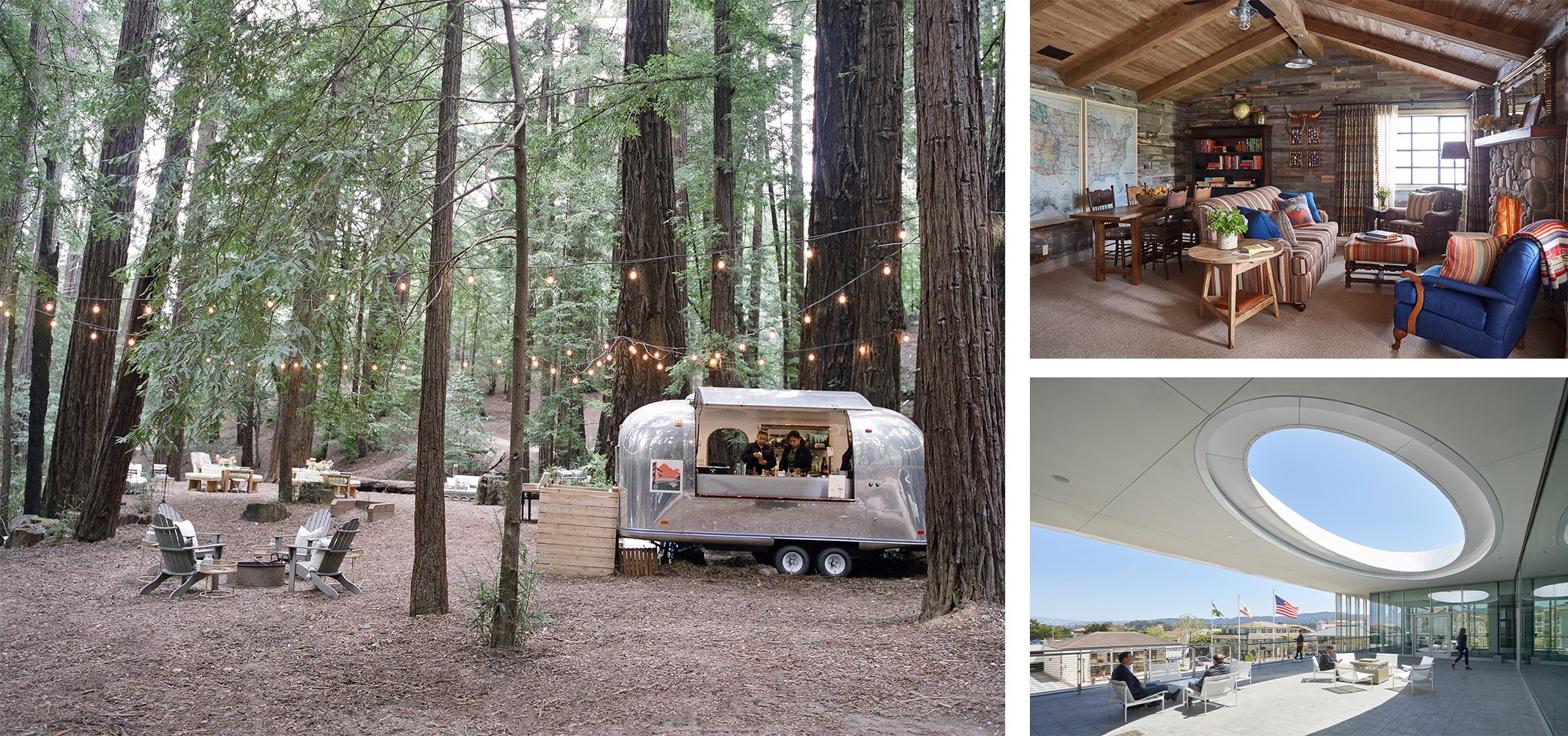
On storied Highway 1, the rugged 70 miles of Big Sur coast made famous by Sierra Club board member Ansel Adams continues to draw groups looking for connection with the earth and each other. Alila Ventana Big Sur answers the call from the shelter of 100-year-old redwoods with a pampering spa and 12,000 sq. ft. of indoor and outdoor gathering space.
Wide open spaces prevail in Southern California’s Santa Ynez Mountains where Alisal Ranch’s 10,500 acres beckon with room for groups to roam free.
“From off-the-beaten path experiences to revisiting tried-and-true favorites, California presents infinite possibilities for travelers looking to get out and explore,” said Caroline Beteta, president and CEO of Visit California in a statement.
That shining landscape beguiled many over the years to devote their lives to protecting it.
In 1961, Governor Edmund G. Brown created a Secretary of Environmental Affairs role tasked with establishing environmental protections that eventually grew into California Environmental Protection Agency (CalEPA), which oversees everything from air and water quality to recycling.
Alila Ventana Big Sur (left), Monterey Conference Center (bottom right) and Alisal Guest Ranch (top right)
At Stanford Woods Institute for the Environment mentioned earlier, the mission of 268 fellows from seven of the elite university’s business schools is: “To produce breakthrough environmental knowledge and solutions that sustain people and planet today and for generations to come.” Research includes a plan to replenish California’s groundwater and innovations in aquaculture to meet food security needs through sustainable fishing practices.
“From off-the-beaten path experiences to revisiting tried-and-true favorites, California presents infinite possibilities for travelers looking to get out and explore.”
–Caroline Beteta, president and CEO, Visit California
A robust bench of experts actively working on the biggest problems facing society today make short work of finding partners and speakers to help you deliver an event that leaves the world better than when you arrived. You may even inspire attendees to do better while you are at it.
Sustainable Meeting
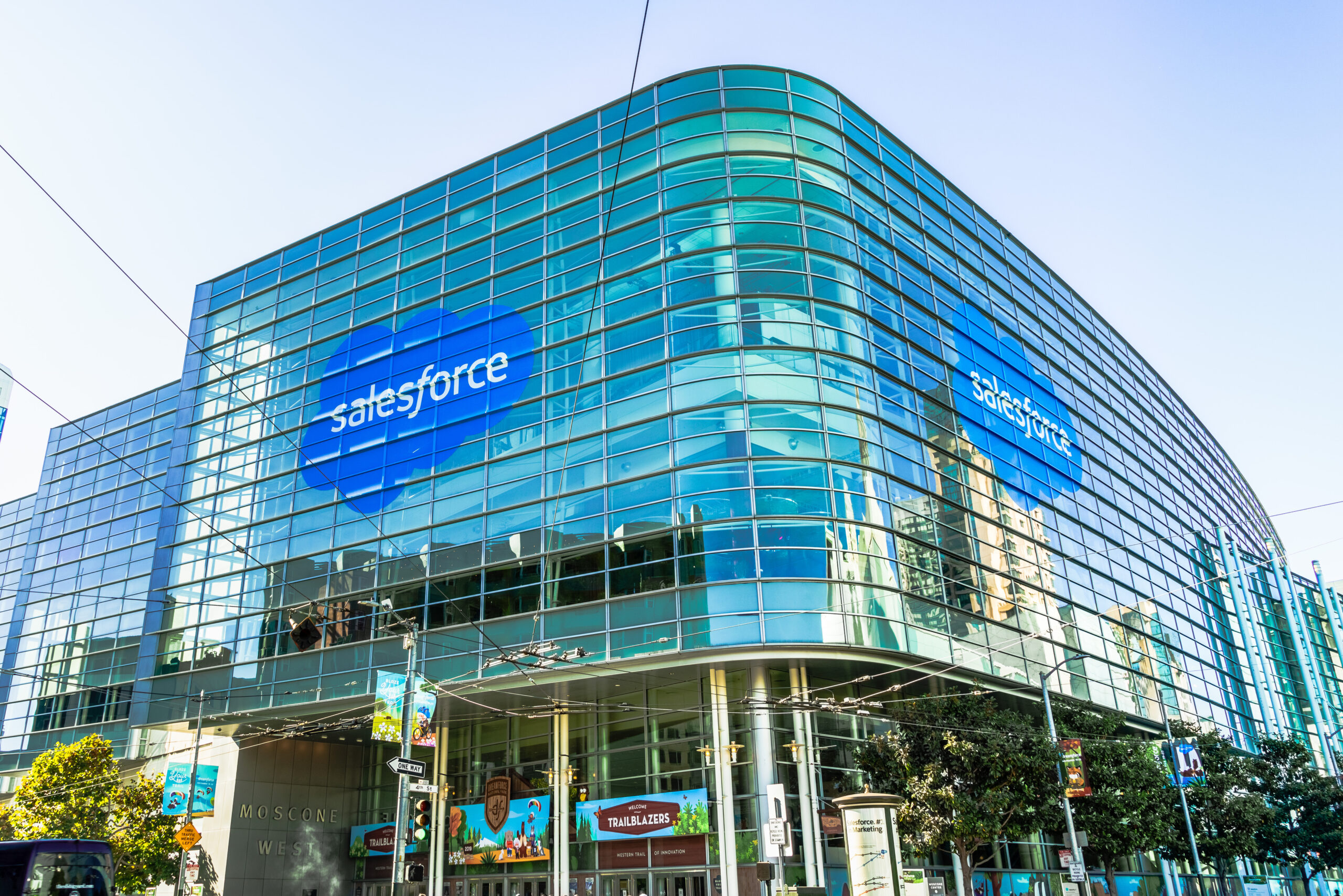
Dreamforce at Moscone Center, San Francisco
That culture of environmental protection is a natural fit with companies prioritizing sustainability as a way of doing business better. San Francisco-based Salesforce hosts a series of events over the year in addition to its Dreamforce flagship citywide activation in its home city.
Pre-Covid, Dreamforce attracted more than 170,000 people and included a major headliner concert, but it was a smaller, hybrid affair in 2021. The 2022 calendar includes a renewed emphasis on lightening the company’s environmental footprint and was greeted enthusiastically by vendors and customers.
“Virtual events during the pandemic proved that Salesforce, its partner ecosystem, and community could all adapt and innovate at the same time. Having said that, we’ve missed the energy and spontaneity of in-person interactions—there really is no substitute, especially when it comes to Salesforce events,” said Lucy Mazalon, head of operations with SalesforceBen.com, a community of Salesforce professionals.
This year, the company officially embedded sustainability as a core company value, joining its values of trust, customer success, innovation and equality. At the same time, it introduced a new product, Net Zero Cloud 2.0—a way for companies to track their greenhouse gas emissions—to help organizations accelerate their own journeys to net zero emissions.
“In this climate emergency, we need every organization to get to net zero as fast as possible,” said Suzanne DiBianca, chief impact officer and executive vice president of corporate relations, in a statement. “Now that Salesforce has reached net zero emissions, we want to use our technology and best practices to help organizations reach their climate goals, too,” she added. The product aids in the setting of science-based targets, carbon footprint forecasting, supplier management to track emissions across the value chain and monitoring waste management data.
For its part, the company has been voluntarily reporting on its greenhouse gas emissions since 2012 and is now tying executive pay to environmental, social, and governance (ESG) performance, including two sustainability metrics. Salesforce is on track to reduce business travel emissions intensity by at least 50 percent by 2030 by utilizing business travel policy to maximize more sustainable choices, influence employee behavior, send strong demand signals for sustainable aviation fuel and electric vehicles (EVs), and optimize travel booking technology that empowers responsible choices.
Planet-friendly Venues
Companies such as Salesforce are finding responsible partners in convention centers up and down the state. Recently expanded and reimagined Moscone Center, where Dreamforce is historically headquartered in San Francisco is a LEED Platinum facility, the highest level offered by the U.S. Green Building Council.
It is home to one of the largest publicly owned solar power systems in the nation. The extensive panel array supplies the center with approximately 20% of its power. Daylight harvesting and green electrical technologies allow for zero-emissions electricity.
Solar energy isn’t the only way that Moscone has invested in environmental friendliness, explained Lynn Farzaroli, senior director of the Moscone expansion for San Francisco Travel Association, when the project was unveiled in 2019. The center also saves materials that would otherwise go to landfills. Attendees are encouraged to pack up every possible piece of merchandise, including reusable items or shopping bags or gift bags, for reuse and donation. Moscone Center sports an in-house recycling system that decreases the impact of events and makes them easier to clean up for both organizers and staff.
A capture and treatment system for ground and rainwater diverts 15 million gallons a year for reuse both in the center and the surrounding community—irrigation, street cleaning and restrooms. In addition, all cleaning products from hand soap to floor cleaner to paint are environmentally friendly.
Farzaroli pointed out that Moscone’s location also reduces its environmental impact. With 20,000 hotel rooms in easy walking distance, as well as a wide variety of restaurants and local attractions, fewer buses and Uber rides are required.
Anaheim Convention Center
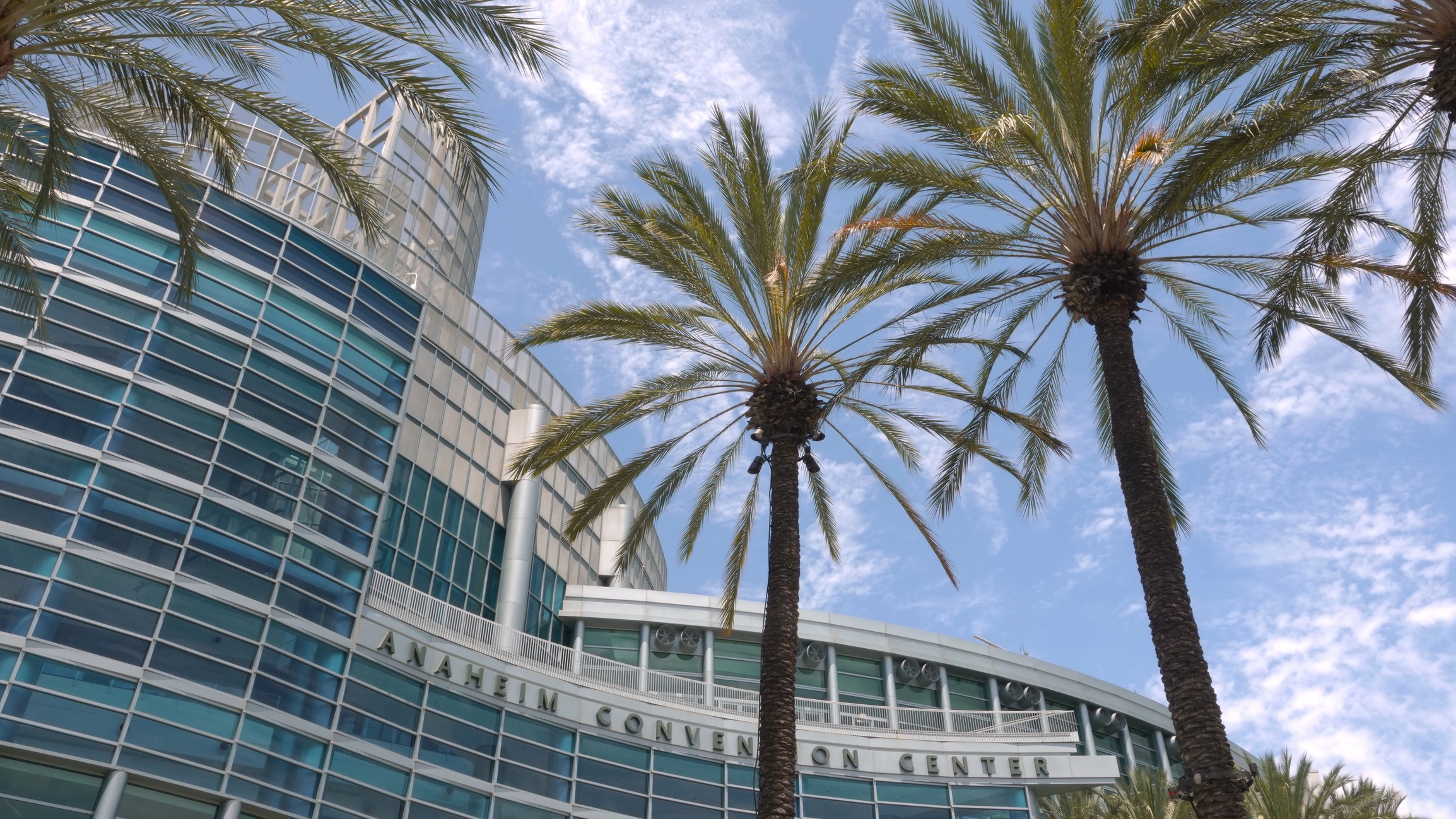
In Southern California, Anaheim Convention Center’s (ACC) 1.8 million sq. ft. of function space is crowned with a 2,000-square-foot green roof garden filled with plants and herbs. ACC’s“Green Zone”on-site recycling center turns kitchen food scraps into nutrient-rich compost later used for the landscape beautification of the Anaheim Resort district. Additionally, ACC works with “Chefs to End Hunger,” which provides meals to the hungry by repurposing and redistributing excess prepared food that would normally go to waste at ACC and participating hotels.
As a result of these and other innovative practices, more than half (54%) of all mixed trash waste is diverted from the landfill each year.
A half hour north on Interstate 5, Los Angeles Convention Center boasts a 2.58 megawatt solar array, making it the largest solar installation on a municipally owned convention center in the U.S.
SoFi Stadium
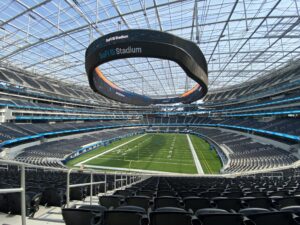
The shiny new SoFi Stadium was built for the NFL Rams and Chargers but is a big winner for meeting professionals looking for sustainable backdrops for any size group. The sweeping roof of the massive outdoor plaza is nestled in an artificial lake filled with recycled water used to keep the surrounding Hollywood Park greenery watered year-round. A natural wetlands and mechanical system filters runoff so not a drop is wasted.
Best of All Worlds
Immersive Design Studios’ CANVAS Studio at Monterey Conference Center
California’s innovative spirit includes advances in the streaming technology that allowed people to meet over the last two years and will fuel the hybrid meeting boom of the coming years. California companies and venues are stepping up to simplify the efforts to deliver to all audiences. Since the state is home to leading streaming meeting innovators, the latest solutions for bringing everyone together are close-at-hand.
San Jose-based cloud video conferencing and event platform BlueJeans is not a Covid-come-lately virtual meeting company. Engineers started connecting Skype rooms for on-the-fly conferencing as early as 2011. In 2014 they expanded to interactive, large events and in 2015 integrated with Facebook Live. in 2020, they were bought by Version and now leverage the power of incorporating 5G and mobile edge computing in its flexible, easy-to-use platform.
An hour north on Highway 101, event-management software platform Hubilo also predates the pandemic. The company started in 2015 as an event-tech play designed to increase attendee engagement at in-person events, then pivoted in 2020 to launch an event platform that could host virtual communication. After a total of $153 million in venture funding over the last two years, it has grown into one of the leaders in the space, servicing companies such as Blackboard, Walmart and Roche Pharma.
With all that hybrid meeting power in their backyard, California venues are empowered to incorporate audience-extending technology in their meeting rooms, providing turnkey solutions for meeting professionals looking for their own platform expansion.
Of course, the capital of big and small screen production is steeped in options for streaming content. If Los Angeles Convention Center can pull off The GRAMMYs, it should be able to handle your keynote in 860,000 sq. ft. of meeting space with close-up-ready lighting, sound and IT infrastructure. In fact, the facility hosts an average of 300 events annually for as many as 39,000 people.
At Anaheim Convention Center, a partnership with Encore AV services and Smart City Networks delivers the excitement of the keynote, panel and breakout to a global audience. Visit Anaheim has also been connecting planners with a local production studio, VCI Events, as a second option to host even more robust virtual components. It features a customizable LED wall that rivals any broadcast election night set-up.
A full-time staff of experts in system engineering, operations/logistics, project management, client services, administration and more than 290 freelancers nationally make easy work of the most complex program.
For upcoming events, the Visit Anaheim team now asks event organizers whether they’re considering a hybrid event or a virtual component in order to match them with the best solution, “a question we didn’t ask a year and a half ago,” shared Jay Burress, president and CEO of Visit Anaheim, in a statement when the resource was unveiled in 2021. “And I think we’ll see that for a while, as the meetings and conventions industry comes back to life.”
24th annual Independent Games Festival Awards
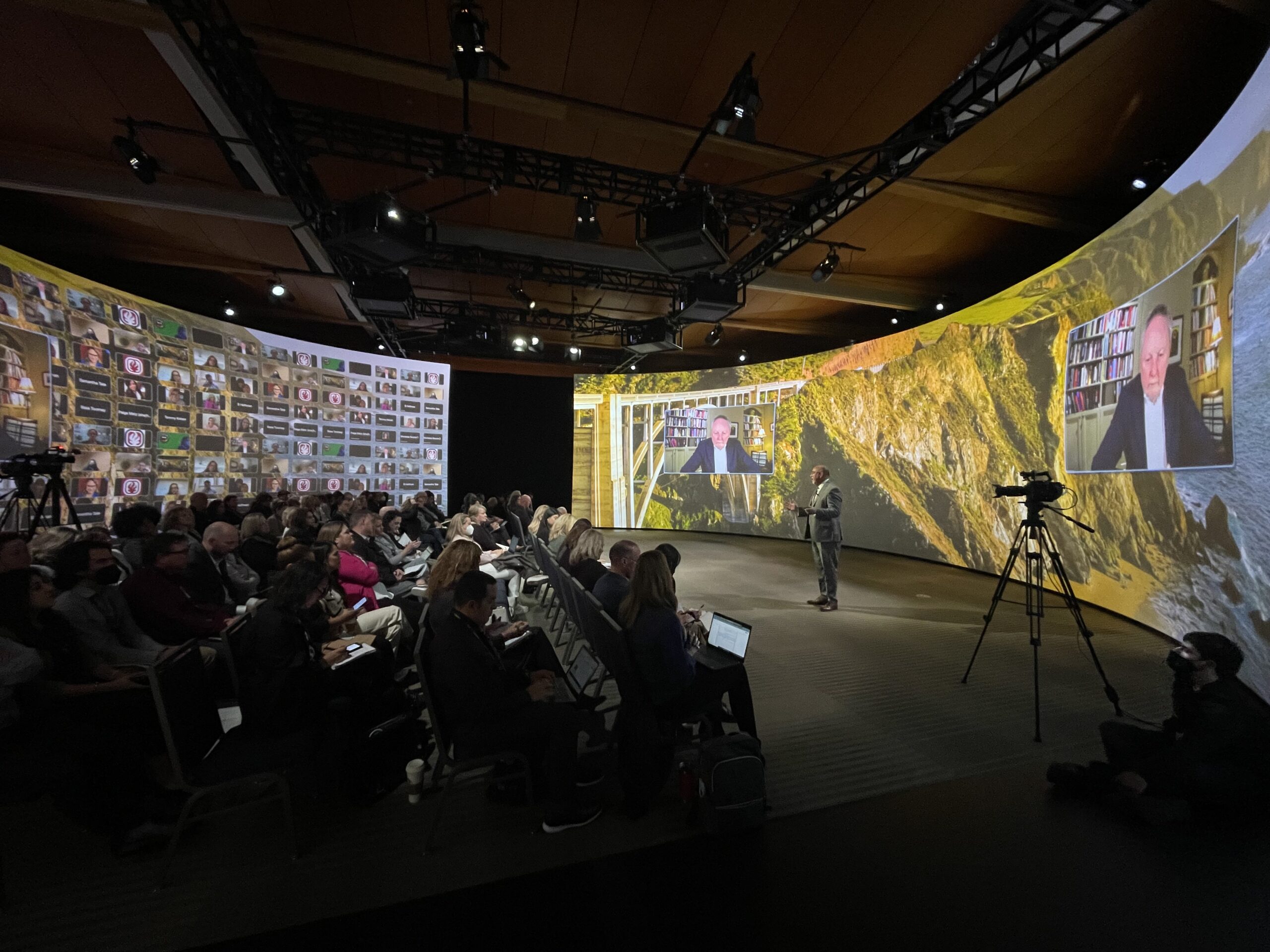
Farther north on the beautiful Central Coast, Monterey Conference Center and Immersive Design Studios built a 10,000-square-foot CANVAS Studio for virtual or hybrid meetings. The second-floor space in Steinbeck Ballroom is equipped with 360-degree wraparound screens and Immersive Design Studios’ CANVAS software platform. Meeting and event speakers can see thousands of remote attendees on the screens at once. The platform lends itself to zooming in on any individual on the fly for spontaneous and authentic interactions with the in-person audience.
Back in San Francisco in March, the 2022 Game Developers Conference celebrated the art and science of making games at a hybrid event beamed from the show floor at Moscone Center where 200 exhibitors and more than 1,000 speakers gathered. It was the 36th running of the week-long show and covered everything from animation to machine learning.
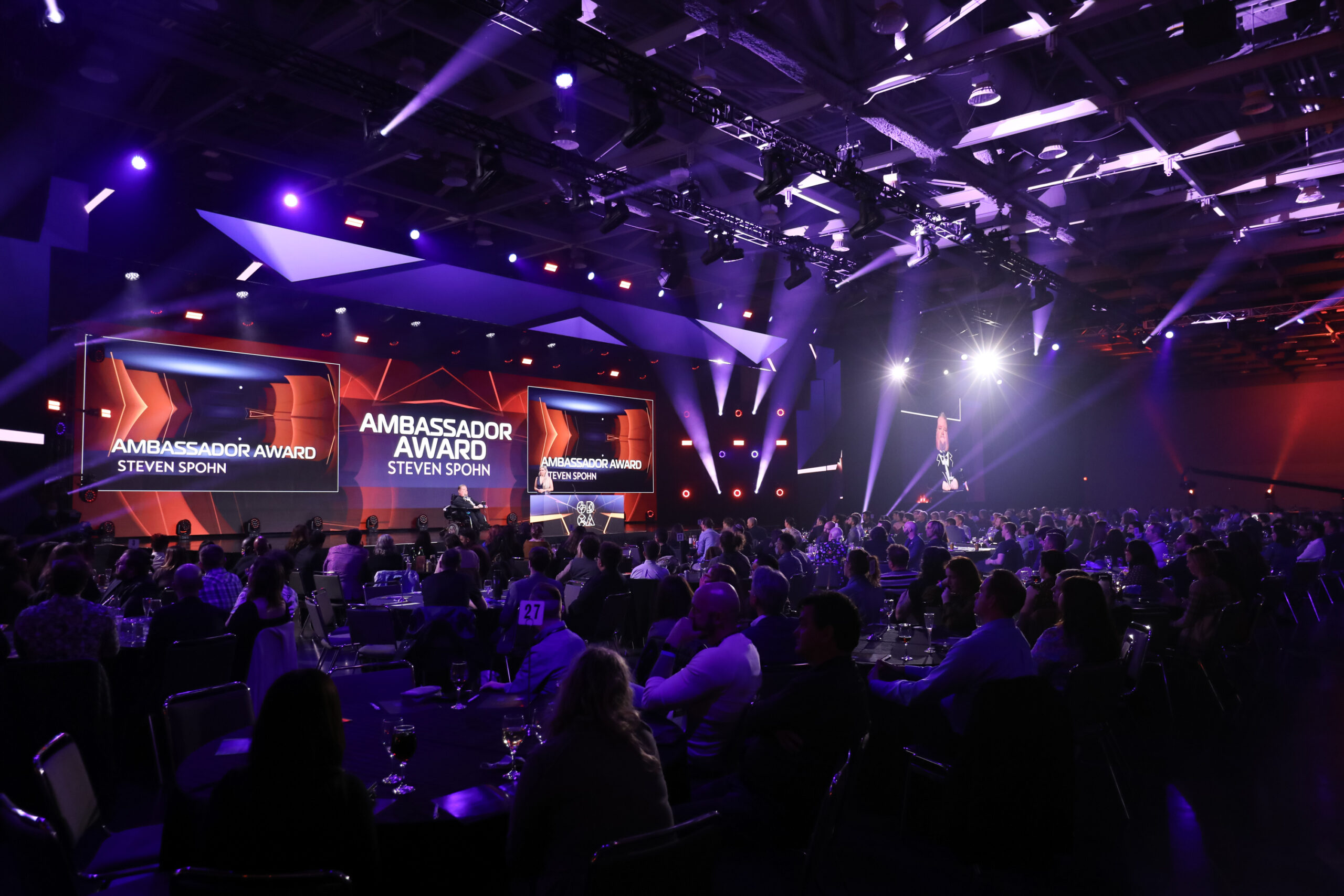
The keynote at The Developer’s Renaissance focused on empowering developers to “kill it with kindness” when it comes to diversity, equity and inclusion. The crowning jewel will be the 24th annual Independent Games Festival Awards, which will be livestreamed on the organization’s official Twitch channel.
“The video game industry is able to join together again to share their learnings, celebrate their successes and breathe a collective sigh of relief,” said Informa Tech Vice President of Entertainment Katie Stern in a statement. “This is the first GDC of many to come that will again be a space for game industry to meet and where professionals can learn and grow.”
Shannon Copeland
The seamless coordination of countless logistics required to produce a productive and enjoyable meeting or event is a Herculean task. Add on the threat of a severe weather situation, and your stress level will multiply.
In today’s world, you cannot overlook the possibility of Mother Nature becoming an unwanted attendee at your meeting or event. Undoubtedly, changing weather patterns requires businesses to become proactive about planning for severe weather or be faced with costly consequences.
Realizing the potential for a winter storm or another weather disaster while planning your meeting or event will help keep your attendees safe while reducing the risk of significant financial losses. If you have yet to build weather-related contingencies into your event planning protocol, below are five steps you can immediately start implementing before the next cold front blows in.
No. 1: Know Your Location
While you think you may know what types of weather to expect when you are in certain parts of the country, the truth is you cannot be too sure. With a changing climate, we can no longer dismiss the likelihood of a major ice storm in the South that cripples businesses for days or record-breaking temperatures in the upper mid-West leaving homes and businesses sweltering in the heat. As meeting and event planners responsible for the safety of sometimes thousands of people, we cannot take anything for granted.
Knowing what to expect in the specific location and estimated date of your event is critical to building contingency plans around severe weather. Obtaining a long-range weather forecast from a reliable source will help you achieve this. Accurate information will impact the success of your planning, so it’s wise to seek advice from weather intelligence services that can provide a forecast tailored to the needs of your particular event.
No. 2: Always Have a Backup Plan (or Several)
As a meeting planner, you know that not having a Plan B, C or Z, means you are doomed. Of course, this goes for your keynote speakers, caterers, audiovisual support, and the weather, too.
Here is a list of questions you may want to ask yourself and your team before planning your next event:
Do you have another nearby venue where you could host the event?
Should you arrange transportation for attendees to get to another venue, or would you cancel it altogether?
Can your venue provide generator power should severe weather impact your electricity supply?
Who are your vendors, and would they be self-sufficient in preparing for a weather event, or would they need emergency guidance? (You may want to consider asking this during your vetting process.)
Does the venue have specific protocols that event planners have to follow? How do these impact your plan for severe weather response?
While your central location should be your primary concern, hotels, restaurants, entertainment venues, and other social settings should also be considered. These sites may be spread across a city or metro area and could impact the comings and goings of your attendees. In addition, forming solid relationships with your venue hosts and maintaining good communication with them will benefit you if an emergency arises and you need to make changes on short notice.
No. 3: Designate Roles and responsibilities
Before an emergency, whether a storm or otherwise, you should elect critical people authorized to make decisions. But, unfortunately, you won’t necessarily have the luxury of time to track down a manager or other authoritative figure, so make sure efficient communication can be maintained.
Also, have your law enforcement, security, medical staff, and public relations team ready and ensure they know their roles and responsibilities. Finally, create a system so that critical information cascades across all parties who may interact with your meeting attendees.
No. 4: Pre-empt Travel Issues
Monitoring where keynote speakers and other event VIPs are traveling from will help you prepare if they are not able to make it due to the weather.
While the severe weather event may not impact the main conference or convention site, it may affect your speakers and their travel plans. Make sure you have a backup plan if a critical event program member suddenly becomes unavailable. Should you remove the event from the agenda? Can you arrange for that person to join remotely, and would they be able to? Should you reshuffle the schedule, or do you have a backup speaker you can call on?
Having contingency plans is crucial, but being able to implement them swiftly could save your program and overall attendee satisfaction. Access to accurate weather intelligence in advance of your event and even before your speakers may give you the time to activate your plan B seamlessly.
No. 5: Communicate (and Overcommunicate) with Attendees
Start communicating with guests, speakers, and vendors before and during your event. Providing a weather forecast and any other helpful resources will help guests and speakers plan for their visit. In addition, utilize a mobile event app with a mass messaging feature to inform guests of severe weather alerts.
Should the weather change unexpectedly, you can make announcements before the speaker session when attendance is usually at its highest. It’s important to also communicate with attendees remotely. Make sure you have each person’s mobile number on file to reach all registered attendees, staff, and speakers.
As the adage goes, knowledge is power. If you know what to expect, you can prepare for any foreseeable weather disruption to your event. In addition, access to information in advance can help you set up and exercise your contingency plans as needed.
The steps outlined are just the beginning, but following these can help set you on a path of preparation that could save your event when you find yourself in any unexpected circumstances.
—
Shannon Copeland is an industry manager and meteorologist for StormGeo and a graduate of the University of Oklahoma’s School of Meteorology. While completing her degree, she supported numerous research initiatives focused on severe weather, emergency management, and disaster preparedness and recovery.
As an Industry Manager, Shannon supports StormGeo’s outreach strategy and aids in identifying weather-related risks to businesses and their employees in the hospitality, banking and finance, property management, construction, and auto manufacturing industries.
As if Las Vegas didn’t already have enough event capital, Area15 cranks it up another notch. Since its conception in September 2020, this venue has brought 40,000 sq. ft. of otherworldly experiences to groups. Now, Area15 just opened two new venues and unveiled news that it will soon expand by more than 450,000 sq. ft., in the form of new experiences, pop-ups and more opportunities to wow your group.
Before heading into what Area15 has in store for the future, let’s first take a look at what the entertainment district offers in the present.
What Groups Get Now
Portal, Photo: Proto Images
Area15 is home to 16 rides and experiences throughout the facility, whether it’s taking visitors on a cinematic experience via virtual reality, granting them a bird’s aviation skills virtually or teasing the brains of your group. The experiences may vary in type, but they’re common in the one-of-a-kind experiences they bring.
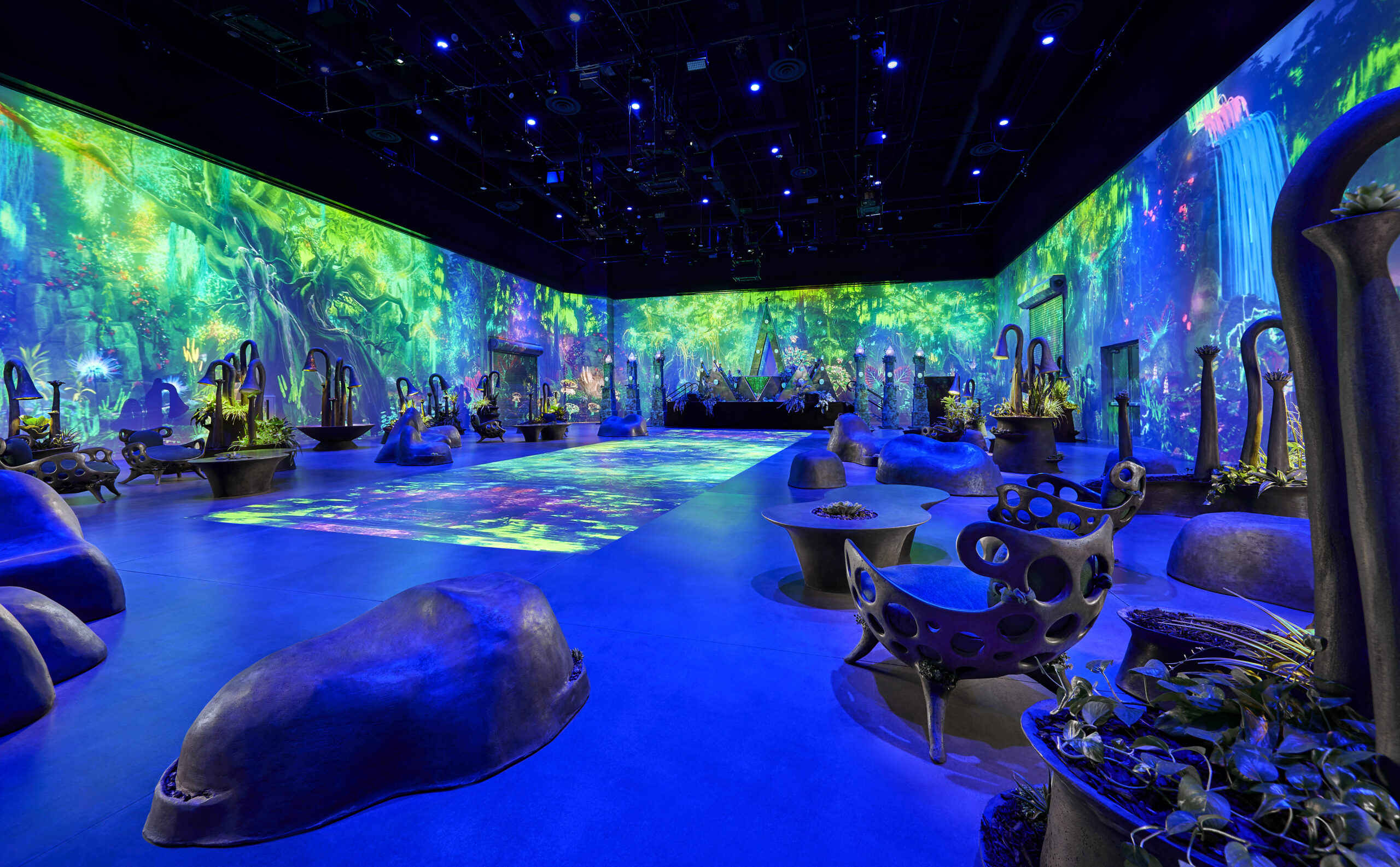
At Area15, the line that separates attraction and event space gets a little blurry. Take Portal, for example, which has a capacity of up to 900 people and offers panoramic floor-to-ceiling video projection throughout the entire space. This space allows meeting profs to bring their wildest visual imaginations to life.
While Area15 offers an expert design and graphic team for visual projections in Portal, meeting profs can bring their own designs, as well. There’s also an in-space bar, which, coupled with the immersive visuals, can make things a little more exciting and memorable for some.
Illuminarium, just across from the main building, is kind of like The Portal’s big brother. It offers visuals in a couple of different ways, such as “Space: A Journey to the Moon & Beyond,” which gives visitors a 360-degree galaxy experience and “Wild: A Safari Experience,” which brings visitors up close to animals in their natural habitats. The space is 16,500 sq. ft. and can be bought out or you can rent out one space, such as the 2,000-square-foot outdoor patio, for smaller groups.
Even more room can be found outdoors at Area15’s A-Lot—named because it has “a lot” of space—which features a 25,013-square-foot layout and a 1,400-square-foot VIP deck.
Meow Wolf’s Omega Mart, Area15’s largest attraction, is what happens when you grant an abstract artist permission to design your grocery store. Inside the 52,000-square-foot venue are more than 70 different minor attractions all reaching out for your attention. According to Drew DiConstanzo, director of sales and marketing for Omega Mart, there are elements in certain sections of the attraction that may connect to or have meaning in other areas, for example, a number on a pipe having some significance elsewhere, which can solve a larger puzzle in the store—so you must keep your eyes peeled.
This puzzle-solving can also take place during scavenger hunts or team-building activities within the space; full buyouts are also an option.
Designed for small and medium-sized groups, Sanctuary features bamboo picked from Indonesia’s Bali and Java regions. Area15’s newest additions are Liftoff Bar and Ride, and a private 18-person dining room inside Area15’s main restaurant, The Beast by Todd English.
Liftoff is a 3,762-square-foot outdoor event space, that doubles as a lounge and slow-lifting 360-degree gondola, large enough to hold 16 people while it takes them 130 feet into the sky. A full-service bar is at the base of Liftoff.
What Groups Can Expect
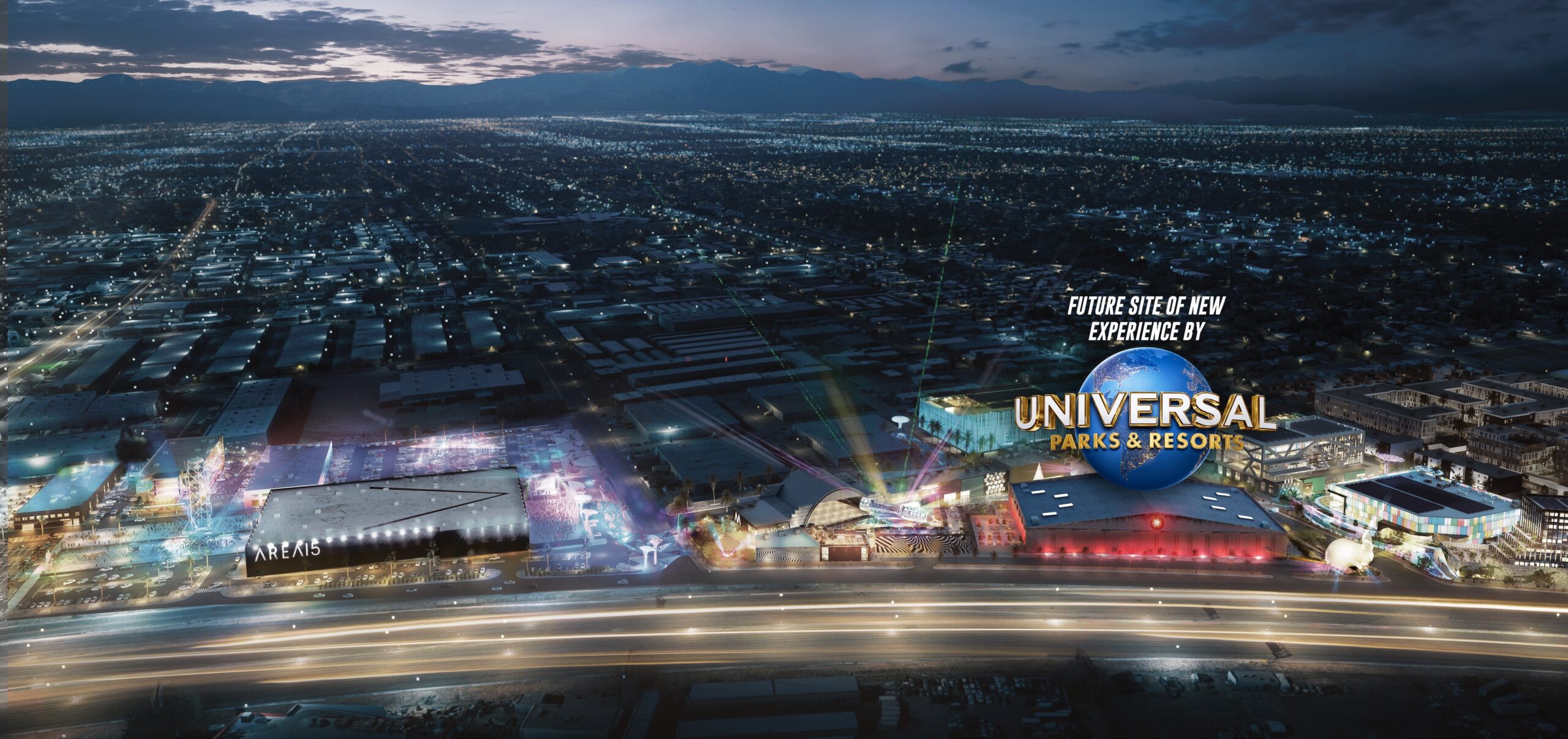
The anticipated additions to Area15 will allow visitors to experience horror outside of October’s regularly scheduled scary hours. In collaboration with Universal Parks and Resorts, Area15 will be home to a year-round terror-based attraction. It is reported that it will be in a 110,000-square-foot standalone building on Area15’s 20-acre expansion and will also include restaurants and bars.
An additional 85,000 sq. ft. will be dedicated to pop-up experiences and outdoor adventures, such as a salvaged Boeing 747 that will serve as an event space.
“Consumers continue to gravitate toward artful new forms of entertainment providing immersive experiences, authentic connections and real emotions,” said Winston Fisher, Area15 CEO, in a press release. “The demand for more AREA15 experiences is high, and we are ready to dive into this substantial expansion and find more partnerships that will have a lasting impact on the AREA15 District and the City of Las Vegas.”
An opening date has not been announced.
The crisp air carrying the eccentric energy over the Willamette River in Portland or through the booth of a Pike Place fishmonger heaving salmon through a grey Seattle afternoon creates a keen sense of expectation and excitement in the hearts and minds of smartphone-wielding visitors.
But unfortunately, this festive atmosphere was temporarily suspended due to the pandemic and was later rocked by civil unrest following the murder of George Floyd at the hands of Minneapolis police officers. Homelessness and property damage made headlines on national news, casting the Pacific Northwest in an unfavorable light as a tourist and meetings destination. But local organizations such as the Downtown Seattle Association have partnered with local businesses and community members to return their towns to their former glory through an equitable and inclusive approach with the intent of benefitting everyone.
Host cities, in most cases, provide attendees with much more than they could have bargained for: unexpected culinary delights or mind-blowing entertainment hosted at top-flight event venues. However, attendees at times may inadvertently overlook the tremendous efforts carried out by local organizations working hard behind the scenes to provide vibrant, safe experiences for visitors and the community as a whole.
Clean, Safe and Welcoming
One organization leading the way in the recovery of tourism in the Pacific Northwest is the Downtown Seattle Association, which has made great strides in rebuilding the region’s momentum through an extensive plan that returned Seattle to its past splendor. For over 60 years, Downtown Seattle Association has functioned under the mission of creating a vibrant and inclusive downtown.
“The downtown area over the last 30 years has always had a great mix of uses and draws from arts and culture, food, music, sports entertainment—everything is really tucked close together and walkable, making it one of the great downtowns to walk in,” says Jon Scholes, president and CEO, Downtown Seattle Association.
Scholes notes that Downtown Seattle’s fairly large population and big brands, and smaller businesses including start-ups, helped to create a springboard to recovery as the area isn’t overly reliant on one type of industry or particular use. “It’s been a great place to work, play and to visit,” Scholes says. “Downtown really offers a variety of reasons to be there and it’s really destinations and not obligations that are going to be successful—we’ve been focused on that for some time.”
To further bolster the efforts made by DSA, the organization founded, by way of city ordinance, the Metropolitan Improvement District (MID) in 1999 and encompasses 285 square blocks throughout six neighborhoods in the downtown area of Seattle. The district operates with funding provided by the owners of commercial and residential properties in the district—making it a true grassroots movement generating tangible results with work carried out in the community by the Downtown Ambassadors of MID’s Clean Team and Community Safety and Hospitality Team.
“One of the strengths here in Seattle, versus other destinations, is that there’s a lot of local investment,” says President and CEO of Visit Seattle, Tammy Canavan. “Most of the larger hotels here are locally owned, the Space Needle is locally owned, so there’s an added incentive for the businesses community here to work together,” adding that many community leaders and those involved have either grown up or continued to live in Seattle and are passionate about guiding the city to a prosperous future. “It’s all hands on deck in this community.”
The MID-funded ambassadors cleared over a million gallons of trash, removed widespread vandalism and helped thousands of visitors find their way in the downtown area from 2021-22—a year that saw 421,654 visitors to Seattle’s Westlake Park and Occidental Square. Another significant aspect of their work is helping Seattle’s unhoused population find the resources they need to get back on their feet. The ambassadors perform morning wakeups and welfare checks on individuals in need daily. The Downtown Ambassadors are on the street lending the community a helping hand 363 days a year.
“The improvements to safety, security and the crisis of homelessness, which was very visible a year ago, a year and a half ago and has much improved today,” Scholes says. “We had 130 plus tents and encampments in the greater downtown about a year ago and today there’s maybe 10 or so in the greater downtown area over two square miles,” he continued, adding, “There’s been a lot of improvement in addressing urban disorder, graffiti, broken windows, plywood, things being closed and people living outside, dealing drugs or selling stolen merchandise, it was pretty chaotic for quite some time,” he recalls.
“We’ve in many ways turned a page on that period,” he says, noting significant progress when compared to the previous year. The latest data available provided by the Seattle Police Department showed a nearly 24% decrease in crimes committed from January to November of 2022.
Improvements Across Emerald City
Rendering: Visit Seattle
Also emerging from the unfavorable set of circumstances that faced the city over the last few years is the Seattle Convention Center and with major improvements, including the opening of the $1.9 billion Summit Building, which hosted its first event on January 12. The new Summit Building includes over 240,000 sq. ft. of exhibit space, nearly 100,000 sq. ft. of meeting space spanning up to 65 meeting rooms, an expansive lobby area, a garden terrace, mixing zone, with 570,290 sq. ft. of total meeting space.
The Summit Building has 32 national conventions booked from 2023 to 2026. Of the Summit Building’s nearly $2 billion price tag, $93 million of those funds will be allocated to a community benefits package to increase mobility within the downtown area, enhance economic opportunities and provide additional affordable housing units and public spaces.
What’s more, the new Summit Building is located just a block and a half from the Arch building, which functioned as Seattle’s premier space for over three decades and offers planners access to a total of 434,988 sq. ft. of event space and is LEED certified with a waste diversion rate of 78% placing the facility in the top 5% of green businesses in the U.S.
“We believe it will be a top-three facility in the country, located directly in the urban core making it easy to access from the train or the airport and is easy to walk to from your hotel to dinner and other events,” Scholes says. “The walkability of it and that true urban experience and the design of the building itself—we think it’s going to make it a great draw.”
SCC’s Board of Directors has, since 1988, recognized the importance of offsetting any possible adverse effects on the community created by the development of the center by helping to create better physical and social environments wherever possible, including providing affordable housing with a net gain of 1,040 units in and around Seattle, offsetting the units of housing that were demolished in the process of building the center.
But the recently unveiled Summit Building isn’t the only new feature in Seattle to attract events. A renaissance of Seattle’s Central Waterfront is underway, elevating the destination best known for its amazing seafood restaurants and Pike Place Market. The revamped waterfront will include a 20-acre park with a marquee promenade and will connect the popular open-air market to the waterfront and Seattle Aquarium.
“Looking ahead, with the opening of the new convention center addition, a billion-dollar remake of our central waterfront—they’re these big moves that have been in planning and construction for some time, but now we’re very close to cutting the ribbon on,” Scholes says noting that the projects were made possible through a “generational amount of investment” going into Seattle’s downtown, ensuring the Emerald City remains an amazing place to live and visit.
The City of Roses Renews
The pandemic created a slew of obstacles, with many issues longstanding for cities across the country making the return to normalcy an even bigger challenge. Partnerships between local convention and visitor bureaus, local businesses, and other community organizations, including nonprofits, have become crucial in helping tourism in different areas rebound and rebound from the subsequent economic downturn.
And dispelling any ongoing misconceptions about specific host cities by showcasing the fruits of these community-based efforts, demonstrating to event planners that destinations such as Portland, are in fact, open for business and is a critical message to help bridge the gap between planners and the perfect event destination.
The phrase commonly associated with Portland, “Keep Portland Weird,” can mean many things to many people, but one thing for sure is that it also represents an uncommon sense of togetherness throughout the community that may seem “weird” to those unfamiliar with the ways of Stumptown.
“Portland, like many cities, has faced a number of challenges, at least since the beginning of the pandemic,” says Portland Mayor Ted Wheeler. “We’re not here to sugarcoat that, but are here to say that we are focused and have doubled our efforts around addressing the humanitarian crisis and homelessness situation on our streets, and our goal here is to get people off the streets and help them stay off the streets,” he says, adding that connecting unhoused residents with the resources they need to stay off the streets is one of the city’s top priorities.
The initiative to combat homelessness in Multnomah County and in collaboration with the Joint Office of Homeless Services, Move-In Multnomah, has worked with partner organizations to help end the homelessness of unhoused residents in the area. Between July 2021 and June 22, the organization helped find housing for over 4,500 area residents while helping another 35,550 people avoid homelessness with prevention services. Another 1,129 individuals were moved from encampments, sidewalks and shelters to a home of their own between July 1, 2021 and June 30, 2022.
Wheeler went on to recognize the obstacles faced by event planners when asked by clients about public safety and other similar concerns when hosting in Portland. “We know that as you are working on behalf of your clients, they’re going to ask you questions about ‘how safe will our delegates be, what kind of livability situations will they be walking into,’ and I want you to know we’re very happy with the progress that’s been made.”
While gun-related crimes occur in most, if not all metropolitan areas, recent statistics published by the Portland Police Bureau indicate a decline in reported incidents with the bulk of crimes being reported outside of areas frequented by visitors. Reports of violent crimes in Portland are happening at a rate much lower when compared to other major cities in the U.S. or Canada, according to Visit Portland. “Some of our accolades for the efforts we’ve made thus far include being named one of the most livable cities in the United States, according to U.S. News and World Report,” he says.
Equity for All in Rip City
Photo: My People’s Market 5 @ Self Enhancement Inc.
In 2017, Portland introduced My People’s Market—a collaborative event organized by Travel Portland (Portland’s Convention and Visitors Bureau) and Prosper Portland—an economic and urban development agency for the city. The purpose of the market is to provide entrepreneurs of color with a pathway to connect to the travel industry to expand and scale their businesses.
“We have made a huge commitment to equitable and economic prosperity,” Wheeler says. The Inclusive Business Resource Network works to expand the market’s exposure to events, providing attendees and other visitors with the opportunity to patronize these local businesses and vendors. “It’s part of a larger program we have throughout the City of Portland to really encourage minority entrepreneurship,” noting that participating vendors learn how to develop, market and sell their products while learning the importance of distribution and testing their strategies in real-time during market events.
“The pandemic hit us hard in many different ways. It gave us a chance to really reassess who we are as a community and what we want our city to look like and be in the future,” Wheeler says. “One area where we all agree we have to do better is making sure that as we recover, as we grow our economy, as we expand opportunities for the people who live here, we want to make sure that that economic prosperity is shared by all in our community.”
In addition, Travel Portland and Prosper Portland offer pop-up My People’s Market for events and conventions, which have shown to be very popular and have garnered widespread positive feedback from event professionals and attendees.