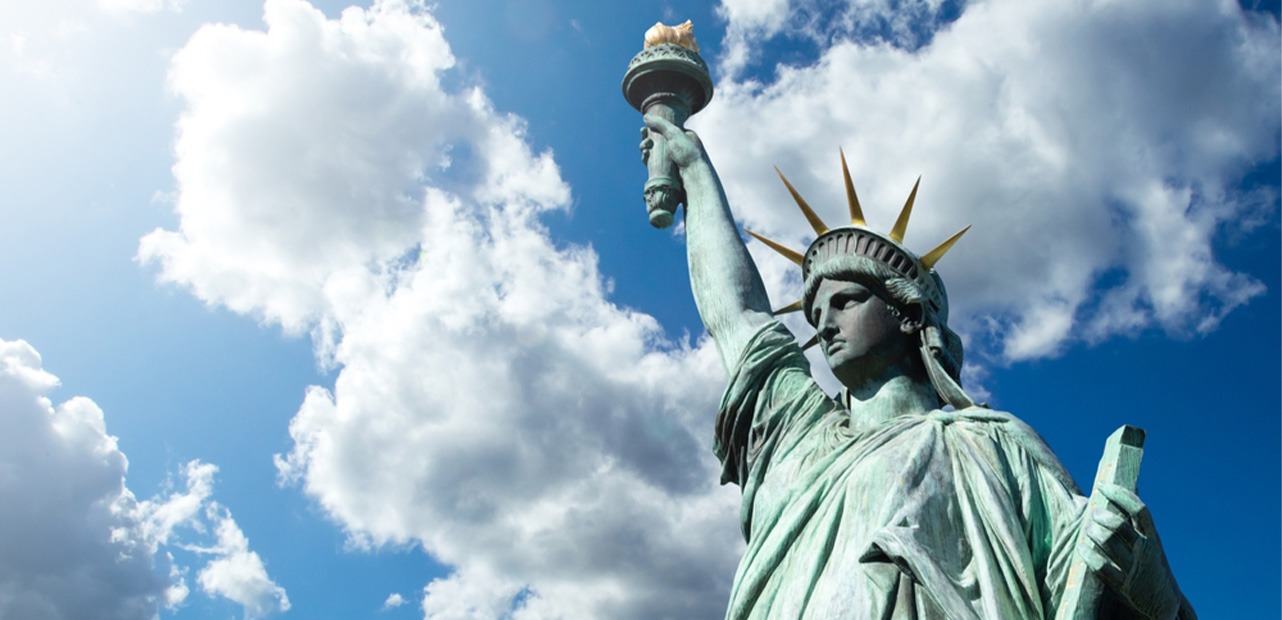
Our nation’s semiquincentennial will not be remembered for its red, white and blue bunting, bursts of fireworks or parades but by its storytelling. Meeting profs know this. You know that attendees at your gatherings want the flash of inspiration even more than the shiny baubles of tech and décor.
America began with a meeting, as every schoolchild learns, when the Founding Fathers met in Philadelphia that led in 1776 to the signing of the Declaration of Independence.
But what of the Founding Mothers? This year offers the perfect opportunity to add the inspiration of their stories to your programs.
Nationally known journalist Lois Romano has observed that there are far too few texts, or monuments or attempts to popularize the roles played by women, including Martha Washington, Martha Jefferson, Abigail Adams, Deborah Read Franklin and Betsy Ross in the founding of this nation.
Read More: Beyond Awareness: Women, Leadership and Intentional Change
Their lives are ripe for recounting.
Martha Washington: During the Revolutionary War, she was a crucial source of support for her husband George and the Continental Army. She spent over five years in total at winter encampments—including Valley Forge—where she lifted morale, managed a social center and organized aid for soldiers. She also acted as her husband’s confidant, helped manage his correspondence and led efforts to supply the army.
Martha Jefferson: She led a fundraising campaign, organized volunteers and collected supplies for the Continental Army, while enduring the dangers of a British invasion in her husband Thomas’ absence.
Abigail Adams: A key political advisor to her husband John, she influenced policy, urged for women’s rights to be included in the new government, and provided invaluable intelligence on the home front in Massachusetts.
Dorothy Read Franklin: During the 1765 Stamp Act riots, the wife of Benjamin Franklin famously stood guard with a gun at their Philadelphia home to protect it from an angry mob. She also maintained the family finances and investments while her husband spent 15 or their 44 years of marriage in Europe.
Betsy Ross: While the oft-told story of her creating the first U.S. flag for George Washington is likely only legend, she was an active patriot who supported the war effort by creating goods for the Continental Army, including sewing uniforms and mending garments. As a Quaker who married outside her faith, she was disowned by her church and operated her own business—a rarity for women at the time.
Read More: Smart Women Rules: Five Leadership Lessons for Thriving, No Matter What’s Next
“For centuries, the lives of some of the most formidable women in history—among them, Cleopatra, Marie Antoinette and Joan of Arc—were documented almost exclusively by men who believed that women were the passive, lesser sex,” Romano wrote recently in The New York Times. “The men who chronicled these women in their lifetimes were hesitant to give them credit for greatness and quick to affix blame in times of conflict. The cultural narratives that endured consistently lack an understanding of social constraints, power dynamics and gender politics. In many cases, it was not until female historians began to write their own revisionist histories that these women’s stories were fully told…. Once a narrative takes hold, it can be repeated and embellished for generations before being dislodged.”
Romano concludes: “Perspective shapes narrative. Power shapes interpretation. Ultimately, who tells the story matters often as much as whose story is being told.” Meeting profs, in a profession dominated by women, can be among those storytellers.
Lois Romano is the author of the new book, An Inconvenient Widow: The Torment, Trial, and Triumph of Mary Todd Lincoln.