In the face of uncertainty brought on by ICE-related press in Minneapolis, one association, The Public Library Association, encouraged attendees to attend in person with an encouraging and heartfelt message on its website. Los Angeles Tourism & Convention Board reported seeing no loss of convention business despite National Guard and federal enforcement presence in 2025.
Editor’s note: This story in its entirety will be in our March issue but in light of its urgency, we are publishing it now.
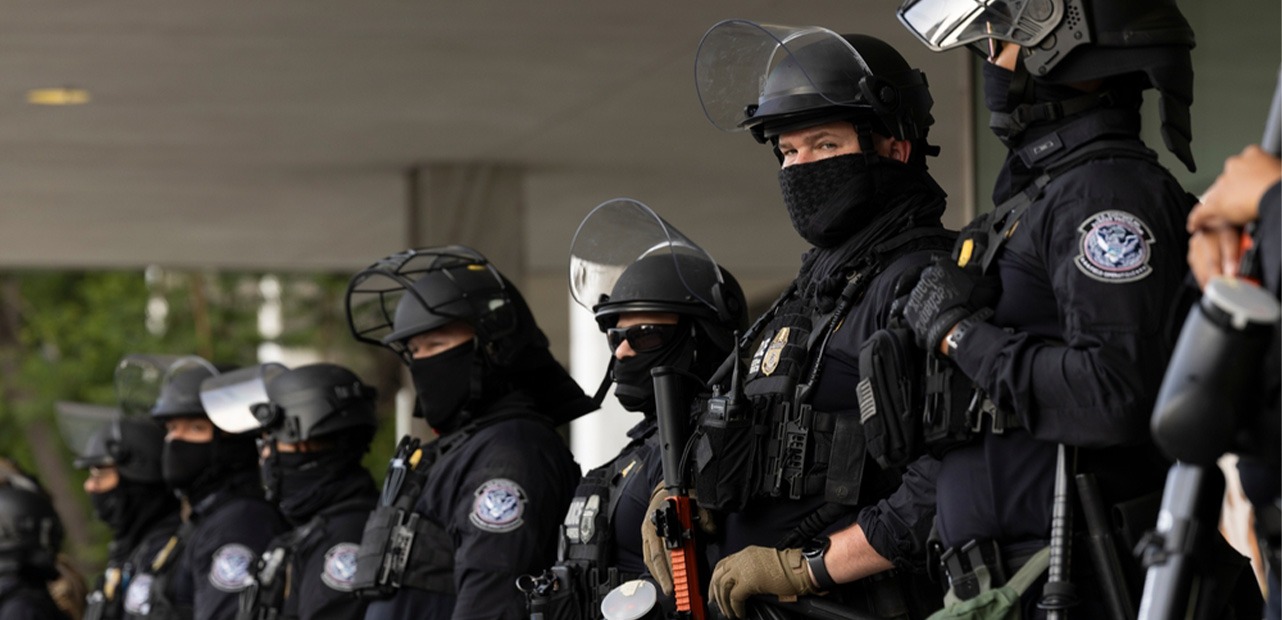
News reports of deployment of thousands of Immigration and Customs Enforcement (ICE) agents and the protests that followed violent and deadly confrontations, most recently in Minneapolis, do not make for compelling—and often not accurate—marketing for events in the area.
Meeting professionals who plan conferences, often years in advance, are put in a difficult situation. They need to reassure potential attendees that the images they are seeing online are not accurate representations of what they will find when they arrive (if that is the case). They are also responsible for the safety of attendees if there is a chance the disruption will touch the area around the event venue.
Transparent communication and creative use of the content delivery tools honed during Covid have helped some planners move forward in the midst of uncertainty. The Public Library Association (PLA) is one example.
Long in advance of the current unrest, PLA booked its biennial conference of educational sessions and a bustling expo at Minneapolis Convention Center for April 1-3. At the same time, it also planned the PLA 2026 Virtual Conference, with half of the programming as encore screenings of in-person sessions aired from an on-site studio in Minneapolis, and the other half being exclusive programming presented remotely from around the country.
As headlines from Minneapolis grew more alarming in recent months, virtual conference attendance saw “a small uptick,” reports Brandy McNeil, PLA’s president.
Yet something else happened, something extraordinary.
Weeks before the opening session, the PLA 2026 Conference website posted a message from the association’s board “regarding federal immigration enforcement in Minneapolis.” PLA, it said, is “heartbroken by recent events and has been coordinating closely with city and venue partners to support them and to foster a safe and welcoming conference environment. We are committed to moving forward with PLA 2026 in Minneapolis.”
After offering safety tips such as carrying a digital copy of a passport or REAL ID at all times, the statement continued: “We also have heard a loud and strong desire from library workers across the nation to support our colleagues and the city at this time. Local officials have told us that the best way that we can do this is to continue to visit, dine, shop, enjoy arts and culture, visit libraries and engage with residents and local businesses in the Twin Cities…. In this moment, we hope you will join us in showing up for the city and residents of Minneapolis.”
After this posting, in-person registrations increased even more than virtual.
Melvin Tennant, president and CEO of Meet Minneapolis, has been heartened by the exchanges he has seen play out in his corner of Minnesota. “Tragedy is part of our story but not the whole story,” Tennant says. “We’ve acquired a sense of resilience and great strength in both our personal and professional lives. Neighbors here love to help neighbors in ways that never get headlines.”
ICE raids and protests have led to some cancellations in Minneapolis, including the Red Bull Heavy Metal street snowboarding competition, scheduled to take place at the Hennepin Avenue Bridge on January 17.
Others happened without incident. A youth volleyball tournament was buzzing with 32,000 in attendance over a weekend.
Tennant shared a personal anecdote that encapsulates the kind of informed, boots-on-the-ground conversations a DMO can provide. “I got a call from a colleague in a distant city. She asked me, ‘Would you bring your daughter to Minneapolis for this?’ And I said, ‘Absolutely, yes.’”
Beyond Minneapolis
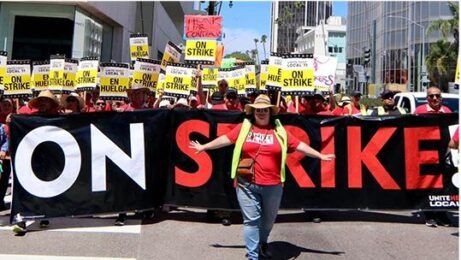
National Guard and federal enforcement presence in Washington, D.C., and Los Angeles in 2025 led to some event cancellations and decisions not to book. During the height of the unrest in Los Angeles last June, Mayor Karen Bass implemented a nightly curfew of 8 p.m. in downtown that forced the cancellation or early end of sessions for several conventions and meetings at the convention center, and nearby venues like the Walt Disney Concert Hall had to cancel performances. Protests and the heavy military presence also led to temporary closures of major highways like the 101 Freeway, making traffic nightmarish for some exhibitors and attendees at the convention center.
Read More: Wisconsin/Minnesota: Nature & Modernity in the Midwest
Yet Los Angeles Tourism & Convention Board President and CEO Adam Burke saw a silver lining. “We actually did not lose any citywide conventions last year. We did not lose any significant group business even through that period of the summer. So, 2025 ended up being a stronger year than we’d anticipated with those issues.”
Looking forward, Burke says RFP volume is “picking up in a dramatic way,” and he urges meeting profs to “look at the confidence that a lot of organizations are placing in Los Angeles.”
Of course, being a top-tier destination certainly helps, with premier events on the near horizon such as the NBA All-Star Game, the U.S. Women’s Open and eight matches for the FIFA World Cup. As does added star power in a forthcoming huge expansion of the convention center, major modernization of LAX with a new metro subway connector to downtown.
On the other side of the country, Destination DC President and CEO Elliott Ferguson arrived in the nation’s capital in 2001, just after the al-Qaeda terrorist attacks, and he’s seen plenty since. He lists them: “We’ve been through snipers, anthrax, government shutdowns, January 6th, Black Lives Matter, Covid, several administrations.”
The government shutdown late last year closed or reduced operations at federally funded museums like the Smithsonian, as had hiring freezes and Department of Government Efficiency (DOGE) staffing cutbacks before that. But the most chilling recent effect on Washington, D.C.’s brand was undoubtedly the surge in federal law enforcement and deployment of up to 2,000 National Guard troops after President Donald Trump declared a “crime emergency.” A perception of “tanks in the streets” alarmed both potential tourists and event planners, with one tour company owner reporting a 50% drop in bookings for August 2025.
Read More: Los Angeles Turns on ‘Open for Business’ Sign
Ferguson, a former National Guard soldier himself, says their presence has been mostly benign. And his city has not seen a surge of ICE raids like Minneapolis and elsewhere. But he understands the outside perception of concern for safety. Better than anywhere in the country, he avers, our capital city is accustomed to protecting visitors of all stripes, up to and including heads of state.
“We are used to a high level of security,” as Ferguson puts it. “With 25-plus police organizations in the city, we are accustomed to having a plan of action.”
To the meeting professional, he advises: Be proactive. Know what the security plan is. Be able to communicate effectively about safety and security to your prospective attendees and organizations.