The Caribbean darling has a vision to maintain its hold on inbound travelers, starting with the luxury segment
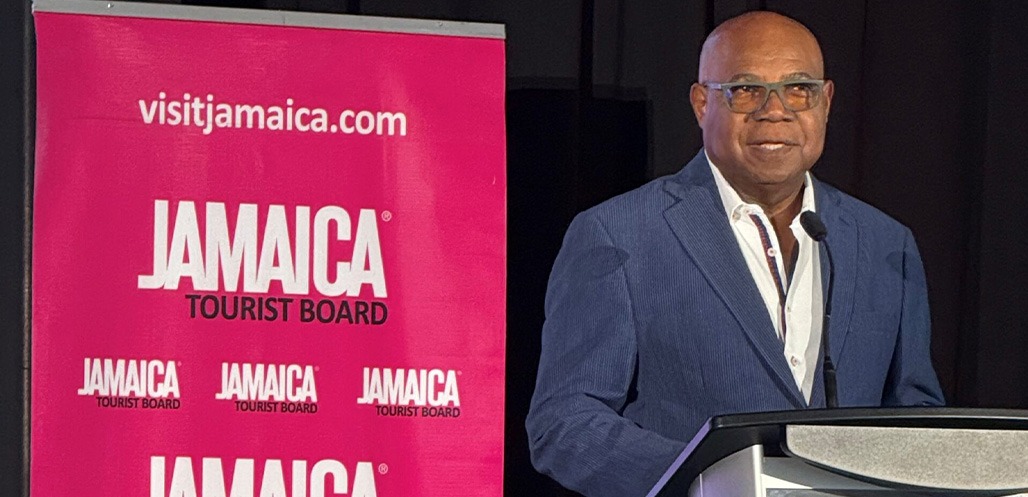
The Honorable Edmund Bartlett, Jamaica’s minister of tourism, outlined a strategic vision for the tourism industry’s future in the most visited island in the Caribbean. Bartlett spoke to an audience of international journalists during the Jamaican Product Exchange (JAPEX) travel trade show in Montego Bay. His presentation centered on three key pillars: innovation, expansion and a “Local First” policy. The address served as a roadmap for sustainable growth, resilience and inclusive prosperity, benefiting both visitors and the Jamaican people.
Setting the Stage: Global Shifts and Jamaica’s Response
Minister Bartlett opened by acknowledging the profound impact of the Covid-19 pandemic on global tourism, emphasizing the need for a “reset” in thinking. He highlighted the changing dynamics of the industry, including evolving traveler preferences, emerging markets—specifically the luxury market—and the increasing importance of sustainability. To this end, he emphasized that while global tourist numbers are a factor in Jamaican tourism, what is more important is growing Jamaica’s economic conditions, building local capacity and developing new experiences for travelers.
Read More: The Caribbean: Crystalline Dreams
Strategic Pillars for Growth
Bartlett articulated a multi-faceted strategy for sustainable growth, encompassing:
- Infrastructure Development for Seamless Connectivity: Recognizing the critical role of infrastructure, the ministry is investing heavily in improving transportation networks. This includes the construction of two new highways to reduce travel times between airports and resorts, ensuring that visitors can reach their destinations quickly and efficiently. Plans for airport expansion in both Kingston and Montego Bay also aim to enhance capacity and streamline the arrival process, with the integration of technologies like facial recognition, which is already in place at Montego Bay. Seaport development plans are underway to increase the number of cruise ships, including ports for smaller luxury craft.
- Empowering Jamaican Participation: The minister underscored the commitment to a “Local First” policy, prioritizing the involvement and economic empowerment of Jamaican businesses and communities. This includes facilitating access to financing for local suppliers through a designated fund at EXIM Bank, expanding the ALEX platform to connect farmers directly with hotels and providing training and certification opportunities through the Jamaican Centre for Tourism Innovation—training future chefs and hospitality staff. These measures aim to increase local participation in the tourism value chain, generating wealth and creating sustainable livelihoods. The goal is to see the supply chain of Jamaican tourism owned by local businesses.
- Diversifying Markets and Products: Recognizing the importance of diversifying its tourism base, Jamaica is actively pursuing new markets in the Middle East, India, and South America. Strategic partnerships with airlines and targeted marketing campaigns are underway to attract visitors from these regions. In addition, efforts are focused on developing high-end tourism offerings, including luxury villas, boutique hotels and exclusive experiences, catering to discerning travelers. The goal here is to attract 250,000 potential travelers from the Latin American regions by 2027, for example, and to increase overall inbound travelers from four million to five million by 2030.
Addressing Key Issues and Envisioning the Future
The address also touched upon key issues facing the industry, including the rise of peer-to-peer accommodations. Bartlett emphasized the need for a balanced approach that supports innovation while ensuring quality, safety and regulatory compliance.
In the meetings space, a new hotel attached to Montego Bay Convention Center is under consideration to improve packaging and price options for large group events. Additionally, he hinted that the JTB is in talks with a yet-to-be-named luxury brand to construct and manage the previously mentioned luxury villas, in hopes that smaller C-suite property buyouts will take place.
Additionally, a significant construction project is underway in Montego Bay. When fully operational, The Pinnacle will consist of four 28-story towers—two as private residences, the other two as hotels, managed by Accor’s luxury brand, Mondrian. The waterfront properties will feature local restaurants, meeting spaces, pools and sporting venues, and docks for watercraft of all sizes. Construction is well underway on the first tower, and the whole project should go online by 2028.