How to track the ultimate metric
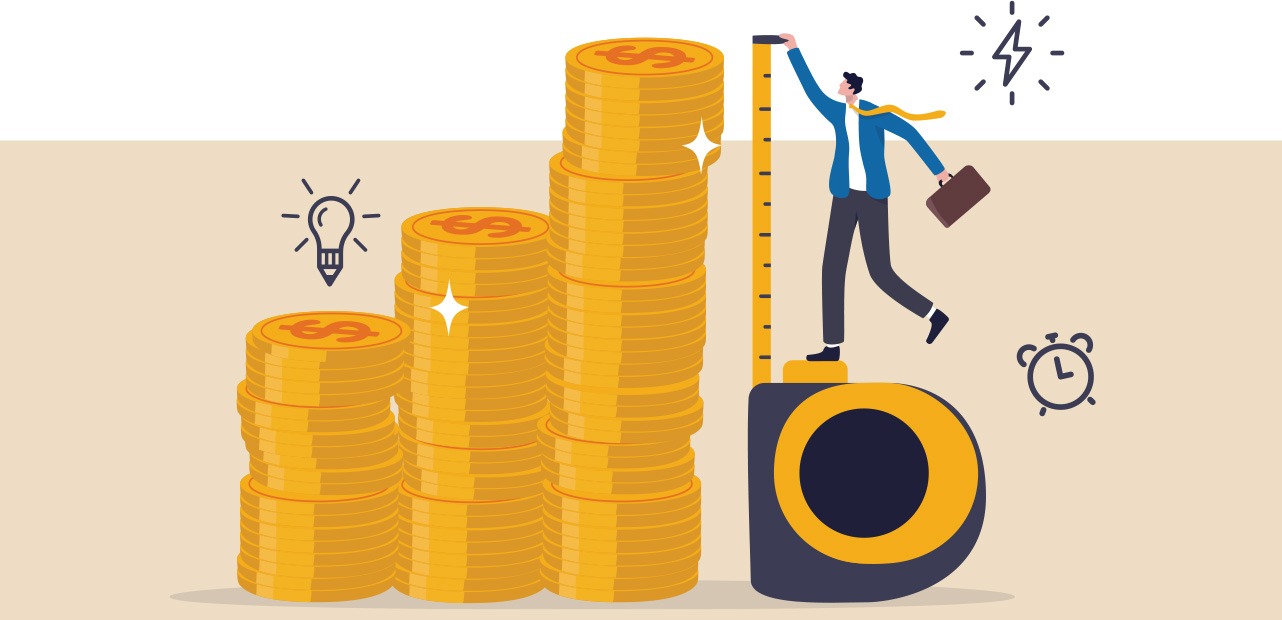
Measuring the return on investment (ROI) for a meeting or event is one of a planner’s most important jobs. But it can also be a challenge, especially when “investment” goes beyond financial costs (think time and energy), and “return” often comes through intangibles like trust built, creative ideas generated or relationships formed.
But just because ROI is challenging doesn’t mean it can be ignored—and getting it right can lead to bigger budgets down the road. “Demonstrating positive ROI elevates the event planner’s role to that of a strategic business partner,” says Jessie Whitman, senior director of planning at Convene Hospitality Group (CHG), a network of meeting and event spaces. “When planners can tie logistics and decisions directly to measurable business outcomes (e.g., increased sales pipeline or faster project completion), they gain significant influence and organizational trust.”
The key to maximizing ROI is to start discussing it early in the process and develop a plan to measure impact in multiple ways, on a short-term and long-term basis. “Start with the finish line,” says Janine Mackie, senior event strategist and head of internal events at Gainsight, a developer of customer retention software. “If you can’t state what behavior should change 90 days after the event, you’re not ready to plan it.”
Define the Objectives
When Amy Kramer, market and product innovation leader at Maritz, was trying to measure the ROI for a large show, she realized that attendees, exhibitors and organizers had different objectives.
“The exhibitors wanted to generate sales, the organizers were focused on education, and attendees aimed to learn about products, network and purchase locally,” Kramer says. “If success was judged only by sales, the event would appear unsuccessful.”
Read More: How to Slay 2026 Event Budget Busters from a Maritz Event Veteran
Kramer’s team looked beyond financial figures and found ways to measure factors aligned with each group’s goals. “By redefining ROI to reflect stakeholder behaviors and objectives, the event delivered value across all groups,” she says. “If planners are only concerned about ‘staying in budget’ or ‘reviewing surveys,’ they could be missing a huge opportunity to improve the event’s impact on experience and performance.”
In other words, planners should not think of ROI solely in dollar terms, but rather think creatively and map out a plan to capture qualitative factors such as improved engagement or productivity. “Start by defining what success looks like for the meeting you are planning,” says Spencer Brace, vice president of partnerships and ecosystem for Troop, a meeting planning and group travel logistics platform. “There are many ways to understand ROI that go beyond financial metrics. Once you know the goal, keep the way you measure it simple and consistent.”
Multiple Channels for Feedback
Post-event surveys are invaluable for understanding a meeting’s impact, but they should be just the start of the process. “Planners often stop their measurement too soon, mistakenly equating high attendance or positive immediate satisfaction scores with a return on investment,” Whitman says. “True ROI requires measuring behavioral impact. Did the content successfully lead the attendee to change a process, apply a new skill or make a different decision 30 to 90 days after the meeting? If the behavior didn’t change, the money was a cost, not an investment.”
The good news is that there are more ways than ever to measure impact, both in real time and in the weeks that follow. Recent years have seen the rise of AI-based tools that can transcribe and analyze presentations and conversations, interpret attendee flows and even use facial analysis to measure a crowd’s energy.
“If you didn’t measure it, it didn’t happen,” says Nick Borelli, marketing director at Zenus, a developer of AI-based solutions for tradeshows and other events. “The goal of events is to create change, and being able to see impressions, dwell rates, stop rates and energy unpacks the story of changed behaviors and effectiveness of your designs.”
For longer-term impact, planners can partner with sales and marketing to use their CRM platforms and other tools to gain a better understanding of how a meeting contributed to the bottom line, says Coty Adams, vice president of sales and marketing for Rockway Exhibits + Events, an Orlando-based trade show company.
“Not all ROI is immediate revenue,” Adams says. “Track deal velocity, customer retention touchpoints, expansion opportunities, brand sentiment, audience intent signals and advocacy moments. These long-tail impacts often represent the highest-value outcomes from an event.”
The most important lesson for planners is to overcome their fears and start experimenting with different approaches to using ROI to show the value you provide.
“Get started and practice,” Kramer says.
—
 Chuck Kapelke, a veteran communications professional, is a perpetually fascinated observer of human behavior; he holds a B.A. in anthropology from Harvard College.
This article appears in the January 2026 issue. You can subscribe to the magazine here.