A Smart Meetings Intelligence Report documenting the science and practical applications of competitive socializing as a business tool
What is competitive socializing, and why has it become such a popular human resources development tool for corporations large and small? The answer requires a look at science and business cases for organized fun.
The sight of a company off-site, where co-workers engage in everything from simulated racing and golfing to axe- and dart-throwing, while sharing food and beverages, may seem straightforward, but understanding its transformational business potential is easier to explain by looking at what it is not.
Read More: Golf and Socialization
Competitive socializing differs from traditional open happy hours in that it is organized and intentional. Behind the cheers and laughter is a measurable imperative to bring people together away from the office for structured interaction in a dedicated third-place venue that changes group dynamics and builds trust.
The Science of Neurological Alignment Caused by Competitive Activations
Competition changes the mental map of teams to decrease error rates and increase brain activity. A 2017 study by Michela Balconi, professor of psychophysiology at University Cattolica del Sacro Cuore and Maria E. Vanutelli, a researcher in the department of psychology at the Catholic University of Milan, published in the National Library of Medicine employed Functional Near-Infrared Spectroscopy (fNIRS) and cognitive performance to test inter-brain activity while teams engaged in competitive tasks—defined as “a social dynamic that requires a comparison between two or more subjects during an interpersonal performance.”
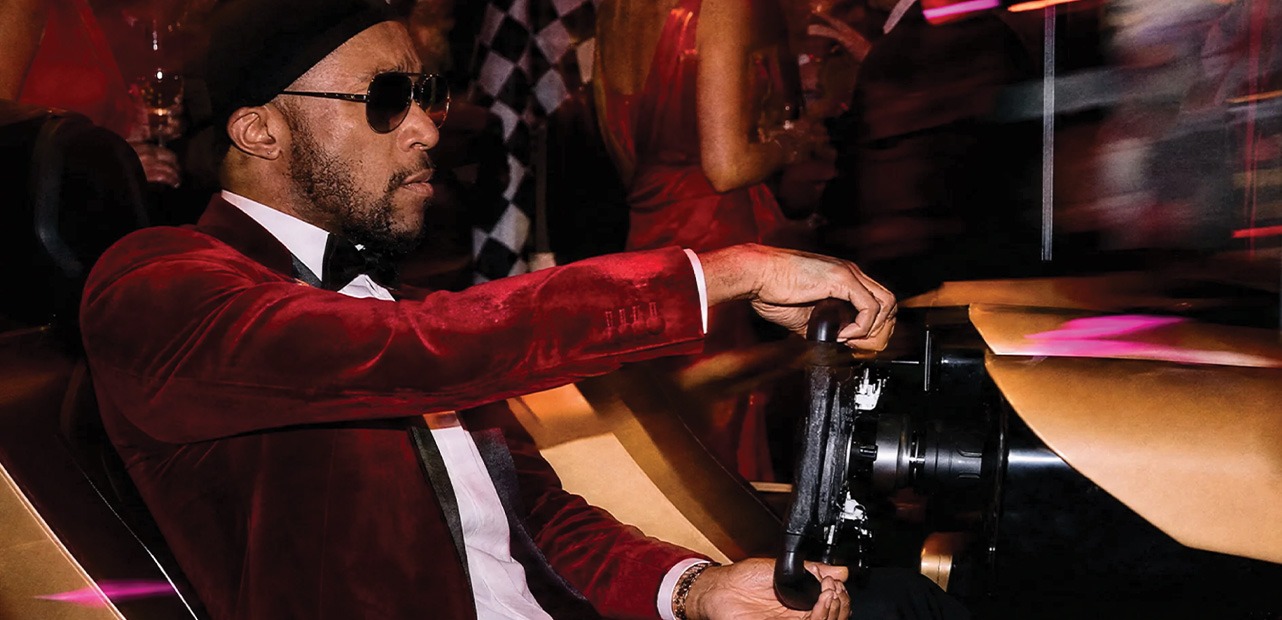
Adrenaline-provoking experiences, such as simulated racing, drive even more powerful emotions and corresponding behaviors. At the nine locations across the country of competitive adult playground F1 Arcade, for instance, teams connect with the energy and excitement of one of the most demanding physical sports on the planet to learn more about themselves and those around them. Successful performance requires communication, precision, prioritization and adaptability, all essential business skills.
“F1 Arcade is not a diversion from business objectives. It is engineered to achieve them. Competition isn’t incidental. It’s foundational to the experience,” says Shelley Williams, vice president of sales with F1 Arcade.
Event Professionals Share Real World Examples of Effective Competitive Socializing in Action
In our survey, trust, communication and collaboration were much-cited benefits of introducing healthy competition to the mix.
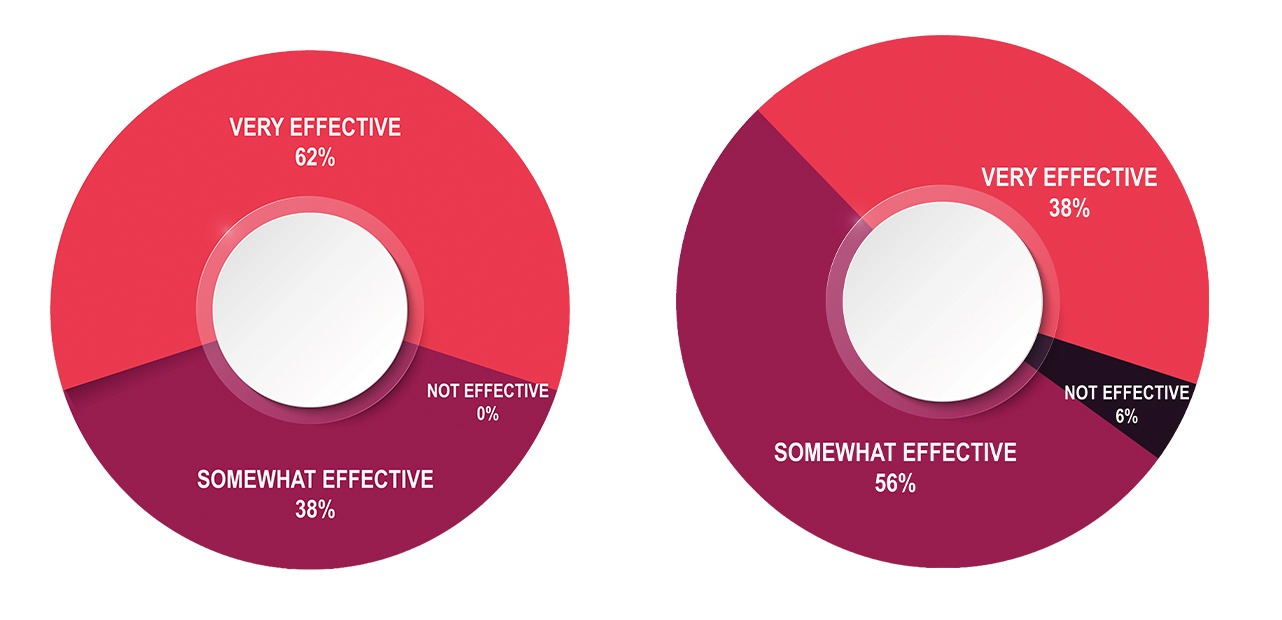
We asked event professionals about whether they were able to change team dynamics after bringing people together for immersive play and almost two-thirds said it was “very effective,” with none saying it wasn’t effective at all.
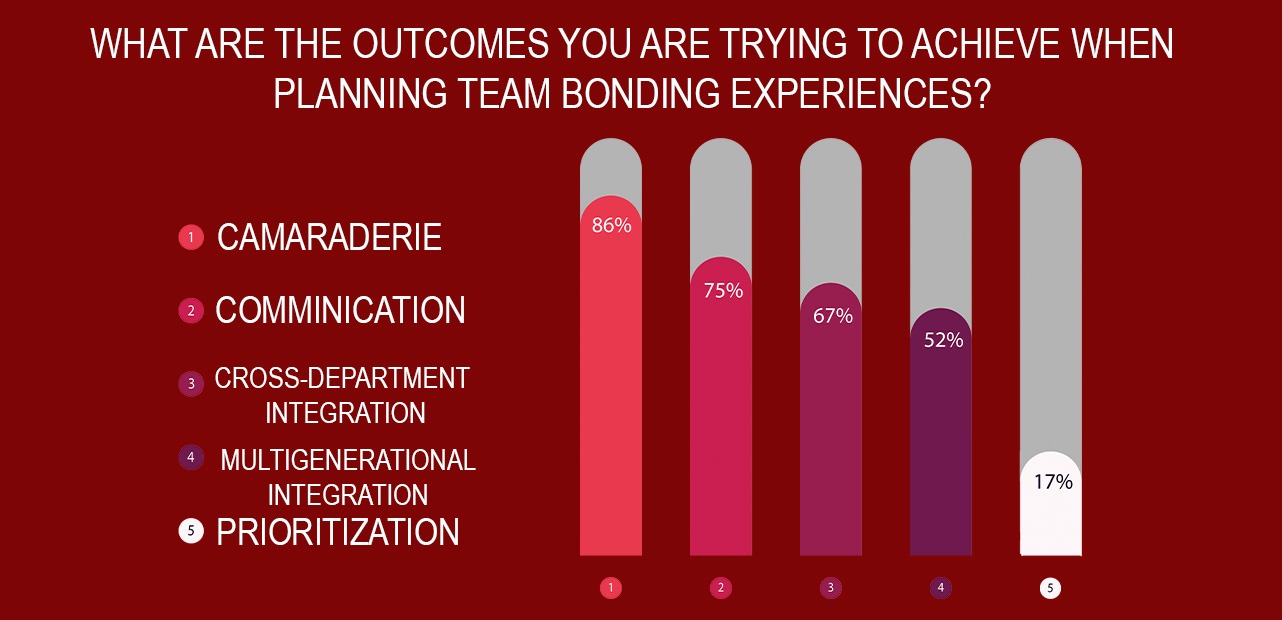
Most looked to the tool as a way to increase camaraderie (86%) and communication (75%). It was noted as particularly effective for cross-department integration, incorporating remote workers in teams and for teams with member from different generational backgrounds.
How to Measure the Effectiveness of Competitive Socializing
Bart Berkey, founder and CEO of Most People Don’t, LLC, suggests a simple, two-question survey. First, on a scale of one to 10, “How much fun did you have?” Then, ask, “What did you learn?”
He has attended a multitude of F1 Arcade activations asking these two questions and found that people don’t say, “I learned how to drive an F1 car.” Instead, they go deeper and upon reflection responded that, “I learned patience, the power of encouragement, how to stay calm under pressure, that I need to look ahead to anticipate what comes next, how to pivot quickly, the importance of overcommunicating with clear, consistent updates.”
While all of these things can be taught in a workshop, they are felt in the heat of competition and therefore internalized in a way that can have real behavioral impacts.
Methodology: Smart Meetings surveyed our community of 130,000 event professionals to ask about their experiences and report their results anecdotally and statistically. That was combined with expert interviews and research to identify best practices. The Intelligence Report was sponsored by F1 Arcade.
Back to IMEX America 2026 home page.