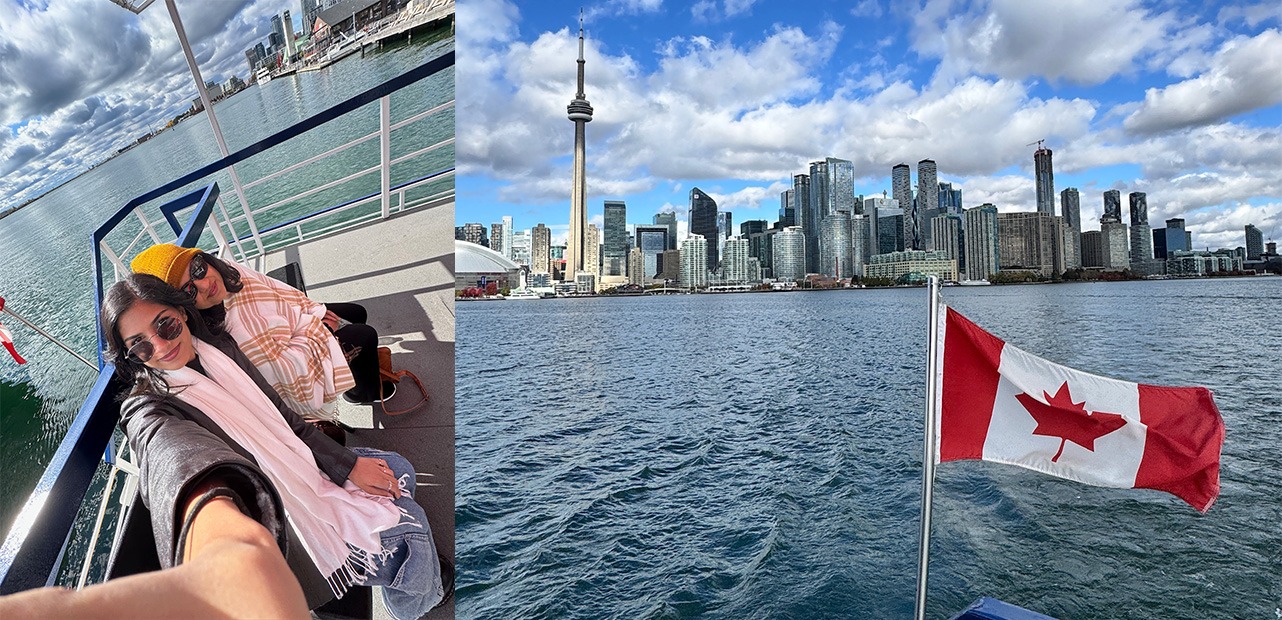
When I invited my 23-year-old daughter to join me on a reporting trip to Toronto, I assumed I would be the one teaching her. As someone who has spent years covering business travel and conferences, I thought the trip would give her a glimpse into how the professional world operates: packed schedules, networking receptions, early-morning panels and the constant balancing act of work on the road.
Instead, it gave me a lesson in how a younger generation approaches work, travel and productivity. That perspective matters because Gen Z now accounts for more than a quarter of the global workforce and is increasingly intentional about how it works, whether in the office or on the road.
The lesson began during the planning process. As we built the itinerary together, my daughter was highly selective about the options provided by our host Destination Toronto. Instead of simply plugging in conference sessions and industry meetings, she started asking a different set of questions: What experiences would help us understand the city itself? Where could we incorporate wellness? What would make the trip sustainable and meaningful rather than just productive?
Read More: Gen Z Has Entered the Building
At first, I treated these ideas as “extras”—nice additions if time allowed after the work was done. In my version of attending meetings and events, productivity meant maximizing conference sessions. Cultural experiences were something you squeezed in between those obligations.
Managing Disruptions Differently

That contrast surfaced again sooner than expected, in a different way entirely. My preference for structured schedules was challenged when an unexpected medical issue threatened to derail my attendance at the Wellbeing at Work Canada Summit.
On the third day of our trip, I woke up with a painful red eye, and began calling clinics to see if anyone would accept a patient without Canadian insurance. By 7 a.m., I was already in an Uber headed to the first location I could find. When I arrived, I learned it was a private clinic with a two-week waitlist, leaving me back at square one.
Meanwhile, my daughter was back at the hotel. Instead of continuing the trial-and-error approach I had defaulted to, she took a more structured, digital-first approach. She methodically researched clinics that accepted out-of-pocket payments from U.S. visitors, mapped nearby pharmacies, verified locations with our concierge at Soho Hotel Toronto, and secured an appointment at another clinic.
By lunchtime, I was walking into the cornerstone conference I thought I would miss entirely. She had quietly saved the day, without her ever leaving her room.
Even with my vision still blurry, the rest of my evening meetings went ahead. While I focused on conversations, she used an AI transcription tool to capture and summarize discussions, instead of my usual reliance on scribbled notes.
Redefining Productivity
The contrasts extended beyond our experiences and into how the industry itself is evolving. The meetings and events industry is already responding to these generational shifts, with planners increasingly rethinking how experiences are designed.
“Breakouts and choice are key,” reflects Hailey Dawood, Owner & Chief Huntress at The Idea Hunter. “Instead of unstructured mingling, I love using structured connection experiences like Brain Dates, where attendees are pre-set to meet specific people based on shared interests or goals. Or, when they can pick a ‘Recharge Session.’ Think sound baths, mindful stretching, or quiet journaling corners—all presented alongside other breakout options like workshops or tastings. When guests can choose these moments intentionally, it reframes wellness as a legitimate, valuable part of the event, not an ‘escape’ from it.”
“That said, we’re still designing across generations,” she continues. “From what I’ve seen, younger audiences tend to seek these wellness-driven moments more naturally, while older generations may not prioritize them yet. My prediction is that within the next decade—as millennials and Gen Z take on more leadership roles—this approach will become the norm.”
Beyond the Conference Agenda

That mindset became increasingly apparent throughout our business trip. My daughter insisted that exploring Toronto’s diverse neighborhoods through local cuisine with food and travel storyteller Aashim Eats, spending wellness time at the Othership and experiencing outdoor spaces at Evergreen Brick Works was every bit as valuable as attending industry meetings and events.
Her perspective reflects a broader trend among Gen Z, who view well-being, mental health and work-life balance as integral to professional success, not separate from it. Concerns about burnout and stress, for example, are cited by nearly 50% of Gen Z respondents in a recent Deloitte survey.
For my daughter, productivity wasn’t only measured by the number of sessions attended. Watching her integrate technology, wellness, moments of connection, cultural exploration and sustainability into the schedule made me rethink how both business travel and meetings and events could evolve.
Perhaps the real lesson wasn’t about the conference agenda at all, but about recognizing that belonging and value can look different across generations. The most effective meetings create space for different definitions of a meaningful experience.
—
Durrani is a freelance content strategist and writer with more than 20 years of experience in crafting high-impact marketing and educational materials and strategic content across various industries.
She specializes in distilling complex concepts into clear, engaging narratives that deeply resonate with specific audiences—a skill that has led to my articles being frequently featured on magazine covers due to their exceptional quality.
She writes regularly for Business Travel Executive, a leading educational multi-media content provider totally dedicated to serving the complex information needs of high-volume corporate travel buyers in North America.