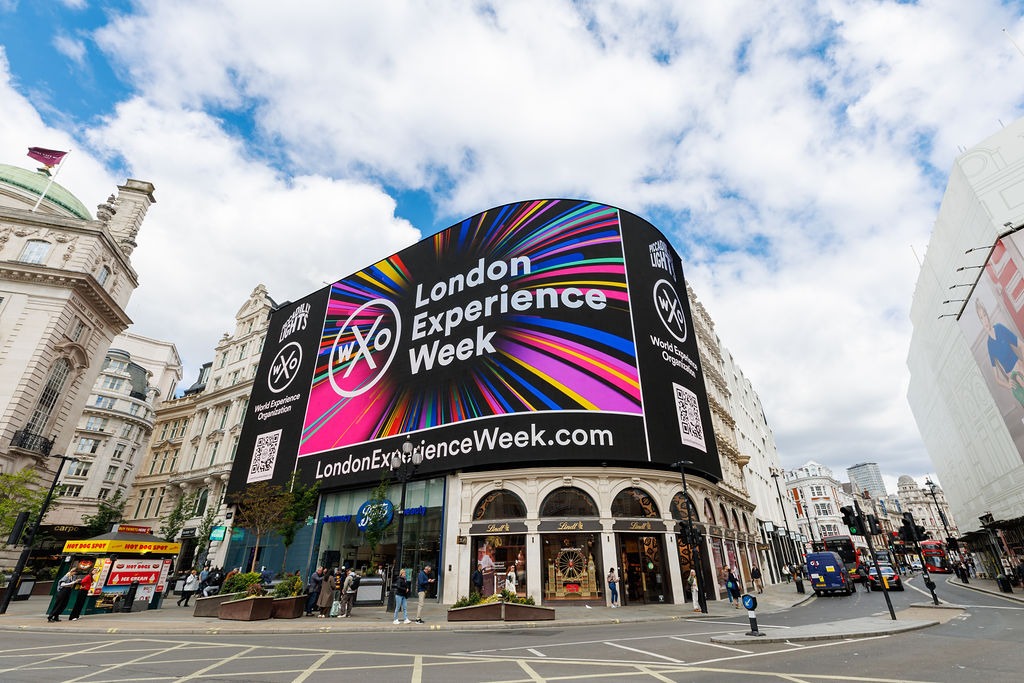
London Experience Week’s immersive design is built to encourage participation. With ABBA Voyage, a hyper realistic experience of the classic band, and The Traitors: Live Experience, based on the competition series where contestants work together to complete missions while secretly trying to identify “traitors” embedded within the group, the week engaged its participants with memorable experiences.
London has long been a global powerhouse for meetings and events, but London Experience Week reframes the city as something more dynamic: a laboratory for immersive design. Rather than a traditional single-venue conference, the program unfolds across multiple touchpoints, anchored in part at Ministry of Sound and extending throughout the city via curated, hands-on experiences.
That structure alone offers a meaningful takeaway for planners. By decentralizing the agenda and embedding attendees into different environments, London Experience Week mirrors how people naturally explore and engage with a destination. It also taps into a key psychological principle: Novelty increases attention and memory retention. When participants move through varied settings, each with its own sensory cues and energy, they are more likely to stay present, absorb information and form lasting impressions.
At its core, the week is designed around participation, not observation. For planners, it is a reminder that content does not need to be confined to ballrooms to be effective. In fact, changing context can be one of the most powerful tools for sparking creativity and connection.
Designing for Emotional Connection
Attending ABBA Voyage offered an example of emotional synchronization at scale. The experience uses hyper-realistic digital avatars of the band alongside a live ensemble, but what truly sets it apart is how it unifies the audience. Familiar songs trigger nostalgia, which neuroscience links to dopamine release and a heightened sense of social bonding. As the crowd sings along, often with strangers, barriers dissolve. That shared emotional high creates what psychologists call “collective effervescence,” a feeling of unity that strengthens group cohesion.
Read more: The Magic of Collective Effervescence
For meeting planners, this means designing for shared emotional peaks can accelerate connection among attendees, and creating opportunities for audiences to feel something together often leaves a more lasting impression than even the most polished programming.
The Power of Play (and Pressure)
On the other end of the spectrum, The Traitors: Live Experience (inspired by The Traitors, the hit competition series where contestants work together to complete missions while secretly trying to identify “traitors” embedded within the group) leans into cognitive tension and social dynamics by assembling participants into teams tasked with completing challenges while uncovering who among them may be working against the group. The brilliance lies in its use of uncertainty. Not knowing who to trust activates critical thinking and sharpens observation, while time constraints and competition heighten engagement and keep energy levels high.
From a psychological standpoint, the experience draws on concepts like game theory and social deduction, with participants reading cues, communicating strategically and adapting quickly. It also introduces mild stress in a controlled environment, which research shows can enhance focus and collaboration when managed effectively.
This translates into a powerful approach to team building. Activities that incorporate clear goals, ambiguity and stakes—while keeping it light and fun—can unlock more authentic interaction. Rather than scripted exercises, these environments encourage participants to reveal how they think, lead and collaborate under pressure.
From Inspiration to Application
What ties these experiences, and London Experience Week as a whole, together is intentional design rooted in human behavior. Every moment considers how people engage: when they are likely to connect, what will spark curiosity and how to sustain energy over time.
The takeaway is not to replicate these experiences outright, but to borrow the principles behind them. Vary the environment. Introduce elements of surprise and participation. And above all, create space for attendees to be active contributors, not passive observers.