America’s iconic highway is turning 100, and it’s not too late to hitch a ride
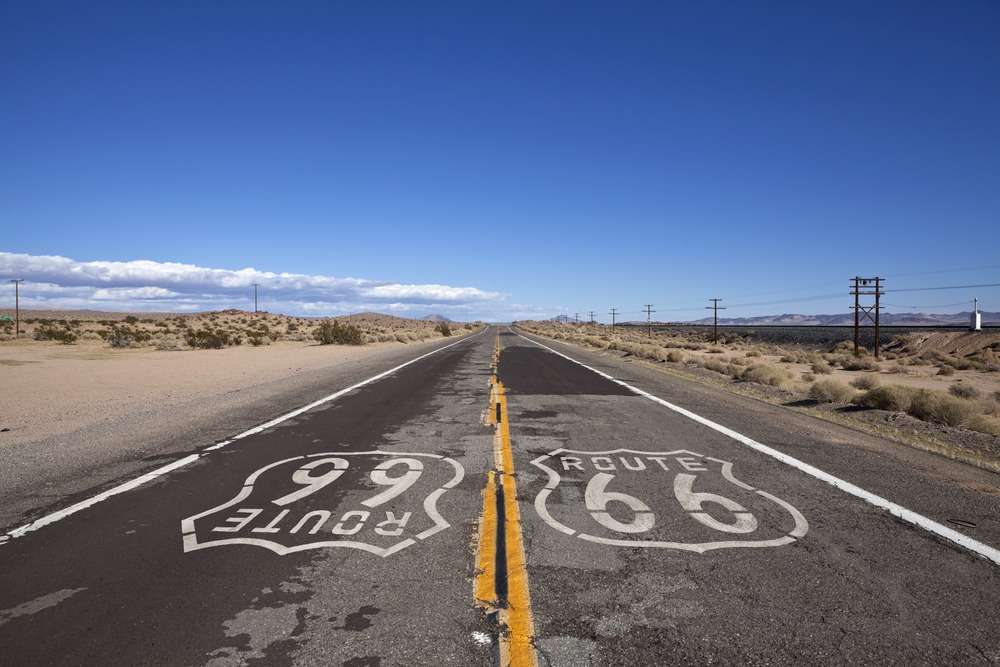
U.S. Route 66. The Mother Road, as John Steinbeck named it in The Grapes of Wrath, was opened Nov. 11, 1926, as part of the original U.S. highway system. It stretched 2,448 miles from Chicago to Santa Monica, California. The hit song later written about it has been sung by everyone from Nat King Cole to Willie Nelson. Books, movies and TV shows have exalted it as an avatar of adventure, freedom, nostalgia for the open road and hunger for endless possibilities. Although officially decommissioned in 1985, all but a sliver of the original roadbed remains drivable today, and it looms as large as ever in the American imagination. Celebrations of its centennial will take place across the highway’s entire length. Here are 66 reasons for meeting on the Mother Road in 2026.
13 Things to Know About Its History
- Not All of It Was Paved. In 1926, only about a third of the official highway was paved; the rest was dirt, gravel or wooden planks. It was not fully paved until 1938.
- There Were No Chain Hotels, at Least at First. Today’s hotel brands didn’t really exist in 1926, though Conrad Hilton’s first venture, a 40-room hotel in Cisco, Texas, debuted in 1919 on a road that would later become part of Route 66.
- Motels Had Just Been Invented. The mashup of “motor” and “hotel,” was coined in 1925 in San Luis Obispo, California. Motorists of that era would more likely have called them auto courts or motor hotels.
- The Heyday Lasted Less Than 20 Years. The late 1940s to the 1960s were the real glory years, spurred by newly abundant pavement, many more cars on the roads and American wanderlust after years of rationing and war.
- Amenities Like Indoor Toilets Wowed Travelers. Early motels advertised conveniences many people didn’t have at home yet, like flush toilets, fitted carpeting and carports; then, later, in-room TVs and air-conditioning.
- People of Color Were Resourceful. Jim Crow laws were still in force along much of Route 66 until the 1960s, especially in “sundowner towns,” where people of color were not permitted after dark. Black travelers relied on The Negro Motorist Green-Book—published from 1936 to 1964—which listed where they could safely go.
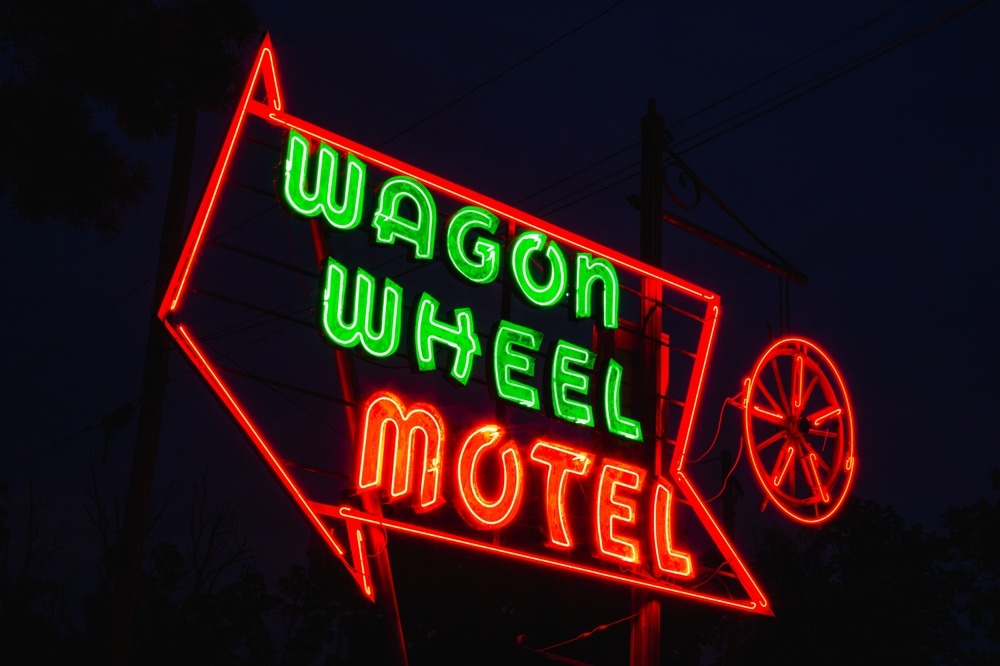
- The Oldest Surviving Motel Dates to 1935. The Wagon Wheel Motel in Cuba, Missouri, bills itself as the “oldest continuously operated motel on Route 66.” Locally owned, its 14 Ozark stone cabins still exist with modern touches.
- Elvis Slept Here. Listed on the National Register and joined the Best Western group in 1948. Elvis stayed there in 1956, and his room is themed to the King.
- Clark Gable & Mickey Mantle Slept Here, Too—But Not Together. In 1939, Boot Court in Carthage, Missouri, opened with a boast of a “Radio in Every Room.” That attracted Clark Gable in 1942 (he even returned in 1947). Other VIP guests include Mickey Mantle and Gene Autry.
- After the Interstates Arrived, All Exits Looked the Same. The coming of the interstate highways in the late 1950s was a boon for faster, if more boring, travel but a disaster for Route 66 businesses and towns bypassed by the new freeways. Many motel and restaurant closures ensued.
- Motels Overcame Their Seedy Rep of the 1970s. A stock market plunge, gas rationing, high inflation and unemployment in the mid-1970s degraded Route 66 motel culture. Motels were dissed as crash pads for unsavory behaviors. But loyalists and intrepid travelers kept many alive.
- When Decommissioned, Route 66 Really Began to Revive. Route 66 nostalgia was actually spurred by its decommission in 1985. Highway adventurers from around the world began cruising its two-lane blacktop in search of a simpler, more quintessential America.
- Restoration Continues. The centennial celebration would not have happened without the advocacy, tourism and preservation groups that promote and protect the history and remaining roadside attractions. The National Park Service, in particular, has funded preservation projects.
“Route 66 nostalgia was actually spurred by its decommission in 1985. Highway adventurers from around the world began exiting the freeways onto its two-lane blacktop in search of a simpler, more quintessential Americana.”
11 Quirky Roadside Attractions
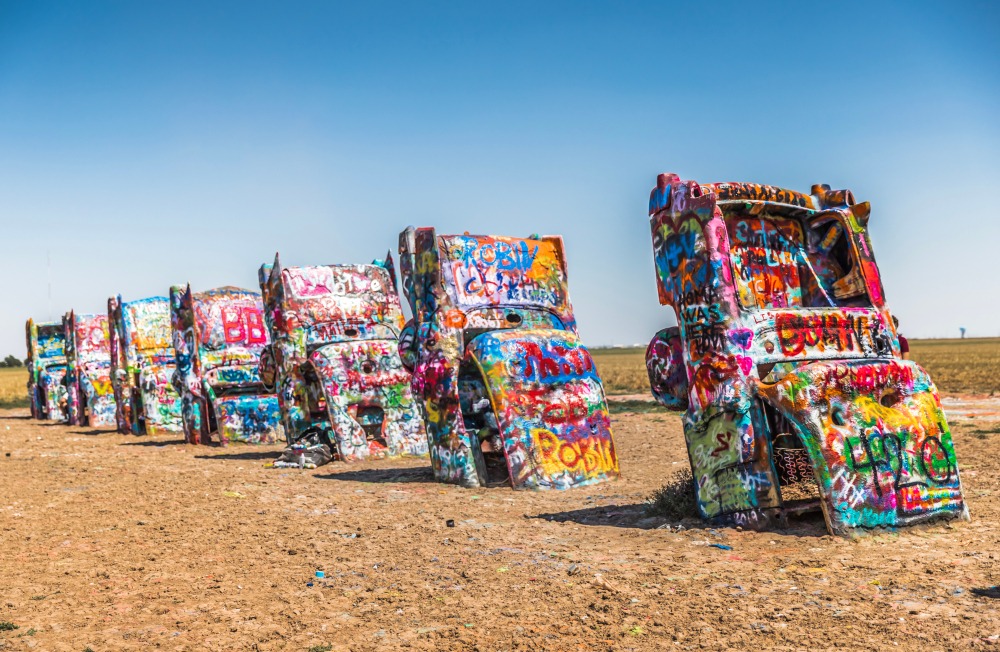
- Cadillac Ranch. Among the country’s most famous art installations, this row of half-buried Cadillacs is in Amarillo, Texas.
- Grand Canyon Caverns. Discovered by a would-be gold miner in 1927 near Peach Springs, Arizona, they are among the largest dry caverns in the United States and are accessible by elevator.
- Jack Rabbit Trading Post. A venerable landmark in Joseph City, Arizona, its billboard proclaims, “Here It Is.”
- Wigwam Motels. Two of the seven motor courts built in the 1930s and 1940s with concrete guest quarters shaped like Native American teepees remain open—in Holbrook, Arizona, and San Bernardino, California.
- Ed Galloway’s Totem Pole Park. Home to the world’s largest concrete totem pole and other totems in Foyil, Oklahoma.
- World’s Largest Catsup Bottle. The 170-foot-tall bottle in Collinsville, Illinois, is empty but impressive (no giant French fries lurk nearby).
- Milk Bottle Grocery. A historic grocery topped with a giant milk bottle in Oklahoma City, Oklahoma.
- Red Garter Inn. In Williams, Arizona, this infamous lodging is a beautifully restored 1897 bordello.
- Blue Whale of Catoosa. An 80-foot-long concrete whale built as a swimming hole awaits in Oklahoma.
- Conoco Tower Station. You can’t miss the Art Deco-themed gas station with its towering flared roofs in Shamrock, Texas.
- World’s Second-largest Rocking Chair. Though eclipsed by a competitor in Illinois, this one in Fanning, Missouri, is really big at 42 feet high.
12 Historic Meetings Hotels
- Congress Plaza Hotel & Convention Center (Chicago). Built in 1893 for the World Columbian Exposition, it’s at the historic start of Route 66 on South Michigan Avenue.
- Route 66 Hotel & Conference Center (Springfield, Illinois). It was once the first Holiday Inn on Route 66.
- St. Louis Union Station Hotel, Curio Collection by Hilton. Though in an iconic train station, it sits in the heart of the city’s historic Route 66 corridor.
- The Mayo Hotel (Tulsa, Oklahoma). The guest book of this 1925 Art Deco landmark in Tulsa’s historic district lists many famous and well-to-do.
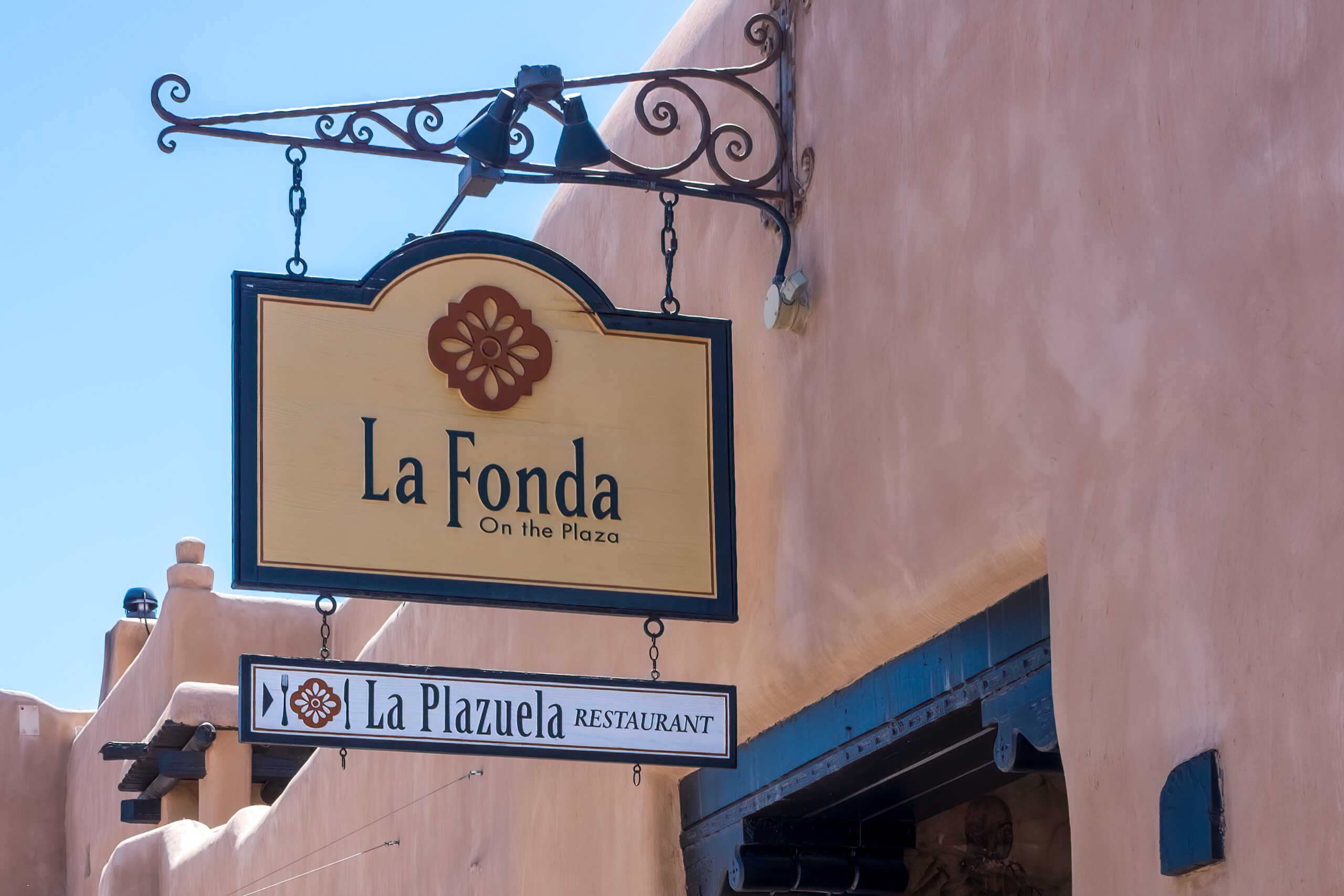
- La Fonda on the Plaza (Santa Fe, New Mexico). Route 66 only ran through Santa Fe until 1937, but you won’t go wrong choosing this beautiful Pueblo Revival property.
- Hotel Andaluz Albuquerque, Curio Collection by Hilton (New Mexico). This elegant hotel, built by Conrad Hilton in 1939, was New Mexico’s first high-rise (at 10 floors).
- El Rancho Hotel (Gallup, New Mexico). Opened in 1937, it feels like a Western ranch and has Native American art and artifacts.
- La Posada Hotel (Winslow, Arizona). Originally a Fred Harvey hotel built for railway travelers, it’s a Southwestern-style masterwork that has been returned to elegance.
- Weatherford Hotel (Flagstaff, Arizona). Just off Route 66, its numerous famous guests include Western writer Zane Grey, who wrote some of his best stories there.
- Historic Grand Canyon Hotel (Williams, Arizona). It was Northern Arizona’s first hotel, dating to 1891, and is the state’s longest-lasting.
- The Georgian Hotel (Santa Monica, California). This Ocean Avenue beauty retains its luxe 1930s vibe and is revered for its Romanesque Revival and Art Deco architecture.
- Fairmont Miramar Hotel & Bungalows (Santa Monica, California). Actress Greta Garbo lodged there, and it was the private home of King Camp Gillette of safety razor fame.
10 Centennial Events
- Jan. 3: Santa Monica. Drive Home VII: Route 66—A Century of Adventure is billed as a “massive caravan of vintage vehicles that will trace the entire span of Route 66 to kick off the centennial year.” It reaches Chicago on Jan. 12.
- March 7: Amboy, California. The Route 66 Cruisin’ Car Show is touted as the first (of many) car shows for the centennial. It will be hosted by Roy’s Motel & Cafe, a space-age-style landmark.
- April 30: Springfield, Missouri. This is the host city for the national kick-off event. A concert with A-list entertainers will be livestreamed, with cut-ins from Route 66 cities across the U.S. April 30, 1926, is when a telegram was sent from Springfield to Washington, D.C., asking that the new transcontinental road be named Route 66.
- April 30–May 5: St. Louis. The Route 66 100th Anniversary Festival will be centered at the Missouri History Museum, with concerts, car displays, a 6.6-mile bike ride, documentary screenings and other activities.
- May 30: Tulsa, Oklahoma. Tulsa’s Route 66 Capital Cruise aims to number 3,000 classic cars, the largest such cruise ever—and will parade along 5.5 miles of Route 66 within city limits.
- June 4–13: Amarillo, Texas. The Texas Route 66 Festival in the Texas Panhandle culminates in Amarillo’s Historic Route 66 District.
- June–November: Albuquerque, New Mexico. Albuquerque Museum hosts a major Route 66 exhibit featuring local stories, artifacts, historical maps and memorabilia.
- June 6, 2026: Flagstaff, Arizona. The Flagstaff Route 66 Centennial Celebration will mount a festival in “the only 7,000-foot elevation, pine-fresh, dark-sky city on the Mother Road.”
- Sept. 25–27: Springfield, Illinois. The city’s annual International Route 66 Mother Road Festival will pay special tribute to the centennial.
- November 2026: Pasadena, California. Known as Pasadena’s “other” parade, the oddball Doo Dah will salute the Mother Road, replete with hilarious costumes and eclectic music.
10 Reasons to Get in on the Fun
- The Neon. Second only to Las Vegas, Route 66 is celebrated for roadside neon—like the 60-foot cowboy at the Big Texan Steak Ranch in Amarillo; a blue swallow at the eponymous motel in Tucumcari, New Mexico; a giant camel outside the Motel Safari in Tucumcari; and a 66-foot-tall soda bottle at Pops 66 in Arcadia, Oklahoma.
- Vintage Diners. Among the many to scratch your retro itch are Delgadillo’s Snow Cap Drive-In (Seligman, Arizona); Red’s Giant Hamburg (Springfield, Missouri), the world’s first drive-through restaurant; Cruiser’s Cafe 66 (Williams, Arizona) in a 1930s gas station; and Ariston Cafe (Litchfield, Illinois), continually operated since 1924.
- Classic Motels. Especially memorable are the El Vado in Albuquerque, opened in 1937 and lovingly restored, and the Blue Swallow in Tucumcari, a perfectly preserved, National Register-listed motor lodge.
- A Night in Tucumcari. This town of 5,058 is a virtual shrine to Route 66 motels, still boasting over 1,000 rooms and a vintage arts scene.
- Hollywood Buzz—Then and Now. From El Rancho Hotel in Gallup’s Westerns to Cars and Easy Rider, Route 66 remains iconic onscreen.
- The Museum with a Fabled Past. Barstow Mother Road Museum in California keeps the golden age of travel alive.
- Small-town America. Family-owned businesses are still the heart of the highway.
- Authentic Regional Food. Green chile burgers, flaky pies, Ugly Crust Pie—local flavor rules.
- Instaworthy Landscapes. Devil’s Elbow Bridge, Tucumcari Mountain, and the Grand Canyon await.
- Reliving American History. From Dust Bowl migration to postwar boom, Route 66 is America’s artery.
10 Best Things Ever Said About It
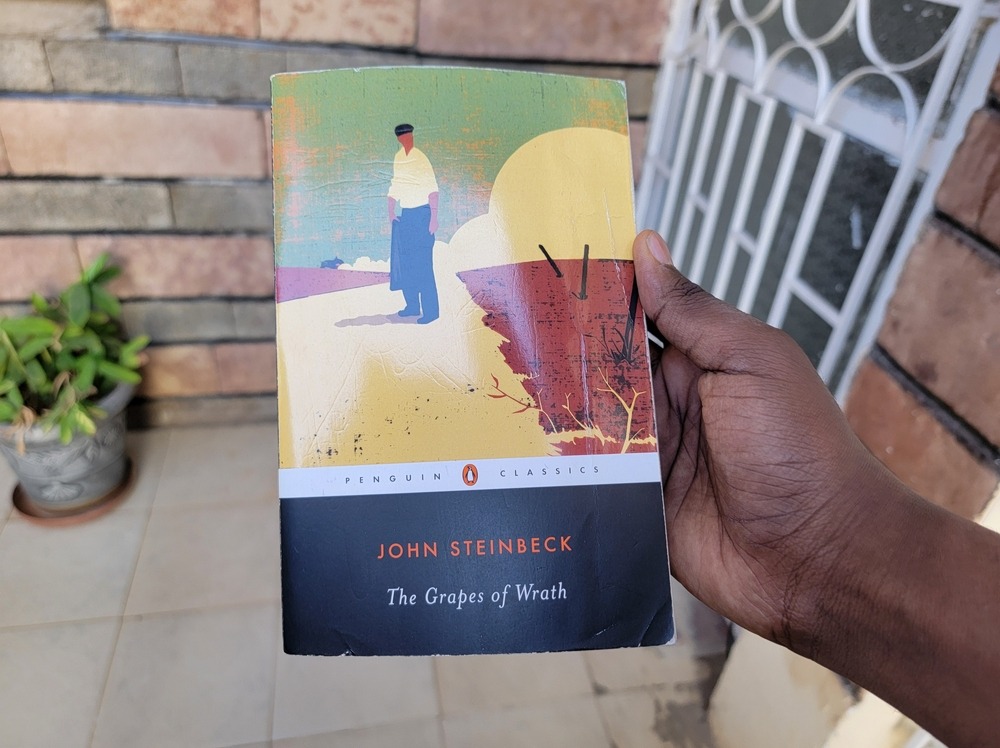
- John Steinbeck, The Grapes of Wrath.
“The long concrete path across the country, waving gently up and down on the map, from Mississippi to Bakersfield—over the red lands and the grey lands, twisting up into the mountains, crossing the Divide and down into the bright and terrible desert, and across the desert to the mountains again, and into the rich California valleys…. 66 is the mother road, the road of flight.” - Michael Zadoorian, The Leisure Seeker.
“What I do love about this road is how the gaudy becomes grand, how tastelessness is a way of everyday life.” - Bobby Troup, “(Get Your Kicks on) Route 66.”
“If you ever plan to motor west/ Travel my way, take the highway that is best/ Get your kicks on Route 66.” - National Park Service.
“Route 66 has come to symbolize hope, progress and the spirit of adventure.” - Michael Wallis, Route 66: The Mother Road.
“Improvement makes straight roads, but crooked roads without improvement are roads of genius. Route 66 is such a road.” - 1950s plaques naming it Will Rogers Highway.
“This Main Street of America, Highway 66, was the first road he traveled in a career that led him straight to the hearts of his countrymen.” - The Eagles, “Take It Easy.”
“Well, I’m a-standing on a corner in Winslow, Arizona/ And such a fine sight to see/ It’s a girl, my Lord, in a flatbed Ford/ Slowin’ down to take a look at me.” - Sally Carrera, a character in Cars.
“Cars didn’t drive on it to make great time. They drove on it to have a great time.” - John Lasseter, film director.
“The spirit of Route 66 is in the details: every scratch on a fender, every curl of paint on a weathered billboard, every blade of grass growing up through a cracked street.” - Michael Wallis, author known as ‘The Voice of Route 66.’
“Life begins at the off-ramp.”
This article appears in the November 2025 issue. You can subscribe to the magazine here.