How experiential pioneers are redefining what meetings can be
It’s the word on everyone’s lips. “Experiential” has become a catch-all for anything splashy, shiny or pinned to an Instagram grid. But for the agencies actually pioneering the practice, it’s something far more powerful: designing moments that inspire people, creating authentic connections that last longer than a keynote and delivering measurable ROI that justifies every dollar of spend.
To cut through the buzz, I asked leaders from three of the industry’s most innovative agencies—Aaron Levinthal, chief experiential officer at MAS; Robyn Henry, vice president of project delivery at TAIT; and Scott Kellner, senior vice president and global head of marketing at George P. Johnson (GPJ)—to define experiential in their own terms. From jacket patch bars to Polaroid-produced poems, their examples prove that experiential is no longer a nice-to-have. It’s the new foundation for both internal alignment and external brand loyalty, and the smartest planners are already putting it to work.
The Heart of Experiential
With the term “experiential” popping up left and right across the industry, I first wanted key players to define the word themselves. Levinthal of MAS said, “We see experiential as crafting emotional connections between people and brands—connections that linger long after the event. That almost always means interaction. It’s about participation, not just viewing. If attendees leave still thinking about the experience days later, we’ve done our job.”
Levinthal pointed to a big shift away from “stand and deliver” content. “In today’s B2B environment, that’s not enough. You have to mix in other experiences and interactions, so people feel connected to the whole,” he said.
Henry of TAIT shares the sentiment: “There are so many misconceptions about experiential. Some people think it’s gimmicky, while others see it as too highbrow or inaccessible. But at its core, it’s about creating a moment that someone walks away from saying, ‘Wow, that’s the coolest thing I’ve ever experienced.’ We call it ‘creating moments that move people.’ That really is the definition.”
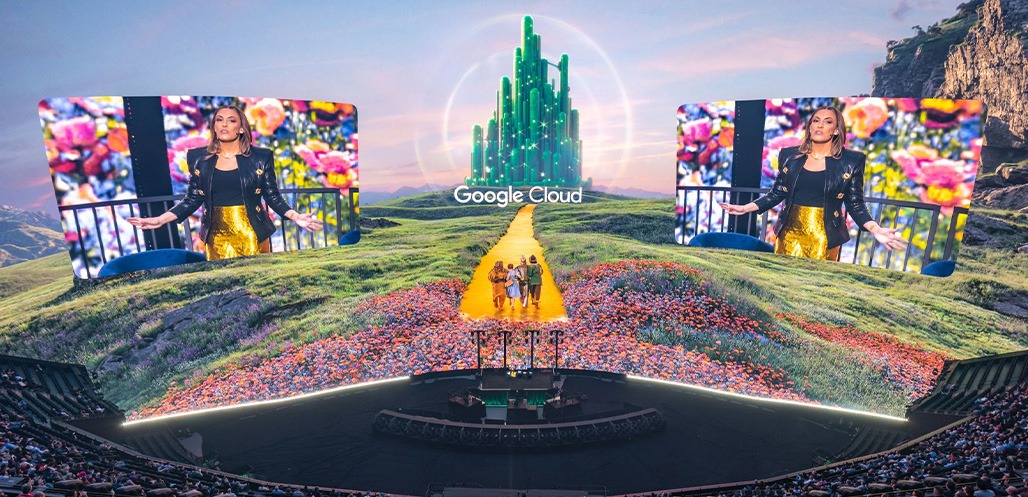
Kellner noted that GPJ’s history of massive exhibitions for World Fairs and auto shows set them up for success once experiential events became more widespread. “That idea—that face-to-face relationships established at real-life experiences could be as or more powerful than Madison Avenue’s offerings—was firmly embraced. For GPJ’s clients, many of whom have been in partnership with us for several decades, experiential is their marketing.… More and more brands are going to see some version of experience marketing as their primary strategy very soon.” In other words, experiential isn’t the future—it is very much the now.
From Buy-in to Belief
Henry’s argument for incorporating experiential elements into internal meetings and events is clear: “The value is huge. If you can’t get your employees to buy into what you’re selling, how can you expect the public to? Employees are consumers of their own brand,” she said, pointing to a smashing success with an entertainment-industry client’s internal conference to roll out a refreshed vision and create alignment. While the details of the event are guarded for the client’s privacy, Henry was able to share the impact experiential planning had on attendees. “Everyone brought the best toys in their toy box. It was like Christmas—seasoned SVPs sitting there with jaws on the floor as they saw new projects revealed for the first time. They completely bought in. And once they could talk about it publicly, they were shouting it from the rooftops. That’s the kind of internal inspiration that fuels external success,” she said.
Kellner spoke of what can happen after an internal team is ready to go public with all of that excitement: “Some of the most dynamic brands of the 21st century view experiential as existential. They know that in a cacophonous marketplace, simply adding to the noise is foolish. They know that establishing a relationship built on human trust is vital. And they know that the experiences they produce, properly executed, can become content studios driving elements of the rest of their marketing.”
Customized Connections
It’s no secret that personalization has become a key element in everything from luxury to hard data. By activating experiential elements, planners can take personalization from standard to supersonic.
Levinthal pointed to an event that was particularly impactful thanks to personalization aided by AI via Polaroid cameras: “What would come out wasn’t a photo. It was a poem the AI model created about the photo. People were going crazy over it, and they all left with them. We didn’t find one of those Polaroids in the garbage or on the floor.” What more direct (and inescapable) way to analyze the success of ideas made into reality than by checking the trash bins?
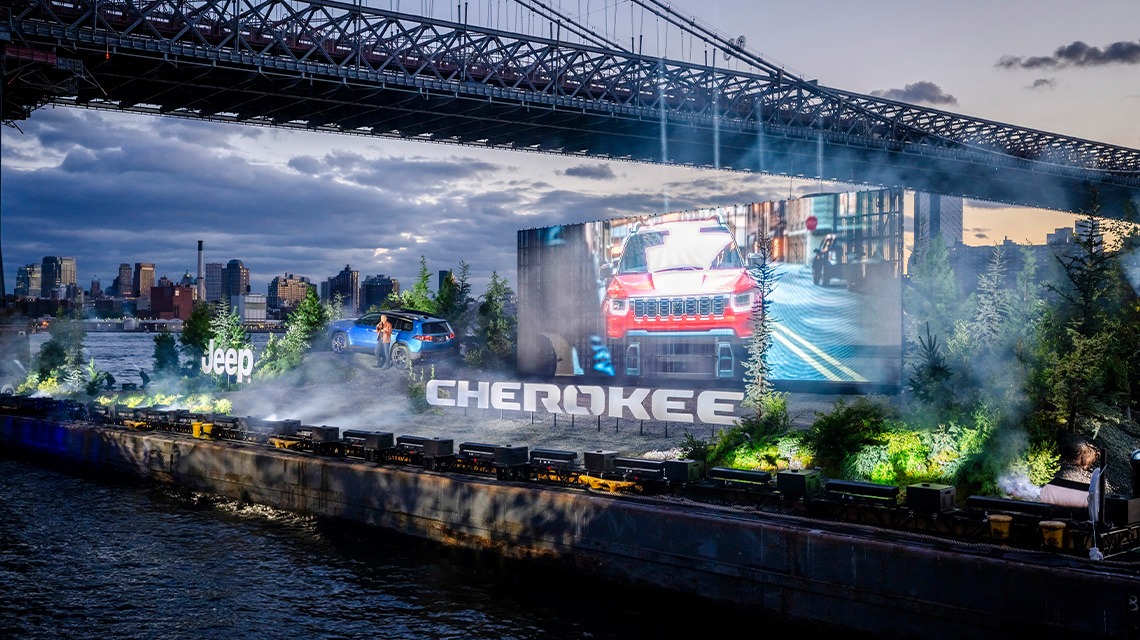
And don’t think experiential elements are limited to in-person events. For CrowdStrike’s B2B conference during the Covid pandemic, MAS found a creative way for attendees to lock in not just willingly, but eagerly. “CrowdStrike was big into car racing, so we set up a full-blown racetrack in a studio in Brooklyn with remote-control cars to race the track from home. We brought in the top racing celebs to call the races…We were showing the pit where people were working on the little cars, and people raced for two days until the final. People loved it,” said Levinthal.
Henry encourages planners looking to maximize personalization to get the ball rolling as soon as possible, as lead time is essential to success. Whether it’s hand-delivered invitations or on-site customization stations for sneakers, hats or bags, tasks like booking talent and ordering materials need to happen well in advance. If you’re thinking examples like this are out of your budget, Henry has some advice: “Decide how many touch points you want. If the budget is limited, focus on one thoughtful moment—like a concierge greeting each attendee by name and handing them a personalized itinerary. It’s simple, but it feels special and intentional.”
Proving the Payoff
Depending on what a planner is looking to achieve, investing in experiential can translate to increased spend. Levinthal pointed out that it’s a consistent concern he gets from meeting professionals—and one that often comes with doubt regarding ROI. “That is something we hear all the time. It’s just not true,” he said. Now, with the addition of AI, factors such as the length of time attendees spend at each activation become much more quantifiable. When coupled with existing metrics, such as website traffic post-event and whether Q&A sessions go overtime, planners can present a strong case for incorporating experiential elements into their next meeting.
Kellner emphasized what experiential agencies can offer to planners looking to maximize investment. “Agencies that are truly full service will have a vertically integrated structure featuring distinct specialty practices for experience strategy, event portfolio management, creative and content production capabilities, creative technology consulting and production, integrated experience production and measurement/analytics. Obviously, that’s not for everyone, but when, as a brand, you’ve made the decision to make experience marketing a significant part of your budget, you need a full-service agency, particularly if you represent a global brand.” In other words, an agency’s impact reaches far beyond pre-planning and day-of delivery, and that value can’t be overemphasized when presenting budgets to decision-makers.
Authenticity Isn’t Formulaic
All three experts share the opinion that attendees are tired of the same old, same old. “It used to be about paying a million dollars for a celeb to show up. But if it’s not the right fit, it feels out of place. Everyone needs to bring something to the experience,” said Levinthal.
Henry seconded, “It’s not about what you’ve already seen out there. The whole point is that we don’t want you to have the same event every other brand has had. It has to feel authentic.” The more data, insight and pre-planning provided to an agency, the more genuinely connected attendees feel at an experiential event. Planners are encouraged to think beyond the expected and ask themselves what a win looks like.
Kellner noted that authenticity doesn’t need to call attention to itself—often, it is quite the opposite. “With experiential marketing, you’re creating the environment to attract folks to your brand and establish a relationship based on trust and, at the same time, on the buyer’s terms—not the brand’s,” he said. When compared with common AV elements, such as videos shown onstage, experiential aspects far surpass the ability to connect with attendees—and potential clients. “Just ask Salesforce, whose Dreamforce attendance has gone from 10,000 13 years ago to a peak of well over a hundred thousand recently,” said Kellner.
Crafted, Not Copied
Integrating experiential elements doesn’t have to look vastly different from what you’re doing now. Take a swag station, for instance. Rather than a stocked table of water bottles or hats (of which attendees likely have too many), take the opportunity to add something to the experience, such as Levinthal’s example of a jean jacket station with a selection of 50 customizable patches, all assembled on the spot for attendees. “Prioritize tangible, in-the-moment experiences. People don’t want to just watch anymore. They want to touch. They want to interact,” he said.
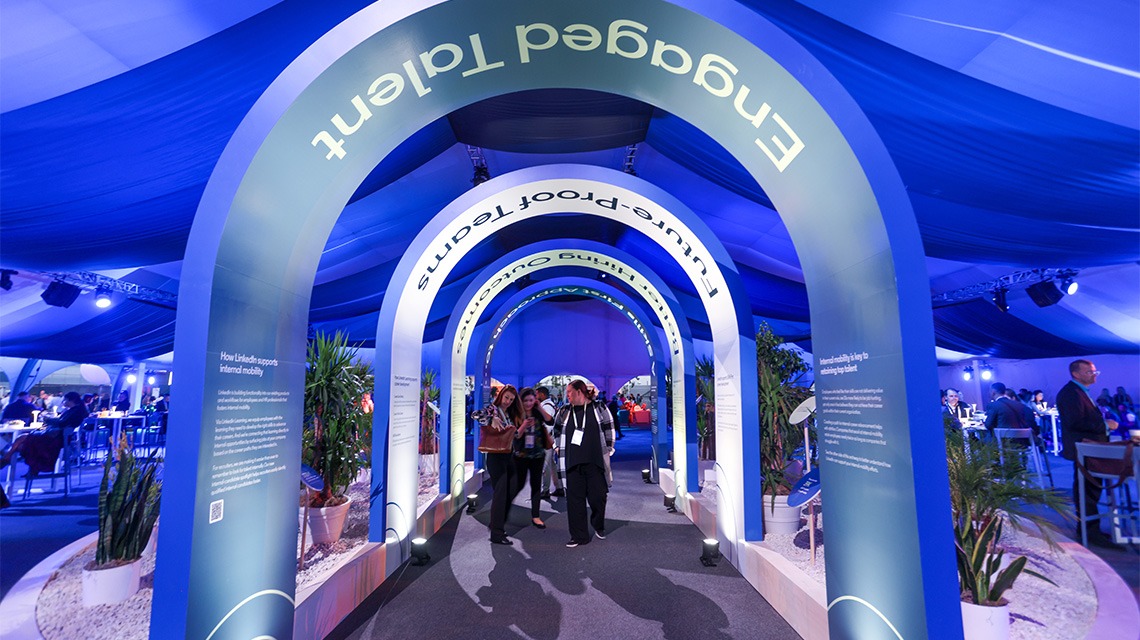
Levinthal also suggests considering a showstopper of an entrance, which serves as both an alluring launchpad for arriving attendees and a strategy for gathering feedback via social media. “Look for signature ‘you are here’ moments—those iconic, photogenic elements that instantly identify where someone is, like Coachella’s Ferris wheel. We design those moments so that when attendees post photos, they’re unmistakably connected to the event,” he said.
Henry argues it’s a misconception that planners new to experiential may have, such as the idea that producing that content can easily be done in-house. “Internal events teams are already managing countless priorities, and adding a complex experiential layer can be overwhelming. Another misconception is that experiential will feel kitschy or off-brand. Our goal is the opposite—we create experiences that are authentic and unique to each brand. In B2B, that means something that resonates internally as much as externally. We don’t want to replicate what’s been done; we want to craft something new that truly fits.”
Whether it’s small-scale gifting or a mind-blowing installation, know that a proper experiential agency will come prepared—and planners should expect nothing less.
This article appears in the September/October 2025 issues. You can subscribe to the magazine here.