If your virtual room feels fine, but nobody is leaning in, this episode is for you.
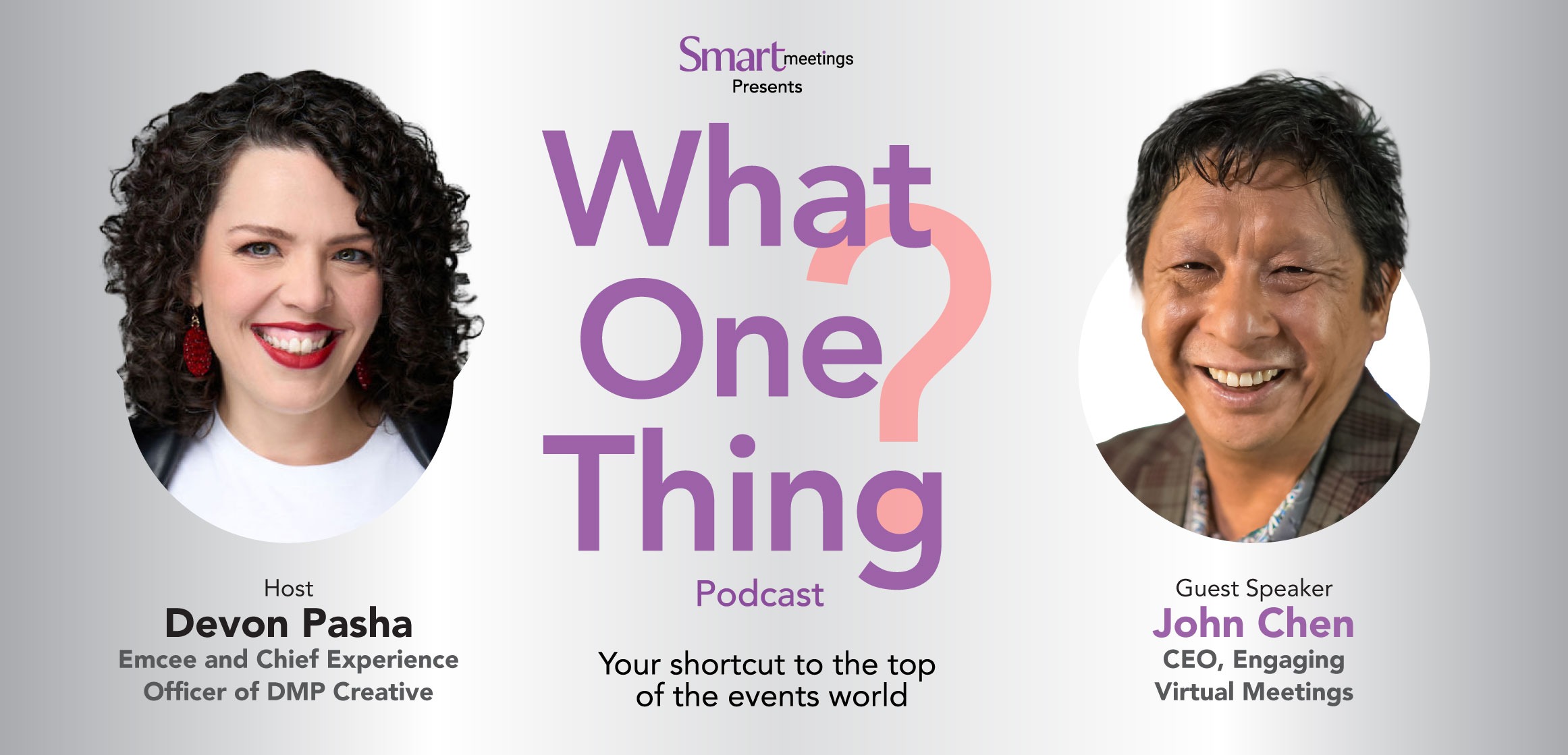
Hosted by Devon Pasha Montgomery, this What One Thing? episode spotlights virtual and hybrid engagement expert John Chen, CEO of Engaging Virtual Meetings. Chen has produced more than 4,000 virtual meetings and breaks down small, repeatable choices that make online rooms feel human, from belonging cues to energy resets. His one thing is practical for meeting pros: Take care of your brain and mental health, because sustainable energy is a production strategy, not a nice-to-have.
Devon Montgomery Pasha
Welcome to What One Thing, a Smart Meetings podcast where we ask successful people what made all the difference in their life and career so you can learn from their journeys and spark your own growth.
Today’s guest has been bringing energy, technology and heart to the world of meetings for decades. His smile can light up a virtual room, and his expertise has helped thousands of people create truly engaging virtual and hybrid experiences.
John Chen, CEO of Engaging Virtual Meetings, spent 10 years at Microsoft, earning two U.S. patents, before founding Geoteaming, a company specializing in tech-based team building and leadership training. He has produced more than 4,000 virtual meetings and authored two bestselling books, Engaging Virtual Meetings and 50 Digital Team Building Games.
Please welcome John Chen.
DMP
John, welcome. You’re omnipresent at our events, speaking, moderating, emceeing and producing. Today we get to focus on what inspired this journey. What drew you to virtual meetings, and what’s your earliest memory of connecting online?
JC
Even in college at UC Santa Barbara, I remember emailing a professor instead of going to office hours. I received a reply almost instantly. That moment showed me how powerful technology could be. It gave me access in a way that felt safe and immediate.
I also had early exposure to computers. My dad was a doctor who secretly wanted to be an audio engineer, so we had recording equipment and early computers at home. That mix of tech and storytelling stayed with me.
DMP
You were in virtual and hybrid long before it became mainstream. What’s one of your favorite virtual meeting moments?
JC
One breakthrough came from research we did years ago. Two people connected over video, shared personal stories for five minutes each and then rated how much they trusted one another. Trust increased by 20 percent.
That was when we realized technology was not cold. It could deepen connection if used intentionally.
Another defining moment was producing a fully live virtual conference during the pandemic. We had 200 volunteers helping create engagement for 1,200 attendees. Elizabeth Gilbert keynoted. At one point, someone wrote in chat that it felt like a one-on-one conversation in an Italian café. There were more than 600 people online.
No slides. No screen share. Just presence.
That proved large-scale virtual events can still feel intimate.
DMP
You’ve produced thousands of meetings. What trends are you seeing now?
JC
In-person events came back stronger than I expected. But virtual is rising again, often for budget reasons.
Hybrid is the fastest-growing format.
One of the biggest mistakes I see is not having a virtual emcee. Eighty percent of hybrid conferences do not have one. Without that advocate, virtual attendees feel like second-class citizens.
Hybrid works when both audiences are designed for intentionally. For example, we spotlight virtual attendees on screen so they can ask keynote speakers questions directly. That bridges the gap.
DMP
What’s the biggest misunderstanding about engagement?
JC
Running a poll does not mean your meeting is engaging.
Engagement is not a checkbox. It is culture and personality.
Music during breaks, walk-on songs and small surprises shape the emotional experience. People remember how you made them feel.
Engagement can also be quiet. It can be leaning in during a meaningful story.
DMP
You’ve also been a visible advocate for Asian representation in the meetings industry. How has that shaped your leadership?
JC
After the rise in anti-Asian hate, I noticed our industry did not respond strongly. So we created API Event Profs.
Asian Pacific Islander represents more than 50 cultures. Bringing those communities together takes effort.
At the National Speakers Association, we organized the first Asian Pacific Islander gathering. Now there is a ribbon attendees can wear.
The first time I put that ribbon on, I cried.
Small gestures like ribbons and inclusive speaker panels create belonging. Meeting planners should understand how powerful those signals are.
DMP
What one thing has made all the difference in your life and career?
JC
Service.
When 20 events canceled in one month during the pandemic, I could have asked why this was happening to me. Instead, I asked how I could help.
I cannot make vaccines. But I can make your virtual meeting better.
That shift led me to teach, write and serve in new ways.
The other key is mental health. When everything falls apart, what remains is you. Your mindset determines your response.
And relationships matter. My network is my net worth. Conferences are not about me. They are about the people who show up and support one another.
We are in the people business.
DMP
Thank you for reminding us that humanity weaves through every format, whether in person, hybrid or virtual. Personality creates connection. Small gestures create belonging. Service creates impact.
What One Thing was produced by Bright Business Media. Visit SmartMeetings.com to subscribe to your daily dose of inspiration.