JT Long 00:26
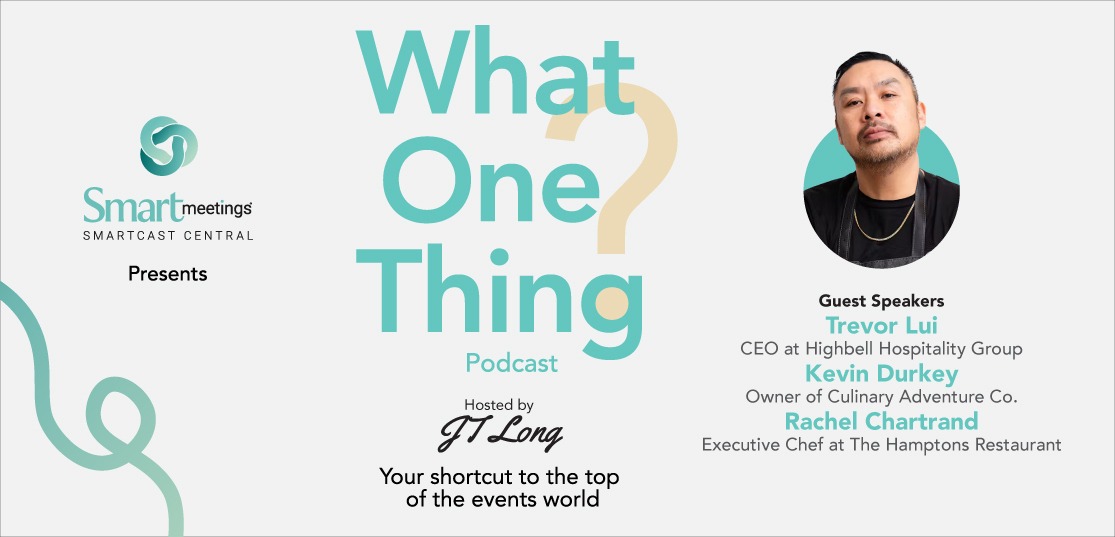
Welcome back to the What One Thing? podcast, where we ask successful people what made the difference in their lives and careers. Today, we are exploring the art of hospitality, Toronto style, with Trevor Lui, the celebrated vision behind Highbell Hospitality Group and curator of immersive culinary events.
Trevor, you are a voice for diversity, innovation and the industry. You sit on boards. You’re talking about the power of hospitality. You started in hotels. What drew you to a 24/7 celebration of food and drink as a way to bring people together?
Trevor Lui 01:03
Thank you for having me, JT. I think one of the things we always forget about is the one area where we have the best conversations, or the way we celebrate, or sometimes not even celebrate. We do it around food.
Being a restaurant brat myself, growing up within a restaurant environment and coming from a restaurant family, it was always part of my DNA. Even though, as an immigrant child, your parents want you to do something else than what they perhaps did, I came back to it. But rather than sticking around on just the food and restaurant side, it was about, how do I get into the event side?
I started on the hotel side. When it becomes part of your blood, it becomes part of your DNA, and that’s what you want to do all the time.
JL 01:43
It’s kind of addicting, right?
TL 01:45
It is. I came through the convention services side of things, working in hotels and convention centers, mostly on the event and food and beverage side. But to me, hospitality is hospitality, and there are so many avenues that are adjacent to food.
I call food the vessel of an event, right? It’s how you tell a story. That, to me, is probably the most intriguing and most rewarding part of what we do, what I do and what I’ve loved.
JL 02:10
Would you explain some of the wild events that you have created, these immersive, cultural, diverse activations?
TL 02:18
I believe the stories around the communities where you create events and experiences are the real untold stories, and sometimes, in my opinion, the best ones to be shared.
As people like you and I, who travel so much to go to conferences and events, sometimes the food is just a byproduct of sustenance more than anything. We don’t really think about the root of where the food came from, who picked the food, who prepared the food or what was the inspiration behind it.
For us, when we create these experiences, particularly when someone’s coming to a city like Toronto, Toronto is ripe with culture and community. There’s a story behind everything that goes onto a plate, and we want to celebrate the people behind that.
But when I think about celebrating when you eat, it’s not just about the food you taste. It’s about all the sensory components of everyday life. Whether it’s sound, music or smell, there is a piece of that in the community that makes up that experience.
We want to find a space that is uniquely not a traditional space like a meeting room, hotel or restaurant. We want to go into communities and utilize spaces that are perhaps owned by small entrepreneurs and businesses, whether it’s retail, art or culture.
We want to integrate music, so we’ll go out into the community and find homegrown talent. Even if you’re a restaurateur these days, one of the most important things about your restaurant environment is the music you choose. For us, it’s not just the music we choose, but who is producing and bringing that music to the experience.
Then everything along the line is, is there a component of art? Is there a component of retail? Is there a component of community? And then the food, which may sound odd from a chef or someone who is in the restaurant or food and beverage business. Food, to me, is not the most important thing. Food, like I said, is the vessel that carries the story, and that’s what’s really important to us.
The next time you eat that one particular bite of a dish that maybe you’ve been eating for years but don’t really think about, it may have a different meaning for you the next time you eat it.
JL 04:23
I love that. I was so impressed with the diversity of the Toronto hospitality scene. On one block, you had five different cultures represented. What’s going on in Toronto’s hospitality right now?
TL 04:38
I think Toronto hospitality is a true fabric of what our community looks like. We are a city that speaks over 260 languages. Over 61% or 62% of our population was not born in Canada, and so we celebrate essentially all the different parts of the world that have congregated in a Toronto home through the years.
I’m a product of Hong Kong immigrants. My parents came here in the late ’60s. A lot of what goes on a plate today is a story of growing up Canadian in mixed communities with really funky and fun stuff in your home pantry.
You get this opportunity to be in communities where you meet other cultures, but the one thing that brings us together is that we’re actually all Canadian. Being able to share things from our pantry and looking at it from a Canadian lens, that eventually lands on your plate. That is what Toronto is all about.
The world’s a real tough place right now, and I would say that people are looking for places where they feel included and feel like they’re welcome. I feel like Toronto is one of those places where it doesn’t matter who or where you’re from. Come here, celebrate this city and enjoy life the Toronto way with us.
JL 05:50
Even Americans? You would welcome Americans there?
TL 05:53
Of course we would. You’re our partners and friends. You’re our neighbors. The longest unprotected border in the entire world. That’s what we knew growing up, right?
We sing your national anthem better than some Americans do sometimes because we watch your television, we watch your programming, and we like to get into our car and drive south of the border and shop at your stores to buy American snacks.
I think that’s something that we have taken for granted for many years. The fact that we could just jump on a plane and be in New York City in an hour, or be in Chicago in an hour, and enjoy everything about your city, and vice versa. And that over 50% of the population within that catchment, from the Midwest to the East Coast, sits within these three cities.
I miss it. I miss seeing more of my American friends. I miss being able to freely go down and hang out with you guys more. Of course we would welcome you. Nothing’s changed from our perspective other than policy, right?
Sometimes, as citizens and just regular people, we’re so far removed from policy that there’s not much you and I can do, other than we should continue doing what we want to do in terms of keeping our borders open and being friendly and welcoming each other, especially around the dining room table.
JL 07:09
Absolutely. I have to tell you, I felt so welcomed and loved just tasting those comfort foods that were outside of my regular realm, but I really felt the comfort that came through.
All of this that we’ve been talking about, how does that fit with Toronto’s destination master plan? Because I know you’re on the board.
TL 07:29
We’re very excited with our 10-year destination master plan that just went public a little over a week ago. I think it’s a wonderful road map for what tourism is going to look like over the next decade and taking us into the next era.
It’s always been part of our DNA and part of our language that multiculturalism and diversity are really a fabric of what this city is about. I don’t think that’s ever going to change. Sure, policies may change. But you said this yourself because you were a witness to it. You can stand on a given block, and I’m looking outside my office now, and there’s a Portuguese bakery there. There is a Mexican restaurant there, southern Mexican, not just Mexican. There’s a pizza joint over there and a Jamaican restaurant over there.
That is almost every block in Toronto. That’s how the city was built. In fact, a lot of enclaves throughout this country were built like that. That is always going to be part of Toronto’s DNA.
As a destination, when people are looking for a city to choose to congregate or do business, isn’t it great to find a city where, whoever you are, from any part of the world that you’re coming from, you feel like you’re at home? That’s really what Toronto is all about. How do we continue building that story and that narrative as a welcoming city while you can do business at the same time?
JL 08:40
I love that idea. Talk to me a little bit about the mission of Quell.
TL 08:45
Quell really was something that came to fruition over Covid. During Covid, after the George Floyd incident, and being Chinese, it was a tough time for Chinese North Americans, particularly with the stigma of where Covid came from, in terms of identifying opportunities and representation for those who were traditionally not represented as much.
We started an agency to look at how we can help represent people in the lifestyle, food and beverage realm to get them a seat at the table. Whether that was a board appointment, getting a book deal, or being a face or the hands of an ad campaign, that’s really how it started.
We started representing talent, and now we’ve got up to 20 talent across the country. Now we do a lot of consulting work and work for brands, trying to see if we can create more seats around the table and more inclusion when it comes to everything we see on a day-to-day basis.
Representation means a lot. Growing up, I never had the opportunity to see someone like myself sit in the position that I am in today. When you cannot see representation, you cannot aspire to something because you can never envision yourself in that spot. What this allows us to do is create conversation and create a clear path for youth and for other generations to come.
JL 10:06
If you can see it, you can be it.
TL 10:08
You got it.
JL 10:09
Speaking of which, you are now a father. How has that changed your perspective?
TL 10:14
I actually have two children. I have a 21-year-old and a 1-year-old, so it is like being a father all over again.
There are a couple of things. I don’t think we’re parenting today the same way we parented 20 years ago. I think there are even some things you can’t say these days to your kids that you said 20 years ago.
My life was a lot different 20 years ago. I was working corporate. The traditional family setting was very atypical and very traditional, right? After five days, I went back to work. My wife took maternity leave, and that was that. So I didn’t spend as much time as today.
Paternity leave is big. A lot of the men are taking the time off, and I think that’s fantastic. I’ve learned that there are things I missed a lot the first time around that I want to experience this time around.
I’m certainly older. I like to say that I’m wiser, maybe not as wise as I think I am. But you take lessons from the things and the missteps that you’ve done in the past, and you try to forge a new path this time and learn a lot more. I’m a different human being altogether, too. That makes raising a child much different, right?
JL 11:22
For me, I’m a Gigi. I’m a grandmother of three little boys under 4. I just have so much respect for what my daughter is going through because it’s hard being a mom. Here, 30 years later, looking back and trying to help her, it’s an experience where you learn as much from them as they do from you, right?
TL 11:47
Yeah. Twenty years ago, we didn’t have the internet. We didn’t have Reddit and apps and a phone telling you what to do, when to do it. You just did it. Now there’s almost too much distraction, right? Because there’s an answer everywhere, and if you don’t like that answer, you just check something else until you go down that rabbit hole.
JL 12:04
But in the end, it’s also hospitality, right? You are welcoming these little ones into the world and hoping that they have a wonderful experience.
This is What One Thing, and I am going to ask you the one thing that made all the difference in your life and career that our Smart Meetings community can learn from you, so that we can also be successful like you.
TL 12:27
Geez, there are so many different things that I can say, and there are a lot of cliches. I always talk about one moment in my career that changed everything for me. I’ve always lived by that adage and that philosophy, even with my staff today.
I was working at a convention facility, and I believe I was in my sixth year. I had just done my sixth annual performance review with my boss. My boss looked at me and said, “You know what? Good review. Performed well again. I don’t think there’s anything left here for you,” was what the next message was.
The message was essentially, you’ve hit your peak in the position you’re in. The next position is my position. I’m not planning on going anywhere anytime soon. I’m OK if it’s time to look for your next step, if you want that next step.
That was the best thing anyone could have told me, because the selfish thing would have been, “We need to keep Trevor around for a while because he’s good at what he does. We’ll keep him at this salary. We’ll just keep him going.”
Not that there’s anything wrong with that, but I could have been that person still there today, 30 years later, working as that event convention coordinator, catering at large events. My job was great. It was exciting. Had that message not been given to me, I would not have taken the leap to actually go out and look for other things because I was really comfortable. I loved my job.
But in reality, it spurred me into a different mindset and process of, what is this? What’s out there? I was fairly young still. I think I was only 27 or 28 at the time, and I ended up getting my first director position two months later. The rest is history. From there on, every job I had was an ambitious move to get to something higher and better.
I say the same for anyone who employs people. Set a path for your staff and try to figure out what their ceiling is. If they’ve hit their ceiling or you don’t have room for them to grow, just let them grow somewhere else. Don’t keep them if they don’t want to leave. Don’t hold them back.
I think that eventually will pay dividends, and it’ll come back in full for you anyway. I’ve always lived by that philosophy.
JL 14:47
That is very wise. Hard to practice, but very wise, right? Nurture them, then let them go on their way and wish them the best.
TL 14:57
I think part of being a successful employer, and I’m not saying I’m the best employer, but we do have a philosophy. Part of your job as an employer is also to mentor and grow people, not just to get them here on their shift to work.
How do we find out the things that people are really good at? Is there a fit within the company or an environment where we can utilize their skills that they would really want to use? Because no one’s ever asked them, right?
Especially these days with the new workforce, we’re working with a lot of new Canadians, a lot of new people to our continent who are probably very skilled in something else, but they’re looking for jobs that are entry into the workforce, which a lot of times is hospitality. That person might very well be my next event marketer or my salesperson. We have no clue.
I think that’s really important as you take a look at what your workforce looks like. It’s really difficult these days just to find good people to stay around. That’s been a philosophy for me, even on the event side.
We see this in large conventions and senior levels in culinary and hotels. How many people are going to school and saying, “I want to be a GM of a hotel. I want to be the director of convention services at a convention center”? They really teach you that stuff, right?
JL 16:19
I think there’s more intentional hospitality now than there used to be, but it’s still a career that, when I interview people, they say, “I fell into it, and I never looked back,” right?
TL 16:30
Correct. Yeah.
JL 16:30
Your passion for people and your place is so evident. Thank you for sharing it with the Smart Meetings community.
TL 16:37
Pleasure.
Kevin Durkee
JL 16:45
Today we’re exploring hospitality, Toronto style, with Kevin Durkee. He’s owner and the “Big Cheese” at Culinary Adventure Co. Welcome, Kev.
Kevin Durkee 16:55
Thank you so much for having me today. Excited to talk.
JL 16:58
When we met, I took your fabulous foodie tour of St. Lawrence Market in Toronto. We did caviar bumps, and we tasted peameal sandwiches. I learned that 90% of seeds for French Dijon mustard come from Canada. You were a dynamic host and changed lives on that tour.
KD 17:17
Wow! I got goosebumps. Thank you so much for saying all of that. We try to change some lives on every tour as best as we can. I’m glad you enjoyed yourself.
I have the best job in the world. I get to eat and drink professionally and ultimately share that love and passion for food and purveyors and product, and the incredible taste of Toronto, with folks who come visit us. I’m glad you had the experience that we wanted you to have. Amazing.
JL 17:40
Tell me, Kev, how did you get into the hospitality industry? You owned a restaurant at one time. Tell me your journey.
KD 17:47
I did. It comes down to my mom, 100%. I grew up in the eastern part of Ontario, near Ottawa. When I was about 13 years old, I came home from school one day, and my mom was at home. She was the head cashier at our local grocery store at the time.
My sister and I got off the school bus. We’re like, “Mom, what are you doing here? You’re not supposed to be here.” It was her workday. She said, “Hey, guys, I told them to take their job and shove it.”
I’m like, “Whoa, what does that mean?” I was 13 years old, so I’m like, “Are we living out of a car? Am I getting my allowance this week? What’s happening?”
But she stopped what she was doing and followed her own passion. She and my dad took half of our basement and turned it into an industrial kitchen. For the better part of the next 20 years, we ran an artisanal bakery out of our home. Then she actually had a restaurant.
When I went to university and went to the big city of Toronto, I got a film background and a marketing background. But I started to feel like, do I want to make everyone else’s brands money in the world, or do I want to follow my mom’s passion?
In 2010, I opened up a restaurant called CHEESEWERKS in Toronto. The entire restaurant was dedicated to cheese and was an opportunity to celebrate what I saw her passion and energy around.
That led me to meet Culinary Adventure Co., which was actually started by another couple. They separated both professionally and personally, so I had a chance to purchase the company. I continued to work with him, one of the partners, and realized why the other owner dumped him. I needed to dump him as well. It’s been family-owned and operated ever since.
There’s family connection. There’s magic and marketing and energy behind what I love and what I do. But at the end of it, it’s all about telling a fantastic, delicious story.
JL 19:24
You did that wonderfully. You also shared your cheese wheel insights and gave us pocket cheese-tasting journals. I’ve got mine here, too.
KD 19:34
Mine, too. I don’t go anywhere without it.
JL 19:38
Would you summarize your cheese wheel philosophy for us?
KD 19:42
Of course. I think it really comes down to cheese being so much of an artisanal product. Of course, there’s commercial product that goes on a delicious sandwich, burger or pizza. But when you walk into a magical little cheese shop, you are transformed into this wonderland of dozens and dozens of different cheeses. It can be quite intimidating.
There are lots of different styles, textures, producers and milks. Something like a little cheese book, where you’ve got a little cheat sheet on the inside of what you like, is a great way to keep you focused on finding something you love.
When you think about wine or craft beer, I don’t like beer. I’ve never been a beer fan. I didn’t really like wine for the longest time, but then I’ve been able to find styles I liked. I think cheese is that same exploration.
You might have tried something when you were a kid and thought, “I don’t like it, so I’m never going there again.” No, no, no. Come revisit some of this beautiful product that’s out there. Keep some notes. Keep a picture of stuff, and trust the person behind the counter, too.
You trusted me on the food tour at Culinary Adventure Co., but wherever anyone is around the world, trust who’s behind the counter and let them have the mystery to find what’s really good for you. Try some stuff until you find your best one. It’s the way to do it.
JL 20:56
You changed my mind on ricotta.
KD 20:57
I’m glad. Most people will use ricotta just to cook with or make a little filling for ravioli. But it’s the purest form of cheese, so it’s the best way to start, appreciate it and train your palate a little bit. Work your tongue around. Understand what you should be thinking, looking and tasting for, and that builds your expertise into the other categories.
I’m glad you liked it. That particular ricotta that we enjoyed that day was made by Quality Cheese. We have cheese awards in Canada, which are the equivalent of the Academy Awards, the Oscars for cheese, and it won actually the best category ever. To have a fresh cheese beat the Goudas, cheddars, Emmentals and all the big boys and girls out there, it takes a lot. That’s a special, special product.
JL 21:41
In addition to that sense of discovery, the great knowledge you have and your vivacious personality, what I loved about the trip was that it really focused on the purveyors, the craftspeople, the people behind the counter who were giving us all of these wonderful products.
Would you talk about the Toronto hospitality community and how they make people feel welcome and are so passionate about what they do?
KD 22:09
It’s an interesting thing. Toronto is a very unique city on the world stage for a couple of big reasons. No. 1, we are the most diverse city on the planet. There is every flavor, every texture, every culture imaginable, so you can really discover what fits for you.
But we’re not a tourist city, and I don’t mean that in a bad way. We’re like a new friend that someone introduced you to, so you already know who we are a little bit. We’re very kind. We’re honest. We’re diverse. We’re that, “Oh, cool. I understand why I’m here. I get it.”
I think that really is who Torontonians are, and that falls right into the heart of hospitality inside the city. We’re welcoming. We’re eager to know about you. We’re eager to hear from you. We want to know what you’d like. We’re Canadian. We want to make sure you’re happy. We’ll say sorry a few times, but it really is about delivering a great experience.
I think we’re quietly proud, and that’s a nice way for us to bring hospitality to the table, the bar, the plate, allowing us to really care about the ingredients, the flavors, the complexity, who’s in the kitchen and made something really delicious. That just permeates around the industry as well.
That makes us stand out differently than the megacities, the Parises, the Vegases, the New Yorks or the Buenos Aireses of the world. We have a little bit of a quieter charm, and that comes through hospitality in a very big way.
JL
Quietly proud. I love that. This is the What One Thing podcast. Of course I have to ask you, what is the one thing our meeting professional audience can learn from your personal journey to enrich their personal and professional lives?
KD
I might take a bit of a different spin on that question. Your world and your industry that we have dealt with for lots of years, meetings and delegates and attendees and the whole organization, for us in Canada, I would love everybody to trust the process.
You guys are experts in what you do and how to plan, build, construct or curate something. When you find an operator like us, leave us alone. We’ve got it as well. We’re the professional on the other side.
Give us a sense of what you want, what your vision looks like. But don’t nickel and dime. Don’t argue. Don’t go back and forth 100 times. Do your homework, and then come and find someone like us.
We’re very proud to be the No. 1 food tour in the city after 15 years. You’ve seen what we do and how we do it. Let us do it. I’ve always trusted my gut that way. No matter what I’ve decided to do for my career, my business or building the tours at Culinary Adventure Co., we’re like, “I want to go on that tour, so someone else will.”
The same thing is that your industry, you know what you want. Ask for it. We’ll deliver it. We will.
JL 24:48
Trust the process.
KD 24:49
Yeah.
JL 24:50
Thank you for joining me, Kev. This has been so special.
KD 24:55
I appreciate it. We had such a lovely time that day. You’re right, we did change some lives with folks who had not taken the cheese or had not done the things that they were excited about and were surprised. We were dunking blackberries in mustard. We had a good morning, for sure.
I really appreciate your energy and your appetite as well for joining us that morning. Appreciate it.
JL 25:14
I brought home some ice wine for my friends in California. See if I can change some lives.
KD 25:20
Fantastic! That’s amazing.
Rachel Chartrand
JL 25:29
I am so lucky. I’m sitting here with Rachel Chartrand. She is the founder, owner and executive chef at the beautiful Hamptons restaurant in Toronto, and we had such a magical night with you. Thank you so much for making us all feel like we mattered.
Rachel Chartrand 25:47
Of course. It was an absolute pleasure having you guys in and being able to tell our story through design, menu and food. It was amazing.
JL 25:56
Everything was just so thoughtful, and that’s why I thought, that’s something that can translate into events so well.
First, I want to learn a little bit about your background. You host so many people and take care of them. We want to hear how you got to this point. You’ve experienced every part of the restaurant industry. How did your experience prepare you for the moment when you realized your vision of a restaurant that cares for diners, staff, the neighborhood and even the farmers growing the produce?
RC 26:25
First off, I would like to say nothing can prepare you for the moment of opening your business. All the things that I experienced never prepared me for what you actually endure once you open your doors.
But I think my life has carried me on a very grateful journey of learning the ins and outs and absorbing as much information and as many experiences as I have that have prepared me for it.
I do think it takes a very special and unique person to run a business through sincerity. It’s always been a passion of mine to host people, to be in people’s lives, to change somebody’s day who gets to walk into my doors, to give them another perspective on life. That’s where the restaurant has taken us, and it’s been pretty lovely.
JL 27:14
What was your first restaurant gig? What was your first job in hospitality?
RC 27:19
I left New York. I was going to school at Juilliard for dance, and I studied contemporary with the Alvin Ailey School.
JL 27:29
That makes sense. You were running up and down those stairs [unclear].
RC 27:35
I always had a very eclectic lifestyle and life before food, and it was always derived from the arts. I came back, and I was feeling kind of lost. A friend of mine was like, “Why don’t you start a catering business?” Because my family’s in food and wine.
I was like, “OK, cool. That’s what I’m going to do. I’m going to do what I’ve been doing for my friends at their houses and for events.”
I started a small catering business, and that took off. I ran the business for about two years, and it was really beautiful and great. I started to meet a lot of new people in that chapter of my life. A few of the people I met were chefs, and I became very close with them.
One of my friends, Daniel Manzone, called me up one day. He’s like, “I’m looking for a pastry chef.”
I was like, “Oh, I know a bunch of them.”
He’s like, “No, I’m talking about you.”
I was like, “What? For what?”
He’s like, “My restaurant.”
I was like, “Daniel, I’ve never worked in restaurants before. I’ve never worked in a kitchen before. This is just me doing my stuff out of my house. I don’t know what that world looks like.”
He’s like, “You’ll be fine.”
The day I put on my first set of whites, it just made sense, and I never looked back. I had the opportunity to be trained and learn under some very successful chefs, restaurateurs and owners who guided me and shaped my career. That’s where it took off.
I think the power of manifestation brings good things into your life. I just went with that trajectory, and I never looked back. That’s where I began. I was humble. I didn’t go to culinary school, but I don’t think that matters.
If your passion is there and you surround yourself with the right people, and you’re willing to be quiet, listen, watch and learn, that’s the greatest skill set. You just have to stay hungry. You have to want to push yourself.
I know that I have so many ambitions. I have so much passion, and I’m just a hard worker. I came in, worked on all my days off and did stages at really beautiful restaurants on my days off, which opened up unreal opportunities to me. I was working seven days a week, 365 days a year, but I was just hungry. I wanted to do it all and see it all. That’s what I did, and I did that for eight years.
After my opportunities in kitchens, I naturally felt burned out, just like everybody who works in the kitchen. But I didn’t want to leave the industry. I was offered a job as a GM to run a restaurant, and I took it. It really opened my eyes to the other side of restaurants.
JL 30:25
What was it?
RC 30:25
It was for the Gusto Group.
JL 30:27
OK.
RC 30:28
For Janet. Then I was working alongside the Donnelly Group, which is from Vancouver. I worked there afterward, and then I went to Café Boulud in Toronto.
I basically did the exact same thing once again. Put my head down, learned, listened and watched the builders, the owners, the operators. I started to learn about P&Ls and COGS and everything that has to do with the operational standpoint of a business, things that my brain is just not naturally good at. I’m more of a creative mind.
I spent the next five or six years doing that, and I learned the other side of the business, which was exciting for me. It was new. It was different, and all the pieces started to come together.
After watching people open and build their dreams, I started to think that maybe that’s something that lived inside me that I wanted to do. I kept on working extremely hard. I landed myself in a very beautiful position at the Four Seasons, working under one of my mentors, still to this day. His name’s Jeremy Geyer. He is a legend in the Toronto hospitality scene, and he really shaped my mind of what hospitality looks like.
I carry those messages that he gave me and the moments that he taught me. The things I learned through him carry with me every single day. Being led by teams like the GM of the hotel, Konrad, he opened my mind and my eyes to things that I would not have been able to see, which I wouldn’t have been able to bring to my restaurant.
I’m very grateful for all the people who have spent their lives in this industry and are passing that along to help this generation, and generations after us, continue to do what has been done.
JL 32:14
That’s a beautiful story. You came back. You were lost, and you found food, and food found you. That amazing passion and energy that we witnessed that night definitely shines through.
But I love the story of how you are now paying it forward and really paving the way for young chefs in your kitchen. Do you want to talk about that program?
RC 32:38
The vision was to build an institution, and that, to me, means a place where people can be creative and collaborate. I think that’s something that is always missing when chefs go and work for other restaurateurs, owners and executive chefs. The vision is not necessarily just theirs. It’s something higher up, and they’re just executing. But I didn’t want that for my place.
We’re a collective. We’re a team. There really is carte blanche. We are like-minded people with like-minded visions, and we are a force to be reckoned with when we are all acting as one. That’s what my dream was.
I built the restaurant, worked in the kitchen and cooked every single day, 365 days, for three years until I found the right people who understood what the mission statement and the ethos were.
Now I get to stand alongside the same beautiful people who are like me, who understand that there are no boundaries in food, there are no boundaries in life, and we get to create. That’s where the artistry and magic really happen on the plate.
That’s the gift that I’ve always wanted to be able to give, to see the opportunities and see these chefs working in kitchens really get their moment. There’s so much talent in Toronto. There’s so much talent in many of my friends’ kitchens and restaurants, and I’m very grateful that there’s so much in mine as well.
JL 34:08
Do you want to name some names?
RC 34:10
Yes. Chef Luiz came to me, reached out to me, and this guy is a visionary. There is nothing too big. There is nothing too small to be done. He is one of the hardest-working people that I’ve ever been able to work alongside.
He cares more than anything in this world. He’s passionate. He’s technically sound. He has a palate like a god. This is his life, and he believes it. It’s not work for him. This is a joy, to be able to do this.
He brought Will, who just joined us with Luiz, and then he brought along the third addition, Tyler. Now we have a fourth addition, Ash. It all started with Luiz, and I would be lost without this human.
It’s been a beautiful relationship. He’s been with me just for a year now, and it seems like 10, to be honest, because we are always working and always together. This past year, from where they started and watching them grow to where they are now, is night and day.
I really believe that they feel very fulfilled with their lives. Filling your cup is so important to do every day. He’s out on the floor. He’s serving. It’s a joy to see one of your staff members treat your business like their own. That’s what any restaurateur wants from their team, to respect the business like they would respect it if they owned it.
JL 35:41
We’ve been talking about the restaurant, but set the scene and the stage for us. This is a pretty intimate, special place. It’s got an indoor-outdoor.
RC 35:51
Leading into the limitlessness in food, we do weekly menus at the restaurant. I think it’s a really fun way to dine, to always expect the unexpected. It puts people outside their comfort zone sometimes, but the assurance of the level of freshness and creativity is always there.
We run an indoor season from November until May. As May 1 begins, we open our back patio, and we have a front patio as well. Our back patio is a place that people love to come. It’s a miraculous little place where you feel like you’re escaping. You don’t even know that it’s in Toronto. The placement behind the house is very beautiful.
That opens in a couple of weeks, which I’ve been building all morning, or rebuilding and redesigning, because I have to change everything all the time, as one would. That’s opening May 1. We have a full outdoor kitchen outside, and it is covered in vines and stone. It’s definitely very special.
Our weekly menus still will live on, as we’ve been doing for the past four years. The idea is everybody gets greeted with a beautiful glass of bubbles, either nonalcoholic or dealcoholized wine, if that’s your lifestyle choice, or something with alcohol.
The bubbles are rotational in style and a depiction of what you’ll be expecting on the menus. It’s a way to have everybody’s nervous system relax when they sit down, have an opportunity to take each other in before we dive into the storyboard for the week’s menu.
JL 37:26
This is Victorian. Is it 38 seats, something like that?
RC 37:31
It’s 36 seats.
JL 37:32
Thirty-six.
RC 37:33
We have 26 upstairs and 10 in our private dining room. Once it comes to summer, we have 10 on the front patio and 50 in the back, so we grow miraculously in size, which is amazing. Even in the summer, we have people on the back patio, inside and on the front patio, which is always beautiful, to see people disperse throughout the restaurant.
JL
It’s in the Little Italy neighborhood and surrounded by lots of these creative forces, right?
RC
Definitely. Our little area, our little corner, College and Clinton, has really expanded in the past year. I remember when we first opened the restaurant, it felt dark and heavy in that area, which was an interesting feeling to open a restaurant during that, just after COVID, which is what we did. It didn’t feel like it had life. We were all starting to wake back up again from the time that we had spent in COVID.
Over the past four years, we’ve seen really beautiful additions. [Restaurant name unclear.] Pompette reimagined themselves. They are Bar Allegro now. We have Danny’s Pizza, Danny’s next door. We have Casa Paco, which is my best friend’s place, across the street from us. It feels like there is such a community there now, which has been amazing.
JL 38:49
Are you originally from Toronto? Left and came back?
RC 38:53
Yes, that’s correct.
JL 38:54
That’s one of my favorite things, when people leave and then come home and bring that appreciation with them. Describe what’s happening in the Toronto hospitality scene today.
RC 39:08
I think there are a lot of restaurants like mine doing very unique things. They are all fighting the good fight as small business owners to try to show people what we’re doing. Obviously, there are a ton of big corporate groups in Toronto, like you would see anywhere else or in other cities. But I think there is a really beautiful, buzzing scene.
There’s Dreyfus. There are a lot of restaurants that are doing miraculous work. They’re about their story. They’re living and breathing authenticity and creativity. I think it’s an exciting place to own a restaurant. It’s a beautiful city to dine in. There’s something for everybody out there, which is exciting, and everybody has their niche.
We are amongst a category of few, that’s for sure, my style of restaurant, which is a really beautiful luxury. I am very honored to stand alongside some of the other owners doing the same or similar things that we are doing.
It’s a very diverse city with tons of offerings and different pockets all over. The East End is so magical. There’s so much going on there. Lake Inez, Belle Isle, very cool things.
JL 40:24
After working under such icons in hospitality, what would you say your hospitality philosophy is?
RC 40:33
I don’t know if it’s much of a philosophy. I think understanding luxury, for me, is a big thing. Luxury means something different for everybody, and it looks different for everybody.
Being grateful that when we open our doors, people are walking through them. I don’t know how to sum that up in an ethos, but just gratitude. I think it’s really cool that people want to come in, dine with us and see what lives in our brain.
That’s something I always talk to my staff about, whether it’s front of house or back of house, to remember what we’re doing here. When we open our doors, this is not about us. This is about welcoming people into our home, into our space. This is a luxury for people, and that’s something different to everybody. We have to read our guests and understand what that looks like and really elevate their dining experience to the best of our ability.
JL 41:29
Lovely. I felt like I walked away from there knowing all the farmers who had contributed to that meal. That was special.
RC 41:37
We’re very lucky. One of my favorite farmers to work with, his name’s Fraser. He owns Aldergrove. He is going to be opening back up his seasonal offerings very soon. I’ve had the pleasure of going up and working on his farm during garlic scape season. I smelled like garlic for about three months afterward. I’m not lying.
Those people are doing God’s work. I think we so often forget the importance of buying locally and buying within Canada. Our economy, our lifestyle, we can look at fast fashion the same way that we treat food. It has to come from somewhere, and it has to come from somewhere with meaning.
That’s what my love is, to work really closely with all of our suppliers and farmers and ensure that we’re supportive of them so that they can continue their lifestyle and continue to produce these beautiful products and ingredients that we’re working with. They’re really miraculous.
My buddy Nick owns Microgreens Organics [spelling unverified], producing some of the most unreal microgreens in Ontario. He works out of Burlington, his space. What would the world look like if we didn’t have those farmers? It wouldn’t be good, I can tell you that.
JL 42:53
Absolutely.
RC 42:56
Yeah.
JL 42:56
I have to ask you, you’ve talked about your passion. What is your secret for your energy level? How are you doing this day in and day out, running up and down those stairs, sharing all of this energy with everyone who walks through your doors?
RC 43:12
I think it has to do with who I am inside, always striving for another level of success. It’s personal success, internal success for me. It’s not something that is a plaque on the outside of the restaurant saying I’m awarded this. [Unclear wording about how she measures success.]
As I grow and as I learn, we get stronger, and our personal goals get bigger. I just know, even when there are hard days, that this is my dream. This is what I wanted, and you find that strength to push through.
I am that person who always wants to keep growing and pursuing more and more. I’ve been like this since day one, so I don’t know how to explain it. It’s tiring for a lot of people in my life, to be quite honest.
JL
There’s not an endless drip of coffee in your veins or anything?
RC
No. I’ve actually scaled back. I only have one a day, one in the morning when I wake up, and I drink all the water in the world. I’m very hydrated.
I’m just excited to see how far we can take things and how far I can go. My time here in this lifetime is just about minutes and seconds, and if I am using them correctly, there are 24 hours in a day to grow. While you’re sleeping, you’re still growing. I know my brain is still going.
I feel like I just want to live a full life, and for me, that’s the way I’m living it. It’s exhausting for many people when they ask me how I’m doing it, but I don’t know. I’m very grateful that this is what I was created to do, to host and create and do it through design, food and connection.
JL 44:57
We’re grateful that you’re doing it. Now we get to the one thing.
RC 45:02
Yes.
JL 45:02
Our community is meeting professionals, so they also work really hard. They are filled with passion, but they also have to be detail-oriented. What is the one thing that made all the difference in your very diverse life and career that they could adopt to meet their own version of success?
RC 45:23
To be humble. Look at everything that you do, whether you’ve done it the first time, the second time or 100 times, look at it differently. Assess it differently.
When somebody teaches you something, and you’ve maybe been taught it a different way at another place, you go, “Oh, I know how to do that.” No, you don’t necessarily know how to do that. You learned a way to do that.
If someone’s willing to show you how they do that, you should watch and learn, because there are seconds and inches and moments that we can learn throughout our day. Small things that can tweak the way we do things that can altogether make something better and different.
Just be a sponge. I think that’s my biggest thing, take it all in. Everything from lights to holding a knife to cleaning a toilet. If someone’s willing to show you how to do something, don’t just watch because you feel like you have to watch. Just watch and really take it all in.
You don’t realize when those moments will come to fruition, when those memories and teachable experiences that you’ve had will show up, and all of a sudden you’re like, “Oh, wow, I do know how to do that.”
JL 46:34
Curiosity. I love it. Live with curiosity. It has been such a treat talking to you, Rachel. Thank you for taking the time to share your one thing with the MeetSmart community.
RC 46:46
It’s been an absolute pleasure meeting you, and your passion and enthusiasm for sharing this world of ours with everybody else out there. You’re doing God’s work as well, and I’m very grateful for this time with you.
Outro
47:02
Smart Meetings’ What One Thing was produced by Bright Business Media. Visit smartmeetings.com to subscribe to your daily dose of inspiration.