America’s 250th anniversary isn’t just a historic milestone. It is a major opportunity for event professionals to create experiences that bring people together and tell stories that actually stick.
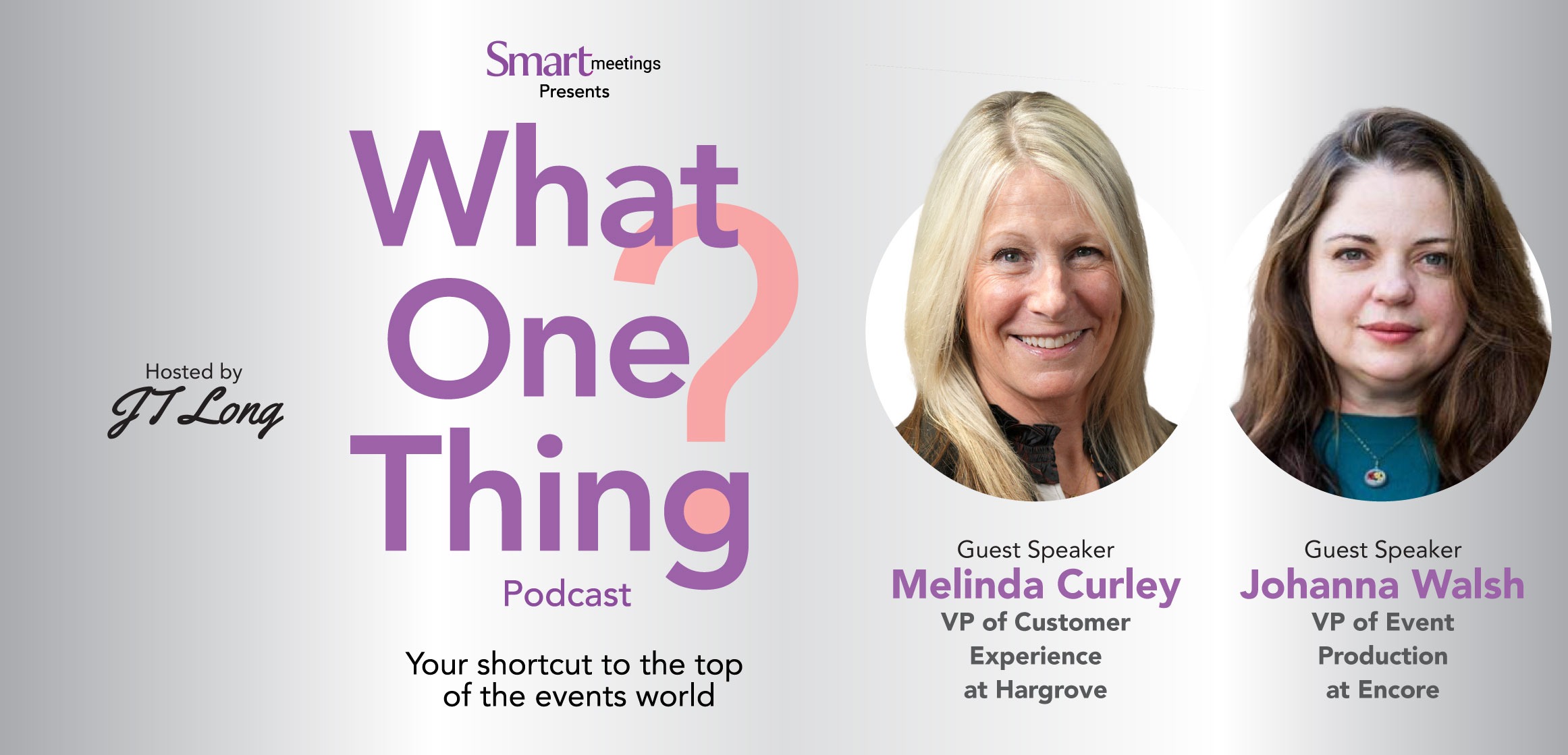
In this episode, Smart Meetings’ Vice President JT Long sits down with Melinda Curley, vice president of customer experience at Hargrove, and Johanna Walsh, vice president of event production at Encore, to talk about what planners should be thinking about now. From tight timelines and rising demand to infrastructure, permitting and budget realities, they share practical advice for getting ahead of the 2026 surge.
But the real opportunity goes beyond logistics. The most memorable events, they explain, will be the ones grounded in authentic storytelling, whether that means highlighting local history, cultural identity or imagining what the next 250 years could look like.
The one thing: start early, be intentional and create moments that make attendees feel like they are part of something bigger.
JT Long
Welcome back to What One Thing?, a Smart Meetings podcast where we talk to experts about what made the difference in their lives and careers. This time, we are focusing on America 250 and how to take the energy of a national anniversary and turn it into a powerful event.
I am here with Johanna Walsh, vice president of event production at Encore. Welcome, Johanna.
Johanna Walsh
Thank you so much, JT. Happy to be here.
JL
Also joining us is Melinda Curley, vice president of customer experience for government and public sector at Hargrove. Welcome, Melinda.
Melinda Curley
Thank you. Delighted to be here.
JL
Let’s get right to it. What does the semiquincentennial of the founding of the United States mean to you personally? Johanna, let’s start with you.
JW
The excitement around celebrating such an incredible milestone for the country is huge. We are already seeing states and cities activating in different ways, all building toward one major celebration. From Ohio to Alaska to California, there is momentum everywhere, and it will all crescendo around this event. It is a once-in-a-lifetime opportunity.
JL
I love that. Melinda, what does it mean to you?
MC
It is funny. I remember the bicentennial. I remember parades in grade school and the plays we all performed in. This feels very full circle. It is a chance for event professionals to connect communities, connect generations and retell history. It is exciting for us at Hargrove and Encore to help create those meaningful experiences.
JL
I remember that time too. There were lots of fireworks, although I predict we may see more drone shows this time.
We do a lot of drone shows at Smart Meetings experiences, and they are always fun. Destinations will definitely use the emotional meaning of the occasion to bring people together.
JL
You mentioned some big statistics around projected spending and visitation in places like Philadelphia and Washington, D.C., Melinda, can you share more about that?
MC
The data is still evolving, but activity is already building in 2025. It peaks in 2026 and tapers off in 2027. Looking back, about 200 million people participated in bicentennial celebrations, with billions of dollars in economic impact.
Projections for major cities like Philadelphia and Washington are estimated to be in the one-to-two-billion-dollar range for this anniversary.
JL
That is a lot of investment, so planners need to make sure they are getting the most out of it. As meeting professionals think about participating, what are your tips for going beyond red, white and blue bunting? Johanna?
JW
I will put on my production hat and say the obvious thing. Start planning now. These events overlap with already busy schedules. Crowd sizes will be large, and the country will also host the FIFA World Cup during peak celebration months.
That means space will be at a premium. Hotels, convention centers and event venues will be in high demand. Understanding your footprint, permitting requirements and fabrication needs early is critical. Our industry relies on a lot of resources to produce great events, so planning early is essential.
JL
So plan early and often.
JW
Exactly.
JL
Melinda, how are you approaching it?
MC
I look at it from a storytelling perspective. There will be huge citywide events, but also thousands of smaller ones that matter just as much.
Think about what your event could look like and what story you want to tell. Do the research now. Gather ideas. Because once momentum builds, clients will want to move quickly, and you need to be ready to respond.
JL
That sounds like a good excuse to start building Pinterest boards.
MC
Absolutely.
JL
Many of us will be at PCMA Convening Leaders soon. When this anniversary was announced, they even brought in a marching band. What are your tips for managing logistics for large citywide events? Johanna?
JW
These events will extend beyond traditional venues. You need to think about permitting, transportation, wayfinding and coordination with parks and transportation departments.
Will streets need to close? Are you near other festivals? Understanding local requirements and working across agencies is key.
JL
Melinda, what needs to happen behind the scenes?
MC
If you have relationships with local officials, use them. Check their websites and learn what they are planning.
When you build a large event outside a traditional venue, you are essentially building a city. You must handle everything a convention center normally provides. That includes trash collection, Wi-Fi, restrooms and more. The checklist is long.
JL
With so many variables, how can planners stay on budget?
JW
I will repeat myself again. Plan early. Prices increase as you get closer to the event. Locking in branding, graphics and production costs now can save money later.
MC
And remember, this is a business. Prices will rise as demand increases. Factor that into your budget planning and anticipate supply-and-demand shifts.
JL
Let’s go back to storytelling. What narratives can add depth to 2026 events?
MC
There is no single right answer. Some will focus on history. Others will focus on culture. Both are valid.
Be authentic and identify the voice that fits your client. That clarity helps the story unfold. Another angle is looking ahead. Instead of only celebrating the past 250 years, think about what comes next. That future focus may resonate with corporate audiences.
JL
Johanna, what stories interest you?
JW
Local stories are powerful. We will see celebrations across the country, so highlighting regional identity will matter.
For example, Cincinnati recently launched a riverboat festival tied to its history along the Ohio River. That kind of localized storytelling resonates deeply. At the same time, the future perspective is exciting. We are already seeing shifts like drone shows replacing fireworks. That opens up creative design possibilities.
JL
Since this is What One Thing, I have to ask. What is the one thing planners should do to make these events succeed? Melinda?
MC
Create experiences that help people feel this is our history, our moment and our future. This is an opportunity to be bold, experiment and celebrate at scale. Help attendees feel the pride and energy of the moment.
JL
Johanna?
JW
I agree. Use this moment to bring people together in ways that feel meaningful and lasting.
JL
Thank you both for joining us and helping us think about this while there is still time to plan. We appreciate you.
JW
Thank you for having me.
MC
My pleasure. Thank you.