Keynote. Breakout. Lunch. Another session. Reception.
If attendees can already predict the rhythm of an event before it begins, is it time to change the formula? Inspired by Sharon Reus’ Smart Meetings article, The Modern Audience Has Moved On. Your Corporate Events Haven’t.
Smart Meetings Multimedia Editor Eming Piansay looks at how familiar event structures can slip from comfortable into predictable and what planners can do to bring attendees back into the room. From rethinking forced networking to creating small moments of surprise, Eming explores why engaging a modern audience doesn’t necessarily mean adding more technology, activations or spectacle. Sometimes, changing the rhythm is enough.
Eming Piansay
Quick. Think about the last conference you attended.
You walk in, grab your badge, get some coffee, sit through an opening session, keynote, break, breakout, lunch, another session, reception.
Did I just describe your event?
Because if I did, we might need to talk.
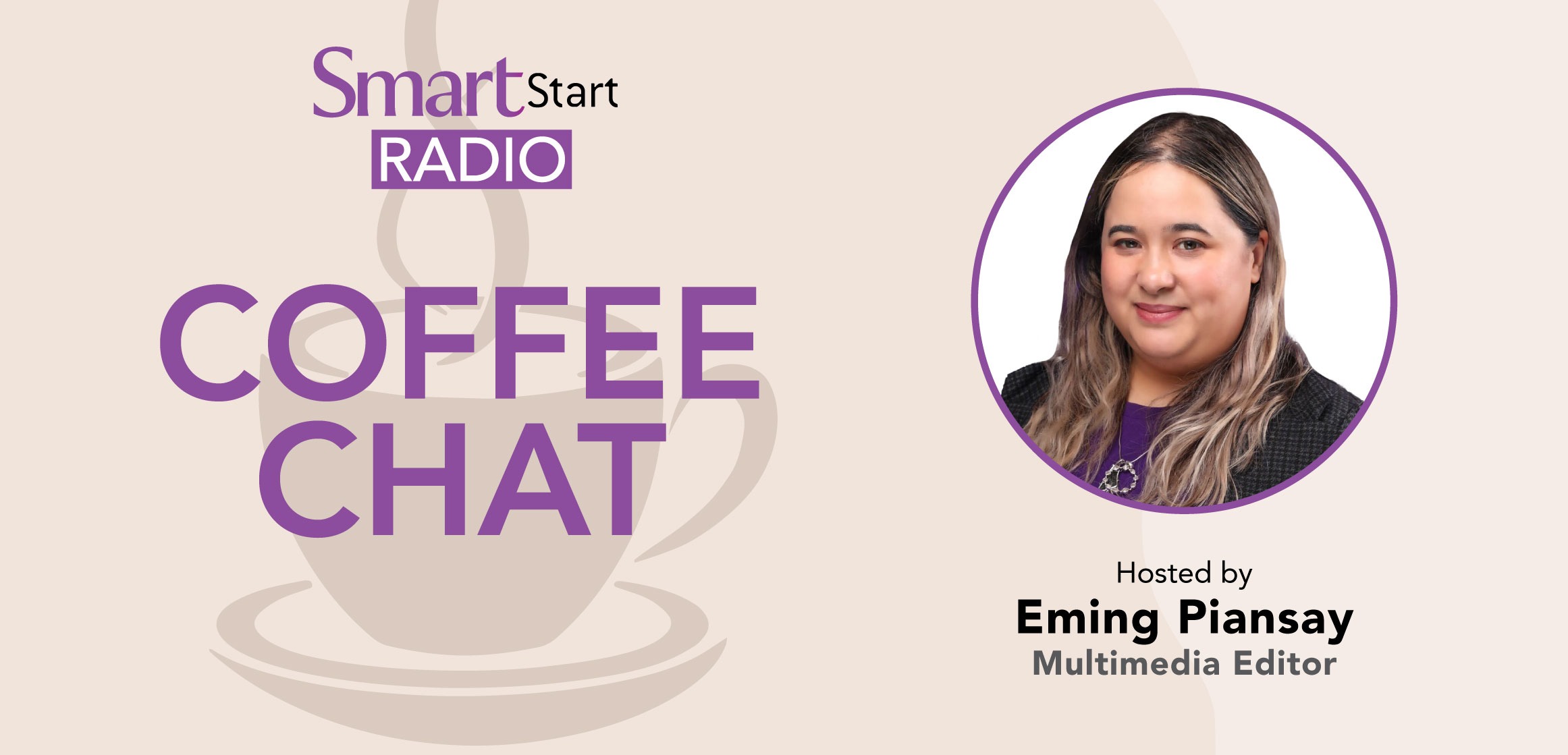
Welcome back, Smart Start Radio family. It is I, Eming Piansay, to another edition of Smart Start Radio Coffee Chat, where we take one idea floating around the meetings and events industry, pour ourselves something caffeinated and talk our way through it.
So, there’s an article on SmartMeetings.com right now called “The Modern Audience Has Moved On. Your Corporate Events Haven’t.”
And first of all, rude.
But also, maybe accurate.
And I don’t mean you didn’t know what was on the agenda. I mean you actually felt curious about what was coming next.
Because we know the rhythm, right?
You come in, you get your badge and maybe there’s coffee. You sit down. Somebody welcomes everybody. There’s a keynote. There’s a break. There’s a breakout session. There’s lunch. There’s another keynote. There’s a reception afterward.
And none of those things are bad.
That’s the thing.
There is nothing inherently wrong with a keynote. There’s nothing wrong with a breakout session. There is certainly nothing wrong with coffee.
Please, please keep the coffee. Keep it coming.
Actually, I travel a lot and I go to events, and when I see the agenda, every event is different, but you can kind of gauge, based on the agenda, the shape of how an event is going to look and how it’s going to feel as the day progresses without having to actually experience it.
Based on that, you can get a sense of how your day is going to unwind.
And I think there’s a difference between having structure and becoming predictable.
The article makes the point that audiences have changed. The way we consume information has changed, too. The way we interact with entertainment has changed. The way we communicate with each other has changed.
And yet, sometimes we still design events like the audience is going to politely sit there and absorb information for eight hours.
And that’s also a really big ask.
Especially when the little rectangle sitting in everyone’s pocket, i.e. your phone, contains literally every distraction known to mankind.
TikTok, Instagram, your email, your text messages. You name it. It’s going beep, beep, beep, beep, beep, or whatever sound you have attached to it.
So maybe the question isn’t, “How do we get attendees to put their phones away?”
Maybe the question is, “What are we giving them that is more interesting than their phone?”
Which is literally the question of the hour for most events.
If you walk into any room and look around, I’m assuming you’re seeing a chunk of people on their phones.
Not to say that the content of the room isn’t interesting, but we live in a society where people are drawn to their phones. We have this five-second TikTok culture.
Our goal for the meetings industry is to make the stuff in the room more interesting than the stuff on your phone.
So how do we do that?
How do we do that?
I don’t have the answer, but it’s a question we should be asking ourselves.
I don’t think every event suddenly needs fireworks or drones or immersive projection walls and someone hanging from a wall.
Although, if it’s in your budget, I would love to see it.
Please invite me.
I’m not opposed to that experience at all.
I think sometimes we hear “engagement” and immediately translate that into adding more things.
I think that’s kind of our knee-jerk reaction for these kinds of experiences: more activations, more technology, more entertainment.
And maybe what needs to change isn’t the amount of stuff.
Maybe it’s just the rhythm of the event.
One of the examples in the article replaces the traditional networking or icebreaker activity with a furniture-building challenge.
People had to work together. There was a time component to it, and the furniture ultimately went to families affected by wildfires.
Think about how different that feels from walking into a ballroom and hearing, “Okay, everyone, turn to the next person and tell them one fun fact about yourself.”
No.
Absolutely not.
I suddenly have never had a fun fact in my entire life.
Totally brained it. I have nothing in my head to share.
I mean, sure, that’s a fine icebreaker. I’ve done it.
But let’s be different.
Let’s do something that’s not just the standard, “Share a random thing about yourself that you have to come up with on the spot.”
Let’s make it an immersive, engaging thing that makes us work together in some capacity that isn’t forced and has an actual impact, which is essentially what the article talks about.
Give me something to do with someone.
Now we have something to talk about.
Now we have something to do together.
And maybe that’s part of what modern audiences are asking for. Not necessarily constant entertainment or constantly working together, but participation and agency.
A reason to lean forward instead of sitting back and waiting for the next slide to pop up.
And I think planners are in an interesting position because there’s also a reason events fall into these formats.
Because they work.
They’re understandable. Everyone knows how to produce them. Your stakeholders know what they’re buying. Your speakers know what they’re supposed to do. Your attendees know where they’re supposed to sit.
And sometimes that format just feels safe.
People like what’s safe and familiar, and it gives you that structure.
But it never hurts to be different.
It’s OK to work outside the box sometimes, especially if you have a specific goal in mind that you’re trying to achieve.
Boring can look a little different and a little more deconstructed, if you will, if you’re trying to get a specific reaction from the attendees. If you’re trying to have them behave, engage or respond in a particular way.
Because safe and memorable are not always the same thing.
And I’m not saying we need to blow up the agenda.
That’s not what I mean at all.
I think sometimes the smallest change can switch the entire energy of the room.
Maybe your keynote isn’t an hour.
Maybe someone speaks for 20 minutes, and then the audience actually gets to do something with what they learned.
Maybe the networking doesn’t start with, “Go network.”
Maybe people are given a, “Here, solve this problem or issue together,” kind of situation.
Maybe the session doesn’t look exactly the same at 3 p.m. as it did first thing in the morning.
Maybe the attendees get to choose where the conversation goes next.
Maybe there’s space for something unexpected.
Because I think that’s really what we’re talking about: surprise.
And surprise does something really interesting to our attention.
When we already know exactly what is about to happen, it’s easy to mentally check out.
When something changes, even a little bit, suddenly we’re back in the room and we’re like, “Oh my God, this is amazing. This is different. This is new.”
“I’ve never heard someone talk about this this way before, and this is engaging, and I feel like they’re appealing to me in a new, exciting way that I’d never thought of before.”
This has happened to me many times in my travels.
I went to New Zealand recently, and I went on this really immersive experience with the All Blacks, the rugby team.
They gave this really amazing presentation, and it was very immersive and thoughtful.
I walked away feeling very touched, very deeply emotionally touched, by this experience.
It was a very standard presentation. It wasn’t like they produced fireworks at the actual event.
But the way they were able to essentially create bookmarks within their presentation that were very emotionally rooted within their organization, and how they prefaced everything and made it very human-oriented and thoughtful, really touched me.
I thought it was very well done, and it stuck with me.
And it’s very rare to have those experiences because occasionally you enter these events and it is very standardized in that respect.
So when you go to an event and you actually remember the moments that touch you, that make you feel something, and they stick with you weeks and months after the fact, it’s impressive.
At least I think so.
I keep coming back to this idea that planners aren’t just creating these agendas. They’re also managing how you engage and your attention.
Because you’re deciding when people listen, when they move, when they talk, when they rest, when they’re surprised and when they’re allowed to just sit there and take it all in for a minute.
And that’s honestly a lot more interesting than just filling time slots.
So maybe the question planners should be asking isn’t, “What else can we add?”
Maybe it’s, “Where has this event been too predictable?”
Look at your agenda.
Where can your attendees already guess exactly what’s coming?
And then maybe just change one thing that makes it less predictable.
Not because different is automatically better, but because your audience has changed.
And maybe our events should be allowed to change with them.
Because obviously, time goes on. Gen Z, millennials, there’s an evolution happening in the people who are attending an event.
So obviously the event should change with them as well.
Anyway, that’s what I’ve been thinking about today.
And as always, thank you all for tuning in today.
Once again, I am Eming Piansay from Smart Start Radio Coffee Chat. It’s always a pleasure hanging out with you, and I’ll see you guys next time.
Bye.