Food can make an event memorable, but it can also make it memorable for the wrong reasons.
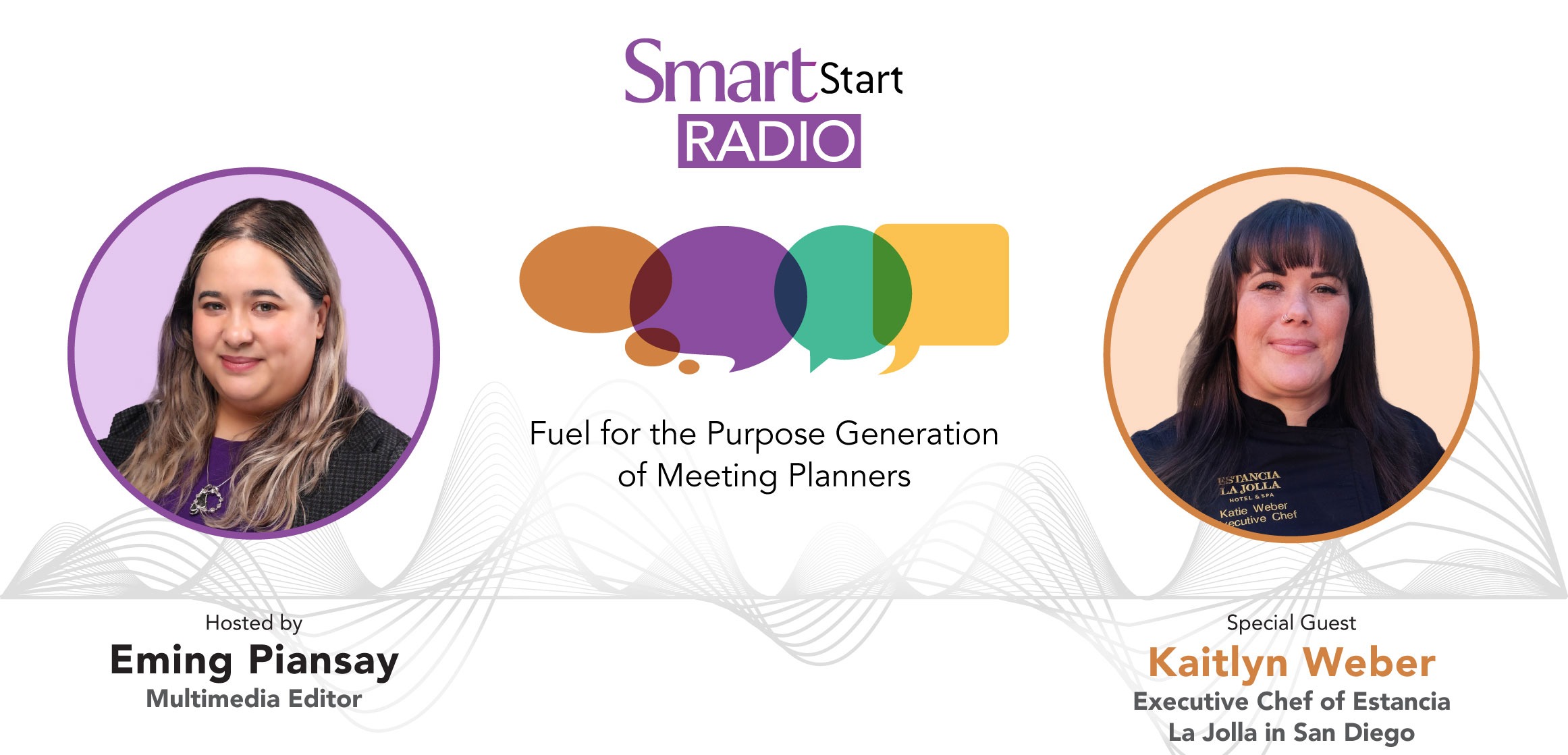
In this episode of Smart Start Radio, Eming Piansay talks with Executive Chef Kaitlyn Weber of Estancia La Jolla Hotel & Spa about the reality of feeding hundreds of guests at meetings and conferences.
They discuss menu design for large groups, handling dietary restrictions, managing last-minute changes and why planners and culinary teams need to work closely together to create the best experience for attendees.
This conversation offers a behind-the-scenes look at the timing, logistics and teamwork that go into every successful banquet.
Leave us a message on our Smart Start Radio Listener Line: speakpipe.com/SmartStartRadio
Further Resources
Accidental Planner: Master the BEO
Eming Piansay
Hi Chef Katie, thank you so much for being here today. To kick things off, I would love to hear more about you, where you’re from, where you work and what brought you into this world of food.
Kaitlyn Weber
Thank you for having me. I’m really excited to be here and talk about my passion, which is food. I live in San Diego, California, and I’m the executive chef at Estancia La Jolla Hotel and Spa. I’ve been here a little over a year, but I’ve been cooking in San Diego for about 23 years.
I’m originally from Cedar Rapids, Iowa. I grew up in a very traditional household where my mom cooked dinner every night. We had gardens, and my family did a lot of canning and preserving. That really shaped how I think about food.
Later, I moved to the Pacific Northwest and started exploring farmers markets and places like Pike Place Market. That was also during the early days of Food Network, which inspired me. Then I moved to San Diego, and everything expanded—fresh produce, proximity to Mexico and a vibrant culinary scene. That’s really where it all took off.
EP
You serve a lot of people, especially in group settings. How do you maintain quality when you’re cooking at scale?
KW
It comes down to what makes sense. You don’t want to serve something that won’t hold well, like fried foods that get soggy. Instead, you focus on dishes that maintain their integrity, like braised items or roasted proteins.
For plated events, timing is everything. We plate as close to service as possible, but we still have to account for holding time and transport to the table. It’s all logistics and planning.
EP
What challenges come up when you’re managing large events, especially with dietary restrictions?
KW
We see the full spectrum of dietary restrictions every day. With large groups, you’re always going to have last-minute requests, so you have to be prepared.
We build flexibility into our menus and keep ingredients on hand to accommodate things like allergies or special diets. In more extreme cases, like airborne allergies, we may bring in a trusted vendor to ensure safety. The goal is always to find a solution.
EP
What’s something planners don’t always think about when it comes to catering?
KW
How food holds over time. Banquet cooking is actually more challenging than restaurant cooking because you have to think about how food will sit, sometimes for hours.
For example, serving ice cream outdoors on a hot day just doesn’t make sense. Those are the kinds of details we’re always thinking about behind the scenes.
EP
You mentioned large-scale events. What’s a favorite experience you’ve had creating a menu?
KW
I love planning big, elaborate events. At Estancia, we host several large activations each year. One of my favorites is our garden party.
I built a menu inspired by my travels, with different stations representing different countries. We had English tea sandwiches, Asian dim sum, Spanish tapas and French pastries. It was such a fun and immersive experience.
EP
Your travel clearly influences your work. How do you approach that?
KW
Travel is a huge source of inspiration for me. I try to experience new dishes everywhere I go and bring those ideas back.
For example, I’ve incorporated global Latin flavors into our restaurant menu, including dishes inspired by Peru and other regions. It keeps things fresh and exciting.
EP
What do you wish planners would communicate more clearly when working with you?
KW
The overall vision. What’s the vibe? Is it casual or formal? Is there a strict timeline or more flexibility?
The more information we have, the more we can create a truly customized experience. We can go beyond standard menus and design something unique.
EP
What’s something you’ve learned in your role that has changed how you approach events?
KW
You can’t control everything. You have to expect the unexpected and stay calm.
If you’re stressed, your team feels it. So you focus on solutions and always have a backup plan for your backup plan.
EP
What does that look like in practice?
KW
It’s about being resourceful. For example, if we run out of something mid-event, we figure out what we can create quickly with what we have.
Recently, we needed more soup for a large wedding. We didn’t have time to start from scratch, but we used ingredients we already had prepped and created a new soup on the fly. That’s the kind of thinking you need.
EP
Is there anything else you want planners to know about working with your team?
KW
We’re always evolving. Our menus change seasonally, and we draw inspiration from local ingredients and global experiences.
We also love creating unique events, whether it’s themed dinners or custom menus. There’s always something new happening, and we’re focused on elevating the experience for every guest.
EP
I definitely need to come visit. Thank you so much for your time.
KW
Thank you. This was really fun. I could talk about food all day.