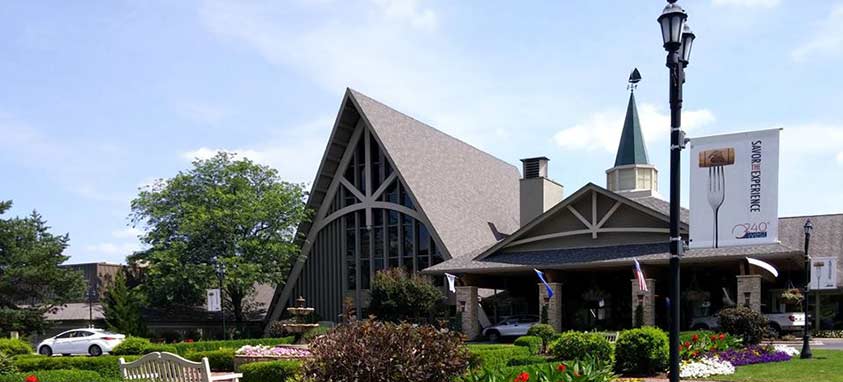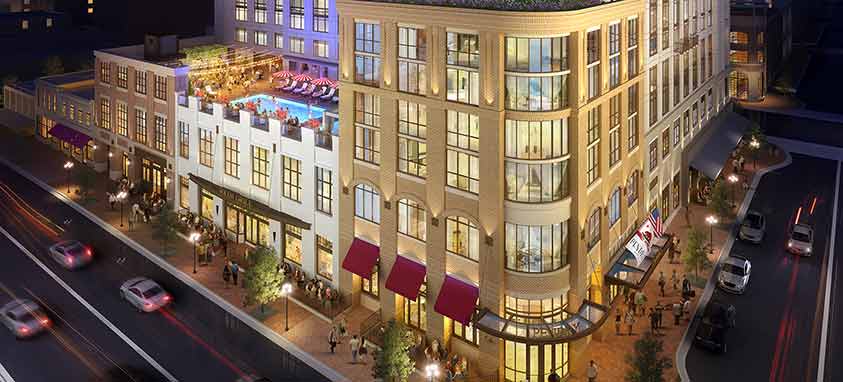
Pendry hotel San Diego Architectural RenderingCourtesy of Montage Hotels & Resorts – Pendry San Diego Architectural Rendering

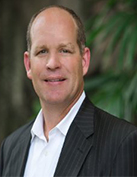
Montage Hotels & Resorts founder and CEO Alan Fuerstman and his son, Michael, are launching a new lifestyle hotel brand named Pendry that will significantly enlarge their portfolio of properties. Ground was broken on Pendry San Diego in the city’s Gaslamp District in October 2014; the projected opening is fall 2016.

“Southern California is home, and we are thrilled to bring another new, innovative option to guests visiting this area,” Alan Fuerstman said. He describes the new brand as “a collection of design-focused hotels in taste-making destinations that will marry fashion-forward, inspired design with the renowned service culture that Montage Hotels & Resorts is known for.”

How Pendry Differs From Montage

According to Michael Fuerstman, the creative director spearheading the brand rollout, Pendry differs from the ultra-luxe Montage brand in several ways. “Pendry Hotels will fill a void between the lifestyle and luxury hotel spaces,” he said. As he describes it, Pendry will merge design and service, with heritage and modern sensibility. “Think: London hip, New York-paced and California healthy,” he said.

Alan Fuerstman expanded on the concept. “Lifestyle hotels are generally known for their vibrant lobbies, bars and F&B, but not for their service or guest rooms. We’re going to combine the two. We’re going to have very active and exciting public spaces, coupled with a luxury experience in the guest rooms.”

The Fuerstmans envision a broad market for Pendry, which will compete with brands such as W Hotels and Edition Hotels.  In contrast, Montage competes in the ultra-luxury market. Montage currently has five properties in the United States; Laguna Beach and Beverly Hills, California; Deer Valley, Utah; Kapalua Bay, Maui, Hawaii; and Palmetto Bluff, South Carolina.

What Pendry Will Offer

Pendry San Diego, located several blocks from San Diego Convention Center, is being designed with both the business and leisure traveler in mind. There will be 317 guest rooms, including 36 suites; a rooftop pool; two restaurants; a lounge and beer hall; a spa and fitness facility; as well as more than 22,000 sq. ft. of meeting space.

Two other Pendry Hotels are in development, and more are in the pipeline. Alan Fuerstman believes the prime market for Pendry is cities such as New York, Miami, Seattle and Austin, Texas.

The name “Pendry” has an interesting origin. It is an old British surname that dates back to the 1300s. “When we discovered that the British surname Pendry embraces ‘Know Thyself’ as its family motto, we knew we had found a brand identification that speaks to the aspirational ethos of our customer . . . self-aware, confident, intellectually curious and engaged,” said Alan Fuerstman.

For more on Pendry Hotels, visit pendryhotels.com. Alan Fuerstman will grace the cover of the August issue of Smart Meetings magazine. Check back to read more about his background and how he developed the Montage Brand.
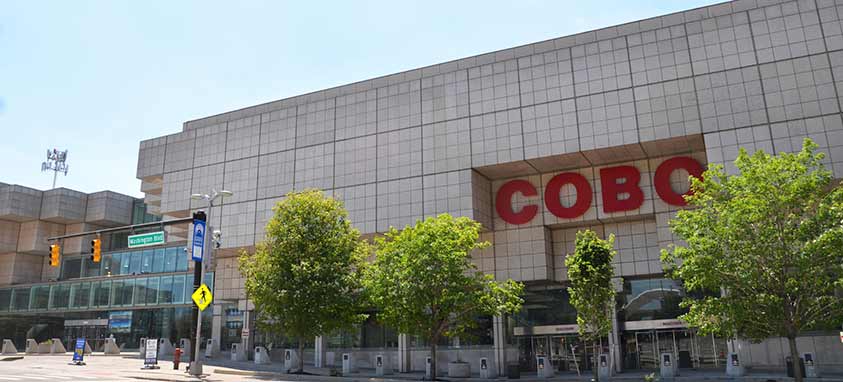
downtown-detroit-is-boomingEvent planners who are attending the American Society of Association Executives (ASAE) annual meeting in Detroit Aug. 8-11 have hopefully secured guest room reservations. Downtown Detroit is facing a hotel room shortage that becomes especially evident when big conventions convene in the Motor City.
More than 5,000 delegates are expected to gather for ASAE event, and the ASAE website indicates that 12 of its 14 partner hotels are already fully booked. These include Aloft Detroit at The David Whitney, Atheneum Suite Hotel, Courtyard by Marriott, Crowne Plaza Detroit, Detroit Marriott at the Renaissance Center, DoubleTree Suites by Hilton, Greektown Casino-Hotel, Hilton Garden Inn, Holiday Inn Express Hotel & Suites, MGM Grand Detroit, MotorCity Casino Hotel and The Westin Book Cadillac Detroit.

The two ASAE partner properties currently showing room availability Aug. 8-11 are Doubletree by Hilton Hotel Detroit- Dearborn and Westin Detroit Metropolitan Airport. They are located 10.5 and 21 miles respectively from the Cobo Center, where the convention will take place.

Downtown Detroit is Booming

As Sherri Welch points out on Crainsdetroit.com, Cobo Center is one of the largest convention centers in the country. Although Metro Detroit has added more than 17,000 new hotel rooms over the past 30 years, the majority are in outlying suburban areas. More hotel rooms are needed in the thriving downtown district, which is currently experiencing a great renaissance. STR Inc., a Tenn.-based hotel consulting firm, notes that the downtown Detroit/Dearborn region has added just 2,100 rooms since 1987 — the earliest year it has on record.

Cobo recently underwent a $299 million renovation—giving it the clout to attract larger conventions—however new properties must open or existing hotels must expand in order to accommodate the growing demand for guest rooms in downtown Detroit. Michael O’Callaghan, executive vice president and COO of the Detroit Metro Convention & Visitors Bureau, told Welch that “the real push for new hotel development in the decade to come will be from events,” adding that the largest growth is expected in downtown Detroit and Novi, near the Suburban Collection Showplace.

Over the past few decades, the largest growth occurred in outlying regions such as Livonia, Romulus, Troy and Auburn Hills.

Keep current on the latest meetings industry tips and tools. Subscribe to Smart  Meetings magazine – FREE.

Think Big Meetings


The Winners: Planners


Breakfast at Arikok National Park
by Susan Avery of Andromeda Consultants

Prize: 5-Day, 4-night stay at Paradisus Cancun Resort in Mexico

Paradisus

Alice in Wonderland After-Party at the Marriott Association Masters Conference
by Sunshine Baker of Hello! Destination Management
Prize: 4-day, 3-night stay at ARIA Resort & Casino in Las Vegas

aria

Annual Employee Meeting, Embassy Suites Charlotte-Concord, North Carolina
by Marie McDaniel of Premier, Inc.
Prize: 3-day, 2-night stay at Hotel del Coronado in California
hotel-coro


The Winners: Hotels and Properties


“[We] provided three different decor looks that were unique and exciting, [including] Cafe Boulud offsite dinner. All the looks were custom designed in-house by our creative and floral team and included extensive branding elements.”originaldate 1/1/0001 6:00:00 AMwidth 836height 475Kerry Simon Says Fight MSA EventBy David Watts of Keep Memory Alive Event Center |

“Legendary rockers, such as Alice Cooper and Sammy Hagar, and celebrity chefs including Daniel Boulud and Michael Mina came together in an epic night to entertain and cook for 450 guests, raising nearly $525,000.”originaldate 1/1/0001 6:00:00 AMwidth 836height 475Meeting BreakBy Steven Klein of Hollywood Beach Marriott |

“This was best because it was for our own associates, for they are the ones that make every event a success for anyone. This was our french fry and s’mores break. Yum in the sun!”originaldate 1/1/0001 6:00:00 AMwidth 836height 475

Havana Nights
by Hillary Smith, CMP, CSEP of Koncept Events
Prize: Apple Watch

Apple Watch

Kerry Simon Says Fight MSA Event
by David Watts of Keep Memory Alive Event Center
Prize: VIP Event Invite to a Smart Meeting
Smart Meetings

Meeting Break
by Steven Klein of Hollywood Beach Marriott
Prize: Native advertising on smartmeetings.com

desktop

For More Updates on Our #ThinkBigMeetings Contest –SUBSCRIBE NOW!


Maggie Mae’s – Austin, Texas

Smart Meetings and Maggie Mae’s teamed up for an authentic Austin, Texas, event during the DMAI conference last week. Thanks to all of our friends who joined us at this unique space, which offers planners lots of event options including four historic buildings, outdoor stages and private rooms. Trust us: The fun factor is very high at Maggie Mae’s.

tehran-travel

As the Iran Nuclear agreement heads to Congress after recently receiving approval from the U.N. Security Council, hoteliers are anticipating new avenues for business and tourism. Hotel brands such as Marriott, AccorHotels and Hospitality Management Holdings (HMH) are awaiting news of lifted sanctions in Iran to open more hotels.

Hotelier Middle East reports that in recent years, hotel operators have been dissuaded from extending their brands in Iran due to negative media coverage. Before the Islamic Revolution in 1979, international brands such as Starwood, Hilton, Hyatt and InterContinental Hotels Group (IHG) operated luxury properties in Tehran.

Rotana Hotel Management Corporation was the first international brand to stake its claim in Iran, even before talks of a deal were in place. The UAE-based corporation opened properties in Tehran in 2013, and currently has four properties in various phases of development.

In the pilgrimage city of Mashhad, Rotana plans to open a 362-room property in 2017 and a 275-room property in 2018. Two more Tehran hotels, a 194-room five-star property and a 210-room four-star property, are planned for 2018. Rotana recognizes a need for hotels in the Persian nation that has experienced many years of isolation.

AccorHotels has also announced intentions to build two properties in the Iranian capital under its Ibis and Novotel brands. The French operator will open a four-star hotel this year, followed by another five-star property nearby. AccorHotels offers the largest number of hotel rooms in Europe.

HMH has a strong tradition of opening properties in the Middle East. It prides itself on being the first hotel chain to offer alcohol-free and halal-friendly lodgings. The management company has a keen interest in Iran, and is anxiously watching the status of sanctions. Marriott International is also looking forward to renewed relations with Iran and the international community.

For its population of approximately 12 million, Tehran offers just 16 four- and five-star properties among its low inventory of 96 hotels. Next door, Dubai has more than 650 hotels. However, numbers of tourists have increased in the last few years. A recent report from TRI Consulting states that 4.8 million tourists arrived in Iran in 2014, a marked increase from 3.1 million visitors in 2010. By 2024, Iran expects 5.2 million visitors.

new and renovated report

The Abbey Resort
Fontana, Wisconsin

The Abbey Resort has completed the final phase of a multimillion-dollar renovation that began in 2013 and highlights Smart Meetings’ weekly new and renovated report. The expansive property is located 80 miles from Chicago and 50 miles from Milwaukee on the shores of Lake Geneva.

The renovations included upgrades to three meeting rooms and the transformation of hallway areas where buildings connect into miniature lobbies. The newly renovated lounge and corridor areas feature new carpet, wallpaper, artwork and furniture, providing ample gathering space for attendees to collaborate and socialize before and after meetings. The project also included major renovations of the 35,000-square-foot Avani Spa, two restaurants, two bars and coffee shop.

There 334 guest rooms and suites, 40,000 sq. ft. of indoor and outdoor meeting space.


The Spectator Hotel
Charleston, South Carolinanew and renovated report

A new 41-room luxury hotel opened last week in the heart of historic Charleston, South Carolina. There is meeting space for up to 50 people. The hotel is named after the iconic spectator shoe of the ’20s and ’30s, and the property’s architecture reflects the shoe’s style, including wrought-iron railings that are reminiscent of the shoe’s stitching.

“Guests at The Spectator Hotel are surrounded by beauty and carefully crafted fashion, form and elegance,” says Jay Keenan, one of the developers. “Vintage touches and high-styled Hollywood glamour are complemented by modern sensibilities.”


Riverhouse Hotel & Convention Center
Bend, Oregon

The 30,000-square-foot convention new and renovated reportcenter has new technology, including full HD components and improved wireless Internet connections.
The upgrade to the LEED certified convention center comes on the heels of the property’s purchase in March by Vancouver-based Vesta Hospitality, which has announced plans for an $8 million renovation to the guest rooms and dining facilities.

“The Riverhouse Convention Center needed very little work as a standalone property, however with technology changing so quickly, much of the audio and visual equipment was dated, and we want to ensure our guests and meeting clients have a seamless experience when hosting an event in our facility,” says Rick Takach, CEO of Vesta Hospitality. “We worked with a local company to execute the upgrade, which gives us access to onsite support and ensures reliability.”


To share information on new and renovated meeting properties, contact Smart Meetings Content Manager Holly Woolard at [email protected]

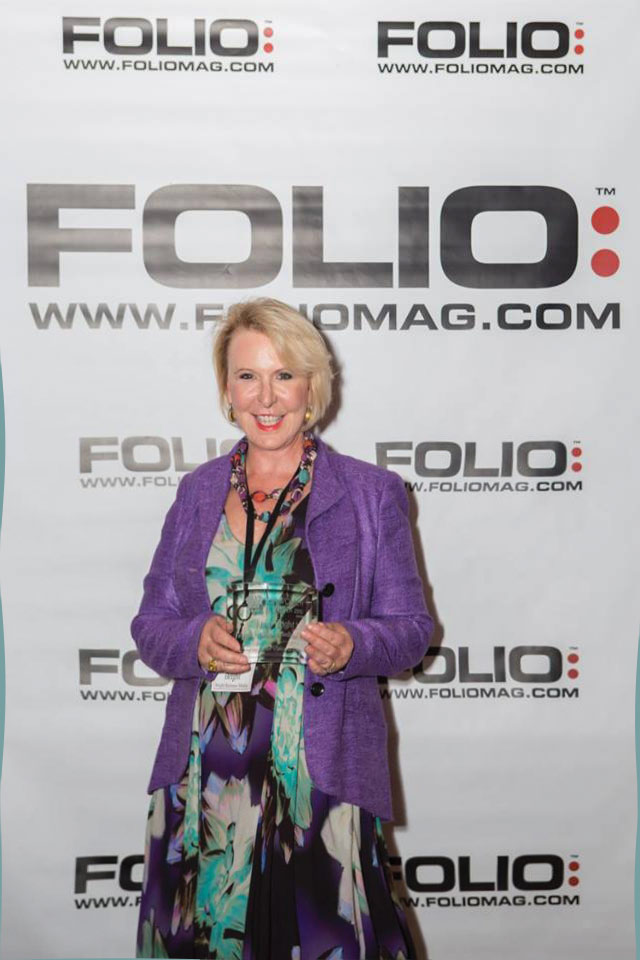
Marin Bright Folio Award Leadership ColumnOn a summer-like day in New York City at the Grand Hyatt earlier this week, I had mixed feelings as I sat as an honoree at Folio’s Top Women in Media Awards. While I was thrilled to be surrounded by esteemed trailblazers, I was a little disappointed that women in media, especially women at the top, are so extremely rare.

I was not the only honoree who was wondering how long it was going to take for things to change. There were a lot of comments about how media-award ballrooms are always full of men, with at best two women, and how we need to break glass ceilings for other women coming up.

I have many thoughts about this, being the only woman in so many arenas I’ve participated in, from sports to business. First, I must say I really can’t believe this is still going on. When I started, it was typical that I was the only woman.

But second, I experienced an indescribable camaraderie with my peers, which gives me hope and pushes me to continue to be a bridge for women, especially women in media and the meetings industry. I saw the scale tip ever so slightly, thanks to those inspiring women who are making a lasting impact on their brands, organizations and markets.

The keynote speaker during Folio’s award luncheon was Judy Robinett, author of How to Be a Power Connector. I totally agree with Judy’s networking philosophy: Network to the third degree. This happens when you know somebody who knows somebody who can introduce you to somebody who can help you, say, start your own business.

Judy reminded us that we also need to ask people for help. Your biggest networking circle will be less than 50 people, so identify those individuals and let the networking begin.

These practical guidelines were reinforced throughout the awards banquet. From the minute I got there, people were shaking hands, and congratulating each other in the elevator. Everyone was very friendly. I felt like it was a very supportive group—that we were all from the same tribe.

Speaking of tribe, I really enjoyed the women I got to know at my table. Sara Wyant of Agri-Pulse has a great story, which shares a common theme with my own: a woman-owned media company filling a need in a niche market and kicking her competitors’ butts.

Sara, who started Agri-Pulse Communications in 2004, is the woman behind the leading communications company serving agriculture and rural policy, with more than 5,000 paid subscribers. Her Washington, D.C.-based staff goes head to head with major media companies.

It was also special to rub shoulders with Ellen Levine, who has had a distinguished career as editorial director for Hearst Magazines. Among her successful launches are O, The Oprah Magazine; Food Network Magazine; HGTV Magazine; and Dr. Oz The Good Life. Ellen is used to media attention, making publishing history in 1994 when she became the first woman to be named editor-in-chief of Good Housekeeping, which dates to 1885.

Lisa Stone, who was among the entrepreneurs honored during the Folio awards, is chief community officer for SheKnows Media. Frustrated that all the bloggers were men, Lisa co-founded BlogHer in 2005, helping create a cross-platform media network for women. Just as Lisa’s frustrations about the lack of women with a social media voice led to the creation of her communications company, my own journey led to the founding of Smart Meetings—which I like to think has also made a positive difference in the meetings industry.

So rather than rush away after I took the stage for my award, I slowed down to enjoy the moment. Being in the moment is a key aspect of networking. You never know who someone knows, what you may have in common with that person you meet in a hallway and what you may learn by networking with your contemporaries.

Bright Networking Tips

–You have to be friendly the minute you hit the door, looking warm and approachable. (Use your time in the elevator wisely, as well.)

–Make sure you’re informed about the event you’re attending. Who are the other attendees? Who is sitting at my table? Will there be photos to be used later? Can I meet the keynote speaker?

–Ask questions of the people at your table or those you’re standing next to in line for a cocktail.

–Avoid pulling out your phone unless shooting a photo to post to social media. Every second counts when there are networking opportunities.

–Stay until the end of your event. Last woman standing seals the deal.


marin-bright-ico-1Marin Bright is CEO and founder of Bright Business Media, LLC, which publishes Smart Meetings magazine. She was honored in June during Folio’s Top Women in Media Awards as a corporate visionary. Read her new leadership column online and in print.

Sara Blaynesmart moves

Lynnwood Convention Center in Lynnwood, Wash. promoted Sara Blayne, CMP as general manager. Blayne is directing the convention center’s operations and will work with Lynnwood Public Facilities District to help grow the building’s success. Previously, she was director of sales and marketing at Lynnwood Convention Center and has spent 20 years in the hospitality and events industries.

“The Lynnwood Public Facilities District supports SMG’s appointment of Sara Blayne as the General Manager of the Lynnwood Convention Center.  The District is confident in her skill and ability to lead and manage convention center operations, and we look forward to working with her,” said Grant Dull, executive director of the Lynnwood Public Facilities District.


smart movesKeith Backsen

The new director of the Omaha Convention and Visitors Bureau is Keith Backsen, a 30 year hospitality and convention industry veteran. Backsen was previously vice president of sales and services for Visit Spokane. While there, he expanded the convention center, increased hotel inventory and opened sales offices in Washington D.C and Chicago.

“Keith brings enthusiasm and experience that will help Omaha grow as a tourism destination and convention city,” said Omaha Mayor Jean Stothert. “He is well known in the industry and will be a strong leader, innovator and mentor to our convention and visitors bureau staff.”


Amaury Piedrasmart moves

Amaury Piedra was named as managing director for Hawks Cay Resort, Villas and Marina in the Florida Keys, which recently underwent a multi-million dollar renovation. With more than 20 years of experience, Piedra comes from a long tenure with Starwood Hotels & Resorts, where he served as general manager of the Westin and Sheraton Ft. Lauderdale Beach Resorts. Prior to that position, he was resort manager for Westin and Sheraton Our Lucaya Resort and hotel manager for Sheraton New Orleans Hotel.

“Hawks Cay has already positioned itself as the Keys’ top destination for outdoor fun in the sun,” says Piedra. “I am eager to lead the resort’s experienced team and take us to the next level. With so many new offerings and even more on the horizon, there couldn’t be a better time to join this world-class destination.”


Skip Jamessmart moves

Lansdowne Resort, a Destination Hotels property, announced Skip James as its director of sales and marketing. In his new role, James oversees group, leisure sales, golf marketing, spa and food and beverage marking activities. Before joining Lansdowne Resort, James held the director of sales and marketing position at Turnberry Isle Miami and Sunriver Resort in Bend, Oregon. He brings more than 20 years of hospitality experience.

“Skip’s vast experience in the hotel industry, and him having served in similar capacities at luxury resorts that offer similar services and amenities as Lansdowne Resort, makes him a perfect complement to help guide the management team’s long-term objections,” said James Horsman, area managing director of Destination Hotels.


Timothy Lamsmart moves

The International School of Hospitality (TISOH) promoted Timothy M. Lam from executive director to president of the foundation for the National Association for Catering and Events (NACE). Lam also served as vice president of the foundation and is a founding member of TISOH. More than 1,500 students have graduated from the 10-year-old school, which specializes in short-term courses on event planning, catering, concierge and hospitality leadership.

“I am honored to serve on the foundation of NACE,” Lam said. “The foundation’s focus on supporting the catering and events industry through education, investment in the community and philanthropy reflects the values we uphold at TISOH. I hope to continue to advance those values and help keep the industry moving forward.”


Pavan Kapursmart moves

The Atlantis, Paradise Island in the Bahamas welcomed Pavan Kapur as senior vice president of revenue optimization and strategy. In his new role, Kapur is responsible for leading strategic direction across the entire property. Kapur has over 15 years of finance, revenue and analytics experience. Most recently, he served as vice president of revenue optimization for Caesar’s Entertainment Corporation in Las Vegas.

“Atlantis’ revenue management is evolving to focus on the total guest spend model,” said Paul Burke, president and managing director. “Pavan’s expertise and wealth of knowledge will bring both strength and growth to our new comprehensive revenue structure.”

airbnb

If it looks like a hotel and acts like a hotel, then it should be treated like a hotel. That’s the argument American Hotel & Lodging Association (AHLA) has made to the sharing economy. In recent months, debates are mounting over the legality of properties offered on rental websites such as Airbnb, HomeAway and Flipkey. Various state and senate bills are surfacing amid a call to impose restrictions, in particular, upon more than one million rentals in Airbnb’s portfolio.

During a Federal Trade Commission “Sharing Economy” workshop last month, Vanessa Sinders, senior vice president of AHLA, voiced concern about the risks surrounding Airbnb rentals. Sinders wants to level the playing field between home rentals and the hospitality industry by leveraging equal taxes and measures to ensure consumer safety.

“Our industry remains successful because our members embrace a highly competitive business model where everyone plays by the same rules,” she said. “Right now there is an un-level playing field that is compromising consumer safety, endangering the character and security of residential neighborhoods around the country and changing the housing market in some negative ways.”

Snider says most Airbnb rentals do not follow safety, security, health and fire standards, in addition to bypassing taxes, rules and regulations hoteliers must adhere to. Last year, hotels collectively contributed $134 billion in federal, state and local tax revenue.

AHLA and other lodging associations have funneled millions of lobbying dollars to state legislatures and political groups. The group is also behind a grassroots-inspired neighborhood oversight website that encourages concerned citizens to write to their local offices about the threats rental websites pose, from renter safety to driving up housing costs.

State Legislature vs. Airbnb

Short-term housing rentals will be addressed in San Francisco’s November ballot. The proposal would limit such rentals to 75 nights a year and permit hosting platforms to only list units registered with the city. Based in San Francisco, Airbnb offers approximately 6,000 active listings in the city. The current law allows a 90-day rental period for an entire home. Hosted rentals do not have a limit, but they are required to register with the city and pay an annual fee.

Silicon Valley is reviewing a bill that would require home rental websites to report booking information, including the number of guests and length of stays, to cities and counties. The measure also tacks on lodging taxes and prevents bookings in areas that do not allow short-term rentals. Airbnb responded that the bill would force the company to leak reams of personal information to bureaucrats who would potentially search through data for violations of local planning and zoning laws.

In New York, the state’s attorney general found 72 percent of Airbnb listings to be illegal. A 2011 state law prohibits residential rentals for less than 29 days. So far, more than 6,000 fines have been issued to New Yorkers who chose to skirt the law, which was originally meant to prevent landlords from turning entire residential buildings into hotels.

Airbnb maintains that it has had a positive economic impact on cities that allow home-share rentals. A 2012 Airbnb study determined that the company created $56 million in local spending in San Francisco. Out of that, $12.7 million went directly to host households. In New York City, more than 400,000 guests generated $632 million in economic activity via the home-rental website. Airbnb cites $105 million in direct spending to outer boroughs that it claims do not typically benefit from tourism dollars. The company upholds that rental properties are located outside of central hotel districts.


Cuba Impacts Caribbean TourismNot everyone is toasting the news that Cuba may soon be opening its doors to unrestricted travel. Caribbean tourism officials are concerned that the recent shift in U.S. government policy may result in a loss of visitors to other Caribbean islands, and they are stressing the importance of working together to promote regional tourism.

The Caribbean Hotel & Tourism Association (CHTA) predicts that effects of Cuba on Caribbean tourism will be “unprecedented.” On June 18 the organization released a white paper entitled, Cuba: The Great Disruption for the Good of the Caribbean. It opens with a bold statement: “The biggest and most disruptive pebble to be dropped into the Caribbean pool in 50 years will arrive with the opening of travel to Cuba for United States citizens.”

Cuba Presents Tourism Challenges and Opportunities

CHTA points out that the removal of travel barriers to Cuba presents the Caribbean with both challenges and opportunities. Almost three-quarters of visitors to the Caribbean come from the U.S., and up until now, other Caribbean islands have not felt competition from Cuba.  For decades, CHTA believes the region has relied on its sun and beaches, but more importantly its proximity to the United States, the largest economy on earth, for its success. The organization believes the emergence of Cuba as a bona fide travel destination will give the Caribbean “a good shake up.”

In the paper CHTA writes, “The coming Cuban disruption just might be the tonic that the countries need individually and collectively to build the kind of strategic approaches to tourism development that will yield sustainable results for its citizens.”

CHTA Chief Executive Frank Comito told the Miami Herald, “It’s a wake-up call,” adding that “it presents an opportunity for the Caribbean to begin working together on improving marketing, offering dual destination visits, easing barriers such as cost and ease of travel, sharing best practices and using tourism more effectively as an economic development tool.”

Emil Lee, president of CHTA and a St. Maarten hotelier, told the Miami Herald, ““We recognize that the opening of Cuba to American tourists will have an impact on both Cuba and the region and want to maximize the positive benefits for all stakeholders and, at the same time, set a tone for a new era of cooperation among Caribbean nations.”

Caribbean Basin Tourism Initiative

To that end, CHTA is proposing the urgent creation of a Caribbean Basin Tourism Initiative. They envision it similar to a partnership initiated with the United States in the 1980s that encouraged investment in the region and permitted duty-free access to the U.S. market for Caribbean goods. This new agreement would focus on tourism rather than manufacturing, with the ultimate goal of developing an economically viable, safe and stable Caribbean.

According to the white paper, the initiative “could also become the spark that ignites the long desired and much needed cooperation and collaboration among all of the governments and the private sector organizations of the Caribbean region.”

It notes that Cuba is no neophyte when it comes to tourism. Despite a 50-year trade embargo that greatly restricted the number of Americans who could officially visit the island, Cuba is second  to the Dominican Republic as the most visited destination in the Caribbean. In 2014 Cuba welcomed more than 3 million visitors, mostly from Canada, South America and Europe. During the first quarter of 2015, the Cuban Tourism Ministry reports that it has welcomed a record 1.14 million travelers.

Impact on the Cruise and Airline Industries

The opening of Cuba to Americans will greatly impact other businesses, namely the cruise and airline industries. Carnival Corp., the world’s largest cruise ship company, has secured approval from the U.S. government to sail to Cuba for voyages that focus on cultural exchange. It expects to receive official approval from the Cuban government shortly, and hopes to begin offering the trips under its Fathom brand beginning in May 2016.

Other cruise companies are also likely to embrace Cuba as a destination. The cruise sector has been seeking new ports of call that go beyond sun and sea; formerly-forbidden Cuba is intriguing because of its colorful and authentic cultural scene. The reality is, however, that multi-destination cruise lines may drop some existing ports, especially in the far reaches of the Caribbean, in favor of Cuba. There are economic incentives for this—Cuba is located just 90 miles from the U.S. mainland; the fuel cost of going there is more appealing than journeying to a faraway island.

Similarly, there is concern that airlines eager to jump on the Cuba bandwagon will shift their aircraft routes, curtailing or even eliminating runs to less popular islands in the Caribbean. While this is a possibility, the flip side is that carriers could add connections in the Caribbean in an effort to draw more business. Currently no commercial airlines fly from the U.S. to Cuba; Americans traveling from U.S. soil must take charter flights. There is no doubt that as soon as commercial carriers are cleared to fly direct from America, they will schedule routes.

The Opening of Cuba is History-Making

CHTA views the opening of Cuba as a historic event similar to the fall of the infamous Berlin Wall. That highly-charged political event served to unify Europe and strengthen its economy. It suggests that the removal of the U.S. embargo of Cuba can similarly strengthen the Caribbean by ushering in a new era of regional cooperation, stimulating employment opportunities, spawning small- and mid-sized tourism related enterprises and presenting exciting investment opportunities.

Acknowledging the irony , CHTA states, ”the country that many regard as the least capitalistic in the region is about to teach the capitalists and free market adherents a lesson.”

Keep current on the latest meetings industry tips and tools. Subscribe to Smart  Meetings magazine – FREE.