Airport HotelsAirport hotels used to be where travelers stayed when they had a long layover, an early flight out the following day, or were jetting into a city just to attend a short meeting or event. Today, however, airport hotels are evolving, in part because airports are becoming more attractive places to spend time. As travelpulse.com points out, new properties built inside terminals are not simply a convenient option for travelers in the midst of a journey, but are becoming resort-like venues and bona fide destinations of their own.

Airport Hotels Evolve

The Westin Detroit Metropolitan Airport is built right into the terminal at Detroit Metropolitan Wayne County Airport (DTW). The luxury hotel has its own security checkpoint, and non-flying guests can get passes that enable them to take advance of the restaurants and shops in the terminal. The fitness center and pool overlook the main runway.

In Florida, swimmers at The Hyatt Hotel at Orlando International Airport (MCO) have full view of the tarmac while they take a dip, while the Orlando Inn will retrieve guests’ luggage at baggage claim and deliver it directly to their room.

There are two upscale airport hotels at Dallas/Fort Worth International Airport (DFW) and one will open at Denver International Airport (DEN) in November. A growing number of cities, including Atlanta, Minneapolis/Saint Paul and New Orleans, are planning similar hotel projects.  In New York, the option to create a hotel is included in the $4 billion makeover of LaGuardia Airport, and a hotel complex with 505 guest rooms and 40,000 sq. ft. of event space is included as part of the redesign of the old TWA terminal at John F. Kennedy International Airport (JFK).

At many of the luxury airport hotels, visitors and guests can take advantage of spa services or enjoy a meal at an acclaimed restaurant.

An Attractive Option When Stranded

Airport hotels provide an attractive option to travelers who get stranded at the airport due to mechanical problems or an unexpected storm. Instead of sleeping on the floor or across three uncomfortable chairs, they can check into a comfortable hotel for a few hours, or overnight.

While most of the airport hotels in the United States today are decidedly upscale, more low-end properties may be opening in the future. Capsule hotels, which are popular in Japan, offer tiny rooms with just the most basic of amenities. This may be perfect for travelers needing a quiet place to shower or catch a few hours of sleep before continuing on their journeys. Capsule hotels have been introduced under the British brand Yotel at Gatwick Airport (LGW), Heathrow Airport (LHR) and Amsterdam Airport Schiphol (AMS).

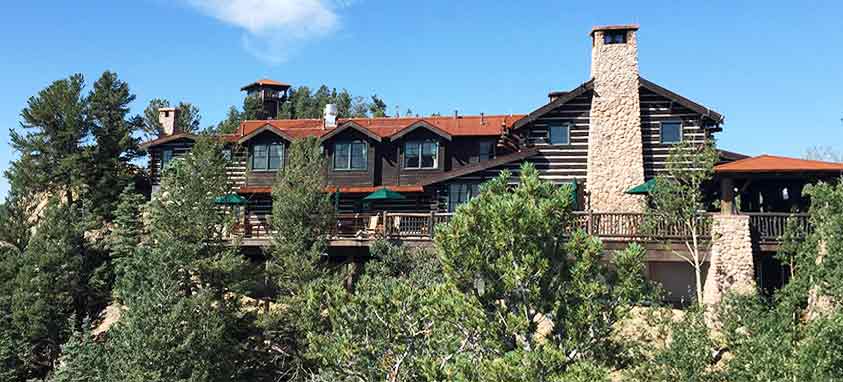
The Broadmoor HillsideThe Broadmoor in Colorado Springs is already a Forbes Five Star, AAA Five Diamond resort that boasts nearly 100 years of exquisite hospitality. Refusing to rest on its laurels, The Broadmoor is diversifying these days, infusing adventure experiences that take full advantage of its glorious mountainous surroundings.

The newest project is Soaring Adventure, which is expected to open Aug. 13 at Seven Falls, one of the key attractions in the Pikes Peak Region and just minutes from The Broadmoor’s main historic property. There will be two ziplines that will showcase the spectacular 1,250-foot high canyon and its 181-foot waterfall that has seven drops.

With a goal to rank among the Top 10 ziplines in the world, Soaring Adventures has a huge advantage over rivals due to its natural environs. Those brave enough to zipline through woods and towering rocks can expect speeds of up to 50 mph. The more advanced of the two courses, which opens in mid-September, will conclude with a rappel to the canyon floor.

The falls area was devastated by flooding in 2013, so the project also serves to bring back to life this popular feature, regarded as Colorado’s top waterfall by National Geographic.

“The goal of our work at Seven Falls has been to restore the natural beauty of this historical attraction,” says Broadmoor President and CEO Jack Damioli. “This summer, guests can experience an all-new adventure and have more reason to visit than ever before.”


Want to Experience The Broadmoor?
Learn more about our Colorado Springs event  


The former snack and souvenir shop at the falls is being transformed into Restaurant 1858, which will feature Colorado cuisine including venison sausage, a variety of trout dishes and bison. This space will be available for buyouts, and the areas just below the falls will no doubt awe groups besides opening their eyes to the amazing scenery in The Broadmoor’s backyard.

It will be possible to walk to the falls from The Broadmoor, with new paths being created; shuttle service from the resort will be available along with trolley service from the park entrance.

Diverse Wilderness Experiences

The Broadmoor’s adventure and wilderness experiences are so diverse that there’s even a shop at the resort that not only arranges offsites, but has a very good selection of outdoor apparel. Located inside the golf, tennis and spa building of the resort campus, Base Camp is the place to go to arrange mountain bike tours, guided hikes, rock climbing, fishing and bike rentals.

There are now three lodges between 30 to 40 minutes from The Broadmoor that deliver an incredible array of wilderness experiences. On a trip this week, I got to indulge in adventure at two of the three lodges.

The Ranch at Emerald Valley has the most variety of outdoor opportunities, with hiking, horseback riding, pond fishing, kayaking and archery. The cabins exude a western vibe, while gourmet meals reflect The Broadmoor’s luxurious flavor. There’s room for 32 guests to spend the night and buyouts are available at this seasonal retreat tucked away in a green valley dotted with wildflowers.

Cloud Camp, which overlooks The Broadmoor and Colorado Springs at 9,200 feet, has room for 60 overnight guests and also can be bought out. One thing that stands out about the lodge and cabins is the Western artwork adorning the walls. Originals and replicas by such artists as Frederic Remington are hanging next to Native American artifacts, helping create a get-a-way-from-it-all experience.

Fishing Camp, which has overnight accommodations for 21, offers river fishing and experts to make sure you catch on quickly. This lodge also can be bought out and makes for awesome day trips for those meeting at The Broadmoor’s expansive meeting space.

With 779 guest rooms, 62 meeting rooms and 185,000 sq. ft. of event space, The Broadmoor’s main campus has long been known as a distinctive gathering destination for groups. Guests particularly appreciate the resort’s three golf courses, six tennis courts and spa. Now, along with amazing wilderness adventures, The Broadmoor continues to re-imagine luxury and guest services.

A word of caution to meeting planners: There are so many fun offsite adventures  coordinated by The Broadmoor that it may be tough to get groups to attend all of your meetings. We think that’s a good problem to have.


Want to Experience The Broadmoor?
Learn more about our Colorado Springs event


sheraton grand rioStarwood Hotels & Resorts Worldwide, Inc. is putting a feather in the cap of its most exceptional Sheraton properties across the globe.

In late August, the high-end hotel company rolled out the Sheraton Grand designation, what they’re calling their new premier tier of Sheraton properties.

The new honorific will go to Sheraton hotels that demonstrate excellence in design, service, amenities, room standards function space, and those that are in the most enticing worldwide destinations.

“Sheraton is Starwood’s largest and most global brand, and as we continue our work to firmly keep Sheraton in the spotlight, we recognize the need to better match guest expectations for the brand around the world,” said Adam Aron, Starwood’s interim CEO. “Sheraton Grand celebrates our standout hotels and helps us further reinforce Sheraton as a trusted voice in global travel.”

Aron didn’t go into deep details about what will earn a hotel the Grand title, but did offer up some guidelines:

-Resorts, convention properties, and urban hotels that offer unrivaled standards of service and outperform guest satisfaction benchmarks

-Dynamic guestrooms and public spaces exhibiting sophisticated design and elevated finishes

-Desirable and sought-after locations ranging from primary city settings to spectacular beachfronts

-Impressive hotel amenities, including top-rated restaurant concepts and renowned chefs, superior gyms, uniqueSheraton Club lounges, and an array of idyllic spa options

-Inspiring and state-of-the-art function space for events, meetings, and conferences

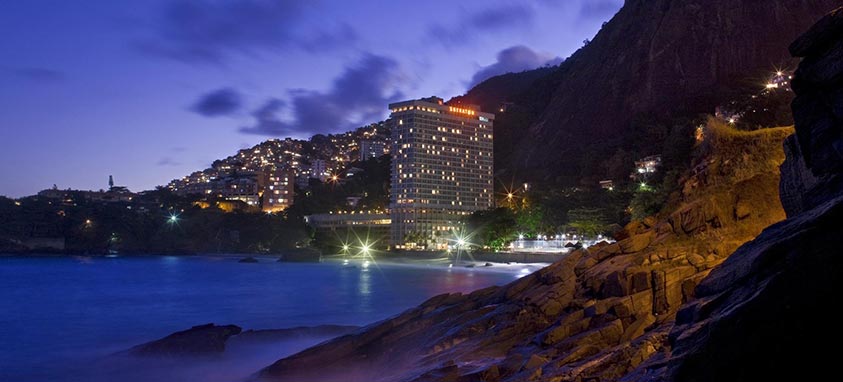
Ten Sheratons around the world immediately made the cut and were place in the new tier, including Sheraton Grand Bangalore Hotel – Brigade Gateway in India, Sheraton Grand Beijing Dingchen Hotel, Sheraton Grand Hotel Dubai, Scotland’s Sheraton Grand  Edinburgh Hotel, Sheraton Grand Rio Hotel & Resort (pictured), Sheraton Grand Ocean Resort in Japan, Bangkok’s Sheraton Grande Sukhumvit, Sheraton Grande Taipei Hotel in Taiwan, Sheraton Grande Tokyo Bay Hotel and South Korea’s Sheraton Grande Walkerhill.

Starwood plans to bring 40 more Sheratons into the new tier by the end of the year, with plans to expand to 100 total Grand properties by early 2017 and more than 150 by 2020.

Non-Stop Flights from Dubai to Panama City

Get out your neck pillows, eye masks and noise-canceling headphones. There’s a new long-haul flight coming, and it’s the longest non-stop route in the world.

Earlier this month, Emirates announced that they’ll be adding daily non-stop flights from Dubai to Panama City. The flight will cover a whopping 8,588 miles, and is estimated to take 17 hours and 35 minutes from takeoff to touchdown.

The new route pushes Qantas’ non-stop flight from Dallas/Fort Worth to Sydney down to No. 2 on the list—a mere 8,577 miles over 16 hours and 55 minutes. The Emirates route will start taking to the sky on February 1, 2016, and will be the airline’s first gateway destination in Central America.

Travelers can expect to plunk down a sizable chunk of change for non-stop flights from Dubai to Panama City. Tickets can already be booked on Emirates’ website, and a one-way economy-class airfare on the inaugural flight (and subsequent ones) runs a little over $1,500. Business class jumps up to anywhere from $3,500 to $5,100, and the luxurious first-class airfare starts at $7,250.

The Boeing 777-200LR aircraft set to make the journeys will fit 266 passengers (8 in first class, 42 in business and 216 in economy), and can carry more than 33,000 pounds of cargo.

Air travel to the Panama City area is expected to increase—especially on the meetings and events front—with the construction of the grand Amador Convention Center. The $194 million, 570,505-square-foot venue is set to open later this year.

If 17.5 hours on non-stop flights from Dubai to Panama City sounds like too much time to spend on an airplane, travelers can always opt for the opposite end of the spectrum and fly the world’s shortest commercial route: a 1.7-mile jump from Westray to Papa Westray in Scotland’s Orkney Islands. Loganair operates the flight, which, in optimal wind conditions, can take as little as 47 seconds. There’s not enough time for drink service on the flight, but flyers can always grab a dram of Scotch after landing.

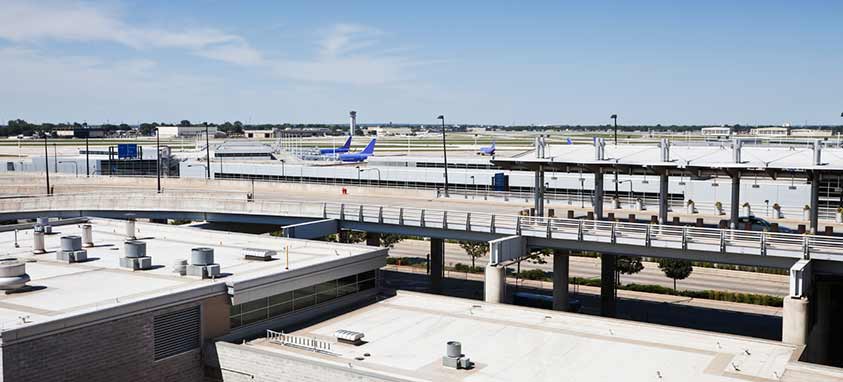
midway-airport-in-chicagoNew York’s LaGuardia is not the only airport gearing up for a major makeover—Midway Airport in Chicago will also be getting a massive facelift.

While not as hectic as Chicago’s O’Hare International  Airport (ORD), Midway International Airport (MDW) is the 30th-busiest airport in the United States in terms of passenger traffic. In 2014 annual passenger volume was 21,179,833, a 3.44% increase over total passenger traffic from 2013. It offers flights to 75 markets, including eight international destinations, and generates approximately $7 billion in economic activity each year.

One reason for Midway Airport’s growing popularity is that it is a major hub for Southwest Airlines. USA Today reports that the carrier accounts for 92% of the airport’s passengers.

Improvements Needed

Although it handles a lot of traffic, business travelers and visitors to the city complain that Midway Airport, located on Chicago’s south side, is small and lacks amenities. The $248 million improvement project will ameliorate some of these concerns. The makeover will add four more levels of parking and double the amount of space currently devoted to concession and retail outlets. Perhaps more importantly, it will include the creation of a new, 80,000-square-foot security hall designed to address long lines at security checkpoints. In addition, initial plans call for Midway’s existing pedestrian bridge over Cicero Avenue to be increased from 60 ft. to 300 ft.

In a press release Chicago Mayor Rahm Emanuel states, “Midway is more than an airport. It is an important economic engine for the City of Chicago…with this modernization we are making an essential investment in the future of Midway, but also the future of Chicago. Emanuel points out that the enhancements “will create jobs for Chicago’s residents, provide an improved experience for travelers from the garage to the gate, and ensure that our world class city has two world class airports.”

The proposed timeline is for the city of Chicago to receive bids on the project through mid-December 2015, evaluate them in first quarter 2016 and advance the proposal in the City Council in second quarter 2016.

new meeting trends

Technology is changing the face of meetings today. Blue Jeans Network, (BJN), a global cloud-based video conferencing service provider located in Mountain View, California, recently released its third-annual State of the Modern Meeting Report , which illustrates 5 new meeting trends. Their data is derived from more than five million business video collaboration meetings the company coordinated. Here are the key findings:

1. Weekend meetings are becoming more common, especially on the West Coast. According to BJN, over the past couple of years there has been a 49% increase of meetings occurring on Saturday, and an 84% increase in Sunday meetings.

2. Companies are holding more meetings online, especially during the winter months, when usage doubles. When Boston was buried in blizzard after blizzard last winter, video conferencing increased 35%. When floods hit Texas this past May, video meeting activity increased 26%.

3. Mobility is key, as one-fourth of all meetings handled by BJN had at least one mobile video caller. This is projected to grow with the rise of remote workers stationed around the globe. The overwhelming majority of these mobile callers (78%) used Apple devices.

4. Meetings are growing shorter. The average meeting lasts 36 minutes. Meetings in the Midwest are more likely to start on time, while those on the East Coast are four times more likely to be late.

5. Video meetings translate into eco savings. In 2015, BJN video conferencing saved firms 7.5 billion travel miles (the equivalent of 53 trips to Mars), and $3.3 billion. It also reduced 2.7 billion pounds of Co2, which is the equivalent of planting 322,644 trees.

Some Other Interesting Stats About New Meeting Trends:

-Tuesday is the most popular meeting day.
-The most popular starting time is 3 p.m.
-The slowest time of the year for meetings is spring, between April and June.
-The West Coast has 1.5 times more video meetings than the East Coast.
-Globally, Silicon Valley meets the most, followed in turn by New York, Los Angeles and London.

airline-industry-lacks-diversity

The U.S. airline industry still lacks diversity and continues to face issues boosting minority representation among its workforce. Projected hirings are not expected to improve the situation and the percentage of minority pilots is decreasing.

Projections from a U.S. Department of Transportation report indicate that the airline industry will hire more than 317,000 employees by 2022, but the growth isn’t expected to improve the low representation of women and non-white men.

Women continue to be unrepresented in the airline industry, accounting for just 34 percent of the workforce, compared with 47 percent in all U.S. industries combined.

The lack of minority pilots has become a particularly significant problem. In 2012, U.S. Department of Labor statistics indicated that 93 percent of airline pilots and flight engineers were white, 2.7 percent were black or African American, and 2.5 percent were Asian. Minority representation slipped in 2014 to 97 percent white, 2 percent black or African American, and 1 percent Asian. Some 5 percent identified their ethnicity as Hispanic or Latino in 2012, compared with 3 percent in 2014.

The report also shows that the airline industry still lacks diversity, compared to all U.S. industries in hiring younger workers. Some 53 percent of airline employees are 45 and older, compared with 44 percent for all U.S. industries. The full breakdown for the airline industry is under 25, 6 percent; 25 to 44, 41 percent; 45 to 54, 32 percent; 55 to 64, 18 percent; and 65 and over, 3 percent.

The U.S. Department of Labor statistics project the number of openings and median annual wages for airline occupations during the next 10 years. They are:

Flight attendants: 96,205/$37,240
Airline pilots, co-pilots and flight engineers: 57,896/$113,877
Aircraft mechanics and service technicians: 56,968/$60,861
Laborers and freight, stock and material movers: 49,928/$30,493
Other transport workers: 26,841/$39,312
Air traffic controllers: 24,416/$121,280
Customer service representatives: 20,557/$29,494
Commercial pilots: 18,336/$72,386
Baggage porters and bellhops: 15,699/$20,634
Vehicle and equipment cleaners: 9,430/$25,771

uber-smart-routesIn yet another move to broaden its scope, Uber is testing a new service in San Francisco that in some ways is akin to bus service, in which passengers are picked up at spots along a predetermined route.

Uber has implemented the service, “Smart Routes,” along two routes—on Fillmore Street between Haight and Bay streets, and on Valencia Street between 15th and 26th streets. Smart Routes is the latest addition to UberPool, the truest ride-sharing option under Uber’s umbrella of on-demand services because it involves sharing a car and splitting expenses with other customers.

Smart Routes, part of ongoing efforts both to increase efficiency during Uber drivers’ time on the road and to help riders save time and money, aims to simplify pick-ups by encouraging customers to request a ride along specific routes. In many cases, customers need to walk a short distance to or from the pickup spot, but their fare is discounted by at least $1.

Also, the routes eliminate some time-wasting and gas-wasting detours, enabling drivers to finish a set of UberPool rides quicker and pick up more fares, which earns them more money. In theory, getting riders to walk to Smart Routes would eventually also increase Uber profits, even after handing out discounts.

Some critics view Smart Routes as essentially a privatization of public bus service, but this isn’t entirely accurate. Pickup locations are flexible along the routes and riders can be dropped off wherever they choose, not just at points along the routes. Also, Uber vehicles running Smart Routes are cars, not buses, and since they have fewer people riding in them, they don’t generally make as many stops. Currently, Uber isn’t requiring Smart Routes drivers to have large vehicles, but it wouldn’t be surprising if it does in the future.

Smart Routes is similar to Loup, a ride-sharing service that pays people to drive their cars and pick people up on bus-like routes through a city. Chariot offers the same type of service, but with big vans.

Smart Routes aren’t the only alternative pick-up option being tested. Uber’s “Perpetual Rides” and Lyft’s “Triple Match” are both experiments that allow drivers to continuously pick up passengers whenever they have an open seat, rather than completing a set of UberPool or Lyft Line rides before starting the next. Lyft’s also tried giving discounts if you’ll wait 10 minutes for a Lyft Line first.

Join 54,000 of your peers who have subscribed to Smart Meetings magazine – FREE!

ahuena-heiau-kailua-konaAhuena Heiau, Kailua-Kona

Hawaii Island is the youngest island in the Hawaiian chain, and twice as big as all the others combined. All but two of the world’s climatic zones can be found here, and the terrain varies tremendously—from the green rainforests of the Hamakua Coast to the jet-black sands of Punaluu Beach, and from the molten magma at Hawaii Volcanoes National Park to the snowcapped heights of Mauna Kea.

“An island of unexpected wonders and inspiring landscapes, Hawaii Island is a great choice for groups that want to motivate attendees to think big and outside of the box,” says Debbie Hogan, director of sales for the Big Island Visitors Bureau. “Add to this a premier selection of hotels and accommodations, a great mix of traditional and nontraditional meeting facilities and function space, and endless possibilities for fun, and you have all the ingredients to deliver a successful, productive and rewarding meeting experience.”

Hogan says that many hotels, restaurants, shops and other businesses on the island emphasize Hawaiian traditions. “Our partners realize that Hawaiian culture is what makes us unique,” she says. “They all try to incorporate this as part of their story.”

Cultural Treasure Troves

The Smithsonian-affiliated Lyman Museum & Mission House in Hilo tells the story of Hawaii’s islands through its exhibits on the islands’ volcanic origins, flora and fauna; Hawaiian culture; and other ethnic groups that have shaped the unique society of the state. It contains an outstanding collection of artifacts, fine art and natural history exhibits, along with archives and special exhibitions. Group tours are offered.

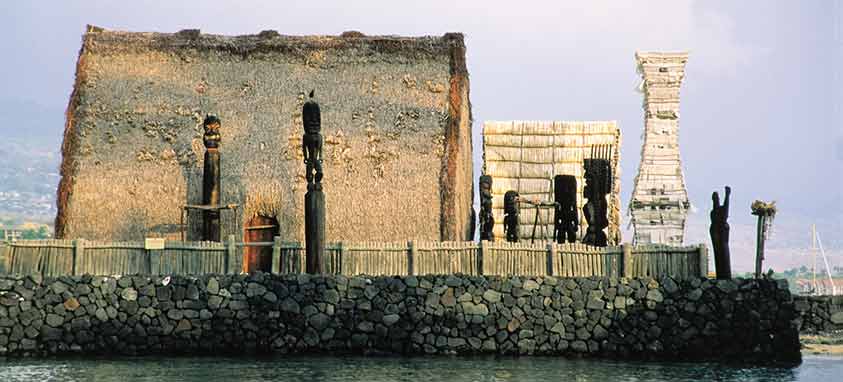
One of the most intriguing historical attractions in Kailua-Kona, the reconstructed Ahuena Heiau, was King Kamehameha I’s retreat and where he mentored his successor, Liholiho (King Kamehameha II).

There are three main structures on the paepae—Hale Mana, Hale Pahu and Anuu. Hale Mana (house of spiritual power), which was thatched with ti leaves and trimmed with fern, was where the king met with his advisers, tutored Liholiho and held prayers. Hale Pahu (drum house) contained a large ceremonial drum and a large white tower, while Anuu (oracle tower) was where the high priest received and proclaimed answers he elicited from the gods.

Ahuena Heiau is located on the grounds of the Courtyard King Kamehemeha’s Kona Beach Hotel, but the public may visit the site during the day. Guided tours can be arranged.

Situated on the coast of Honaunau Bay in south Kona, Puuhonua o Honaunau National Historical Park immerses groups in Hawaiian culture. This 180-acre national historic park was a sacred worship site for Native Hawaiians and a refuge for ancient Hawaiian lawbreakers. Puuhonua o Honaunau remains one of Hawaii’s most sacred historic places.

A wide assortment of activities is available, including walking tours and demonstrations of Hawaiian craft making. Guided group tours are available, but planners need to make arrangements at least one week in advance.

Learning the Ways

Groups visiting Hawaii Island have been showing more interest in including corporate social responsibility into their trip.

“One program that has really taken off is the Hawaiian Legacy Restoration Initiative, which utilizes volunteers to help restore a native forest on the slopes of Maunakea,” Hogan says. “The historic site was once a majestic koa forest and the personal property of King Kamehameha I before being cleared for farming and ranching nearly a century ago.”

Groups can participate in the restoration project by contacting the program.

Attendees wanting a taste of the paniolo tradition can visit the 8,500-acre Kahua Ranch in Waimea. Located on the western slope of the Kohala Mountains, this working ranch offers ATV adventures, horseback riding and an evening barbecue dinner. Groups are welcome and can customize their visit.

Kaupulehu Cultural Center, located below Hualalai Grille at Four Seasons Resort Hualalai at Historic Kaupulehu, offers interactive programs and interpretive resources and displays to create a living picture of Hawaiian environment, culture, history, traditions and arts. The center also offers programs focusing on star navigation, hula, Hawaiian language and kupuna teachings. Classes may include Hawaiian quilting, feather art, lei making, weaving, shell crafts and ancient Hawaiian games.

Sheraton Kona Resort & Spa at Keauhou Bay offers a trip aboard a Hawaiian sailing canoe, during which groups learn about native traditions, myths and legends. Resort provides lei making, ukulele and hula lessons, and a Monday luau.
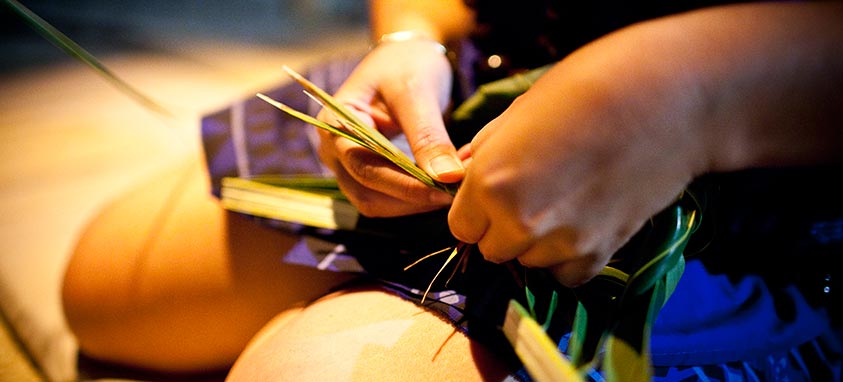
coconut-frond-weaving-the-fairmont-orchid-hawaiiCoconut frond weaving, The Fairmont Orchid, Hawaii

The Fairmont Orchid, Hawaii offers classes on Hawaiian traditions and cultural techniques including coconut frond weaving, ukulele songs and hula lessons. A hui holokai ambassador takes groups to explore historic fishponds, shelter caves and petroglyph fields. The Fairmont Orchid also features daily torch lighting and a Saturday luau.

Mauna Lani Bay Hotel & Bungalows offers a hike through Hawaii’s largest petroglyph field, as well as ukulele, coconut frond basket weaving and hula classes.

Brimming With Tradition
puukohola-heiau-historic-sitePuukohola Heiau Historic Site, just north of the resorts on the Kohala Coast, is home to one of the largest restored heiau in Hawaii. Built to fulfill a prophecy, it is one of the last major Hawaiian temples constructed in the islands.

The visitor center contains exhibits and displays, including a traditional koa wood spear display. The center also offers crafts demonstrations and hands-on activities. The park’s museum includes a traditional weapons display, archaeology display and original paintings by renowned artist and historian Herb Kane. Park rangers offer guided tours.
Middle East ConferencesA new survey shows that early three out of four North American-based association executives have interest in organizing Middle East conferences but only one-third have done so, partly because the region still is learning how to reach out to Western planners.

The survey, “Inside the Business Events Dilemma in the Middle East” was released this month by Development Counsellors International in New York City. The company polled 166 senior association executives in North America who source long-haul destinations for international events.

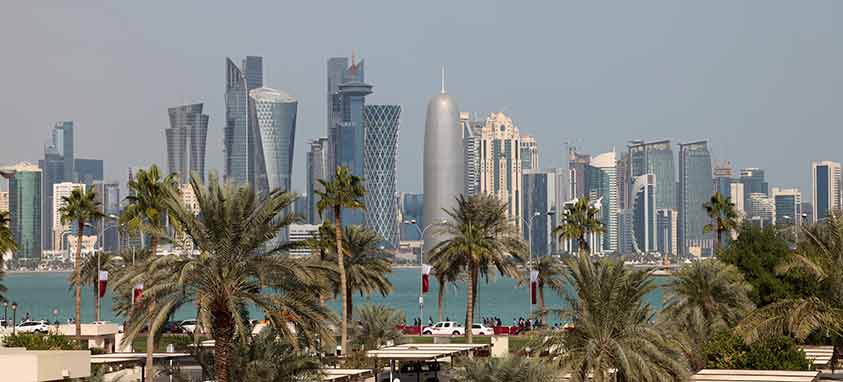
The interest in Middle East conferences portends well for the region, which is striving to become a global meetings hub. The study suggests that primary Gulf Cooperation Council (GCC) convention destinations—which include Abu Dhabi and Dubai in the United Arab Emirates, Doha in Qatar, and Muscat in Oman—have a great opportunity to increase their North American market share.

Several GCC countries boast new, technologically advanced conference centers that have been lauded by North American associations that have convened there.

But the study also suggests that GCC members need to take a more proactive approach by boosting marketing outreach to Western planners, successfully addressing perceptions about cultural and security concerns, and establishing professional conference organizer companies catering to the North American market.

The member nations have made some improvements, such as developing new industry trade shows over the last decade, including IBTM Arabia. Also, Oman and the Professional Convention Management Association are collaborating to create new business relationships, and the International Congress & Convention Association is developing a stronger Middle East chapter, which includes 42 member organizations from six countries.

Among the other findings in the survey:

Sixty percent of respondents said that the GCC “offers an opportunity to create and grow Middle East regional membership for their organizations.” Seventy-nine percent indicated that Dubai, in particular, offers this opportunity.

The survey shows that 38.2 percent of the associations that have met in the Middle East have chosen Dubai, followed by Abu Dhabi at 16.4 percent, Doha at 16.3 percent and Muscat at 5.5 percent.