destination capitol hill

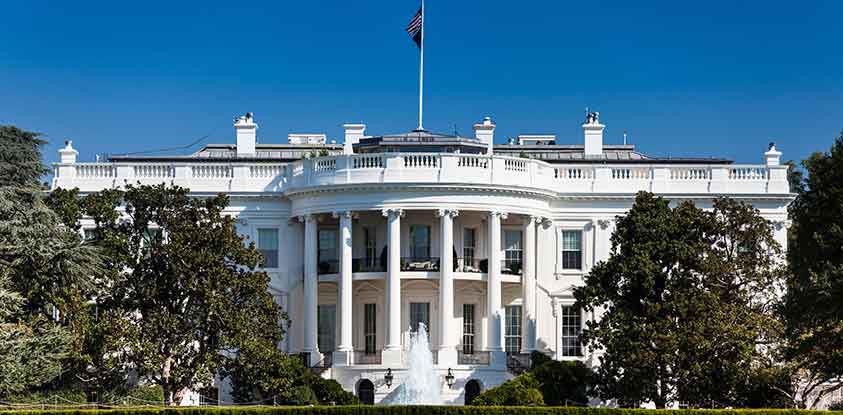
More than 300 travel leaders descended on Washington, DC, March 16-17 as part of an annual fly-in called Destination Capitol Hill. Sponsored by U.S. Travel Association, the two-day event highlights the travel industry’s role as one of the United States’ strongest economic contributors. Representatives from 40 states participated in more than 295 congressional meetings on March 17.

“These two days are about celebrating travel’s essential economic contribution, and the need for pro-growth policies that keep travelers safely and efficiently moving to and within our country,” said Roger Dow, president and CEO of U.S. Travel Association.

Travel leaders from a variety of sectors, including convention and visitors bureaus and state tourism organizations, urged Congress to embrace policies that are pro-growth, pro-competition and pro-traveler. Besides showing a united front before Congress, the annual Destination Capitol Hill is a time for travel leaders to combine a legislative day with advocacy training, guest speakers and peer-to-peer networking. Many delegates have stayed abreast of key issues via webinars in order to prepare for face-to-face meetings with their representatives.

Here are a few key issues that were discussed:

-Restoring choices to the overconsolidated U.S. airline sector

-Modernizing air and surface transportation infrastructure to keep pace with demand

-Ensuring the U.S. remains a welcoming destination for overseas visitors while maintaining strong national security.

Travel Leaders

U.S. Travel presented its annual Distinguished Travel Partner awards, honoring travel leaders and decision-makers who advance policies that strengthen travel. The winners are:

Distinguished Travel Champions
Sen. Dean Heller (R-Nev.), Sen. Brian Schatz (D-Hawaii), Rep. David Jolly (R-Fla.), Rep. Dina Titus (D-Nev.), and U.S. Customs and Border Protection Deputy Commissioner Kevin K. McAleenan

Distinguished Travel Ally
Julie Heizer, Deputy Director of Industry Relations, U.S. Department of Commerce, National Travel and Tourism Office

Grassroots Travel Champion
Great Lakes Bay Regional Convention and Visitors Bureau, led by Annette Rummel, Ph.D.

seaworld

SeaWorld Entertainment Inc. took a major step forward toward animal protection and advocacy on March 17 when it announced that its theme parks would no longer breed orca whales.  With parks in San Diego, Orlando and San Antonio, SeaWorld has been targeted by animal-rights groups for the parks’ treatment of captive orcas.

In another move aimed at improving its image and reducing potential harm to animals, SeaWorld has formed a new partnership with the Humane Society of the United States (HSUS) to protect ocean habitats. SeaWorld parks are ideal locations to educate its more than 20 million annual visitors about animal welfare and conservation issues.

“SeaWorld’s commitment to end breeding of orcas is a long-held goal of many animal advocacy organizations, and we commend the company for making this game-changing commitment,” said Wayne Pacelle, president and CEO of HSUS. “Today we turn a corner, working together to achieve solutions on a wide set of animal issues including sunsetting the use of orcas at existing facilities; maximizing SeaWorld’s focus on rescue, rehabilitation and advocacy for marine mammals in the wild; and sourcing food for animals and customers from humane and sustainable sources, including cage-free eggs and crate-free pork.”

SeaWorld Documentary

In 2013, the documentary Blackfish criticized SeaWorld’s treatment of orcas, commonly called killer whales. The deaths of two trainers also fueled the controversy about how the parks’ animals are housed, fed, trained and used for entertainment purposes.

“As society’s understanding of orcas continues to change, SeaWorld is changing with it,” said Joel Manby, president and chief executive officer of SeaWorld Entertainment, Inc. “By making this the last generation of orcas in our care and reimagining how guests will encounter these beautiful animals, we are fulfilling our mission of providing visitors to our parks with experiences that matter.”

SeaWorld plans to introduce a new creative way to feature natural orca encounters, rather than the theatrical shows it has become known for. Changes will begin to roll out in San Diego park next year, followed by San Antonio and then Orlando in 2019.

travel to cuba

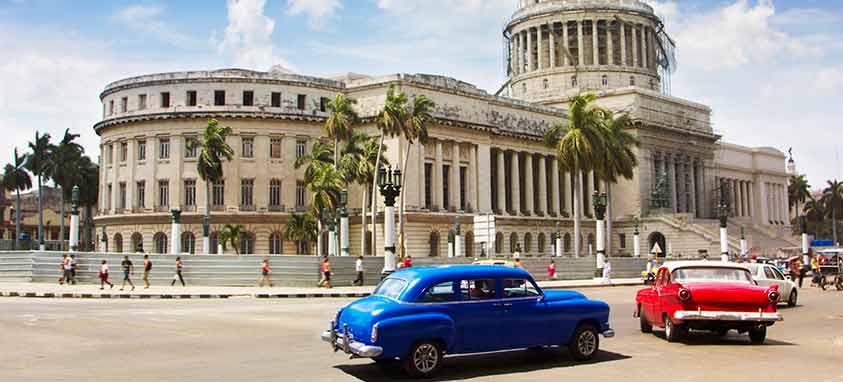
Americans now are able to travel to Cuba on their own much more easily, after a fifth round of restriction easements were implemented by the U.S. government on Wednesday.

A new policy stipulates that Americans can travel to Cuba by themselves on “people-to-people” educational trips, rather than having to be part of an organized group tour approved by the U.S. government. Visitors must keep a record of their itinerary for five years, but don’t need to submit it unless requested.

Preceding restriction easements allowed U.S. government-approved trips by groups for educational purposes, but did not allow individual visits. The new policy states that Americans will need to have a full-time schedule of authorized activities “intended to enhance contact with the Cuban people, support civil society in Cuba, or promote Cuban people’s independence.” This broad-based policy allows for a plethora of cultural experiences, such as visits to museums and other popular sites.

This is one of the main policy changes that are preceding President Barack Obama’s historic visit to the island, beginning Sunday. It will mark the first visit there by a U.S. president in nearly 90 years.

Waves of U.S. policy changes and a surge in visitors to Cuba have left some groups and individuals confused about travel matters. Here are a few major updates:

Any American can now travel to Cuba under 12 categories of legally permissible purposes, which include meetings and other professional activities, as well as journalistic assignments.

Cuba still isn’t easily accessible by Americans, but it’s about to get much easier. Previously, Americans needed to take chartered flights and routes through third countries to get to Cuba. But the United States has opened the door to restoring commercial air traffic. The first of up to 110 daily commercial flights are expected to begin later this year. Also, some cruise lines have received U.S. government approval to travel to Cuba, and are awaiting the green light from the Cuban government.

Due to a recent surge in travel to the island, most hotels are at or close to 100 percent capacity, and the top rental homes and apartments are already booked through the fall. The U.S.-based Airbnb provides a new option, allowing customers to search listings of private homes, known as “casas particulares,” in Cuba, and pay by using a credit card from the United States.

Marriott Marquis San Diego MarinaRendering of new meeting space at Marriott Marquis San Diego Marina
In its second phase of an extensive hotel renovation, Marriott Marquis San Diego Marina will soon offer one of the largest and most visually stunning event spaces on the West Coast. This June, the luxury hotel will expand its meeting space to 280,000 sq. ft., facing downtown San Diego’s waterfront.

The $107 million expansion will roll out updated technologies within a newly constructed two-level stacked ballroom and outdoor terrace overlooking the 446-slip private marina. Meetings spaces will boast a 16-screen video wall with state-of-the-art sound, videography and production capabilities.

A new building will house the two ballrooms, each offering 36,000 sq. ft. of customizable space accommodating up to 3,700 people. Both ballrooms have grand foyers that can extend each space by up to 25,000 sq. ft.

The ocean-inspired interior design includes Swarovski crystal chandeliers hanging against a ceiling installation mimicking coastal waves. The waterfront backdrop and blue elliptical glass curtain will fill meeting areas with natural light and offer unobstructed views of the bay.

Marina Terrace will be suited for outdoor events for up to 4,000 people with 27,000 sq. ft. of paved space. The terrace will be connected to a walkway that features two public art displays from Los Angeles-based art collective After Architecture. The area will be fully wheelchair accessible and have bike racks and benches.

The renovated meeting areas complete a $200 million refurbishment of the hotel’s guest 1,305 guest rooms and public areas in 2011. The first phase of renovations earned the Marriott Marquis San Diego Marina its top-tier “Marquis” designation, which it currently shares with only four other Marriott properties in the United States.

Marriott Marquis San Diego Marina is adjacent to San Diego Convention Center and steps away from Petco Park, Seaport Village and the historic Gaslamp Quarter. The hotel is also close to other popular attractions, such as Balboa Park, San Diego Zoo, SeaWorld San Diego and Legoland California.


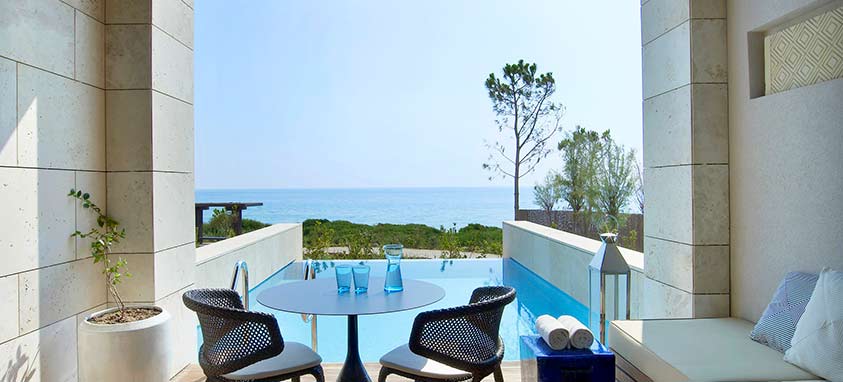
starwood mergerThe Romanos Costa Navarino, a Starwood property
Fresh off its $6.5 billion purchase of Strategic Hotels & Resorts on Sunday, Anbang Insurance Group of China made an offer Monday morning to acquire Starwood Hotels & Resorts for $13 billion.

In November, Marriott International made a $12.2 billion deal to purchase Starwood, consisting of $11.9 billion in stocks and $300 million in cash. Marriott expects to finalize it at the end of this month. But its agreement with Starwood includes a $400 million breakup fee and enables Starwood to consider other offers through March 17.

Marriott released this statement regarding the new offer: “Marriott is confident that the previously announced merger agreement is the best course for both companies.”

The unsolicited bid from a consortium led by Anbang valued Starwood shares at $76 each, while the present value of Marriott’s stock and cash offer is around $63.74 after a decline in its stock price. Marriott’s stocks were around $72.08 per share when it announced its tentative acquisition of Starwood.

Anbang’s offer would keep Starwood’s executive team in place. The Beijing-based firm has attracted interest in China because of its political connections. The company’s founder, Wu Xiaohui, is married to the granddaughter of Deng Xiaoping, China’s former leader and the architect of the country’s transition from a planned economy.

The firm has made at least $23 billion in purchases worldwide in the last 18 months, including a $2 billion takeover of the renowned Waldorf Astoria New York in the Big Apple and yesterday’s purchase of Strategic Hotels & Resorts, a portfolio of the Blackstone Group consisting of 16 properties.

Strategic’s properties include the Ritz-Carltons in Half Moon Bay and Laguna Niguel in California; Montage Laguna Beach in California; Four Seasons hotels in Austin, Texas, Washington, DC, and Silicon Valley, California; and InterContinental hotels in Chicago and Miami.

Chinese companies have been spending billions of dollars annually on international property acquisitions. This year, the total already has reached $102 billion, just short of its record of $106 billion set in 2015.

most-expensive-cities-in-the-world

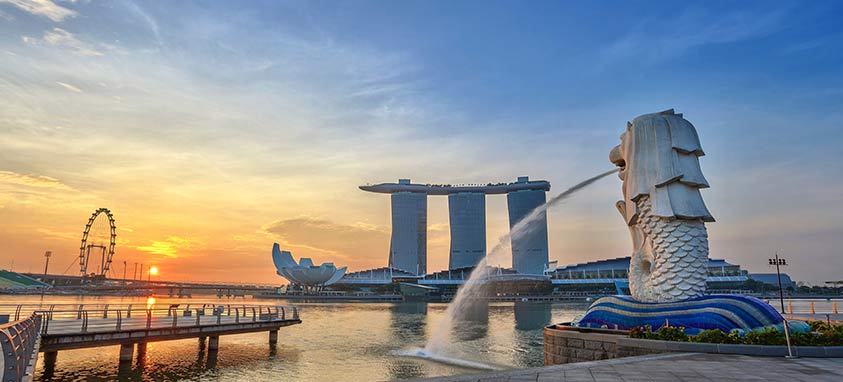
Overtaking Tokyo in 2013, Singapore was named the world’s most expensive city by the Economist Intelligence Unit for the third straight year. The good news for those traveling there is that the cost of living in Singapore has dropped 10 percent compared to last year’s numbers.

Survey Methodology

Twice annually for the past three decades, The Economist Intelligence Unit has conducted a survey to determine the worldwide cost of living, compared to the base city of New York. To come up with its ratings, researchers analyze more than 400 prices from 160 products and services in 133 cities around the world, including food, drink, clothing, rent, transportation, utility costs, private schools, domestic help and recreational costs. Human resource and finance managers can then use the information to calculate cost-of-living allowances and compensation packages for business travelers and expatriates.

Although European cities dominate the 2016 list, The Economist Intelligence Unit reports that the strong dollar pushed American cities up in the rankings. For the first time in 14 years, the Big Apple made the Top 10 Most Expensive Cities list. After Singapore, the Top 10 priciest cities are, in order, Zurich, Hong Kong, Geneva, Paris, London, New York, Copenhagen, Seoul and Los Angeles.

Some interesting findings include the fact that Hong Kong jumped seven places in the rankings compared to last year, while New York has leapfrogged 42 places since 2011. Singapore’s high transport and utility costs place it at the top of the list. The report notes that it is the most expensive place in the world to buy and run a car because of Singapore’s complex Certificate of Entitlement system. (Transportation costs in Singapore are 2.7 times higher than in New York.) Basic groceries, however, cost less in Singapore than in Hong Kong, Tokyo or Seoul.

The Least Expensive Cities to Live

The most affordable city identified by The Economist Intelligence Unit is Lusaka, the capital of Zambia. Its overall cost of living is 41 percent less than New York’s. In the 2016 survey, India and Pakistan account for five of the Top 10 Least Expensive Cities to live in; Asia has six of the cheapest cities of the 133 cities studied.

In order, the Top 10 Least Expensive Cities are Lusaka, Bangalore (India), Mumbai, Karachi (Pakistan), Chennai (India), Algiers, Almaty (Kazakhstan), New Delhi, Caracas and Damascus.

Other low-cost cities include Rio de Janeiro, which dropped 52 places the rankings, and St. Petersburg and Moscow, which fell 51 and 63 places down in the ranking respectively. The latter two reflect a 40% decline in living costs in Russia over the previous year.

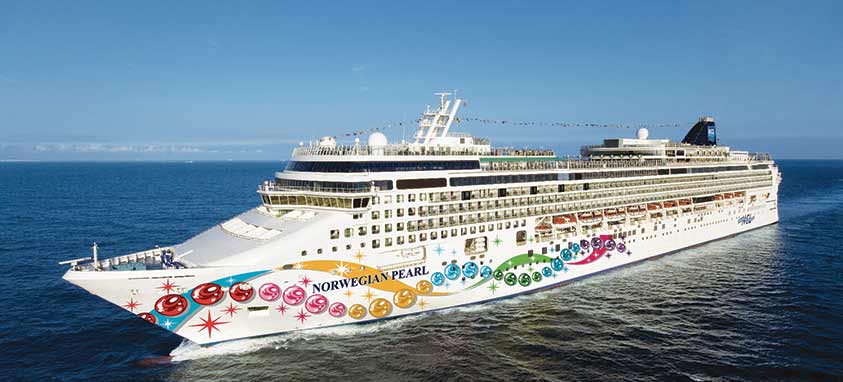
cruise-meetingsNorwegian Pearl

This story is the third in a series that focuses on meetings and events at sea. Parts 1 and 2 highlighted some of the unique benefits of having a meeting on a cruise ship.

Planner Checklist

-There are a few things planners should take into account when considering a cruise ship for a meeting or event.

-Every ship requires that the planner submit a detailed manifest listing all passengers and some personal data about them.

-Most cruise itineraries require that passengers have a valid passport.

-Most cruises are not tax deductible for U.S. companies, so planners should inform executives of that and check deductibility for the itinerary they’re considering before committing to a cruise meeting.

-A small percentage of attendees tend to take longer than others to acclimate to the motion of a ship; in light of this, have Dramamine available. “Don’t hold your opening-night reception in the back of the ship,” Punke warns.

-Also, every cruise line brings something different and special to a program, so make sure you find the right fit to accomplish your meeting goals and provide the right types of leisure for your attendees, Athanasiou says.

Site Inspections Still Important

Cassidy urges planners to “do their homework to understand what each cruise line and ship delivers in terms of onboard experience.” She says it’s a mistake to look only at destination and price.

Punke strongly suggests that planners do a site inspection whenever a group will use a particular cruise line for the first time.

“Six months out, I went with a few committee members on the same itinerary we looked at for our meeting,” Punke says. “If we didn’t do that, our event would not have gone nearly as well as it did.”

Flexibility is Key

Interestingly, a midsized hotel company recently altered its typical meeting practices and had a successful event on a cruise ship. Debra Punke, senior vice president of human resources for Concord Hospitality in Raleigh, North Carolina, coordinated an event for 275 attendees, plus another 250 family members. Using a vessel for the first time, Punke admits that the ship didn’t offer a ton of dedicated meeting space. But during the group’s four-day, three-night Caribbean itinerary, she varied session times. One day the group met from 7−9 a.m., another day it met from 9−11 a.m. The group also used the ship’s main theater for a memorable recognition event and celebration.

“We couldn’t do an exclusive group dinner because of our size, so instead we conducted a Hollywood-style awards ceremony that worked out so well that we’re doing it that way at next year’s land-based event,” Punke says.

As Punke points outs, groups use a cruise ship to promote objectives such as the value of face-to-face interactions.

“We emphasized to our attendees that this event was about connecting with the people on the ship, not with others off the ship,” Punke recalls. “So for those four days, [we said] let’s not worry about being connected to email and social media so much.”

Further Reading:
Get On Board with Cruise Meetings
Cruises Offer a Fresh Take on Meetings

Rob Carey is a business journalist and principal of Meetings & Hospitality Insight, a content marketing firm for the group-business market.

hotel-uniformsIt’s readily apparent that millennials have been driving changes in many aspects of the hospitality industry, and they’re starting to have a much bigger influence on employee dress.

Drawing inspiration from millennial fashion, several hoteliers have developed new uniform styles that make young employees feel more comfortable—and match the changing vibe of the property, and in some cases, the surrounding neighborhood.

Ever since Hotel Indigo Lower East Side New York opened in December, its door attendants have worn orange military coats and its female front-desk associates have been dressed in block orange and gray dresses.

Although the Hotel Indigo brand usually features a more traditional uniform style, its executives felt that because art and graffiti are such integral parts of the property’s design—and because the hotel is located in an artsy, graffiti-covered neighborhood—it was fitting to create uniforms that blend in with the environment.

JW Marriott Grand Rapids in Michigan switched from dark suits and ties to suits with colored pocket squares to give employees a more fashionable and approachable appearance. Not all staff all wearing these uniforms, but managers’ suite styles were modernized and front-desk associated are now allowed to wear statement necklaces.

Before Hilton West Palm Beach opened, some of its executives traveled to Manhattan to check out the fashion style of bartenders at chic bars. As a result of their observations, the hotel’s bartenders are dressed in leather vests; baristas don flat caps and valets wear black shell-top shoes.

The executives wanted to provide uniform styles that suit the hotel’s young staff and abundant millennial guest market, but they also have given employees several uniform options to allow them to express their personal styles. These include choice of colors in shirts and ties.

Properties report that allowing more flexibility in dress and incorporating more millennial fashion have been a win-win for them.

“I think [the uniforms] are a benefit for our guests because the customers come in, they see it and it feels fresh; it feels good,” said John Parkinson, general manager of Hilton West Palm Beach, in an interview with online site Hotel News Now. “The team members are comfortable in what they wear.

“When I was in college playing sports, we always said, ‘You look good; you play good; you feel good.’”

meetings-industry-day

Global Meetings Industry Day is April 14, and Las Vegas has some pretty big plans to celebrate. Las Vegas Convention and Visitors Authority (LVCVA) and its resort partners are hosting a panel discussion on the growth and importance of the meetings industry at the brand new T-Mobile Arena.

The afternoon of festivities will mark one of the first events at T-Mobile Arena, which is slated to open April 6. Capable of seating up to 20,000, the arena gives Las Vegas yet another flexible, state-of-the-art venue for major events.

Las Vegas’ Global Meetings Industry Day presentation will include a keynote by Roger Dow, president and CEO of U.S. Travel Association. The panel will be moderated by Rossi Ralenkotter, president and CEO of LVCVA.

Global Meetings Industry Day Panel

The panel members reflect the role that Las Vegas and the gaming industry play in supporting meetings and events. Panelists include Michael Massari, senior vice president for national meetings and events for Caesars Entertainment; Chuck Bowling, president and COO of Mandalay Bay, a member of the MGM Resorts International family; Chris Flatt,  executive vice president of hotel sales and marketing for Wynn Resorts; and Chandra Allison, vice president of sales for Sands Corporation.

Following the keynote and panel discussion, attendees will be treated to a tour of the arena. The arena is part of a new entertainment district just west of The Strip near New York New York Las Vegas Hotel & Casino and Monte Carlo Las Vegas Resort and Casino.

T-Mobile Arena is owned by AEG and MGM Resorts International and will be managed by MGM Resorts International. The $375 million project has been designed to achieve LEED Gold certification. The arena will host up to 150 events annually, ranging from concerts and award shows to sporting events.

The venue features extraordinary options for VIPs beyond its 50 luxury suites. Hyde Lounge is an exclusive nightclub, which will offers views of the show, concert or sports taking place below. In addition to the arena, the project includes a two-acre outdoor Toshiba Plaza for pre-event functions and special events.


las-vegas-solar-powerWith dozens of hotels and a lively Strip that has neon signs blinking 24/7, the city of Las Vegas consumes a huge amount of energy. It also boasts near constant sunshine, making it a prime candidate for solar energy.

For numerous reasons (including pressure from planners who rent their conference halls and want to see more sustainable practices), three of the city’s largest casino operators (MGM Resorts, Wynn Resorts and Las Vegas Sands Corp.) have announced plans to switch to renewable solar energy. Their green intentions, however, are not sitting well with regulators and the state’s main utility provider, NV Energy.

According to theguardian.com, the three casino companies’ 15 collective properties account for 7 percent of NV Energy’s electricity sales. If that revenue is lost, the utility claims that its customer base will be forced to absorb significant rate hikes. Bill Ellard, an energy economist for the American Solar Energy Society, told The Guardian, “They need to maintain the grid. You cannot let these utilities go bankrupt or else every business in the city dies.”

Las Vegas Review-Journal reports that in Dec. 2015, the Nevada Public Utilities Commission (PUC) sided with NV Energy when it ruled that the three casino companies could purchase their electricity elsewhere, but would have to pay $127 million in “exit fees.” The PUC ruling also stipulated that the casinos would have to buy power from a “new” source that has no relationship with NV Energy, a technicality that handcuffs the casinos because NV Energy has a near monopoly on power in the state.

The resorts insist that the required “exit fee” is exorbitant and potentially illegal. Wynn Resorts filed an appeal in January; MGM Resorts and Las Vegas Sands Corp. are considering their options.

These hospitality companies are not the first to become embroiled in an energy drama in Sin City. The Guardian notes that last year Switch, a data storage firm in Las Vegas, wanted to convert to 100% renewable energy. When NV Energy could not meet its energy demands, the PUC ruled that Switch would have to pay $27 million to sever ties with the utility since it was responsible for nearly 3 percent of NV Energy’s electricity sales. The companies eventually reached a compromise, with Switch paying NV Energy to build a new solar array that would meet its sustainability goals.

Solar Powering The Strip

Mandalay Bay Resort and Casino is owned by MGM Resorts. As part of a major redesign and expansion project, solar panels are being installed on the roof of the Mandalay Bay Convention Center. The project is expected to be completed soon. Covering more than 28 acres, the combined array will be one of the largest rooftop solar arrays in the country, and will generate enough electricity to power the equivalent of 1,300 homes.

“It’s no accident that we put the array on top of a conference center. This is good business for us,” Cindy Ortega, chief sustainability officer at MGM Resorts told The Guardian. “We are looking at leaving the power system, and one of the reasons for that is we can procure more renewable energy on the open market.” She added that the resort’s major push toward sustainability will help combat perceptions that Las Vegas lacks a conscience.

Over the years, MGM Resorts has been a leader in health, wellness and sustainability. In addition to the solar panels, the company is replacing 1.3 million light bulbs in its properties with more energy efficient LEDs. Mandalay Bay and its Convention Center, which hold Five Key ratings from the Green Key Eco-Rating and Meetings Programs and have been awarded Gold status in TripAdvisor’s GreenLeaders program, recycle more than 80 percent of convention materials.