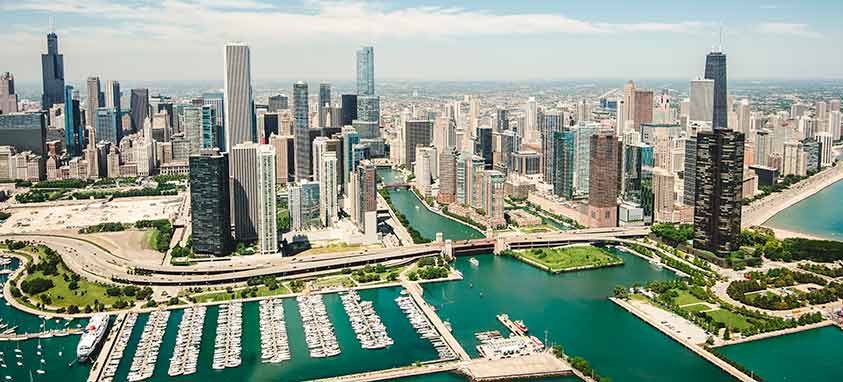
ASAE in 2018

After more than 10 years, Chicago has been chosen to host American Society of Association Executives (ASAE) Annual Meeting & Exposition in 2018. The event, which draws around 7,000 association professionals from across the United States, will be held Aug. 18-21 at McCormick Place West Building. A joint announcement was made today by Chicago Mayor Rahm Emanuel and Choose Chicago President and CEO David Whitaker.

“Playing the backdrop to ASAE 2018 demonstrates the city of Chicago’s world-class reputation as a true hub for industry and culture,” said Mayor Emanuel. “We are proud to welcome ASAE back and host this important conference once again. As one of the most visited cities in the United States and one of the top cities in the world to conduct business, there is no better time to show every member everything Chicago has to offer.”

The three-day conference includes educational seminars on strategic planning, community engagement, advocacy, leadership and service, global marketing and more. Many attendees are leading decision makers for their respective organizations and determine the location for their own meetings and conventions.

“Our last visit in 2007 resulted in the largest association attendance in ASAE’s history with more than 3,700 executives. In two years, our members will be able to experience the West Building of McCormick Place and explore the new venues and restaurants in the new McCormick Square,” said John H. Graham, president and CEO of ASAE.

Since ASAE Annual Meeting & Exposition was last hosted in Chicago, the city has experienced an increase in new hotels with 2,200 rooms added in the last year. McCormick Place, the largest convention center in North America, will undergo a $650 million expansion to include a 10,000-seat event center and 1,200-room Marriott Marquis Chicago hotel completed by the end of next year.

Navy Pier, one of the city’s most famed landmarks, will also receive its own 200-room hotel by the late 2018. Earlier this year, the most visited attraction in the Midwest unveiled a 200-foot-tall Ferris wheel during the Pier’s Centennial Celebration. Citywide development is part of Chicago’s plan to attract 55 million visitors by 2020.

“It is an absolute privilege to welcome ASAE back to Chicago, and it is also a tremendous opportunity as a destination to share with attendees the incredible developments that have taken place in Chicago since ASAE was last here,” said Whitaker. “Chicago continues to be an exciting place to convene, work and play. We’re also thrilled and honored to engage and collaborate with local ASAE members who are part of this community and who share a commitment to this great city as well as the diverse industries they serve.”
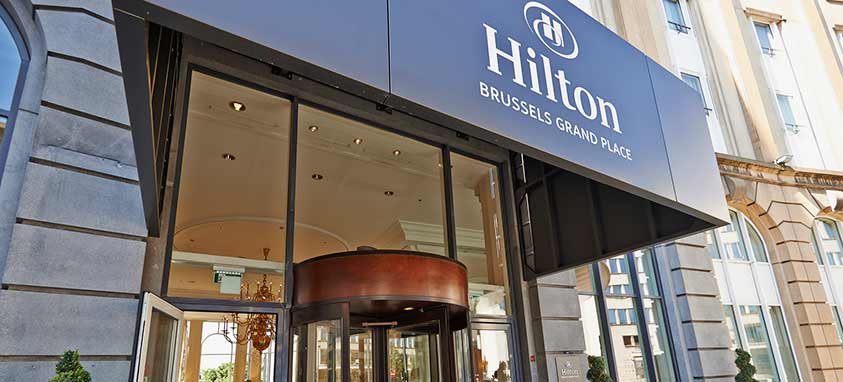
paris-hilton

By unveiling her own luxury hotel line, entrepreneur Paris Hilton is following in the footsteps of her great-grandfather Conrad Hilton, who founded the hotel chain in the 1920s. The first  of Paris Hilton’s properties to open will be located in Dubai, New York and Las Vegas; three cities where she spends a lot of time.

When she was younger, Paris Hilton was primarily known as a socialite who starred in a series of reality television shows—the most famous being “The Simple Life,” which aired from 2003 to 2007. The party girl, who was arrested numerous times, seems to have settled down.

Today, the 35-year-old is a successful businesswoman with a chain of eponymous boutique stores, mostly in Asia and the Middle East, that hawk her perfumes, handbags, watches and footwear. Her fragrance empire alone reportedly has sales that have topped $1.5 billion.

Not Her First Foray in the Hospitality Business

Hilton literally grew up in hotels, and this is not her first foray into the hospitality business. As Jim Dobson reports for Forbes, in 2010 she helped design the Paris Beach Club for Century Properties’ Azure Urban Resort Residence in the Philippines. The luxury apartment complex features nine buildings named after beach destinations she enjoys, such as Rio, Santorini, St. Tropez and Maui.

A second Paris Beach Club recently broke ground at the Azure Urban Resort Residences in Parañaque, north of Manila. It will contain themed towers named after other beaches and seaside resorts that the heiress favors, including Monaco, Bali, Kauai, St. Barths and Barbados. The project will feature the largest man-made beach in the Philippines.

“Her unparalleled style that made her a successful businesswoman and a style icon, as well as her zest for living the good life, are the qualities that we would like to incorporate into our vacation-inspired residential property” John Victor Antonio, Century Properties CEO and project head of Azure, told Dobson.

The New Hotel Line

Hilton’s newest hotel endeavor in Dubai, New York and Las Vegas will carry on the modern yet casual beach theme she has popularized in the Philippines. Although at this point few details about the project have been released, her branded hotels will be a separate entity from the family’s Hilton hotels.

Paris’ younger sister Nicky Hilton Rothschild, a fashion designer, socialite and model, tried to lend her name to a line of branded hotels separate from the family’s properties in 2006, however the Nicky O hotel projects in Miami and Chicago never materialized.

ASAE in 2018

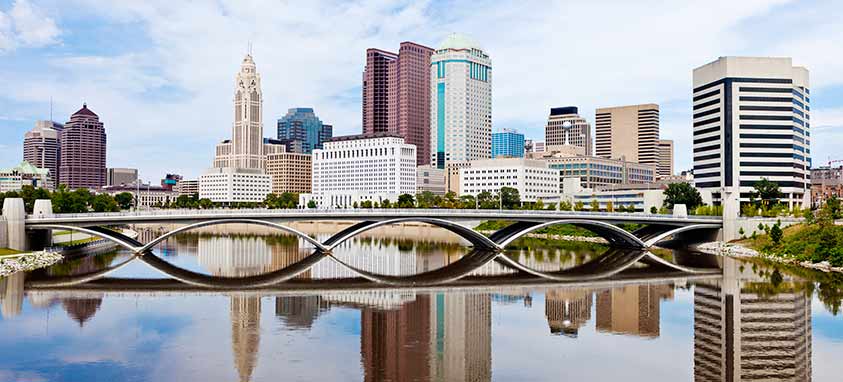
American Society of Association Executives (ASAE) today announced that it will hold the 2019 Annual Meeting & Exposition in Columbus, Ohio. The annual conference is estimated to bring more than 5,000 attendees to Greater Columbus Convention Center (GCCC) from Aug. 10-13.

“This will be the first time ASAE will hold its Annual Meeting & Exposition in Columbus,” said John H. Graham, president and CEO of ASAE. “Columbus is a great convention city, and they are excited to welcome the association community. Columbus has planned unique and exceptional events that will surprise and delight our members. We’re looking forward to working with the city of Columbus and can’t wait for our members to experience everything it offers.”

By July 2017, The GCCC will unveil $125 million in renovations before the conference takes place. Exhibitors will be able to make use of 373,000 sq. ft. of newly expanded contiguous exhibit space; 10,000 sq. ft. of event space across two levels; 10 new meeting rooms; an open atrium entrance on the north end; and a new 800-space parking garage connected by covered a skywalk.

Out of 27,000 hotel rooms in the city, 4,000 are located in downtown Columbus and 2,100 are connected or adjacent to the convention center. The Annual Meeting & Exposition is expected to fill 16,800 hotel rooms. The GCCC is within walking distance to dining and entertainment districts, plus 33-acres of green space along Scioto Mile, which runs through the heart of the city.

“This is a game-changer for our community,” said Brian Ross, president and CEO of Experience Columbus. “Hosting ASAE puts Columbus on the map with key decision makers and influencers planning meetings for their national associations. Our community should be very proud of the collaborative effort put forth to win this conference. We look forward to wowing attendees when they come in 2019.”

Based in Washington, DC, ASAE is a membership organization of more than 21,000 association executives and industry partners, representing 10,000 organizations. Its members manage leading trade associations, individual membership societies and voluntary organizations across the United States and in nearly 50 countries around the world. ASAE members plan over 376,000 meetings, expositions and seminars that reach over 200 million attendees annually.

Incentive Marketplace Estimate Research Study

The Incentive Federation has released a study which confirms incentive programs among business in the United States are on the rise. Since the Incentive Marketplace Estimate Research Study was last compiled in 2013, the non-cash incentive market has grown by 17 percent to $90 billion in annual spending. Each year, businesses spend $14.4 billion on incentive travel and $75.6 billion on award points, merchandise and gift cards to employees, partners and customers.

Nearly 1,400 business executives participated in the national study, conducted in partnership with research firm Intellective Group. It found that a third of the incentive marketplace is driven by small businesses with up to $10 million in annual revenue. They generate a total of $29 billion a year in spending on incentives. Larger organizations with up to $100 million in revenue accounted for 84 percent of total expenditures.

“This study reaffirms that the use of non-cash incentives has been and continues to be an important part of many businesses’ growth strategy,” said Melissa Van Dyke, co-chair of the Incentive Federation and president of The Incentive Research Foundation. “The growth in the use of non-cash incentives is an important signal that U.S. businesses value tangible incentives over simply using cash to recognize performance and loyalty.”

Highlights from the Incentive Marketplace Estimate Research Study:

Employee rewards and corporate gifts are the most common forms of non-cash incentives, with 72 percent of businesses having one or both types of programs.

Non-cash sales incentive programs are present in three out of five businesses; non-cash loyalty programs are used in 45 percent of firms; 41 percent use non-cash channel programs.

Gift cards are the most prevalent form of reward in all programs, except customer loyalty. Trips and travel is most frequently used with sales programs and least often within customer loyalty. Merchandise use is highest for channel programs.

Organizations, regardless of their size, increased their use of non-cash incentives by 36 percent from 2013 to 2015.

global-business-travel-association

Each year, thousands of meeting and business travel professionals head to the Global Business Travel Association (GBTA) annual conference to unveil new products, participate in education sessions and discuss the industry’s latest trends. This year’s event, which took place July 16–20 at Colorado Convention Center in Denver, reinforced the value of meetings and events and the continued opportunities they present for companies worldwide.

Here are several key takeaways and emerging themes meeting professionals should know when planning future meetings and events.

Leveraging Meetings Expertise is Essential

Understanding meetings and events spend continues to be a key challenge for companies worldwide. Many organizations are striving to achieve a deeper understanding of this spend to activate investments and ensure full alignment with overall business strategies. Meetings professionals can play a highly strategic role within their own organizations in leveraging their expertise and guiding their clients (whether internal or external) during this process. With great discipline, a strong focus on achieving value and a commitment to transparency, meetings professionals are able to design programs that achieve their company’s strategy and drive decision-making through comprehensive research and meaningful insights.

Integration, Integration, Integration

Meetings and events make up a category of spend that is closely tied to business travel. Today, there are a number of solutions and initiatives that focus on creating more integration between meetings event data, meetings expense data and travel data. While it is unlikely that travel and meetings data will fully converge, there is significant benefit and value for buyers and suppliers to understand the relationship and dynamics of shared resources, whether it is hotels, air or ground transportation.

Small Meetings Offer Big Opportunities

Companies today utilize a variety of solutions and business processes to make small meetings more efficient, however, new methods are emerging to achieve greater efficiency. A number of technology and service providers are innovating in this space, working to provide smarter processes, better access to content, and an overall better experience for small meetings. It will be important for meeting professionals to understand the capabilities and solutions that exist today, and be proactive in testing the feasibility of these solutions within their own meetings program and meetings portfolio.

Appetite for Investment

Across the meetings and events industry, there is a growing awareness and strong appetite for new opportunities that foster innovation and generate greater returns on investment. While we have seen some improvement in the ecosystem among buyers and suppliers over the last five years, more opportunities lie ahead to enable direct access to more content. Organizations are now seeing the benefit of consolidating their meetings and events programs across business units, geographies and business functions. As their visibility of this spend increases, their ability to direct this spend to their preferred suppliers will benefit market leaders and innovators in our industry.

Global Events Take Center Stage

As meetings and events continue to connect business professionals around the world, global events will have a profound impact on our industry and travel more broadly in the future. Today’s world is highly unpredictable. As a result, duty of care remains a priority for companies, no matter where they are located. Meetings professionals must continue to keep this top of mind as they develop their programs and look to create peace of mind for attendees.

It’s an exciting time for the meetings and events industry. With innovation paving the way, business leaders leveraging the fill power of meetings and events to drive business outcomes, and meetings owners leaning on experts to guide their programs, the future is brightly filled with new opportunities to achieve continued success.


Issa Jouaneh is senior vice president and general manager of ‎American Express Meetings & Events.

phoenix-convention-center

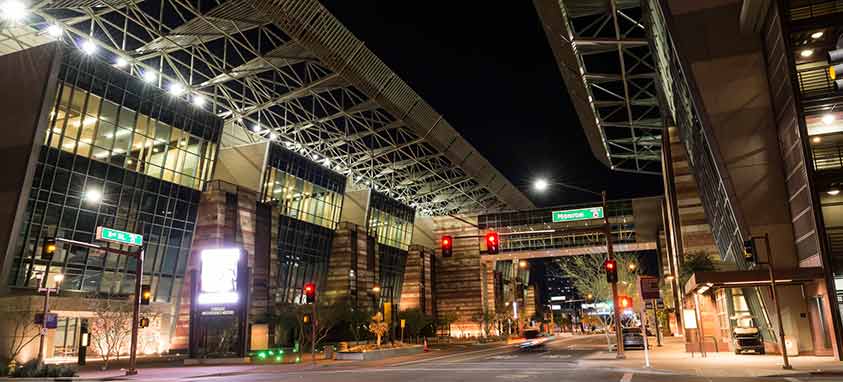
Smart City Networks has received final approval for a public-safety distributed antenna system (DAS) it installed last year at Phoenix Convention Center. Smart City Networks partnered with system integration firm Connectivity Wireless Solutions (CWS) to design, install, manage and commission the customized, turnkey system that ensures first responders can maintain communication with each other in case of an emergency.

“Bringing together large numbers of sports fans or conventioneers creates critical public safety concerns,” Smart City Networks President Mark Haley noted. “First responders must be able to communicate when responding to fires, medical emergencies and other extreme conditions.”

Strict fire codes and other safety regulations make these types of emergency communications systems uncommon in convention centers. The public safety DAS system meets all National Fire Protection Association 2015 standards, including circuit survivability, two-hour fire-rated housing and cabling and system monitoring.

Smart City and Phoenix Convention Center officials recently were presented with the fire marshal’s “green tag,” symbolizing the project’s completion and fire inspection approval.
Smart City and CWS initiated the public safety DAS at the same time they installed and began managing the convention center’s cellular DAS last year. The cellular DAS project came online in time for the convention center to serve as media headquarters for the 2015 Super Bowl in Phoenix.

DAS employs a network of mini antennas to boost signal strength, eliminate dead zones and remove interference from phone and radio frequency signals. It is especially helpful in exhibit halls and other locations where concrete structures, steel reinforcements and intricate architecture can block signals and lines-of-sight. Weak and interrupted radio signals can literally become a life and death situation when firefighters, medical professionals and other first-responders lose communication with dispatchers and each other in emergency situations.

“Smart City’s and CWS’s technical knowledge, experience in digital infrastructure and commitment to problem solving positioned us to recognize, analyze and provide a custom solution for special challenges presented by the Phoenix Convention Center’s unique venue design, building materials, and public safety requirements,” said Haley.

SkySpire Tower

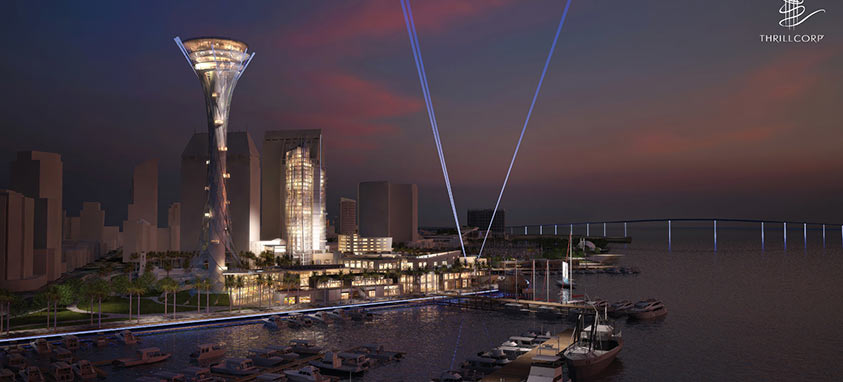
Thrills and excitement are on the horizon for San Diego’s skyline. San Diego Port Authority Commission recently approved the addition of a 480-foot-tall observation tower on prime waterfront land in the Port of San Diego. The site near San Diego International Airport (SAN) will be turned into SkySpire Tower, an iconic architectural feature with access to retail, dining and entertainment in the Marina and Gaslamp District.

The $1.2 billion project will have rotating gondolas that spiral around the tower, transporting guests to the top for an interactive observation experience while enjoying unobstructed 360-degree views of San Diego Bay and Coronado Island. Each gondola is expected to hold up to 20 visitors in a ski lift-style boarding process. SkySpire is a vertical alternative to the Ferris wheel, boasting a one-of-a-kind restaurant at the very top.

The observation tower will be erected by ThrillCorp, a developer of vertical entertainment experiences including retail centers and free-standing roller coasters. It is part of an extensive redevelopment along 70 acres of Downtown San Diego’s waterfront, including Seaport Village. Protea Waterfront Development is spearheading the redesign and area expansion to include new recreational spaces, an esplanade, parks, an aquarium and a pier.

“I believe this site is unquestionably one of the best waterfront sites in the United States that when completed will redefine experiential, urban mixed-use development and make San Diego a truly world-class city,” said Yehudi Gaffen, spokesperson for Protea Waterfront Development.

meeting-trends

Unified communications vendor ShoreTel recently conducted a global survey of more than 1,000 people about meeting habits and productivity that dispelled several common beliefs about today’s meetings and how individuals feel about them.

For example, the study, titled “Build a Better Meeting,” shows that millennials participate in meetings in conference rooms with their peers at the same rate as other generations.

However Generation X—those born between 1965 and 1979—are 28 percent more likely than other generations to spend more time in meetings, at more than 9 hours per week.  (According to Clarizen, the average worker spends 9 hours per week preparing for and attending meetings).

The study also proved that the frequency of meetings didn’t depend solely on age. In fact one of the biggest factors was industry. Those in the technology field average 30 hours a week, and enterprises report the most meetings among businesses, while startups report the fewest.

Software startup Pivotal, for example, headquartered in San Francisco, starts every morning with a five-minute all-hands meeting, promptly followed by a 5-10 minute team meeting, and the rest of the day is dedicated to uninterrupted work.

Geography proves to be another notable factor. Respondents in Asia reported the fewest hours spent in meetings each week (57 percent said 0 to 4 hours) while Australians meet the most (45 percent citing 9 or more hours).

Evaluating Productivity

Forty-seven percent of Baby Boomers who took the ShoreTel study said meetings are productive, while 34 percent of Millennials agreed.

Those in Asia (48 percent) and Europe (52 percent) find meetings to be more productive than their counterparts in North America (40 percent).

Sixty-seven percent of respondents said they listen and take notes during their meetings.

Nearly every generation came to an agreement on location. Sixty-four percent of Millennials said they’d rather meet in conference rooms versus phoning in or attending remotely, while 65 percent of Gen Xers and 63 percent of Baby Boomers did as well. Surprised? Studies have shown that face-to-face meetings actually spur more creativity and ideas than when meetings are conducted digitally.

Meetings get a bad rap, especially when the conversation is directed at the newest generation of the workforce, who are often said to have smaller attention spans and less of a tendency to embrace face-to-face meetings.

The aspects of meetings may be changing, but most agree that meetings are in fact necessary and productive. The key is to find a balance that is both productive and efficient. It should be a time to update the team, share ideas, set goals and then let your attendees free to go accomplish them.

sheraton-kuauiSheraton Kuaui Resort

There is a lot of talk about the changing behavior in today’s workforce and how younger generations choose loyalty. Millennial and Gen-Z professionals have claimed they’re more likely to choose a brand for philanthropic reasons than for points systems and memberships.

This attitude is perhaps one reason that more groups are looking for properties that offer CSR opportunities as opposed to traditional team-building exercises that don’t benefit the greater good. There is a rising trend of using time wisely to donate money, resources and services to those in need, which can in turn build strong work relationships and boost overall morale.

Many people want to give their business to companies who have something to offer their communities, and hotels have found myriad ways to do that. Here are six hotels that give back in fun, collaborative ways.

1. In June, The Westin Hilton Head Island Resort and Spa donated 3,319 pounds of frozen food to Lowcountry Food Bank, a local food bank that serves the 10 coastal counties of South Carolina.

The donation resulted in the creation of 2,766 meals, according to a press release.

2. Animal Samaritans, a no-kill shelter in Palm Springs Valley, and Westin Mission Hills Golf Resort & Spa partnered up to form the Dog Samaritans Adoption Project. The hotel lobby at the resort has been transformed into a temporary home for dogs in need of a family.

A team of caregivers take the dogs for walks and introduce them to the guests while they wait for their perfect matched applicant to stay at the hotel. On August 26, Westin and Dog Samaritan will be celebrating their success of almost 50 adoptions on National Dog Day. The partnership has been working together for a little more than a year.

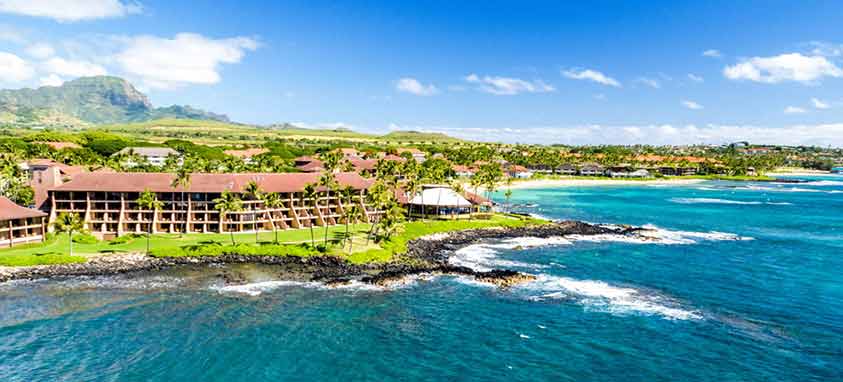
3. RumFire Poipu Beach at Sheraton Kauai Resort offers the Table 53 Program. All net food and beverage proceeds for the restaurant’s Table 53 is donated to local charities year-round. The restaurant has raised over $150,000 for local charities since the program’s inception in October 2012.

Guests can call and make a reservation for the table in order to help the cause.

4. The staff at Sheraton Tysons Hotel, managed by Crescent Hotels & Resorts, regularly gives back in myriad ways. They recently collected food for the Capital Area Food Bank helping to feed those in need in the Washington, DC area. Nearly 500 pounds of food were collected by the hotel via donations from guests and staff members.

The hotel also raised over $15,000 for the Nova Viva Vets 5K to support veterans in the Virginia area and participated in GO RED to promote awareness that heart disease is the number one killer of women in North America. Most recently, the hotel teamed up with its sister hotels in the area to collect nearly 3,000 Toys for Tots for local underserved kids.

5. Each year, Coast Hotels hosts a golf tournament that raises money for various causes. Last year, the 13th annual Coast Hotels Shuhachi Naito Golf Classic raised a record $72,000, which was donated to The Salvation Army and ALS Society of BC.

“Coast believes in being an active part of our communities, and our annual golf tournament is one way we help make a difference,” Robert Pratt, president of Coast Hotels, said in a press release.

6. Mohegan Sun, whose owners regularly give back to their community, recently hosted a Battle of the Departments Food Drive, in which all food donations benefited the Gemma E. Moran United Way/Labor Food Center in New London. Mohegan Sun reported that 23,003 items of nonperishable food were collected in one month to help feed community members in need.

The Future of Hotels?

Hotels giving back to their communities is nothing new, but as hotel management continues to understands the value in giving back and the importance many potential attendees find in staying at such hotels, it’s likely a trend that will continue expanding. Beach clean-ups, volunteering at nursing homes and soup kitchens, and creating care packages for service members overseas are just some of the ways teams can spend even a single day giving back.

But consider a hotel built on charity. Celebrity photographer Jeremy Cowart hopes to do just that with his new endeavor, Purpose Hotel, which he hopes to build into a 200-300-room hotel in Nashville in the next few years, starting with a Kickstarter campaign.

Cowart envisions every detail of the nonprofit hotel having a direct connection to charity. Each room would sponsor a child, with each blanket made by a Bangladeshi woman and each towel made by an Ethiopian woman.

If successful, Cowart said he hopes to grow the brand into an international hotel brand that could raise millions of dollars for nonprofits around the world, such as Compassion International, Mission Lazarus and Fashionable.

Nearly $200 million later, Marriott is rolling out the red carpet for groups at its premier properties in California. From San Diego to San Francisco to the heart of the Silicon Valley, Marriott is inspiring groups at nine newly enhanced hotels and resorts in picture-perfect destinations.

These hotels are letting the sun shine in a combined total of 720,000 sq. ft. of new indoor and outdoor meeting facilities; introducing contemporary guest rooms with waterfront or skyline views; spotlighting wellness with state-of-the-art fitness centers and serene spas; and serving fresh, flavorful regional cuisine for an authentic taste of California.

Groups can experience Best-in-the-West meetings at the following hotels.

Northern California

marquis_843x342

San Francisco Marriott Marquis
The 1,500-room hotel has introduced a new fitness center and spa with outdoor terrace, M Club Lounge, Mission Street Pantry and Fleet Feet boutique – offering jogging tours of the city.  Adjacent to the Moscone Center, the hotel offers 117,000 sq. ft. of self-contained event space, including the renovated View Lounge perched high atop the skyline.

sf-marriot-unionsquare_843x342

San Francisco Marriott Union Square
Located steps away from the shopping and dining attractions of Union Square, the stylish 400-room hotel will unveil 9,100 sq. ft. of prime function space with stellar San Francisco views this fall.

sf-airport_843x342

San Francisco Airport Marriott Waterfront

This bayside hotel offers 688 new next generation guest rooms; Marriott’s first high-style, high-tech M Club Lounge and 28,000 sq. ft. of stunning indoor and outdoor function space.

sj_843x342

San Jose Marriott
New meeting facilities feature a stylish décor with natural light and local artwork. The contemporary redesign of its 510 guest rooms, lobby and concierge lounge; robust in-room entertainment offerings including Netflix; Michael Mina’s revitalized Arcadia steakhouse and the region’s fastest hotel Wi-Fi make this hotel a preferred destination.

santa-clara_843x342

Santa Clara Marriott
The hotel has renovated its 40,000 sq. ft. of event space in tech-inspired elegance and introduced mobile keyless entry to its 759 guest rooms and suites, each featuring private balconies overlooking the spacious grounds.

oakland_843x342

Oakland Marriott City Center
The popular property will soon reveal a boutique-style makeover of its 489 guest rooms, enhanced dining options and an inviting great room for work and play.

Southern California

coronado_843x342

Coronado Island Marriott Resort & Spa
The seaside retreat nourishes the body and soul with the introduction of The Spa at Coronado and a two-story fitness center. Three hundred serenely renovated guest rooms and cottages and 26,901 sq. ft. of function space spread across the luxurious 16-acre resort.

sd-marina_843x342

Marriott Marquis San Diego Marina
The 1,362-room waterfront resort just completed a $107 million expansion of its 280,000 sq. ft. of function space, adding spacious stacked ballrooms and a breathtaking Terrace along its 446-slip marina.

anaheim_843x342

Anaheim Marriott
Adjacent to the Anaheim Convention Center and near Disneyland, the hotel is a haven for business and pleasure following a top-to-bottom renovation of its 1,030 guest rooms, lobby, dining offerings and 164,254 sq. ft. of event space.

Marriott’s commitment to service excellence, including integrated guest and meeting planner mobile services, makes California Dreaming a reality.