Tropicana Las Vegas

Tropicana Las Vegas—A DoubleTree by Hilton is surprising meeting planners and their attendees after a recent transformation. With a convenient location just minutes away from Las Vegas’ McCarran International Airport, major convention centers and top entertainment stadiums, the resort provides a luxurious yet affordable group experience on the Las Vegas Strip.

Each of the Tropicana Las Vegas’ 1,470 residential-style guest rooms features luxurious amenities, such as Wi-Fi and 300-threadcount linens. Guests can opt to stay in the Bungalows, which come with balconies; the casino-adjacent rooms in Paradise Tower; or Club Tower rooms near the conference center. For VIPs, the Pool and Sky Villas offer an entirely new level of luxury.

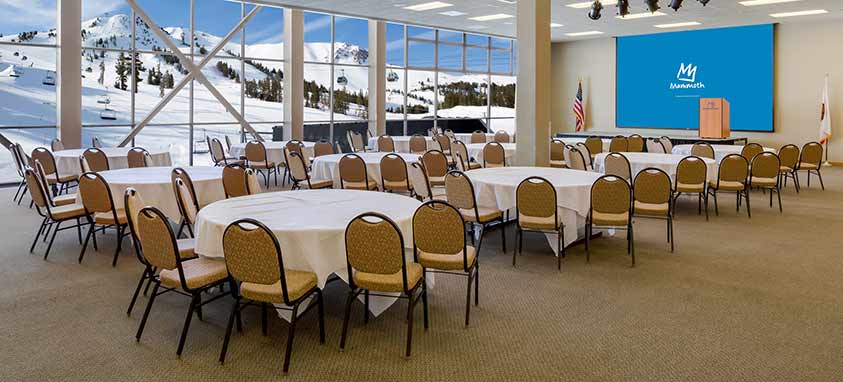
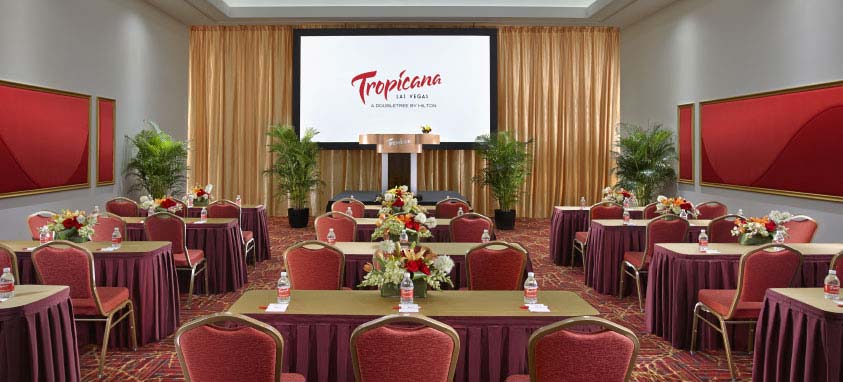
After a recent expansion, Tropicana Las Vegas’ conference center now offers more than 100,000 sq. ft. of flexible meeting space that can be broken down into 38 breakout rooms. The Trinidad Pavilion and Meeting Rooms provide 55,000 sq. ft. of meeting and exhibition space with ground-level access, making them ideal for large general sessions, exhibitions, and other types of events. The award-winning pool and gardens and the Tropicana Theater offer opulent spaces for upscale events. Other unique venues for group functions include the Havana Room, a stunning backdrop for galas and receptions with its chandelier, dark-wood dance floor, custom seating, and premium audiovisual technology, and Sky Beach Club’s pool setting is also set up to accommodate outdoor events up to 2000 guests.

Entertainment options include the Laugh Factory comedy club and live entertainment in the Tropicana Lounge. When it comes to dining, three on-property restaurants include in-door or out-door dining at Beach Café, Biscayne Steak Sea & Wine for a reinterpretation of a classic steakhouse and Bacio Italian Cuisine. Robert Irvine, host of the Food Network’s “Restaurant: Impossible,” will debut a new restaurant at the resort in 2017. And when it comes to gaming, Tropicana Las Vegas’ 50,000-square-foot casino includes an assortment of slots and table games.

For more information: Tropicana Las Vegas—A DoubleTree by Hilton — (800) 462-8767 or (702) 739-2222; [email protected]; troplv.com
emotion

Part of both the fun and fear of planning a trip is questioning how it will play out. Instead of gambling with a significant investment when organizing a meeting or event, imagine selecting a destination that caters to a desired emotion. The capacity of such technology would certainly be the holy grail of tailor-made travel. Fortunately, this prospect could soon become reality.

According to a report by Lonely Planet, scientists from two Australian universities worked with the Singapore Tourist Board to create a travel guide based on the emotions evoked by various attractions. Ultimately, the research group aims to offer a more custom-made planning process to enhancing travel experiences. The research project, called the Singapore Emotion Travel Guide, studied the brainwaves of one family while on vacation.

The small study was conducted throughout 20 tourist activities in Singapore. An Australian family, including Chantelle Ellem of the blog Fat Mum Slim, wore headsets throughout the trip. The headsets measures for electroencephalography, or EEG, which records the activity of billions of brain neurons. The study also entailed pre- and post-experience questionnaires.

The travel guide, now available online, details the various attractions which have been categorized and ranked according to their emotional component. Sections include happiness, excitement, fun, stress, interest and relaxation.

The results?

  • Free attractions can make people equally as happy and interested as costly ones. Happiness and interest levels were about equal when sightseeing in Little India (a free experience) as they were while ziplining (a more expensive attraction).
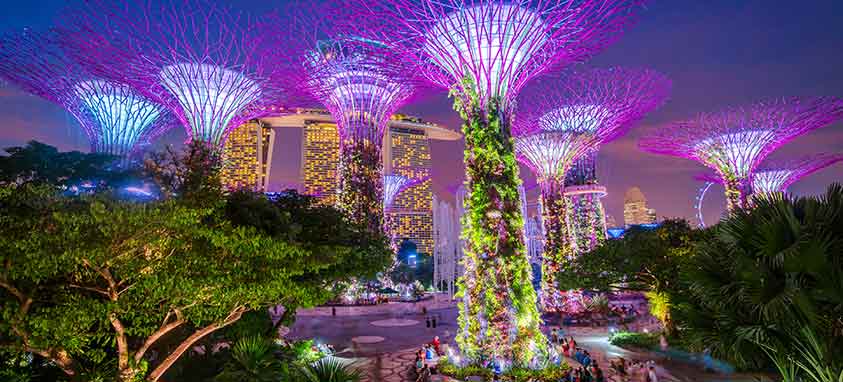
  • New cultural experiences are desirable. Children’s interest levels rose about 10 percent while eating native Singaporean food compared to Western food. Plus, the whole family demonstrated high levels of enjoyment while exploring the city-state’s 250-acre Gardens by the Bay. Adults showed the highest levels of happiness visiting Jurong Bird Park and Merlion Park.

united airlines

United Airlines announced a significant change to its policy of giving off-duty flight crews priority seating over passengers who have already boarded. The airline said crew members would be allocated seats at least one hour prior to departure, the BBC reported.

The announcement follows a recent episode involving a passenger onboard a United Airlines flight out of Chicago. The passenger, Dr. David Dao, reportedly was asked to vacate his seat on the overbooked flight to make room for United Airlines flight crew. When he refused, Dao was dragged off the plane by an aviation security officer.

Although United Airlines’ CEO Oscar Munoz later issued a public apology on behalf of the airline, Dao has hired an attorney, who said during a press conference that his client will “probably” file a lawsuit.

United Airlines’ decision coincided with another incident involving passengers who were removed from a United flight at George Bush Intercontinental Airport (IAH) in Houston.

Michael Hohl told reporters he and his fiancee were the last to board United Airlines flight 1737 from Houston to Costa Rica this past weekend when they discovered another passenger sprawled across their assigned seats, napping.

Hohl said the couple elected to sit three rows from their assigned seats, but the airline reported they picked an upgrade section. The couple was escorted off the plane by a U.S. Marshal, reportedly without incident. Hohl claimed they offered to pay for the upgrade.

In an official statement, United Airlines said, “These passengers repeatedly attempted to sit in upgraded seating which they did not purchase and they would not follow crew instructions to return to their assigned seats.”

Some travelers willing to pay extra to avoid United

Meanwhile, a Morning Consult poll found that among respondents who had heard recent negative publicity surrounding United Airlines, 79 percent said they would prefer to fly American Airlines if offered the choice between a $204 nonstop flight on either airline.

It’s not all bad news for United. The Morning Consult poll found the cheaper the airfare, the more likely respondents were to ignore negative news and select United Airlines to reach their destinations. Among respondents who had not heard any negative recent news about United Airlines, 56 percent said they would choose it over American if offered significantly lower airfare.

Delta could shell out nearly $10,000 for overbooking

Another carrier, Delta Air Lines, has reportedly informed employees they are allowed to offer passengers substantial airfare compensation if they are asked to give up their seats on overbooked flights. The Associated Press reported the new policy after obtaining an internal Delta Air Lines memo authorizing gate agents to offer bumped passengers up to $2,000 in compensation. Delta supervisors are allowed to offer as much as $9,950, up from $1,350, AP reported.


acquired

Image credit: Mammoth Mountain Resorts

A pair of Colorado-based firms are heading West.

Aspen Skiing Co. and KSL Capital Partners this week announced the firms entered into an agreement to acquire Mammoth Resorts. The Southern California ski-resort properties include Mammoth Mountain Ski Area, Snow Summit, Bear Mountain and June Mountain.

The transaction is expected to close by the end of the third quarter of 2017, pending certain closing conditions and regulatory approvals. Financial terms were not disclosed.

The acquisition of four prized ski resorts, accessible to Southern Californians, is big news across a spectrum of industries. In addition to skiing enthusiasts, the hotel and travel industry—as well as event planners that specialize in selecting venues for intimate corporate and association meetings—is taking notice of the deal.

“Mammoth has been Southern California’s mountain home since 1948,” said Rusty Gregory, current chairman and CEO of Mammoth Resorts. “After doubling down on our offerings to Southern California with the purchase of Snow Summit and Bear Mountain in 2014…this new platform, built around a collective passion for the mountains and our commitment to the people who visit, work and live there, is exactly what the ski resort business needs.”

acquire

Image credit: Mammoth Mountain Facebook

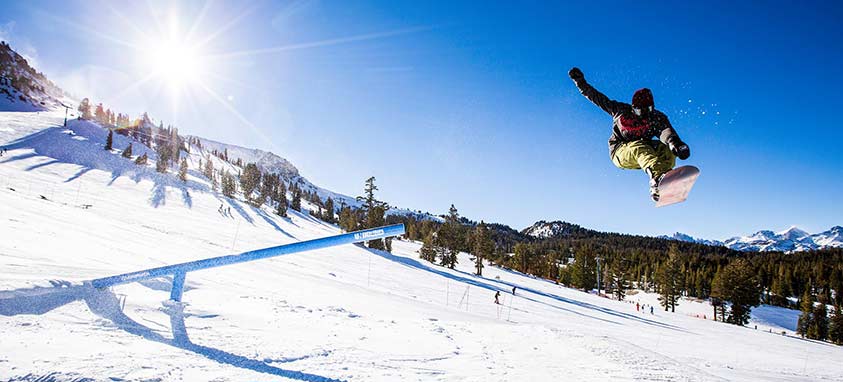
With more than 3,500 acres of skiable terrain, Mammoth is considered the No. 1 skiing and snowboarding destination among Southern California winter-sports enthusiasts. The area is also considered a prime destination for hikers and mountain-bikers from California, Nevada and Arizona.

Starwood Capital Group is currently the majority owner of Mammoth Resorts. Barry Sternlicht, chairman and CEO of Starwood, said, “We had greater plans for Mammoth but the Great Recession, and then some less favorable weather, interfered with our strategic aspirations in a finite life investment vehicle.”

In addition to Mammoth, the acquisition includes Snow Summit, with 240 acres and 31 trails; Bear Mountain Resort, comprising 748 acres; and June Mountain, which offers 1,500 skiable acres and 41 trails. Mammoth Mountain is serviced by 28 lifts, including two gondolas.

Eric Resnick, CEO of KSL, offered a pragmatic assessment of the deal. “This transaction will allow the combined company to better serve Mammoth’s loyal customers while at the same time exposing these world-class resorts to a broader audience,” Resnick said.

“Mammoth is a special place,” said Mike Kaplan, CEO of Aspen Skiing Co. “The landscape is spectacular, the mountain is phenomenal and the place is in constant motion. Whether it’s the vibrant park and pipe scene, the high-quality alpine racing programs, or excellent mountain biking, Mammoth has it all.”

A slew of recent air-travel incidents have created public backlash against several airlines. The most recent episode involves a passenger onboard a United Airlines flight out of Chicago. The passenger reportedly was asked to vacate his seat on the overbooked flight to make room for United Airlines flight crew.

The passenger refused, and was dragged off the plane by an aviation security officer. The humiliating incident was recorded on video and then posted on social media sites. It launched a public outcry against the airline and the officer, who has since been placed on leave pending investigation.

The incident comes in the wake of another United Airlines embarrassment involving two young girls wearing leggings. A United boarding agent refused to allow the girls to board a flight from Denver to Minneapolis because both were wearing Spandex leggings. Although the agent was following an obscure airline procedure, the incident caused a public outcry after the story went viral.

Recognizing the need for calm, Jonathan Grella, executive vice president for public affairs at the U.S. Travel Association, recently posted a statement calling on airlines to recognize the value of their customers—business and leisure air travelers alike.

“For days, the airwaves have been filled with negative stories about airlines,” Grella said. “The common denominator here is that air travel has become all too unpleasant for scores of travelers. While airlines tout record profits generated on the backs of their passengers, many are left stranded with few to no options. Years of over-consolidation, compounded by policymaking favoring the airlines rather than the travelers they serve, has led to a broken system that needs to be fixed.”

Grella’s timely statement arrives as airlines cope with increased U.S. government regulations and tighter restrictions on everything from carry-on luggage to personal electronic devices. The United States and United Kingdom recently announced that laptops, tablet computers and computer games would be banned from specified flights to the U.S. and U.K. from certain North African and Middle Eastern countries, prompting some airlines to offer business-class travelers loaner laptops.

In an open letter to President Donald Trump, the U.S. Travel Association requested an Open Skies policy to ease restrictions against targeted ethnic groups and to implore governments to minimize interference in air travel. The most recent incident involving a passenger removed from an overbooked flight supports the association’s criticisms of an industry with misdirected priorities.

“Airlines that obstruct airport infrastructure improvements and growth or advocate the undoing of our nation’s Open Skies policies should use this moment to consider how to make the system better, not worse, with more choice and connectivity for all,” Grella said. “It’s time Washington ‘re-accommodate’ the proverbial fox from the henhouse and put passengers and their experiences first in the equation.”

airline wifi report

In his standup, comedian Louis CK reminisces on his first experience with in-flight Wi-Fi.

“It’s fast, and I’m watching YouTube clips. It’s amazing—I’m on an airplane! And then it breaks down. And they apologize, the Internet’s not working. And the guy next to me goes, ‘This is bull…’ I mean, how quickly does the world owe him something that he knew existed only 10 seconds ago?”

Well, this was only the beginning. Airlines have noticed that when passengers are denied technology to which they feel entitled, they get very frustrated. And it seems that in-flight Wi-Fi has transitioned from being a luxury to an expected standard.

Routehappy, an airline content platform, released a study on the phenomenon’s current state. The report is based on an analysis of all flights worldwide that have at least a chance of Wi-Fi. More than 70 airlines qualified.

Here are the big shocks and awes from the Routehappy report.

Note: Available Seat Miles (ASM) is a standard measure of an airline’s passenger carrying capacity. To calculate it, the number of available seats for sale is multiplied by the number of miles flown.

  • 83 percent of U.S. airlines offer a chance at having Wi-Fi on any given flight.
  • For non-U.S. airlines, 28 percent offer a chance at having Wi-Fi on any given flight.
  • Delta, Emirates and United have the highest percentage of ASM with Wi-Fi connectivity.
  • An additional 11 airlines began offering Wi-Fi since last year.
  • Seven airlines now offer Wi-Fi on all long-haul flights, compared to only one in 2016.
  • Last year, Virgin America was the only airline to provide 100 percent of its seats with Wi-Fi.
  • Etihad, Iberia, Singapore’s Scoot and Icelandair now provide Wi-Fi on 100 percent of their flights.
  • JetBlue offers Wi-Fi on 100 percent of its flights within the contiguous United States.
  • Emirates, Lufthansa and United are the top airlines for offering Wi-Fi on long-haul flights.
  • Emirates leads with almost double the available ASM with a chance of having Wi-Fi aboard.
  • Overall, 39 percent of ASM worldwide have a chance of a Wi-Fi equipped flight—an 8 percent increase from last year.

Everyone could use a little more Zen. The demanding modern workplace frequently imposes a hefty dose of stress. Rather than focusing on life’s strains, plan a meeting or event where free time provides an opportunity to recharge, relax and decompress. From serene lakes to charming towns full of friendly locals, there are many places offering just that. Here are the U.S. destinations best equipped to encourage calm—either among attendees, or for yourself.

zen destinations

1. Carova Beach, North Carolina

Carova Beach is only accessible by its beach which is unpaved. The area is comprised of a few neighborhoods in the northernmost part of the Outer Banks. Peace, quiet, natural beauty and seclusion are the main draws. Plus, the beach is full of free-roaming mustangs.

2. Gates of the Arctic National Park, Alaska

No road or trail is to be found in this wonderland, which holds a glacier-carved valley and river system. If you’re looking for an experience involving wholly authentic, unscathed nature, then Gates of the Arctic National Park is where you need to be.

zen destinations

3. Finger Lakes, New York

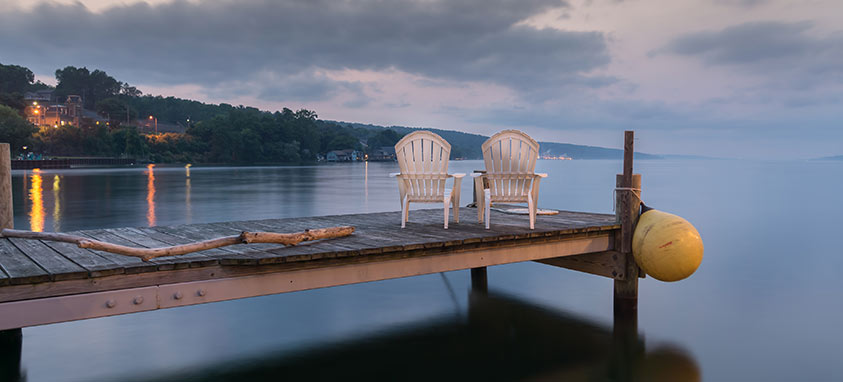
The Finger Lakes area is a dreamy oasis of wineries, mountain and lake activities, fine art, live music, spas and farm-to-table restaurants. Every season brings new activities to enjoy among waterfalls, gorges, woods, rolling hills and fresh glacial lakes.

4. Flathead Lake, Montana

Flathead Lake is the largest natural freshwater lake west of the Mississippi. Recreation areas provide room for boating, camping, swimming and picnicking. Roadside stands offer a variety of locally grown apples, cherries and other fruits during the summer months.

zen destinations

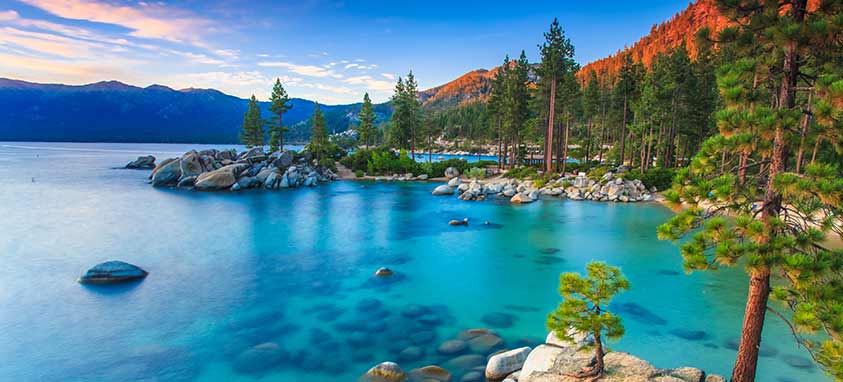
5. Lake Tahoe, California

An abundance of powdery snow, sparkling water, high mountaintops, granite cliff sides and rich greenery make Lake Tahoe a California gem and an Instagrammer’s picturesque dream.

6. Martha’s Vineyard, Massachusetts

Each vineyard comes with its own equally impressive and distinct character. In the area you’ll find boutique shopping, stunning harbor views, Greek revival houses from the early 19th century, a carousel and beaches—all among tall stalks of grass. Visitors get there by ferry. Once on the island, most prefer to walk, bike, scoot or ride the bus.

zen destinations

7. Maui, Hawaii

Maui is a tropical haven, made distinct by its bamboo forest, waterfalls and golden sand beaches. It’s also the leading whale-watching center of the Hawaiian Islands, with many reported sightings of humpback whales.

8. Olympic National Park, Washington

Olympic National Park spans almost a million acres and preserves a variety of natural ecosystems. The park’s natural treasures include glacier-capped mountains and old growth temperate rain forests.

zen destinations

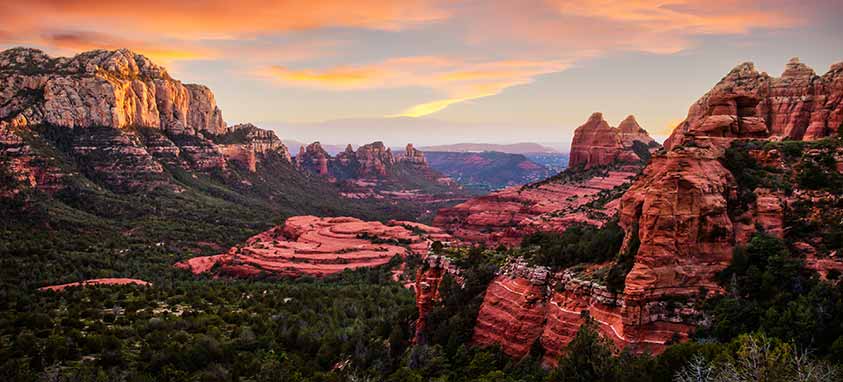
9. Sedona, Arizona

Regarded as sacred by Native Americans, Sedona is widely recognized as a place of healing and spiritual renewal. Visitors can satisfy their relaxation needs with more than 40 art galleries, spa facilities, wine tasting and 1.8 million acres of national forest land.

airport eats

Editor’s note: This is a sneak peek from the upcoming May issue. You can expect the entire issue online next month.


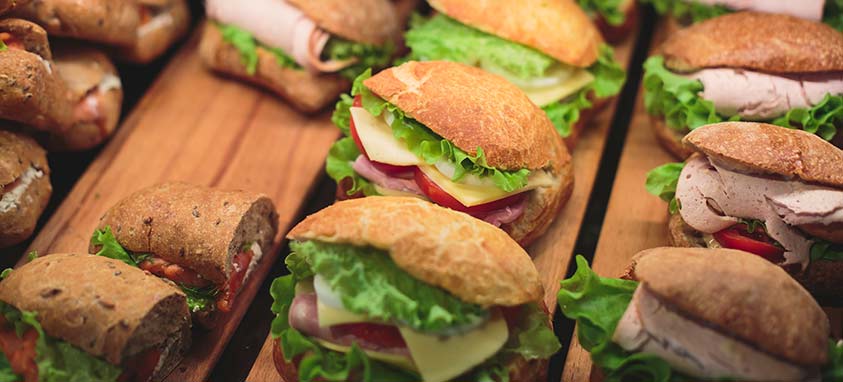
Regardless of the circumstance, airport dining often isn’t very appealing. Much of the food is often overpriced, over-processed and underwhelming. However, when an airport restaurant does manage to impress, it can have a lasting effect on the rest of a trip. But which airports offer the most positive experiences?

RewardExpert, a free service, is designed to help travelers maximize airline points and miles. In another endeavor to help travelers, the company released its 2017 Airport Dining Scorecard. The data-based report ranks the 20 busiest airports, from best to worst.

The ranking was based mainly on customer satisfaction, price and quality. Satisfaction was determined by Yelp score per venue, and average Yelp score per reviewer at each airport. Price was also calculated using Yelp data. Quality was measured by a cumulative average from Zagat reviews, Physicians Committee for Responsible Medicine healthiness scores and J.D. Power rankings. These factors were analyzed using nearly 75,000 restaurant reviews and factors in menu and pricing options.

“Airport infrastructure has been widely discussed this past year, and dining amenities can play a big factor in a traveler’s experience at an airport,” says RewardExpert CEO Roman Shteyn. “We set out to find which major U.S. airports go above and beyond to offer exceptional culinary options for those in transit.”

Ranking Highlights

airport eats

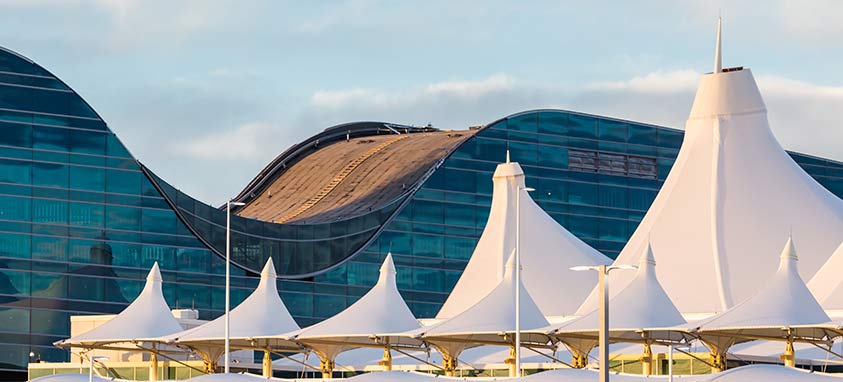
  • Denver International Airport (DEN) wins the No. 1 spot overall because of its highest overall rating, reasonable prices and wide range of food options. It is also No. 2 for price and variety.
  • Philadelphia came in fourth overall and No. 1 for Cheap Eats. Philadelphia offers almost 30 percent less expensive food, on average, compared to Newark Liberty International Airport (EWR), the most expensive in the top 20.
  • All three airports from the Greater New York area—La Guardia Airport (LGA), John F. Kennedy International Airport (JFK) and Newark Liberty International Airport—were at the bottom of the list due to their poor variety of options, high prices and high number of low-rated chain restaurants.

Best by Category

airport eats

High-End Bites: Los Angeles International Airport (LAX)

Cheap Eats: Philadelphia International Airport (PHL)

Local Eateries: San Francisco International Airport (SFO)

Gluten-Free Accommodations: Dallas/Fort Worth International Airport (DFW)

Vegetarian and Vegan Options: George Bush International Airport (IAH)

Top 5 Airports

# AIRPORT QUALITY PRICE SATISFACTION OVERALL SCORE
1 Denver 3/3 $ (out of $$$) 5/5 5/5
2 Phoenix 2/3 $ 5/5 4/5
3 Atlanta 2/3 $ 3.5/5 4/5
4 Philadelphia 2/3 $$ 4.5/5 3.5/5
5 Houston 1/2 $ 4/5 3.5/5


Full Top 20 (ordered)

  1. Denver International Airport (DEN)
  2. Phoenix Sky Harbor International Airport (PHX)
  3. Hartsfield-Jackson Atlanta International Airport (ATL)
  4. Philadelphia International Airport (PHL)
  5. George Bush Intercontinental Airport (IAH)
  6. Dallas/Fort Worth International Airport (DFW)
  7. Chicago O’Hare International Airport (ORD)
  8. San Francisco International Airport (SFO)
  9. Miami International Airport (MIA)
  10. Boston Logan International Airport (BOS)
  11. Minneapolis Saint Paul International Airport (MSP)
  12. Detroit Metropolitan Airport (DTW)
  13. Seattle-Tacoma International Airport (SEA)
  14. Orlando International Airport (MCO)
  15. Charlotte Douglas International Airport(CLT)
  16. Los Angeles International Airport (LAX)
  17. Las Vegas McCarran International Airport (LAS)
  18. New York LaGuardia Airport (LGA)
  19. John F. Kennedy International Airport (JFK)
  20. Newark Liberty International Airport (EWR)

incentive travel programs

The meetings and events industry isn’t all business. Rewards are part of the trade, too. In celebration of Global Meetings Industry Day on April 6, Incentive Research Foundation (IRF) compiled 10 incentive travel facts to help planners orchestrate their next incentive excursion. Considering employees prefer travel and experiences to cash when selecting a large-scale award, an opportunity is bound to present itself.

1. According to Incentive Federation, a noncash reward program of some kind is employed by 84 percent of all U.S. businesses bringing in more than $1 million in annual revenue. Incentive travel is used to motivate employees and partners at 38 percent of U.S. firms exceeding $1 million in revenue.

2. Each year, U.S. businesses spend more than $14 billion on incentive travel, Incentive Federation reports.

3. IRF created a new, simplified metric to track economic outlook for the incentives industry. Net Optimism Score calculates the percentage of respondents providing a positive rating to an industry question minus the percent giving a negative rating. As of fall 2016, the industry’s Net Optimism Score measured 26 percent, indicating an outlook that is moderately positive, but shows more negativity than the past several years.

4. Based on fall 2016 data, incentive travel budgets typically range from $3,000 to $4,000 per person. Approximately 40 percent of businesses spend more, however. For example, per-person incentive travel budgets exceed $5,000 at 20 percent of firms.

5. Since fall 2014, the average per-person spend has risen 5 percent annually.

6. Recent trends indicate that incentive groups are returning to faraway destinations. Currently, the most common destinations for incentive group travel are the United States, Caribbean, Mexico and Europe.

7. Analysis revealed the Net Optimism Score for incentive travel to be closely tied to the United States’ overall economic performance. Given the economic impact of the travel industry as a whole, and fluctuating forecasts related to recent travel policies, the Net Optimism Score can act as a valuable indicator.

8. Event disruption is the norm, not the exception. Nearly 60 percent of planners have dealt with disruption at their events. In fact, planners estimate that nearly one in four events have been impacted in some manner.

9. The key to a value-added partnership varies depending on which side you ask. Planners value flawless execution from hotel partners above all else. From a hotelier’s perspective, the most impactful thing a planner can do is provide a strong vision.

10. Planners and organizations show enthusiasm for wellness, but implementation of wellness practices lags behind interest. Wellness elements most frequently included in meetings today are healthy snacks, reduced-calorie drinks, smoke-free properties, free access to fitness facilities and frequent breaks.

Read more in the IRF 2017 Outlook Study.

The U.S. Travel Association has announced that Geoff Ballotti, president and CEO of Wyndham Hotel Group, was elected national chair in a member-wide vote. Travel Oregon CEO Todd Davidson previously held the role.

“We are thrilled to welcome Geoff as our new chair,” said U.S. Travel Association president and CEO Roger Dow. “Who better to help us emphasize the tremendous power of travel in our lives and the U.S. economy than someone whose professional life is all about hospitality? Geoff’s experience and expertise will help us continue to elevate our message to the highest levels of government leadership, and advocate for policies that keep America an attractive, welcoming destination for travelers around the world.”

In his role as national chair of U.S. Travel, Ballotti will lead the board to achieve its goals, which include increasing travel to and within the United States, highlighting the economic importance of the U.S. travel industry and advocating for policies that support and encourage travel.

“Travel makes us culturally richer, while simultaneously fueling both the U.S. economy and economies around the world,” Ballotti said. “Together we’ll continue to drive an agenda that supports connectivity—not isolationism—and encourages safe and secure travel to and throughout the United States.”

Wyndham Hotel Group’s portfolio includes 15 distinct brands, 7,800 hotels and more than 600,000 guest rooms that span 66 countries.