major sporting event host cities

Are you ready for some…meetings? From football to baseball to figure skating and more, college, professional and amateur sports bring in a lot of dough and tourism to popular meeting destinations. When a city is preparing to host a sporting event, they invest in improving their infrastructure, building and renovating hotels and expanding their public transportation routes. These enhancements, plus the fact they are trusted cities to accommodate massive amounts of people, are attractive to meeting professionals to book the same locales.

Indianapolis

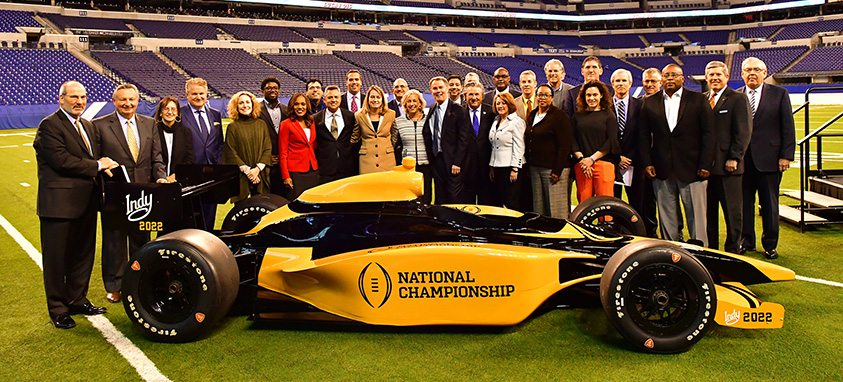
Last week, Visit Indy announced that Indianapolis was selected to host the 2022 College Football Playoff National Championship at Lucas Oil Stadium on January 10, 2022. The event will also utilize the Indiana Convention Center for a fan fest. The city is anticipating that the game and festivities surrounding it will bring in more than $150 million and 100,000 visitors to Central Indiana.

“Hosting this game will also ensure the 78,000 residents in our local hospitality industry will continue to earn a paycheck,” Indianapolis Mayor Joe Hogsett says in a press release.

Philadelphia

Fans follow their favorite college athletes into the pro league. Philadelphia Convention & Visitors Bureau (PHLCVB) revealed that April’s NFL Draft generated an estimated $94.9 million for the City of Brotherly Love. Hotel reservations reached 18,991 booked room nights. Hotel revenue increased by 11 percent from the previous year during that same time period.

“We are thrilled that not only did it generate substantial economic activity for Philadelphia, but we were also successful in showing the world that this city is a premier destination for sports, big events and tourism in general,” Julie Coker Graham, PHLCVB president and CEO, says in a press release.

Houston

The Super Bowl is one of the biggest money-makers of them all. Whether your favorite team is playing or not, the allure of the Big Game draws in the crowds. Where the people are, the moolah will follow. The Super Bowl is also a great incentive trip, regardless whether you can get your hands on game tickets. There are so many events and activities going on, visitors will surely have the time of their lives.

According to the report, The Economic Impact of Super Bowl LI on Greater Houston, prepared for the Houston Super Bowl Host Committee in May 2017 by Rockport Analytics, 337,000-plus hotel room nights were booked in connection to the game. The game brought an estimated $428 million in new spending to the region. “Many visitors and meeting planners impressed with GH and Texas will return to build future tourism,” the study states.

Houston, which needs all the economic help it can get in the aftermath of Hurricane Harvey, is fresh off a World Series win. However, the Fall Classic does not bring nearly as much profit as its football counterpart. This is because the two designated cities hosting the World Series each October are selected at the last moment based on the hometowns of the teams participating, Patrick Jankowski, senior vice president of research for the Greater Houston Partnership, explained to Texas Monthly.

“Whatever financial benefit that comes to cities hosting a World Series, it comes as a sudden windfall,” Greg McBride, chief financial analyst for Bankrate.com, tells FOX Business. “There’s not much time to plan, but you don’t have the crazy costs that go into bidding for a Super Bowl or Final Four.”

Omaha

This doesn’t mean that baseball as a sport isn’t a homerun for a city. The College World Series happens annually in Omaha, regardless of the teams playing in it. Jack Diesing, chairman of College World Series of Omaha Inc., estimated $70 million and 357,646 spectators for the 2017 tournament. “There’s no question that this is a record year for the economic impact and for the image of Omaha and Nebraska getting out across the country,” he tells the Omaha World-Herald.

Los Angeles

Metro, the Los Angeles County Metropolitan Transportation Authority, plans to expand rail service to Los Angeles International Airport (LAX) in 2023 and add a People Mover System to connect the terminals the following year. These ambitious goals contributed to the City of Angels winning the bid to host the 2028 Summer Olympic Games and Paralympics. Most host cities plan growth projects because of the Games, but Los Angeles is a unique scenario in that all these projects were in the works regardless of the Olympics coming to town.

In 2017 alone, L.A. added 3,000 new hotel rooms and has a total of 9,200 new rooms scheduled to open by 2020 in Downtown L.A., West Hollywood, Hollywood, LAX and Beverly Hills. These beds will be utilized by meeting professionals even sooner than when the Olympics roll into town. This new inventory is projected to generate 760,000 hotel room nights during the multi-week worldwide sporting event. Meet Los Angeles anticipates the local area to see a $11.2 billion benefit.

San Jose & Kansas City

Leading up to an Olympics, some of the sports’ governing bodies hold qualifying events to select the members of Team USA. Sharpen your blades because one such sport is figure skating. Seeking to capitalize on the popularity of the Olympic spirit, San Jose’s SAP Center will host the U.S. National Figure Skating Championships in January, one month ahead of the 2018 Winter Olympic Games in Pyeongchang, South Korea. The San Jose Sports Authority does not make predictions on the revenue the competition will accrue, but history shows that the same event earned $23 million for the city in 2012. Last year, the national championships took place in Kansas City, Missouri, which estimated an economic impact of $18.1 million.

“The Prudential U.S. Figure Skating Championships were instrumental to Kansas City’s success in 2017,” Visit KC president and CEO Ronnie Burt tells Smart Meetings. “Thousands of figure skating fans came to know what we’ve known all along—that Kansas City loves and supports its sporting events. From officials and athletes to fans and casual followers, KC was seen taking full advantage of its moment in the skating spotlight.”


In the aftermath of a mass shooting at a church in Texas that killed 26 people just a month after an attack at a concert in Las Vegas killed 58 attendees, the responsibility of event planners to keep people safer became even more urgent.

“Most planners don’t like to think about the unthinkable,” says Fran Rickenbach, executive vice president of the Association of Destination Management Executives International (ADMEI), who spearheaded the Emergency Preparedness Certificate Program that launched its first two-day training course in April. But the numbers show that more people are now taking the time to consider worst-case scenarios and plan for them. More than 90 people have gone through the three programs she has produced, and another one is planned for November 14 and 15 in Las Vegas.

AMDEI works with legal consultants and MSA Security (the company tasked with safety for Pope Francis’ visit to the U.S.) to address best practices for risk management, emergency-operations planning and liability for everything from medical emergencies to weather events and live-shooter incidents.

Rickenbach has the following tips for what planners absolutely must do in today’s world—to prepare, mitigate damage when an event occurs and recover after the fact. Just in case.

Prevention

  1. Compile complete contact information (mobile phone number, email and Twitter address) for everyone who touches a program—attendees, suppliers, partners and the DMC (local DMCs can be an invaluable resource in case of emergency, because they know what resources are available and where).
  2. Make sure people know how to contact you after hours (which is often when medical emergencies occur). Appoint someone to monitor the conference’s mobile app and twitter feed, as they can be a way people reach out.
  3. Take time to understand the venue, what it offers and what you need to fill in. This include fire plans, alarm sounds and meanings, and staff trained in first aid.

Mitigation

  1. Follow script established during role-playing of scenarios with staff before the event. This will help everyone play their part and remain calm.
  2. The advice in the case of an active shooter used to be to shelter in place; but now authorities recommend getting to a place of safety and helping others do the same—all before calling 911.
  3. Wait for authorities to declare an area safe before returning or allowing others to do so.

Recovery

  1. After an event, when everyone has gathered, take roll call.
  2. Identify a reliable source of news (sheriff updates or agency websites, for instance)
  3. Keep everyone informed either through the contact info secured beforehand and/or through a simple web platform that directs people quickly to what they need to know.

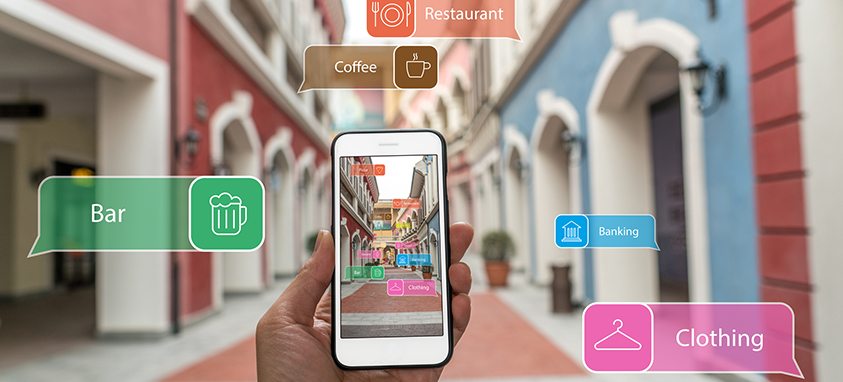
Before Pokemon Go became an instant hit, augmented reality (AR) and virtual reality (VR) seemed more like slow-moving science fiction than relevant reality. Skip forward just a year though, and the AR and VR business is booming, especially within the events industry.

The use of VR and AR has penetrated multiple entertainment sectors, from travel to sports, to news. Case in point: During the 2016 NBA finals, the Cleveland Cavaliers gave out cardboard VR headsets (that also doubled as beer carriers) for attendees to experience player intros, a look inside the locker room and a courtside view of the national anthem.

Here is how VR and AR are being used today, and what this means for the future of event planning.

AR and Alcohol: An Unlikely Pair

Taking a creative approach to market two types of 12-year-old whiskey, Scotch brand The Macallan developed an augmented reality app for Apple’s iOS 11. Focusing on a Macallan scotch bottle, the app launches an animation on the making of the whiskeys, starting with the American and European oak trees used to make the casks in which the whiskeys are aged for variations in color and flavor.

The Macallan event adds to the growing number of alcohol marketing efforts that combine bottle labels with AR to evoke an ambiance or tell a story. Back in April, we wrote about the Lobby Bar at One Aldwych in London used VR, along with its Origin cocktail, to teach patrons about the roots of the drink. Audiences are craving new and exciting ways to be entertained and marketed to, and AR and VR have been successful in these efforts.

At a New York City pop-up, visitors could walk through The Macallan AR experience in a gallery setting. Sculptures represented the multiple steps of the whisky-making process, and thus activated narration and animations about each subsequent step involved in the process. This was all visible via Microsoft Hololens glasses, which were handed out upon entry to the event.

In an adjacent room, bartenders served two whiskeys—Sherry Oak and Double Cask—in cocktails and straight. The Macallan Gallery Experience appeared in Miami in October and will travel to Houston and San Francisco on Nov. 8 and 15, respectively.

Why This is Relevant to Planners

In a world where time is our greatest asset, AR and VR promise to change the events industry rapidly, as they completely transform each aspect of event planning, from venue selection to audience participation.

Instead of simply being given a lecture and handed a pamphlet, conference attendees can instead receive a customized and tailored VR or AR experience, which ultimately provides for more comprehensive feedback.

AR and VR are already being used extensively within many different industries and events. On March 3, during a presentation at YPO Edge in Vancouver, British Columbia, Canada, a Guinness World Record was set for the Most People Using Virtual Reality Displays. During his presentation, Ziv Aviram, CEO and co-founder of Mobileye, surprised the 1,867 participants with the experience of driving a driverless car in virtual reality.

Rukkus, a VR ticket vendor, allows customers to see their seat via a VR depiction of the entertainment venue or sports arena before they decide to buy the tickets, ensuring there’s no buyer’s remorse after purchase. Altspace VR allows participants to watch live debates virtually, where attendees are represented as avatars and emojis are used to express reactions (perfect for the less vocal tweeters in attendance).

The New York Times VR allows users to experience stories reported by award-winning journalists via an immersive, 360-degree video experience.

Different Types of VR and AR

An event-friendly use of AR is found in 360 videos. For the viewer, 360-degree video has a much lower barrier to entry than full VR, requiring only a mobile device to experience the virtual world, at least, through its mobile device. This technology is creating a rise in venue exploration; event planners can experience a potential venue without having to travel to it in person, thus saving valuable time and money.

There are already a number of available VR platforms, including Oculus Rift, HTC Vive and PlayStation VR. As far as mobile is concerned, there is Samsung Gear, Google Daydream View and the least expensive device, e Google Cardboard, which is essentially a cardboard box outfitted with viewing lenses that is compatible with newer phones.

With high-definition, 360-degree cameras now available for less than $500, venues can create these immersive videos with financial ease, and post them on YouTube, where anyone with a compatible AR viewer can then watch them. It’s also possible for them to distribute fully branded versions of Google Cardboard with their marketing materials. Considering that Google Cardboard is marketed at $20, the technology is in line with what is often spent on event brochures, so it may be wise for event planners to consider using the technology soon.

What This Means for the Event Industry

Augmented reality provides limitless possibilities for events. It can help get contact information faster than ever before, with a business card that could connect you to an individual’s LinkedIn profile, or add their office number automatically to your contacts with a simple and swift scan with your cellphone.

AR is quickly becoming an event essential. In addition to saving planners time and money, AR and VR provide event attendees with more ways to interact with each other. When you consider that so many successful companies are already utilizing AR and VR for their events, from whiskey tastings to live concerts, it is clear that this technology has created an ever-changing landscape for the meetings and events industry.

Gone are the days of “one size fits all” hotels. From paintings by local artists adorning walls to local craft brews on tap at the bar, to common-area decor showcasing local recycled materials, to customizable wellness and fitness options in guest rooms, hotels are competing to offer unique experiences and a distinctive sense of place.

Consider, for instance, a program recently launched by Loews Hotels. Called Flavor by Loews Hotels, gastronomic start-ups are teaming up with the Loews brand to put their locally loved products on menus in all 24 of the company’s hotels this year.

For meetings attendees with little time to venture outside the hotel, it means they can experience local flavors such as Little G’s Ice Cream, handmade deliciousness created by teenage owner/founder Grace Conner. She started making ice cream at age 8, inspired by a favorite ice cream parlour on Nantucket, Massachusetts. In January 2016, she walked through a snowstorm to deliver her first batch for sale at a specialty grocer in Boston’s South End. It sold out in a week. Three of her flavors are on the menu at Precinct Kitchen and Bar at Loews Boston Hotel.

Another example: Loews Ventana Canyon Resort has partnered with Tucson Tamale Company to serve its decidedly local tamales, which have been touted by Alton Brown of the Food Network as best in the country. They are made with organic, non-GMO corn and Santa Cruz red chilis.

Or: In Nashville, guests can brighten their stay at Loews Vanderbilt Hotel with Whisper Creek Tennessee Sipping Cream liqueur. The artisan distillery of husband-and-wife team Jeff and Jenny Pennington taps grain from local farmers and gives back stillage (post-distilling leftovers) to feed their pigs.

“Flavor by Loews goes beyond the farm-to-table movement of highlighting native ingredients on restaurant menus,” says Mark Weiss, senior vice president of food and beverage. “We’re offering guests celebrated and locally known products from resident artisans right within the walls of our hotels. By partnering with the finest bakeries, smokehouses, distilleries, breweries, juice shops and more, our hotels are not only becoming a part of their local scene, but are also helping to nurture and support their hometown communities.”

National Sandwich Day on Friday, November 3, is a great day to celebrate the grab-and-go lunch staple that appears at many event mid-day meals. The convenient treat dates back to 18th century England when John Montagu, the fourth Earl of Sandwich, enjoyed putting beef between a few slices of bread while playing cards with his friends. Impressed, they began asking for the “same as Sandwich,” and thus the dish was termed.

Throughout the years its popularity has endured, but the sandwich model has adopted many new forms. Each culture puts a unique spin on this basic, but brilliant, model. No matter what you like in between the bread, the comfort of a sandwich is irresistible. Here are a few sandwiches takes from around the world to inject some delicious culture into your next meeting or event. And if you find yourself in these countries, we highly recommend seeking out these delicacies.

1. Banh Mi (Vietnam)

Originating as a street snack in Vietnam, the Banh Mi has become a popular sandwich throughout the world. The sandwich traditionally consists of a meat (pork usually), vegetables (often pickled), jalapeños and coriander in a baguette. Yet, the Vietnamese baguette is made with rice and wheat flour, so it’s airier than the French bread.

2. Vada Pav (India)

Also called a Bombay Burger, Vada Pav is a great option for vegetarians and vegans. The meatless dish is basically a bun filled with deep fried potato dumplings, topped with chutney and a green chili pepper.

3. Doubles (Trinidad and Tobago)

Although the sandwich is typically lunchtime street food, many in Trinidad and Tobago many eat it for breakfast. Doubles consists of two fried and flat pieces of bread, filled with chickpeas and topped with a sauce made of local cilantro, cucumber, coconut, tamarind, mango and pepper sauce.

4. Doner Kebab (Turkey)

A post shared by Mob Kitchen (@mobkitchenuk) on

Originated in the Ottoman Empire in the 19th century and now immensely popular in Turkey, the Doner Kebab is made of meat (beef, lamb, chicken or veal) cooked on a vertical rotisserie. Similar to a gyro and shawarma, the meat is slowly cooked, heavily seasoned and thinly sliced. The meat is stuffed into a pita with vegetables such as onions, pickled cucumber, lettuce and tomatoes.

5. Chacarero (Chile)

A post shared by manon houston (@manonhouston) on

To make a Chacarero, place thinly sliced pork or steak in a bread roll with tomatoes, chili peppers and green beans. The Chilean sandwich is often served at fast food restaurants and beer draught houses.

6. Arepa (Venezuela and Columbia)

A post shared by Como en Casa (@comoencasaven) on

In Venezuela, the Arepa is a chewy, crispy flatbread sandwich stuffed with a variety of meats (or plantains), cheese, avocado—essentially any ingredients that can be found in a taco. Arepas are served throughout South America, but in Columbia they are typically stuffed with chorizo and chili sauce.

7. Croque Monsieur (France)

This sandwich is extra cheesy—and not just on the inside. This French classic is a grilled ham and cheese sandwich, using Emmental or Gruyere cheese, that’s covered on the outside with more melted cheese. The name Croque Monsieur, translates to “Mister Crunchy.” The version with an egg on top is called a Croque Madame, “Misses Crunchy.”

8. Smorgastarta (Sweden)

A post shared by Matte Westergren (@kryss4) on

This sandwich takes the cake—literally. The Swedish dish is no average sandwich but a layered mix of food. Designed in a similar fashion to a layered cream cake, ingredients are layered on with creamy fillings (such as egg or mayo) between slices of rye bread. Some popular ingredients used include liver pâté, olives, shrimp, ham and caviar, alternated with tomato, cucumber, grapes, lemon slices, cheese and smoked salmon.

9. Kaya Toast (Singapore)

A post shared by RicK (@rickisntrick) on

Similar to French toast, the Singapore delicacy is smothered in butter and kaya jam (egg and coconut milk), then fried. As a popular breakfast meal, many enjoy the dish with a hardboiled egg or dipped in the yolk of a soft boiled egg. Kaya Toast is offered at most coffee shops in Singapore.

Frequent flyers often bemoan the time lost to TSA screenings at the airport, waiting for fellow passengers to board and de-plane and collecting luggage at the carousel. In some cases, it takes longer to wait for your flight than the duration of the flight. Private jet travel offers a solution, and the good news is it’s more accessible than ever before. You no longer have to be a CEO, superstar, entrepreneur or politician to fly in a private jet.

Bonus, the same service can also transport attendees to and from events. This reduces the likelihood of delays, cancellations and missed connections. By eliminating the headache of travel nightmares, you’ll have an easier time sticking to your itinerary.

1. Fly JetSuiteX

A big perk of private jetting is avoiding the security line. Passengers can arrive at the hangar only 15 minutes before takeoff. JetSuiteX is a west-coast based consumer-friendly public charter service. Each aircraft has 30 seats with similar legroom to business class on a commercial carrier.

They’re expanding service between Los Angeles and the San Francisco Bay area later this month. Mid-November, they’re adding a new route that connects Burbank’s Bob Hope Airport (BUR) and Oakland International Airport (OAK)’s private terminals with three daily round-trips (one on Saturdays). They’ll also be offering a special pop-up service in January to shuttle passengers to and from CES, the consumer electronics trade show, in Las Vegas and the Sundance Film Festival in Salt Lake City.

“JetSuiteX was created to be the ultimate travel hack for time-starved travelers, especially those going between LA and the San Francisco areas, who are tired of waiting in line after line, just to wait some more,” Alex Wilcox, founder and CEO of JetSuiteX, says in a press release. “Our customers get to arrive refreshed when they skip things like spending more time in an airport than in air, getting herded through lines or feeling the discomfort of boarding a plane with 100 other people.”

The company launched this special service in April 2016 and currently flies to Concord/East Bay (CCR), San Jose (SJC), Burbank and Las Vegas (LAS). Ticket prices are comparable to the major airlines’ fares. The planes are also available to be chartered for corporate events. Passengers can even earn, but not redeem, JetBlue TrueBlue points between select destinations.

2. Incentivize NetJets’s New Partnership with Four Seasons Hotels and Resorts

private jet experience

Photo credit: Four Seasons Hotels and Resorts

Fly the friendly skies and leave the planning to the experts thanks to a new joint effort between Four Seasons Hotels and Resorts and NetJets. Gather up to 14 of your most valuable clients or colleagues to board a private aircraft to exclusive destinations in the U.S. and abroad. Groups are assigned a director of guest experience from Four Seasons to act as a personal concierge.

“Four Seasons has always been singularly focused on the luxury consumer–understanding their needs, looking at how they like to travel and recognizing opportunities to extend our offering in ways that fit their lifestyles,” J. Allen Smith, president and CEO of Four Seasons, says in a press release.

The program includes three customizable itineraries—a ski adventure in Jackson Hole, Wyoming or Vail, Colorado; an island getaway to Lanai in Hawaii; and an escape to Europe for a tour of France or Italy. While in each destination, these VIPs will be treated to exquisite cuisine and immersive, Instagram-worthy experiences. The schedule is flexible until July 2018.

The program includes three customizable itineraries—a ski adventure in Jackson Hole, Wyoming or Vail, Colorado; an island getaway to Lanai in Hawaii; and an escape to Europe for a tour of France or Italy. While in each destination, these VIPs will be treated to exquisite cuisine and immersive, Instagram-worthy experiences. The schedule is flexible until July 2018.

3. Host an Event Inside a Private Hangar

private jet experience

Photo from Hangar event 

Meeting professionals can get inspired by the sky-high possibilities an airplane hangar offers. It is a blank canvas for a planner to create a work of art. Just like a movie sound stage, the big empty space lends itself to creating custom experiences.

Photo from Hangar event 

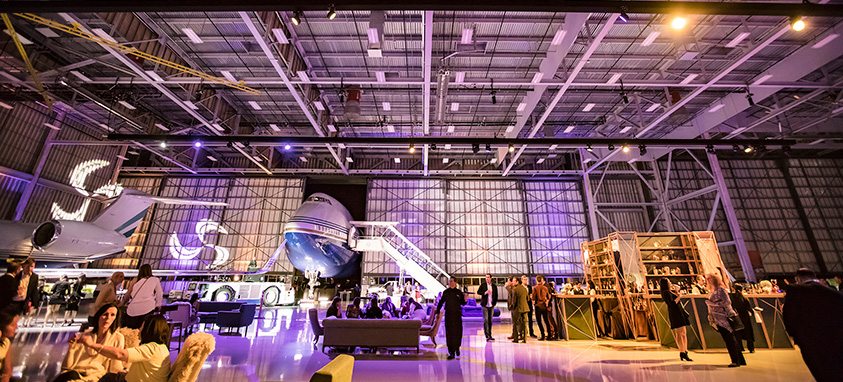
During IMEX 2017 last month, The Venetian and The Palazzo hosted approximately 200 attendees for a reception held inside the Las Vegas Sands’ private hangar at McCarran International Airport (LAS). Three of the company’s planes were on display and guests were invited to board two of them. Pilots and flight attendants answered questions and shared a bit of history. The rare double-decker 747 was originally owned by a middle-Eastern royal family. It was built in the 1980s and is only one of five left in operation. The party also featured top-notch catering and live music. Guests were given personalized luggage tags as a favor.

group dancing

Photo credit: Paula Lobo/The Metropolitan Museum of Art

Watch for this at a museum or other hallowed cultural landmark near you. Because this is one of those ideas your groups will be clamoring for soon. At Metropolitan Museum of Art, New York City’s High Temple of Culture, a pair of lithe ladies in sparkly cocktail dresses and sneakers stands at the ready. They are about to lead a group of 15 or so in The Museum Workout—”part performance, part workout, part art tour,” as NPR puts it.

Let’s let NPR do the play-by-play:

“A guy with a portable speaker stands nearby. He presses play, and with disco propelling us forward, we power walk, we punch the air, we daintily jog through the otherwise empty Met at 9 in the morning…We power through a hall of busts—some with heads, some headless—in the fastest tour of a museum you’ll ever take. Most of the workout is spent jogging past priceless, important artwork, but we do slow down a few times. We pause in front of John Singer Sargent’s ‘Madame X,’ a portrait of a beautiful, pale woman in a long black gown—and I can’t help but laugh.”

The outlandish routine was created by Monica Bill Barnes & Company, a New York City-based dance company “that brings dance where it does not belong,” as its website proclaims. After four weeks of sold-out Met workouts, their run was extended into November and December.

“It’s one of the most expansive spaces in New York City,” Monica Bill Barnes said to NPR. “And to be able to move through all the different galleries, and the rooms and the space that they’ve created felt like such an incredible opportunity.”

Yet it took more than two years for the dance troupe to get the Met board of directors to get on the workout wagon. “It’s really, ‘How many inches are you from that work?’” Barnes said. “That’s when we had to do a lot of good, careful conversations.”

Dance Spirit called The Museum Workout “a tour that leaves its audience-members-slash-participants both sweaty and inspired.”

We call it brilliant. Planners, rev your choreographers!

Venues play a key role in hosting an event, and sometimes it can tricky to find a place that is attractive, fun, and accommodates large meetings. Lonely Planet’s Top 10 Must-See Cities for 2018 helps to pinpoint great places  for your next event.

Most of them are international destinations, which means there are plenty of options for incentive meetings.

1. Seville, Spain

As the capital of southern Spain’s Andalusia region, Seville is famous for flamenco, bullfighting, Alcazar castle and Seville Chapel, which contains Christopher Columbus’ tomb. The Hilton Garden Inn has 9,000 sq. ft. of meeting space.

2. Detroit, United States

A post shared by Visit Detroit (@visitdetroit) on

Slowly but surely, the city is recovering economically, and is abuzz with street art, food trucks and carefully crafted coffee. Think Portland, but with significantly less rain. Detroit Marriott at the Renaissance Center provides more than 100,000 sq. ft.

3. Canberra, Australia

A post shared by VisitCanberra (@visitcanberra) on

Canberra, the capital city of Australia, is packed full of adventure, foodies, wildlife and culture. Hike to see beautiful scenery, take a kayak out on Lake Burley Griffin, check out one of many hip coffee shops or bakeries, and grab artisan bread or a meal from a farm-to-table restaurant. Hyatt Hotel Canberra has 11,000 sq. ft. of meeting space.

4. Hamburg, Germany

Full of canals, winding streets and quaint but vibrant architecture, Hamburg is just as pretty in person as it is in pictures. Take a harbor tour, and make sure to visit Minatur Wunderland to see a 13,933-square-foot model of Germany. Reichshof Hamburg, a Curio Collection by Hilton hotel, offers 7,000 sq. ft. of meeting space.

5. Kaohsiung, Taiwan

Night markets, street food and bright lights are just the beginning of what Kaohsiung has to offer. On your to-do list: Interact with street artists at the end of a pier, visit one of the many temples and end the night with a gondola ride down Ai He, the River of Love. You can host your next event at Kaohsiung Exhibition center, which provides more than 100,000 sq. ft. of meeting space.

6. Antwerp, Belgium

A post shared by Visit Antwerp (@visitantwerp) on

A hub for fashionistas and creatives alike, Antwerp offers cafe-filled cobbled lanes, a riverside fortress and a truly impressive cathedral, along with inventive architectural and cultural contrasts. For a unique venue choice, host your event in The Royal Army and Military History Museum, which provides more than 100,000 sq. ft. of meeting space.

7. Matera, Italy

A post shared by visitmatera (@visitmatera) on

Matera is having a resurgence now, as boutique hotels and upscale restaurants take over the historic town. While you’re there, be sure to peek at the frescos —elaborately painted into many of the caves and churches —and the Museum of Contemporary Sculpture of Matera. End the day in a quirky wine bar.

8. San Juan, Puerto Rico

While Hurricane Maria caused much damage, most hotels and restaurants in San Juan are already back up and running. This is great news for tourists who are eager to see the white-sand beaches, jungle terrain and clear, blue waters the island has to offer. For future events, consider hosting at Sheraton Puerto Rico Hotel and Casino.

9. Guanajuato, Mexico

A post shared by VisitGuanajuato (@visit_edogto) on

Guanajuato is brimming with architectural beauty, from the churches and grand mansions built on the fortunes of the local silver mines to the multicolored houses dotted across the hills. One of Latin America’s biggest arts festivals takes place there every October, with a celebration of the great Spanish writer Miguel de Cervantes. When hosting your next event, you might consider Hotel Real De Minas, which provides 55,000 sq. ft. of meeting space.

10. Oslo, Norway

A post shared by Visit OSLO (@visitoslo) on

Oslo is, in short, hipster haven. Complete with a grungy underground music scene, boutique burger bars (yes, they actually exist), and craft cocktails to boot, Oslo offers a little bit of something for everyone. The recently installed Oslo Opera House is also an architectural beauty to behold, and there’s shopping for everyone’s taste, from vintage to luxury fashion. For your next event venue, we recommend Oslofjord Convention Center, complete with more than 100,000 sq. ft. of meeting space.

Let us know the Lonely Planet destination where you want to host your next event!

punctual airlines

Meeting and event planners are well-aware that time is money, and that arriving late can completely throw off an otherwise successful function. Alas, when travel is involved, even more factors are at play.

You might hustle to the airport early, only to catch your breath and discover your flight’s been delayed. It’s not only an inconvenience, but also a major source of stress and anxiety.

OAG, an air travel intelligence company, released its On-Time Performance (OTP) Star Ratings, recognizing top airlines and airports around the world for outstanding performance. When booking your next trip, you might want to consider these ratings as you’re deciding between airlines and airports.

“Today’s travelers are evaluating their air travel options through a variety of considerations, and punctuality is increasingly becoming a deciding factor,” says John Grant, senior analyst at OAG. “On-time performance is viewed as an indicator to judge the quality of an airline or airport. As a result, many airlines and airports continue to track this critical metric and invest to optimize operations and improve their performance.”

Here are a few of the most significant findings in the report.

Airlines

  • Hawaiian Airlines was the only North American carrier to earn five stars, with an OTP of 87.7 percent.
  • Delta was the only legacy carrier to earn four stars, with an OTP of 82.8 percent.
  • Despite its large fleet, Delta also beat out smaller airlines, including Alaska Airlines and Sun Country Airlines.
  • Southwest (78.9 OTP), American (78.8 OTP) and United (78.5 OTP) all received solid ratings, with each earning three stars.

Airports

Wyndham Hotel Group continues to solidify its standing as a big dog on the U.S. midscale and economy hotel landscape. The company inked an agreement with American Hotel Income Properties REIT (AHIP) to convert more than 44 existing hotels across the United States into Wyndham-flagged brands, as well as to operate them. The well-known brands include Baymont Inn & Suites, Travelodge and Super 8.

In addition, two other recent AHIP acquisitions will join the Wyndham portfolio. The agreement ramps up Wyndham’s visibility near Nashville, Tennessee; Kansas City, Kansas; Jefferson City, Missouri; Lincoln, Nebraska; and Buffalo, New York.

“As leaders in midscale and economy lodging, we champion everyday travelers and prioritize our growth in the places they want to be with the brands they adore,” said Chip Ohlsson, Wyndham’s executive vice president and chief development officer, in a statement. “Our unshakable momentum is a testament to the strong industry relationships like this one which support that mission.”

All 46 hotels will become part of Wyndham’s global distribution network and loyalty program by year’s end.

Last month, Wyndham bought Americinn, a midscale brand with 200 hotels clustered in the Midwest. The company’s acquisition pipeline for 2018 and beyond totals nearly 700 hotels and 63,000 rooms, reported Hotel Management.

“By licensing Wyndham Hotel Group’s renowned brands,” said Rob O’Neill, CEO of AHIP, “our hotels tap into the power and scale of the company’s unmatched portfolio and gain access to tremendous distribution, buying power and sales capabilities, in addition to an unrivaled loyalty program that is 53 million members strong.”