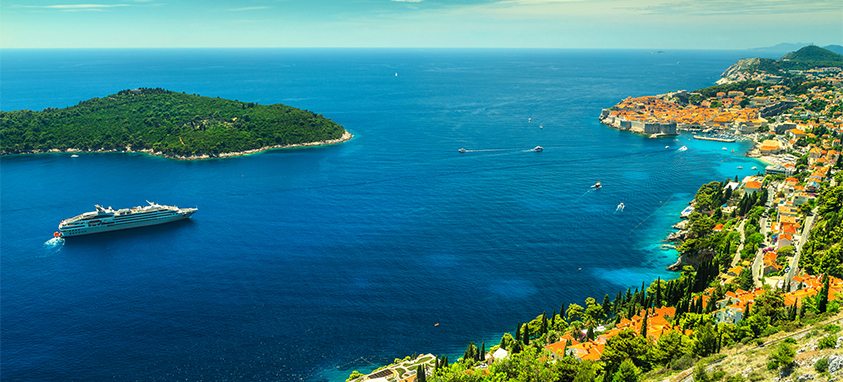
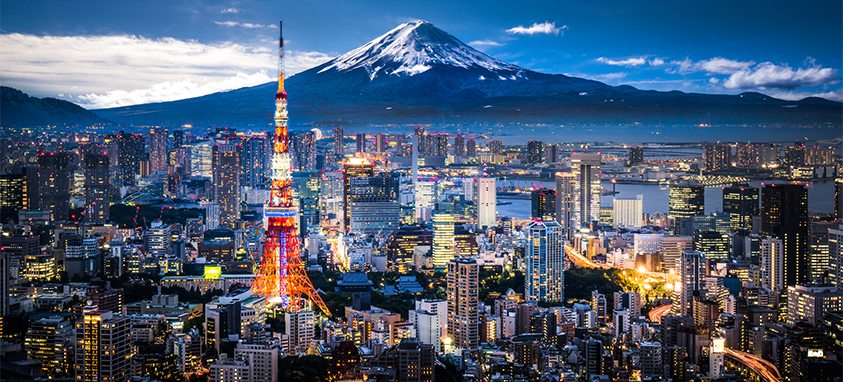
“Japan. Endless Discovery” is Japan National Tourism Organization’s slogan, and it’s for good reason: there’s something new around every corner. “All major hubs [are] more than ready to handle large international MICE events,” says Alicia Hinds, convention specialist at the Japan National Tourism Organization. Indeed, from the bright lights of Tokyo to the slopes of Sapporo, there is much to discover.

Why Japan?

Did you know that Japan has the most Nobel laureates in all of Asia? “The country is a hot bed of innovation and world-class minds,” says Hinds. Japan also prides itself on its hospitality—you’ll find nothing but the best and most considerate service. If you’re wanting a taste of its culture, Japan has 21 UNESCO world heritage sites, and Tokyo is the most Michelin-starred city in the world.

While Tokyo is the most populated city, with over 37 million people, you can still host large events throughout the country. The RIKEN Yokohama campus and PACIFICO Yokohama recently hosted 400 delegates at the Human Genome Meeting. Looking for more space? Makuhari Messe in Chiba boasts more than 581,000 sq. ft. of event space, while Fukuoka Convention Center has 23 meeting rooms and over 100,000 sq. ft. of space.

Stand-Out Cities

Distinctive cities include Kyoto, Chiba, Sapporo and Tokyo—all of which have their own special details. “The thing that is really special about Japan is that it has something to offer everyone,” says Hinds. Host an event in Sapporo, and your attendees will be treated to its ski slopes and snow galore. Traditional Japanese gardens decorate Kyoto, giving your event a serene setting. And if you’re looking to add a touch of spring, Chiba’s tulips are the Japanese equivalent of cherry blossoms. No matter which city you’re in, there is always something to explore and do.

Killer Public Transportation

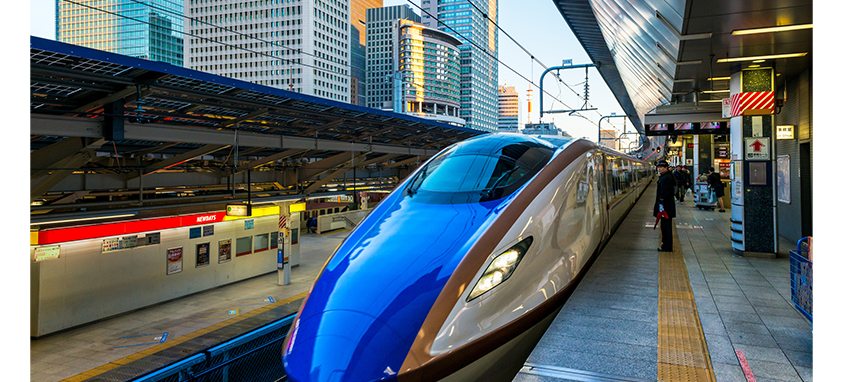
Another plus, nobody will have trouble reaching your event. Airports abound throughout Japan, including Haneda International Airport (HND) and Narita International Airport (NRT) in Tokyo and Kansai International Airport (KIX) in Osaka. For travel connecting to major cities, you can experience the extensive transportation infrastructure and catch a ride on Shinkansen, Japan’s bullet train.

The Olympic Games

The 2018 Winter Olympics just came to a close, but Tokyo has already begun preparation for 2020. As with any Olympic Games, there will be a noticeable increase in tourism—which means there are already plenty of construction plans in the works to host their visitors, great news for groups planning a future event.

“There are a few big-name brand hotels that are opening up in Tokyo in preparation for the Olympics,” says Hinds. This includes Marriott International’s luxury Edition brand hotel in the Ginza and Toranomon districts and Four Seasons Hotels and Resorts’ second hotel in Tokyo. Hyatt Hotels opened its first Hyatt Centric Property in Ginza mere months ago.

Regardless of how many years of schooling you’ve completed or fancy degrees and titles you’ve earned, there is always more to be learned. As a meeting professional, the goal is to ensure that all attendees are gaining knowledge at your conference to make their dedicated time worthwhile.

The way to achieve this is not necessarily seating everyone on uncomfortable folding chairs in a bland ballroom as a presenter delivers a lengthy monologue. Realistically, how much will be retained, or will attendees be fiddling with their smartphones to stay alert? It wouldn’t be surprising to catch a few people hoping to go unnoticed as they drift off into la la land or take a power nap.

“As learners, 70 percent of job knowledge is acquired through experience, immersive workshops, case studies and simulated exercises,” explains Tonya Almond, vice president of knowledge and experience design for Professional Convention Management Association (PCMA). “Typical retention rate from traditional learning styles ‘listen to the lecture’ is five percent.”

To become a more effective planner, it may be good to take one step back and become the student. Classes taught by the Disney Institute offer professional development courses on topics such as leadership excellence and employee engagement. Many of these methods and tactics can be applied when you step back into your role as the teacher or facilitator.

One Size Fits All

There are many types of learners—tactile, visual, auditory—to name a few. However, it turns out the fundamentals of learning are actually pretty universal. “While one may think that demographics may play a part in the consumption and understanding of content shared, the statistics are demonstrating that a highly engaging and interactive meeting is of benefit to all generations, professions and skill sets,” Almond says. “New research suggests that it’s not just about changing the learning activity, but also about the timing of the activity.”

“I am a learner who best learns when I have a chance to see it and touch it and do it, so for me that was a very valuable part of it,” Ruth P., president and CEO of a non-profit, says in a video testimonial of her Disney Institute experience.

Many people find that writing notes commits information to memory. Mona Desai, head of special events at Peerspace, recommends providing every attendee with a notebook and pen to enable them to take notes and write stimulating follow-up questions as they think of them. She also suggests booking a visually appealing venue that is more unique than the typical hotel conference room. Some examples she provides are buying out an architecturally significant space or renting a venue with a beautiful city skyline view or discovering a chic room in a niche neighborhood of a major urban metropolis.

Choose Your Own Adventure

Think back to when you were in school. You were more likely to retain maximum information on subjects aligned with your personal interests. The same holds true in the meetings world. Surfing your personal social media feeds during a boring meeting can be a distraction and detract from learning, but social media can also be used as a very powerful tool to maintain and build engagement amongst attendees.

Metrics collected by polling attendees on outlets such as Twitter and Facebook can steer the keynote speaker in a certain direction, for instance. Think of it as a virtual remote control. “Preparing the speaker to leverage feedback from the audience in order to change the presentation…embraces the learner in a personalized way,” Almond says. “Speakers who prepare to speak this way often gain as much from the audience participation as the audience themselves!”

“For presentations and panels, we recommend giving people the freedom to Tweet their takeaways and favorite sound bites so they can get feedback from others and potentially help someone who hadn’t considered the subject in that way,” says Desai. “We also find this surfaces more relevant questions that someone may have been afraid to ask if the presenter was just passing a mic around.”

Lunch and Learn

Invite experts to a meal and give conference participants the freedom to select at registration which topical table they’d like to sit at for stimulating conversation. These yummy breakout sessions “drive a deeper connection with the subject matter…and empowers the audience to participate in the session interactively, which heightens retention of content and enhances learning,” Almond says.

Desai adds that food trucks and interactive food stations serving s’mores, burritos and sushi can spark great opportunities for conversation, and therefore learning from one another.

Lead by Example

Meeting Professionals International (MPI) is experimenting with a new method to stimulate live learning at their World Education Congress (WEC) from June 2-5 at Indiana Convention Center in Indianapolis. Implementing EventCanvas.org Foundation’s flow chart of event design, MPI plans to have four connected WEC Villages, each with a specific theme: experiential design, innovation, leadership and social.

Eighty simultaneous education sessions will be taking place throughout the open floor plan villages versus enclosed meeting rooms. WEC Experience Coaches will help to scope out the agenda best suited for each attendee and pep rallies will get attendees amped up at beginning and end of each day.

“The Indiana Convention Center is the perfect venue for us [to] try our new concept of villages and open space learning,” Darren Temple, chief operations officer of MPI, says. “We are excited about WEC18, which promises to be unlike any other event experience.”

Seating Means Business

Meeting and hospitality professionals need to take chairs seriously. There are hours upon hours of sitting during meetings and conferences. Attendees who are uncomfortable will get fidgety and be concentrating more on their discomfort than the meeting. Desai says that, whenever possible, planners should seek out a venue that has soft, plush couches and cushioned furniture, or find a vendor to rent from.

When selecting seats for the amphitheater at Boston’s Seaport Hotel and World Trade Center, vice president and general manager James Carmody played a game of musical chairs before selecting a seat that he feels can be comfortably sat in for six to seven hours. “[We] evaluated 14 different chairs,” he tells us. “I find sitting in a meeting for any length of time I almost get into a catatonic state.” According to Fishbrook Design Studio, the hotel installed seats from Italian manufacturer Poltrona Frau that are upholstered with a lush, custom fabric.
Drink your way through New England, responsibly of course. The region is home to a thriving beer scene, and group tours are offered at several breweries.

The Maine Brew Bus


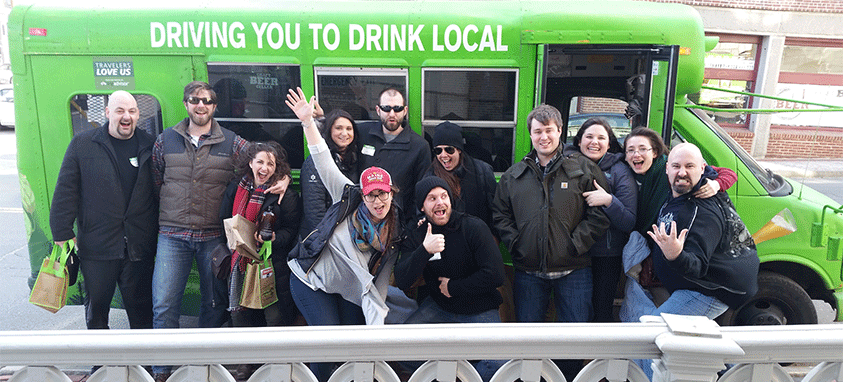
Let the Maine Brew Bus be your designated driver as an expert tour guide educates your group aboard a lime green school bus. Get behind-the-scenes access to craft breweries, distilleries and wineries. The tour can even be paired with a curling clinic at a local ice rink. The company also operates brew buses in Providence, Rhode Island and Boston.

Anheuser-Busch Brewery and Tour Center

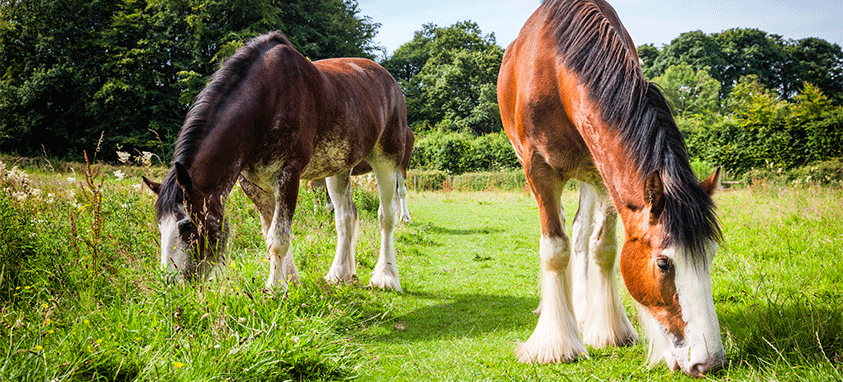
Hay is for horses and hops are for humans at the Anheuser-Busch Budweiser Brew Experience in Merrimack, New Hampshire, where you can snap a selfie at the Clydesdale Hamlet. Since 1970, this facility has been responsible for distributing Budweiser to other New England states, including Maine, Vermont, Connecticut and Rhode Island. Groups can learn the company’s seven-step brewing process on a complimentary tour open to the public or a private group tour for up to 50 guests. The 3,500-square-foot Biergarten opened in June 2016 and can fit 175 guests. Locations outside of New England include St. Louis; Fairfield, California; Ft. Collins, Colorado; Houston and Jacksonville.

Von Trapp Brewing

Doe a deer and brew a beer at Von Trapp Brewing at the Trapp Family Lodge in Stowe, Vermont. Johannes von Trapp, Maria and the Baron’s youngest son, opened this Austrian-style brewery at his family’s resort to bring his love of lagers to America. Private brewery tours and tastings can be arranged for meeting groups. The Bierhall has 1,500 sq. ft. of event space and the hotel’s main lodge has 6,000 sq. ft. There are 96 guest rooms.

Samuel Adams Brewery and Tap Room

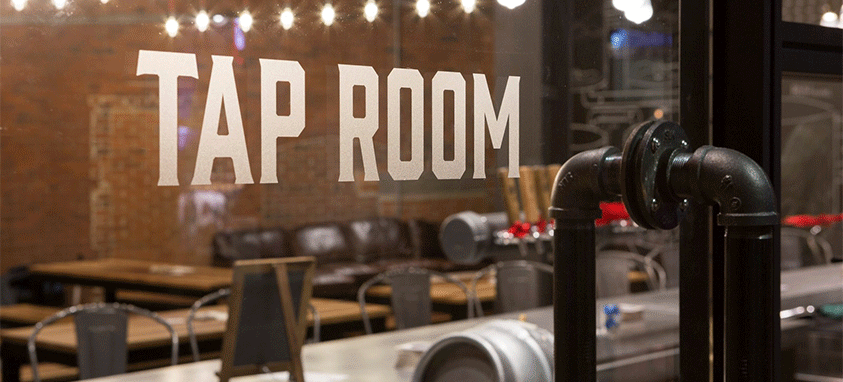
Fill your mugs at Samuel Adams Brewery and Tap Room in Boston. The tap room just opened in November 2017. It’s housed in the historic Haffenreffer Brewery, a pre-Prohibition brewery originally built in 1871. Visitors can sample experimental flavors, or enjoy their favorites. Learn about the brand’s history and their craft brewing process. Behind-the-scenes tours include a visit to the Barrel Room fermentation cellar.

Harpoon Brewery & Beer Hall

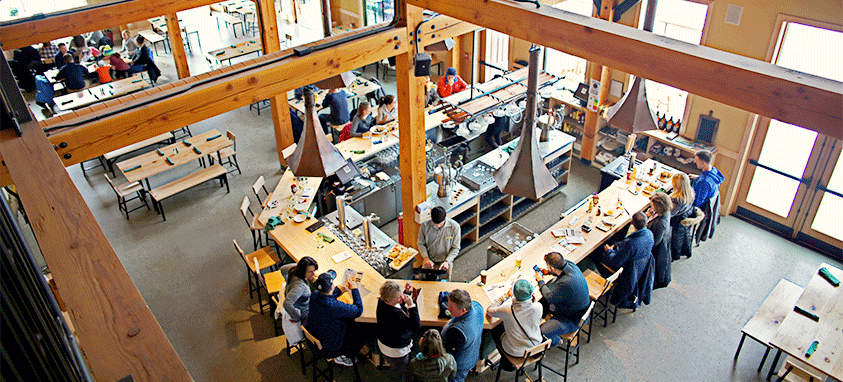
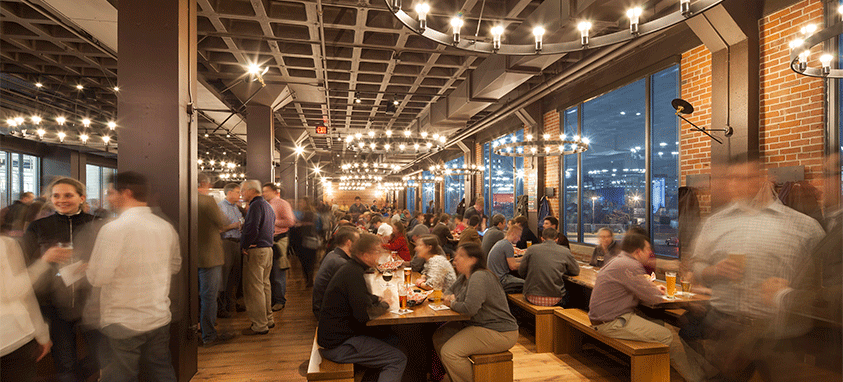
Tap into New England’s beer culture at Harpoon Brewery & Beer Hall in Boston’s Seaport District. They have 20 beers and ciders on tap to pair with handmade hot pretzels. Four-hundred guests can be seated for a complete buy-out and a one-hour guided tour is available daily for $5 per person.

Night Shift Brewing

Photo Credit: Tim Oxton / Night Shift Brewing

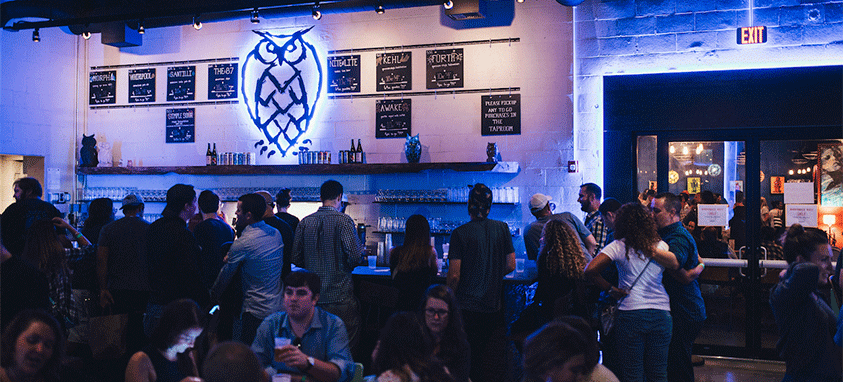
Founded in 2012, Night Shift Brewing in Everett, Massachusetts can accommodate up to 200 guests in the Taproom for a private event. Brewery tours are included in the venue rental.

Downeast Unfiltered

Downeast Unfiltered, New England’s craft cider, is produced at their new cider house in east Boston. They welcome guests on a complimentary tour of the facility that includes free samples and a flight.

Cold River Vodka

Some people turn lemons into lemonade, and Cold River Vodka turns Maine potatoes into vodka using a copper pot. The Freeport, Maine, facility is one-of-a-kind because it’s the only “ground-to-glass” distillery in the United States. Tours are available and they also make gin.

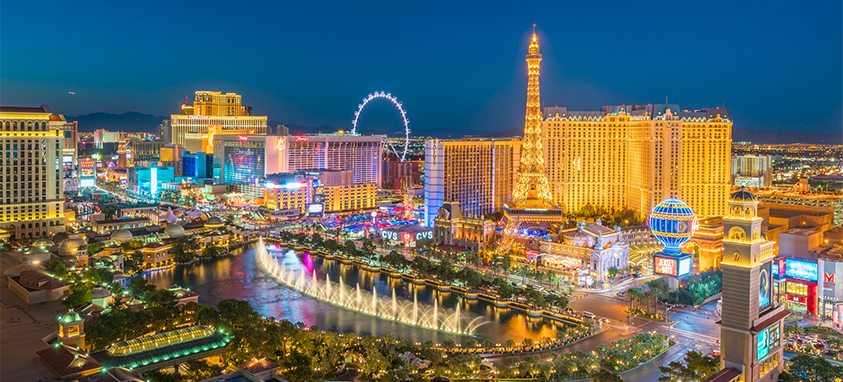
Las Vegas had 47 shows on Trade Show News Network’s recently released list of the top 240 trade shows in 2017, thereby earning the top spot for the 24th straight year.

Las Vegas landed 47 meetings on the list—2017 TSNN Top Trade Shows in the United States—followed by Orlando (24), Chicago (21), and Atlanta (20). A total of 240 shows made the list and were ranked, based on the amount of square footage used.

“Last year, a record-breaking 6.6 million people traveled to this destination for business, and with a number of high-profile projects like the Las Vegas Convention Center District in the works—in addition to new meeting and convention space being added to the destination—Las Vegas is well-positioned to continue the momentum for decades to come,” Rossi Ralenkotter, CEO of Las Vegas Convention and Visitors Authority, told the Trade Show News Network. “It’s an incredible honor to top TSNN’s coveted Top Trade Shows in the United States list for the 24th consecutive year, and we look forward to welcoming more shows to Vegas in the future.”

The Association of Equipment Manufacturers’ ConExpo-Con/AGG show earned the No. 1 ranking for an individual trade show. It was held March 7–11, and spanned more than 2.67 sq. ft. at Las Vegas Convention Center. The show attracted 2,375 exhibitors and more than 128,000 attendees.

“Our new immersive Tech Experience amplifies the technology in the exhibits, and was just one example that underscored our team’s commitment to deliver an unparalleled show experience and content to inspire and inform attendees about what’s next,” Sara Truesdale Mooney, the show’s director, told the Trade Show News Network.

Consumer Technology Association’s CES gathering, which garnered the top spot in 2016, placed second. The show drew more than 182,000 attendees, from 158 countries. It occupied 2.6 million sq. ft. of Las Vegas Convention Center.

Informa and UBM each had 14 shows on the list, more than any other companies. They were followed by SmithBucklin and Spargo (12 each), AmericasMart Atlanta and Reed Exhibitions USA (10 each) and PennWell (6).

Cities with the Most Trade Shows on TSNN List

  1. Las Vegas—47
  2. Orlando—21
  3. Atlanta—20
  4. New York—13
  5. Indianapolis—10
  6. San Diego—9
  7. Boston and New Orleans—8
  8. Los Angeles and Washington, D.C.—7

Top Shows

  1. ConExpo-Con/AGG 2017 (Las Vegas Convention Center)—2.67 million sq. ft.
  2. Consumer Technology’s CES (Las Vegas Convention Center)—2.6 million sq. ft.
  3. Atlanta International Gift & Home Furnishings Market (July show, AmericasMart)—1.33 million sq. ft.
  4. Atlanta International Gift & Home Furnishings Market (January show, AmericasMart)—1.28 million sq. ft.
  5. International Construction and Utility Equipment Exposition (ICUEE, Kentucky Exposition Center, Louisville), 1.24 million sq. ft.
  6. Specialty Equipment Market Association (SEMA) 2017 Show (Las Vegas Convention Center)—1.21 million sq. ft.
  7. Florida RV Supershow (Florida State Fairgrounds, Tampa)—1.10 million sq. ft.
  8. America’s Largest RV Show (Giant Center, Pennsylvania)—1.06 million sq. ft.
  9. 2017 NBAA Business Aviation Convention & Exhibition (Las Vegas Convention Center and Henderson Executive Airport, Las Vegas)—1.06 million sq. ft.
  10. NAB Show (Las Vegas Convention Center)—1.02 million sq. ft.

It’s almost the day of your big presentation. You’ve prepared heavily—you’ve practiced your speech, consulted with outside sources and chosen what you’re going to wear. The one thing left to do is create your PowerPoint presentation.

PowerPoints have potential to be an incredible addition to your presentation when done correctly. But irrelevant infographics, a hard-to-read font or pictures scattered throughout in odd places will make your slideshow more distracting than helpful. A PowerPoint should not be the leading source of information—you should be, and the presentation should be an aide. So, how can you put together your best PowerPoint yet? We’ve compiled a list of tips that will keep your audience engaged and intrigued.

1. Use a template.

There’s a reason you’re offered templates before you begin—they’re clean, they work and they all tie into one another. Choose the best template that will fit your presentation, be it filled with colors or subtle and sleek.

2. Mention key points.

You want to expand on the information in your PowerPoint, not read directly from it. This will also demonstrate that you know what you’re talking about and that your PowerPoint is not a crutch.

3. Choose specific infographics that support your proposal.

It might be tempting to find infographics that are semi-relevant to your pitch in order to convince your audience that your idea is fully thought out. But these may also distract your audience from your main point. Choose infographics carefully. Want to go a step further? Do your research and create your own infographic that is 100% directed toward your pitch.

4. Find graphics that are high quality.

Finding pictures is fun, and visual aides are always a plus. But make sure you choose graphics that are high quality. Fuzzy pictures take away from the cleanliness of your presentation.

5. Choose a legible font.

You don’t want anybody squinting to read cursive, but you also don’t want to choose a font that is boring. Stick with something easy to read from far away that still has some professionalism. (Consider Cambria, Georgia or the classic Times New Roman.)

6. Show some personality.

While this may not be appropriate for every pitch, people generally like a break from the statistics and lecturing. Inject a sense of humor or add a persuasive (but not pushy) one-liner at the end to truly bring home why your idea is a good one.

7. Engage your audience.

While it is a pitch, you can still encourage input. Ask members what they think a particular statistic is or what they think the percentage rate of success for an idea is. It will keep them alert.

Working hard for several days in a conference room—even one with windows and loosely structured formats—can make groups ready to get up and go. Several wine country destinations have a solution: charming, walkable downtown areas lined with tasting rooms from a variety of producers.

Some well-known destinations come immediately to mind: Downtown Napa, and the Sonoma and Healdsburg plazas in Sonoma County. Three others should be included in this prestigious list: Santa Barbara’s Funk Zone, Woodinville’s Warehouse District and McMinnville’s Third Street. They’re completely opposite from each other in vibe, but offer the same advantages—opportunities to experience wine country in a different way (on foot) and to chat up fellow attendees in a casual situation.

Santa Barbara Funk Zone, California

One of two downtown neighborhoods on the Urban Wine Trail, this eclectic, artsy area borders the beach and is home to most of the trail’s tasting rooms. Meet up at The Lark for a family-style dinner.

Third Street McMinnville, Oregon

Part of the city’s Wine Walk, historic Third Street, with a cluster of tasting rooms, was named Best Main Street in the West in 2017 by Sunset magazine. Rendezvous and dine at Thistle Restaurant & Bar, a stylish farm-to-fork gem.

Woodinville Warehouse District, Washington

With a gritty/chic vibe, Woodinville Warehouse District has more boutique wineries per square foot than any other wine region in the world. The PicNic Table is a private dining space with a Mediterranean/Northwest menu.

Here are a few helpful walkie-talkie tips for planners interested in arranging wine destination visits.

Walkie Tips

Start with a plan—maps are available through CVBs and regional winery associations

Limit the number of tasting rooms to three.

Arrange for tastings and tips ahead of time, both for the convenience of the tasting room and to cover the costs.

Talkie Tips

Break large groups into clusters of four, to allow the best interactions.

Set the groups off in different directions.

Encourage participants to talk not only among themselves, but also to the tasting room staff, who are often the winemakers.

Read more about wine country gatherings in Carolyn Koenig’s story, “Beyond the Bottle: Wine Country Destinations Offer Exciting Opportunities for Groups to Experience Something New and Different,” which can be accessed in the March issue of Smart Meetings and here.

Large venues are looking forward in their land layout maps. From mobile apps to virtual 3D maps, recent additions by large hotels and convention centers show a trend of locations upping their tech game to help cater to guests and attendees as well as meeting planners.

There’s an App for That

The largest Marriott, the Orlando World Center announced the “World Finder” smartphone app in partnership with MeetingPlay, an event technology company. An interactive map app that will assist attendees in finding where the bathrooms are, where their meeting room is in case they forgot or tell them what restaurants are serving what, with the option to even order from their phone.

“We’re excited to expand upon Orlando World Center Marriott’s legacy as a leader in the global hospitality industry by continuously introducing revolutionary technologies, like the “World Finder” app, into our diverse offerings,” said Gary Dybul, director of sales and marketing at Orlando World Center Marriott. “The app provides a virtual concierge in our guests’ pockets, which aligns perfectly with our goal of providing top-notch services and interactive experiences for our group and leisure guests alike.”

Once guests have downloaded the app they can pinpoint where they are on the property and navigate where to go in the palm of their hand. From step-by-step directions to guest rooms to entertainment and recreational offerings, including access to hours of operation, menus and more.

Ocean Views

On the other side of the globe the Hawaii Convention Center and its 1.1 million sq. ft. of space have teamed up with innovative technology company Concept3D to create a fully interactive 3D map of the multileveled convention center.

The map is displayed and accessible through the Hawaii Convention Center’s website. The software was designed with convention centers, hotels, and other meeting and event spaces in mind, with the goal to cater to meeting planners needs and assisting in simplifying the event planning process.

“We see Concept3D as a powerful information hub that offers the ability to explore all that we have to offer, from our unique indoor and outdoor meeting spaces to nearby hotels, restaurants and other attractions. It’s an engaging way to experience the convention center from anywhere in the world and will certainly help our sales and marketing team be more effective at what they do,” said Teri Orton, general manager of the Hawaii Convention Center.

Times are changing in the meetings world. How can you be sure that you are delivering what today’s attendees want when they sign up for a conference? Mark Cooper, CEO of International Association of Conference Centers (IACC) has been watching the shift in meeting trends as part of an annual survey of his members and shared some insights on innovations in everything from food and beverage to virtual reality with Smart Meetings webinar attendees.

Personalized Food Options

According to the IACC survey, an overwhelming majority (79 percent) of venue managers were asked in 2017 to display nutritional information at food stations as a response to a marked increase in dietary requests compared to two years ago. Just about every respondent received requests for gluten-free alternatives last year and 83 percent reported an increase in vegan options.

Staying ahead of these trends is essential, Cooper explained, because food and beverage links directly to attendee satisfaction and personalized experience—a one-size-fits-all solution is no longer the answer to attendees’ requests.

Creative Breaks

The breathing spaces in your agenda are prime opportunities for creating new relationships, but breaks are no longer solely for networking. They have become extremely valuable to attendees constantly on the move, as they allow time to connect with their office peers and loved ones back home. To encourage team bonding during that time, consider staging activities. One chef taught attendees how to make their own pastry filling, encouraging them to work together while giving attendees a chance to catch their breath.

Cooper suggests taking into consideration how busy the day is going to be and how attendees will feel when scheduling. A longer break may be more beneficial to networking, while shorter, more frequent breaks throughout the day can help attendees digest large amounts of information.

Technology and Communication

Planners are still struggling to find meaningful ways of integrating new technology in their experiences. A majority of respondents (64 percent) said they expect virtual reality and augmented reality technology will play a greater role in the near future. Cooper predicted that holograms will take off as the technology becomes more affordable than keynote speakers.

Other advances in interactive communications, including polling has already been adopted by more than nine out of ten respondents. Just under half (48 percent) had used event apps and 45 percent had implemented social media campaigns.

Themed cruises run the gamut of interests—if you have a special interest, you can be sure there’s a cruise to match it. A few examples pop to mind immediately.

Weight Watchers—surprise—offers dedicated theme cruises, with sailings to the Caribbean, healthy meals with SmartPoints values, on-board activities such as cooking demonstrations, fitness classes and meetings, and special guest appearances. You will even learn how to tame the buffet (portion control, portion control).

For the Fans

For families and hard-core fans of the Force and Marvel Universe, Disney Cruise Line is once again offering two popular themed-cruise programs for 2018 and 2019: Star Wars Day at Sea (Disney Fantasy) and Marvel Day at Sea (Disney Magic). These daylong celebrations take place aboard select cruises sailing to the Caribbean and Bahamas, and feature character sightings (Darth Vader, Wookiees and Stormtroopers; as well as Spider-Man, Iron Man and Captain America, among others), meet-and-greet opportunities with villains and super-heroes, entertainment and a host of movie-related family activities. Don’t forget to pack your costumes!

If you can hum the theme songs from Turner Broadcasting’s animated cartoons, the global media giant and Singapore-based Oceanic Group have a cruise for you. The two companies recently joined forces to launch Cartoon Network Wave, a fully branded ship that focuses its entire on-board experience on Turner’s popular characters and shows.

You will embark on “Tooniverse” adventures, hang out with popular stars from Adventure Time, Ben 10, The Powerpuff Girls and We Bare Bears, enjoy nightly shows and parties, and much more. Debuting in late 2018, this 2,000-passenger ship (check out the Tooniverse-inspired exterior) will be home-ported in Singapore and cruise to 13 Asia Pacific destinations, among them Thailand, China, Taiwan, Australia and Japan. Incentive idea for your affiliates?

Read more about exciting cruise meetings options in Carolyn’s story, “Cruise News You Can Use: Top 10 Trends to Consider When Planning a Meeting at Sea,” in the upcoming April issue of Smart Meetings.