Accorhotels

AccorHotels, the French-based hospitality giant, has an answer for that pesky problem of not having enough guest-room capacity: retrofitted shipping containers.

After a pilot project tested at cultural, sporting and artistic events throughout France, Accor’s Flying Nest concept is being expanded to meet accommodation needs in the B-to-B marketplace in Europe—and, eventually, at some of its hotel properties. The company sees demand from event planners, exhibition organizers, corporate clients and AccorHotels partners.

Used marine containers are converted and delivered from Lyon, France, by Capsa, a startup specializing in the reworking of these modules.

The mobile guest rooms were created by French pop culture designer Ora-ito (known for, among other creations, his aluminum Heineken bottle and virtual Vuitton products). Each “island” of six containers is transformed with raw and natural materials, and decked out with all the comforts of a hotel room (Sweet Bed by Ibis bedding, private bathroom, air-conditioning and Wi-Fi).

“The layout of the islands, the patio and the large windows connecting the inside of each room to the outside all provide guests with a totally immersive accommodation option,” said Damien Perrot, senior vice president design for Accor.

Materials, techniques and equipment are environmentally friendly, including use of fair-trade bath amenities, eco paint, sustainable wood and LED lighting.

Sebastien Dupic, new business senior project manager for Accor, said the Flying Nests could be offered to consumers by 2019.

renews diplomatic ties with cuba

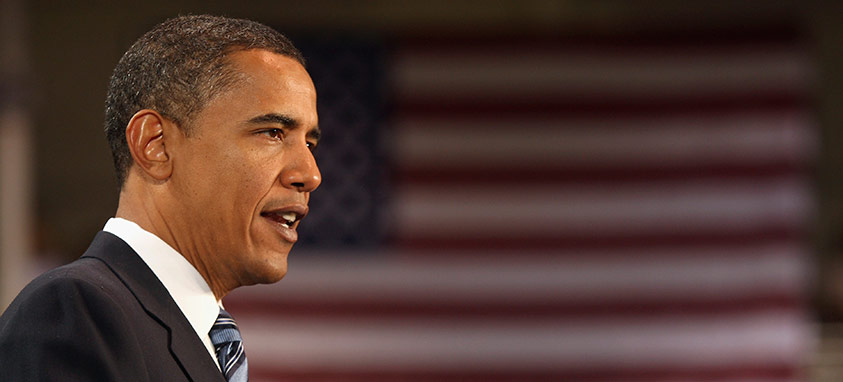
On July 1, the White House announced a series of landmark steps it is taking to renew diplomatic ties with Cuba. After more than 50 years of severed relations, President Barack Obama stated that embassies will re-open this month. During a press conference, he called on Congress to lift the embargo between the two nations.

Secretary of State John Kerry will visit Havana to reestablish the U.S. embassy, which has been shuttered since 1961. Kerry’s trip marks the first visit to Cuba of an American secretary of state since 1945. Normal relations between Cuba and the United States have yet to be fully resolved. However, the President’s move is expected to further ease travel restrictions for American and Cuban citizens. President Obama and President Raul Castro began talks in December 2014 to resolve relations.

According to a statement released by the White House, general licenses will be made available for travelers in the following categories:

-Family visits
-Official government business
-Intergovernmental organizations
-Journalistic activity
-Professional research
-Educational activities
-Religious activities
-Public performances
-Clinics
-Workshops
-Athletic competitions
-Exhibitions
-Humanitarian projects
-Private foundations
-Educational institutions
-Information exchanges
-Importation
-Exportation transactions under existing regulations

Although an economic and financial embargo remains in place, licensed U.S. travelers will be allowed to import $400 worth of goods from Cuba, with no more than $100 consisting of tobacco products and alcohol.

With expanded travel, Americans will be able to help support the growth of civil society in Cuba more easily,” the release stated. “Americans will also be able to provide other support for the growth of Cuba’s nascent private sector.”

The lifted restrictions will provide Cubans with better access to telecommunications. Incoming providers will be allowed to install necessary technology to provide Cuba with more affordable commercial Internet services. Cuba currently has an Internet usage rate of about 5 percent—one of the lowest rates in the word. The United States’ efforts will also extend to improving human rights conditions and democratic reform.

Like this content? Click here to get it Delivered FREE to your Inbox or your Mailbox

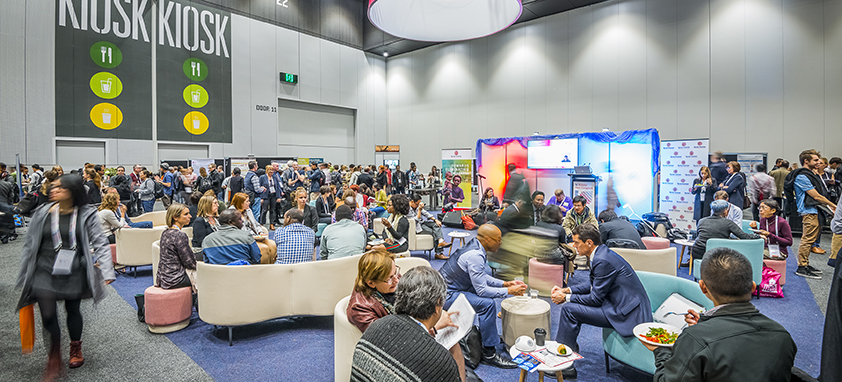
Planners are welcoming the news that freshly expanded areas of Melbourne Convention and Exhibition Centre (MCEC) officially opened Sunday, increasing the facility’s total size by more than 215,000 sq. ft., including a new 97,000-square-foot multipurpose event space with a 1,000-seat theater.

The expansion also includes new exhibition halls, meeting rooms, an outdoor terrace area and banquet space. MCEC now covers more than 753,000 sq. ft., ensuring that it remains Australia’s largest convention and exhibition space. The new space is expected to annually attract an additional 74,000 international visitors, including meetings personnel, resulting in a yearly $125 million boost to the local economy.

“We’re incredibly proud of our expansion and the benefits it will bring for our customers, our city and our state,” said John Bumbry, chair of the Melbourne Convention and Exhibition Trust.

The expansion began in 2016 and was funded by the 2015–16 Victorian state budget. The new facility is fully connected and integrated with the existing MCEC buildings. Key spaces in the expansion were named after Victoria’s rich history and the gold exterior of the building was inspired by the state’s goldfields.

“We have delivered a world-class facility that is functional, adaptable, and aesthetically pleasing, with a quality and sophistication that reflect the attributes of Melbourne,” said MCEC Chief Executive Peter King. “Customer experience was front-of-mind when planning the design—we wanted to ensure our facilities suited the needs of our customers, rather than constraining them to fit within our space.”

MCEC’s expansion is part of a larger, $261 million, collaborative project by the Victorian Government and Plenary investment company and its private-sector partners. The Victorian Government provided $153 million for the MCEC expansion, while Plenary and its partners invested more than $112 million for the new, four-star Novotel Melbourne South Wharf and a 1,150-space, multilevel parking garage.

The 347-room hotel is housed in a 26-story gold tower and is connected to the convention facility. It includes a 24-hour fitness center and two restaurants: Mr. Carpano, which serves rustic and seasonal Italian fare, and Allora, which provides relaxed, casual dining.


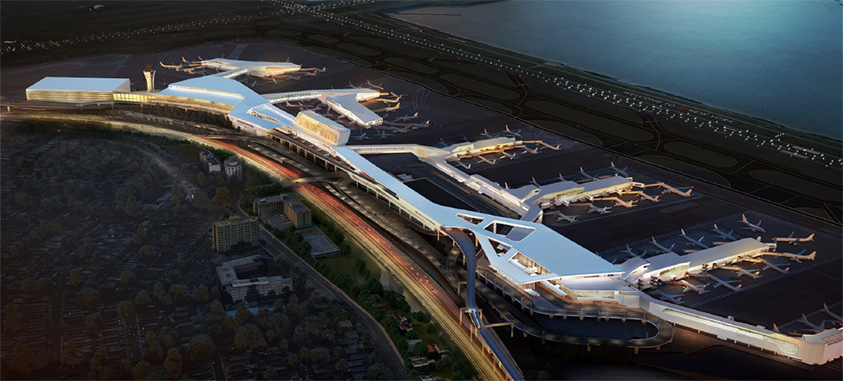
Rendering of the new LaGuardia Airport

This week, New York Gov. Andrew Cuomo and Delta Airlines CEO Ed Bastian announced the start of the construction on a new Delta terminal in the new LaGuardia Airport (LGA), which will replace the current airport facilities. The brand-new airport will be unified rather than have separated terminal buildings, which currently make up LaGuardia.

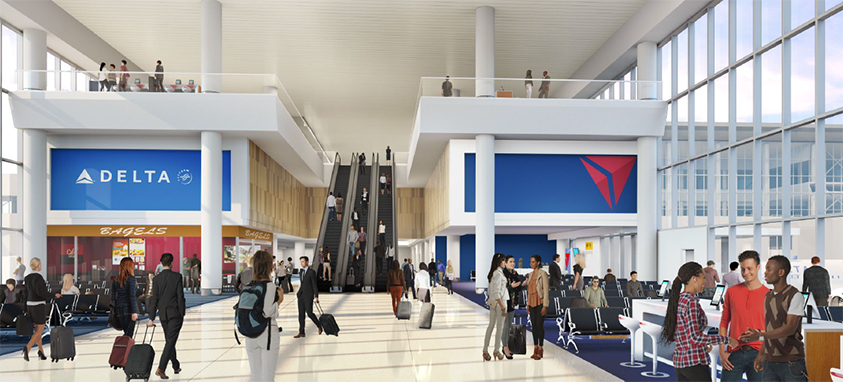
Delta fit the final piece of the puzzle by signing a long-term lease with Port Authority of New York and New Jersey. The airline is investing $3.4 billion into the terminal, while Port Authority of both states is contributing $600 million. Delta’s terminal will occupy the eastern part of the new terminal building, while Air Canada, American, JetBlue, Southwest and United will be tethered to the west end. The western part has been under construction since June 2016.

“We are living off the inheritance, not of our parents, [but] of our grandparents,” Cuomo said. “Everything you see, all the infrastructure you see, everything we built, all these great accomplishments are literally from our grandparents’ generation, and we’ve been standing still. But while we’ve been standing still, our competition around the globe has been working, building and developing.”


Rendering of Delta’s eastern half of the new LaGuardia Airport

LaGuardia’s new facilities will also include an AirTrain transit system, which has been criticized by New Yorkers in its planning stages. Critics have said that getting to the proposed AirTrain would take more time and effort than current transit options, and they are particularly concerned with its $450 million price tag.

“We are going to put in an AirTrain because there’s no airport that works in a metropolitan area that doesn’t have a one-seat ride to the airport, and it’s about time New York did,” the governor said. “It is going to be a beautiful front door to New York.”

The new operations will start to phase in by 2020, and Delta will begin in its new facilities in 2021. Cuomo’s office says the new LaGuardia will create 16,000 direct jobs and 20,000 indirect jobs, all while being built by organized labor.

“This is a workforce we can be proud of,” Cuomo said. “The development itself is a beautiful, progressive, groundbreaking policy.”

The western half of the airport is being built by LaGuardia Gateway Partners, which also has big news: JLC Infrastructure, a joint project between Magic Johnson Enterprises and Loop Capital Markets LLC, will become a Minority and Women Business Enterprises (MWBE) investor with LGP. This will be the first time an MWBE firm will be investing equity in a public-private construction project in the country.

“MWBE applied to the ownership of the project, the equity of the project, because that’s where wealth comes from,” Cuomo said. “It has established a new national standard and a new national precedent.”

It models a futuristic utopia. Sleek, avant-garde hotels kiss its sky and exude geometric elegance. Inside them, robot butlers take your luggage and your phone unlocks your hotel room. It’s Dubai—a growing powerhouse in the hospitality industry that generated over $18 trillion in 2017.

It Started with a Vision

In 2012, Dubai welcomed 10 million visitors. In May of 2013, the government announced a Dubai 2020 vision to double that number in celebration of the nation’s 50th anniversary. The plan includes a strategic marketing approach to convert awareness to bookings, as well as an increase in tourism destinations.

The city is on track to fulfill the vision. In 2017, nearly 16 million people came to indulge in the city, a 6.2 percent increase from the year before. Room inventory is predicted to climb to 132,000 by the end of 2019.

“The evolution of Dubai’s hotel sector has played an important role in underpinning the city’s growth as a business and tourism destination, and amid this there is an increased focus on the midscale segment of the market,” Steen Jakobsen, Dubai Business Events director says. “Driven by incentives for developers in recent years, this has resulted in a push for diversity of hospitality offerings, meaning that business travelers and planners have a wide range of options to choose from at different price points.

Hotel Heaven

Some buildings serve as cultural icons, such as the Burj Khalifa, the tallest building in the world that is home to the opulent Armani Hotel Dubai. The hotel’s five meeting spaces are decked out in black and white amenities and ooze sophistication. Combined, the rooms accommodate more than 1,500 people.

Many luxury hotel chains are also showing up to the planning party.

AccorHotels announced a SO/ property to be built in Uptown Dubai. The imaginative building will model a kaleidoscope and vibrantly reflect the city. A press release promises a “reimagined” meeting space with a unique pre-function space for events and meetings.

The manmade Bluewaters Island in Dubai will become home to two of Caesar’s first non-gaming resorts. Caesar’s partnered with Meraas Holding for the project. Combined, the five-star resorts will offer almost 500 guests rooms and a wellness space specifically for meetings and conventions.

“We are creating unique experiences and leveraging strategic partnerships to showcase the best of what Dubai can offer to its visitors,” His Excellency Abdulla Al Habbai, group chairman of Meraas, said in a press release.

A Jetson’s state-of-mind has interwoven itself into hotel plans. Dubai’s industry continues to experiment with futuristic technology, such as wireless charging tables.

Getting Down to Business…

Luxury event venues aren’t limited to hotels. The Dubai World Trade Centre is the region’s largest events site. It boasts 1.3 million square feet of space, and is conveniently located three miles from Dubai International Airport.

A heavy stream of professional events is in the pipeline. Jakobsen says 2017 was Dubai Business Events’ most successful year. The convention bureau won 212 event bids and proposals. It’s a move with an anticipated economic impact of more than $194 billion in addition to the impact from a full pre-existing calendar of annual events.

Jakobsen adds that with a diversity of events and venues, the city can accommodate groups of all sizes.

…And Pleasure

Dubai isn’t just a diverse city for meetings. It’s a prime cut for team building and leisure activities as well.

“The city has plenty to offer, from a spread of world-class, action-packed theme parks, to impeccable beaches and resorts, while its malls are fitted with indoor ski slopes, large-sized aquariums and more,” Jakobsen says.

The Dubai Eye (Ain Dubai) is set to open later this year. Standing at nearly 689 feet tall, it will be the world’s largest observation deck.

Michelin-starred chefs and street food have combined to turn Dubai into a foodie destination with quality cuisine across the board. Famous chefs, such as Gordon Ramsay and David Myers have opened properties at Atlantis The Palm and Renaissance Downtown Hotel respectively.

“As a melting pot of over 200 nationalities, Dubai has cuisines from around the globe, meaning there are options for every taste, and visitors and groups can do a food tour of the world in one city,” Jakobsen adds.

Cruisin’ Easily

Dubai’s blend of cultures and tourism numbers can be attributed to its accessible location. Two-thirds of the world’s population lives within a four-hour flight of the city. Dubai International Airport (DBI) serves more than 90 airlines and welcomed more than 80 million passengers in 2017.

The airport has also embraced the ease technology can bring. Over 100 smart gates are available at DBI, allowing passengers to get through security in as little as 10 seconds. A reader scans your passport, fingerprint and iris and then sends you through.

A recent partnership with Virgin Hyperloop One could set the city further ahead of the transport game. Hyperloop is a suspended vacuum tube that could transport passengers and cargo at speeds of up to 745 mph. There is speculation on a route from Dubai to Abu Dhabi that would turn a 90-minute drive into a 12-minute commute. The system is forecasted to be fully functional by 2021.

The Future is Bright

Dubai awaits an even greater influx of travelers after it hosts World Expo 2020: a showcase of the greatest technologies and inventions that occurs every five years. The city expects more than 25 million visitors during the six months the Expo runs, with 70 percent traveling from outside the United Arab Emirates. In consequence, the hospitality sector is running full speed ahead with new developments to accommodate them all.

Jakobsen notes that the industry, however, is also building for long-term sustainability. Eighty percent of the host site will be repurposed.

“As the city enters the next phase of preparations for Expo 2020 Dubai, we’ve already seen a growing interest from businesses, conference organizers and meeting planners in the event, its theme of ‘Connecting Minds, Creating the Future’ and how they can seamlessly fit within this synergistic business eco-system that’s being built to host the world,” Jakobsen says.

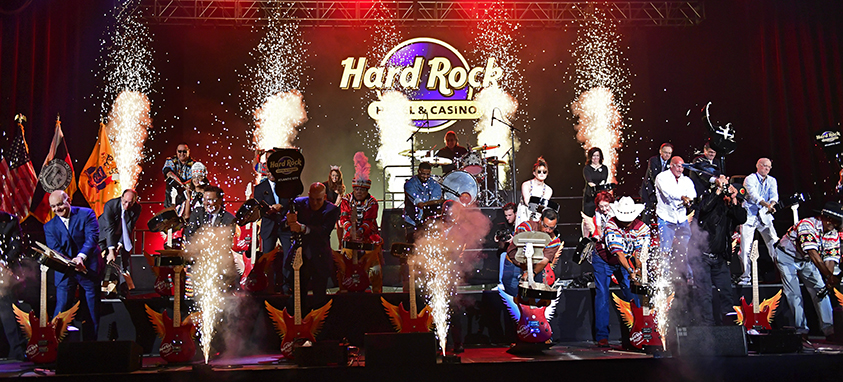
Under the boardwalk, we’ll be having some fun…so goes the 1964 hit by The Drifters. But just in time for last week’s Fourth of July holiday, revelers standing tall not under but on the Atlantic City Boardwalk were having the kind of fun two new hotels can bring. Hard Rock Hotel & Casino Atlantic City and Ocean Resort Casino opened simultaneously last week.

Hard Rock Hotel & Casino Atlantic City

Photo Credit: Corey Perrine/AP Images for Hard Rock Hotel & Casino Atlantic City

Inscribed on the building as guests drive up the entry way of Hard Rock Hotel & Casino Atlantic City are more song lyrics: “Welcome back, my friends, to the show that never ends…” The words were originally sung by rock group Emerson, Lake & Palmer.

In this context, their message is clear: Atlantic City is back with a vengeance, and here to stay.

Just like many musical legends whose memorabilia is on display throughout the lobby, restaurants and casino floor, Hard Rock underwent a major nip and tuck. The building was previously occupied by Trump Taj Mahal. “[We] promised not to just paint it and put a guitar on the wall,” said Jim Allen, chairman and CEO of Hard Rock International. The promise was kept to the tune of $500 million.

With 150,000 sq. ft. of meeting space and 2,000 guest rooms, Hard Rock hopes to strike the right chord with the MICE market. According to Shaun Lightbourne, director of hotel sales, the hotel has already booked 3,500 room nights for meetings in 2018, 3,000 room nights for 2019, and with another 5,000 nights in the works.

“When this building was designed, it certainly understood the importance of mid-week business. I think if we look at the amazing success that Harrah’s has had with its convention center, I think it demonstrates that you can book business and bring people to Atlantic City not just for the sole purpose of playing a slot machine,” Allen said in a press conference held inside Brighton Ballroom.

At its grand opening, Hard Rock rocked the town with the chain’s signature Guitar Smash ceremony inside Hard Rock Live at Etess Arena. Actor Michael B. Jordan and Miss America 2018 Cara Mund joined hotel executives and members of the Seminole Tribe of Florida, which owns the Hard Rock brand, on stage for the celebration.

The party continued after the sun set, as VIPs gathered outside on an event terrace connected to another of the hotel’s ballrooms. Guests were treated to a spectacular 15-minute presentation in the sky by Fireworks by Grucci, choreographed to hit songs. Some attendees then filtered in to Daer Nightclub for a last hurrah.

This Hard Rock is also home to Howie Mandel Comedy Club, 2,200 slots, 120 game tables and more than 20 restaurants, including Hard Rock Cafe, Council Oak Fish, Kuro and Sugar Factory. The hotel received an influx of more than 50,000 applications, and hired 3,800 enthusiastic employees. The company’s star employee, Rita, was flown in from London to show her support. She was Hard Rock’s first-ever hire and has worked at the company since 1971.

Ocean Resort Casino

After sitting dark and dormant since 2014, Atlantic City residents are thrilled to see the ball atop Ocean Resort Casino lit once again. The boardwalk is bustling again, too, breathing life into the seaside town, and giving it hope for a prosperous future. During the hotel’s grand opening, the sphere on the roof of the building was programmed to appear as a beach ball and then as the sun wearing sunglasses. It can be branded for events occurring at the hotel.

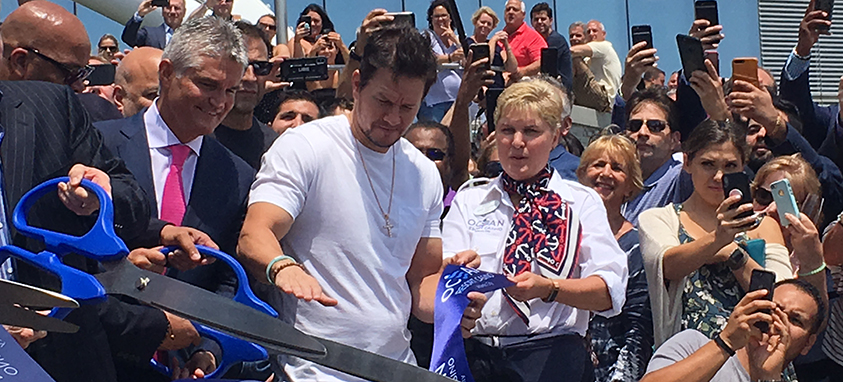
One of Hollywood’s biggest stars shone brightly at the ribbon-cutting ceremony on the afternoon of June 28. Mark Wahlberg had the honor of snipping the big scissors and placing the first sports bet. Sports gaming had become legal in New Jersey just days before the hotel’s opening. Wahlburgers, the restaurant chain owned by the actor and his brothers, will be opening a location in Atlantic City soon.

The hotel, once known as Revel and very briefly as Ten, houses 160,000 sq. ft. of indoor meeting space and 90,000 sq. ft. of outdoor space. Atypical of most gaming properties, Ocean Resort Casino has a wall of floor-to-ceiling windows facing the ocean that allows sunlight to flood the building. The 1,399 guest-room hotel is part of The Unbound Collection by Hyatt. It features Exhale spa and the world’s largest Topgolf Swing Suite, with a virtual putting green and interactive multi-sport games.

king street

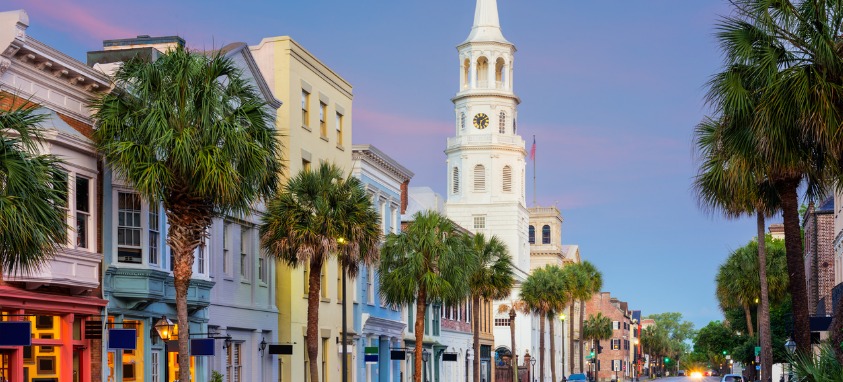
Each season, a crop of debut restaurants arrives to reinvigorate the Charleston, South Carolina, dining scene. The class of 2018 includes three of-the-moment King Street hangouts where meeting attendees can grab a snack, attend an off-site function or enjoy a futuristic self-serve wine tasting. For evidence of Charleston’s unfailing ability to saturate its every square mile with deliciousness, indulgence and hospitality, look no further than this closely clustered trio.

Millers All Day

Flaunting the rules is business as usual at Millers All Day, where you can feast on cornmeal pancakes, farro salad or a country ham biscuit any time between 7 a.m. and 7 p.m. The single-menu concept is especially enticing for people in search of sustenance at off-peak hours—for example, conference attendees deposited downtown straight from the airport. Millers’ menu includes signature Charleston dishes such as grits and Hoppin John, as well as irreverent offerings such as Mello Yello Sour, available daily at happy hour.

Uptown Social

Uptown Social encourages casual camaraderie with shareable, crowd-pleasing fare, including pizza, sliders and tacos. A selection of grown-up frozen drinks features the requisite frose and scores serious style points with slushy dark and stormies, and an icy margarita/paloma hybrid. Add to that wines on draft, signature cocktails and a craft beer selection that boasts a custom-brewed Session IPA created in collaboration with Palmetto Brewing, and you have a perfect spot for group gatherings. Uptown Social’s 10,000 sq. ft. encompasses private party rooms and VIP areas. Total buyouts are also available.

Uncork

What counts as novelty in the frozen yogurt realm is a game-changer when applied to wine. At Uncork, due to open soon, wine lovers can choose not only their desired varietal, but also their preferred portion. These options come courtesy of a state-of-the-art wine dispensing system capable of pouring one, two or four ounces of any of the 40 wines on tap from locales such as Greece, Lebanon and South Africa. The interactive, sophisticated and fun concept means no more 20-minute group discussions to decide which bottle to order, and no taster’s remorse if your first choice doesn’t suit your palate. Cheers!

Read more about Charleston in Courtney Peter’s story, “Museum Hopping Through South Carolina,” in the July issue of Smart Meetings.

succeed career

Having a chronic illness while pursuing a career can be difficult to navigate. Every chronic illness manifests itself differently, and learning how to balance health with a full-time job takes time, effort, and trial and error. While it may feel impossible at first, juggling the two can be achieved.

Here are five ways that prioritizing your health can lead to success in your career.

1. Don’t skip doctor’s appointments.

This should be obvious—being proactive helps slow any possible progression and resolve problems. With deadlines looming at work, however, it might seem that it’s necessary to keep on pushing—especially if you aren’t currently feeling sick. But powering onward can lead to burnout, which can easily lead to a flare-up, so don’t miss monthly check-ups. Let others know you’ll be unavailable on the day of your appointment, and make sure deadlines will be met.

2. Take a sick day—even if you work from home.

It’s easy to say you’re taking a sick, or personal, day if you work remotely, because you’re technically in bed, surrounded by tissues…with your laptop on your lap, and excel sheets and email open. If you’re taking a sick day, really take a sick day. Stress doesn’t help the healing process, so shut off the computer and rest for a bit.

3. Delegate tasks.

Whether your colleagues know that you have a chronic illness or not, delegating tasks isn’t seen as a weakness. A chronic illness is a lot to have on your plate, sometimes rivaling a part-time job, and taking on everything at once can be unrealistic. If need be, give a task or two to someone else. Plus, someone else can fully dedicate their time to the work—whether it be an event proposal or managing communication with event sponsors.

4. Make a list of what you have to do, then prioritize.

The Spoon Theory is a wonderful metaphor for those with disabilities. Essentially, people with chronic illnesses get a set amount of spoons for a day. Each thing they do—from answering emails to washing dishes to showering—costs a certain amount of spoons, and they must regulate their spoons throughout the day in order to finish important tasks.

So, use your spoons wisely. Start the day off with a few questions: how many spoons do you have? How are you feeling? What are your goals for today, and what items can wait? Don’t overthink items that can wait until tomorrow because you’ll end up feeling overwhelmed, which can trigger stress, and that can quickly lead to a downward spiral. Tackle what’s in front of you for the day, delegating important tasks if necessary, then hunker down and begin. Just keep watch on how many spoons you have left.

5. Be clear about boundaries.

Sometimes, disclosing a chronic illness can make you vulnerable. Whether you mention it to colleagues and employers or decide to keep it to yourself is a personal choice. This doesn’t mean you can’t set boundaries, though. Whether it’s solely scheduling meetings on Mondays to avoid exhaustion later in the week or keeping your phone off after 6 p.m. to take care of your medical regimen, try to avoid breaking personal rules that keep you healthy.