Editor’s Note: Updates added 2/7/25

On Feb. 5, Mayor Bass and the Mayor’s Fund for Los Angeles launched a new online tool to help Angelenos affected by the recent wildfires called the LA Disaster Relief Navigator, which gives Angelenos tailored resources and plans for recovery. 

On Jan. 24, the temperature in downtown Los Angeles was 72 degrees and the 61st Annual Meeting of The Society of Thoracic Surgeons (STS) had gathered at the Los Angeles Convention Center which, like 98 percent of Los Angeles County, was not impacted by the fires that raged on televisions around the country and in the hills of Palisades and Altadena. By Jan. 25, the weather report called for welcome rain. On Jan. 30, Cal Fire had contained two of the biggest blazes that burned more than 16,000 homes and buildings, caused an estimated $30 billion in damage and had taken the lives of 29 people.

The price of the tragic disaster is even greater when calculating the loss of tourism and meetings revenue that is so important to the region. Visit California President and CEO Caroline Beteta today issued a statement that emphasized Los Angeles is open for business. “With 98% of the county not directly impacted by the fires, the iconic event venues, world-class hotels, thrilling attractions and diverse neighborhoods the world knows and loves are ready to welcome groups of all sizes,” she said.
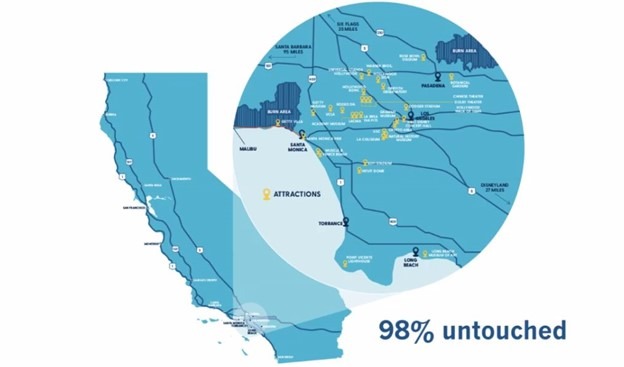
 

Blue graphic showing state of California zoomed in on Los Angeles county
Courtesy of Visit California

How to Support Southern California After the Fires

The resiliency of the hospitality industry is legendary and many hotels opened their doors for evacuated residents at discounted rates. But many more watching from home are asking what they can do to help. Beteta said going ahead with a planned event as STS did or planning a new one is a meaningful way to show that the area is still an attractive destination for attendees and avert an economic crisis. “Hosting a meeting, conference or event in the region supports thousands of local businesses and the more than half a million Angelenos whose livelihoods depend on them,” she said.

“One out of five California tourism-related jobs are in Los Angeles County, highlighting just how vital the tourism industry is to the region’s economy and recovery efforts. The meetings and events industry can help support the city’s recovery by continuing to bring business to the City of Angels,” Beteta continued.

Read More: LA Fires Update: What Meeting Profs Need to Know

To amplify the philanthropic impact, STS raised money for a Los Angeles Wildfire Response Fund. Smart Meetings, too, announced it would be donating to the Search Foundation Wildfire Relief Resources when meeting with top event professionals three hours away in San Diego for our Elevate Experience.

“Now is the time to host your event, support our communities and help show the world the enduring spirit of Los Angeles,” Beteta concluded.

Update on Southern California Destinations

  • Santa Monica: The Los Angeles tech hub merges tech-forward culture with inspiring coastal settings. The Annenberg Community Beach House offers cutting-edge A/V capabilities with a beachside view, while the new Regent Santa Monica Beach boasts luxurious, smart meeting spaces with panoramic ocean views. For more intimate meeting spaces, the Santa Monica Proper Hotel combines state-of-the-art A/V equipment with the warmth of natural beach elements throughout their welcoming venues.
  • Marina del Rey: Located just 15 minutes from LAX and adjacent to Venice Beach and Santa Monica, the Marina offers convenience alongside California’s relaxed luxury. Recent hotel enhancements at Hilton Garden Inn and Jamaica Bay Inn feature upgraded rooms with ocean-inspired designs and coastal charm. The Ritz-Carlton’s Sisley Spa now includes expanded relaxation areas, perfect for pre- and post-event wellness. For more casual gatherings, Marina del Rey Hotel’s new Mojo Café provides a trendy, grab ‘n go setting. For memorable team-building, Killer Ocean Adventures provides e-boat rentals and coastal excursions.
  • Pasadena: The innovative entrepreneur has easy access to four major airports, with the 130,000-square-foot GBAC STAR accredited Pasadena Convention Center centrally located, and more than 1,200 hotel rooms within walking distance, plus another 1,300 rooms a short drive away. For one-of-a-kind experience, check out the historic  Caltech Antheneum, iconic Rose Bowl Stadium, or NASA/JPL, just to name a few.
  • Los Angeles: Events in LA mean access to world-class museums, venues, hotels, theaters, restaurants and more. From one of the most technologically advanced convention centers, the LA Convention Center, to the brand new Intuit Dome, downtown LA has something for everyone. The city encompasses 841 galleries and museums, more per capita than any other city, 3,000 new hotel rooms added, and 13 unique districts offering unique experiences.
  • Beverly Hills: This luxury destination boasts 16 prestigious hotels with 2,500 guest rooms and 100,000 square feet of event space making it a versatile destination for meetings and events of all sizes. The Maybourne Beverly Hills offers chic conference rooms and sun-drenched terraces that can accommodate any professional gathering. The Peninsula Beverly Hills’ elegant Boardroom features mahogany wood-paneling, ideal for exclusive meetings and conferences. Waldorf Astoria Beverly Hills’ Astor Ballroom offers an open and dynamic space that can be customized to suit any meeting needs.  Beverly Hills is launching “EAT. DONATE. LOVE from February 9-15, during which seven Beverly Hills hotels will donate dining proceeds across over 20 restaurants, contributing a total of up to $175,000 for wildfire relief for the Boys & Girls Club of Malibu, Boys & Girls Club of Pasadena and the California Community Foundation Wildfire Recovery Fund

(Update list comes courtesy of Visit California)

Maritz is in the business of motivating people to be their best, has been since it was founded in 1894 as the E. Maritz Jewelry Manufacturing Company. In 2019, a group formed at the St. Louis-based company to support the emerging female leaders among the more than 2,600 employees.

After lifting each other up through a pandemic and the hybrid shift that followed, Smart Meetings sat down with the co-chairs of Amplify Women’s Network, Beck Kjar (third from right in the photo above) and Cindy Allen (far right in the photo) and leadership member Deborah Cohen (far left in the photo), and asked about what women need today to realize their personal and professional best.

Growing a Voice

In 2020, the 200 women in the group quickly shifted to virtual events such as a “Watch It Amplify” video series to maintain a sense of community. The presentations tackle intergenerational topics and include leadership along with robust chat and breakouts into small groups to discuss. It’s a networking opportunity, often tag teaming with the DEI committee, where any Maritz employee can have conversations with people they may have only emailed before.

Through all the changes, the focus remained on developing leaders with an inspiring example in Holly Francois, who was promoted to chief financial officer at Maritz in 2024.

Read More: Southern California Trailblazing Women Speak Out

“I know I’ve found myself in a room many times when and I’m the only female and you have to represent differently as somebody you don’t want people messing with,” said Kjar, director of corporate insurance with Maritz. Her hope is that all women know they are not alone in their struggles.

Paying it Female

One way the group helps people follow their passions and gives back is through charitable activations, mainly to help women. They have supported Dress for Success, Teach for America Supply Drives and anti-human trafficking organizations. During Maritz Days of Caring promotions, the group has tapped into member passion projects and reached out to local charities, doing things like raking leaves at a women’s shelter.

Read More: Dear Female Leaders, Stop Struggling and Start Succeeding

“My passion is connecting people who can help lift them up to make the load lighter,” said Allen, who is director of event accounting at Maritz. “We all have problems. We all need help sometimes. Women are tasked with handling so many things and we need some kind of sponsor in in the workplace.”

Just because they address serious topics, doesn’t mean this group doesn’t know how to have fun. For Mental Health Awareness Month, they sent people knit “emotional support vegetables,” to lift their spirits with a note to keep it as long as they needed and then send to someone else who might like a huggy vegetable on their desk to bring a smile.

That is how you amplify women’s leadership.

This week, the travel community joined the world in mourning following the deadliest U.S. aviation disaster since 2009. We’ve included the latest updates for those with meeting or travel plans that include Reagan Washington National Airport.

In brighter news, the top travel trends of 2025 were revealed by a new report, so you’ll be up to date on the best ways to keep your attendees smiling. Seeing wellness rise to the top of the list of attendee preferences? New European river cruises are offering seamless integration of healthy itineraries, giving meeting profs one less thing to manage.

As always, Smart Travel is here to keep you in the know about everything travel and tourism.

Deadliest Aviation Disaster Since 2009 Occurs at Reagan International Airport

The country is still reeling from Wednesday’s deadly aviation crash over the Potomac River in Washington, D.C., which involved a collision between PSA Airlines Flight 5342, a Bombardier CRJ700 regional jet operated by a subsidiary of American Airlines, and a U.S. Army helicopter, a Sikorsky UH-60L Black Hawk. An intensive investigation is ongoing, as are search and recovery efforts of 64 people on the American flight and three crew members on the Black Hawk.

Read More: Flight Safety Under Scrutiny

Ronald Reagan Washington National Airport (DCA) handles over 800 takeoffs and landings per day, and in 2024, DCA accommodated approximately 25 million passengers, surpassing its designed capacity of 15 million. Thousands of people with scheduled flights, including meeting planners and attendees, are now left wondering whether they should change their plans. Here is what you need to know:

  • DCA has resumed normal operations, and all airport services are functioning as usual.
  • Today, the Federal Aviation Administration (FAA) reported that DCA is experiencing minor arrival delays averaging 15 minutes or less. These delays are mostly occurring due to inclement weather.
  • As of Friday, there are no reports of any airlines offering widespread refunds or credits specifically for passengers wishing to change airports due to the plane crash. However, some airlines may offer these options if requested directly.
  • No major meetings or events that are scheduled for this weekend, such as the Washington, D.C. Auto Show, have been canceled.

New Study Reveals Top Travel Trends and Destinations for 2025

Businessman using a laptop with close up on world globe

International Medical Group (IMG) has released its 2025 predictions for travel trends, discovered through data gathered from over 1,500 IMG customers. Key insights include:

  • International travel tops the chart. IMG discovered that 96% of respondents plan on at least one international trip, with 51% of them planning on at least three global trips.
  • Domestic travel isn’t too far behind, with 85% planning on at least one domestic trip and 52% planning on three trips or more.
  • Urban tourism has a slight edge, with 53% planning to visit major metropolitan areas.
  • Slightly behind urban tourism is family travel, with 51% planning trips abroad to visit loved ones.
  • Beach tourism is a draw for 42%.
  • Rural tourism focused on nature and countryside experiences pulled in 40%.
  • Additional highlights include adventure and sports travel, resort stays, cruises, special interest trips and travel to meetings and events.

“Each year, we look forward to the results of our Travel Outlook Survey to help us better understand how our customers are planning to travel in the year ahead,” said Steve Paraboschi, IMG president and CEO. “Travel trends are constantly evolving, and this research helps IMG better meet the growing demands of international and domestic travelers.”

AmaWaterways Launches Celebration of Wellness River Cruises

AmaWaterways, winner of Cruise Critic’s “Best for Active Cruisers” award, has announced a series of themed European voyages focused on physical health and mental well-being. Named the “Celebration of Wellness River Cruises,” these journeys provide carefully curated itineraries to provide guests with the opportunity to experience iconic destinations with specially crafted activities, dining and other options that will leave them feeling refreshed and reinvigorated from head to toe.

With the exponential growth in demand for health and wellness integration at meetings and events, those in search of a unique option with built-in well-being might find it here. Cruise services include daily wellness classes taught by experts, fresh cuisine, guided outdoor activities and more.

“As an advocate for a healthy lifestyle, I am passionate about offering our guests a vacation that nurtures their physical, mental and spiritual well-being,” said Kristin Karst, co-founder and executive vice president at AmaWaterways. “We’ve been pioneers in the active river cruise sector for many years, and today, more travelers are seeking experiences that promote health and wellness, even while on vacation. Whether it’s staying active or connecting with the destinations in a meaningful way, these travelers are choosing cruises that align with their lifestyle.”

New Luxury Travel Booking Platform Launches

The Luxurist, billed as “the world’s first comprehensive luxury travel ecosystem,” made its debut on Wednesday. Currently available in the U.S. with European markets to soon follow, The Luxurist focuses exclusively on best-in-class accommodations and transportation and leverages innovative travel technology to users in the luxury sector.

Research from McKinsey projects that luxury travel will grow from a $239 billion industry to $391 billion by 2028, positioning The Luxurist with notable potential, and meeting and event profs may find the planning process for top-tier gatherings significantly streamlined.

The Luxurist is backed by travel technology advisor HBX Group, which provides a massive portfolio of over 3,300 curated properties across 141 countries. With a smoother booking process and a wealth of A-list offerings, the platform seeks to provide planners with the ultimate white-glove services.

“The luxury travel industry has long operated on fragmented systems that do not match the level of excellence high-end clients expect,” says David Amsellem, CEO of The Luxurist. “We are changing that by creating a platform that’s as sophisticated and exceptional as the experiences it helps create. Today’s luxury travelers demand flawless execution and unparalleled service. Through The Luxurist, we are enabling travel advisors to exceed these expectations while elevating their own experience of crafting extraordinary journeys.”

Features of The Luxurist include:

  • Seamless end-to-end itinerary planning, enhanced by AI
  • Exclusive access to the world’s most prestigious properties
  • Real-time inventory management and booking confirmation
  • Dedicated concierge team available 24/7
  • Privileged rates and unique amenities for discerning clients

VisitBritain Launches Global Screen Tourism Campaign with Blockbuster-Inspired Film

National tourism agency VisitBritain launched a global screen tourism campaign this week, kicking off the series with a video highlighting many iconic film locations across Britain. The campaign, titled “Starring GREAT Britain,” is part of an effort to drive inbound tourism and debuted with a launch video that featured famous film and television moments, including those from Mission: Impossible, Bridget Jones, Spider-Man, Succession, Harry Potter and more.

Options for incentives centered on exploring famous filming locations are intriguing to many meeting profs, and several travel companies, such as Tours International, structure travel itineraries for exactly that. VisitBritain CEO Patricia Yates pointed to how these tours can foster connection, saying, “Films, TV and tourism have a lot in common. They bring people together and they can transport us to new places, experiences and adventures. From exploring our vibrant cities, world-class attractions and stunning countryside, the backdrop to so many iconic filming locations, to enjoying our exciting contemporary culture and hospitality, Starring GREAT Britain inspires visitors to put themselves in the picture, discover more and book a trip to Britain right now.”

The life of a meeting professional is a whirlwind of tight deadlines, packed schedules and high-stakes decisions. While the role is incredibly rewarding, the stress that comes with it can often feel overwhelming. To navigate these demands effectively, meeting professionals need to prioritize their own mindfulness and well-being. You can’t pour from an empty cup. Here’s how you can manage your stress, stay grounded  and perform at your best—even during the most chaotic times.

Take Time for Yourself

When you’re busy managing every detail for others, it’s easy to neglect your own needs. The truth is, taking time for yourself is not selfish—it’s essential. Schedule pockets of time during the day for self-care, even if it’s just 10 minutes to breathe deeply, step outside for fresh air, or drink a cup of tea or hydrate.

By carving out moments to recharge, you’ll have greater focus, energy and creativity. Think of it as investing in your own productivity and health.

Stay Healthy with the Basics

As meeting professionals, we often skip meals, lose sleep and neglect movement. But staying healthy is your first line of defense against burnout.

Read More: Incentive Trips Expand to Address Burnout Beyond Sales Team

  1. Nutrition: Fuel your body with balanced, nutrient-rich meals. Keep healthy snacks like nuts, fruits or protein bars on hand during busy event days. Avoid relying on caffeine and sugar to power through—it leads to crashes that only add to your stress.
  2. Movement: Incorporate physical activity into your routine, whether it’s a morning walk, yoga session or simple stretches between meetings. Movement reduces stress hormones and boosts mood, helping you stay grounded, make better decisions and offset stress.
  3. Sleep: Rest is not a reward; it’s a necessity. Protect your sleep by creating a calming nighttime routine and trying to avoid late-night work sessions. Quality rest allows your mind and body to reset, making you more resilient to stress.  If you have trouble falling asleep due to a busy mind, try using a meditation app for sleep to help you fall asleep and stay asleep or leave a notepad by your bedside table for those middle of the night thoughts that keep you awake.

Busy Doesn’t Equal Important

In the meeting industry, there’s often a badge of honor attached to being “busy.” But being busy is not the same as being impactful. Your worth is not measured by how many tasks you juggle.

Instead, focus on what truly matters and let go of the rest. Prioritize the tasks that align with your values and long-term goals. Remember, you’re not just managing meetings—you’re creating experiences. Let that purpose guide your actions.

Find Joy in the Simple Things

It’s easy to get caught up in the chaos of logistics, timelines and demands. But don’t let the craziness let you miss out of life’s small joys.

  • Take a moment to appreciate a sunrise on your way to the venue.
  • Smile at a kind gesture from a colleague.
  • Reflect on the impact your work has on others.

These simple joys can ground you in the present moment and remind you why you love what you do.

Start Your Mornings Intentionally

The way you start your day sets the tone for everything that follows. Instead of rushing out of bed into the chaos, give yourself the gift of a slow, intentional morning.

Wake up a little earlier to enjoy a quiet moment of stillness, a brisk walk, or journaling. Starting your day with calm and clarity can make even the busiest schedule feel more manageable.

Celebrate Small Wins

In the fast-paced world of meeting planning, we often move straight from one task to the next without pausing to celebrate. But recognizing your accomplishments—even the small ones—can be a powerful motivator.

Take a moment to acknowledge when something goes right: a well-executed session, a happy client, or simply keeping things on track. Gratitude for these moments fosters positivity and keeps stress in perspective.

Gratitude for Yourself

Meeting professionals are known for expressing gratitude to clients, vendors and colleagues, but how often do you show gratitude to yourself? Take a moment to recognize your own hard work and resilience. Whether it’s a quiet “thank you” in the mirror or a treat you’ve earned, honoring yourself can give you the boost you might need.

Read More: Event Leaders Share Their Gratitude Practices

Don’t Let Others Define Your Priorities

It’s easy to get caught up in the expectations of others—clients, team members and stakeholders. But remember, you are in control of your priorities. Establish boundaries and communicate them clearly. When you focus on what truly matters to you, you’ll work more effectively and feel more fulfilled.

Find Moments of Mindfulness

Mindfulness doesn’t have to mean lengthy meditation sessions. It can be as simple as:

  • Taking three deep breaths before you respond to an email.
  • Noticing the smells and sounds around you during a break.
  • Journaling for five minutes at the end of the day to reflect on what went well.

These small moments can shift your mindset and help you feel more centered.

Additional Tips for Meeting Professionals

  1. Delegate Where Possible: Don’t take on everything yourself. Empower your team and trust them to manage tasks so you can focus on the bigger picture.
  2. Unplug Regularly: Turn off notifications for an hour or two to focus on deep work without distractions.
  3. Prepare for Stressful Situations: Identify your personal stress triggers and have a plan to manage them, whether it’s stepping away for a brief walk or practicing grounding techniques.
  4. Build a Support Network: Connect with peers in the industry to share challenges, ideas and encouragement. Knowing you’re not alone can make all the difference.

As a meeting professional, your ability to stay calm, focused and mindful is key to your success. Prioritize you, remember, mindfulness isn’t about perfection—it’s about progress and being kind to yourself along the way.

You create extraordinary experiences for others—don’t forget to create them for yourself, too.

Black and white image of Charlotte Frederick smilingCharlotte Frederick is a corporate meeting and incentive industry expert with over 25 years of experience. After overcoming personal battles with stress and burnout through mindfulness techniques, she founded Mindful Moments, a woman-led company dedicated to enhancing well-being in the corporate world. Charlotte believes in empowering organizations and individuals with the right tools and strategies. By embracing mindfulness and self-care, individuals can show up as the best versions of themselves in every facet of their lives. Charlotte’s commitment to sharing her knowledge and helping others is rooted in her own successes and the transformative power of wellness. She is a certified integrative health and mindset coach, a certified meditation teacher, a certified yoga instructor, and a certified positive psychology coach. 
Charlotte encourages meeting professionals to reward themselves by taking a break from the hustle and letting someone else handle the details for a change.

Join Charlotte for her Joie de Vivre Retreat in Provence from Aug. 30-Sept. 6, 2025, where you’ll rediscover the art of joyful living through mindfulness, wellness and cultural exploration. Learn more and apply at jdvretreats.com


From art galleries to rooftop bars, these new and renovated properties come with a view.

Whether you’re looking to stay in a fully-restored landmark building or a new build with art all around, you’ll find your match here. When you’re trying to plan meetings that make an impact, it sure helps to host at a hotel you can only describe as awe-inspiring.

Rooftop Wonders

InterContinental Indianapolis for New and Renovated
InterContinental Indianapolis

InterContinental Indianapolis is the first luxury hotel to open in the city in nearly two decades. Following a $110 million investment, the landmark Illinois Building features refreshed historic design while implementing modern amenities. It offers 170 guest rooms and suites, two new dining concepts, a 24-hour fitness center and 5,000 sq. ft. of meeting and event space, from a 2,500-square-foot ballroom to an executive boardroom.

The Illinois Building was listed as one of the state’s 10 most endangered landmarks prior to being purchased by real estate development and investment firm Keystone Group. The redevelopment added an entire new floor, bringing the grand total to 11 stories. Speaking of new heights, visitors will discover the first rooftop bar of its kind in the city at Astrea Rooftop Bar. The highest rooftop bar in Indianapolis, it offers prime views of Monument Circle and the Indiana State Capitol. Down on the ground floor, guests can enjoy delicious meals at Hyde Park Steakhouse.

The property also offers the city’s only penthouse suite on a private floor, as well as the city’s largest presidential suite. All guest rooms offer Nespresso Machines, curated mini bars, Bal D’Afrique scented amenities by BYREDO and other in-room comforts. The building’s design celebrates its history, preserving historic elements while tastefully adding contemporary features, such as a new canopy within the building’s original, ornate lobby. Guests discover immersion in this history right when they enter through the lavish brass doors, featuring intricate brass grillwork set against alabaster panels. As they explore the invigorating space, guests will discover curated artworks, created by local Indiana artists, commissioned exclusively for the property.

Read More: Stay in an Art Gallery—Best Hotels for Art Lovers

Life in Art

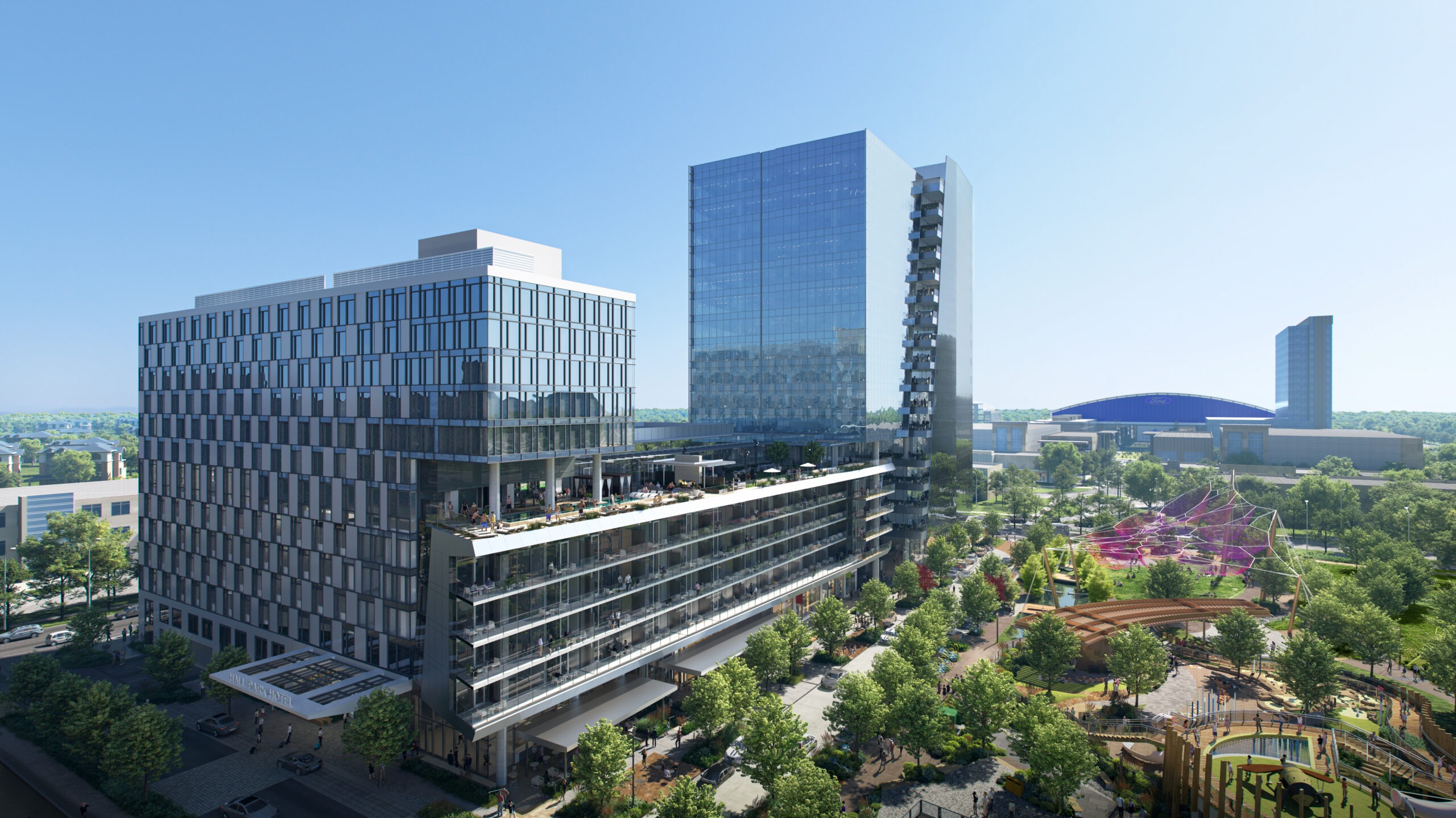
HALL Park Hotel exterior view for New and Renovated
HALL Park Hotel exterior view next to Kaleidoscope Park

Frisco, Texas sees the grand opening of its first Marriott Autograph Collection Hotel, HALL Park Hotel. Overlooking the city’s new six-acre greenspace, Kaleidoscope Park, the hotel offers 224 elegant, design-forward rooms. Their décor celebrates the flora and fauna of North Texas through modern art and decorative elements, while floor-to-ceiling windows elevate the ambience. 60 suites are located in The Reserve, four private floors designed with extended-stay business and leisure travelers in mind. These suites offer apartment-style amenities, including full kitchenettes and private balconies, alongside the unique accommodations Autograph Collection hotels are known for.

The property offers over 20,000 sq. ft. of indoor and outdoor event space. Its location in HALL Park elevates event capabilities. A Frisco mixed-use development since the mid-1990s, HALL Park encompasses 2.2. million sq. ft. of office and retail space throughout 15 buildings. A third of that area is dedicated green space. Throughout HALL Park, visitors will find three miles of walking trails and over 200 works of art.

The hotel continues the dedication to art that the area is known for, with a world-class art collection, featuring works by both local and internationally renowned artists. Art enthusiasts can elevate their stays with art tours, led by expert team members. All event spaces also house various artworks.

Other notable features include an outdoor pool with a rooftop bar, an expansive patio overlooking Kaleidoscope Park, a state-of-the-art fitness center and dining at Palato Italian Kitchen and Lounge.

Glamour and Character on the Coast

Fairmont Breakers Long Beach for new and renovated
Fairmont Breakers Long Beach

Landmark hotel Fairmont Breakers Long Beach has been an icon along the Long Beach Skyline since it was built in 1926. Following a multi-million-dollar transformation, the property now offers upgraded amenities and sophisticated touches. The transformation balances the contemporary by preserving and refurbishing its original, historic design features.

All 185 guest rooms, including 22 suites, feature an elegant coastal palate of deep blue tones, while gold and mixed metal details resemble sunlight shimmering on the ocean. Marble bathrooms, tasteful furnishings and expansive windows blends the hotel’s historic character with relaxing modern comforts. Guests will discover historic features such as untouched plaster molding and exterior ornamentation, and even the original mailbox in the lobby. More features of the lobby, from marble flooring to grand chandeliers, emphasize the glamourous feel.

Throughout the property, guests will also find a curated art collection featuring work from local artists and photographers. An ecletic mix of pieces and vintage photos displaying the hotel throughout the eras pay homage to the hotel’s history. Plus, visitors can discover even more art at curated gallery walls in restaurants Nettuno and Sky Room.

Additional onsite dining includes Halo, the only rooftop bar in Long Beach, Alter Ego, an upscale jazz bar, and La Sala, the lobby bar.

Fairmont Breakers Long Beach offers just under 10,000 sq. ft. of flexible event space, from intimate ballrooms to modern meeting spaces to a sunny outdoor reception terrace.

Read More: New and Renovated: History at Heart

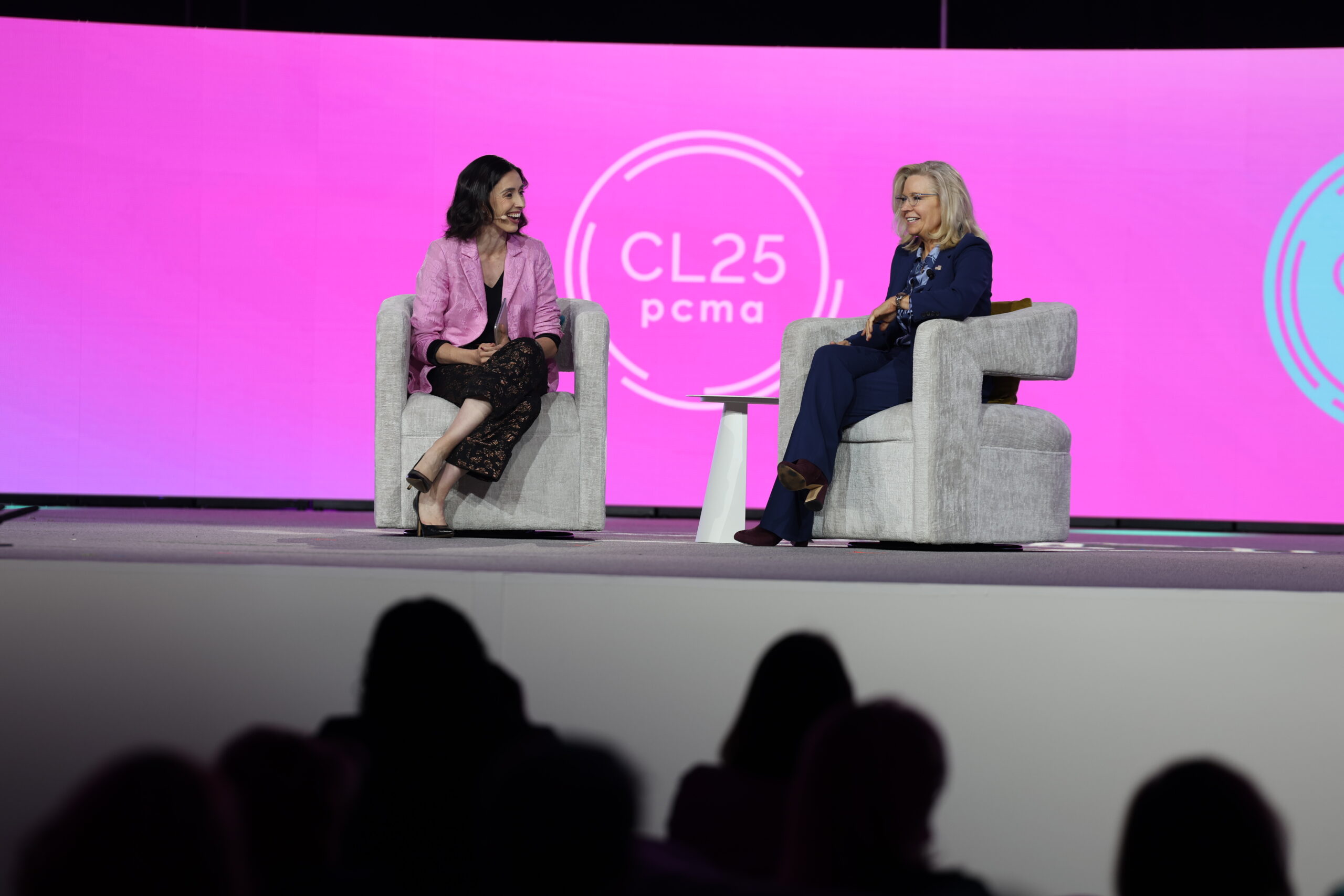
One way PCMA Convening Leaders draws more than 4,000 people to register for a conference at the beginning of the year is by booking high-profile, controversial-in-some-circles speakers such as former U.S. representative and author Liz Cheney, who took to the stage in Houston this year a call for elected officials who are “serious, listen and act in a way that is respectful and substantive.”

PCMA President and CEO Sherrif Karamat characterized the decision to showcase outspoken speakers as important for health of civil society. “Unless we hear different points of views, we will be trapped in our own little paradigms and that that could be very dangerous,” he said.

Liz Chaney talking to woman on stage
Liz Cheney (right), photo by Jacob Slaton/Whatever Media Group

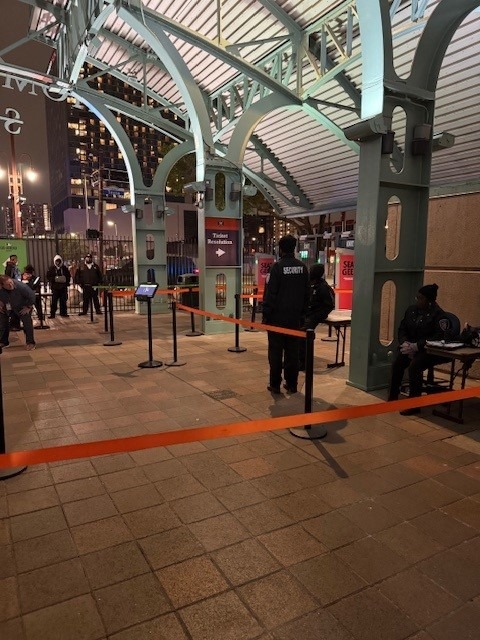
But hosting presidential candidates brings a price beyond their speaking fees. Limitations on the size of bag that can brought into the general session led to multiple long-snaking lines and pleas from stage to be kind to the security guards manning the checkpoints. “We will continue to provide that level of security to make sure that our people are safe,” said Karamat.

Security section at PCMA Convening Leaders
Security at PCMA Convening Leaders

He predicted that elevated levels of security at all events will evolve to be more seamless and less costly to balance safety and comfort. Until then, PCMA turned the experience into a conversation to help event organizers struggling with how to keep everyone safe and feeling welcome at their events.

Read More: Rebranded 2025 PCMA Conference Embraced World Stage

Houston Police Department Executive Chief Thomas Hardin, a former Homeland Security employee, spoke at a breakout session about “Pro Strategies for Safeguarding Your Events.”

The highlights were captured by PCMA’s Spark AI tool Snapsight. Following may be some measures to consider at your next critical conference to be prepared for any imaginable threat and those yet unimagined. He emphasized the critical balance between robust security and maintaining a welcoming atmosphere.

Security Checklist

A Layered Security Approach: Blend visible measures with covert strategies such as plainclothes officers.

Access Control: A combination of sophisticated concealed weapons detection, AI-based visual gun detection, wristbands, facial recognition and QR codes can ensure only approved attendees are in the building.

Breaking News: Geopolitical headlines, such as the terrorist attack that happened in New Orleans in the weeks before the PCMA conference can heighten tensions and influence where security resources are placed.

Cultural Awareness: Hiring security consultants who speak multiple languages and employing tools such as Google Translate can help manage a global audience.

A Safety Partnership: Relationships with venues and local law enforcement, improving both security effectiveness and emergency response times.

Cybersecurity: Meeting professionals can work with federal agencies to monitor digital threats to event systems and attendee data.


Would it be easier to get the budget you need for an effective channel incentive travel program if your chief executive knew that 83% of participants—customers who sell your company’s product—would be less likely to suggest your widgets if there were a reduction in program benefits? A new study from Maritz shows that may be the case.

Motivating and rewarding the resellers of your company’s products—the channel partners—is an example of an incentive travel program that can have outsized consequences to improve or hurt the company’s bottom line. That is why Maritz recently surveyed hundreds of channel partners—the participants in travel incentive programs—from various industries to understand their experiences, preferences and what truly drives their engagement.

Practical questions were aimed at understanding what participants loved, how it changed their behavior and how they would structure the program if they were designing it from scratch. The resulting report, “Channel Incentives: Protecting Your Budget, Boosting Your Returns for 2025 & Beyond,” could help all meeting planners prioritize the features that make the biggest impact.

Smart Meetings sat down with Casey Epley, director of product advancement at Maritz, to better understand the role channel incentives play in leveraging business relationships and learn tips for advocating for and making the most of incentive budgets.

Motivated to Sell

The proof that channel incentive programs work was pretty overwhelming, according to Epley. A total of 91% of respondents said incentives have a “high” or “very high” impact on their motivation to sell. That means that most people in these programs care about the incentives and are selling more at least in part because of the incentives.

Learn More: Incentive Travel, a How-to on Fostering Greatness

Bar graph about brand awareness and incentive programs

In fact, respondents said they mattered more than short-term discounts and almost as much as profit to the business. Incentives are a powerful tool to build partner loyalty and brand awareness. 91% of respondents agree that the opportunity to earn rewards encourages them to learn more about that brand. Plus, 92% of sellers say they actively keep earning opportunities in mind while performing their daily tasks. The report concluded, “Successful programs don’t just influence a single sale; they help your brand stay top of mind, ensuring partners continuously engage with and advocate for your products.”

Circle graph about the motivation of rewardsConversely, if the travel and financial incentives are removed, the behavior—buying and reselling the company’s products—would significantly decrease. In fact, 83% of participants said that if incentives were removed, that would impact their sales effort.

That insight places incentive programs in the role of revenue generators, rather than cost centers. Designed strategically, they can be used as a tool to address fluctuating inventory levels, supply chain disruptions or promote priority products.

Best Practices for Channel Incentive Programs

But not all channel incentive programs are equal. The Maritz report found that partners dropped out if rewards were too hard to earn or took too long, communications and offers weren’t relevant, rewards weren’t appealing or rules weren’t clear or were confusing. The most effective programs simplify the rules, personalize the reward experience and communicate effectively.

Learn More: Defining Exceptional Channel incentive Programs

Epley stressed the importance of making rewards flexible. Points programs allow participants to choose their own adventure, whether that is a new handbag or taking the family on a trip.

While there might be a base level of cash reward, adding competitive elements with unexpected prizes at different levels can make the program even more compelling. Rebates, gift cards, merchandise, trophies or symbolic rewards, like tier progression or points toward an incentive trip are also popular.

Ideally, the incentive designer will have a chance to test interest and adjust based on uptake. By watching the bell curve, tweaking the program to sweeten the gold rewards can move more people to the higher levels if too many are doing the bare minimum or move the bar higher if too many are achieving costly elite levels too soon and then were not as motivated after they had already qualified for the Hawaii trip. At that point, unlocking an exclusive catamaran trip or some other perk may be required to keep everyone engaged.

Learn More: SITE Study on Gen Z Incentive Travel Preferences

Whatever you offer, make it easy to use and communicate the benefits clearly. “Rule structure may be the most important thing,” said Epley. The best way to structure the sales challenge varies based on the culture of the industry you are working with and the relationship.

Exclusive sellers can be influenced to purchase more frequently and more premium products. Measurables may include order accuracy, growth compared to the previous year or product categories. Other partners may have a choice of brands they can recommend. The yard stick may be based on more transactional measurements.

“As you are looking to capture wallet and mind share, personalize the behavior you are trying to incentivize for best results,” Epley advised. The more rules fit the specific partner or industry rather than feeling like they were written for the general market, then the more likely the partner is to participate.

Technology companies, for instance, respond to rebates and discounts more than manufacturing or other more mature industries that have a culture of offering non-cash rewards.

One finding that surprise Epley was the popularity of training programs as an incentive activity. “They rated learning as a critical benefit. That was a big light bulb for us.

Caesars, Harrah’s and Tropicana to host top-tier celebrations

As the countdown to Super Bowl LIX begins, Caesars Entertainment properties in Atlantic City are gearing up to offer sports enthusiasts an unmatched experience. With a mix of electric game-day atmospheres, top-notch food and drink specials, and exclusive events, Caesars, Harrah’s and Tropicana are turning the East Coast into a prime spot for Super Bowl celebrations.

Immersive Game-Watching Experiences at Caesars Sportsbooks

The centerpiece of this year’s Super Bowl festivities is the trio of Caesars Sportsbooks located at The Wild Wild West at Caesars, Harrah’s Resort and Tropicana. These venues combine luxury, technology and excitement to create the ultimate game-day viewing spots.

  • The Wild Wild West at Caesars: Spanning over 15,200 sq. ft., this sportsbook is a haven for sports fans. Highlights include private Fan Caves for an exclusive viewing experience, a self-serve beer wall for ultimate convenience and a variety of delicious snacks from the Atlantic City Snack Shack.
  • Harrah’s Resort: Offering a stadium-style atmosphere, Harrah’s brings the game to life with two private Fan Caves outfitted with Xbox and other game consoles. Guests can enjoy mouthwatering dishes from AC Burger Co. & Deli while cheering on their favorite team.
  • Tropicana: Known for its VIP game-watching areas, Tropicana ensures every fan gets a front-row experience. With a focus on comfort and convenience, this venue is perfect for those looking to immerse themselves in the action.

Read More: Super Bowl LIX: As Las Vegas Cools Down, New Orleans Heats Up

Game Day Food and Drink Specials

When it comes to food and drinks, Caesars properties have fans covered with an array of specials to fuel the excitement:

  • Broadway Burger Bar (Tropicana): Super Bowl specials include $2 drafts and $3 bottles, offering a budget-friendly way to enjoy the game.
  • Chickie’s & Pete’s and A’Dam Good Sports Bar (Tropicana): These fan-favorite spots will also feature their popular menus, perfect for a game-day feast.

Exclusive Pre-Game Events

Caesars properties are taking the celebration beyond game day with special events leading up to the big game:

  • The Ultimate Pre-Game Party at Boardwalk Saloon (Caesars Atlantic City): On Feb. 9, this event sets the tone for the weekend with a hearty game-day food buffet, a competitive beer pong tournament and exciting giveaways.
  • Super Bowl Sunday Splash at The Pool (Harrah’s Resort): Also on Feb. 9, this vibrant pre-game event combines “daylife” and nightlife with over 40 screens for immersive viewing, an all-you-can-eat buffet and a live DJ starting at 4 p.m. It’s the ultimate way to kick off Super Bowl Sunday.

Read More: Sports Arenas and Stadiums: On Game for Meeting Planners This Year

The Top Destination for Super Bowl Fans

Whether you’re a die-hard football fan or just looking to soak up the atmosphere, Caesars, Harrah’s and Tropicana in Atlantic City promise an unforgettable Super Bowl experience. From luxurious sportsbooks to mouthwatering food and drink specials and exciting events, these properties have everything needed to make game day one to remember.


Hilton’s 2025 Trends Report features a special section to spotlight the future of meetings and events.

Alongside the highly anticipated release of its 2025 Trends Report, Hilton launches a multi-faceted initiative designed to spotlight the transforming nature of meetings and events in the context of rising trends such as the increased demand for group and incentive travel and digital meetings.

The “World’s Most Welcoming Events” initiative includes a special section in the 2025 Trends Report, “The Meetings Maximizer: The Next Generation of Meetings & Events,” alongside the new World’s Most Welcoming Events Playbook, which can be found within Hilton’s EventReady Playbook.

Based on the findings, the report concluded that the 2025 planner and their attendees are “maximizers,” in the sense that they seek to make the most out of their in-person connections, networks and the time they spend together; and they’re doing so in evolving ways, especially with the rise of Gen Z in the professional workforce. At the heart of the matter is building events that are welcoming and therefore inspire this maximization.

Kelly Knowlen, vice president of sales engagement and special events at Hilton, says, “The world has a fresh new approach and perspective toward in-person gatherings, and young corporate employees are influencing the evolution of meetings, events and conferences…this new generation entering the workforce is more digitally savvy than ever while still valuing connections and redefining the purpose of face-to-face interactions.” As has become clearer than ever in the past few years, she says, “Travelers embrace more engaging, human experiences and connections.” Hilton’s 2025 Trends Report identifies the key takeaways for planners to meet the needs of their evolving audience.

Read More: Gazing into 2025: Trends Shaping the Year Ahead for Meeting Planners

Methodology

The Meetings Maximizer poll, conducted between September 30 and October 16, 2024, interviewed 1,050 U.S. adults between 18 and 65 who planned to attend an in-person work event over the next two years.

Jason Dorsey, president and lead researcher at The Center for Generational Kinetics, who partnered with Hilton to conduct the study, remarks that its key goals were to uncover the most up-to-date perceptions, beliefs and expectations—both overt and hidden—about in-person meetings and events and reveal key trends, resulting in new, data-driven solutions. He says, “This special section of Hilton’s 2025 Trends Report does all of this and more by diving into key aspects of transforming meetings and events into more welcoming experiences from a variety of perspectives.”

It identified four key areas, from high demand for comprehensive meeting preparedness to the rise of “Frolleagues” and more.

Insights

Event Prep 2.0: The Surge of Extreme Meeting Preparedness

An attendee checks into an event and holds up their name badge, image for Hilton Meetings Maximizer storyA leading takeaway of the study is that young and emerging professionals are transforming the industry. PBS reports that Gen Z will outnumber Baby Boomers in the professional workforce in 2025, and that, together, Gen Z and Millennials will make up 75% of working professionals. Though these professionals are beginning to dominate the workforce, only 44% of those who have five or less years of work experience feel very comfortable attending in-person events, the study found. There is a need for events to evolve in order to increase this number. Cue data-driven solutions to create “The World’s Most Welcoming Events.”

Further questions reveal some specific changes that can maximize attendee comfort. Over two-thirds (71%) agreed that receiving agendas well in advance helps them to feel more comfortable. In a similar vein, 58% report that they feel more comfortable at all forms of events, virtual or in-person, when they have the option to attend a pre-con meeting to address last-minute pre-event questions. Once the event begins, 60% of attendees find that being able to attend a meet-and-greet for first timers alleviates anxiety.

Attendees Seek Steps for a Stress-Free Start

While the previous area addresses the highest demands for maximizing attendee comfort, the following categories break it down into more specific action items.

Today’s attendees take preparing for an event more seriously than ever. Some of the most common practices include studying the event schedule, with 40% reporting that they do so, aligning with the 71% of those surveyed agreeing that receiving agendas in advance makes them feel more comfortable.

Around 42% of those surveyed expressed feeling unsure of proper attire. Broken down by generation, 79% of Gen Zers report that they feel at least a little anxious about not having the right attire for a work event. 67% of respondents stated that they feel more comfortable at in-person events when they are provided with attire guidelines to reference, with supporting visuals, as they get ready to pack.

Another source of anxiety for meeting attendees is food and beverage, with 28% of respondents experiencing anxiety about spilling on their clothes, 30% worrying they will not like the food served, and 28% worried about getting food stuck in their teeth. As for what attendees want, 60% feel more at ease when they can look at the food menus in advance, 52% of attendees want non-alcoholic drink options available and 52% want food options for people with allergies.

These aspects—attire guidelines and menus showing versatility of options—could ideally be included in a comprehensive agenda with ahead of the event.

Sound Shhhift: The Rise of Silent Meeting Time

Quiet rooms and spaces to unwind and re-center have become a staple in events, and the study results confirm it, with 78% agreeing they sometimes need a break or time to themselves when attending a work event. Quiet rooms have been a positive shift in events for all attendees, whether they use them as an accessibility feature or just as a space to stay up to date with their work. 65% feel more comfortable having dedicated quiet areas that they can use to work or check emails.

Many attendees (68%) agree that work events are often too long, and 71% feel more comfortable when they have built-in breaks, so their schedules are not completely full. 51% report that they feel the need to be “on” for large periods of time, and that it causes them anxiety, which is a major area where dedicated quiet spaces are helpful.

Many attendees also find it difficult to speak in large groups. 62% feel more at ease speaking when they can do so in smaller groups instead. This trend speaks to the growing recognition of attendees’ desire to foster quality connections, as speaking in smaller groups allows attendees to foster more authentic conversations and get to know the people in their group.

Read More: Four Quick Ways to De-stress During Meeting Crunch Time

The Emergence of Pod Squad Travel

Much in line with the desire for smaller groups revealing a greater interest in authentic collaboration, a whopping 82% of attendees feel more comfortable attending events when they are with somebody they know. Over half (59%) share that they feel more comfortable when they can bring at least one “Frolleague”—a work colleague who is also a friend—to an event.

However, attending events alone also provides opportunities for growth, with 83% agreeing that they have made new friends at work meetings or events; and this increases the likelihood that the next time they go, they’ll have a friend there. 71% agree that they have met someone at a work event who has helped further their career.

pod-squad travel Hilton Meetings MaximizerThere’s no question that work meetings and events build meaningful connections. The survey results confirm this, with 82% agreeing that they have built a better connection with their team members, 78% with their boss and 76% with executives and senior leaders because of work events.

Yet, many attendees of younger generations find it difficult to make new connections at work events, with 54% of Gen Zers and 48% of Millennials more likely than Baby Boomers to report they feel this way.

There are plenty of ways event planners can help make this easier, such as offering first-timer meet-and-greets as suggested in the Event Prep 2.0 section, which helps people to possibly even find a friend. Enabling smaller discussion groups, as suggested in the Sound Shhhift section, or the ever-popular conversation-starter stickers for name badges, can make it easier for an attendee to strike up a conversation with senior leadership in a way that feels comfortable and approachable.

The power of events to foster authentic, lasting connection is undeniable, especially based on the high volumes of respondents who confirmed the connections they’ve gained through attending events. The study’s findings show that there is space to expand this power even further when planners make changes to make events feel more comfortable and welcoming.

The Meetings Maximizer

The greatest lesson from The Meetings Maximizer is that today’s attendees share some very specific baseline needs that would enable them to get the most out of the meetings and events they attend. “Understanding the changing needs of customers and attendees and acting quickly to evolve and innovate is pivotal to propelling our industry forward,” says Frank Passanante, senior vice president and global head of sales at Hilton.

A diverse group of professionals taking a cheerful selfie together during a seminar or workshop. They are smiling and appear engaged. hilton meetings maximizer

The World’s Most Welcoming Events Playbook offers even more solutions, from avoiding traditionally messy foods (begone the fear of spilling on that new outfit!) to enabling easier networking with conversation-starter stickers, as well as information on offerings available to planners, such as the Hilton Meeting Packages, the Hilton Incentive Collaborative and the Meet with Purpose program. All of these offerings seek to make it easier for planners to meet the unique needs and desires of their attendees based on factors that vary with every meeting, such as size, industry and demographics.

Read More: Incentive Travel 2025: Trends, Challenges and Opportunities

Kelly Knowlen, vice president of sales engagement and special events at Hilton, shares, “The positive power—personally and professionally—of meetings and events is endless, from unlocking solutions to strengthening workplace culture to building greater team trust. Understanding what attendees need to feel welcome, comfortable and supported is the key to making one moment in time have a lasting impact.”

As Hilton debuts this initiative, it is a recognition of the rapid transitions in the meetings and events industry, and a call to action to planners to transform their events to create more welcoming, more impactful environments that maximize attendees’ goals.

Millennials (born between 1981 and 1996) and Z (born between 1996 and 2012) are already filling our ballrooms with Gen Alpha not far behind. How can we make the next generation of attendees feel comfortable, not to mention the entry of young workers helping us create meeting magic?

We asked Claire Lester, senior design strategist with Maritz Design Studio, for tips that will benefit everyone in the crowd. Spoiler alert: Her research into this much-maligned demographic shows that the things they are asking for based on the unique times they grew up in and the way they were raised might end up benefitting everyone.

#1 Ditch the Labels

Gen Z doesn’t like labels. “They are super-sensitive about gender identification,” said Lester, who was born on the cusp between Gen X and Millennial, observed. You might want to take a page from southerners and adopt the inclusive “y’all” instead of “ladies and gentleman,” or worse, “you guys.” “They” is a safer pronoun than “she” or “he” and “we/ours” might be the gold standard going forward.

The same may be true for making assumptions based on age. David Allison, founder of The Valuegraphics Database, says age is not an accurate predictor of behavior. Stereotypes such as gender, age and race only apply a small percentage of the time. Instead, meeting designers have to understand the core values of their attendees.

Learn More: Finding Common Ground and Shared Values with David Allison

#2 Consider the “Why”

Gen Z is the first generation to live the merging of home and work. They demand straight talk from friends and brands. They want a healthy home and work life and that is having a positive impact on all generations.

Read More: What Does Success Look Like for Gen Z Planners?

“They want to know why on everything,” Lester said. That means you, as a meeting presenter, have to be prepared to answer the hard questions. “They are searching for authenticity; they are searching for  themselves,” she said. In fact, Gen Y (also known as Millennials because the oldest members became adults at the turn of the millennium) are sometimes called the “Me Generation” because self-realization and self-fulfillment were some of the aspirations they promoted. They want to know where they fit in.

Again, this desire for in-real-life (IRL) connection is being felt across the age ranges. In a world of fake news with images generated by AI, everyone is getting smarter about demanding authenticity and truth.

#3 Make Room on the Fast Track

Baby Boomers (born between 1946 and 1964) grew up believing you have to pay your dues. You grew knowledge through experience and time.

“It’s just not the same anymore,” said Lester. “Knowledge is available to everyone immediately. This generation doesn’t have to imagine things. They can look anything up.”

Gen Z and Millennials demand meaningful work and often expect to be promoted and given autonomy faster than some of their supervisors may have planned. But in the right circumstances, they can also be very loyal if the company answers the “why” question in words and action, according to Lester.

#4 Let Them Choose Their Own Event Adventure

Choice is a big priority for younger audiences. “Give people the opportunity to co-create content with you,” Lester suggested. The majority of sessions may be planned out, but let attendees learn from each other with self-created content that fits their schedule.

The days of back-to-back meetings won’t be tolerated anymore by any generation, Lester concluded.

#5 Encourage Bring-a-Friend Event Packages

Younger generations are intimidated about going to an event by themselves, according to the Maritz data. Instituting package pricing with buy-one-get-one (BOGO) free and two-for-one packages could help overcome that hurdle.

The team pricing also allows for more event mentorship to take place, something younger workers say they want.

The Gen Z-Friendly Event Solution

So how does this relate to events? Now that you have your five data-based strategies for attracting younger audiences and employees, how do you put the plan into action?

The challenge, Lester acknowledges, is that often we design events for our boss rather than our audiences. And often the executive team is older, male and not in need of special accommodations. They came of age with the understanding that value meant packing the days full of content and requiring everyone to attend every session. Free time, meant golf for the men and spa for their wives. Statistically, preferences don’t break down that way anymore.

The solution, she suggested, is to bring diverse representation to the table. Millennials are 40% of the business workforce today. That number could rise to 75% by 2026. If they are represented in proportionate numbers, we won’t be making decisions about what to offer on incentive trips and product launches that reflect the demands of the people attending.

“No one is really listening to them,” Lester said. She suggested changing things up one step at a time and getting feedback from this emerging attendee block.

For example, if we started considering the preferences of the next generation, we would see more wellness integrated into the workday and the conference agenda. “Millennials and Gen X are no longer willing to pause their lifestyle for an event,” Lester said. “It needs to be wellness their way, not necessarily 6 a.m. yoga.” They want to schedule the type of workout that is meaningful for them.

So, add some flexibility into the program and pick a property that has many wellness options available and your registration numbers will thank you.