wastes attendee time

Are your meetings making the most of you guests’ valuable time? A recent study says maybe not.

Employees in the United Kingdom, Germany and France believe that out of the 187 hours they spend on average in meetings per year, 56 percent of that time is spent unproductively. That’s nearly 105 wasted hours.

According to a Crowne Plaza Hotel and Resorts survey of 2,000 employees, some people will go to great lengths to avoid attending unproductive meetings. The most common excuse used for opting out was a heavy workload, which nearly a third of respondents (30 percent) have admitted to blaming for their absence. Heavy traffic came in second (15 percent), and six percent of respondents even admitted to calling in sick.

MoreHow to Keep Attendees Engaged

What causes a meeting to reach such ineffectiveness that employees run away? Length. Location. Time. More than a third of respondents (34 percent) say when meetings last too long they tend to shut-off, and almost a quarter of those surveyed (23 percent) say they’ve witnessed another person falling asleep. The research discovered that 40 minutes is the optimal duration for an effective meeting. Employees expressed that they are more likely to meet offsite and if free food and beverages are involved. Nearly two-thirds of respondents (65 percent) prefer to meet in the morning, specifically, between 9:30 a.m. and 11:30 a.m.

Other annoyances that make people dread the next meeting include people talking over each other, tardiness and technological issues.

Good Meetings Guidelines

What can be done to create meetings that attendees want to attend? We recommend some guidelines that will result in a productive next gathering.

  1. Discourage multiple lines of dialogue. Try to keep the number of people talking simultaneously to a minimum.
  2. Room temperature is critical. It’s tough for attendees to concentrate if they feel as though they’re in a freezer or baking in an oven.
  3. Be a strict clock-watcher. Late-comers are common, but constant reiteration about a meeting’s start time might lessen the chances.
  4. Allow everyone to get a word in. An attendee might have a lot to say, but it’s best to make sure everyone has the chance to chime in.
  5. Make it a tech-free zone. Texts/emails/phone calls can wait.
  6. Keep it on topic. State the meeting’s topic at the beginning so the conversation doesn’t veer from the main point.
  7. Have enough chairs. It’s better to have too many chairs than not enough. This way everyone feels welcome.
  8. Make sure room isn’t double booked. There is nothing worse than finding you’ve booked a room that another group also intends on using at the same time.
  9. Stress serious business. Everyone wants to have a good laugh every now and then, but there should always be a limit.
  10. Test your tech. It’s best to make sure that all technology being used for your meeting is working before everything gets going.

How intelligent is your company about your customers? Do you know enough about them to create a personalized customer experience? Understanding your customers through deep intelligence enables you to drive actions and experiences that can make the difference in your ability to compete in the marketplace and win with them.

In today’s world, competing on price alone cannot win at checkout. You need to create a unique customer experience that separates you from the competition. This could be your customer service, return policy, quality of product or services, or designing a bespoke experience.

Imagine the frustration of working to create an amazing experience for a targeted customer segment but lacking even the most basic information about specific customer interaction with your products or services. In these common instances, a company typically guesses the best customers to target or uses attributes that they feel are the next-best indicator, usually sweeping some people who are not truly targets. This approach leads to marketing campaigns with low response rates and wasted marketing dollars.

Related: Freeman Study: Event Data is Driving Increased Revenue

To achieve a better yield on your marketing spend, we recommend creating Customer Intelligence analytical solutions that provide your company with a variety of ways to monetize your customer.

Here is a three-step approach to building a customer intelligence analytical solution.

Step 1: Actions

The first step in our approach is to define the actions you would like to take with your customer-targeting strategy. This can include a wide variety of marketing and sales activities. For a retail company, it might be a segmentation strategy based on customer transactions such as value, frequency and recency of purchase. By segmenting your customers into specific purchase behavioral groups for marketing and sales purposes, you can optimize marketing spend to align with what will attract that customer segment.

An example of event-based marketing to a specific customer segment is performed on a regular basis by Michael Andrews Bespoke, a premier customer men’s clothier in New York City. After analyzing its customers spend, profitability and referral rate, the clothier invites premier clients to a high-end scotch-tasting event. To include all their customers would be cost prohibitive, but by focusing on the best customers, the cost of the event yields high returns.

Other actions you may want to think about include email or mail campaigns, targeted discounts, print media advertising, social media, SEO, paid online advertising and special events. Each of these options is designed to deepen the relationship with your customer, but the type of action may yield a different type of customer intelligence analytical solution.  Knowing upfront your purpose helps yield the right analytics to help monetize customers’ experience with your company.

Step 2: Data

As you work to improve your ability to connect with your customers and build a customer intelligence solution, the next step is to gather the right data. Based on the actions you want to drive, you will need specific datasets or attributes to drive decisions. This, in turn, helps you understand the attributes needed and the data that needs to be collected. We find that starting with the actions and letting them drive your data needs is a clearer path to monetizing it.

Related: 6 Ways to Drive Success with ROI Technology

Stitching together the various datasets needed is often a large undertaking and where most of the time is usually spent. In some cases, you may have more than enough data to support your customer intelligence needs, but in most cases, you will be missing key pieces of information. In either case, having the right data set is the key ingredient to drive revenue through a better understanding of your customer purchase activity.

Places to look internally for the right data include internal systems such as point of sale, customer relationship management, loyalty and order management systems. If the data does not sit within the walls of your company, consider asking customers to fill out a short survey. Surveys can be a great tool to help gather information about what customers are looking for and what they think about your products and services. We recommend that when asking a customer to give you something, return the favor by giving them something back. This could entail a 10 percent off coupon or a free gift.

Another approach to finding the elusive data needed to build your customer intelligence is to purchase the data from a data vendor. There are several data vendors, big and small, that collect a wide variety of information on U.S. consumers. This can include purchasing habits, affinities, social media presence, clickstream data and mobile use, among many others. These datasets often enrich your data to better understand your customers, thereby enabling you to target them with the right offer.

Step 3: Test and Learn

The final step in our approach is to get out there and execute. Begin with leveraging your customer intelligence analytical solution to identify the right candidate customers for the actions and results you want to achieve. Start small with several tests, and see how they perform. Make sure that you set up a way to measure the test, either through inferred or a direct response.  Based on the results of the test, you can scale the marketing activity as appropriate to achieve the desired results.

Your customer intelligence analytical solution will provide the insights needed to monetize customers through actions that best support your business. You will find that the solution is a journey and will grow and mature over time as you achieve success with customers and win in the marketplace.

Andrew Roman Wells is the CEO of Aspirent, a management-consulting firm focused on analytics. Kathy Williams Chiang is vice president of Business Insights at Wunderman Data Management. They are the co-authors of Monetizing Your Data: A Guide to Turning Data into Profit-Driving Strategies and Solutions.

Stop looking at potential attendees as belonging to demographic groups and start planning meetings based on a “genergraphic” approach to increase group sales. Demographics show the age, gender and income of potential attendees. It can track the products they buy and how often. Genergraphics can do all of that—plus tell you how their generational mindset influenced them.

Every generation has its unique mindset. When meetings professionals speak to each generation’s language and preferences, they are providing attendees with an added value that will make an event more effective. This personalized language allows you to address one generation separately without alienating another generation.

MoreTo Draw Millennial Attendees, Pick a Tech-Savvy Hotel

Hotel sales directors and their staff can help meeting planners create generational functions—such as targeted entertainment, food and beverage—at their property, giving the planner an edge over the competition.

The following tips will help you shift to a generational mindset.

  1. Learn how to speak to a generation’s mind-set, especially the one that you don’t belong to.
  2. Understanding a generation’s mindset can help in the selection of menu, activities and speakers.
  3. Factoring the differences of each generation is important when you consider using social media (Younger audiences may respond better to Instagram while older audiences may still be on Facebook or not on social media at all).
  4. Focus on the complete background of the Boomers, Gen-X, and Gen-Y- (Echo Boomers) to anticipate their needs when they arrive at the convention center.

MoreHow to Stop Putting People in Generational Boxes

Remember, a generation’s preferences and attitudes are created by the rise and fall of birthrates and the historical and social events that happen in a person’s youth. Baby Boomers were born between 1946 and 1964, Gen-Xers were born between 1965 and 1976, and Gen-Ys were born between 1977 and 1994. Personalizing the experience for the audience will make them feel you are speaking their language.

Phil Goodman is founder of Genergraphics and has been quoted in USA Today, Wall Street Journal and Fox Television. He has worked with Harrah’s Hotel & Casinos and Hyatt and has addressed keynotes for American Hotel Association and Travel Industry of America. He is the author of Genergraphics Sales & Marketing for the 21st Century.

There’s a new way to powerfully engage with employees and customers nationwide while delivering a corporate message that sticks—and it takes place in your local movie theater.

Like you, I have sat through dozens of dry, boring and sometimes mundane corporate videos, webinars and all-employee meetings. My employers were always well-intended, whether it was to make the necessary information conveniently accessible to me and my colleagues, or to try and foster a sense of community by bringing us all together. The challenge was that it was always hard to either dedicate the time, stay focused and engaged with the presentation, or retain the information a week (or even days) after the meeting concluded.

Little did I realize while watching or sitting through those presentations on my laptop that the answer for how to engage employees in a fun and entertaining way lived right down the street from my office. Those seemingly forever-monotonous corporate communications vehicles are being challenged in our very own local movie theaters, which offer something unique, entertaining and far more powerful.

In the Beginning

I’m going to go out on a limb here and say everyone has gone to a movie theater at least once in their life. When I was young, I recall it being a magical experience. Movie theaters give attendees the feeling of being a part of the world on the screen. It is inherently awesome, entertaining and brilliant because you don’t get it anywhere else.

Companies are beginning to recognize this opportunity. The nearly 40,000 movie screens in the U.S. are not just for movies anymore. Whether it’s an annual meeting, executive address or employee or customer appreciation event, employers can use leverage these venues to motivate their work force and consumers in an unforgettable way.

Innovative businesses who want to ensure their message is not only received, but adopted, are now using these fun, interactive and one-of-a-kind solutions for marketing and corporate communications—everything from customer appreciation events to new product launches, team building, crisis communications or a corporate-wide rebranding.

Effective and Efficient

Producing a company-wide event can feel daunting, especially when the company has historically used the same format and achieved the same results. But the idea of presenting new ideas in theaters brings about change in culture—generating enthusiasm around the company’s latest initiative while promoting employee and customer engagement by delivering a remarkable and unforgettable experience.

Furthermore, live in-person training or customer events can be expensive, particularly for large audiences spread out geographically. But utilizing theaters eliminates the need for traditional roadshows, which require extensive travel, time and resources.

Movie theaters offer a high impact way for businesses, entertainment companies, brands, and other organizations to engage, inform, and activate privately invited audiences through the unmatched power that only the big screen cinema can deliver. Corporate communications implemented on the big screen can be further amplified with branded handouts, tchotchkes and other fun giveaways and activities, whether it’s new company apparel, employee handbooks, contests or interactive games—providing even greater return on the investment. Live attendee questions and comments offer a collaborative experience on a nationwide scale.

Moreover, you can celebrate your best customers and employees with the glamour and excitement that surrounds the big screen, reward employee accomplishments or enhance your loyalty program through an invite-only screening of a blockbuster film. Even cable-TV networks are using this tool to create a buzz and engage fans with a high-impact way to showcase their upcoming programming with bigger-than-life viewer screening events.

A Happy Ending

Before planning your next corporate event, consider giving your entire staff a front row seat, and watch their attention and retention increase in the distraction-free surroundings of a theater.

Craig Wilmes is corporate sales manager at Fathom Events and leads business development, strategic positioning and account management for the company’s private B2B/B2C events vertical. He spent many years in experiential staffing as well as affiliate sales and marketing with both Comcast and TechTV.

tips-for-managing-internsMany firms welcome interns to the work place, but in a blog posting on hotelsmag.com Larry Mogelonsky points out that they are more than just temporary recruits brought in to handle menial tasks. The Toronto-based marketing expert offers the following 7 tips for effectively managing interns.

Create a plan for the intern, defining in general terms what you hope the intern will gain from his or her experience. Query the intern to determine what they personally hope to accomplish during their time at your workplace.

Develop a clear orientation program that introduces the intern to the intricacies of your organization and provides perspective on how it functions. It may be helpful to have staff members from each department highlight their respective areas of operation.

Designate a supervisor who will monitor the intern’s progress and provide constructive feedback. When the intern is ready, reinforce success by giving them tasks they have been trained to handle.

Ask the intern to research and prepare reports about different aspects of your operation. For example, ask them to examine the local competition and prepare a comparative analysis, or dissect your website and suggest ways to improve it.

Tech savvy interns can assist with social media. Ask them to audit and monitor your company’s social media channels and respond to postings.

Get them involved in marketing. Take advantage of their fresh, creative ideas for advertising and promotions.

Prepare a departure gift that is not necessarily expensive, but is meaningful. This will end the relationship on a positive note.

Keep current on the latest meetings industry tips and tools. Subscribe to Smart  Meetings magazine – FREE.

planners-can-acieve-work-life-balanceMany New Years’ resolutions revolve around achieving a better work-life balance. This is especially true for meeting planners, who often work long hours, travel frequently and are separated from their loved ones.


Creating work-life balance can be challenging, but experts agree that it is essential for health, happiness and success. If changes are in order, they may be physical in nature (such as getting more exercise or cutting down on caffeine) or behavioral  (such as learning to disconnect from technology or changing one’s working habits).

Achieving a satisfactory work-life balance is very individual; no simple answer will work for everyone. Below, Sujan Patel of Inc. offers a dozen suggestions for improving work-life balance:

Full disconnect. When you are not working, fully disconnect from your computer or smartphone. Disable push notifications and avoid the temptation to check your email and social media accounts. Focus instead on the humans around you.

Learn to delegate. A recent study found that just one out of every 10 managers possesses strong delegation skills. Delegating actually shows co-workers that you have faith in them. Identify tasks to be delegated and assign them to individuals with the proper skills to address them.

Establish routine working hours. Clearly communicate them to your team, and stick to your guns about retaining them. You can certainly deviate in the event of an emergency, however make that the exception rather than the rule.

Work in short bursts. In the 1980s entrepreneur Francesco Cirillo pioneered the Pomodoro Technique, where people work in 25-minute sessions without interruptions or breaks. Using a timer, they take a 3-5 minute break after the 25-minute sprint. After four sessions, they take a 15-30 minute break. The technique gets you up and moving, and reportedly increases productivity.

Create a time frame for answering inquiries. Instead of dropping everything whenever an email, phone call or employee question comes through, establish a specific time frame (such as after lunch) during which you commit to handling such inquiries. This also lets those with questions know when they can realistically expect a response from you.

Block out vacation time. To maintain work-life balance, make sure to take at least one vacation annually. In order to make sure you do it, actively schedule it like any other task.

Make a to-do list daily. Divide it into sections of what must be done immediately, and what can wait. Checking off items as they are accomplished will provide a great sense of satisfaction.

Journal. What you write in your journal is not meant for publication and does not have to be profound. Use journaling as an opportunity to reflect on your work, tally what you’ve accomplished that day or to simply relax.

Aim for a more healthy diet. More than three-quarters of Americans start their day with caffeine, however excessive amounts of it can cause anxiety. Try healthier beverages such as fresh squeezed juice, tea or water.

Regulate your body rhythm. Establish a regular wake-up and sleep time. The body is more relaxed with a natural circadian rhythm.

Get exercise. Regular exercise has physical and mental benefits. Science indicates that exercise releases norepinephrine, which helps alleviate stress, depression and anxiety.

Analyze your activity. Low-cost wearable devices made by FitBit and Jawbone allow individuals to monitor their movement and sleep habits. They can be helpful aids when analyzing what might be necessary to create a better work-life balance.

The ultimate Disney fan event did nothing short of exceeded expectations last weekend at Disney’s D23 Expo, filled with limited-edition memorabilia, interactive experiences, celebrity appearances and exciting announcements on the latest films and theme parks worldwide. During the Aug. 14-16 event, I was invited to experience Disney’s VIP treatment with a stay at Disney’s Grand Californian Hotel & Spa and catch a behind-the-scenes look at how Disney dazzles visitors during its 60th anniversary celebration.

D23 Expo 2015

The fun-filled fete began with an up-close viewing of Disneyland’s brand new “Paint the Night” electrical parade—a cutting-edge take on the original 1972 Main Street Electrical Parade. The new spectacle features larger-than-life floats decked out in 1.5 million LED lights, special effects and 76 performers dancing to the tune of pulsating techno-pop music. Walt Disney’s favorite “Kiss Goodnight” fireworks show also received a birthday update with new projection mapping technology. Scenes from classic Disney movies, such as The Lion King and Sleeping Beauty played across the “It’s a Small World” attraction facade.

The next day, lines were already queued out the door to enter the expo, held in Anaheim Convention Center’s 12,000 sq. ft. exhibit hall. The Disney Legends Awards Ceremony opened the D23 Expo with a procession of talented animators, ambassadors, actors, directors and musicians. This year’s award recipients were George Bodenheimer, Julie Reihm Casaletto, Andreas Deja, Eyvind Earle, Danny Elfman, George Lucas, Susan Lucci, Carson Van Osten, and surprise inductee Johnny Depp.

The star-studded presentation didn’t stop there. During a studio animation update, celebrity after celebrity stepped onstage to introduce never-before-seen footage from Pixar’s upcoming films. Zootopia (March 2016), a comedy-adventure, will feature Jason Bateman and Ginnifer Goodwin, who discussed playing bunny rabbit policewoman Judy Hopps.  For the South Pacific-inspired animation Moana (November 2016), the crowd went wild when Dwayne Johnson appeared onstage. He asked the audience to participate in a Samoan chant and described his character in the film, a tribal-tattooed hulking islander named Maui (inspired in part by his personae). For the long-awaited sequel to Finding Nemo, none other than Ellen Degeneres presented the movie Finding Dory (June 2016) alongside famous cast members Ed O’Neill and Ty Burrell from the TV sitcom Modern Family.  More animated films were also announced: The Good Dinosaur (November 2015), Toy Story 4 (June 2017) and Gigantic (2018)—a musical version of Jack and the Beanstalk.

D23 Expo 2015

That evening, we were treated to a special dinner in Stage 17 at the California Adventure theme park. In a fairytale-like setting, our group saw a sneak-peak of the next Disney show we were about to experience. Neil Patrick Harris and Disney partnered to produce “World of Color,” an updated musical presentation in honor of Walt Disney’s magical vision and the theme park’s 60th birthday. We also caught a glimpse of a never-before-seen reel of Harris and Mickey Mouse singing a comical tongue-twister rhyme together. The show combines water fountains, mist screens, fire, lasers, lighting and fog—all synchronized with thematic music and image projections. But that wasn’t all. The room lights began to dim, and a booming voice with no apparent source announced an evil presence among us, in true Disney-fashion. Out of the fog appeared four Disney villains: Jafar from Aladdin, Maleficent from Sleeping Beauty, the Queen of Hearts from Alice in Wonderland and the Evil Queen from Snow White and the Seven Dwarfs. The villains allowed us to stand next to them and take photos—if we dared.

D23 Expo 2015

Our final day at D23 Expo was just as action-packed and buzz-filled as the day before. The studios live action update started off with a bang, as Walt Disney Studios chairman Alan Horn announced Marvel’s Captain America: Civil War slated for theaters in May 2016. Chris Evans and Anthony Mackie were on hand to share their experience shooting the superhero film sequel. More celebrities, including Ben Kingsley and Lupita Nyong’o came onstage to reveal the upcoming live-action version of The Jungle Book, coming in April 2016. However, fans cheered the hardest at the announcement of Star Wars: The Force Awakens. The new movie marks the franchise’s continued legacy with several more Star Wars films in the works. Harrison Ford and director J.J. Abrams further fueled excitement in the room, and anticipation mounted even higher when Disney Chairman and CEO Bob Iger announced the biggest news of the entire expo: Disney is in the process of bringing two 14-acre Star Wars themed-lands in both Disneyland and Disney World parks.  The single largest expansion in the history of Disney includes an Avatar themed-land in Disney World’s Animal Kingdom, a Toy Story themed-land in Hollywood Studios and a new theme park opening in Shanghai next year.

All in all, Disney succeeded in putting together a spectacular, unforgettable event for thousands of fans who were blown away by D23 Expo 2015. I know Disney can count me as one of them.

Shreveport, Louisiana

Many may know Shreveport, Louisiana as a southern hub for the oil and gas industry or for its many casinos shared with twin city, Bossier. But that’s only half the story. Often overshadowed by New Orleans’ extroverted flamboyance, the cities of Shreveport and Bossier call themselves Louisiana’s other side. Nestled in the northwestern corner of the state, these two cities also show visitors another side of culture, food, art and down home southern hospitality.

Last weekend, I was in town with a group to attend the Louisiana Film and Music Prize and Red River Revel–two annual festivals celebrating the best of local arts, culture and food. Shreveport-Bossier Convention & Visitors Bureau also opened our eyes to a number of unique group activities that visitors can partake in for a true Louisiana experience.

Our first day began with an outing at Sci-Port Science Center, which overlooks the Red River separating Shreveport from Bossier. Sci-Port tour guides want to debunk the myth that science is scary and only for students. Adults can taste ice cream made from liquid nitrogen, trace constellations in a planetarium and make hair stand on end with a Van De Graff generator.

Shreveport, Louisiana

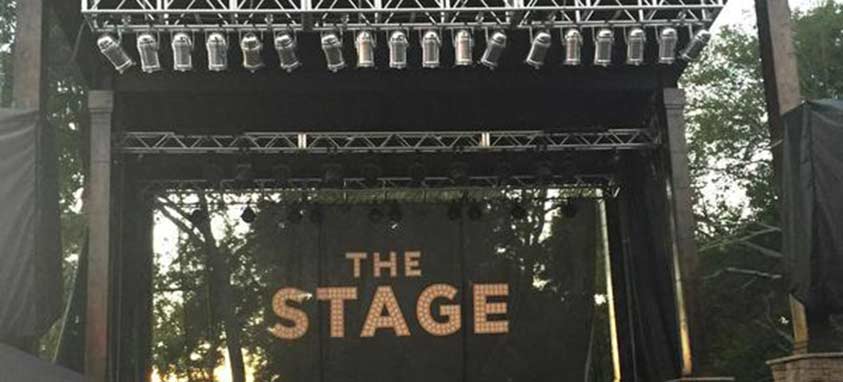
The evening kicked off with a dinner at Silver Star Steakhouse, a barbecue and stake joint that serves smoked meats in a Texas-inspired setting. Next door is The Stage, a new outdoor venue attached to the restaurant. When the barn-style courtyard isn’t stomping grounds for famous country musicians, it’s often rented for receptions and corporate events.

Then it was time for opening acts at Louisiana Music Prize. Locals gathered to hear bands from around the state compete at Voodo Café: An Art Bar in downtown Shreveport. Judges from Austin, Texas, Minneapolis and New York City flew in to rate the musical talent and decide who would go home with a $2,500 cash prize. After the scores were tallied, The Breton Sound from New Orleans was named the winner.

Shreveport, Louisiana

No trip to Shreveport is complete without a visit to Municipal Auditorium, a historically significant concert hall that harkens back to the early days of rock ‘n’ roll. Constructed in 1929, the art deco structure was where World War I soldiers were processed. Later, it became home of the Louisiana Hay Ride, a country music radio show that was broadcast across the country from 1946 to 1960.

The stage, with original floorboards still intact, is where musical legends such as Johnny Cash, Elvis Presley, James Burton and Dolly Pardon found their start. The multi-story building, listed on the National Register of Historic Places, is also rumored to house multiple ghostly beings that, at times, make their presence known in eerie ways. Tour guides attribute paranormal activity to Municipal Auditorium’s location across from the Oakland Cemetery.

Connected to 350,000 sq. ft. of exhibit space at Shreveport Convention Center, is Hilton Shreveport Convention Center Hotel. Within its convenient location is a new addition to the kitchen. Executive Chef Michael Pacheco has worked for top restaurants in New York and California, but he comes to Louisiana to put a spin on deep-fried southern cooking. Our group dined on watermelon gazpacho with lump crab meat, steak and salmon with crayfish and shrimp stuffed spuds and a dry rice pudding with pineapple compote.

Shreveport, Louisiana

At Jimmy’s Seafood & Steak restaurant in Margaritaville Resort Casino, restaurant manager and sommelier Dexter Huewitt elaborated on proper wine etiquette and choice truffle pairings. We learned about the difference between champagne and sparkling wine, how to distinguish different notes and how to pair wine with food. Huewitt holds demonstrations in his restaurant for groups of all sizes.

The next morning began bright and early with a stomach-churning adventure: zip lining over alligators at Gators & Friends, a park and petting zoo. Seven zip lines zig-zag over a pit of alligators sunning themselves not far below. The fun, yet nerve-wracking experience is perfect for groups that are unafraid of heights or large reptiles.

Shreveport, Louisiana
The highlight of our trip was viewing the short film slate at Louisiana Film Prize. Each year, filmmakers from around the country submit short movies shot in Shreveport for a chance to win a prize of $50,000. The films spanned categories of action and adventure, slapstick comedy, romance and drama. After watching all 20 films, audiences voted for their top three choices. In the end, it was The Bespoke Tailoring of Mister Bellamy that won. The touching narrative is about an African American man who tries to make a living collecting empty coke bottles during the period of integration in 1964. The main character teaches himself to sew, and eventually tailors a bespoke suit for himself. Although he is passed over for a cleaning position because of his skin color, he coincidentally meets a wealthy man who is in need of a tailor and admires his handiwork.

Art & Soul

Shreveport and Bossier are two cities on the verge of elevating their local arts, music and culture. The arts community has rapidly grown since 2011, when the Louisiana Film and Music Prize first started. And a number of theaters, art spaces and collectives have sprung up in the last few years to support the burgeoning arts scene and revitalize downtown areas. Shreveport’s artistic reputation is cemented with the presence of Millennium Studios, a film making hub which has produced mass-market movies, such as Expendables 3 and The Texas Chainsaw Massacre. Today, there is no doubt that talent can flourish in a place with a whole lot of heart and a true southern soul.

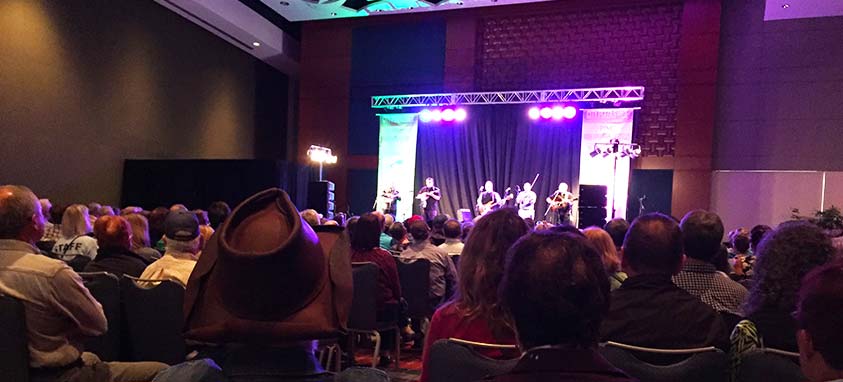
visit-raleighThe amazing event story that unfolded in Raleigh, North Carolina, last week deserves the attention of meeting planners. For the third consecutive year, Raleigh hosted the International Bluegrass Music Association (IBMA) annual convention and followed that up with two days of concerts on six stages. When Hurricane Joaquin showed up on the radar, it became clear that an outdoor street festival and sold-out shows at the downtown Red Hat amphitheater were likely going to get washed out.
Although Raleigh always had a contingency plan to move the street festival and concert stages inside the Raleigh Convention Center, they didn’t have to rely on Plan B the first two years. Things changed dramatically just before thousands of musicians and bluegrass lovers descended on North Carolina’s state capital last week.

“I knew we could do it based on our partnerships,” said Loren Gold, executive vice president of Visit Raleigh. “People come together to solve things. That’s the basis of our community.”

Raleigh’s downtown convention center campus is pretty awesome for citywides, including  two hotels (Sheraton Raleigh Hotel and Raleigh Marriott City Center), the amphitheater and Duke Energy Center for the Performing Arts. The IBMA business meetings were already scheduled for the convention center and the award show took place at the performing arts center on Thursday night, so neither was impacted by the inclement weather.

Outdoor to Indoor Game Plan

But when it came to the street festival and six outdoor stages, that’s where the scrambling skills were needed. For starters, organizers moved the ticketed shows scheduled for the amphitheater inside exhibition halls A and B, marking the first time they had been used for live music. Besides setting up seating for more than 5,000, audio experts worked around the clock to make sure the concerts were unaffected sound-wise by the venue change. There were even two big screens set up (compared to one in the amphitheater) so concert goers could see the pickin’ and grinnin’ as easily as possible.

Next up came the task of where to put the other five concert stages, which offered eight to 10 live performances each day on Friday and Saturday. Two stages were created on the ground level of the convention center, where North Carolina vendors, a beer garden and IBMA merchandise also were located. Then on the ballroom level, three more stages were created, plus a food court.

The only outside event space was in front of the convention center, where a dance tent was covered. (The wooden floor was perfect for clogging.) A dozen or so food trucks also braved the rainy weather outdoors.

It’s pretty spectacular how organizers were able to set up six stages and maintain the same concert schedules that would have been showcased outdoors. They even used the same street locations to name the indoor stages, so attendees who had already decided which acts they wanted to hear could easily move from level to level and room to room inside the convention center.

Musician after musician praised event organizers for the great sound systems that were quickly erected and helped maintained the integrity of the event. And since North Carolina had already received several weeks of rainy weather, attendees welcomed a dry place to enjoy some bluegrass music, taste a little barbecue and explore the trendy convention center, which opened in 2008.

Passionate Minds

“We look for solutions constantly in Raleigh,” Gold said. “They’re finding cures for diseases here. I knew we had the brain power to come together. This is a city of passionate minds.”

If Raleigh can move its largest downtown event of the year from outdoors to indoors in a matter of days, just think what Visit Raleigh can do for your next event. It’s easy to sing the praises of Visit Raleigh after seeing the city showcase its flexibility and passion to ensure that the shows did indeed go on.

SFMOMA Expansion

San Francisco’s South of Market neighborhood is always abuzz, but recently, more so. After undergoing three years of renovations, last week San Francisco Museum of Modern Art announced May 14, 2016 as its official reopening date. For a behind-the-scenes look at what visitors can expect, I went on a hard-hat tour of the construction site.

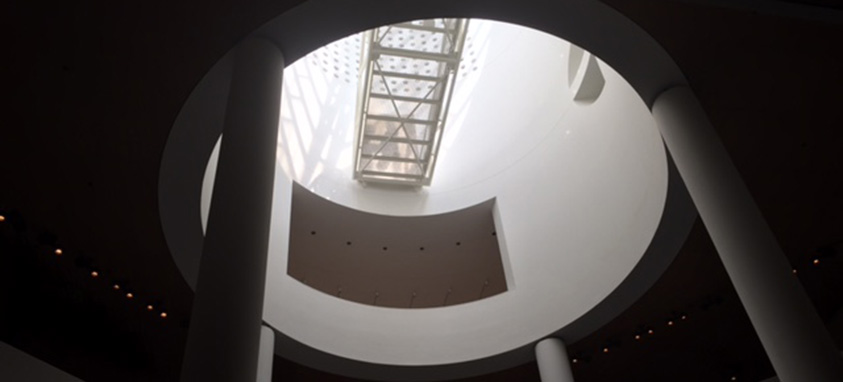
Through a side street entrance, our group entered the first hall, a circular sky-lit area surrounded by black marble and slate. The $305 million SFMOMA expansion leaves no area untouched, and each gallery is as architecturally significant as the next. Norwegian design firm Snohetta has designed the spaces to reflect SFMOMA’s theme of accessibility, openness, engagement and interaction.

The new museum doubles its square footage for a total of 460,000 sq. ft. of exhibit space, and when it opens it will be the largest modern art museum in the U.S. Housed in the Pritzker Exhibit Hall, the photography collection will be one of the largest with more than 17,000 displayed images.

Jill Lynch, director of communications says it will be a groundbreaking space due to a new photo interpretive gallery with digital interactive opportunities. “People can learn about photography and how to take a picture,” she says. “It’s a really interactive space for people to understand the media.”

In addition to the SFMOMA expansion, supporters of the museum have also sought to bolster educational opportunities for youth. A record number of classroom excursions have been booked for next year, thanks to a generous benefactor who has made it possible for all visitors under 18 to enter for free.

Outdoors, SFMOMA will showcase the largest living wall in North America. The industrial space features more than 15,000 native plants across a broad brick-walled expanse. It’s one of two outdoor spaces that will be available for rentals. Another outdoor sculpture atrium on the same level as an upscale restaurant will offer 30,000 sq. ft. of garden space suited for events.

SFMOMA Expansion

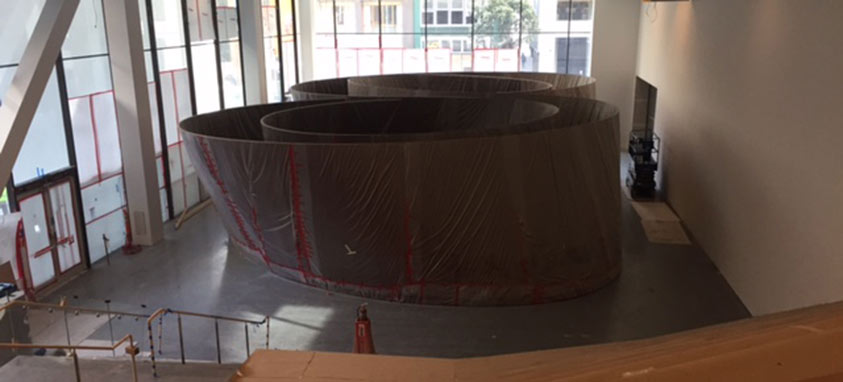
The museum has commissioned a number of dramatic pieces to be unveiled on its opening date. Already on display is a dark maze-like work called “Sequence” by Richard Serra; it’s made of large rings cocooned inside each other and takes up the entire floor space next to the ticketing booth. SFMOMA’s arts campaign committee has already received 3,000 works of art and will display 600 new pieces when it opens.

Visitors will not recognize the outdoor façade, which appears to topographically mirror a desert landscape with hand-cast fiberglass ridges across the 10-story building. It’s a groundbreaking design unlike anything in San Francisco’s skyline.

Where to Stay

SFMOMA Expansion

Across the street from SFMOMA, visitors can stay at InterContinental San Francisco (ICSF), a LEED Gold Certified hotel that blends an eco-conscious ethic with a luxury aesthetic.

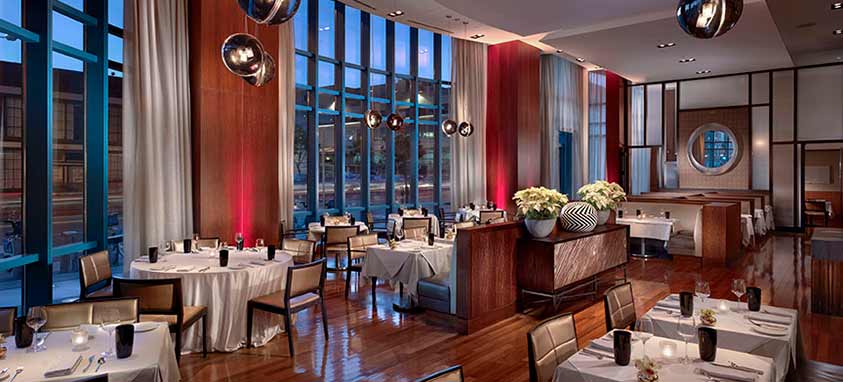
The star of the show at ICSF is Luce, a fine-dining establishment that was recently awarded its 7th consecutive Michelin star. Chef Daniel Corey fuses local, approachable flavors with a global take on modern American cuisine. Our group dined on tartar of prime beef with fermented black garlic; pacific amber jack and trout roe; and handmade sweetbread ravioli with black winter truffles. Corey and his kitchen staff specialize in the sous-vide method of cooking, which creates especially tender meats and vegetables.

As expected, ICSF’s top-tier amenities extend well-beyond the kitchen. We received a behind-the-scenes tour of the property’s green features and energy-saving utilities. After it was awarded LEED certification in 2011, ICSF cut energy consumption and building maintenance costs by half. Today the hotel is one of the top green buildings on the entire West Coast, according to Harry Hobbs, area director of engineering.

Guests can also lower their own carbon foot prints during their stay. By participating in the linen and towel re-use program, lowering use of central air and taking public transportation, the hotel will deduct 10 percent of the bill for each method practiced.

ICSF has 550 guest rooms and more than 43,000 sq. ft. of flexible meeting space, including 21 meeting rooms and two ballrooms.

The Local Experience

For a city that’s only 49 square miles, San Francisco packs a lot of things to do within its diverse neighborhoods and various hotspots. SF Travel Association keeps the city’s best attractions within reach with CityPASS—a booklet filled with free tickets to California Academy of Sciences, Exploratorium, DeYoung Museum and Legion of Honor, Aquarium of the Bay and more. Between dining, tours and tastings, it was easy to see how meeting groups and travelers can combine business with local experiences.