seattle-meetings-destinationLess than 10 years ago, long-time residents were lamenting that Seattle didn’t have the same spirit of adventure and independence any more. Growth was sluggish and prospects for a more robust future were dim. But what a difference a decade makes. Today, Seattle thrives as a meetings destination.

Some of the economic recovery can be attributed to mega companies such as Amazon, which is headquartered in the city, and Google, which has one of its largest offices there. The city prospered due to its widespread technological advances and other attractive offerings as a meetings destination.

Hotels are opening at a steady clip and the Washington State Convention Center recently completed a $20 million refurbishment of its downtown facility. In 2015, Seattle Tacoma International Airport broke its all-time record for passengers served (42 million) for the second consecutive year.

“No one could have predicted what has happened,” says Tom Norwalk, president and CEO of Visit Seattle. “It’s the biggest renaissance the city has ever seen.”

Seattle Thrives as a Meetings DestinationDowntown construction

Development in Seattle

The fun is just beginning. Seattle had 79 construction projects underway as of December and 3,000 to 4,000 hotel rooms are now in the pipeline.

Two upcoming projects will have major ramifications for the meetings industry. A convention center hotel, the largest in the United States north of San Francisco, is being built two blocks north of the convention center, in the heart of downtown Seattle. The $450 million, 45-story building will provide 1,260 guest rooms and 105,000 sq. ft. of meeting and ballroom space. It will also include nearly 30,000 sq. ft. of restaurants, bars and lounges.

“There has been tremendous customer interest in the hotel,” Norwalk says, adding that several hotel companies have expressed interest in the property, which is scheduled to open in 2018.

Seattle Thrives as a Meetings DestinationWashington State Convention Center

The other big news is that plans are in the works for a huge addition to the convention center, which currently provides 414,722 sq.ft. meeting and exhibit space. The addition, to be completed by 2020, would be located one block from the current facility. It would include 250,000 sq. ft. of meeting space on two levels, 120,000 sq. ft. of meeting space, a 60,000-square-foot ballroom and a full-service kitchen.

“It would feature plenty of natural glass and light,” Norwalk says. “The issue is how to find a way to pay for the project—it would cost about $1.5 billion.”

These two large facilities are intended to help address Seattle’s growing appeal as a destination city for meetings. The city has lost out on 350 potential meetings during the past five years due to lack of sufficient space.

Seattle Thrives as a Meetings DestinationReception at Motif Seattle

Part of Seattle’s problem—though in one sense, a desirable one to have—is that meeting groups tend to love the city. Around 20 percent of participants tack on days before or after their meeting, and more than 60 percent of groups coming to Seattle have come before.

Plus, more groups are coming from overseas. In particular, some 4 1/2 years ago Delta Airlines expanded Seattle’s visitor base by serving as a hub for flights to and from Asia.

Norwalk, a native of Seattle who left in 1982 but returned in 1989, is thoroughly enjoying his hometown’s renaissance. “It’s a lot of fun—it’s as good as it gets,” he says.

psychology-for-meetings

In a now-famous 1943 paper entitled “A Theory of Human Motivation,” psychologist Abraham Maslow identified a psychological hierarchy of needs that remains a popular framework in a wide variety of fields, including management training. A new white paper from FreemanXP, a San Francisco-based brand experience agency, suggests that planners can apply Maslow’s psychological theory to meetings.

The author, FreemanXP’s vice president of strategy and planning, international Niru Desai, believes that attendee engagement can be maximized when meetings are purposely designed to address attendees’ wants and needs. She points out that these needs morph throughout the life of an event. “From proper guidance to different venues and speaker times to making connections and having fun, the needs span a wide universe. By tracking these needs as an event unfolds, we can design unique and engaging experiences to satisfy them—deliberately, on-time, and as they arise,” she writes.

Desai acknowledges that identifying and meeting attendee needs can be challenging, however social media, mobile apps and other digital engagement tools that provide real-time data can allow planners to monitor, adjust and amplify the attendee experience.

Maslow’s Psychology: A Hierarchy of Needs

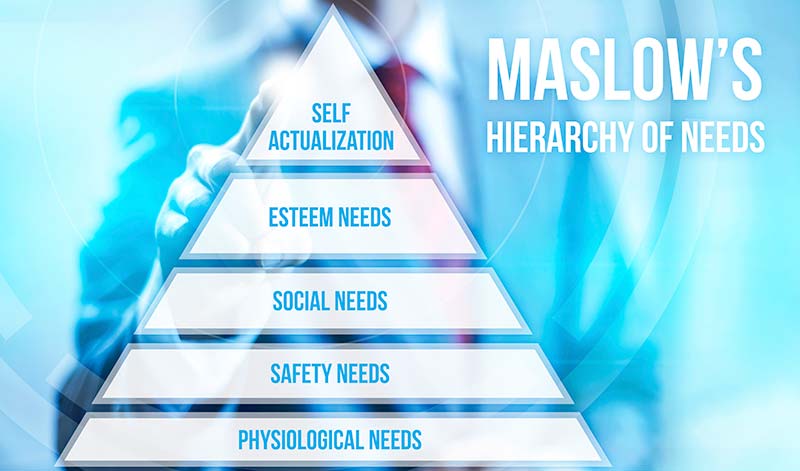
Maslow’s hierarchy of needs is often expressed in the shape of a pyramid. Basic physiological needs such as food, drink and shelter reside at the base, while self-actualization, the highest of the five levels he identified, is at the top. In between are safety, love and self- esteem.

maslow-psychology-for-meetingsAccording to Maslow, basic fundamental needs must be met before humans can progress to higher levels . Similarly, Desai suggests that planners must ensure that the basic needs of their event attendees are met before attempting to engage them with deeper, “self-actualization” experiences.

The base of the meeting pyramid hierarchy of needs would include factual information about the venue, speakers and events that will take place over the course of the conference. Desai recommends providing these basics before attendees arrive, while at the same time ascertaining how attendees would prefer to receive communication throughout the event.

Then, Desai says, offer them the tools that will help them navigate their own preferred experience and rise up the pyramid. The goal is to provide relevant and insightful value that they will share with their networks. This self-actualization meeting experience may come about as a result of the level of access you provide to experts throughout the conference, or the engaging interaction the attendee experiences with others.

“By giving them the opportunity to engage with a community as well as get recognition and respect, their hearts begin to open to deeper experiences,” Desai writes. You want attendees to leave your event with a sense of purpose and achievement, and share what they have experienced with others.

She points out that all event attendees want to grow, evolve and learn. “Their attendance is driven by these wants. For Maslow, this is the meditational stage of self-actualization,” she writes. “What they take away will extend your event long after the lights go out.”

Five Levels to Meeting Self-Actualization

Using Maslow’s pyramid, Desai illuminates the five levels meeting attendees may progress through.

Level One. The base level guides attendees, making them feel more secure about attending the event. Effective tools for guiding employees include a mobile app, live onsite support and the introduction of social media tools related to the event. When attendees feel confident, they will be more open to the possibility of deeper engagement.

Level Two. When attendees feel comfortable about their surroundings, they will advance to the next level, which is value. Offer attendees a valuable experience by providing short, bite-sized presentations, access to experts, lots of visuals and social media platforms that they can engage with.

Level Three. Attendees want to interact, share their experiences with others and become a part of a community. Encourage connection and maximize networking opportunities. These deep emotional connections will make their individual experience stick.

Level Four. At this level, participants will most likely have formed important and lasting impressions about the experience and your brand. They may be open to contributing after the event ends, helping develop the content or experience for future meetings.

Level Five. At this highest level, attendees will incorporate what they gained at your event and share it with others both professionally and personally. Encourage this by providing tools that will enable them to continue sharing the content long after the event, and drive the future long-term success of your business by attracting return attendees, increased sponsorship and press coverage.

team-building-ideasIt’s easy to fall into the trap of cliched, uninspired activities when planning a team-building event or corporate retreat. Activities such as trust falls have been used so often that they’re no longer very effective, and attendees might actually groan at the mere mention of them. So how do planners keep team-building events fresh, fun and effective? In a blog for Huffington Post, Brian Hughes, CEO and founder of Integrity Marketing & Consulting, shares four simple tips, paraphrased below, that will help planners do just that.

Make sure everyone’s on the same page: If team members are not on the same page, it’s difficult to have productive discussions. To avoid this, start your event with a card-sort exercise. Attendees are given identical stacks of cards with a word or phrase on each card, such as “customer service” or “culture.” They must rank the cards in order of which issues they believe will have the biggest, and most immediate, impact on the company. Clearly defining the company’s strengths and weaknesses will help resolve any perception gaps and make sure everyone understands the goals of the retreat.

Brainstorm about an ‘ideal’ competitor: Rather than asking the age-old question, “How can we make our company better?,” why not try a different approach? Instead, ask your team, “What kind of competitor could put our company out of business?” By imagining your ideal competitor and brainstorming a strategy to defeat it, you’ll be looking at things from a new perspective that could reveal previously unseen vulnerabilities and inspire new tactics for success.

Give out thoughtful, unexpected gifts: Do away with the usual corporate gifts such as T-shirts, bags and other knick-knacks plastered with the company logo. Instead, take some time to think about what gifts and incentives would inspire and motivate your attendees. Cash incentives are one option, but more creative choices can be far more satisfying for recipients. Offering unusual experiences such as luxury getaways or flying lessons can give attendees memories that will last a lifetime.

Find creative ways to build team unity: Obstacle courses and golf outings have been done a million times over. Keep things fresh by considering some out-of-the-box options such as glow-in-the-dark team-building ideas, adventurous outdoor activities such as hiking, and escape rooms and scavenger hunts that will surely boost team bonding and cooperation.

hotel contract

On March 15, 2016, Lisa Sommer Devlin of Devlin Law Firm P.C. presented a webinar entitled “Problem Contract Clauses and How to Avoid Them.” The Arizona-based attorney has practiced law since 1984, concentrating in hospitality law since the early 1990s. She drafts standardized contracts, provides legal training for sales staff, and handles convention- and meeting-related litigation nationwide for major hotel chains.

Devlin was not able to answer all the questions posed to her while speaking live. She graciously addresses some of the unanswered questions below.

If you missed the free webinar or would like to access it again, here is the link.

Devlin Answers Webinar Questions

Would you mind covering again how to estimate a hotel’s estimated profit for F&B and rooms?

You should determine your minimum commitments in both areas and then discuss with the hotel its range of overall profits for each item (the hotel will not disclose actual figures, which are confidential and trade secret), and apply an estimated profit percentage to the revenues committed. Remember, your damages do not have to be based on profit or reference profit, but damages should not be more than a fair estimate of overall profit.

How do you recommend addressing confidentiality when the information that is confidential is the name of the client, and the fact that they will be hosting their event in this particular location/venue?

If the client will be signing the contract you have to disclose it and ask the hotel to agree that the hotel will not disclose or advertise that the client is holding the event. If the client does not want the hotel to know it is there, then the third party agency will have to sign the contract and not disclose the name, and the third party will be responsible under the contract. That is not really recommended, as it would be virtually impossible for the hotel to never find out the identity of the client over a several-day meeting.

What is your opinion on reciprocal cancellation…. when the hotel wants to cancel your agreement for a larger piece of business that will utilize the entire hotel. Shouldn’t the hotel be held to pay damages to the client in the same way they expect the client to pay?

Reciprocal cancellation is a very bad idea! The damages that a group suffers when a hotel cancels it have nothing to do with the damages that a hotel suffers if the group cancels. Even if there is no clause about the hotel cancelling the group, the hotel will be legally responsible for paying the increased costs that the customer incurs in moving the event, which can vary widely. For an article explaining the dangers of “mutual” or “reciprocal” cancellation clause, see my website: www.devlinfirm.com.

Should there be a clause that holds the hotel liable for any known food allergies/dietary restrictions if the planner specifically states in writing about participants requiring specific foods?

I have not seen clauses like this being requested. The hotel in general has a legal obligation to adhere to safety requirements and not to injure its guests. It can be difficult in a large hotel kitchen that is preparing foods for many events each day it to certify that all items are 100% gluten-free, or meet other restrictions. The key if you have attendees with allergies is advance planning and good communication, which includes documenting allergy issues, and meeting with the chef and banquet captains to ensure that items are properly marked and segregated. Of course, the attendees also need to take responsibility for good communication and making their needs clear.

I have noticed that the hotels are now charging resort fees. How can I prevent a hotel from imposing a resort fee if one was not in place when the contract was signed?

It is very difficult, as hotels will be reluctant to agree that they will not apply any new fees to your event. You can request such a clause, but it will be unlikely that the hotel will agree.

corporate sponsors for events

Meeting planners are taking note of this year’s Special Olympics Chicago’s Polar Plunge fund-raiser, which drew in a record-breaking $1.5 million, partly due to its heightened effort to obtain more corporate sponsors.

The annual Chicago event, in which participants go ankle-high, knee-deep or take the full plunge into the frigid waters of Lake Michigan, was held on March 6. It featured eight new sponsors this year—Peoples Gas, Yelp, Lyft, Sprint, Sports Authority, Redbox, Chicago Athletic Clubs and Body Gears Physical Therapy.

“The Chicago Polar Plunge has become an iconic Chicago event with remarkable growth over the last two years, so we certainly did make sponsorship more of a priority than ever before,” Katie Hardiman, senior development manager for Special Olympics Chicago told Bizbash.com.

Polar Plunge attracted 6,000 participants—including Lady Gaga and Al Roker of the Today television show—a 35 percent increase from 2015.

Based on the success of the event, Hardiman offered five tips to attract corporate sponsors.

  1. Promote group participation: By adding eight new sponsors, Polar Plunge quadrupled its monetary support. Five of the new sponsors had teams that participated, which brought in thousands of dollars.
  2. Maximize sponsors’ involvement in the cause: Two of the new sponsors—Peoples Gas and Chicago Athletic Clubs—have become involved in other Special Olympics Chicago initiatives, thereby providing it with additional support.
  3. Know your event’s selling points: Special Olympics Chicago staff emphasized to prospective sponsors that they would have an opportunity to not only transform the lives of 6,000 athletes, but also help their own company connect with the local community, build brand awareness and improve employee engagement.
  4. Be discriminate: The Polar Plunge team was careful to target potential sponsors who would benefit from participation and then tailored the company’s sponsorship to best suit its needs.
  5. Communicate ROI: After the event, the Polar Plunge team compiled sponsorship fulfillment reports for each sponsor, with analytical details and anecdotes. The reports show how much exposure each sponsor received and the type of media coverage for the event.

Special Olympics Chicago has partnered with the Chicago Park District since the first International Special Olympics Games were held on July 20, 1968 at Soldier Field. More than 5,000 athletes have participated in Special Olympics Chicago, which offers year-round sports training and competition in 22 sports for children and adults with intellectual disabilities.

Special Olympics Chicago participants also build courage and establish friendships with other Special Olympics athletes and the community.

site-selection

One of the key tasks facing meeting planners is site selection. First, you have to figure out which destination will entice and inspire members of your organization. Then you have to find suitable meeting spaces and lodging. Then it’s F&B, then decorations, then…you know the drill.

Social Tables, a meetings and events company that utilizes software to help planners and suppliers work together online, has released a new report on the site visit process. The new downloadable eBook features best practices, benchmarks and tips to help properties close more deals. It’s based on a survey of 700 respondents in the meetings and events industry who were asked about ways they thought site visits can be improved.

To download the report, click here.

The report, entitled “The Site Visit Revisited,” reveals that there’s a major disconnect between planners and properties, especially with regards to cost as a priority in the venue sourcing process. The report concludes that planners value cost as the second biggest concern after location, while properties believed cost was the last priority for planners.

Reasons planners choose an event space according to the survey are:

1. Location

2. Cost

3. Meeting space

4. Other (includes timing, available dates and contract specifics)

5. Amenities

Reasons properties think planners choose an event space according to the survey are:

1. Location

2. Meeting space

3. Other

4. Amenities

5. Cost

According to the 350 planners surveyed, the group averaged hosting 37 events a year, with 56 percent requiring site visits. That translates to planners organizing 21 events a year that require a site visit.

When asked about the primary purpose for going on a site visit, planners noted their No. 1 objective was to assess aesthetics—the look and feel of an event space. Logistics and trust rounded out the top three priorities.

The report notes that site visits represent a unique opportunity to kick off lasting relationships between planner and properties. Properties need to adapt to the changing complexion of their buyers, site visits are the piece of the event sales puzzle that offers the greatest room for improvement.

Smart Meetings Simplifies Site Selection

Smart Meetings 360, Inc. saves meeting planners time by assisting with the site selection process. Once planners, office managers and administrative assistants begin to narrow down the destination organizations want to stage an event, the Smart Meetings 360, Inc., team of experts will step in to help with determining which site is the ideal fit for an event. Smart Meetings 360, Inc., which has assisted more than 500 clients on event sourcing, works with more than 200,000 domestic and global properties.

Knowledgeable experts are with you every step of the way, including handling the RFP process. For assistance with site selection, email the Smart Meetings 360, Inc. team at [email protected]


Want to learn more? Make site selection simple with Smart Meetings 360

game-plan-efficient-meetings

March Madness is bringing out the basketball fan in everyone…and providing some inspiration on how to make meetings more efficient. A recent posting on the Harvard Business Review website suggests that the same shot clock used by the NBA and NCAA to quicken the pace of the game could make meetings more efficient.

In the article, Bob Frisch and Cary Greene of Strategic Offsites Group, a Boston-based consultancy, argue that at most meetings, early proposals get debated but those at the bottom of the agenda are often tabled due to lack of time. The shot clock, which was implemented in basketball to discourage teams from passing the ball endlessly without penalty, would be helpful in the workplace because it would guarantee that all agenda topics are addressed, and that time is not wasted going over the same old material.

The Game Plan

Here is how they envision making meetings more efficient. Before the meeting begins, mutually agree upon how much time and discussion should be devoted to each topic on the agenda. Then, set up a “shot clock” (an actual clock or a smartphone notification sound) to buzz loudly when time runs out. People must immediately stop talking when it goes off.

The technique has several appealing features. Impersonal and fair, the device prevents certain individuals from dominating the conversation. It limits the over-analysis of ideas, keeping meetings lively, focused and sharp. It will also make meeting attendees think and speak more succinctly. In the beginning employees may resent being interrupted, however over time they will become skilled at managing the clock and will conclude their remarks before the buzzer sounds.

A Goal of 30-Minute Meetings

In a separate posting on Harvard Business Review, author/consultant Peter Bregman of Bregman Partners discusses the benefits of compressing time. Instead of allocating an hour for a task, he gives it just 30 minutes. He has found that this not only saves him time, but makes him much more efficient.

He applies his concept to everything from talking on the phone to working out at the gym. He has discovered that compressing one-hour meetings down to 30 minutes is a great idea that saves everyone time and money. He notes that it puts everyone into high gear—attendees arrive on time and don’t waste precious seconds chitchatting. People put more thought into what they say, and are better listeners because when conversation moves quickly, they have to be more alert. They are also more likely to come arrive prepared because they must get right down to business.

Bregman has discovered that the self-imposed time constraint enhances focus and makes meetings more powerful. He advises those who want to try 30-minute meetings to begin on time, even if certain individuals have not arrived. Stay on topic and make decisions to generate forward momentum. Save the final five minutes of the meeting to summarize key points and clarify next steps.

green-meetings3

Thanks to amazing new innovations in sustainable technology and processes, it’s now easier than ever to plan green meetings. When it comes to sustainability, a little goes a long way—a few simple changes can make a big difference in your event’s carbon footprint. Here are six green changes you can make for your next event:

1. Choose a Green Venue

Selecting an eco-friendly venue is one of the best ways planners can minimize the carbon footprint of their event. For your next event, consider a LEED-certified venue equipped with modern systems that conserve electricity and water, such as energy-efficient lighting and smart temperature controls. Planners should also ask about a hotel’s waste management processes, including recycling and composting policies.

2. Use ICAO’s Green Meetings Calculator

Having trouble selecting a sustainable destination? International Civil Aviation Organization (ICAO) has created an app that makes it easy to discover which meeting locations will have the smallest impact on your carbon emissions. The calculator ranks the best destinations for you based on information such as the number of participants and the city of origin. ICAO Green Meetings Calculator is available for download from the Google Play store and Apple Apps store.

3. Select Locally Sourced Food and Beverage

eat-local

Food and beverage is one of the most important factors to consider when planning a sustainable meeting. It’s best to choose local and seasonal fruit, vegetables and meat whenever possible. Local foods have smaller carbon footprints and are often fresher and tastier, as well. These days, the farm-to-fork movement and growing popularity of craft beers and local wineries have made it much easier to find reasonably-priced local food and beverage options.

4. Donate Leftover Food

According to a National Resources Defense Council report, 40 percent of food in the United States goes uneaten, while one in six Americans is experiencing food insecurity. Instead of throwing leftovers in the trash, planners can donate uneaten food to local charities and soup kitchens. Many hotels and convention centers already have donation programs and partnerships in place, so this is one simple change that can make a huge impact.

5. Organize Sustainable Activities

Take some activities outdoors—not only will it boost event sustainability, your attendees will surely appreciate the change of pace. Cleaning up a local beach or planting trees can be a creative networking activity that doubles as an opportunity for attendees to give back to the community. City-wide scavenger hunts are a great team-building option to get people moving, working collaboratively and exploring their environment.

6. Use Sustainable Dinnerware and Packaging

Plastic forks, water bottles and Styrofoam containers are both wasteful and harmful to the environment, in part because they do not naturally decompose the way organic material does. When it comes to sustainability, reusable dinnerware is usually the best choice. But for lunch boxes and situations that require disposable forks and packaging, there are now many green options, including biodegradable or compostable dinnerware made from recycled materials.

mpi-md medical meetings

With the healthcare meetings community growing quickly, Meeting Professionals International (MPI) has launched an initiative to better support this complex and highly specialized niche. MPI has developed the MPI-MD membership community and advisory council, which is tasked with supporting and promoting medical meeting professionals through an exclusive online member community, private consulting, education, career development programs and other resources. To provide even more assistance for medical meeting professionals, MPI has also created more healthcare meeting education opportunities for its 2016 World Education Congress (WEC), which will be held in Atlantic City in June.

MPI President and CEO Paul Van Deventer said, “Medical meeting professionals operate in a very complex regulatory environment and as a result, this segment of our membership has campaigned for more specialized training and resources. Since acquiring the HMCC Program almost two years ago, we have expanded our offerings to include healthcare webinars, the HMCC Refresher Course, the CMP-HC Prep Course, and now MPI-MD. We anticipate the MPI-MD advisory council and community will be instrumental in shaping our healthcare meeting education for years to come.”

MPI-MD is essentially an evolution of International Medical Meeting Professionals Association, which had been dissolved after MPI acquired the organization’s Healthcare Meeting Compliance Certificate in 2014. MPI-MD’s membership already includes more than 800 planners and suppliers. The community is led by Pat Schaumann, CMP, CSEP, DMCP, HMCC, who is MPI’s director of professional development – healthcare sector.

The MPI-MD Advisory Council, which plans to have its first meeting during WEC 2016, consists of leading healthcare meetings experts. Council members will serve a two year term that ends in December 2018. They will provide expert knowledge for the MPI-MD forum within the MyMPI Online Community, as well as offer guidance for curriculum design.

For more information about MPI-MD, visit www.mpiweb.org/membership/mpimd.


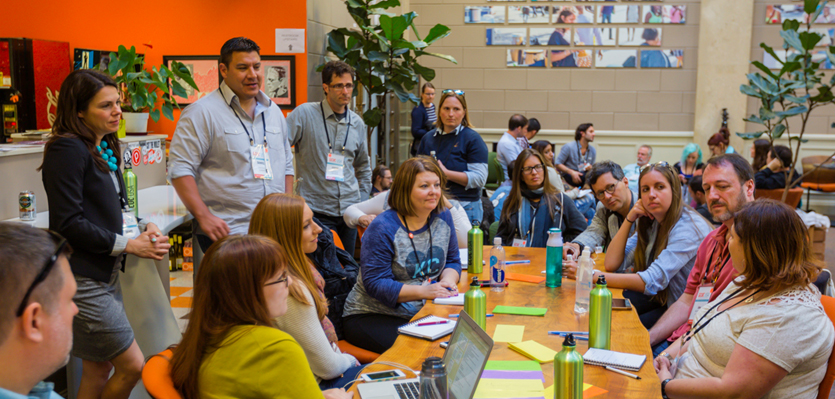
Attendees at the 2015 GCUC.Attendees at the 2015 GCUC (Photo courtesy Liz Elam/GCUC)

Though the theater-style seating concept will always be one of the most common ballroom floor plans for keynote speakers and presentations, today’s attendees and hosts are looking for any excuse to get out from behind the podiums and banquet tables and break away from the traditions of conventions.

On every press trip, when the conventions/meetings director is asked what new trends they’re seeing and what today’s planners want most, the answer is the same: flexibility. Rooms that allow for new set ups, out-of-the-box break-out sessions, and unique presentation styles are at the forefront of planners’ wish lists.

In February at Meeting Professionals International Northern California, Spin Planners Chairwoman Shawna Suckow started her session on engaging audiences by asking everyone to get up out of their seats. From there, the attendees formed discussion groups and were asked to walk to one corner of the room or the other to indicate their answer to the questions posed by Suckow.

It was a rare sight; attendees were energized, laughing, moving, sharing, and talking as much as the “speaker.”

More often, unconconferences, as they’ve come to be called, are the new norm for hosts who want to encourage a new kind of meeting where brainstorms, decisions and even agendas come from those in attendance.

This May, the Global Coworking Unconference Conference (GCUC) will take place in L.A., where Austin-based coworking expert Liz Elam will host four days of unconference. (Except, not really, because an unconference, by definition, is run by the attendees).

What began as a half-day unconference at a 2009 South by Southwest (SXSW) festival in which attendees wrote their discussion topics on a wall, became an international meeting held several times throughout the year in Canada, Southeast Asia, China, Latin America and the U.S.

A GCUC 2015 attendee posts a topic on the wall. A GCUC 2015 attendee posts a topic on the wall (Photo courtesy Liz Elam/GCUC)
Today the conference is divided into curated and non-curated tracks, where topics are written, voted upon, and discussed. Curators are there to merge like-minded topics together and keep the discussion moving forward.

“The unconference is the highest-rated portion [of the event] year after year,” said Elam. “Everyone has the chance to speak at an unconference. A lot of times people think their questions are dumb and there is a fear around asking questions. Unconferences invite you to ask questions and it really helps move people beyond their fear.”

In a Forbes interview with unconference facilitator Joshua Kauffman, he explained why many events are moving towards this structure (or rather, unstructure).

“So much of life and work is overly structured that it doesn’t give us, or our ideas, the room to run and grow freely. By contrast, the unstructured, high-energy environment of the unconference amplifies ideas.”

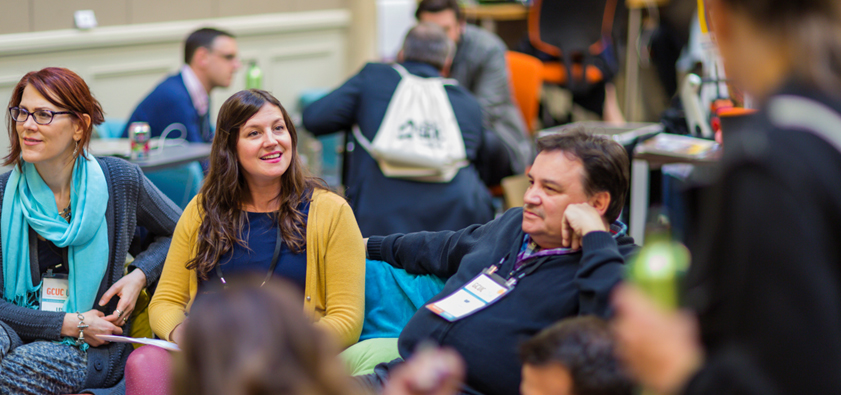
Attendees at GCUC 2015 unconferenceAttendees at GCUC 2015 (Photo courtesy Liz Elam/GCUC)

The idea is far from new, but what was once popular in coastal cities for smaller meeting groups is expanding, both in terms of destination and physical size. Kauffman has facilitated MASSTLC’s Innovation Unconference in Boston, which draws more than 1,000 entrepreneurs, executives and students.

Of course, this concept doesn’t work if you need a set agenda. Elam says at GCUC, curators don’t plant topics, manipulate the conversation, or accept payment for speakers on stage, to keep everyone and every topic on an even keel.

So if you’re struggling to gain valuable feedback from your conference attendees, considering giving them a voice, canceling the keynote, and inviting them to an unconference.