Flight DelaysWelcome to airport hell. Thousands of travelers at airports all over the country were stranded for hours this morning when United Airlines grounded all of its planes and caused massive flight delays after what the airline described as a “network connectivity issue” interfered with flights ops.

In a futile effort to relieve impatient and frustrated passengers, at least one United flight crew went as far as offering restless passengers tours of the flight deck, but that did little to satisfy the unrest.

Social media sites exploded with myriad unhappy hashtags and photos of huge airport crowds while the flight delays were in effect. Photographer Kristina Lee captured an image of a winding line she was stuck in at LAX.

My line…. (It wraps around twice) think I’ll make it? #unitedsucks #lifeofaphotographer @thefranze A photo posted by kristinaleephotography (@kristinaleephotography) on

Sharing frustration with all your internet friends can help, but many grounded passengers never get beyond the anger stage. When faced with long flight delays, there are other ways to deal with an unexpected chunk of time stuck in the airport that will help keep your sanity intact.

Grab a Bite (or a Drink)

Unless you’re catching a red-eye flight, there are typically several sit-down restaurants open for business near the terminals and gates. Beat the rush to the bar and you’ll be sipping a cocktail or glass of wine and awaiting a juicy burger before dozens of others crowd the place and stare at you with envy. Sign up for text alerts from the airline you’re flying in case the delay ends earlier than expected. Some airlines will even reimburse F&B expenses you incur during the flight delays.

Go VIP

Step away from the angry hordes. Airlines’ VIP lounges are much more relaxed areas to wait out a delay—and many offer free snacks and/or drinks. If you’re not already a member of the airline’s loyalty program or triple-platinum elite club, you can often pay a small fee for access to the VIP lounge, or even join on the spot.

Skirt the System

If the delay is the result of a mechanical issue or anything not related to weather, you may be able to have the airline put you on a different flight, even with a different carrier. The airline’s app or a flight aggregator such as kayak.com (or corresponding mobile apps) can help you find alternative flights that you can request to be switched to.

Entertain Yourself

Get a jump on your in-flight entertainment by making it a pre-flight diversion. Tune out the chaos and start reading your book or watching that movie on your laptop or iPad, and with a little luck the delay will be over before you realize how long it’s been. Even if you’re waiting on a long-haul flight, there are ways to extend your entertainment options.

Misery Loves Company

If you can identify another delayed passenger who seems to be handling the wait without a hefty helping of rage, commiserating with them can lead to interesting conversation and even new friends. A good place to look is at the bar. Someone sitting calmly with a beer in hand may well be in the same, sanity-saving state of mind as you are—as long as you followed the first tip and got their before the angry mob. Alternately, call friends or family members to share your horror story. Laughing about it goes a long way toward not letting the frustration well up.

Loyalty ProgramsMillennials seem like a hotel marketer’s dream. They’re tech savvy, they’re business-minded, they have disposable income, they’re not shy about giving their personal info and they frequently travel for business and pleasure. However, a study done by Software Advice earlier this year shows that only 14 percent of millennials ages 18-34 belong to hotel loyalty programs.

“In the next five to 10 years, as millennials enter their peak earning years, this generation will provide the majority of spending for travel and leisure,” says Mary Miller, vice president of marketing for Stash Hotel Rewards.

With this demographic with proven propensity for travel about to explode, how can hoteliers bring them into the fold?

Discounted Rooms

More than half (51 percent) of millennials surveyed said they’d participate in hotel loyalty programs if doing so gave them the potential for free or discounted rooms. Millennials are notorious for doing their research and selecting the best deals on rooms rather than making their decisions based on hotel brand.

“It’s not a disloyalty,” says Jeff Fromm, president of FutureCast, “They’re willing to do a little more homework and they’re more savvy.” Offering them an “exclusive” discount or tips this balance in favor of loyalty programs.

Easy Earnings

Among those that had already joined a hotel loyalty program, 41 percent said they did so because rewards were easy to earn. Offering rewards—be they discounts or other incentives–early and often has the potential to get more millennials on board.

Little Freebies

Millennials also tend to enjoy the “surprise and delight” factor. This mostly amounts to small gifts, such as a free glass of wine on arrival or a package of chocolates or cookies—anything that has the effect of making them feel like a special and valuable guest. The study points out an example of a guest of the Gaylord Opryland Hotel who tweeted the hotel about the Sharper Image clock radios they have in their rooms. Next time the guest stayed there, the hotel gifted her with one of the clock radios, along with a handwritten note. The guest blogged about it and the hotel got a lot of good press—and a few more loyal customers.

Go Mobile

Millennials love their gadgets and mobile apps. Of those surveyed, 58 percent said they would find a mobile app for loyalty programs “very” of “moderately valuable.” Promoting the app at guest touchpoints and having rewards—and how gusts can use them—clearly outlined on an apps home screen could have an impact on whether millennials download the apps and join the loyalty programs.

Eco-Friendly MeetingsWith the ever-increasing demand to go green in every thinkable manner (really, a 1-square meter portable house?), the meetings and events industry is coming under more and more scrutiny for having a heavy carbon footprint.

In a recent Smart Meetings webinar co-hosted by Paul Salinger, VP of marketing for Oracle, and Shawna McKinley, directors of sustainability with MeetGreen, the question of whether meetings and events can ever reach the point of being sustainable came up multiple times.

While the goal of making the answer a definitive “yes” is something the industry is still striving for, there are plenty of ways to green it up and plan more eco-friendly meetings right now.

Shorten the Paper Trail

Reducing print collateral is one of the biggest and easiest ways to lighten an event’s eco-footprint. Putting schedules, maps and other information into a mobile app attendees can download to their phones cuts a tremendous amount of paper out of the equation. Services like Guidebook Builder can help with this for little or even no cost.

For material that absolutely must be printed, use two-sided printing to halve the amount of paper used.

Make Green Planning Choices

Thinking green from the get-go can have a huge impact on eco-friendly meetings. Choose a venue with a silver, gold or platinum LEED certification to know that many behind-the-scenes aspects of your event are handled in good green fashion—and supporting these environmentally conscious venues encourages other venues to do so.

When purchasing supplies, giving priority to products made from recycled materials can not only make you feel good about going green, but also reduce expenses.

Green Eggs & Ham

Food is another huge source of waste, especially with larger events. Selecting buffet-style menus keeps the amount of food used as efficient as possible, and donating all leftovers reduces the amount of waste to as close to zero as you can get—and helps local communities in the process.

Using silverware and ceramic or even china dishes instead of their disposable counterparts lends an air of class to your meeting, and deepens the shade of green in eco-friendly meetings. Plus, if you chose a LEED certified venue, the dishes should be washed with recycled water.

Keep current on the latest meetings industry tips and tools. Subscribe to Smart Meetings magazine – FREE.

What’s the coolest trend in meetings? Getting high, of course. No─we’re not talking recreational use of marijuana. We’re talking about holding events in venues that are high enough to give attendees spectacular views of cityscapes and beyond.

Here are a few favorites for planners to consider, as tall venues take meetings to a higher level:

Waldorf Astoria New YorkTall Venues Take Meetings to a Higher Level

The Waldorf Astoria New York recently expanded its famed 20th floor rooftop garden and beehive sanctuary, doubling it in size for use as a private reception space and airy locale for culinary demonstrations. Groups can reserve the space for events or book the exclusive beekeeping experience as a breakout activity.


The Amway Grand Plaza Hotel, Grand RapiTall Venues Take Meetings to a Higher Levelds, Michigan

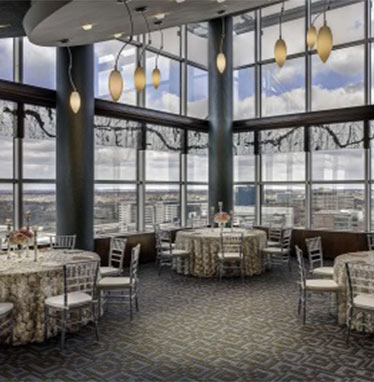
The Pinnacle Room located on the 29th floor of The Amway Grand Plaza Hotel showcases the surrounding city of Grand Rapids and the Grand River with its breathtaking floor-to-ceiling views. The hotel consists of countless meeting rooms with views, including the Latin-inspired restaurant Cygnus 27 that will leave meeting-goers raving.


Kitano New YorkTall Venues Take Meetings to a Higher Level

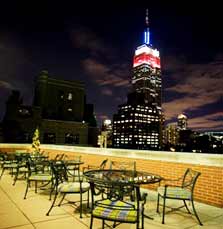
The Kitano New York – NYC’s only Japanese-owned hotel – offers private rooftop BBQs for groups on the hotel’s 18th floor Penthouse outdoor terraces, flanked on either side by majestic views of both The Empire State and Chrysler Buildings. Groups can choose a selection of BBQ favorites grilled over charcoal and oak wood for the true summer grilling sensory experience overlooking a breathtaking cityscape.


Hilton San Francisco Union SquareTall Venues Take Meetings to a Higher Level

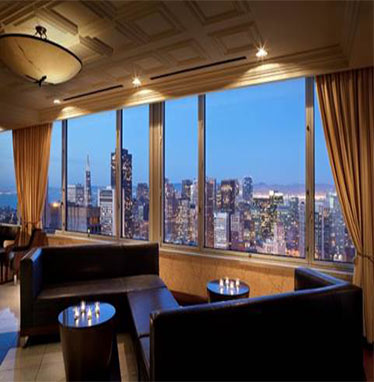
Perfect for groups of up to 100 people, the Vista Room on the 45th floor of Hilton San Francisco Union Square features sweeping views of downtown San Francisco. At 1,675 sq. ft., the space is completely customizable for groups and is a scenic option for private events taking place during major conventions at San Francisco’s Moscone Center.


The Ocean Resort ResidencesTall Venues Take Meetings to a Higher Level

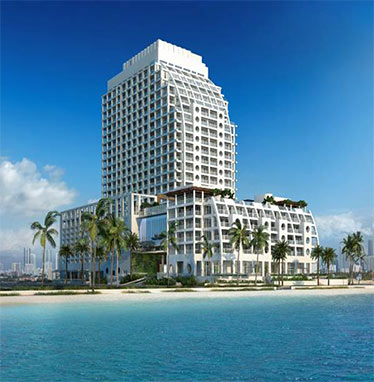
The Ocean Resort Residences can offer meetings in a 360-degree, glass-enclosed area. This space, called the “Jewel Box,” is suspended in air between the property’s East and West towers and overlooks Fort Lauderdale’s beach strip, the Atlantic Ocean and the Intercostal Waterway.


Time Management MistakesAlthough busy event professionals regularly check their email and update their to-do lists, it often feels like the day races by and ends with tasks left undone. Fastcompany.com has identified what it considers to be the top five time management mistakes. How many of them are you guilty of committing?

1. Failure to prioritize. Creating a to-do list can organize your thoughts about what you might want to accomplish in a given day, however it is more important to prioritize the tasks. Instead of focusing on all that could possibly be addressed, or what you would prefer to do most, narrow the list down to the most crucial task(s). Even though they are the most important, oftentimes they are the tasks we procrastinate upon.

2. Overestimating how fast a task can be completed. This is particularly troublesome for overachievers. They believe something will take just a few minutes, but it winds up taking a half hour or more of their precious time. To overcome this common time management sin, realistically calculate how much time you believe a task will take. If it totals a half hour or more, block it out on your calendar. Each morning, schedule the upcoming day in half-hour blocks, leaving some room for the unexpected.

3. Getting distracted. Top distractions include email and paper clutter. Experts recommend disabling email notifications when you are working on an important project. Schedule notifications to pop up every hour or two, rather than instantly, and address email  when you can give it your undivided attention. Paper clutter also distracts you because it makes you focus on all you have not done. Clear your desk at the conclusion of each workday, so each day you can start fresh.

More Time Management Mistakes to Avoid

4. Not tracking time. The process can be very illuminating. Whether you physically use a pen and paper to write down what you do over the course of a day or digitally track it with an app like Toggl, you will gain insight into your own personal time management mistakes. When you analyze exactly how many minutes you are interrupted by phone calls or spent handling employee crises, you can get more strategic with your time.

5. Multitasking. Experts today believe it can’t be done effectively because the brain can only successfully manage one thing at a time. Multitasking is another word for task shifting, which is inefficient.

Join 54,000 of your peers who have subscribed to Smart Meetings magazine – FREE!

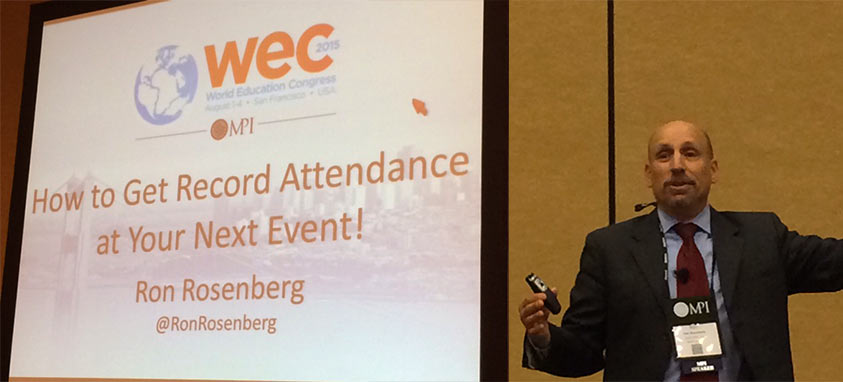
marketing-your-eventA big dilemma for meeting professionals is how to attract attendees to events. Marketing expert Ron Rosenberg, principal of ronsbusinesscoaching.com, gave a high-energy presentation at the 2015 Meeting Professional International’s World Education Congress in San Francisco on Monday that included the following tips:
Put the focus on the attendee. Make sure all marketing materials address the benefits he or she will gain. Translate all the features (content, presenters, location, etc.) into benefits, emphasizing the valuable takeaways your event offers. Create customized pieces that address different groups, so each recipient will feel that the event is “just for me.”

Walk to the edge of the abyss. Don’t be afraid to make your marketing message bold and provocative.

Address objections head on. When potential attendees hedge about an event, don’t be shy. Instead, wave the objection like a big banner—actively dispelling notions as to why the objection is not an issue.

When designing a marketing piece (either print or digital), create a killer headline to grab attention. Practical information (date, location, session descriptions, etc.) should appear lower, as should the company logo or pictures. Other design elements should include using short bullets, as well as numbers or percentages, to emphasize key points.

Make presenters earn their pay. Ask them to offer special incentives such as closed-door lunch sessions or one-on-one consulting. To build interest in an upcoming presentation, ask them to develop a video clip that you can post as an exclusive before the event to reward those who have signed up and intrigue those who may be on the fence.

Sincere, attributed testimonials from people who attended your event last year can be terrific, especially if they are humorous. The best way to solicit testimonials is to ask open-ended questions on evaluation forms directly after the event and follow up again with email questionnaires a month later. Tweak the testimonials down to their essence.

The early bird gets the worm. While they are actively engaged in this year’s event, get them to register for next year’s gathering. Entice them with an attractive offer (perhaps 35 percent off if they sign up early), but provide a strict deadline.

Make it easy. If someone goes to your website to sign up for an event, create a dedicated landing page for it. You don’t want them hunting all over the place for the link.

Offer a money back guarantee. It will make attendees feel that they have nothing to lose by signing up for your event.

Create urgency by stressing exclusivity. Emphasize that there are only 75 seats left or state that they don’t want to miss out on the valuable information their competitors will reap.

Building Event Momentum

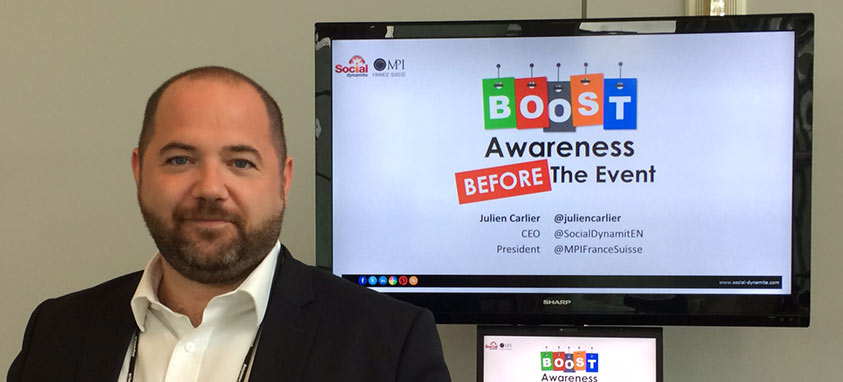
boost-awareness-for-your-eventIn a presentation entitled, “Boost Awareness Before Your Event,” Julien Carlier, founder and CEO of Social Dynamite and president of the French chapter of MPI, also shared some tips:

Marketing is a continuous loop. You need to market before AND after your event, because after the event is actually promotion for your next event.

Use ambassadors to help promote your event. Ask your ambassadors (your speakers, sponsors and attendees) to share content via word of mouth or through social media, especially Twitter.

Employ all types of outreach. While digital channels are very popular and efficient, they have become saturated. Surprisingly, old-fashioned letters, printed on nice paper with a handwritten signature, can be an effective way to market your event because they attract attention.

Let audience members choose their channels. Some like print, others prefer email while others like Tweets. Don’t make choices for your readers. Let them choose the channel they feel comfortable with.

Constantly test what works for your particular audience. It can constantly change.

Build excitement by creating a media calendar. Post one article per day on different channels for two weeks leading up to the event. Another good idea is to create a quarterly or “Best Of” collection of content.

Never miss out on great new destinations. Subscribe to Smart Meetings magazine  – FREE!

Venue Site Visits

MPI’s World Education Congress 2015 may be over, but that minor detail won’t stop Smart Meetings from providing some of the best information from the event.

One of the most informative educational programs I attended at the three-day conference was a sessional guide to “Sizzling Site Visits,” energetically hosted and moderated by Lindsay Martin-Bilbrey, a meeting planner and director of learning experiences for the National Speakers Association, and Melissa Lanouette, meeting manager with the association.

Planners and suppliers alike filled the seats at the intimate gathering to engage with each other and share the most important tips for what both sides want out of site visits. The 30-minute session was packed with tips for what makes for great site visits from the perspective of planners and hotels.

Vision

One topic that was covered repeatedly was for meeting planners to come into site visits with a sense of vision—especially when it comes to spaces that are being built or renovated. Martin-Bilbrey advised her fellow planners to look beyond the dust and the fact there the floor might not be installed yet. Focus on what the new or updated spa or ballroom will look like.

On the same note, those on the hotel side can go beyond showing planners drawings of what the space will look like. Bringing samples of the napkins, the material the floor will be made of, what will be on the walls and more provides a tactile experience that helps cement the image of the experience attendees will have.

Focus on What’s Right Now

Site visits can be tricky for suppliers when facilities are in use and are unable to be shown off during site visits. Spec sheets can only go so far to convey a sense of the space to planners, but there are some statistics that help complete the overall picture in their minds.

Occupancy was by far the most talked-about number. When a hotel’s occupancy is consistently 90-95%, it shows that the property is doing something right—as does the fact that the property’s meeting space is in use and can’t be toured. Promoting these aspects—as long as they aren’t being exaggerated (because smart planners follow up and verify what they’re told during visits)—goes a long way toward convincing planners that the property can make the event a smashing success.

Do Your Research

Another hot topic was knowing who you’re meeting with. Not just their names, but details about them that can help make a site visit feel catered to them. For suppliers, this applies both to the company holding the event and the planners themselves (as well as anyone else who might be joining the site visit). Find out what they’ve done with events in the past so you can target areas that’ll be of the greatest importance. Also research the visitor’s LinkedIn and social media profiles (or people) so you can add personal touches—but not so much that it comes off as creepy.

Keep current on the latest meetings industry tips and tools. Subscribe to Smart  Meetings magazine – FREE.

boost team building

Solo project or team effort? Often professionals think a project essentially is one or the other, but actually, it can be both by allowing for sufficient autonomy within a larger framework.

When staging an event, for example, typically many people are involved, contributing their own talents to the greater whole. At least some degree of autonomy is given to each contributor, but a delicate balance is needed to assure that everyone is bringing their best to the table within a team concept. Here are some ways (inspired by a column at techsytalk.com) that managers can strike that balance, and thereby boost team building and obtain the best possible results.

Corral the best talent: Find all the people you need to make it work. They all need to not only offer special, unique skills, but also be able to work successfully as team members. It’s not always easy to find people who are great at both.

Make any criticisms constructive: No one enjoys being scolded or told that they’re simply wrong about something. Instead, offer suggestions regarding how the employee can better utilize his or her special skills to boost team building, while expressing appreciation for something positive about the person’s work. And be a good, receptive listener: You’ll sometimes find that your criticism is off-base because of your own misunderstanding or hasty judgment of a situation. Shed egos aside, and always remember that you and your employee are working together toward common goals.

Communicate clearly and regularly: If you haven’t done so already, before the project begins, get to know each person working on it. By developing mutual understanding and appreciation, you will provide the foundation for a good working relationship. Make sure that there are clear channels for communication between you and each employee during every step of the project.

Give your employees a sense of freedom: Although you’re in charge, be a facilitator rather than a general. You know what needs to be accomplished and have ideas of how to do it, but don’t insist on always wearing your manager hat. Often, you need to simply be one of the team, and in some cases, you need to allow others to lead you. If you simply dictate what needs to be done without leaving room for others’ feedback, you may as well be working with entry-level administrative assistants and interns. When working with highly skilled professionals, provide room for them to utilize their own styles and talents to achieve the desired team goals.

7-tips-for-planners-in-sellers-marketResearch and conventional wisdom shows that the meetings and events industry has been in seller’s market for several years—and may well be for the rest of the decade. While this gives sellers more leverage, there are ways planners can maximize cost savings and other benefits.

We recently spoke with Terri Woodin, CMP, the senior director of global meeting services at Meeting Sites Resource, who shared some key insights for planners about how to get the most bang for the buck out of sellers.

What factors do you see has led to the seller’s market the meetings & events industry is seeing?

Post recession, there has been very little new hotel room supply, particularly in the four- and five-star categories. Low new supply, combined with greatly increased meeting demand, which started in 2010, and has continued each year, has fueled the big shift to a hot seller’s market. How hot? 2015 will mark the hotel industry’s biggest year ever for hotel occupancy, average daily rate and RevPar (revenue per available room).


Like this content? Register for our next FREE Webinar, “Successful Negotiations in a Sellers’ Market”

What are the biggest challenges you’ve seen for planners as the market shifted to favor sellers?

One of the big challenges is finding quality hotel options for short- term meetings. Hoteliers are turning down three meetings for every one they accept, so it is important that planners have a complete RFP and assess their leverage, based on many hotel revenue management criteria. Additionally, since corporate and association planner budgets are not keeping pace with hotel revenue projections, we are seeing more hotel fees and surcharges being introduced—all of which planners can negotiate, of course.

How can planners maintain a symbiotic relationship with hoteliers in the current climate?

Both sides need to have a conversation, and it has now become more strategic, meaning that planners must track and leverage meeting activity and spend data to maximize success with negotiations, including added meeting value, cost savings, contract-risk mitigation and ROI. Meeting planners are facing more scrutiny, with increased expectations from senior management, to demonstrate ROI. While this has always been a relationship business, now it is also a business relationship, and when planners make the shift from logistics to strategic, they will add more value to their meeting and the bottom line, and in the process, demonstrate more value to their management and stakeholders.

Are there any niches in areas of the industry where the market is more favorable to buyers?

Because of limited availability, increased room rates and F&B costs, many planners are searching and evaluating second tier cities or contracting their meetings in the shoulder season. Hoteliers often do have need dates, so ask what dates and pattern would deliver cost savings and meting value. Also, it’s helpful to have multiple date options and flexibility with peak night pattern and meeting and event space utilization. There is a spike in new hotel development in most major markets, and although mostly in the mid-range categories, pre-opening rates can be favorable.

Are there any indicators for planners to watch out for that would signal the end of the seller’s market?

Industry experts are predicting a strong seller’s market through 2019, but we should view this news with caution, since the global economic and political environment can change quickly, as we have recently seen with a weakened economy in China, and the ripple affect it had on a global level. That said, we believe that hotel occupancy will remain flat, but average daily rates will continue to show slight increases, particularly in the four- and five-star categories.

What strategies can you offer that will help planners succeed in this hot seller’s market?

Success today requires that corporate and association meeting planners have a business plan approach to these investments called meetings, along with a negotiations plan. The art of the deal is changing and planners can succeed when they carefully evaluate their overall meeting needs, revenue contributions (by category), flexibility and key factors such as peak-night pattern, their  percentage of the hotel’s meeting space on the heaviest day, other groups in-house and their space and revenue contributions. The seller’s market does not mean doom and gloom, just more strategy to achieve your goals.

To hear all of Woodin’s great advice and suggestions about navigating the current seller’s market, be sure to register for our Sept. 15 webcast, Successful Negotiations in a Sellers’ Market.

Meetings Industry Fund

With a mission to help meeting professionals in crisis, several prominent meetings industry leaders have launched The Meetings Industry Fund, a new 501(c)(3) foundation.

The fund will provide financial assistance during times of crisis to individuals who are directly involved in the planning, execution, delivery and support of meetings.​ For example, if a meeting professional out of work and suddenly faces a medical emergency, the fund can be there to help.

The fund was co-founded by David Peckinpaugh, president of Maritz Travel Company; Susan Sarfati, CAE, CEO of High Performance Strategies; Heather Burkee Scherer, president of ATC Travel Management; Neal Couture, director of government procurement law and business programs at the George Washington University Law School; and Chuck Fazio, industry photographer and artist-in-residence of American Forests, who originally conceived the idea.

“Our industry is made up of amazing people and organizations that do fantastic work on behalf of our industry,” Peckinpaugh says. “The one gap we noticed was for an organized effort to help out individuals in crisis, and The Meetings Industry Fund is all about them. We know our industry will pitch in to help our colleagues who have short-term financial needs.”

$100,000 in 100 days

The fund to support meeting professionals has an initial goal to raise $100,000 in the next 100 days, enough to begin to help industry members in need.

“We can support our friends and colleagues in the meetings industry when they need us the most,” Sarfati says. “Our community can give generously to support The Meetings Industry Fund. It’s about helping each other and it doesn’t get much better than that.”

“I have witnessed firsthand the kindness and generosity of industry friends to each other in times of crisis,” Scherer says. “Through a collaborative effort, we hope to provide an even greater level of support to our friends in need.”

“I am personally thrilled that after years of being a vision in my brain, the fund has come to fruition and is now here to help people in an industry that was there for me several years ago when I really needed the help,” Fazio says.

To donate or learn more about the fundraising campaign for meeting professionals, click here.