 Going into a meeting, all attendees should consider the opportunity as a chance to learn something. Many, however, don’t take meetings seriously enough. Continue reading “How to create a lasting impression in meetings”
 Conflict during a meeting can help provoke new ideas and thoughts, but it can also be disruptive. Anne Thornley-Brown, an event planning blogger on Cvent.com, has some ideas to take the heat out of confrontations. Continue reading “Ideas to Help Keep Tempers Cool at Meetings”
Discover the ultimate Southern California oceanfront retreat, located in Orange County, between Los Angeles and San Diego in the legendary community known as “Surf City, USA.” Hyatt Regency Huntington Beach is easily accessible from three major airports and convenient to all of southern California’s main attractions. Overlooking miles of pristine beaches with spectacular views of the Pacific Ocean, this stylish resort is the area’s preferred meeting destination. Reminiscent of an Andalusian-style village with six picturesque courtyards and lush gardens, a full-service spa and 517 elegant guest rooms and suites with private terraces.
THE HYATT MORE MEETINGS OFFER MADE SIMPLE.
It’s easy to earn more rewards when you hold multiple meetings at participating Hyatt® hotels and resorts. In fact, bringing people together at Hyatt has never been more rewarding.
• Book two qualifying meetings, select two rewards
• Book three qualifying meetings, select three rewards
• Complimentary coffee break
REWARDS FOR YOUR MEETINGS
• 100,000 Hyatt Gold Passport® bonus points per meeting and Hyatt Gold Passport Diamond status for two years (points and/or upgrade awarded to meeting planner upon signing of contract for all meetings)
• No attrition fees for up to 50% slippage
• One complimentary guestroom per 40 paid room nights
• Complimentary coffee break
Offer valid for meetings booked by December 31, 2015, and held by December 31, 2020.
To book your next meeting, please contact your Hyatt Sales Representative and reference offer code MEETHY
 While email is an essential business tool, most professionals find that their inboxes easily become overloaded. Continue reading “5 Ways to Ease Email Inbox Overload”
A Discussion with Justin Gonzalez of DoubleDutch
Research from MPI shows that 63 percent of meeting planners are currently using mobile apps at events. In advance of his Smart Meetings webinar: Event Apps 101: 5 Things to Consider When Shopping for Event Apps, we spoke with Justin Gonzalez, marketing communications manager at DoubleDutch, about why he’s so passionate about the future of event apps, and what meeting planners and organizers should consider when evaluating apps for their events.
Here’s what he had to say.
In reference to the MPI stat about event app adoption, the research also shows that within the next 12–18 months, event app adoption will be close to, if not at, 100 percent. How is that number possible to achieve?
As event apps continue to mature with new features that meet the needs of planners, they will quickly become an ubiquitous part of the event experience. The research also pointed out that, at the time of the survey, many planners viewed event apps as just another content delivery mechanism. In the past year, we’ve seen a dramatic change in the conversations we have with our clients where the mobile application is becoming an integral, strategic part of the event experience. In fact, just this morning a new study came out showing that 86 percent of U.S. planners will use mobile event apps by 2016.
As planners shift their mentality around mobile apps from a nice-to-have to a need-to-have tool in their arsenal, reaching ubiquity won’t seem as far-fetched as it sounds.
Why are adoption rates for event apps rising so fast?
The need for a mobile experience at events is really just a reflection of our daily lives. Whether it’s using apps to measure how many steps we walk, stay in touch with friends, hail a cab, or even get a date, people are becoming more accustomed to using their smartphones in all aspects of their lives. It’s about using technology to make our lives easier.
Arriving at an event is no different. A mobile app can enhance the real-life experience for all event stakeholders (from attendees to exhibitors and organizers) in big ways.
When planners have made the decision to use an app at their event, what’s the most important thing they need to consider?
The starting point is to consider your mobile app as the house for all your event content—not to mention a closed social community. It hosts everything from the agenda to speaker bios and session information, to floor maps, lodging details and more. Imagine being able to eliminate your printed information entirely, and just using a smartphone to navigate your way through the event.
From there, it’s a matter of mapping your mobile strategy to your event goals. Want to enhance networking and business opportunities for attendees and exhibitors? No problem. Want to create a fun and engaging experience? Easy.
What else should a planner consider when evaluating an event app?
We always recommend that planners give themselves enough lead time before an event (and before choosing an event app) to work out their mobile strategy in advance. We suggest that the process of creating a strategy for your mobile app should begin as much as six to eight weeks prior to the event.
Your event app vendor should be capable of helping you craft a strategy if needed, but that should be part of your initial conversation with any vendor you’re considering to provide with your event app.
How can attendees engage with an app without distracting from the overall event?
One of the biggest concerns for event organizers is they want their attendees to be focused on the event content and not on their inbox, chatting and texting, or [being] distracted by a multitude of other things going on.
The best mobile apps should enable attendees to check into event sections and allow them to comment on, like and interact with the content and other attendees—all from within the app itself. We strive to offer what we call “continuous engagement” that drives attendees toward the event content, creating a holistic brand experience.
To hear all of Gonzalez’s great advice and suggestions about choosing the right app for your event, be sure to register for our webcast Event Apps 101: 5 Things to Consider When Shopping for Event Apps.
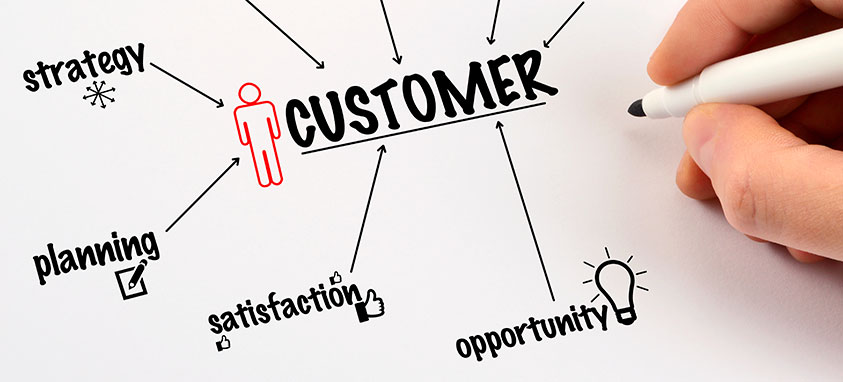
As marketing and sales strategies merge within event planning, it’s no surprise planners are finding success with account-based marketing. Michelle Schofield, director of marketing and partner alliances for Certain, Inc., reveals her approach toward a more targeted method of communication. She says more marketers are moving away from blasting emails to batches of accounts and looking toward the B2B environment for direction.
“Account-based marketing takes what we know about marketing to individuals today and applies it to the B2B environment, where it’s about marketing and selling to the multiple decision makers within a given organization or account,” Schofield writes.
Events can play a major role in improving marketing approaches for these four segments: large accounts, named accounts, industry/segments and customer accounts. User conferences or field marketing events provide a greater opportunity to use event data with a marketing automation system.
Marketers can begin by gathering an attendee’s profile and their level of interest. This will help them better understand target accounts. From pre-event marketing and registration, this information can be used to gain more insight into the individuals within each account. It also helps point marketers in the direction of products and services that are of most value to each account. This data can then be used towards post-event sales and marketing.
When marketing and sales teams share similar objectives, they can work together to better identify, develop insights and gain knowledge about how to approach key accounts. Schofield says, “Events bring this partnership to life by providing marketing and sales teams the ability to develop and execute a clear plan for targeting the prospects and customers that matter most.”
Schofield offers the following tips to derive greater value from account-based marketing:
-Assess the attendee list and organize it into target account types.
-Research target accounts and learn which business objectives yield purchase decisions.
-Devise the best strategy to engage individuals within each account during in-person events
-Make a plan to follow up with individuals after the event. This includes lead sourcing and using insight from marketing automation platforms.
-Make sure marketing and sales teams are in-sync during this process in order to achieve the best results.
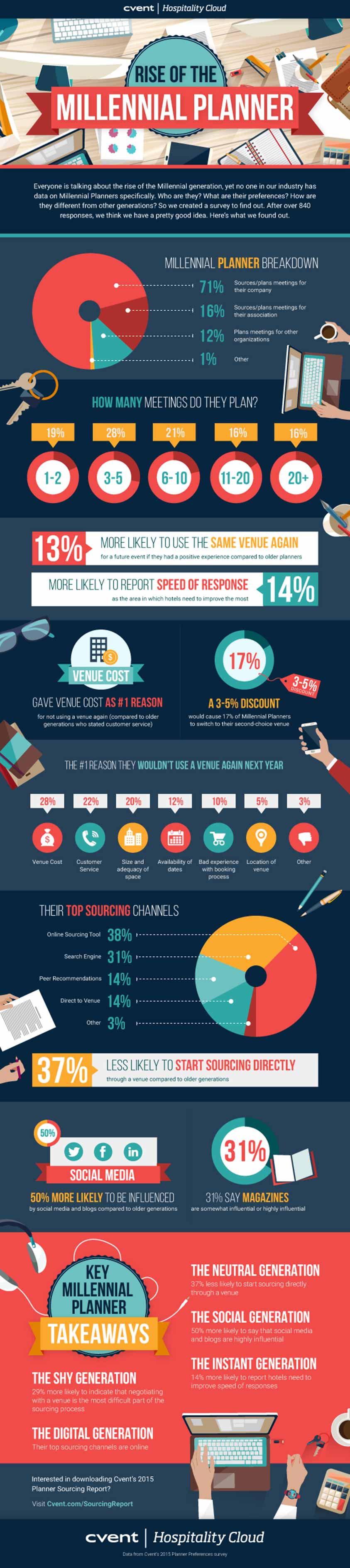
 Millennials say that a venue’s cost is the most influential factor when deciding where to hold an event, while members of older generations place more value on customer service, according to a new survey conducted by Cvent, Inc.
The cloud-based event management platform surveyed more than 800 meeting planners to understand the sourcing behaviors of different generations as millennials rise in the meetings industry. The survey revealed that a 3 to 5 percent discount would convince up to 17 percent of millennials to choose their second choice. Millennials also are flexible regarding dates, especially if they can save money.
Other top reasons millennial meeting planners switch venues included:
-Customer service (22 percent)
-Size and adequacy of space (20 percent)
-Availability of dates (12 percent)
-Bad experience with booking (10 percent)
“As the next generation of meeting planners rises in the work place, hotels and event venues need to better understand their behaviors to close more group business,” said Kevin Fliess, vice president of product marketing at Cvent. “It is clear from the survey findings that both the influx of millennial planners and advances in event planning processes and technologies are changing how hotels compete for lucrative group business.”
Venue sourcing is often a multiday process that involves various touch-points and interactions between the venue and planner. Millennials were 37 percent less likely to source directly through a venue when compared to their older generation industry peers, indicating that the new generation of meeting planners value the convenience and simplicity of an event management platform during the process.
This new digital generation prefers to source directly at scale. Twenty-five percent of millennial planners are more likely than older generations to report that negotiations are the most difficult part of sourcing a venue, indicating an aversion to one-on-one interactions and a preference for a transactional experience, while Generation X and baby boomers showed a much higher willingness to negotiate.
Millennial meeting planners were 50 percent more likely to say social media and blogs are highly influential when it comes to evaluating a venue compared to older generations. These millennial planners rely on online reviews, ratings and opinions, compared to traditional media.
Cvent surveyed 842 meeting planners in three days. Among those polled, 71 percent sourced meetings on behalf of their company, 17 percent were association planners and 11 percent were third-party planners. Generation X planners (35-52 year olds) represented the largest demographic of event planners with 43 percent of the surveyed audience. Millennial or Generation Y planners (18-34 year olds) were the second largest segment, comprising of 41 percent of respondents. The Baby boomer generation represented 53-64 year olds surveyed. The 2015 Planner Sourcing Report was designed to provide venues with the insights needed to close more group business. The executive summary can be downloaded here.
Cvent offers software solutions to event planners for online event registration, venue selection, event management, mobile apps for events, email marketing and web surveys. Cvent provides hoteliers with an integrated platform, enabling properties to increase group business demand through targeted advertising and improve conversion through proprietary demand management and business intelligence solutions.
 Five mindsets can influence the outcome of a meeting. In a blog post entitled “Attitudes That Separate Growing, Healthy Conferences From Declining Ones,” Jeff Hurt discusses the major factors that he believes make the difference between a robust or a lackadaisical meeting.
1. Actionable Metrics versus Vanity Metrics
According to Hurt, leaders of healthy conferences focus on actionable metrics that can be used to make important future decisions. Actionable metrics include such things as the percentage of those in education sessiosn at any given time versus the total number of attendees, or exactly who is participating in the conference rather than the sheer number of how many are in attendance.
In contrast, Hurt believes that leaders of declining conferences focus on vanity metrics such as registration pace, the number of sponsors or the number of speakers. They are more concerned about annual revenue and expenses, rather than percentage invested into the attendee experience. While Hurt believes vanity metrics may make conference leaders feel good, they don’t permit leaders to identify future opportunities.
2. Guiding Principles versus Members’ Preferences
Hurt thinks it is a mistake to focus on the concerns of a small but potentially vocal minority who might complain about the opening session speaker, the lunch or the destination where the meeting was held. He points out that since planners cannot please everybody, it is unproductive to respond to the preferences of a handful of critics.
The more sensible approach, according to Hurt, is to focus on the principles and strategies that will help companies reach their target audiences and drive their missions. He thinks the mindset should be more about addressing future challenges, rather than trying to fix last year’s problems.
3. Proactive versus Reactive Approach
Hurt maintains that leaders must be proactive and refrain from yielding to the agendas of others that might divert them from their missions. He says reactive approaches waste valuable time and impede leaders from charting future growth.
4. Now versus Eventually
Impact meeting outcomes by taking action in a timely manner, rather than procrastinating. Unsuccessful leaders may have good intentions, but nothing is gained if they fail to follow through.
5. Meeting for Talk versus Meeting for Action
Oftentimes people meet for the sake of meeting, or waste time in what are ultimately unproductive meetings. Hurt believes leaders who spend time debating menu selection, room set-ups or other logistics are too focused on execution rather than outcome, and lose the vision and strategy for their event. He thinks it is more imperative to spend the valuable time figuring out how to move the company forward. According to Hurt, action produces traction. He recommends making decisions, especially about the important issues.
 As airlines continue to cram more passengers into smaller seats, the thought of a long flight can wear travelers down. However, there are a few things you can do to decompress, make air travel more comfortable and help you stay calm during a long flight.
CNN shares valuable tips from travel experts to enjoy your next flight.
Be on Time
Some people tend to over-plan, but there’s nothing wrong with wanting to be on time. Travel is supposed to be enjoyable, after all. Avoid stress by not running late to the airport and getting stuck in security lines.
Being early also lets you take in the experience. Get through lines on time, take an opportunity to use the restroom, browse the gift section, answer emails or get some work done.
Make use of your time, and do the little things that help you decompress; even if it means reading your favorite magazine.
Discover the Secret of an “All-Inclusive” Meeting in our FREE Webinar – Earn CEU Credits
Invest in Yourself
Focus on taking care of your personal wants prior to boarding. This can keep you in better spirits and set in motion a relaxed flight.
Whether it’s a quick drink at the bar or a good book, make sure you are fulfilling your needs.
Some airline loyalty programs even offer complimentary alcoholic beverages to members in coach. But remember, overdoing alcohol is dehydrating and may even increase anxiety.
Stay Connected with In-Flight Wi-Fi
Now that Wi-Fi is offered by most commercial airlines, it’s time to put it to use!
It’s easy to forget how glued we are to our mobile devices. Average users check their phones 110 times a day, according to data from the app Locket.
In-flight Wi-Fi is the perfect time to use your mobile device to connect with family, email with friends or catch up with followers on social media. Life at 30,000 feet provides you with a large amount of uninterrupted time and is the perfect place to read a funny article or listen to a podcast.
If you choose to opt out of Wi-Fi, you can always use a pen and paper to write letters to family or friends.
Create a Buffer Zone Around You
Foam earplugs or headphones are two tools that can help cancel out loud jet engines or chatty seatmates. If plugging in and tuning out is more of your style, keep an iPad loaded with the latest TV series, podcast or music.
For more travel tips, check out our Smart Meetings Travel Tips Section.
 With the trend for airlines reducing amenities while charging us more for less, it’s becoming a necessity to be prepared and consider DIY options to help make the often dreaded long-haul flight more tolerable.
Geoffrey Morrison, self-proclaimed inveterate traveler and tech writer for Forbes, suggests the following tech tools and tips for long-haul flights so you can land with your sanity intact.
Reduce the Noise
The drone of the airplane’s engines is a sound that can eventually drain the energy out of even the most chipper passenger over the course of a long flight. Investing in a quality set of noise-cancelling headphones is a great way to eliminate this.
Bring Your Own Power
We’ve all been there: frantically packing your carry-on in advance of a flight and telling yourself, “I’ll just recharge my phone on the airplane.” Don’t count on it. With more people carrying multiple mobile devices these days, and limited outlets (and limited charging capacity) available at your seat, plan ahead and bring our own portable charging device.
Keep Your Phone Within Selfie Reach
While we don’t recommend using a selfie stick or aggravating your seatmate by taking egregious selfies, once your phone is all charged up, don’t put it too far out of reach. You never know when you might fly over a spectacular mountain range, or see a sunset that you’ll wish you had immortalized in pixels (or uploaded to Instagram).
Bring Your Own Entertainment
With streamlined service offerings, you can no longer count on in-flight entertainment, in-seat TV screens, and so on being available on every plane. To make sure you have something to do during those long hours of travel, consider downloading your favorite movies or TV shows to your tablet or phone.
Make sure you get a variety of content—binge watching Season 2 of Game of Thrones might sound like a good idea pre-flight, but even the saga of Westeros may not keep your attention after the first 5 hours or so.
Bring Your Own Paperback Book
Believe it or not, books are still printed on paper. While not exactly a tech tool, the simplicity and utility of a printed book makes it one of the best inventions ever devised. You’ll appreciate the ease of opening and reading a hard copy of your favorite novel or non-fiction interest, especially when the person next to you has claimed all the seat power outlets and your USB charger has given up the ghost after the 3rd hour of GoT.
There’s an App for That
When booking your flight, find out if your air carrier has its own app. If so, download and test it prior to your flight.
Whether it’s updated flight, weather, or destination information, or additional in-app entertainment options, native flight-based apps can go a long way to making your long-haul flight more tolerable, and dare we say it, enjoyable.
