2016-rio-olympics-virtual-reality

People watching at home now can feel as if they’re on the track at the 2016 Summer Olympics in Rio de Janeiro as Jamaican sprinter Usain Bolt dashes past and American Ashton Eaton strives for a decathlon medal.

It’s made possible by virtual reality coverage, another major step in Olympics technology, offered by Samsung Electronics Co.

The opening and closing ceremonies of the Olympics and select competition—including track and field, gymnastics, basketball and diving—are being shown. The South Korean electronics company has partnered with Comcast’s NBCUniversal and Olympic Broadcasting Services to offer the coverage.

Samsung has exclusive virtual reality (VR) rights through NBC to broadcast the 2016 games in Rio de Janeiro. Eighty of the 6,700 hours of programming will be included, and will be broadcast one day after the regular broadcast. Viewers will need to use a Galaxy smartphone and a Samsung Gear VR headset, and have a cable subscription and the NBC Sports app.

Residents of Brazil, where the games are being shown by media conglomerate Globo, don’t have access to NBC’s VR video. They are able to sample the VR coverage, however, by stopping by one of 13 Galaxy Studios.

Samsung’s venture is being viewed as a pilot program that will help to strengthen VR coverage at the 2018 Winter Olympics in PyeongChang, South Korea.

Virtual reality is emerging as a major step in technology, but it is still in its nascent stages. Users have complained about overheated phones and motion sickness, among other things. Also, although the image quality is good, it is grainy and many people don’t like the bulky, space-age goggles that are used.

The Olympics have showcased other new technologies: The 1984 Summer Olympics in Los Angeles introduced email to a wider audience and Seiko debuted its Quartz timing system at the 1964 Summer Olympics in Tokyo.

event-roi-technology-etouches

Etouches, a global provider of cloud event management software, recently announced the launch of its newest product, event ROI. For the first time, event professionals using Etouches software are able to gain a comprehensive view of the value their events generate and real-time means to improve the outcomes.

Etouches developed the product to address event professionals’ increasing need to demonstrate the value events add to their organizations. The tool’s insights-to-action approach collects, integrates and analyzes a broad range of event data and performance metrics against trends, benchmarks and best-practices.

“As a breakthrough capability for event managers and organizers, our event ROI tool will change the way that the industry operates,” said Niko Nelissen, vice president of mobile, data and engagement at Etouches. “By measuring event ROI in real time against client goals, the product will bring event data points to life with actionable tools.”

With Etouches’ event ROI, event professionals can now benefit from an integrated event performance toolset for the meetings industry. Organizations can track the performance of their events in real time according to their desired goals. The data points generated from sourcing, registration, mobile and onsite activity are seamlessly collected throughout the event’s lifecycle and displayed in context to the client’s goals within flexible, easy-to-action dashboards.

“Etouches’ goal has always been to provide the industry with innovative solutions to maximize an organization’s reach, relevancy and efficiency as it relates to events,” said Oni Chukwu, CEO of Etouches. “By properly and comprehensively tracking the data around events, event professionals now have the comprehensive tools at their fingertips to positively impact and transform the way they allocate their massive investment in events overall.”

Since closing a $20 million funding round in May and completing the acquisition of hospitality and venue booking solution Zentila in June, Etouches has significantly added critical, differentiated components to its award-winning enterprise event management platform. The new event ROI product will be offered as part of Etouches, in addition to supplementary tools.

four-seasons-private-jet

In a move that reflects the increasing use of live-stream advertising, consumers were able to virtually board the Four Seasons Hotels & Resorts private jet recently to tour the aircraft and discover its amenities.

Four Seasons utilized Facebook Live’s streaming capabilities on Sept. 18 to offer the 35-minute live broadcast, which shows Four Seasons’ host Yvonne Yuen boarding a plane in Austin, Texas. She was greeted by a cabin crew member carrying a tray with champagne, an amenity that t every guest experiences when entering the aircraft. A flight attendant then directed her to her seat and helped her get situated.

Javier Loureiro, director of guest experience for Four Seasons private jet, then served as the guide. Prior to the broadcast, Four Seasons invited its Facebook followers to submit questions about the aircraft experience. Loureiro answered some of these questions—ranging from how on-board staff members are trained to how itineraries are arranged— during the broadcast. He also made suggestions, such as ways to deal with jet lag, and discussed the meal menu.

Loureiro then toured the aircraft, pointing out the mobility of seats as well as the availability of storage compartments and electrical outlets.  During the broadcast, viewers were able to comment and ask questions.

The live broadcast enabled Four Seasons to display its luxury jet from an unfiltered perspective, taking brand film beyond carefully produced montages. This virtual option is designed to appeal to affluent travelers who seek direct, behind-the-scenes experiences of flight options.

The Four Seasons Private Jet Experience, which began in February 2015, offers itineraries that crisscross the globe and allow customers to discover up to 10 international destinations on a single journey. A retrofitted Boeing 757 that accommodates 52 passengers is used for the journeys.

The private jet tour is one of the latest developments in live-stream video advertising, which Facebook is reportedly testing. A recent report from Trusted Media Brands, a global media and direct marketing company, showed that 8 percent of marketers are considering using live-stream video advertising in the next year.


videoconferencing virtual conferencing

Global training is one meeting niche that already benefits from virtual conferencingInternational Institute for Learning (IIL) will provide further insights into this 21st century meeting convenience during International Project Management Day on Nov. 3.

Expected to be the world’s largest online project management conference, the theme of International Project Management Day is “Leading with Agility and Embracing Change.” IIL reports that thousands of professionals, from project managers to C-suite executives, will come together to learn about new insights focused on the future of project management, business, leadership, agility and sustainability.


Headquartered in New York City, IIL is an international  leader for training, providing learning and development solutions that are critical in helping organizations succeed. With clients in more than 150 countries rely, IIL has developed an expertise in customized course development.

“This year we are honored to bring together a truly incredible group of keynote speakers and presenters,” says E. LaVerne Johnson, president, CEO and Founder of IIL. “IPM Day is just one way for IIL to support our valued clients who look to us both for what they need today and to identify the new trends for tomorrow.”

The virtual conferencing event will feature six keynote sessions with live Q&A scheduled throughout the day and more than 25 video presentations.

Virtual Conferencing

8:30–9:30 a.m.: “Benefits Realization and Value Management”
Harold Kerzner, Ph.D., senior executive director, IIL

10–11 a.m.: “Business Excellence in a Disruptive Age”  T
Tom Peters, founder, Tom Peters Company and Co-Author, In Search of Excellence

11:30 a.m.–12:30 p.m.: “How to Navigate the Real-World Complexity to Drive Delivery Value for the Organization”
Joanna Durand, senior Vice president, TD Bank Group

2–3 p.m.: “Innovating Around the Box: The LEGO Approach to Innovation”
David Robertson, professor of practice, The Wharton School and Author, Brick by Brick

3:30–4:30 p.m.: “Why Proactive Water Stewardship is Good for Planet and Profit Nelson Switzer – VP and Chief Sustainability Officer, Nestle Waters North America

5–6 p.m.: “Scrum: Disrupting the Automotive Industry”
Joe Justice, president Scrum@Hardware, Scrum, Inc. and Founder, Team WIKISPEED

Participants also will have the opportunity to network with other attendees, download content and visit sponsor booths. PMI® credential holders can earn up to 30 professional development units (PDUs). Content will be available for 90 days after Nov. 3.

Discrimination in the Sharing Economy

In a different economy, it’s the same story. Startups within the sharing economy continue to be plagued with reports of racial discrimination. As Airbnb prepares to enact a new Nondiscrimination Policy on Nov. 1, researchers at the MIT Sloan School of Management, Stanford University and the University of Washington have determined the reaches of racial bias also extend to ride-sharing companies including Uber and Lyft.

Based on field data from more than 1,400 individual cases of research assistants ordering, waiting and taking actual rides, primarily with Uber and Lyft, the study found that African Americans wait longer to get rides and suffer more cancellations once drivers determine they are black.

Controlled field experiments took place in Seattle and Boston, with randomly selected times, days, routes and a diverse mix of riders. Performance metrics were used to monitor each stage of the trip, and outlined in the report, titled “Racial and Gender Discrimination in Transportation Network Companies (TNC).”

In Seattle, one experiment found consistently longer waiting times for African American passengers—as much as a 35 percent increase. In Boston, a separate experiment that captured a wider variety of performance metrics found more frequent cancellations against passengers when they used African American-sounding names. Across all trips, the cancellation rate for passengers using African American-sounding names was more than twice as frequent compared to when the same passengers used white-sounding names.

“The patterns of discrimination were quite clear and consistent in both cities – and one can only assume it’s happening all across the country in other markets,” said Christopher R. Knittel, one of the study’s authors and a professor at MIT Sloan School of management. “The study has found major areas of racial discrimination within this new industry. It’s quite concerning.”

Researchers say they were disappointed to find the existence of discrimination within the ride-sharing industry, considering many had hoped the new transportation option would serve as a break from the transportation industry’s past history of racial discrimination. However, they also pointed out that the discrimination documented among transportation network companies is not necessarily worse than the current taxi system.

“In the Seattle experiment, we also document racial discrimination among conventional taxis, so we aren’t taking a stand on which system is better or worse,” said Knittel. “But, our study illustrates that discrimination among TNC drivers is occurring, and we point to ways TNC companies can reduce this discrimination.”

The study offers suggested ways to reduce the impacts of racial bias, such as eliminating the practice of showing the names and photos riders to drivers before orders are confirmed (as is the case at Lyft) or showing the names of riders once a driver accepts a ride order (as in the case of Uber).

Airbnb Responds to Discrimination

Last month, Brian Chesky, CEO and co-founder of Airbnb, sent a message to the Airbnb community, promising that the home-sharing startup would better address widespread complaints of racial discrimination on its platform, which serves approximately 50 million users around the world. It stated:

Discrimination is the opposite of belonging, and its existence on our platform jeopardizes this core mission. Bias and discrimination have no place on Airbnb, and we have zero tolerance for them. Unfortunately, we have been slow to address these problems, and for this I am sorry. I take responsibility for any pain or frustration this has caused members of our community. We will not only make this right; we will work to set an example that other companies can follow.

Some guests have reported instances of racial profiling while renting an Airbnb, such as a couple in Atlanta who were caught off guard by police officers waiting at the property, responding to a report from neighbors that they appeared to be robbers. Cases such as these have spawned social media campaigns including #AirbnbWhileBlack. According to a study from Harvard Business School, African American guests on Airbnb are 16 percent less likely to be accepted by hosts, compared to identical guests with white-sounding names.

Airbnb worked with the Washington D.C. Legislative Office of the American Civil Liberties Union to outline principles hosts and guests must adhere to in order to participate in home-sharing services. In the Community Commitment agreement, participants must comply with treating users with respect and without judgement or bias, regardless of race, religion, national origin, ethnicity, disability, sex, age, sexual orientation and gender identity.


boom-supersonic-jet

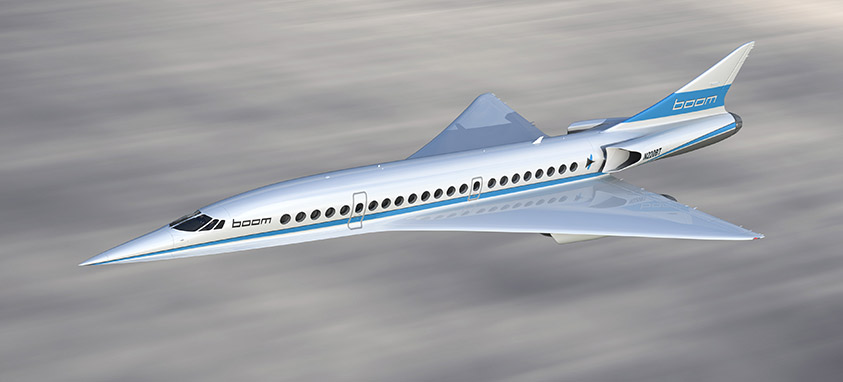
A prototype for a new jet that aims to transport passengers from New York City to London in 3 1/2 hours was unveiled in a hangar in Denver on Tuesday.

Richard Branson, founder or Virgin Group, is collaborating with Boom, a Denver-based startup, to build a new generation of supersonic jets. Branson said his private space exploration company, Virgin Galactic, and its manufacturing arm, The Spaceship Company, would help Boom to build the jets that will have flight times comparable to those offered by Concorde.  Flown by British Airways and Air France from 1976 to 2003, Concorde was used almost exclusively by very wealthy passengers because of high ticket prices.

Boom would succeed where Concorde failed because developments in technology and lighter materials would result in lower ticket prices, Branson said.

A 3 1/2-hour, one-way flight from New York City to London would cost $2,500. A flight from San Francisco to Tokyo would take 5 1/2 hours (instead of 11 hours currently) and cost $3,250 and a Los Angeles to Sydney flight would take 6 hours,  45 minutes (rather than 15 hours) and cost $3,500. The plane would travel at a speed of 1,451 miles per hour, which is 2.6 times faster than any other airliner.

Boom will have 45 to 50 seats, compared with Concorde’s 92 to 128.

Branson is partnering with Blake Scholl, founder and CEO of boom, as well as a pilot and former Amazon executive. Several other companies, including Boeing and Lockheed Martin, are also developing new supersonic jets, but Scholl says that Boom is likely to beat them to market because it does not require any new technology that would need approval by regulators.

Test flights are scheduled to begin in Southern California in 2017, and commercial departures are expected to be introduced in 2023.

Scholl said the plane could work on 500 different routes, but initially would focus on London to New York City, San Francisco to Tokyo and Los Angeles to Sydney.

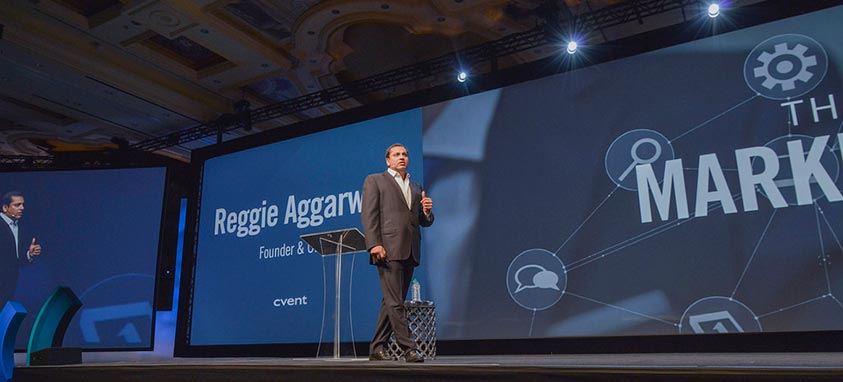
reggie-aggarwal cvent and lanyon mergerCvent Founder and CEO Reggie Aggarwal at Cvent Connect 2016

Today, two leaders in event technology have become one. Cvent and Lanyon, two of the most trusted and widely used providers of cloud-based event management technology, have announced a merger effective today. Lanyon’s owner, Vista Equity Partners, recently completed a previously announced $1.65 billion acquisition of Cvent, which paved the way for this merger. Prior to the acquisition, Cvent had been a publicly traded company.

“We are thrilled to welcome Cvent to our portfolio of high-performing software companies,” said Brian Sheth, co-founder and President of Vista. “With the leadership of Cvent’s highly-successful management team, working with our experienced Lanyon team, we are bullish on our ability to seize the green field opportunity ahead and remain the market leader in this segment.”

Cvent and Lanyon will now operate as a privately held company under the Cvent brand, with Cvent Founder and CEO Reggie Aggarwal as CEO of the newly combined company. Lanyon CEO David Bonnette will assist with the transition process. The new company will be based in Cvent’s headquarters of Tyson’s Corner, Virginia. However, the company will continue to maintain a significant presence in Dallas, Texas, where Lanyon was previously headquartered.

“We celebrate two new milestones today as we formally join the Vista family and merge with our highly-regarded peer, Lanyon,” said Reggie Aggarwal, founder and CEO of Cvent. “Combined under the Cvent umbrella, and with Vista’s powerful backing, we will draw on our decades of experience to push the boundaries of event technology innovation and remain focused on delivering outstanding technology, capabilities and service to the events industry.”

Together, Cvent and Lanyon have an estimated 28,000 customers across 100 countries. Over two decades, their cloud-based software solutions have been the backbone of more than 2 million events. With services ranging from mobile event apps, online event check-in and registration, venue sourcing, email marketing and more, Cvent and Lanyon offer powerful, all-encompassing solutions for meeting planners.

social-media-trends-for-2017

Social media has long been trumpeted as a valuable tool for meeting and event planners who want to boost their marketing strategy. Mastering social media is key to connecting with millennials, who respond well to non-traditional marketing models.

One of the factors that makes social media particularly challenging is the fast pace at which it changes. Things happen so quickly, it can be hard for anyone to keep up. A viral video or post can be forgotten in just a few hours. A once-dominant social media network can become defunct in just a few months, as seen in the story of Vine. In Dec. 2015, Vine was one of the world’s hottest social media networks, boasting more than 200 million users. In less than a year, parent company Twitter announced that it would be shutting down the social network due to declining popularity.

Thanks to the fickle nature of the business, it’s important for meeting planners who want to make the biggest impact on social media to stay on top of the latest trends. These are a few of the trends social media experts predict will make waves in 2017.

1. Live video

Live video was everywhere in 2016, and it’s only going to get more popular next year. In 2016, major social networks such as Facebook and Twitter launched live video streaming options which were quickly embraced by early adopters. However, this is the year that live video is expected to go mainstream. Recently, Facebook Live had its first truly viral live video—a mother of two put on a Chewbacca mask, filmed it and garnered 165 million views. With live-streaming on the cusp of widespread popularity, now is the time for planners to learn how to leverage it for events.

2. Paid ads

In the past, social media was a great source of free marketing. However, as every social media marketer knows, it is getting more and more difficult to reach your audience with each passing day. Some networks, such as Facebook, actively limit the reach of posts deemed too promotional, while others are hampered by the sheer volume of posts and clutter on users’ feeds. These days, marketers must pay to have their content seen, as well as create useful, valuable and entertaining content that users will be eager to like and share.

3. Virtual and augmented reality

In 2016, virtual and augmented reality became truly commonplace in meetings and events. At this year’s IMEX America, virtual reality technology was everywhere. Meet L.A. announced the launch of Virtual Discovery L.A., a virtual reality travel platform that provides meeting professionals with the ability to view 50 venues in 360-degree experiences. At its IMEX booth, Las Vegas Convention and Visitors Authority gave away DodoCase VR viewers—similar to Google cardboard—and invited attendees to “Enter the Vegas VR Experience.”

Augmented reality recently made headlines with ultra-popular mobile gaming app Pokemon Go, and it’s bringing new innovation to meetings, as well. Holograms and other virtual meetings technology give meeting planners the opportunity to bring remote attendees to the forefront. As the technology becomes easier to use and more advanced, it can lead to better experiences for all attendees, whether they are on site or thousands of miles away. There’s no doubt that top social media networks are currently experimenting with ways to incorporate virtual and augmented reality into their platforms.

las-vegas-monorail-ces-2017

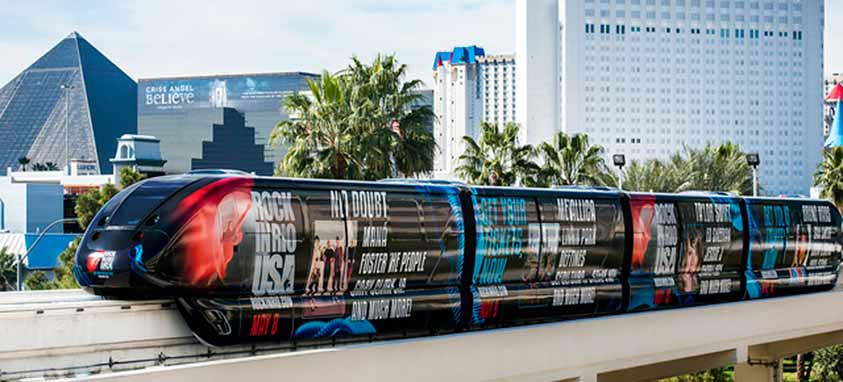
The Las Vegas Monorail was one of many vehicles that helped display innovative technology during the 50th annual CES convention, which took place Jan. 5-8.

With an estimated 175,000 attending the largest gathering of innovation and connectivity in the world, many participants took advantage of the ability to use their CES badges for fast and convenient access to public transportation. Las Vegas Monorail partnered with technology innovator NXP Semiconductors to set up a customized link that allowed registered attendees to prepay for transportation tickets.

During the show, attendees also were able to add a Las Vegas Monorail ticket to their badges through the NXP AppXplorer mobile application from the Google Play store or by visiting the NXP tent at the Las Vegas Convention Center. Onsite, NXP embedded the fare into attendees’ registration badges with the help of event solution provider ITN International.

“To offer a seamless customer experience, we were pleased to partner with NXP to make the transportation experience on the Monorail even more hassle-free for attendees,” says  Ingrid Reisman, vice president and chief marketing officer for Las Vegas Monorail. “No more need to hunt through wallets and handbags for Monorail tickets—their CES badges enables them to scan their badge and ride the Monorail.”

CES drew more than 3,800 exhibiting companies, requiring the use of 2.6 million sq. ft. of exhibition space. Among the record-breaking number of attendees, 55,000 came from outside the United States.

Attendees included government officials and celebrities from around the world.
Notable political leaders in attendance included His Royal Highness Prince Constantijn of the Netherlands; Francois Fillon, French presidential candidate; Axelle Lemaire, France’s Deputy Minister for Innovation and Digital Affairs; Henk Kamp, Dutch Minister of Economic Affairs; Jaime Reyes Robles, Secretary of Innovation, Science and Technology, Government of the State of Jalisco, Mexico; Adebayo Shittu, Nigeria’s Honourable Minister of Communications; Navdeep Bains, Canada’s Minister of Innovation, Science and Economic Development; Brad Duguid, Canada’s Ontario Minister of Economic Development and Growth; and Matt Hancock MP, Minister of State for Digital and Culture, Department for Culture, Media and Sport, UK Government.

“CES 2017 shifted to a new level as large and small companies from around the globe gathered to reveal solutions for many of our world’s most challenging problems,” says Gary Shapiro, president and CEO, Consumer Technology Association. “Our industry is bettering the world through connectivity and innovation, touching literally every facet of our lives. Today’s connected world was on full display this week at CES 2017–our largest, boldest show in history.”

Las Vegas Monorail is just one example of how the city relies on technology to make meetings as convenient as possible. In March, attendees of CONEXPO-CON/AGG will be the first to have the Las Vegas Monorail fare integrated into the cost of registration. Attendees will receive a three-day pass and exhibitors will receive a seven-day pass, with the fare built right into their badges.

Las Vegas Monorail has about 5 million riders annually, 19 percent of whom are convention visitors. That equals nearly 1 million convention riders a year, a number that is sure to increase with the ability to add prepaid fares to badges.

Australia-eliminate-passports

The Australian Department of Immigration and Border Protection recently announced a plan to revolutionize airport security by 2020. It’s the latest and most extensive part of the government’s five-year Seamless Traveler initiative. Facial, iris and/or fingerprint recognition technologies will replace passport checks, allowing travelers to pass through Australian airports without any paper documents. Passport scanners, landing cards and immigration desks will soon be Aussie history.

Implementing the technology in Australian airports will cost a whopping AU$ 93.7 million ($71 million). The first installation is set for July in Canberra Airport. The government hopes to introduce the system in Sydney and Melbourne airports by November, with plans to implement it throughout national airports by March 2019. If everything goes as planned, 90 percent of Australia airport travel will be automatically processed, with minimal human interaction, by 2020.

Currently, Australian airports use a SmartGate electronic border processing system, which is less than 10 years old. SmartGate matches the face of the passenger with the microchip image on his or her e-passport.  However, soon this technology will be superseded and traditional immigration desks will be replaced by identifying electronic stations.

airport-facial-recognition

In a comment to The Sydney Morning Herald, John Coyne, head of border security at Australian Strategic Policy Institute, mused that passengers could pass through a corridor rather than gates. Travelers would have their biometrics measured there without even pausing.

“Whilst [travelers] still have to carry their passport, [they] may not have to present their passport at all in the long term,” Australia’s Immigration Minister Peter Dutton said in a statement to ABC News. “But in the immediate term, this will make it easier [and] quicker for people going in and out of our airports.”

U.S. Customs and Border Protection announced earlier this month that facial identification software might be used throughout U.S. airports to help prevent identity fraud. In fact, John F. Kennedy Airport in New York City has already adopted this technology as part of its $10 billion renovation.

The availability of passenger data, such as travel history, ticket information and criminal records, has accelerated the progression of biometric technology. Although it seems promising, the contactless system is still underdeveloped and has been met with some apprehension—namely, concerns about privacy and racial bias.