seoul-south-korea-top-10-meeting-cities

There’s excitement at the Seoul Tourism Organization this week following the announcement of the annual International Meetings Statistics Report by the Union of International Associations (UIA).

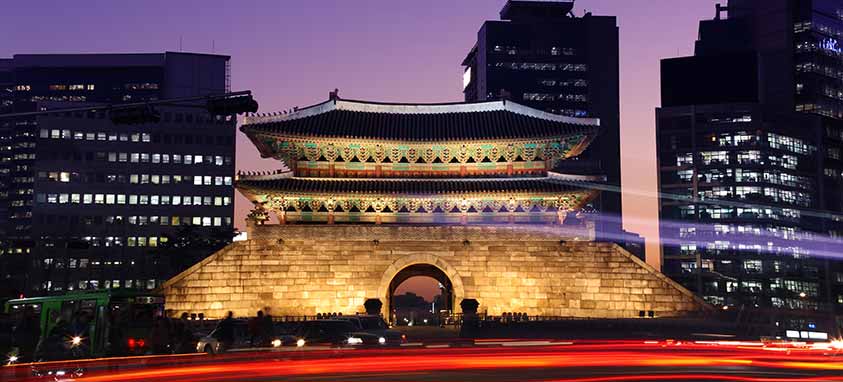
Not only did Seoul, the capital city of South Korea, move up to the No. 3 spot among elite meetings cities, but the country itself checked in at No. 2, trailing only the United States. Singapore and Brussels were No. 1 and No. 2, respectively.

The UIA report tracks meetings staged by international organizations that appear in the Yearbook of International Organizations and International Congress Calendar, including conventions, symposiums, regional sessions grouping several countries and some national meetings with international participation organized by national branches of international associations. The rankings do not include national meetings and specialty groups such religious, political, sports, and corporate and incentive meetings.

The 57th edition of the UIA report analyzed 412,403 events, which were held in 1,459 cities.

“Seoul is honored by this year’s results but we will not rest,” said Eui-seung Kim, general director of Tourism and Sports for the Seoul Metropolitan Government. “We are motivated to work even harder to let everyone know that Seoul is the complete convention city.”

What’s good for Seoul is good for South Korea. In 2015, South Korea hosted 891 meetings, marking a 40-percent increase from the 636 meetings that were recorded in the 2014 UIA report.

Many times it takes resolve to emerge as an elite meetings city. That’s what has happened in Seoul.

“After being hit by MERS last year, Seoul remained calm and resolute by immediately working to alleviate concerns while reinvigorating and stabilizing the city’s tourism and related industries,” said Byungtae Kim, president and CEO of Seoul Tourism Organization. “Through the measures implemented, such as our expanded support and our 24 Hour MICE Help Desk, we were able to bounce back stronger than before.”

2015 Top international meeting cities Number of meetings Percentage of all meetings
1. Singapore 736 6.3%
2. Brussels 665 5.7%
3. Seoul 494 4.2%
4. Paris 362 3.1%
5. Vienna 308 2.1%
6. Tokyo 249 2.1%
7. Bangkok 242 1.8%
8. Berlin 215 1.6%
9. Barcelona 187 1.4%
10. Geneva 172 1.4%
2015 Top international meeting countries Number of meetings Percentage of all meetings
1. United States 930 7.8%
2. South Korea 891 7.5%
3. Belgium 737 6.2%
4. Singapore 736 6.2%
5. Japan 634 5.3%
6. France 590 5.0%
7. Spain 480 4.0%
8. Germany 472 4.0%
9. Italy 385 3.2%
10. Austria 383 3.2%

las-vegas-trade-shows

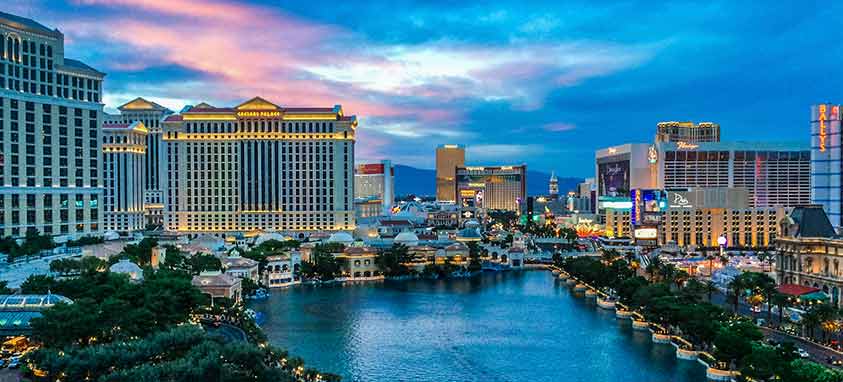
Las Vegas is not only the entertainment capital of the world; it is also one of the top destinations for trade shows. In 2015, Las Vegas was named the No. 1 trade show destination for the 22nd consecutive year in the Trade Show News Network’s (TSNN) “2015 TSNN Top 250 Trade Shows in the United States” list.

The prestigious ranking represents the largest 250 trade shows held in the country, ranked by net square footage. Las Vegas hosted 54 of the largest shows held in the country last year. Las Vegas’ closest competitor on the TSNN list was Orlando with 24 shows, followed by Chicago and New York hosting 21 shows each.

In the first half of 2016, Las Vegas trade shows are experiencing growth in a number of areas, including square footage, attendance and number of exhibitors. Through May 2016, more than three million visitors traveled to Las Vegas to attend a meeting or convention, a 12.1 percent increase over the same time last year.

The Consumer Technology Association’s CES show snagged the top spot on TSNN’s 2015 list with more than 2.2 million square feet of exhibit space across several Las Vegas convention facilities. CES 2015 welcomed more than 3,600 exhibitors and nearly 170,000 attendees. In 2016, CES broke its record once again with 2.47 million net square feet of exhibit space and more than 170,000 attendees.

InfoComm broke records for attendance, exhibitors and exhibit space in 2016. Nearly 39,000 people visited the Las Vegas Convention Center for the event. More than 35 percent of attendees visited InfoComm for the first time while it was held in Las Vegas. The June show welcomed 1,000 exhibitors, including 211 new exhibitors, across more than 527,000 net square feet of exhibit and special event space.

In 2016, ISC West at the Sands Expo Center attracted the highest attendance and largest number and square feet of exhibits. Nearly 30,000 security industry professionals attended the event to interact with a record 1,072 exhibiting companies and brands.

Several shows, including World of Concrete and RECon 2016, also reported their highest attendance numbers in the post-recession era.

Planning for More Growth

Even with more than two decades under its belt as the No. 1 trade show destination, Las Vegas works hard to maintain that ranking. The city that evolved to host people is always evolving to improve the experience and ensure its top ranking.

More than $9 billion in current and proposed development is on the books to add to the destination’s appeal, including a 5,000 seat theater at the Monte Carlo Resort and Casino, Wynn Paradise Park, Lucky Dragon Hotel-Casino, Resorts World Las Vegas, Alon, renovation of the Julius Tower at Caesars Palace just to name a few. In addition, Las Vegas Convention and Visitors Authority is progressing with its Las Vegas Convention Center District project that will expand and renovate the Las Vegas Convention Center.

Las Vegas Meetings Snapshot

  • Nearly 22,000 meetings in 2015
  • 5.9 million delegates in 2015
  • $9.3 billion impact to local economy
  • $2.7 billion in local salaries and wages supported
  • Supports 66,500 jobs

disneyland-luxury-hotel

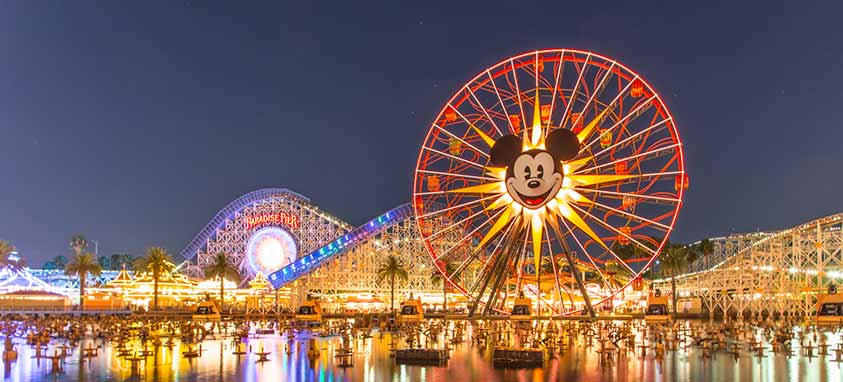
Although Anaheim, California, is the center of Orange County tourism—with top attractions and a first-class convention center— it has surprisingly few luxury hotels. That will be changing, as four new luxury hotel projects in Anaheim have gotten the green light. These include Orange County’s first JW Marriott, which will be built adjacent to the Anaheim GardenWalk ; an upscale property across the street from Disney California Adventure that will replace The Anaheim Plaza Hotel & Suites; a luxury hotel next to Anaheim Convention Center that will replace the Anabella Hotel; and a new AAA Four Diamond resort built by Disney.

“Luxury hotels are critical to Anaheim’s continued success,” asserts Jay Burress, president and chief executive officer of Visit Anaheim, who wants to see more AAA Four Diamond-quality lodging in the city. He notes that Anaheim, which hosts nearly 25 million visitors per year, has far fewer luxury hotels than other major tourist destinations.

“The Orlando area, home to Walt Disney World, has more than 30 Four Diamond hotels. San Francisco has 20, while Los Angeles, San Diego and Las Vegas have 13 each. Phoenix, with no coastline or famous theme park, has seven,” he says.

A Need for More High-End Hotels

Currently the only two Four Diamond hotels in Anaheim are both Disney properties—Grand Californian Hotel & Spa and Disneyland Hotel. According to Burress, both are usually booked months in advance.

“If you’re here to visit the Disneyland Resort, attend a convention or catch an Angels or Ducks game, odds are you’ll have to go to another city to find upscale accommodations,” Burress stated in a July 10 opinion piece in the Orange County Register. “As a city that relies on a thriving visitor industry to provide vital resident services, Anaheim cannot afford to see its hotel market lag as game-changing expansions play out at Disneyland and the Anaheim Convention Center.”

He notes that more than $2 billion is being invested to expand the convention center and bring Star Wars-themed lands to Disneyland—moves that will attract millions of new visitors to the city.

“The changes are the most significant since the late-1990s expansion that turned the Anaheim resort district into a world-class destination,” Burress says, adding, “Part of providing a magical experience in our destination is also providing a variety of accommodation choices that meet a visitor’s specific needs. Adding additional luxury hotels is the best way to ensure those visitors also stay in Anaheim and uphold the important role hotels play in supporting services for residents.”

Four Luxury Hotels on the Drawing Board

1. The first JW Marriott in Orange County will be built adjacent to the Anaheim GardenWalk. The 12-story property will have 466 guest rooms. The projected opening will be in 2018.
2. The City of Anaheim has given a developer approval to build a $225 million, 630-room business/convention hotel on 6.8 acres of land next to Anaheim Convention Center. The luxury property will replace the Anabella Hotel, which will be demolished.
3. The Anaheim Plaza Hotel & Suites, located across the street from Disney California Adventure, will also be demolished and developed into a luxury hotel. The $208 million, 580-room property will have 25,600 sq. ft. of retail space and 50,000 sq. ft. of meeting space.
4. Finally, a July 12 decision by the Anaheim City Council gave Disneyland Resort permission to proceed forward on a new 700-guest room luxury hotel next to Disneyland theme park. The AAA Four Diamond property will feature two pools, a fitness center and a kid’s play area. A rooftop restaurant will offer alfresco dining and views of the nightly fireworks display over Sleeping Beauty Castle. Construction will start in 2018, with a slated opening in 2021.

Controversial Kickback

Although the Anaheim City Council approved the Disney hotel proposal in a 3-1 vote, there was some controversy over the fact that Disney will receive an estimated $267 million in city tax room rebates over the next two decades as part of the deal. Bloomberg.com reports that the deal will return to Disney 70 percent of the city’s transient occupancy tax generated by the hotel, which is 15 percent of room charges.

It is projected that the new property will have an assessed value of $411 million, and the hotel will generate $750 million in new revenue to the city over 40 years. Rates at the as-of-yet unnamed hotel are expected to run about $450 per night.

The new Disney property will be located on what is currently a parking lot. According to bloomberg.com, the parking lot site currently generates $40,000 annually in property taxes. Under the new deal, over the course of four decades Anaheim will collect $11.8 million in property taxes and $7.2 million in sales taxes from the project.

Mayor Didn’t Like Deal

Anaheim Mayor Tom Tait spoke out against the deal. “We need to stop gifting tax dollars to luxury hotel developers,” he wrote in an opinion piece published July 10 in the Orange County Register. “The policy of handing out hundreds of millions of taxpayer dollars to subsidize luxury hotel development must end. The people of Anaheim need that money to provide essential city services.”

Tait was adamant that luxury hotel developers should not get a better deal than local entrepreneurs with smaller properties, and that the city should keep all the collected tax. “If you operate a hotel in Anaheim, you collect a tax paid by the guest. The city should keep that for all hotels. It shouldn’t matter if your hotel is large or small, luxurious or basic,” he wrote.

In addition to the lost taxes, Tait is concerned that the deal shows preference to Disney, the city’s largest employer. “I want to see our city be a good partner by setting fair and equitable conditions that allow everyone’s business—from a hot dog cart to a hotel—to compete and prosper,” he wrote.

Tait believes Disney would still have gone forward with its project, even without the rebate. He told LA Times columnist Michael Hilzik, “If Disney is going to build the hotel anyway, this incentive is more like a gift.” Yet Disneyland spokeswoman Lisa Haines told Hilzik, “The proposal we are bringing before the city council will not be built without this incentive.”

Tait, who has served as mayor of Anaheim since 2010, has a history of opposing moves that benefit Disney. Last year, he opposed an agreement that put a 30-year moratorium on ticket taxes at Disneyland in exchange for the company making $1 billion in new theme park investments through 2024.

destination management organizations and airbnb

Chip Conley is the head of global hospitality and strategy at Airbnb. At DMAI’s 2016 convention, Conley shared his story of going from hotelier (he founded the award-winning, boutique hotel company, Joie de Vivre Hospitality) to innovation chief, along with panelists from domestic and international destinations who have taken the risk to work with Airbnb. Each speaker revealed how and why they believe working with, rather than against, Airbnb is in everybody’s best interest.

For the past 27 years, Chip has been a force of innovation in the hospitality industry; he’s overseen the creation and management of 52 boutique hotels and won numerous awards for innovation in customer service and leadership.

From home share to time share to boutique hotels, game-changers have taken the industry by surprise. Each of these new trends catches a wave, because it fills a customer void, and that’s what happened with Airbnb. When it first appeared, much like many other trends, people dismissed it as something that wasn’t here to stay.

“But now hotels are realizing home sharing isn’t going away,” Conley said.

Why isn’t it going away? There are tens of millions of idle rooms and mattresses around the world. There is supply. Creating a trusted platform with peer-to-peer review provides a strong foundation to keep Airbnb and other home-sharing networks around.

Proving a Need

There weren’t enough hotel rooms for the amount of attendees coming to watch World Cup in Brazil two years ago, so Airbnb was called upon to help; to reach out to home owners to open their homes during that period for hopeful guests.

“That was a win, win, win. It was a win for locals who got the revenue. It was a win for the guests who got to experience the city. And it was a win for the environment because we didn’t have to waste resources building hotels that would be mothballed,” Conley said.

Conley told the audience at DMAI that not only does Airbnb wish to be a regulated industry and pay a hotel tax; they’re also more than willing to share the data they gather for every town about the tourism that occurs there. By emailing [email protected], they will provide data on your community. He argues that the market that uses Airbnb is not taking guests away from hotels, because those who use the service would not otherwise book a hotel. They’re looking for a cheaper alternative, or none at all.


Joe D’Alessandro, president & CEO San Francisco Travel Association, explained that 75 percent of hotels in San Francisco are located downtown, and conversely, 75 percent of Airbnb hosts are outside of downtown. Attendees coming into the city for a convention will stay at a hotel while downtown, but may extend their stay and move to an Airbnb.

“We don’t fight what the community wants,” explained D’Alessandro, a sentiment he echoed several times during the presentation. “If the community wants this, we’re behind it.”

Isaac Mizrachi, Director of Tourism Tel Aviv Global, agreed that the guests using the service aren’t taking sales away from hotels.

“We’re able to host tourists who wouldn’t have come otherwise,” Mizrachi said. “It [Airbnb] put us on the travel destination map. It targeted millennial tourists for us.”

Two projects spawned from Tel Aviv’s bond with Airbnb: an online travel guide of the city’s neighborhoods, and a series of seminars between current Airbnb hosts and future hosts. Today in the small city, there are over 8,000 active Airbnb listings.

Board Member Backlash

Martha Sheridan, president & CEO of Providence Warwick Convention & Visitors Bureau, shared her own experience pitching the idea of a partnership to a less-than-enthused board of CVB members.

Sheridan didn’t see Airbnb as competition because she saw hotel revenue continue to elevate year after year. They experience high occupancy times like in spring around graduation and Airbnb has proven to be a viable options that allows hundreds of new visitors into the city if hotels are booked up. And guests staying at Airbnb homes are still spending money in the destination, going to restaurants and events.

The sharing economy isn’t new, but it is growing. Conley stated that there are almost 2.5 million listings on Airbnb today; more than Hilton, Marriott and Intercontinental hotels, combined.

As D’Alessandro said, “If we resist the evolution of the industry, we’re going to lose.”

minneapolis-downtown-hotels

Minneapolis has long been coined “City by Nature” although City of Construction may be more fitting as of late. Renovations are happening left and right to rebuild the city into one of the most walkable destinations in the Midwest.

During DMAI’s annual convention, I toured several downtown hotels in walking distance to the convention center, and they all had one major thing in common: renovation. Whether they’ve just wrapped up refreshments, just announced a new project or are smack dab in the middle of a face lift, they’ve all got some exciting new things to showcase.

Nicollet Mall

A $50 million public-private project led by the City of Minneapolis and the Minneapolis Downtown Council to rebuild Nicollet Mall is perhaps the most significant renovation project happening in the city. Spanning more than 10 city blocks, the pedestrian “mall” includes retail spaces, office spaces, restaurants and hotels in the heart of the city between Loring Woods and Mississippi Woods.

The redesign will better connect everything from the Mississippi River to the Chain of Lakes, including the convention center, Target Field, Target Center, Loring Park and the Walker Art Center. It will also serve as an east-west connection to and from the new home of the NFL Vikings, U.S. Bank Stadium. The project will also create more green space with park-like settings and amenities. The official grand reopening is slated for summer 2018.

Millennium Hotel Minneapolis 

Millennium Hotel Minneapolis completed renovations in 2013 to all guest bathrooms and to the iconic dome event space on the hotel’s 14th floor.

The 321-guest room hotel is the closest full-service hotel to the Minneapolis Convention Center, offering more than 20,000 sq. ft. of event space in 16 versatile meeting rooms and a business center. The 1,300-square-foot dome is an event space unlike any other, offering panoramic views of the city. The dome flows right into the Marquis Ballroom, which can accommodate 160 for receptions. The Grand Ballroom and the Loring accommodate 550 and 400, respectively.

Just off of the lobby, which was just wrapping up finishing touches during my tour–and offers cozy networking and reception space–North Restaurant and Bar offers three meals a day in an elegant-yet relaxed setting. The open concept design from the dining area to the lobby makes a great happy hour spot.

Hyatt Regency Minneapolis

Renovations were completed in 2013 at Hyatt Regency Minneapolis, which added 110 new guest rooms for a total of 645, including 48 suites. The redesign pays tribute to the unique culture of Minnesota, with sleek mid-century Scandinavian decor highlighted by a spacious lobby featuring an expansive stone fireplace framed by rustic wooden logs. A beautiful newly renovated bar is surrounded by floor-to-ceiling windows.

The hotel’s 105,000 sq. ft. of meeting space was also renovated, and includes a 30,000-square-foot, ground-floor exhibit hall; four ballrooms and 45 meeting rooms. The fourth floor of the hotel has been completely redone, and offers a 12,600-square-foot central ballroom surrounded by seven breakout rooms, including a stunning executive boardroom.

A 32,00-square-foot health club offers every piece of equipment a hotel guest could want, plus a basketball and racquetball court, yet the gym doesn’t feel colossal, thanks to an intimate layout. A new feature, dubbed “fitness on demand” will allow groups and individuals to choose classes from a touchscreen in the gym’s activity room.

Radisson Blu Minneapolis Downtown 

The 360-room Radisson Blu Minneapolis Downtown showcases the epitome of a modern-day lobby.  A digital wall displays the city’s emerging artists while several flat screen computer monitors welcome guests who are ready to walk in, sit down and connect. An early morning grab-and-go breakfast ensures business guests have everything they need before hitting the connected Skywalk, which links several downtown hotels with retail spaces and the convention center. (It is a lifesaver for the hot and humid days as well as the cold, although I highly recommend downloading the Skywalk app for at least day one of nagivating downtown.)

29,000 sq. ft. of function space are broken into several ballrooms, board rooms, and breakouts, the largest of which is 7,054 sq. ft.

The Marquette Hotel 

As it prepares to rebrand as a Curio Collection member at the end of this year, The Marquette Hotel is embarking on an $18 million renovation that will move it’s famous restaurant, Basil’s–currently part of the neighboring IDS Center– to the lobby and will re-imagine the guest rooms with soft blue and grey tones. The traditional front desk that currently resides in the lobby will transform into interactive check-in pods, and the executive lounge will move up to the 19th floor.

The Curio Collection bases it’s hotels’ designs on the history of the location, and that’s exactly what they’re doing with The Marquette, named after missionary Jacques Marquette. The 1600’s explorer will be represented throughout the hotel once renovations are complete.

The 281-room hotel offers 24 meeting rooms than can accommodate up to 450 guests. Most impressive is the space located on the fiftieth floor, overlooking all of the Twin Cities. Windows on Minnesota is comprised of four meeting rooms. The largest, appropriately named The Galaxy, spans 4,061 sq. ft. and can accommodate 350 for receptions. Groups can spot US Bank stadium, Target Center and the Mississippi River from the floor-to-ceiling windows in every room.

Visit Orlando App

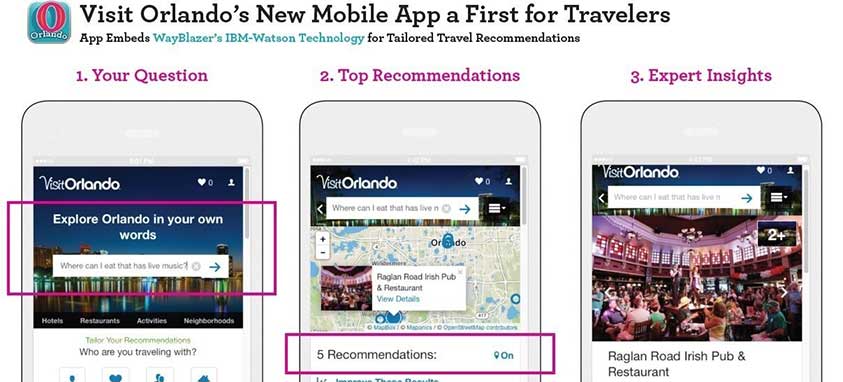
Destination marketing organization Visit Orlando has partnered with WayBlazer artificial intelligence and IBM Watson technology to create an innovative travel app that boasts tailored itineraries and personalized suggestions for one of the most visited destinations in the United States.

“As the first destination to create a mobile app using this advanced level of cognitive computing, our goal is to help visitors maximize their Orlando vacation in a way that is personally meaningful to them,” said George Aguel, Visit Orlando president and CEO. “This innovative technology is like having your own personal Orlando expert 24/7. It analyzes numerous options, extensive data, and insights from destination experts and fellow travelers to create a recommended experience that is just right for you.”

The mobile app, which integrates artificial intelligence and augmented reality, is still in the beta phase and is available for download in the Apple App and Google Play stores. The app detects conversational language to compile personalized recommendations of experiences in Orlando that best fit an individual’s needs and preferences.

By either speaking or typing into a mobile device, the app continuously learns from each interaction and gains knowledge about user preferences, helping to further refine recommendations over time. Once a question is asked, the Visit Orlando App narrows available options based on specific factors such as interests, time of day, location and weather. It also consults numerous data sources including news stories, consumer and expert blogs, third-party travel sites and Visit Orlando’s own database of travel suggestions.

The Visit Orlando App includes other interactive features to assist and entertain travelers including:

-Augmented Reality Around Me Capabilities – Easily locate and learn about relevant dining and entertainment experiences in your immediate vicinity as the app adds an overlay of augmented reality information to your phone camera’s view.

-Augmented Reality Magical Orb Game – Unlock Orlando deals by hunting and capturing Magical Orbs that appear throughout the destination via augmented reality on your phone camera. Collect all to enter a sweepstakes for prizes.

-Interactive Selfie Scavenger Hunt – Earn savings for taking selfies throughout the destination such as Orlando-themed photo filters, discounts and a unique virtual souvenir to remember your trip—a 3-D photo cube of all your selfies.

-One-Touch Destination Specialist Service – For an even more personalized experience, users can instantly connect to a helpful (and human) Orlando Destination Specialist with one touch.

-Purchase Attraction Tickets

There seems to be a direct correlation between awesome suppliers and top-notch meeting planners when it comes to amazing events. It’s kind of like the age-old question: Which came first, the chicken or the egg?

The three-day Smart Meeting Event at Arizona Biltmore, A Waldorf Astoria Resort, in Phoenix Sept. 11-13 featured the best of both worlds, bringing together quality planners and suppliers. The suppliers represented many of the top meeting venues from Canada to the Dominican Republic. The planners, from the corporate world to the Girl Scouts, participated in more than 2,000 one-on-one appointments.

Lots of Arizona suppliers took advantage of the Smart Meeting Event that touched down in their state. Tempe Tourism Office, which sponsored a fun run and morning yoga during the Smart Meeting Event, came to Arizona Biltmore to remind planners that it’s home to the second-most visited attraction in the state. Second only to the Grand Canyon, Tempe Town Lake is unique as a four-mile oasis that hosts rowing events, triathlons and boating. Besides being a place where locals flock, it’s quite the entertainment venue, hosting such performers as Kanye West. Matt Connelly, group sales manager, calls Tempe a “college town-plus,” with a vibrant cultural scene that includes performing arts theater ASU Gammage on the Arizona State University campus.

Visit Glendale Arizona, another key meeting destination in Greater Phoenix, is still basking in the limelight of hosting the 2015 Super Bowl. The big game took place at University of Phoenix Stadium, home of the NFL Arizona Cardinals. The stadium and Gila River Arena are key event venues that are part of Westgate Entertainment District, which features seven hotels with a combined 1,400 guest rooms. The district is great for events, featuring 90 restaurants and entertainment every night of the week. “We’re not just sports—we’re so much more,” said Danielle Dutsch, national sales manager.

Visit Tucson had some pretty exciting news regarding airlift. Brooke Sauer, national sales manager, told us that starting next month, Tucson International Airport (TUS) will have direct flights to and from John F. Kennedy International Airport (JFK). That brings the number of nonstop service to 18 cities, including Chicago, San Francisco, Denver and Salt Lake City. TUS is connected to 300 cities with just one stop.

Smart Meetings’ San Francisco Bay Area neighbors were also well represented at our event in Phoenix, including Kerri Harris-Gay who attended to discuss nine properties in the East Bay area of Diablo Valley. Harris-Gay is director of sales and catering at Clarion Hotel of Concord, which offers 198 guest rooms and a 4,500-square-foot ballroom, which has recently been renovated. Diablo Valley has three properties in close proximity,  Clarion, Hilton Concord and Crowne Plaza Concord, forming a great lodging campus for visiting youth sports teams, for example.

Also from the East Bay, Walnut Creek Convention & Visitors Bureau was in the house, represented by Scott Slocum, regional director of sales and marketing. Slocum calls Walnut Creek “the jewel of the East Bay.” He said the CVB is trying hard to make a name for itself in the meetings market by calling attention to its growing food scene and stellar properties, including Walnut Creek Marriott, which is almost done with a renovation of its 338 guest rooms and 17,000 sq. ft. of meeting space. Meeting Professionals International is coming to Walnut Creek on Sept. 27 for a “Nothing but Networking” session at The Balcony. “To have that type of event in Walnut Creek is a big deal for us,” Slocum said.

Pasadena Convention & Visitors Bureau had a lot of news to share. Jean-Ann Pavoni-Biller, national sales manager for the CVB, reported that two key meeting hotels are undergoing significant renovations. The 296-room Pasadena Hilton is getting a $25 million overhaul, which is expected to be complete mid-2017. The Hilton, only a five-minute walk from Pasadena Convention Center, has 28,000 sq. ft. of event space. The Westin Pasadena will begin its renovation in early 2017 and it is expected to be complete by the end of the year. The property, which is a nine-minute walk to the convention center, has 350 guest rooms and a 5,058-square-foot ballroom. Pasadena’s newest hotel, Residence Inn by Marriott, opened in July with 144 guest rooms and meeting space for up to 80. A new Hyatt Place is expected to open across from the convention center by the end of 2018.

South Point Hotel, Casino and Spa in Las Vegas is a meeting planner’s dream come true. It’s located in the meeting capital of the world, yet off the The Strip to help keep attendees focused. Another big bonus about this property, according to Mary Andrews, national sales manager, is that the resort has every amenity imaginable. Only 10 years old, South Point has 11 restaurants, a 64-lane bowling center, a 16-screen movie theater and a 22-room spa. The 180,000 sq. ft. of meeting space includes a pavilion with 80,000 sq. ft. of usable space and a covered arena, which hosts competitions such as equestrian events. “We have everything. Attendees don’t have to leave,” Andrews says.

Lots of smaller properties were represented at our Smart Meeting Event, reminding meeting planners that bigger isn’t always better. Denver’s Hotel Teatro is such a property, with 110 guest rooms and suites and 6,000 sq. ft. of meeting space. The AAA Four Diamond rated hotel is just five blocks from historic Union Station and across the street from the Four Seasons. Hotel Teatro makes sure guests know they’re in Denver with homey Western decor. According to Emily Crane, group sales manager for Hotel Teatro, one of her property’s distinctions is the natural light in its 2,500-square-foot ballroom. “People are craving natural light,” she says. Another cool thing here is The Nickel bar, which features barrel-aged cocktails. Specialty drinks are mixed in a barrel and then aged for six weeks before serving.

Of course, we were all wowed by our host, Arizona Biltmore. All of the food, decor and hospitality was extraordinary. But the one thing people kept talking about was the appetizer on opening night: short ribs served on a bite-sized crostini-like circle of crispy polenta. Yum.

Arizona Biltmore and the Smart Meeting Event made a great combo. And with 80 quality planners, who had at least 25 appointments with nearly a third of the 80 suppliers in attendance, I’d have to say we did a pretty great job of matching as well.
 

villanova-wildcats north carolina HB2Victory parade for Villanova Wildcats, 2016 NCAA men’s basketball champions
For months, North Carolina’s controversial House Bill 2 (HB2) has been widely criticized by major American corporations, U.S. politicians and organizations. The law eliminates anti-discrimination protections for LGBT people and requires that in government buildings, individuals only use restrooms corresponding to the sex on their birth certificates.

This week, the National Collegiate Athletic Association (NCAA) announced that it will relocate seven championships from North Carolina for the 2016-17 season. This includes first- and second-round games of the Division 1 men’s basketball tournament.

“Fairness is about more than the opportunity to participate in college sports, or even compete for championships,” said Mark Emmert, NCAA president. “We believe in providing a safe and respectful environment at our events and are committed to providing the best experience possible for college athletes, fans and everyone taking part in our championships.”

Just a few days later, the Atlantic Coast Conference, home to some of North Carolina’s top universities, followed suit by stating it would relocate all neutral-site championships from the state during the 2016-17 season.

For a state that takes pride in its high-caliber college basketball teams, this has both an economic and emotional impact. HB2 has had a largely negative effect on the state’s economy, and the law has been condemned by members of the hospitality and travel industries in North Carolina.

According to certain media estimates, the law has already cost the state 1750 jobs and $77 million in investments and tourism. Numerous conventions, events and company expansions have been canceled due to HB2. An estimated 19 convention groups have pulled out of the Raleigh area since the law was passed in March.

“I think there are groups that might have been hesitating, and this will now give them more cause for concern,” Dennis Edwards, president of Greater Raleigh Convention and Visitors Bureau, told WNCN.

One of the biggest recent setbacks was the NBA’s decision to relocate the 2017 NBA All-Star Game from Charlotte to New Orleans, a move that is projected to cost the state around $100 million in lost revenue.

virginia tourism lgbt-logo

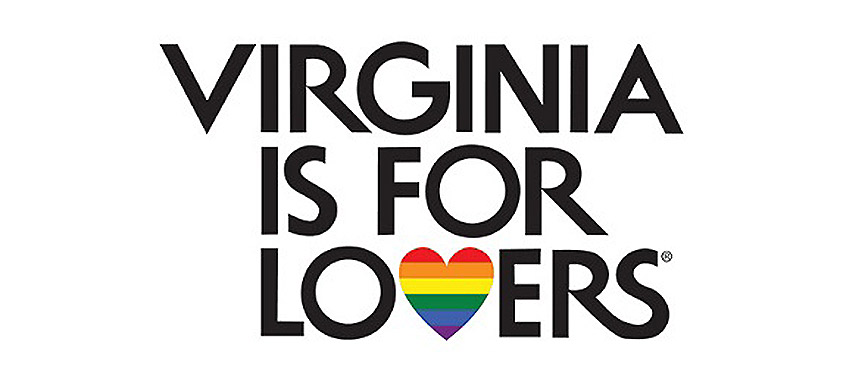
The longtime slogan for the state of Virginia is getting a slight makeover. Ever popular “Virginia is for Lovers” has become a little more diverse these days, replacing the traditional red heart used as the V in lovers with a rainbow-colored heart.

The new LGBT campaign is being launched by Virginia Tourism Corporation as part of recommendations offered by Governor Terry McAuliffe’s LGBT Tourism Task Force.

“We are thrilled to offer this new resource for the LGBT community, their friends and their families to help them plan the perfect vacation in Virginia,” said Rita McClenny, president and CEO of Virginia Tourism Corporation. “Travelers to Virginia can experience our legendary historic attractions, more than 280 wineries and 160 craft breweries, outdoor recreation, amazing dining scene, the arts, beautiful beaches, and so much more. We look forward to welcoming all travelers to the Commonwealth to discover for themselves why Virginia is for Lovers.”

The LGBT campaign features a new landing page for LGBT travelers, a resource guide and Virginia is for Lovers pride merchandise.

The state task force, which first met in 2015, is comprised of 21 community leaders and supporters of the LGBT community from across the Commonwealth. It was charged with delivering recommendations to help inspire lesbian, gay, bisexual and transgender travelers to visit Virginia by promoting the state’s welcoming and safe destinations as well as inclusive experiences.

Last year, domestic travelers spent $23 billion in Virginia. The report noted that 5 percent of travelers to Virginia identified as LGBT, and they spent more and stayed longer compared to all travelers in Virginia.

Virginia’s new LGBT campaign got valuable support from a case study following a similar promotion by the city of Richmond, Virginia. OutRVA was launched in 2014 with its own LGBT campaign, which was promoted by Richmond Region Tourism. The campaign got international attention with faux coming out letters sent to Ellen DeGeneres and Washington, DC, among others, to announce “I’m gay.”

The concept for OutRVA was developed by a group of students at the Virginia Commonwealth University Brandcenter, the country’s top-rated graduate program for advertising.

visit-baltimore-cvb

After an extensive national search, John Frisch, chairman of the Baltimore Convention and Tourism Board of Directors, announced the hiring of Al Hutchinson, 57, as Visit Baltimore’s new president and CEO. Hutchinson will assume the position on November 14.

Hutchinson brings more than 24 years of experience in the hospitality and destination marketing industry to Baltimore, most recently serving as president and CEO of Visit Mobile, where he was recognized as the 2016 Alabama Restaurant and Hospitality Alliance’s ‘Tourism Promoter of the Year.’ Under Hutchinson’s leadership, Visit Mobile launched a new brand campaign, ‘Born to Celebrate;’ saw record visitor attendance; a large increase in visitor inquiries; and an increase in the city’s hotel occupancy rate and revenue collection.

As president and CEO of Visit Baltimore, Hutchinson will be responsible for leading the growth of the convention and tourism industry in Baltimore, overseeing the day-to-day management of all sales and marketing programs and serving as the hospitality industry’s liaison to the business, civic and local community, while demonstrating the impact of tourism on the City and State.

“Visit Baltimore is a strong bureau well positioned for growth and I have great confidence that Al is the right leader to build upon recent successes of the organization,” said Frisch. “From hosting a record 30 citywide conventions in 2015 coupled with multiple years of record visitation numbers, to the creation of a separate Visit Baltimore Education & Training Foundation, he is taking over the helm of a very strong organization.  I know that the organization, and in turn the City, the region and the State, will benefit from his sales and marketing experience and strong reputation as a collaborative, transparent leader and effective communicator.”

Prior to joining Visit Mobile, Hutchinson served as the vice president of convention sales and services at the Virginia Beach Convention and Visitors Bureau. Hutchinson has spent a good portion of his professional career in the hospitality industry also serving in leadership positions with the Greater Pittsburgh Convention and Visitors Bureau, the Charlotte Convention Center, the Park Hotel in Charlotte and the Richmond Metropolitan CVB.

“I look forward to leading Baltimore’s tourism efforts and to working with the Visit Baltimore team, Convention and Tourism Board of Directors, the city’s elected officials and the citizens of Baltimore to lead the City to new heights,” said Hutchinson. “I’m excited by the opportunity to take the helm of such a strong organization.”

“Al is well-respected within the industry,” said Mayor Stephanie Rawlings-Blake. “We are lucky to have him and I am confident that he will serve as a strong advocate for tourism in Baltimore while also working to build relationships and partnerships within the community. I was impressed by his passion and perspective on how tourism can further advance Baltimore’s economy.”