As an event professional, you may understand the science of producing a trade show—ordering pipe and drape and carpet, selling booth space and scanning badges—but are you a master of the art of the trade show?

Smart Meetings talked to a pair of expo virtuosos about best practices, fatal flaws, analytics and trends that could change how we approach #boothlife. Oh, and we even included some etiquette tips at the end that you can share with sponsors.

Pre-Show Prep

The seeds of success are sown before the show doors open. Smart event organizers start early, using the event hashtag on social media. Working with vendors to spread the word and tease their presence is a great way to amplify the message. 

Create Critical Mass

The event producer is tasked with setting the stage for a productive show. Whether it is called an expo, a hall, an arena, an exchange or another name, the trade-show floor is the place where attendees can find solutions and sponsors can explain their benefits to qualified visitors. An estimated 92 percent of attendees say they are there to learn about what is new. The event organizer just needs to nudge attendees to mix and mingle with vendors.

RelatedLas Vegas Ranked Top Trade-Show City

Creative event professionals have learned that embedding the snack or lunch break in the exposition floor is one way to attract attendees. Michael Printy, trade-show chair for Las Vegas Territory, which promotes the nongaming amenities of the Silver State, says that food is a winner when it comes to attracting people. “A tasting, especially if it is native to the destination,” is a great idea,” Printy says.

He is less enamored with the idea of having speakers as neighbors on the show floor. “The entire purpose of the show is to talk to people, and when a breakout is blaring in your ear, that is not conducive. You want people walking by, not running to get to the presentation,” he says.

Printy is also not a fan of incentivizing people to collect stamps at each booth to win a prize: “It doesn’t help you tell the story of your product. They have an ulterior motive—to get stamps.”

Branded photo booths and Instagram-optimized backdrops with props have become popular ways to reach audiences beyond the trade-show floor.

Stand at Attention

Meg McDaniel, senior manager of extended destinations with Las Vegas Convention and Visitors Authority, says once everyone is in the hall, it is the responsibility of the companies to make the most of the opportunity. “I would advise staff to avoid sitting down behind a table or counter as much as possible. When you are on your feet, appear ready and excited about engaging with customers. At the very least, I suggest standing up to speak with customers when they approach,” she says.

When it comes to swag, Printy recommends handing out hot items that will bring people to the booth and asking visitors to fill out an online survey or share details to get it.

McDaniel also says organizers should encourage vendors to not tear down their booths early. “This is a common mistake. We’ve all heard the familiar sound of packing-tape dispensers sealing up boxes while the rest of us are trying to conduct business. Whether attendees have or have not paid to attend, the show has posted hours, and the attendees should be provided every opportunity to see the exhibitors,” she says. Plus, the last customers at a trade show are often some of the most engaged and can actually be your “best sale” of the day. 

Follow-up

The show isn’t over, even when the show is over. Smart event professionals continue to build relationships throughout the year. Including vendors in those communications is a win-win, even though many of them will be doing their own outreach. In the case of LV Territory, handwritten thank-you notes go out after B2B conferences and emails for large consumer shows. “If you are out of sight, you are out of mind,” Printy says. 

Measure Success

Trade shows are a sizeable investment of both time and money for sponsors. They need analytics to show that they are getting ROI. McDaniel reviews both quantitative and qualitative measurements.

“I review the quantity and type of collateral distributed and how it may have changed year over year,” she says. “What was the engagement of customers? Did they ask a lot of questions? And how many customers registered to receive our digital newsletter?” Her ultimate litmus test is when someone she met at a consumer show returns the next year to tell her about their vacation in the destination.

Printy distributes gift cards with discounts on hotels and promo codes so he can track how many come back from each show. The results offer insights to demographics and markets interested in the destination, and are a tool to strategize future outreach and sales missions.

Booth of the Future

McDaniel says people will always need and want to meet face to face: “I’m not sure that we’re ready to have AI technology completely replace human interaction.” As technology becomes more affordable, she does expect to see more interactive and immersive experiences become the new standard for exhibitors. “A travel show will probably feel more like a trip around the world,” she says.

Printy agrees. People are buying stuff online, but they come to shows to talk to someone who lives there to learn what they can do in the destination. To that end, he envisions a more experiential future for the booth.

“We already allow people to live in the ballroom from any seat using augmented reality,” he says. Ten years from now, it will be even more interactive, allowing attendees to step into a destination in an even more encompassing way.

He is putting planners on notice that they will need to provide more bandwidth as part of the sponsorship price. “Stop nickel-and-diming for the Wi-Fi,” he said.

Trade Show Etiquette  

From the presentation, The Art of the Tradeshow, at an LV Territory event featuring Meg McDaniel, LVCVA senior manager of extended destinations; Michael Printy, LV Territory director of trade shows; Sylvia Welsh, Travel Nevada sales manager; and Veronica Bonazza, sales manager for The Terry Fator Show.

  • No eating, smoking, chewing gum or candy is allowed in the booth.
  • When necessary, drinking should be limited to plastic-bottled water only.
  • All purses, briefcases, additional clothing, etc., should be stored away and out of view.
  • At least one sales rep should be standing at/in the booth at all times.
  • Professional attire and a name tag/badge are required at all times at the booth.
  • During active booth traffic, speaking with other vendors/booths should be limited to introducing a client or when information from the other booth is required on behalf of a client. Conversations with other vendors/booths should be concluded immediately when a client approaches your booth.
  • Make no derogatory comments about the competition on or off the trade show floor, either to or in front of customers.
  • Refrain from any off-color or inappropriate remarks/jokes or personal conversations/opinions that could be overheard by customers.
  • Be careful not to interrupt conversations with customers or approaching customers while they are at another booth.
  • Introduce customers to other associate members.
  • Stay within the boundaries of the exhibit space. “Working” in the aisle is prohibited by show management.

Just one-quarter of respondents to a recent survey indicate they report a service problem at a hotel, and more than one-half said that they would return to it again if a poor experience was turned into a positive one.

These were among the findings in Zingle’s 2019 Guest Service Report, issued annually by the text messaging software company, which serves the hospitality, travel and retail industries. To help you make the most out of this report, Smart Meetings has broken down key findings so you can put them to use to boost your business or venue.

What is the Zingle Study?

The statistics found in the Guest Service Report that Zingle put out this year were gathered from a survey of more than 1,100 American consumers. They weighted the survey by age, gender and region, and broke down the participants by age, gender, region and income. The survey consisted of nine questions regarding the likelihood of a customer reporting a problem to a hotel, speculation about why or why not they would report a problem, and their expected response if the problem was solved.

Related7 Hotels with Amenities That Will Elevate Your Experience

Some Key Findings

  • Nearly one in three respondents of those who say they don’t report issues don’t do so because there is “not an easy or quick way to do so.”
  • More than one in three guests are willing to pay up to $50 more for hotels that provide better service than nearby competitors.
  • Forty-two percent of respondents say they would return to a hotel if it were able to turn a poor experience into a positive one by solving a problem immediately, and an additional 52 percent would “certainly consider it.”
  • Eighty-seven percent of respondents report that they at least sometimes feel “more emotionally connected” to a brand when their customer service solves a problem for them.
  • Fifty-one percent of respondents say online reviews “greatly” impact their decision to give a hotel their business.

Good News for Hoteliers

While the survey found that only 25 percent of customers report an issue, the survey also outlines ways in which businesses can improve this percentage. For example, 45 percent of respondents said they would prefer to report an issue through SMS (text message) and 36 percent said that they might prefer this. Therefore, making text messaging available for guests could improve their tendency to report any issues they may have.

The study also found that although guests do not tend to extensively report their issues, when they do, and if the said issue is then resolved, they are likely to return to the hotel. In fact, 42 percent of respondents said they would stay at that hotel again while 52 percent said they would certainly consider it if their poor experience was turned into a positive one.

We all know things go wrong in hospitality. Even if you plan every last detail, you can still run out of a wine, accidentally. But when a mistake is made, if you can remedy your guests’ experience, they are likely to stay in your hotel again. So, don’t worry—not every misstep means a lost customer!

Editor’s note: This is a follow-up to the May 2018 article, 8 Low-Cost Tips for Making Conferences More Family-Friendly. Severine Bennet agreed to share, in her own words, how International Society of Political Psychology invested in supporting families at the association’s 2019 Annual Meeting.

Family Friendly from the Start

Our meeting was held in Lisbon, Portugal, which is considered one of the safest countries and has a variety of family-friendly activities and sites to see. Those who submitted proposals to present at the conference could make scheduling requests, and we did all that we could to accommodate those.

When it came time to register, we let family members and children register for the conference for free, knowing that they would only be present for a reception or two and perhaps the talk by their parent, spouse, etc. who was actually there to attend the event. We asked for minimal information on the family members so that we could have name badges for them and some special things for the children, to make them feel included and recognized. We provided information on the city and surrounding areas and attractions, as well as local childcare information. All of this was provided in advance of the conference via e-mails and on our web site, plus we had it available at the registration desk on site. The information and materials were obtained through the CVB and a couple of local members, and everything was free of charge.

We had one nursing mother in attendance, so we used our conference office as a private place for her to breast feed as needed. When she used the room we locked the door so that she did not have to be concerned about anyone walking in on her unexpectedly.

In the Bag

We purchased some inexpensive items for children’s “goody bags” to hand out at the conference. We bought these in bulk, so we actually have a good bit left over for future years. A total of $221.34  purchased:

  • 144 assorted coloring books
  • 144 boxes of 6-piece crayons
  • 250-piece assorted small toys
  • 96 passport books w/stickers
  • 2400-piece assorted animal stickers
  • 60 small paper bags with handles

During registration we asked for the gender, age and name for each child (as well as any allergies) and packed boy/girl bags. The only difference really was that only the girls got the princesses-themed coloring books. We initially had toys in the bags, but decided that letting the children choose their own toy (only one per child) from a box would work better. Not only did the kids get something they wanted, but the parents also got to approve what they chose. That turned out to be an excellent idea, and we enjoyed watching he children pick up and inspect various toys and put them back in the box, finally settling on one. It was a major decision, and they had to choose wisely! One little girl skipped away excitedly telling her mother that she had gotten the same toy as her friend, Rosie. It seemed we had made her day!

We also purchased name badge ribbons for family members and the children, 500 of each (again, buying in bulk at a lower price per item, and still having plenty left for future years). The adult family members were identified as ISPP Family Member, keeping it general across the board (for parents, spouses, partners, etc.). The children received “Future ISPP Member” ribbons. These were a huge hit. Not only did we plant seeds for future generations of members in our association, but the parents thought they were very cute and clever. Who knows, maybe they’ll end up in a family scrap book. We even provided the ribbons for babies and toddlers, who had adhesive name badges (so that there would be no concerns over the clips or lanyards on the plastic badge holders). If not applied to the adhesive name badges, they still offered a little memento.

The Bottom Line

Altogether, with the goody bag items, badge ribbons and adhesive name badges (72 pieces), we spent $433.92 on “family member attendee” items. We’ll need to get more paper bags and obviously new name badges each year, and maybe some more play passport books, but otherwise, we have enough supplies for about two more years for children and adult family member attendees. It was a relatively small amount of money to spend for the amount of happiness and appreciation it brought from our parent attendees and their children.

If you can find just a little bit in your budget for these types of things–to recognize that your attendees have families and that you, as an organization, are making efforts to accommodate and include them and make them feel special—you will likely reap rewards of loyal members and repeat conference attendees.

Severine Bennett, CMP, PMP, is executive director at the International Society of Political Psychology. She holds a master’s degree from Carnegie Mellon University. Her background in theater production and business administration have served her well in a career of more than 25 years planning and managing productions, events and meetings for all branches of the U.S. military and association meetings around the globe.

You attend a cocktail party. After having a few drinks, you suddenly see something that deserves a second take: A spear-fisher is in the distance, donning a wetsuit, carrying a net filled with lobster in one hand and a spear—on which sits even more lobster—in the other hand.

No, it isn’t the alcohol: This really is happening, and soon that lobster will be on your plate.

This is just an example of experiences guests are having at various hotel properties across the United States. The one described is offered at Casa Marina, A Waldorf Astoria Resort, in Key West, Florida. This method of food delivery is called ocean to table, and it ensures that your dish is as fresh as possible.

Here are a few other properties offering ocean-to-table experiences.

Crocodile Bay Resort, Jimenez, Costa Rica

Guests at this property can trek the Osa Peninsula waters and embark on their very own fishing excursion. After catching a few of the region’s unique fish, including wahoo and snapper, guests can take them to the property’s on-site chef, who will then prepare them into a custom-made masterpiece.

Panama Jack Cancun, Mexico

Every Friday, chefs at this all-inclusive property pull and serve some of the freshest fish from the Caribbean Sea, a sight that groups can witness. Using the Zarandeado grilling method, the food and beverage team prepares the more than 30-pound fish in a live demonstration and serves it alongside Mexican sides, such as rice, tortillas, guacamole and beans.

The Westin Cape Coral Resort at Marina Village, Florida

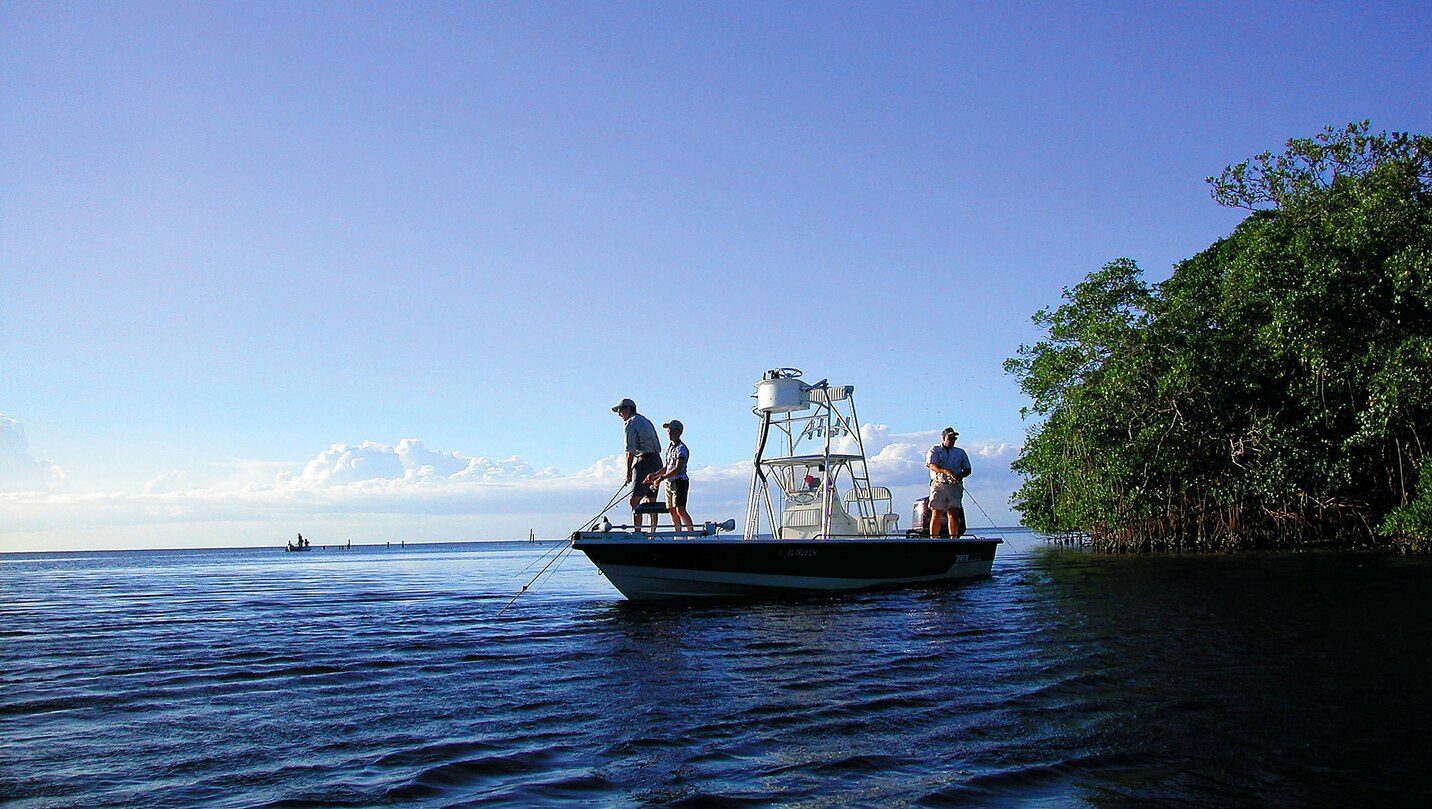
Well-known for being a prime fishing location overlooking the Gulf of Mexico, Caloosahatchee River and San Carlos Bay, the surrounding waters are replete with grouper, mahi mahi, tuna, snook, snapper, amberjack and cobia. Guests can participate in the property’s Hook N’ Cook program or join resident sous chef and fisherman Alex Kruger Springer for a captivating cooking class.

Cayuga Collection, Central America

The Cayuga Collection has properties in Panama, Nicaragua and Costa Rica, each of which have site-specific conservation and sustainability initiatives. Of these, the most notable is a partnership with Dock to Dish, which connects the resorts to local fisherman to provide locally sourced, low-impact seafood.

Jewel Grande Montego Bay Resort & Spa, Jamaica

Guests at this oceanfront resort can feast on the daily array of fresh fish and lobster caught by local fisherman that can be purchased at the on-property fish market. For groups looking for an exceptional dining experience, private chefs can prepare the catch of the day in-suite.

In this age of information, data protection is ever-more important. To address growing consumer concerns over a right to privacy regarding data and information collection, California passed the California Consumer Privacy Act (CCPA) in June. The act implements key requirements for businesses that will aid consumers in keeping their information and data private, if they wish. It is one of the strictest privacy bills to be passed in the United States and will go into effect in January. So what do you need to do to make sure your business is CCPA compliant?

MoreCalifornia Passes Strictest Data Privacy Law in US

Remember GDPR

While this law is seminal in America, Europe led the way in 2018 to ensure consumer data privacy with the General Data Protection Regulation (GDPR), which set the ball rolling for stricter data privacy laws worldwide. When GDPR came into effect, it also affected businesses outside Europe who dealt, in any way, with European consumers or clients—meaning it affected many American businesses, and planners who collected data from EU attendees, as well.

(For a refresher on what GDPR was and tips on how to remain compliant with it, check out this Smart Meetings article.)

More: GDPR Redefines Industry Privacy Practices on a Global Scale

Now, with imminent implementation of CCPA, it’s time for anyone who collects data from Californians to look at their marketing practices to make certain of compliance.

Key Requirements of the CCPA

Following are the four key requirements of the CCPA, as stated in a press release from the Attorney General of California.

  • Businesses must disclose data collection and sharing practices to consumers;
  • Consumers have a right to request that their data be deleted;
  • Consumers have a right to opt out of the sale or sharing of their personal information; and
  • Businesses are prohibited from selling personal information of consumers under the age of 16 without explicit consent.

Fines under the CCPA will cap at $7,500 per violation, although unintentional violations will only be liable for fines up to $2,500 per violation.

Public Comment

Since the law’s enactment, the attorney general’s office has been holding a public comment period as part of the law’s review process. This means any individuals or businesses that wish to comment on the law may contact the attorney general’s office before Dec. 6. Additionally, the attorney general will hold public hearings in Sacramento, Los Angeles, San Francisco and Fresno in the first week of December for those who wish to say their piece in person.

Even after January, a six-month grace period from enforcement will allow businesses to acclimate to the new law.

Now would be a good time to make sure your marketing and data collection adheres to the new requirements. And hey, compliance can become a marketing strategy in and of itself! Who wouldn’t love to have a little more control over their data?

Party season has begun! While normal people are carving pumpkins and finalizing their Halloween costumes, event planners are getting ready for holiday parties. Our clients are looking to us to plan beautiful and memorable events and, if you’re like me, you have a few of your own to manage as well.

Once you have all the details organized, the invitations sent, the decor plan in place and the entertainment under control, it’s time to think libations! This is a great opportunity to make an event stand out to guests, and for nonprofits, can be a money maker as well.

Related8 New Year’s Eve Drinks to Replace Champagne

As you’re designing your event, here are some things to think about:

  • If you’re providing all the beverages (i.e., no cash bar option), you’ll need to consider how many drinks you to plan to provide each guest. Not enough can make them leave early, but too many can be problematic, too. What’s the right number for your audience and event?
  • Will the weather impact your drink choices? If you anticipate snow or cold, maybe a hot toddy of sorts would be good! If you’re in a warmer climate, how can you celebrate the season in a way that won’t overheat guests?
  • A fun idea is to serve your custom-themed drink in a unique or funky glass imprinted with your client’s (or your own) logo. Make the glass something your guests can take home to memorialize the event. If you’re creating a holiday event for a charity, arrange with the vendor to charge a little extra for the cocktail with the additional money going to the charity.
  • Themed cocktails can actually save you money if your budget is tight. Work with your bartending vendor to come up with some fun and creative ideas.
  • Of course, any time you’re offering alcohol, you should make sure you have the necessary insurance and licenses required for alcohol service. In my metro area, many of the smaller communities have different rules—so be sure you understand yours.
  • If you’re producing a larger party, consider whether you need to hire (discrete) security.
  • Always provide non-alcoholic options. Water, coffee and tea are inexpensive and easy-to-manage, self-serve choices.
  • One of our favorite things to do is provide a coffee bar at the end of the event. It can help caffeinate guests and keep them warm and fuzzy for the trip home.
  • Consider offering car service for those not able to drive safely. At the very minimum, provide the contact information of cab companies (in case guests don’t have a Lyft or Uber account).

RelatedDrink Your Veggies (with Alcohol)

We’ve developed a drink guide to help you know exactly how much and what type of alcohol you will need to prepare for. Feel free to download A Guide to Serving Alcohol at Your Event.

Tracy Fuller became an entrepreneur 32 years ago when she started her first company, Happy Occasions. Nearly three decades later, she leads the team at InnovativEvents, providing event decor, backstage management and overall coordination and management of all production aspects. She has worked with Elton John, Bon Jovi and Keith Urban, and with companies such as Google, Oracle and Allstate Insurance. Her passion is helping other entrepreneurs create their event business without going through all the hard knocks she did. You can find tips and tricks to advance your event business at Event Heroes.

Businesses today are constantly striving to work out how they can achieve more, improve and work more economically, often through meetings and brainstorming sessions. Brainstorms provide a valuable platform for sharing ideas and planning creative ways to tackle challenges as a business.

But how can you make sure that you’re getting the most out of your brainstorming sessions? Whether it’s an intimate team meeting or a business-wide innovation session, it’s important to ensure you’re set up to make the most out of every session instead of wasting precious time.

Related3 Steps to Strategic Planning

Experimenting with new ways to come up with ideas, suggestions and innovating plans is important for any business. If you’re struggling to motivate your team to tap into their creative nerve, read on for three creative brainstorming techniques to improve your meetings.

1. The Pre-Brainstorm

While the aim of a brainstorm is to work as a team and bounce new and exciting ideas off one another, it’s often best to take advantage of some individual prep time beforehand. This might sound counter-intuitive but making people aware of what will be covered and asking them to plan ahead often renders better results.

Team members coming to the table with a solid understanding of what needs to be achieved in the brainstorm as well as a few initial ideas are far more likely to add value to the session than those who do not.

2. Moving Meetings

Being in a different setting often helps employees think outside of the box. For this reason, one of the best brainstorming techniques is to get up, step away from desks and boardroom tables and get out of the office. There are many ways you can make this work, and plenty of businesses utilize walking meetings. Going for a walk as a group or meeting somewhere outdoors can really help employees break away from their normal, chained-to-their-desk pressurized mindset and come up with different ideas. Fresh air and exercise are also a natural way to stimulate employee’s creative traits.

Another option is to book a creative venue where your team can feel inspired. This could be a local botanical garden or even the grounds of a historical castle. The options are endless, but getting your team away from their normal setting can get creativity and problem-solving abilities flowing more freely.

3. Point of View Brainstorming

Brainstorming sessions focused on solving a problem can be difficult. If it’s a problem you’re facing, you obviously aren’t quite sure how to tackle it. Try taking a different point of view and putting yourself in the shoes of someone else, like a key customer, client or even an industry expert. What would they think of the problem, and what would their likely solution be?

RelatedUpgrade Your Event with These Tech Innovations

Wearing different hats, so to speak, during a brainstorm allows team members to tackle challenges from a new perspective and can often bring about some very interesting results.

Once this is all done, you’ve got really creative ideas—and that’s great. But now what? How do you keep the momentum going and ensure the brilliant ideas you came up with come to fruition? Now they need to be followed up with action points. Before everyone leaves a brainstorm session, action points need to be assigned so that the session, and the great new techniques you’ve employed, don’t go to waste.

Jacqui Wylde is business development manager at CT Group Travel, a meetings management company with a wealth of experience in planning and delivering meetings.

family-friendly events

Academic conferences are very important to the careers of professors and researchers. They must present their work and get it published to move up the ladder. Conferences also provide networking opportunities with other professors, publishers, universities and vendors. Attending one, two or three conferences a year can make a huge difference in an academic career.

But while away at conferences, these people are paying a price. Not just money, but personal costs. A three-day conference can mean five days away from home with two days for travel. For someone with a family, that might equal a week of a spouse or mom taking care of the kids and the dog, or a big expense for a nanny. The traveling parent misses bedtime stories, goodnight kisses, soccer games and recitals; they might even miss their baby’s first words or first steps. No matter how major or minor these things seem, you can’t recapture them or get a do-over.

For more helpful tips, visit our Smart Woman’s Guide.

As conference planners, we can offer attendees more options. We can make events more inclusive for families, especially if attendees want to pair a family vacation with a conference trip. A good first step is to survey attendees to find out how many might want to bring children and families. If only a few, you can work with them one-on-one for more family options. If you’ve got a lot of interest, you might want to consider some changes to your event(s) overall, and get your organization’s leadership on board, plus have conference codes of conduct to cover mothers-to-be, LGBT attendees, children, spouses, etc.

Here are some easy and low-cost changes to make your conferences more family-friendly:

  1. Choose family-friendly destinations. Lots of cities have children’s museums and attractions for people under 18. Beach and mountain locations with lakes and nature centers often also offer programs for children.


  1. Look for hotels with family suites. Include some in your room block if you know you have takers for them.


  1. Provide information on licensed local childcare options. Check with the CVB or hotel for suggestions (daycare, in-hotel babysitting, local day camp programs, etc.).


  1. Add a line or two to your registration form. Ask for the age, gender, emergency contact information and food allergies/dietary needs for any attending children. Get some markers or crayons and allow kids to decorate their own name badges. Have a small “party favor” bag for them. Use stick-on name tags or clip-on badge holders with young kids—no lanyards.


  1. Allow children (and spouses) to attend one or more social events. Choose something on one end of your event in case family members aren’t in town for the entire conference. This will help them feel included, and attendees with families will find common ground. Have the chef provide some “kid-friendly” finger foods (ex. pigs in a blanket, pizza bites, etc.) and non-alcoholic drinks.


  1. Allow presenters to ask to speak on one of the first or last days of the conference. This will minimize their time away from home. If they have multiple presentations, schedule them on the same day. And offer a discounted “parent registration rate” if they are only attending part of the conference.


  1. Get information on family attractions and activities. You can ask for points of interest from the CVB or a DMO.


  1. Make new mothers more comfortable. Offer to store breast pumps under the registration table or in the planner office (somewhere always staffed or secure) so that new moms don’t have to carry them around all day. Better yet, arrange for a small room with a refrigerator in the conference venue for mothers who need to use breast pumps. Provide labels and markers to label bottles with names. And have express shipping information available if they need to ship the milk home.


These eight ideas cost little or no additional money. Every conference will be different, and you might have other ideas for your events, or you might have a larger budget and can do more. But even with a limited budget, you can take steps to help make your conferences more family-friendly and inclusive.

Severine Bennett, PMP, is executive director at International Society of Political Psychology. She holds a Master’s Degree from Carnegie Mellon University. Her background in theater production and business administration have served her well in a career of 25 years of planning and managing productions, events and meetings for all branches of the U.S. military and association meetings around the globe. This topic was covered in two articles published in scientific journals (“Family-friendly academic conferences: a missing link to fix the “leaky pipeline”?” published in December 2017’s Politics, Groups, and Identities; “How to tackle the childcare-conference conundrum” published in the Proceedings of the National Academy of Sciences, March 2018).

Where would event professionals be without the tireless hotel employees who staff our events, set up tables, serve the carved roast beef and dim the lights at the end of the day? Mary Jo Valentine Blythe, founder of The Above and Beyond Foundation (TAABF), calls these people the “heart of hospitality” and set up an award to thank them in a big way.

Beginnings

Mary Jo Valentine Bythe

Blythe, who founded the events production company Masterplan in 1991 and later sold it to Creative Group, had seen for herself how hard frontline hotel employees work—day and night, “and with a smile.” Thus was her idea for TAABF born. To set the parameters, she worked with co-founders Thierry Kennel, regional vice president and general manager of Four Seasons Hotel in Denver; Rhea Stagner, vice president of sourcing and supplier relations at Maritz Travel; and Ron Officer, chairman emeritus at The Creative Group. Then she recruited a stellar board to raise money for the program and guide its initiatives: Stacy Lucherini, regional vice president with Associated Luxury Hotels International; Maggie Lapcewich, executive vice president corporate strategy and communications with Breakthru Beverage Group; Rhonda Brewer, vice president of North American sales with BCD Meeting & Events ; Tony Lorenz, CEO of PRA; Lynn Pavony, director of incentive sales with Four Seasons Hotels and Resort; Craig Reid, CEO of Auberge Resorts Collection; John Reimers, chief operating officer at Propark; Tom Povich, regional vice president of venues at PSAV; and Kevin Edmunds, vice president of meetings and incentive sales at AIC Hotel Group. TAABF’s stated goal is “to recognize and reward outstanding individuals employed in the hospitality industry by providing grants to help them attain their personal and professional goals and better their lives… The Foundation strives to motivate individuals to elevate their service levels, reinforce employer service initiatives and provide a resume accomplishment for job advancement.” Lorenz, in an article for LinkedIn, called TAABF a “thank-you to these individuals for inspiring us to be grateful to them for their work. The Foundation is hopeful our work will lead to many more avenues for recognition of many individuals in many ways for years to come.”

Giving Back

TAABF manages a turnkey CSR program called Boomerang! that asks meeting attendees to keep an eye out for outstanding individuals they encounter—from drivers and doormen to housekeepers and AV techs—and then nominate them for a $10,000 grant in the name of the host company. In September, TAABF awarded $10,000 to Gary Gill, an employee at The Broadmoor, who started his career there as a telephone operator. He accepted the award “on behalf of all the professional Broadmoor employees.” At IMEX America 2019, Bryson Taylor, an employee of Fudale, a Global DMC partner in Las Vegas, was given the award “for consistently going above and beyond in his role.” He planned to use the money as part of a downpayment on a home for him and his son. Blythe awarded three grants at SITE Classic in October and counts event planners as an integral part of her community. “This is a 100 percent volunteer organization,” she said. “Planners can help by volunteering to be ambassadors—to spread the word and solicit donations and nominations; select TAABF’s CSR program as a part of the meetings they produce; and use TAABF as their company/ association’s charitable entity.” Board member Edmunds sees much flexibility and empowerment for meeting professionals in the program. “Event planners have a massive opportunity to position the rock stars that have helped produce their event at the highest level. The Above and Beyond Foundation provides a platform for our event planners to either bring in a CSR portion to their program or actually work with us to recognize a certain individual. In a lot of instances, our grants are life-changing, and, frankly, that is only a fraction of what the grant winners have given to us,” he said.

It was April 2005 when the thought first struck me. I was in Hall 8 of Messe Frankfurt, walking down one of the aisles of IMEX—the international trade show I was working for at the time. It was 3 p.m. and the noise was incredible; everywhere I looked people were interacting: discussing, debating, gesticulating, negotiating, smiling, sharing, influencing and convincing and it was then, as I surveyed this sea of human connectivity, that I realized what powered the most successful global business events.

On that day, it occurred to me that those who were thriving at the exhibition weren’t necessarily promoting the best brands, products or services; instead they exceled at face-to-face human interaction and were highly skilled in the ability to connect, interact and communicate effectively with others. In short, I began realizing that as an organizer you could have the best location, the best venue, the best AV, the best F&B and the best content being delivered by the best speakers, but that it was the social skills of those attending that powered the success of your events.

Looking back, I have no doubt that my experience on that sunny spring day almost 15 years ago led me to the professional situation I find myself in today—working with a small team of behavioral psychologists, speaking and training internationally on a subject we have called Meetology—the behavioral science powering world-class social skills; a large element of which is dedicated to helping event organizers equip their attendees with the social skills needed to excel.

But what about your social skills?

Related11 No-Fail Icebreakers for Gal Bonding

The dichotomy of the meetings industry is that while its objective is to facilitate face-to-face interaction for professionals in other industries, the industry itself also offers a myriad of international trade events to attend where your social skills need to be on point too. I’ve delved into our vast library of bite-sized, behavioral nuggets and am sharing one from each of our 5-stage Meetology behavioral models in the hope they can help you excel too.

1. Prepare: Expect People to Like You

A recent study by Erica Boothby, published in Psychological Science found that most people are too pessimistic about how much strangers like them—something psychologists call The Liking Gap. Relax and try to remember that most people are too busy thinking about something far more important than you…themselves!

2. Connect: Offer a Smooth Handshake

Psychologists in Germany trained people to handshake using either a sharp, spiky manner or a fluid, smooth one. Those who had experienced a smooth handshake reported feeling psychologically closer to the experimenter and rated them as more likeable and open.

3. Interact: Ask the Right Questions

Researchers at Harvard Business School found that while asking questions increases likeability, asking follow-up questions had a particularly positive impact. An example would be asking someone to elaborate on something they had mentioned to you earlier in the conversation.

4. Resolve: Agree Before Disagreeing

To reduce the possibility of conflict, before disagreeing with someone, first point out how their current viewpoint is right before you explain your opinion. (Example: “Ah yes, you made a couple of really good points, I think these are important issues.”)

5. Influence: Use these two Simple Words

Behavioral research from Lisa Williams and Monica Bartlett  suggests that a simple “thank you” can encourage openness and interpersonal warmth, even with strangers. If you want someone to co-operate with you, a simple ‘thank you’ note can be a powerful tool.

Remember, we humans are built to interact, and the fact we are social creatures is a powerful argument for the meetings industry to use as the events it delivers facilitate an important human need.

However, could you help your attendees even more?

In an industry increasingly needing to justify attending the events it creates, I believe the most successful events of the future will be those that equip those attending with the behavioral skills to better connect, interact and communicate on-site. After all, it is human interaction that powers the success of every business event this amazing industry delivers.

Jonathan Bradshaw is the creator of Meetology and an international speaker on the behavioral science powering world-class social skills. You can find him @meetology.