Whether you’re trying to get sponsors for your event, or sponsoring yourself, there are some key questions to ask before confirming that activation. And yes, this goes way beyond just putting your logo on every surface of the designated booth space or interaction.

Let’s break down what to do and what not to do when planning a sponsor activation.

To Do: Start by asking yourself, “Is the sponsor a good match for the organization?”

It may sound simple but if the sponsor is not the right match for your organization, then its presence there will be both unproductive for them and confusing for attendees, the latter of which could lead to a negative experience overall and affect their view of your organization.

More8 Essentials for a Killer Sponsorship Strategy

Not to Do: Have sponsors for the sake of sponsors.

What does your sponsor ultimately want to accomplish? Make sure they have synergistic goals with your association. You don’t want to take on sponsors simply for the sake of having them and/or getting money in the door. Having the right donors activate is what will make a difference in the attendee experience and ensuring the right perception of your organization and its goals is clear.

To Do: Focus on collaborative sponsors (aka partners.)

Just as you need to ensure their goals are synergistic to yours, you also want to work with those who are open to recommendations on the best ways to activate at your event. Often times companies have a set activation they do for all event sponsorships.

See also: Partnership Lessons from a Cvent Panel Speaker

While that may work for them in many scenarios, the sponsor who is going to be open to ideas of what will make their brand stand out best at your event is ultimately the best sponsor for you. Activations should be as unique as possible to the sponsoring organization so it makes sense for both of you. If it doesn’t, you will lose the attendee next time around.

After all, your suggestions all tie back to making both organizations look good, so it’s a win-win! Which leads me to my next suggestion…

Not to Do: The same thing that’s been done over and over…and over again.

We’ve all been to that event where all the booths are holding raffles in exchange for an attendees’ contact information (#beentheredonethat) or where the sponsor’s remarks at the opening sessions, luncheon or closing are just well, dull.

Instead, look for new ways to activate that can be mutually beneficial to both of your organizations. For instance, sponsorship of breakout sessions or workshops that are relevant to attendees’ topics of interest are a great way to provide training and education for them and keep a sponsor’s name top of mind.

📍 Smart Tip: Be sure the workshop topic and the sponsor’s corporate message are synergistic such as when Lifetouch, the major photography company behind school photos, sponsored a headshot photo booth at a recent conference for National PTA.

To Do: Ensure the sponsor’s message to attendees is clear.

Let’s say you’ve got the right sponsor(s) and the activation is different, stand-out and on message—as I would sincerely hope it is by this point in the story. Do the attendees know what to do next? Is the sponsor’s call to action clear?

Some sponsors may be in it for brand awareness, which can work, but even then, there should be a clear takeaway for anyone who engages with that sponsor—whether it’s future business, referring business or following up for a separate meeting later.

The best sponsor activation in the world can easily be negated by a lack of follow through in the message to its intended recipient. Give them a clear call to action and next step and then you’ll truly have a successful activation.

Amaia Stecker has more than a decade of experience planning a wide variety of events for corporate, nonprofit and social organizations. With more than nine years in event production and 13 on Capitol Hill, she approaches each event holistically with an eye for detail and a passion for making the experience purposeful. In 2015, Amaia founded Pilar & Co., an event planning agency specializing in innovative association and government relations events that achieve a defined purpose.
Are you ready to enter the age of experience? A new study from the global agency George P. Johnson Experience Marketing singled out the effective emerging practices smart planners used in the last year to produce transformational messaging. David Rich, senior vice president of client services for the company, drilled down on the trends that are motivating employees and consumers.

Delivering Depersonalized Personalization

People expect events to mirror the experiences they are getting when they pick up their breakfast at the local coffee shop. “What happens in a meeting can’t pale compared to what they see in daily life; it has to exceed expectations to achieve the level of engagement companies demand,” Rich said. Attendees want the registration experience to be just as simple as when someone orders Starbucks coffee on the phone, walks in and picks it up without talking to anyone. “It needs to be exactly the way you want it, when you want it, without waiting in line,” he said. Meeting professionals have to learn how to deliver efficient and meaningful experiences that are not interrupted with transactions for paying.

Today, many registration processes are exactly the opposite of that paradigm. Attendees are required to stand in line and the result is the same as what everyone else gets. The good news is that because attendees are already registered and staff knows they are coming, they are armed with the information they need to make showing up easy and bespoke.

Leveraging emerging facial recognition, date analytics and AI technology, could make delivering frictionless customized services ubiquitous at expo halls around the world in the next 3-5 years, Rich predicted.

Cisco is already tapping into the power of data with its GSX Portal experience. Attendees scan their badges and Bluetooth beacons track them around campus, recommending activities based on their individual learning objectives. It even points them in the right direction using dynamic floor projections through the Cisco Event app. “This provided a more personalized, more exciting experience that brought it to life in the space—people lined up to do it,” Rich said.

Inviting Story-Living

experiential trends
Dreamforce

The evolution of storytelling invites participants to co-create their interaction with a brand. “This leverages the innate human desire to create and be seen,” Rich said.

Instead of sharing ideas through videos, or talking from stage, meeting planners are now putting people inside the experience of doing something so they walk away smiling and saying they want more of that. “Participating is the shortest distance between not knowing and believing,” Rich said.

Examples include a Westworld built at South by Southwest that invited attendees to create and experience their own show plot and Salesforce’s Dreamforce that transformed San Francisco’s Moscone Center into a camp for exploring.

Leveraging Sensorial Immersion

When story-living is boosted by sensorial immersion—appeals to all of the senses—as part of the food and beverage, staging and lighting, the message is even more memorable. “Experiences that wow audiences by appealing to and pleasing the senses hold the power to deepen engagement, fuel advocacy and amplify the brand socially,” the study concluded.

Rich says companies don’t have to have a massive budget to tap into these powerful trends. Involve people in social cause expression. Simply giving people a chance to express themselves by welcoming feedback and letting them discover branded moments will lead to more sharing and voluntary participation.

Washington has had the reputation as a good ole boys club for decades. If you weren’t in the inner circle, getting things done on Capitol Hill was an uphill battle, pun intended. However, times are changing. Not only are women taking over a larger portion of the seats at the table, a new wave of representatives is bringing about new opportunities for advancing legislation for associations.

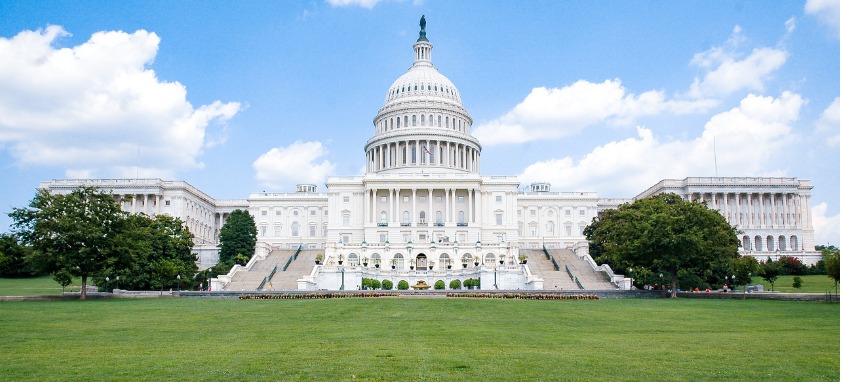
With this new crop of senators and representatives come new staffers ready to serve as the gatekeepers between you and getting your organization’s agenda in front of legislators. Take it from me, someone with more than eight years experience on the Hill planning association and government relations events: avoid these top five mistakes and your efforts to book meetings on the Hill will be more successful.

Mistake 1: Requesting A Meeting Too Far In Advance

Look, I’m all for planning in advance, however, the schedules of congressional offices move so fast and are so tightly coordinated, you can’t ask for a meeting two months in advance and expect to get it. There is simply too much time that could pass and too many things that could happen in the government that’ll derail that plan, so offices can’t commit.

Related3 Tips for Landing Sponsorships in 2019

The ideal is to wait about two to three weeks out from your requested dates. Any further out, or with less notice, and your chances of a face-to-face go down drastically.

Mistake 2: Being Inflexible With Availability

You’ve chosen the week you want to meet, but don’t get so locked in on specific time. You are the one asking for the time, so you need to be flexible with how many windows you offer up. Narrow time constraints will hurt your request.

Mistake 3: Following Up Too Aggressively

Not hearing back within 24–48 hours is not a reason to freak out and follow up again with a “Just wanted to check in here…” type email. More than 90% of the time, if you haven’t heard back it’s because the request is still in process. Be sure they see you as someone they want to meet with, and not a time suck, by providing a thorough, yet specific background on why you want the meeting.

Mistake 4: Submitting the Request in the Wrong Way

It may sound simple, but following directions for submitting a request is paramount. Some offices have forms that need to be filled out in lieu of lengthy emails or attachments. Find out if your member’s office has a specific protocol to follow for requesting a meeting, then follow it. Simple as that.

Mistake 5: Going Around the Scheduler

It doesn’t matter that you have a relationship with the chief of staff or legislative director. Follow the right channels and climb the ladder. The only time going directly to your connection is appropriate is when you have exhausted all of your other options for connecting with the scheduler (i.e. multiple emails, phone calls and voicemails) and time is running low.

RelatedInsider Tips for Planners Bringing a Meeting to St. Louis

Jump to the top of the chain too soon and the result could be deprioritizing your request. Why? Simply because you also committed Mistake 4 and did not follow the office’s protocol.

Amaia Stecker has more than a decade of planning experience for corporate, nonprofit and social organizations. With more than 13 years in event production and nine on Capitol Hill, she founded Pilar & Co. in 2015, specializing in innovative association and government relations events and matching organizations to like-minded sponsors and donors.

In July of 2019, Marriott International launched a Mastermind peer mentoring program that brought together a collaborative community of planners to take a deep dive into the five trends identified in a landmark study sponsored by PCMA and Marriott. Participants discussed the evolving needs of attendees and shared their experiences with adjusting their programs to meet those needs. Some of the participants have agreed to share their insights with Smart Meetings readers on this page. The group will meet regularly over the next 8 months and share updates here. Bookmark the page and you can follow along virtually.


Amy Popper
November 13, 2019

Joe Leavitt
November 13, 2019

Tessa Goettsch
November 25, 2019

Joe Leavitt
December 10, 2019

Tessa Goettsch
December 16, 2019

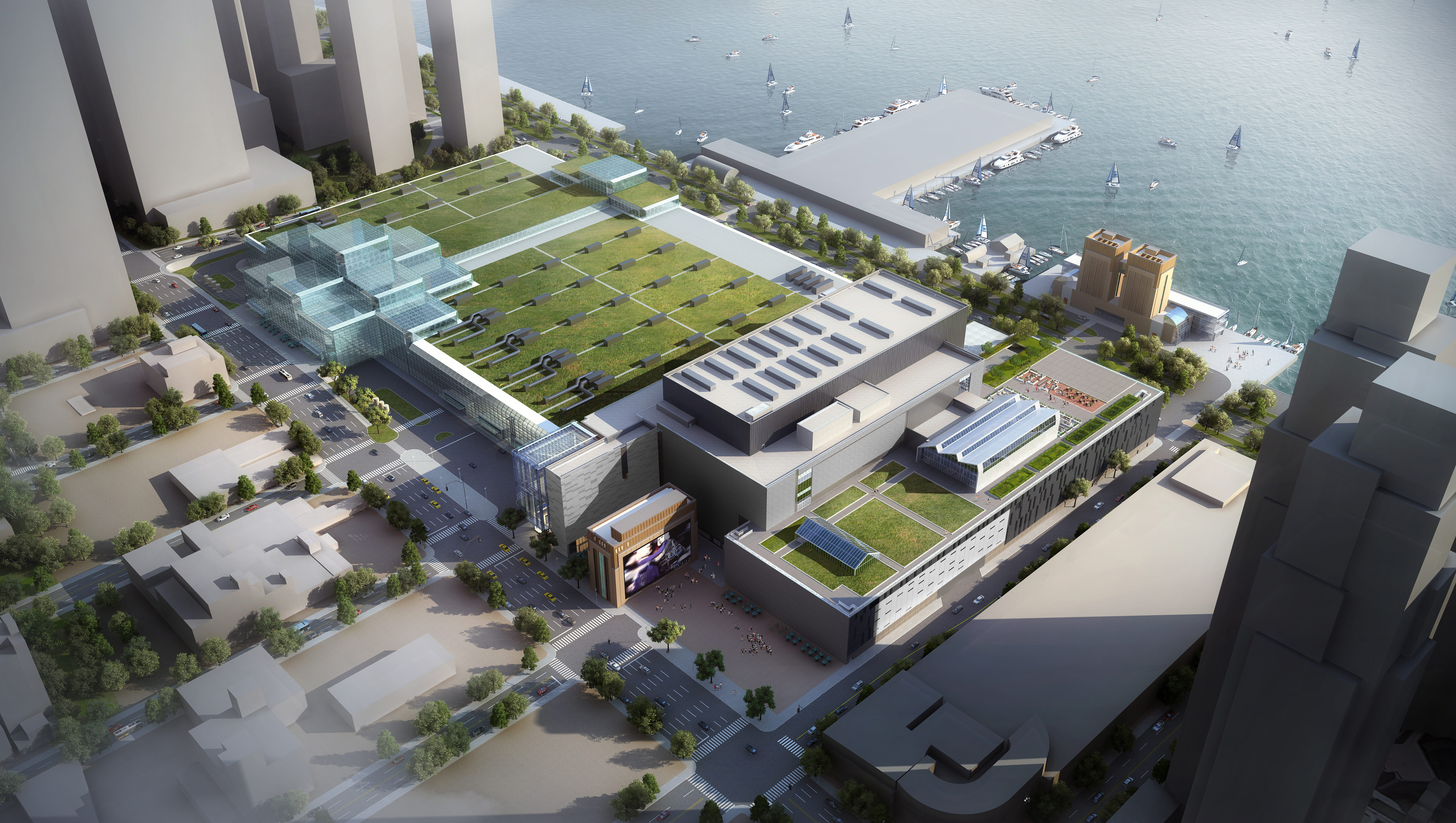
New York Gov. Andrew Cuomo recently announced that the $1.55 billion expansion of Javits Convention Center in New York City is set for completion in March 2021, exactly three years after the groundbreaking. He joined the project team and construction workers this week to put his signature on one of the last steel support beams to be laid.

The Javits Center was erected in 1986 and has been host to some of the nation’s largest trade shows and conferences, bringing in an estimated $2 billion.

Pioneering Conference Center Sustainability

Renovations in 2014 included some of the center’s pioneering sustainability efforts, such as its 7-acre green rooftop, which has become a haven for 29 species of birds and five species of bats amid an otherwise concrete jungle. In 2016, three bee hives were installed on the roof, and two more have since been added.

Related: How Cisco Built a Bridge to Sustainability

Some 2,500 ounces of honey was harvested in 2018, which was distributed to customers as well as used in the center’s catering recipes. The green roof has substantially helped to insulate the building, and combined with other measures, has resulted in a 26 percent reduction in the building’s energy usage. The live roof also retains 77 percent of area rainfall, mitigating potential issues from rainwater runoff.

New Expansion Benefits

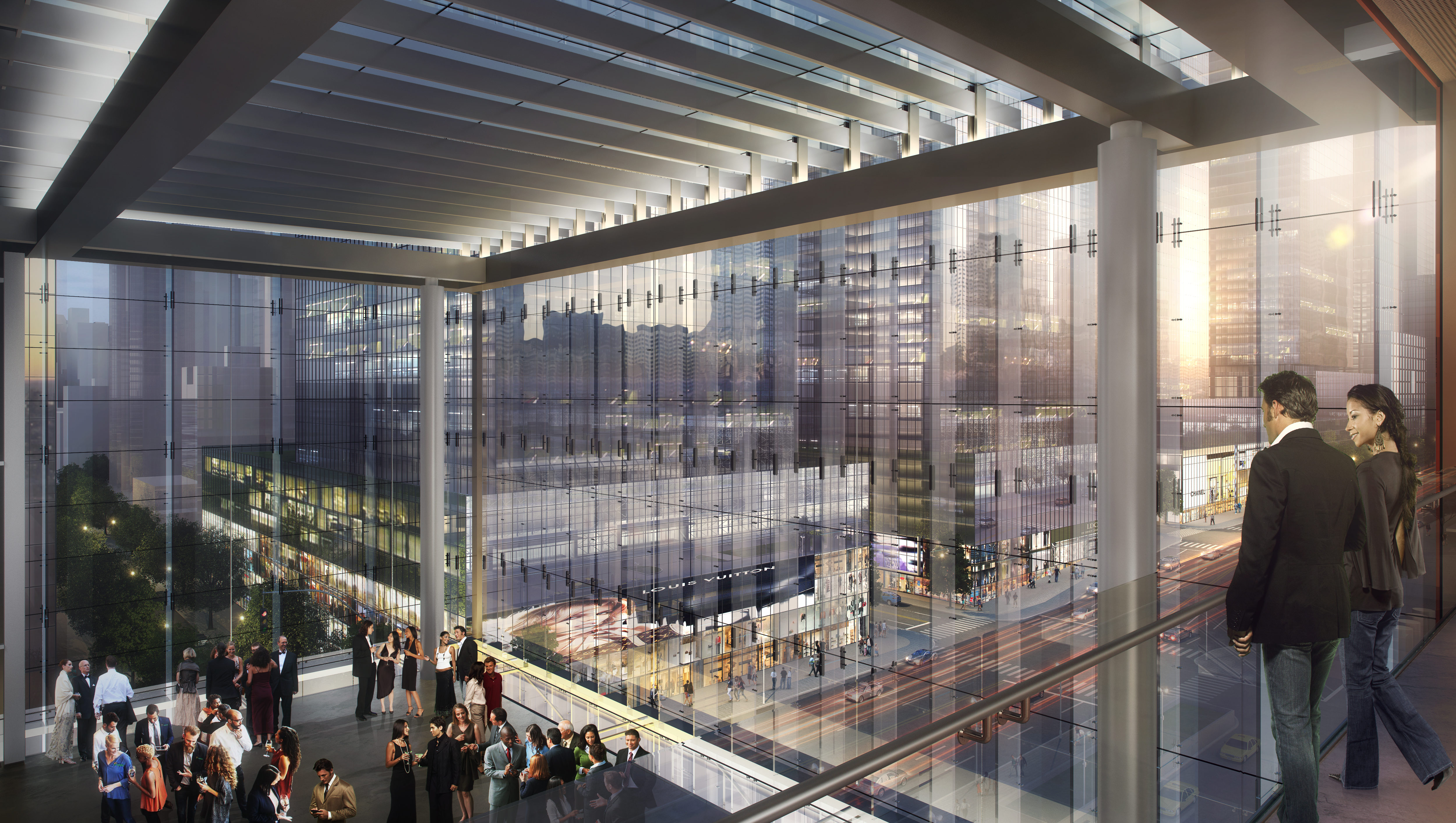
The expansion will add 1.2 million sq. ft. of total event-related space to the facility, including 500,000 sq. ft. of contiguous event space on one level, and a rooftop pavilion and terrace capable of hosting 1,500.

See also: NYC Challenges Planners to Lose Fear, Find Authentic Voices

Other additions include a four-level truck-marshaling facility to reduce area congestion and pollution. The green roof will see the addition of a 1-acre rooftop farm, expected to produce as much as 40,000 tons of produce for use in the convention center’s catering.

“With so many jobs dependent on large-scale events hosted here, the Javits Center has become one of New York’s most important economic assets, and this expansion will ensure it remains the nation’s busiest convention center for generations to come,” Cuomo said.

Normal Operations Continue

The construction has been carefully planned to avoid any impediment to the center’s daily activities and events. The current four-floor structure has 760,000 sq. ft. of exhibition space and is proceeding normally with operations until the completed expansion. The first event upon full completion of the project will be the joint International Contemporary Furniture Fair and LightFair in May 2021, which will bring more than 40,000 design professionals to New York City.

Whether it’s a huge corporate party, an intimate office gathering or an opportunity to do something totally removed from work, meeting professionals are kicking things up a notch this season when it comes to end of year gatherings. With the holidays and New Year’s Eve around the corner, this month is all about not only making the most of the last part of 2019, but the last part of a decade! So a lot of people are going big when it comes to entertainment.

Here are my top tips for throwing a fantastic fete this season.

Set the Tone

Music sets the mood for any event, so it’s important to create the right ambiance (whether it’s loud and high-energy for dancing or chill music designed to be able to hold conversations over). Music brings the party to life, regardless of the size of the gathering or the theme. Consider the following options:

  1. DJ/Karaoke Party
  2. Fun Party Band
  3. Tribute Band
  4. Solo Acoustic Performer
  5. Dueling Pianos
  6. String Duo, Trio or Quartet

Theme It

A fun theme helps connect guests and gives the event a central focus to create menus, music, entertainment and more. From a classic casino night with games to a Cirque-themed bash a theme is a fun way to get guests involved and liven up the night. Some popular theme ideas include:

  1. Casino Party
  2. Motivational Speakers/Dancers
  3. Cirque Performers (Hoop dancers, poi or jugglers)
  4. Aerialists
  5. Fire Breathers
  6. Stilt Walkers

MoreBest New Year’s Eve Destinations to Ring in 2020

Step it Up

Another fun way to really involve guests is by offering an activity or an interactive element. When you give party guests something to do, it really takes the party to the next level, gets everyone involved in some way and makes for a really memorable night. Some of my favorites are:

  1. Photo Booth (including all sorts of fun props to liven up each picture)
  2. Comedian
  3. Living Mural Painter
  4. Tattoo Artist, Face Painter or Henna Artist

For those that really want to take their event up a notch, consider a bash focused on all things magical, mysterious and mystical. This type of unexpected element really gets people interacting on a deeper level and it’s always fun to see how guests respond. “Out of the box” ideas can include:

  1. Fortune Tellers
  2. Mentalists
  3. Hypnotists
  4. Strolling Magicians

The most important part of any holiday gathering is the guests. Making sure everyone is involved, included and having a good time is really what any event is about. It’s also the host’s job to have fun with their guests, which is why having an expert take care of the entertainment is ideal.

Eric Cheroske is the founder of Got you Covered Entertainment, with headquarters in Phoenix, Arizona. Since 2003 Cheroske and his team have been creating memorable and impactful events with outstanding entertainment, ranging from weddings, to corporate galas and everything in between.

Being an effective meeting planner means you’re an ace at multi-tasking, plus your networks are wide and your personal tool kits expansive. As we age and start thinking about the future, those assets will come in handy when exploring new paths of happiness or finding a truer sense of purpose throughout our golden years.

Do you have a second act in you? Or more pointedly, have you ever thought about the possibility of one at some point after your journey as a meeting professional has run its course? To be clear, I’m not referring to retirement, although for many, that might be the calmer, gentler second act that you look forward to when the time comes.

Millions of baby boomers are starting to think about bridging that potential gap of currently being gainfully employed and not yet ready to retire, but also not wanting to suffer through the climb up another ladder of success as we pivot toward new work goals for different reasons. That’s where the term “second act” comes in, or more precisely “time to find out what you really want to do when you grow up!”

In fact, statistics show that up to 75 percent of boomers (generally identified as those being born before 1964) will be working beyond their 65th birthdays, leading many of us to take a pause, pour a stiff adult beverage, and say “Can I continue at this crazy [fill in the blank] or is it time to think about taking a detour to find another passion?”

How to Find Joy

A few big sips later, you might start to ponder how to begin that search. Easy. Let your heart guide you down this path. Think about what you would spend time doing if you weren’t afraid of failing, because at this stage in your life it’s not about failure. It’s about self-fulfillment, finding more joy in daily work and putting more pep in your step as opposed to reaching higher sales goals or stretching yourself for a job promotion that will most likely increase your stress levels along with required work hours.

This reflective scavenger hunt is all about challenging yourself—before it’s too late—to be the author of your own ending, thinking more specifically about the overall body of work. Some call it your personal legacy, that you want to leave behind as opposed to the dollar amount in your bank account.

Have you been a great team leader on your journey? Maybe it’s time for you to teach. Does your daily joy come from food discoveries? Perhaps you need to start a food blog to express that passion. Have you been super successful at organizing events? Maybe there’s a business idea in that level of success.

Essential Q&A

Here are some quick questions to start the dialogue moving forward:

  • When you were young, how did you answer the question, “What do you want to be when you grow up?” Are you anywhere near that answer now or is there still a fire in you to explore whatever your younger self was dreaming about back then?
  • Think about your upcoming retirement age—whatever that is for you—and start to look at financial numbers, most importantly, do you still need to work because of money, or can you start to focus on something that brings you joy even if there is little or no income involved in it?
  • Try to answer the question, “before I die, I want to. . .”. Did that answer come quickly or are you still thinking?

If you’re struggling to answer or are uncomfortable thinking about the answers to any of these, you might need a reality check as you gaze into your own personal crystal ball. If you’re already halfway through your expected life span, then it’s probably time to do an individual review on all angles—personal and business—to see if your goals are still aligned with what they were when you got that first job out of college.

Remember that some people didn’t want to get off the Titanic. Consider the invitation to explore a second act as your chance to grab a life vest before you jump.

Terry Matthews-Lombardo is currently still happy to be known first and foremost as a veteran professional meeting planner, but is doing a ‘gentle slide’ into her own second act as a travel writer focusing on meetings and detours.

Travelers through Los Angeles International Airport (LAX), know navigating of one of the busiest airports in the world takes some level of skill—or luck. Starting Oct. 29, new traffic mitigation measures could require more adjustments.

LAX recently announced that curbside pickups i.e. Uber, Lyft, etc. will not be allowed at the main terminals. Ride-share cars will be permitted in their own designated area in an attempt to ease congestion and keep cars moving (some have reported 2 hour waits to get out of the current pick-up area). The change will create a dedicated lane for shuttle buses on the lower arrivals level that will take passengers to a new pick-up lot, called “LAX-it” where the taxi or ride-share travelers booked after picking up their baggage will be queued up. LAX-it will include amenities such as food trucks and toilets—because it is L.A.

According to Forbes, the shuttles are scheduled to arrive every three to five minutes during peak hours. LAX staff will be available at each shuttle stop to assist you. And if you don’t want to wait for the bus, or if you’d like to stretch your legs after a 12-hour flight, you’re welcome to walk to LAX-it. The lot, adjacent to Terminal One, is said to be around twenty-minutes or less by foot.

Related: Uber’s JFK Helicopter Taxis Open for Hailing Monday

Although some have complained about the shift, Lyft has officially welcomed the change. “We have been working closely with the LAX airport leadership and we look forward to continued collaboration with the Airport leadership on how to best reduce terminal congestion, lessen wait times for drivers and riders, and provide the best possible pick up and drop off experience for all Lyft users,” a Lyft spokesperson said.

Uber is not as on-board. The company has raised questions regarding the logistics. According to an Uber spokesperson, their drivers have been allocated 37 stalls for pickups. The company schedules nearly 500 pickups per hour on average at LAX. During peak periods, they reported more than 1,000.

FlyLAX, the airport’s official website, stated that “the shuttle system will be incredibly efficient and reliable.” The statement also said its customers deserve a better experience, and will get one with this new system. Perhaps the scariest thing on Halloween this year will be if the system is a problem rather than a solution.

Stephanie Glanzer has assumed the position of senior vice president and chief sales officer for MGM Resorts International.

Glanzer has been with MGM Resorts since 1998. Before her new position, she served as vice president of sales strategy and operations. Much of Glanzer’s experience in the hospitality industry has taken place on the Las Vegas Strip; other experience includes working as vice president of sales for Mandalay Bay and Delano Las Vegas.

MoreQ&A with Stephanie Glanzer, CMP

Before working for Mandalay Bay and Delano Las Vegas, Glanzer worked for Aria Resort & Casino and Vdara Resort & Spa at City Center in Las Vegas, where she served on the opening team.

“After a 21-year career in sales with MGM Resorts, I am honored and excited for the opportunity to lead our talented teams to drive performance and expand upon the world-class guest experience at all our amazing properties,” Glanzer said. “I look forward to working with our sales organization, partners and clients to build a stronger, more successful future together.”

Her promotion follows the departure of Michael Dominguez from the role to become president and chief executive of officer Associated Luxury Hotels International.