The $2 trillion federal stimulus bill that is expected to land soon on President Trump’s desk is drawing mixed reaction from various corners of the travel, hospitality and meetings industries.

U.S. Travel Association President and CEO Roger Dow on Wednesday offered praise for the coronavirus relief package known as the CARES Act, which includes significant priorities championed by his organization.

But Dow cautioned that there is still work to be done to protect the entirety of the 15.8 million American jobs supported by travel, according to a statement issued by U.S. Travel.

See alsoMore Events Sectors Call for Federal Coronavirus Relief

“With this bipartisan deal, Washington is providing a vital lifeline to protect millions of travel workers and help businesses of all sizes keep their lights on through the worst of the health crisis,” Dow said.

“No legislative package was ever going to erase 100 percent of the pain from the economic catastrophe being caused by coronavirus, but this deal gives the travel economy a fighting chance to weather the eye of the storm and prepare to quickly lead the recovery,” he said.

Dow continued: “Our industry stayed together and presented hard facts to make the case for massive and urgent relief, and our political leaders heard us. However, the true scale of this crisis, and the economic damage created by this public health disaster, will extend beyond the scope of this historic bill. It’s sad, but it’s true—more help will be needed soon.”

At the same, ASAE told CEO Update that it is disappointed the CARES Act does not include the $25 billion sought by associations to cover lost event revenue, nor does it make all 501(c) organizations eligible for Small Business Association business interruption loans.

MoreYour Coronavirus Resource Guide

“ASAE applauds Congress for swiftly taking action to assist millions of Americans, corporations and small businesses impacted by COVID-19,” said ASAE CEO Susan Robertson. “At least one of the provisions in this economic stimulus package—an employee retention tax credit to assist businesses and 501(c) entities that have a furloughed or reduced workforce due to the coronavirus—will benefit some revenue-stricken associations, along with other impacted segments of the economy.

“We need more, and we have made some very specific asks of Congress to assist associations suffering due to COVID-19-related event cancellations and other losses. We understand there is an additional relief package under consideration after the passage of this third stimulus package, and we will continue to make the case that associations need and deserve additional aid during this crisis,” Robertson said.

CEO Update reported that, in a March 23 letter to congressional leaders and Treasury Secretary Steve Mnuchin, Robertson wrote, “Without this financial support, innumerable associations will fail.”

This is a developing story and will be updated.

With armies of employees and businesses transitioning quickly to a remote workforce due to coronavirus containment measures, data protection and management has become an increasing priority for meeting professionals. Cyber-attacks were among the TOP 5 risks to global stability in 2019, with over 2,012 confirmed data breaches just last year. In the app age, meeting professionals manage an abundance of data that is vulnerable to cybertheft, a costly crime that has become regular headline news.

Smart Meetings consulted Douglas Williams, president and CEO of Williams Data Management, for tips on the best practices to protect your company and attendees—including shielding virtual guests from emerging “Zoombombing” attacks.

1. Comply with GDPR

The bigger the event, the more challenging it is to protect the data. The security of information for businesses and planners must be a top concern.

Quiz: Is Your Business CCPA Ready?

“With the recent adoption by the European Union of GDPR regulations and new privacy laws such as CCPA in California, the rules on gathering and use of data have become stricter. In addition to the loss of reputation and business that can befall a company due to a misuse of data, the penalties and fines have real consequences attached to them,” Williams said.

 2. Track Data Lifecyles

“Planners and businesses should have a firm grasp on what data is collected and where it is being stored,” Williams said. “Due to today’s workforce transitioning to a more mobile and remote landscape and attacks and risks evolving, encrypting that data is a must across all devices. Creating policies surrounding the collection, access and disposition of data and communicating those policies to all employees and planners will help mitigate the risk of a data breach occurring.”

3. Make Security Everyone’s Job

Any storage place that is unsecured is an opportunity for the wrong people to access data. Williams stressed the importance of securing information and only allowing approved stakeholders to be granted access.

“The threats surrounding cybersecurity are changing and the technology surrounding protection is being forced to adapt,” said Williams. “Planners and businesses are facing the reality that a solution to data protection no longer resides in one department, but rather has become the responsibility of an entire organization.”

4. Be Zoom-safe

Use of the video conferencing app Zoom has increased exponentially over the past few weeks. With many working from home, it has become the go-to hallway conversation portal. However, with all good things, there are also downsides. The term ‘Zoombombing’ has been coined to describe people jumping in public video conference calls or webinars to showcase inappropriate videos or simply gain access to information.

Zoom spokespeople have advised users to change their privacy settings and limit sharing screens to only the meeting hosts. For private meetings, password protections are encouraged. Disabling videos and disabling private chats can help.

Event professionals looking to advance their careers while sheltering in place due to coronavirus (COVID-19) concerns have a place to go to share ideas—and learn something along the way.

A year ago, Jillian Cardinal, a 2020 Rising Star Smart Women in Meetings Award winner and business-event specialist at JPdL in Montreal, Canada, decided to post a note on LinkedIn, saying she wanted to read Bill Burnett and Dave Evans’ Designing Your Life: How to Build a Well-Lived, Joyful Life and discuss it with friends in the industry.

“I wanted to keep the conversation and relationships growing between physical events. As the world is evolving and so much is digital, I wanted to find a way to marry the human with the viral connection,” Cardinal said. “Plus, I am a lover of the written word and hearing people’s ideas, as I am insatiably curious. What better way than to discuss, debate and ideate over books?”

She started posting questions on the appointed day. “Where/when do you feel most engaged and energized?” “How do you build your way forward?” And the popular: “How did you feel when you read the statement, ‘The biggest re-frame is that your life can’t be perfectly planned, that there isn’t just one solution to your life, and that’s a good thing?’”

Many books and platforms later—she still recruits on LinkedIn, but has used GoodReads.com, has an email newsletter, Instagram, Facebook and Twitter and now hosts Zoom chats with a core group of industry learners—she is still asking the provocative questions as the organizer of  The Eventprofs Book Club.

Now, however, she has also begun featuring special guests to lead the conversations. First up were Sandy Biback, a 2019 Smart Women in Meetings award winner, representing Meeting Professionals Against Human Trafficking and Tania Ferlin, senior manager at Compass Group Canada to talk about the memoir Out of the Shadows by Timea Nagy and Shannon Moroney. The discussion included links to resources, where planners could get tips on being part of the solution for ending human sex-trafficking in venues.

That was followed by Let the Story Do the Work by Esther Choy and a virtual visit from Reena Kansal, chief operating officer and story facilitator at Leadership Story Lab, who had participants practice turning their sales pitches into emotional stories to engage listeners.

Even the most pedestrian anecdote can be transformed into an engaging story that captures the listener’s attention, changes minds and inspires action if the traditional arc of storytelling—a three-act-formula and surprising hook, for example—are applied, Kansal counselled. The takeaway: People forget facts, but they never forget a good story.

See alsoHot Summer Reading Suggestions for Planners

Cardinal now describes the virtual gathering as “book club meets webinar meets workshop.”

Eventprofs Book Club Reads

  • Designing Your Life: How to Build a Well-Lived, Joyful Life by Bill Burnett and Dave Evans
  • The Art of Gathering: How We Meet and Why It Matters by Priya Parker
  • Dare to Lead: Brave Work Through Conversations, Whole Hearts by Brene Brown
  • This is Marketing: You Can’t Be Seen Until You Learn to See by Seth Godin
  • Out of the Shadows by Timea Nagy and Shannon Moroney
  • Let the Story Do the Work: The Art of Storytelling for Business Success by Esther Choy

Upcoming reads

  • The Non-Obvious Guide to Event Planning (for Kick-Ass Gatherings That Inspire People) by Andrea Driessen, with a discussion on Thursday, April 29 at 5 p.m. EST
  • The Creative Curve by Allen Gannett, with a discussion on Thursday, June 4 at 5 p.m. EST

Sandy Biback and Timea Nagy will host another discussion of Out of the Shadows on July 15.

The U.S. economy, increasingly reeling from plunging financial markets and business closures due to the COVID-19 (coronavirus) pandemic, will take a $809 billion hit due to decreased travel, according to a new analysis by U.S. Travel Association.

The dire numbers, prepared by Tourism Economics, were presented by U.S. Travel Association President and CEO Roger Dow at a White House meeting yesterday with President Trump, Vice President Pence, Commerce Secretary Wilbur Ross and other travel leaders.

Small businesses, including those of most meeting planners, represent 83 percent of travel employers.

See alsoAV Pros Advocate for Event Aid

“Travel-related businesses employ 15.8 million Americans, and if they can’t afford to keep their lights on, they can’t afford to keep paying their employees,” Dow said in a statement. “Without aggressive and immediate disaster relief steps, the recovery phase is going to be much longer and more difficult, and the lower rungs of the economic ladder are going to feel the worst of it.”

Huge Damage Before May

The latest data, U.S. Travel stated, shows that $202 billion in direct travel spending and 5.9 million jobs will disappear before May.

The numbers highlight the need for aggressive and immediate action by the federal government, travel leaders say. The non-airline travel sector is seeking $250 billion in disaster relief to avoid putting millions of Americans out of work.

MoreDestinations Prepare for Financial Hit from Coronavirus; Look Forward to Rebound

Other findings in the impact analysis:

  • Total spending on travel in the U.S.—transportation, lodging, retail, attractions and restaurants—is projected to plunge by $355 billion for the year, or 31 percent. That is more than six times the impact of 9/11.
  • The estimated losses by the travel industry alone are severe enough to push the U.S. into a protracted recession—expected to last at least three quarters, with Q2 2020 being the low point.
  • The projected 4.6 million travel-related jobs lost would, by themselves, nearly double the U.S. unemployment rate (3.5 percent to 6.3 percent).

“This situation is completely without precedent,” Dow said. “For the sake of the economy’s long-term health, employers and employees need relief now from this disaster that was created by circumstances completely out of their control.”

3 Paths to Recovery

At the Tuesday White House meeting, Dow urged the administration to consider $150 billion in overall relief for the travel sector. He suggested three possible mechanisms:

  • Establishing a federal Travel Workforce Stabilization Fund to keep workers employed
  • Providing an Emergency Liquidity Facility for travel businesses to remain operational.
  • Bulking up and streamlining the SBA loan programs to support small businesses and their employees

U.S. Travel’s urgent recommendations echo that of a group of audiovisual experts, who launched a Change.org petition last week, COVID-19 Federal Aid Package for the Events Industry. It has so far collected more than 200,000 signatures.

The New York Times reports the White House is asking Congress to allocate $300 billion to help small businesses continue to meet payroll, according to a Treasury Department proposal circulating on Capitol Hill and among lobbyists.

The proposal, a copy of which was obtained by Times, would also include $50 billion for secured loans for the airline industry, and another $150 billion for secured loans or loan guarantees for other parts of the economy hard hit by the crisis.

“We’re witnessing the shutdown of travel. The economic effects of that are already disastrous but could become worse and permanent unless the government acts now,” Dow said.

Keith Spinden

Spinden is now the general manager of Hyatt Regency Lost Pines Resort & Spa in Austin, Texas. He has worked with the company for more than 32 years, having started with Hyatt Regency Greenwich in Connecticut in the culinary field. Spinden then held various positions, ranging from sous chef to executive chef, at Hyatt properties across the country.

John Remmers

Remmers was selected as the general manager of Hotel Derek in Houston. He previously worked as area general manager at Hotel Vitale in San Francisco and The Marker in downtown Houston. Before this, he served at Magnolia Hotels, where he began as general manager and was later promoted to southwest regional general manager and vice president. Remmers also has held leading positions with Lakeway Resort in Austin and Omni Jacksonville Hotel in Tennessee.

Jeanne Delgado

Delgado was named director of sales and marketing for Rosewood Sand Hill in Menlo Park, California. She has worked with the company since 2016, beginning as director of sales at The Carlyle, A Rosewood Hotel in New York City from 2016 to 2018. Before joining Rosewood Hotels & Resorts, she worked at various properties, including The St. Regis New York, The Mark in New York, both in New York City, and Vamizi Island Luxury in Mozambique.

Mark White

White is the new director of sales and marketing for Boar’s Head Resort in Charlottesville, Virginia. Prior to joining the team, White was director of group sales and marketing for Wintergreen Resort in Nellysford, Virginia, a position he held for the last decade.

John Annicchiarico

Benchmark in Houston chose Annicchiarico to take on the role of vice president of sales operations. He recently worked for Salamander Hotels & Resorts as vice president of sales. Before this, he was director of sales and marketing for Villas of Grand Cypress in Orlando, a Benchmark property. Annicchiarico is a member of MPI and ASAE.

Peter Bowling

Viceroy Los Cabos appointed Bowling regional managing director. He comes from Waldorf Astoria Beverly Hills, where he worked as managing director. He previously worked in managing director roles at One & Only Palmilla Los Cabos, Capella Pedragal Cabo San Lucas, both in Mexico, and Jumby Bay Rosewood Antigua. Bowling has held other top positions at properties such as Capella Castlemartyr County Cork Ireland, Cotton House Mustique in St. Vincent and Grenadines, and Glitter Bay Barbados.

Brett Briseno

Briseno is now director of sales and marketing for Commodore Perry Estate, Auberge Resorts Collection in Austin. A sixth-generation Texan, Briseno has worked with Texas-based hotels for many years, most recently serving as director of sales and marketing at W Austin Hotel & Residences. Previous leading sales and marketing positions he’s held include W Dallas, W Minneapolis and Victory Hotel & Residences.

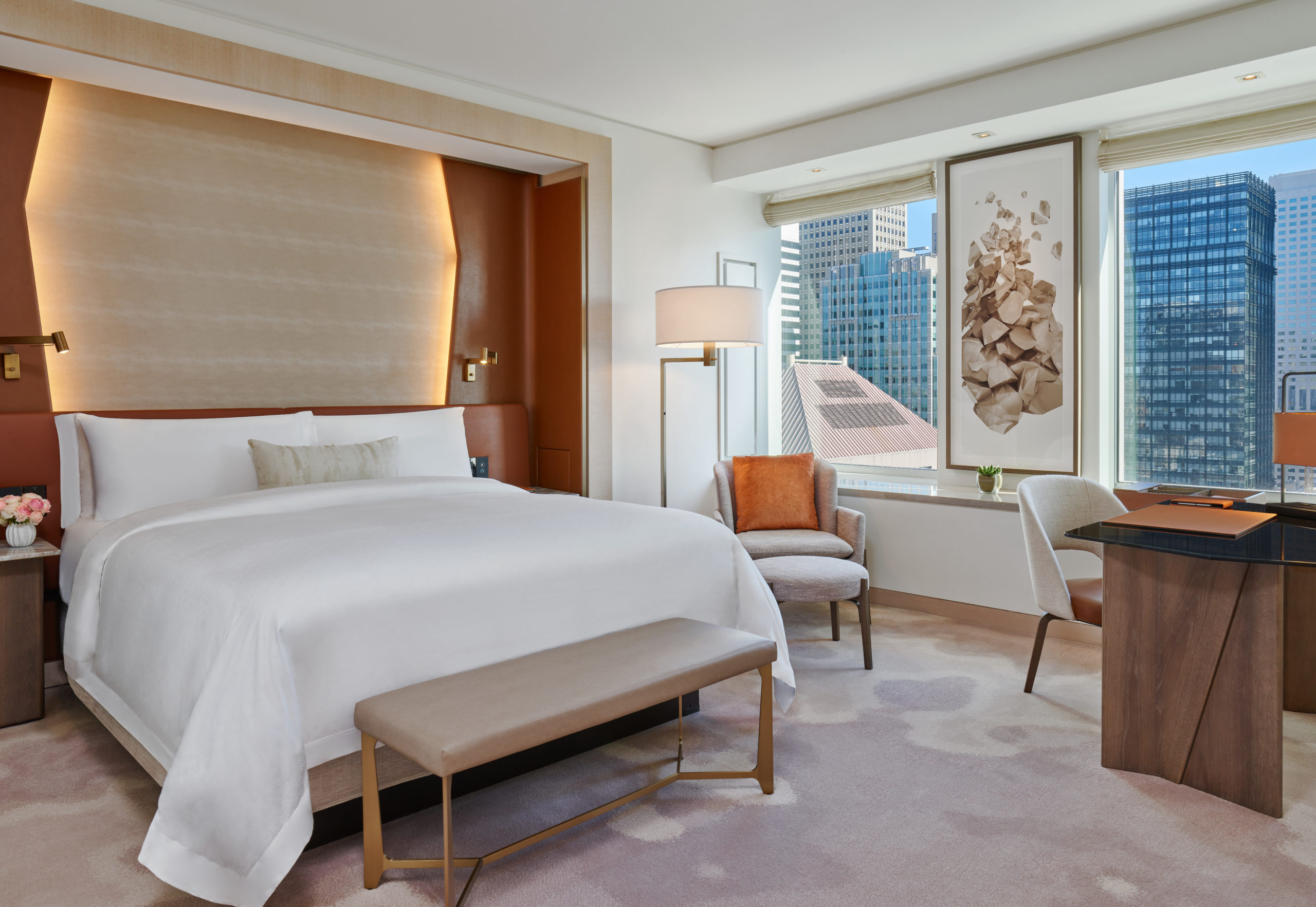
The St. Regis San Francisco

This property, which features 260 redesigned guest rooms, has a new design that pays subtle homage to California history with a metallic palette echoing the Gold Rush and artwork reflecting the city’s history of tech innovation. Event space of over 22,000 sq. ft. was also refreshed,  with nine event rooms that offer plenty of natural light and a fresh-air terrace for outdoor gatherings. The property is prominently located downtown in the Yerba Buena Corridor, steps from Market St. and SF MOMA.

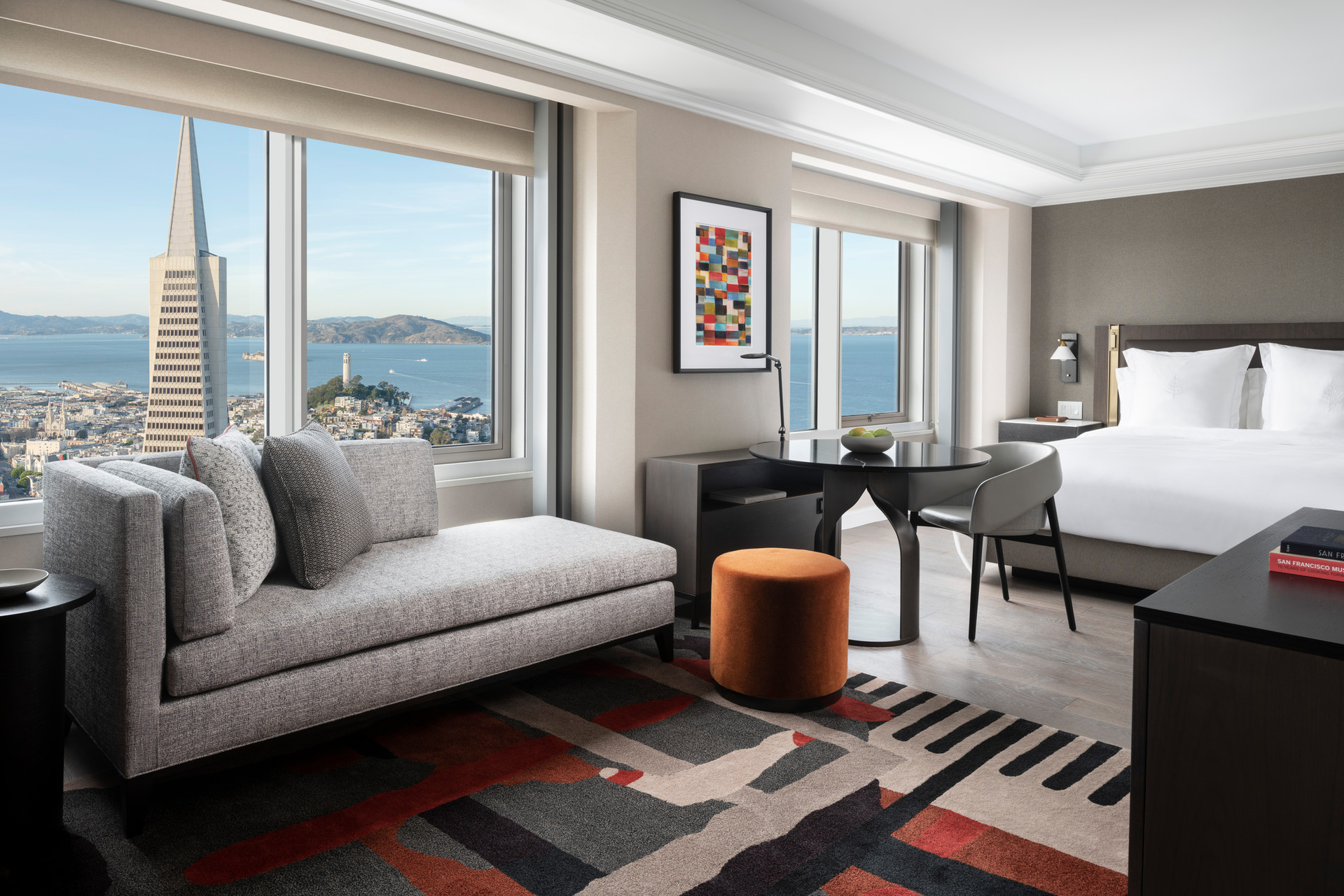
Four Seasons San Francisco Embarcadero

Perched on the top 11 floors of a 48-story building in the Financial District, this property’s 155 guest rooms and suites were redesigned for its debut as a Four Seasons in May. Rooms feature natural wood floors, modern design and panoramic views of the city. The hotel is centrally located moments from Union Square, Fisherman’s Wharf and the Ferry Building, where the concierge can organize walking tours of the famed artisan farmer’s market.

Hotel Amarano, Burbank, California

This Burbank boutique will reveal property-wide renovations this spring that are inspired by the spirit of Hollywood’s heyday and meant to evoke the atmosphere of a golden-era retreat for stars. Just a mile from Universal Studios Hollywood, the property features three refurbished meeting rooms with some 4,000 sq. ft. of space. New dining concept FYC (For Your Consideration) will be available for buyout and can accommodate up to 100 guests, reception style.

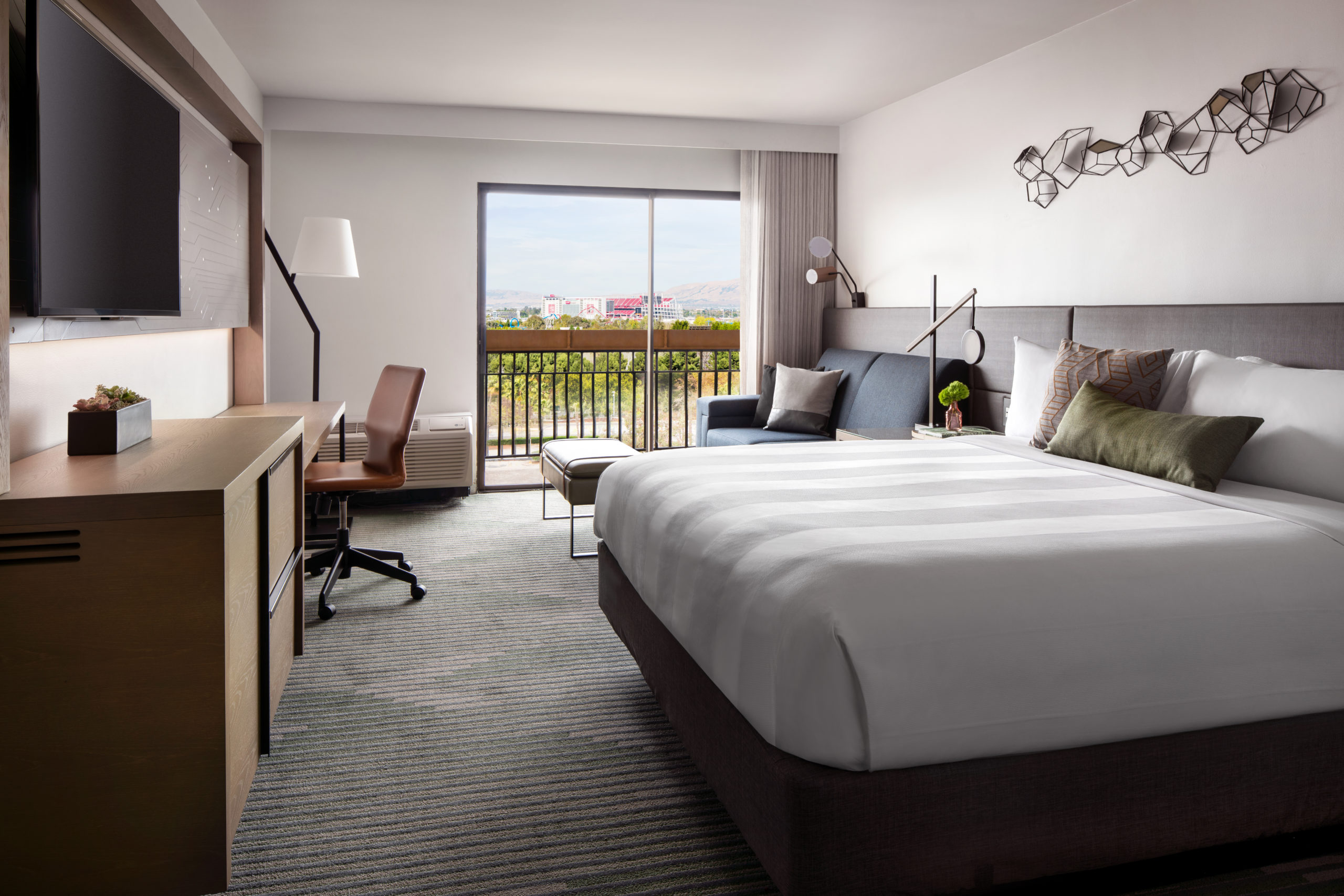
Santa Clara Marriott, California

Recent renovations brought modern furnishings and geometric designs to the public areas and all 766 guest rooms in this Silicon Valley stay. New restaurant concept Bosc & Bartlett, named for the orchard that once stood near the hotel, brings Asian-inspired Californian fare to the newly elevated lobby. The property has almost 27,000 sq. ft. of event space, also updated, including the Sedona Room, with floor-to-ceiling windows and an adjacent patio.

Every part of the events industry is being impacted by restrictions on meetings put in place to slow the spread of novel coronavirus (COVID-19). The American Rental Association (ARA) petitioned Capitol Hill last week for $20 billion in financial aid provisions for the equipment and event rental industry as part of the financial relief bill being negotiated in the U.S. Senate.

“ARA has been in communication with Capitol Hill as well as the Administration regarding relief efforts for our industry. This letter is one example of how ARA reaches out to policy makers in support of our members. Right now, there is an overwhelming need for the federal government to aid all businesses–but, especially small businesses–in the equipment and event rental industry,” said John McClelland, ARA vice president of government affairs and chief economist.

MoreYour Coronavirus Resource Guide

Prior to the coronavirus (COVID-19) outbreak, the equipment and event industry was projected to exceed $60 billion in revenue in 2020. “The shelter in place directives and social distancing recommendations have caused virtually every planned event to be cancelled. These wide sweeping conditions have shuttered many event rental operations and most companies have laid off all staff as we wait on recovery measures,” said Tony Conant, ARA CEO. “It’s imperative that we take every possible measure to assist members and we’re hopeful to see some relief from our Administration.”

Petition for Relief Update

U.S. Travel Association reported that more than 6,000 travel industry and related organizations sent a joint letter to congressional leadership Friday requesting aggressive and immediate financial relief in light of the coronavirus pandemic. Signers included transportation, hotel, recreation and entertainment, food and beverage, meetings, conferences and business events and destination marketing organizations—businesses that employ 15.8 million people. The U.S. travel industry is predicted to lose 4.6 million of those jobs in the next six weeks because of the virtual shutdown of travel caused by coronavirus.

The letter asked Congress to include two specific measures that could help the events industry in its “Phase III” coronavirus emergency relief package:

  • $150 billion in travel employment grants: Through the U.S. Department of Treasury, provide $150 billion in grants to travel-dependent businesses to maintain employment at pre-coronavirus levels.
  • Provide greater financial assistance to severely impacted businesses by increasing the aggregate loan amount for severely distressed industries above $150 billion and providing the assistance through unsecured loans and loan guarantees.

A COVID-19 Federal Aid Package for the Events Industry petition started by a group of AV professionals on change.org is now up to almost 350,000 signatures as of Monday and is targeting 500,000.

The good news is that United States Secretary of the Treasury postponed the deadline for filing 2019 federal tax returns to July 15, 2020 with no penalties or interest due to disruptions connected to novel coronavirus (COVID-19). The bad news is that not all states have adopted three-month postponement (you can look up the specifics for your state here) and if all goes well, meeting professionals will be clipboard-deep in rescheduled events by mid-summer. Smart Meetings consulted the experts and put together some tips for getting your receipts in order during any down time.

Accounting for Layoffs

For those experiencing extreme slowdown as one of the 1.5 million people expected to file for unemployment benefits this week, Treasury Secretary Steven Mnuchin promised refunds are still going out within 21 days if you have one coming. Direct deposit is the fastest line between you and your money. Although the Internal Revenue Service is curtailing some operations during this period, it continues with mission-critical operations, including accepting tax returns and sending refunds. That means you might want to file earlier rather than later to help cover the loss.

See alsoMarriott, MGM, Hilton to Furlough Tens of Thousands of Employees

Independent Filing

Independent planners and vendors were also included in the extension. Self-employed individuals can defer for 90 days up to $1 million for tax year 2019 federal tax payments. This also applies to tax year 2020 estimated tax payments previously due on April,15.

MoreYour Coronavirus Resource Guide

You can use the extra time to calculate the WFH deduction for working from home. It can be calculated in two different ways. First figure the percentage of your home’s square footage that you use “exclusively and regularly” for business-related activities. Multiply your mortgage or rent by that that percentage to get your deductible. A home office that takes up 5 percent of your house’s square footage equals a 5 percent of housing expenses deductible. Alternatively, you could deduct $5 per square-foot of home used for business, up to 300 sq. ft., about a 17-by-17-foot space. That is the simplified option. But while you have time, why not pencil it out and see what works best?

Ongoing Education Credits

If you are using time that would otherwise have been filled with traveling to events to binge educational webinars and position your career for the upside, that might be deductible as well. The costs of “qualifying work-related education,” including things such as tuition, books and supplies to maintain or improves skills needed in your present work could fall under 970 tax benefits.

Additionally, the Lifetime Learning Credit allows you to claim 20 percent of the first $10,000 you spend at an “eligible educational institution.” Earning maximums apply.

A Healthy Test

The IRS is also making accommodations for including testing and treatment under federally recognized healthcare plans. Anyone with a high-deductible health plan (HDHP) will be covered for COVID-19 testing and treatment even before deductibles have been met without losing status.

Travel and daily life continue to be affected by COVID-19 as “shelter-in-place” orders are mandated across the United States, and the world. Even still, amid isolation and quarantine, technology and the internet are keeping people connected. From working remotely to socializing with friends and family, there is readily available tech that can assist in day-to-day tasks during these uncertain times.

Home Sweet Home (Office)

Sitting in your home office, you’ve brought a fresh cup of coffee and are ready to start the day. Except, oops, your two toddlers barge in and knock the coffee over onto all your work. Maybe that’s not your exact scenario, but working from home isn’t necessarily ideal for many—even when it’s necessary in times like these. Online resources are your best friend. There are plenty of ways to remain efficient and organized while working from home.

For those new to home offices, LinkedIn is offering free courses on working from home, and can help individuals figure out what works best for them. For starters, experts recommend that to stay on schedule, segment what you’ll do—and when—over the course of each day. Apps such as Google Calendar and Monday make this easy.

Related: 6 Virtual Meeting Tools to Facilitate Working from Home

Checking In and Staying Connected

Humans are innately social, and social distancing or being alone doesn’t have to be lonely. And in times like these, it’s critical that we support one another and show compassion. Technology, as we all know, makes it much easier to stay connected while still being physically separated. Even remotely, positive social interactions can help foster happiness and reduce loneliness.

That thing you use to check Facebook and Instagram—better known as your cellphone—is waiting for you to use FaceTime or Skype to stay in touch with relatives, friends and business associates. Zoom is another way to video chat (and screenshare) with dozens of people at once. Even when it comes to entertainment, there are still ways to share. An extension called Netflix Party on Google Chrome allows people to watch movies and TV shows together in real time.

Don’t Forget to Disconnect

While technology allows for connection between people at a distance, don’t neglect those around you. Maybe now is the time to forge deeper connection with those you’re living with. Don’t forget to go for a walk. Do other exercise when you can and incorporate meditation into your routine. Wherever the opportunity arises, assist people in your life who may be more vulnerable, such as elder relatives or those with limited or no internet access. Be creative in not only minimizing the spread of COVID-19, but in how you continue to live your daily life with those around you.

Sheraton Denver Downtown has long been a global gathering place and pillar of the Denver community. Now, we are excited to share that Denver’s Gathering Place is amid a massive transformation. We have embarked on an 80M+ renovation journey to bring a new, welcoming arrival experience, a lobby with town-square energy, food that breaks barriers with the bold and comforting flavors of Colorado, open and collaborative workspaces, over 133,000 square feet in renovated meeting space and 1,237 newly redesigned rooms to Downtown Denver.

We are taking a space and making it a place. Our reinvented lobby is a place you’ll want to visit again and again. The new spaces have been designed to inspire and empower a collective spirit of creativity and collaboration spearheaded by a Community Manager.

Community tables invite connection and conversation with plenty of seating and power sources to keep you charged. Phone booths allow you to stay connected to your communities virtually while traveling, and our studios provide the perfect setting where guests and locals can collaborate. Plaza Fireplace will cultivate a central gathering area that will bring the community together with soft seating for groups to network and socialize. An elevated Coffee & Bar experience pouring coffee by day and cocktails by night and Veiled Bar delivering a unique and captivating setting for enjoying bespoke cocktails together. Offering one of the city’s only outdoor heated pools that are open year-round, we are elevating this popular space with a modern look, a big-screen TV and plenty of comfortable seating to enjoy Denver’s 300 days of sunshine.

With the introduction of Access by Sheraton, our meetings, events and operational services are designed to facilitate a productive and uplifting experience, so you can best achieve your objectives with ease. Our meeting spaces will be transformed, offering 133,000 square feet of flexible meeting and exhibit spaces with 3 distinct ballrooms designed to accommodate events of all sizes.

Our new culinary experiences are sophisticated yet familiar, inspired by the bold flavors of Colorado and with a sense of purpose bringing people together. Our creative, locally sourced cuisine has earned our Executive Chef Skomal local and national recognition. Our new Sheraton Club provides a unique and exclusive offering designed for our elite Marriott Bonvoy™ members who play an amplified role in our community.

Our 1,237 reimagined guest rooms are more than a place to lay your head, you will find a sophisticated space to work and relax in. We are creating lighter, brighter environments that deliver timeless comfort with thoughtfully considered features to enhance your rest and productivity. Some of the features include a platform-style bed with integrated reading lights and ample bedside charging, a custom closet, deluxe amenities, and an innovative adjustable table.

Catch up with a friend or work with a colleague- you’ll always feel welcome in our newly transformed space. Everyone is invited. Premiering summer of 2020.