Running a trade show is both an art and a science. Aligning all aspects of your show from getting the right venue, to publicity, to staffing is a job for professionals.
You may only get the chance to get an annual show right once a year, so it is essential that you get it right. Otherwise, you spend the next 51 weeks second-guessing yourself. Perhaps the most important aspect is hiring the right trade show staff. Building a dream team is vital to making sure you know how to make a difference and ensure a smooth-running event.
It’s remarkable how much of a productivity kicker an organization gets from top talent. A recent research cited by global consultants McKinsey & Co shows that high-performing workers are around eight times or 400% more productive than average ones.
However, attracting and keeping qualified and experienced staff has rarely been more challenging, as 54% of companies globally report talent shortages, the highest in over a decade. Talent shortages in the United States have more than tripled in the last 10 years, according to a ManpowerGroup survey, with 69% of businesses failing to fill positions, up from just 14% in 2010.
If you don’t have the right staff ready to go, then you are going to spend longer getting ready for the show. This will involve training employees or even recruiting people to train up and show the ropes of how the show will run.
Well-trained staff don’t need as much training and you can usually trust them to go into the trade show and one-to-one engagement without extensive education.
When it comes to considering all aspects of health and safety, and the logistics of your show, the right trade show staff can be even more important. If you have a staff member who knows how to coordinate multiple stallholders and the audience, that can help with compliance and safety.
2. Customer Service Enhancement
Customers—both B2B stallholders and B2C attendees—expect a professional interaction at a trade show and having the right staff with a customer service background can ensure that people get the experience that they expect.
This maximizes the chances that you will achieve your business goals and create a successful event with all of the demonstrations going to plan, and stallholders having a successful and fruitful experience.
3. Business Growth
The best show team knows how to grow the show and make it a more successful event. This means promoting it to the correct people, and ensuring that you have enough stallholders to make a profit.
Trade show staff are good for business growth if you know what you are doing and have a clear plan. If you are looking to increase attendance, remember that you will need people working on the show a long way in advance, as well as casual staff to help during the show itself.
4. Reduces Turnover Costs
You may be able to get more effective employees at an affordable rate and reduce turnover costs, you might even be able to get by with fewer employees, as long as the ones you have know what they are doing.
Good staff can also manage expenses well and ensure that your trade show doesn’t rack up costs that are simply unnecessary.
5. Team Morale
Trade shows can be a mix of people from all different businesses. Your own staff helping you run the event should be experienced and enthusiastic. The experience is going to rub off on the those manning their stalls or doing demonstrations. Your trade show team will probably be diverse, but the leaders should definitely have management skills to keep the morale high and help others get up to speed.
The more knowledge your team has going into the event, the more likely it is that morale will be high, and this can even give a far better overall impression of the show, encouraging more engagement for future shows.
6. Protects Your Image
You want to be known as a good business and a good employer. Hiring the right trade show team will help you protect that reputation. People won’t see your show as a disorganized mess and be reluctant to pay for a stall in the future. Having the right trade show staff projects an image of your organization as a professional environment.
7. Maximize Productivity
Good trade show staff help you to get the most out of the show. This means they can help you to maximize productivity while you are there.
The right employees know how to make the most of the space, encourage engagement and create a productive environment for other employees. It’s not always easy to pull together a team, but a few experienced leaders can ensure that time doesn’t get wasted and that the show goes well.
Experienced trade show staff are an investment, but they can be well worth it considering all the benefits they can bring to your event, and the fact they can help to drive future growth.
Frank Derby is a Las Vegas-based event marketing strategist and communications expert working with GoldenMFG. With a background in traditional marketing, Frank provides insights offline promotions, PR, trade exhibitions gleaned from his 9 years of B2B experience.
In the world of destination events, we often conduct whirlwind site inspections to scope out a new city or country, inspect our top hotel candidates, and experience every possible component of our future event there. Sites are typically fly-in, fly-out and, if we are lucky, we squeeze two or three nights in to accomplish oh-so-much.
On the opposite side of the spectrum, there is the “slow travel” movement where it’s all about meaningful immersion and taking our time to authentically learn about the local culture.
For the past 15 months, I have been living and working like a local around the world. Each month, I call a new country home and get fully immersed into the fabric of the local communities. In doing so, I have been able to combine the best of whirlwind site inspections and the slow travel movement.
I like to call this new approach a “slow site.” It has been in the slower-paced destination discovery that I have gained the greatest awareness, understanding and passion for each destination I uncover.
Here are 10 ways to kick off your first slow site.
Preparing for Your Slow Site
1. Spend at least one hour learning about the history of your destination.
Don’t head to a new place without first getting a little acquainted with its culture, history and traditions. Here are a few questions I research before heading to a new destination:
What is the destination’s founding story?
Where did its name come from?
What does the country flag represent?
What is the political landscape?
What are the social hardships?
What are the national holidays, why are they significant and how are they celebrated?
What is the currency and the conversion rate?
The more I invest in learning about the destination, the more I’m able to connect with the partners and locals I meet while I am there. Plus, it helps me build out educational materials and interesting facts for the pre-event materials I share with attendees.
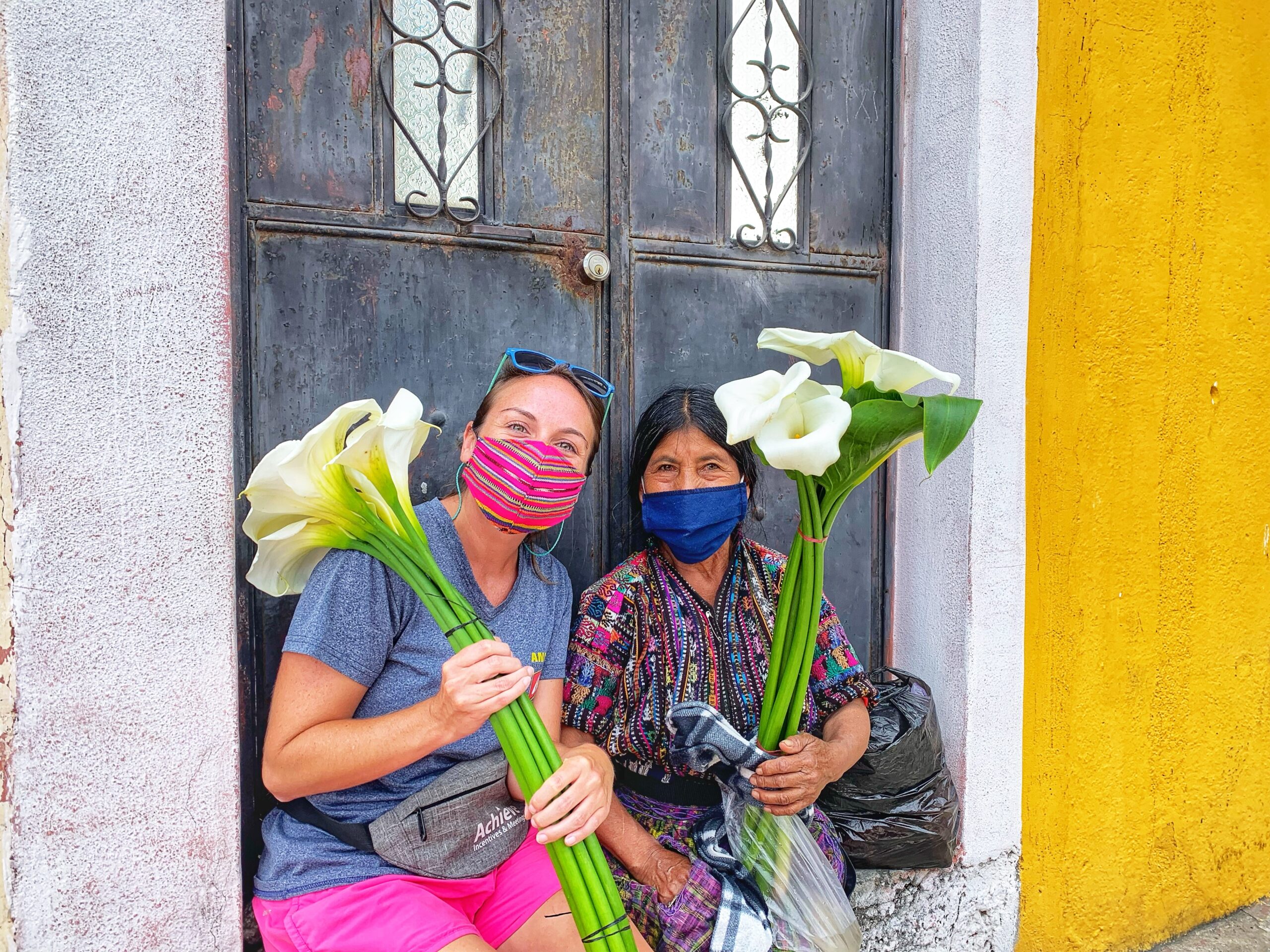
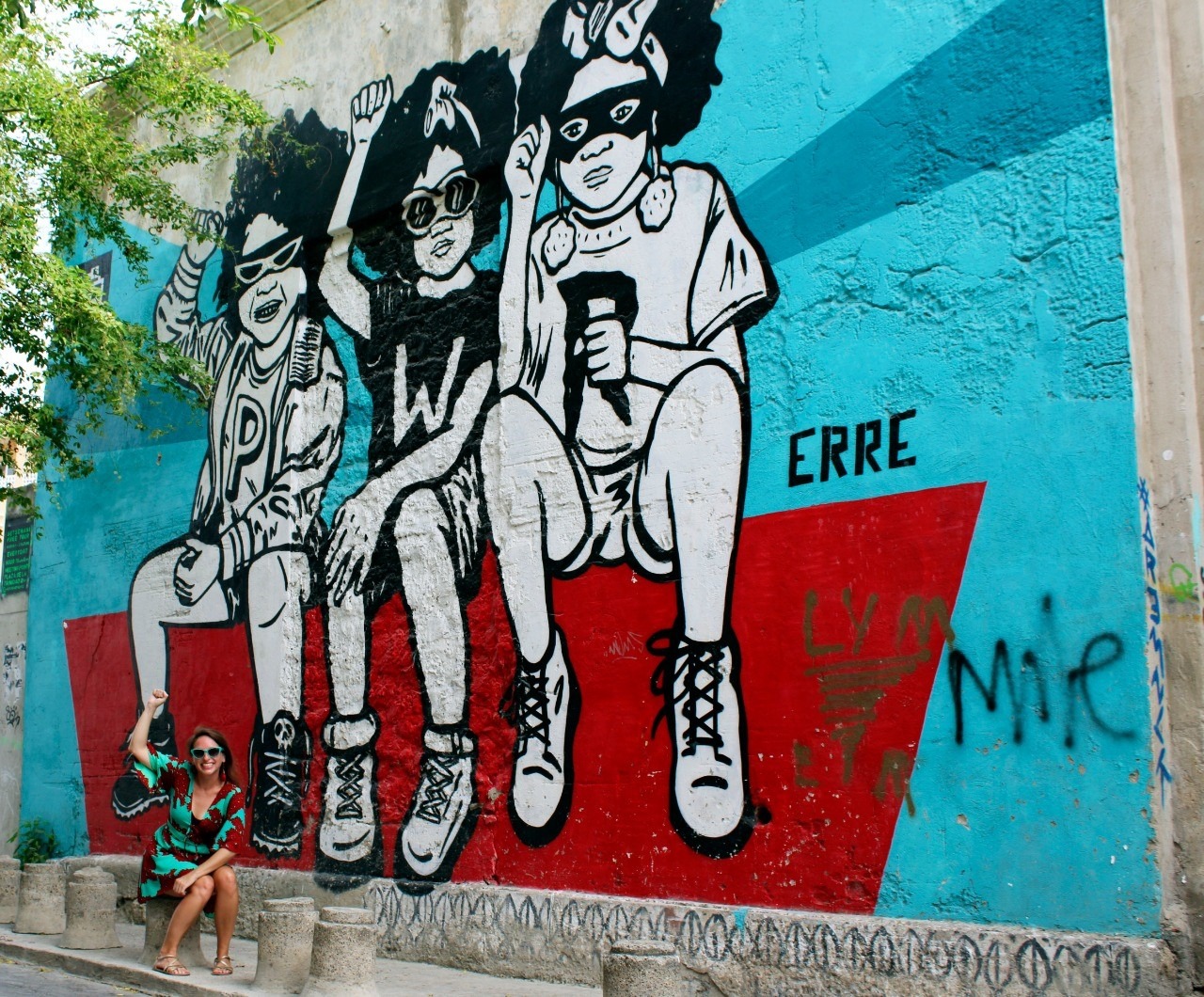
Buying Cala Lillies from locals in Antigua, Guatemala
Slow Site Pro Tip: I focus my initial research on local blogs, Wikipedia and insights from podcasts such as National Geographic Kids. These sources always have engaging, easy-to-understand facts and fun storytelling.
2. Learn a few phrases in the local language.
Here are my favorite phrases to master ahead of a slow site:
Hello.
Nice to meet you.
My name is…
What is your name?
Please.
Thank you for your help.
Cheers!
Where is the bathroom?
Many destinations also have a unique phrase or saying. Ask your partners ahead of time what they are. In Costa Rica, the most common greeting locals use is “pura vida” (which translates to “pure life,”) whereas in Argentina, locals say “como andas” (similar to “what’s up” in English).
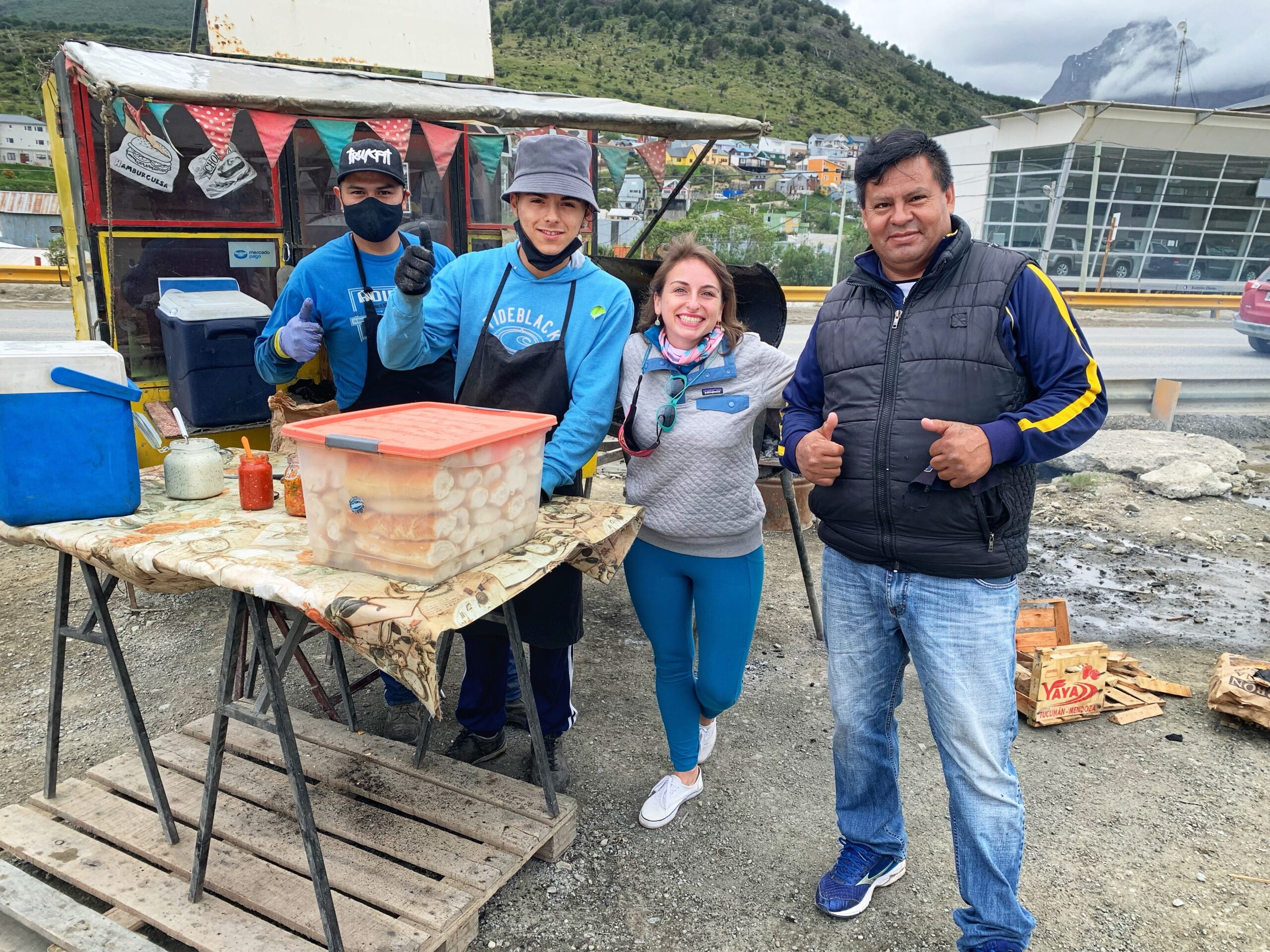
Street Food with Freddie in Ushuaia, Argentina
Don’t worry about saying something wrong or feeling like you don’t have the accent just right. Simply attempting to speak in the native tongue shows anyone you interact with that you respect and appreciate their culture.
Slow Site Pro Tip: Download a language app on your phone to help. I use Duolingo to practice a new language and the Google Translate app for translation support. You can scan any document in the app and it will translate the language for you. Make sure to download your preferred language in Google Translate, that way you can use it offline anytime.
3. Ask partners if there is a special market to explore.
If you can, schedule your slow site to fall on a market day. Markets are the hub of culture and community. They are a literal journey through the history of a destination.
They are one of the most valuable resources for getting ideas of local foods to incorporate into events, connecting with artisans who make beautiful items that could serve as custom gifts for your attendees, and learning about the different cultures that make the destination diverse.
Slow Site Pro Tip: My secret for scouting out the best local entertainment is at the market. Oftentimes there are awesome local acts performing, and you might get lucky and find some great options for your event. Check out this great band in Buenos Aires that I discovered at the San Telmo market day.
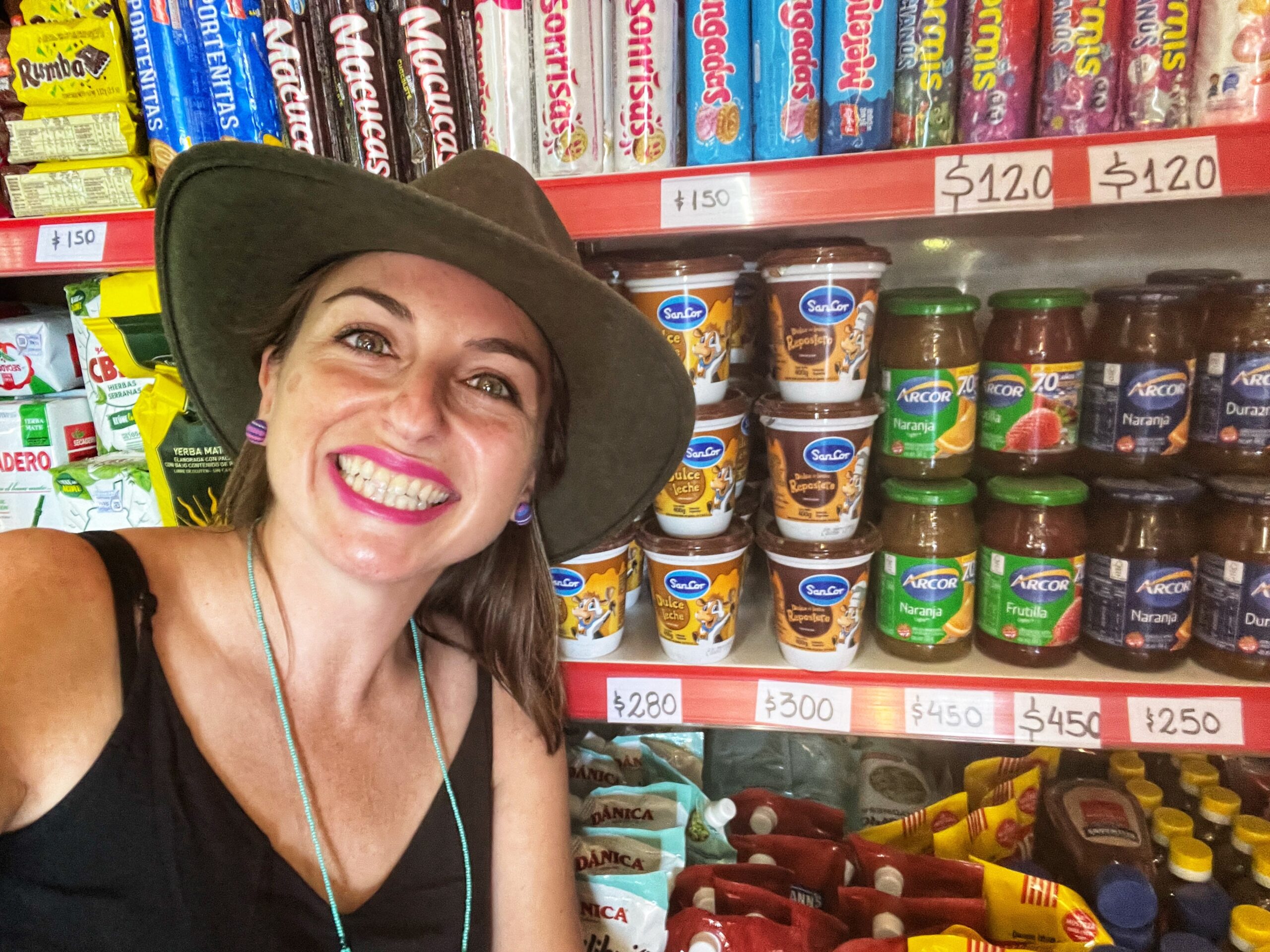
Checking out the supermarket in Buenos Aires, Argentina
4. Curate a playlist of songs that are popular in the destination.
Music is the heartbeat of any destination, and it can be a great way to understand its history. Ask your on-the-ground partners for some of their favorite songs to listen to. This is a fun way to get immersed in the destination before you even arrive.
I create my playlists on Spotify and download them so I can listen to them offline, even when my phone is disconnected from the internet. My favorite time to listen to this playlist is on my flight to the destination. The second I land—I’m already feeling the local vibes.
Slow Site Pro Tip: Keep building out your destination-themed playlist and before your big event, share it with your attendees so they can feel the rhythm of the destination before they even arrive onsite.
5. Extend your trip by two days.
However long you were planning to stay, try to add on an extra two nights to your trip.
If you’re asking, “How in the world can I manage that and what will I do with those days,” I’ve got you covered. While it might sound impossible, we have mastered remote work options. These extra two days can be a mix of work and immersion.
Slow Site Pro Tip: Rent a home for these nights rather than stay at your hotel. Ask your partners what neighborhoods would be good to experience and start your AirBnb search there. For me, the closer I stay to a market, the better.
Ready, Set, Slow Site
6. Taste-test the culture.
On typical site inspections, we are often going to the top restaurants, which of course makes sense because we want to be able to recommend them to our attendees or plan dine-arounds there.
However, on a slow site, it’s all about connecting to the local culture. The best way to do this is to go to a restaurant that the locals love, preferably one that doesn’t have their menu in English and only accepts cash (those are my two biggest clues for extra authenticity).
Slow Site Pro Tip: Schedule a cooking class with a local. I have done this in a lot of ways: asking partners to help coordinate the activity, meeting strangers who welcome me into their homes (which is gutsy but always my favorite), or by checking out AirBnb Experiences.
I also run through my hotel grounds as it helps me learn about the layout of the resort, scope out secret passageways so I can get to events faster and have the property footprint in my head when guests ask questions on-site (i.e.: what bathrooms are closest to my function spaces).
Slow Site Pro Tip: If you typically use headphones on your runs, only use one earpiece so you can hear and feel the sounds of the city.
8. Go on a memorial-finding mission.
I love when a city stands for something and showcases its values upfront and out loud. One of the best ways to determine what matters most to a destination is to scope out the memorials.
To me, memorials are established when a city’s money meets their morals. Memorials often tell the story of a destination’s commitment to the communities and causes that they are most invested in.
Slow Site Pro Tip: When scouting out memorials, consider the area as a possible venue space.
9. Make a new friend in a taxi driver.
Most likely you or your destination management company has all your transportation sorted out. However, the best way to get a front-row seat to learning a destination’s culture is to nestle into the backseat of a taxi.
What are your favorite food stands or restaurants around here?
Can you turn on your favorite local music?
What do you like about living here?
What do you like to do on a Friday night?
How do you like to celebrate the holidays?
What are common jobs people have here?
What is the toughest part about living here?
What would you like people who don’t live here to know about your home?
Slow Site Pro Tip: Make sure to get the local currency of your destination so you can properly pay and tip your taxi driver. Checking out currency often offers a glimpse at the history of your destination, so learn about the people pictured on the currency and the reason behind the artwork.
It’s in the wandering at a new destination that I fall the most in love with it. As destination event planners, the more knowledgeable we are about our host destination, the stronger ambassadors we can be, and that excitement and passion surely carries over to our attendees and the experience they will have.
Site visits are all about the go, go, go, but slow sites are all about the slow, slow, slow.
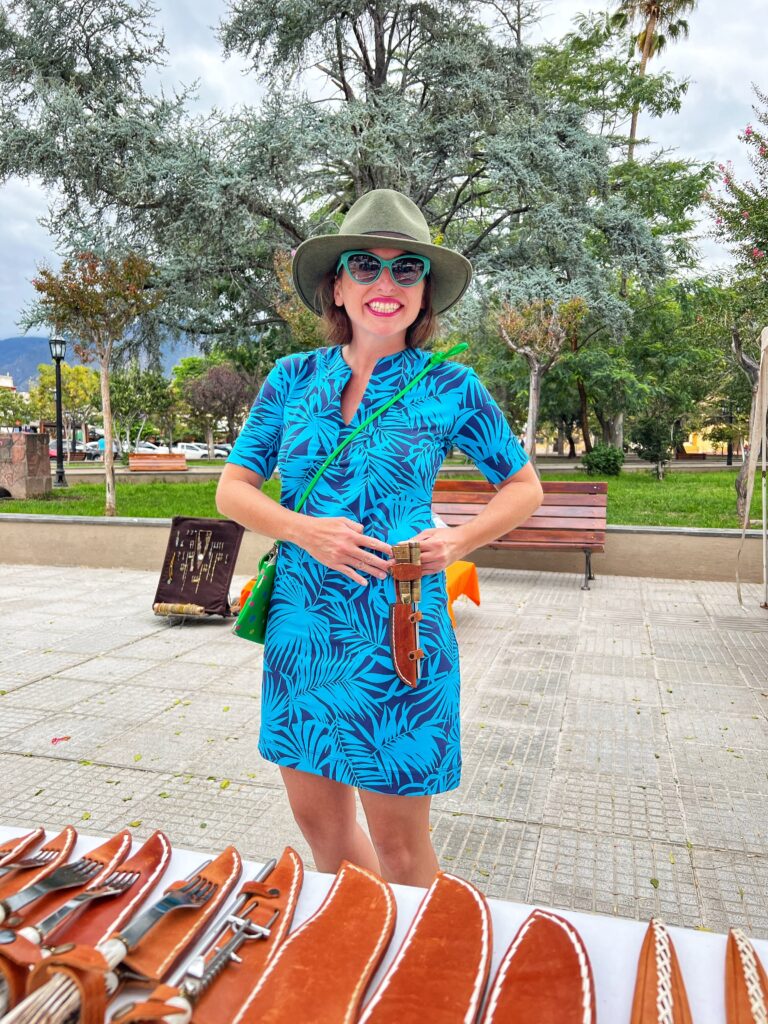
Visiting a local artisanal market
As time is the most limited resource for busy event profs, sometimes adding an extra day or two to a site inspection just isn’t possible. If that’s the case, pick one or two of these ideas and prioritize them.
Tell your partners ahead of time so they can help incorporate these extra moments into your agenda. Treat it like a scavenger hunt and it always makes things more fun (I like to use the app GooseChase).
To me, there is no better way to authentically infuse the local culture and community into an event than by living it, breathing it, and appreciating it. Whenever you can, take the extra time to explore and experience the destination like a local – it’s where you will get the best inspiration as you design your event.
Slow Site Pro Tip: Connecting with cultures is a two-way street. When you are heading to your slow site, bring something special from your culture or home to the partners you will be working with.
As a planner from Ohio, the Buckeye State, my go-to is to always bring packages of Buckeyes, our favorite sweet treat of chocolate and peanut butter. Buckeyes are an easy gift for me to purchase as they sell them in the Cleveland airport so I can pick them up on the way to my flight.
Ashley Lawson is Vice President and Partner of Achieve Incentives & Meetings and a 2022 Smart Women in Meetings Award winner. When the pandemic hit, Ashley took her passion for travel and events to a new level. She sold everything she owned, packed a backpack, and starting living in a new country every month.
As a full-time globetrotter and event planner, Ashley is the go-to for infusing local culture and community into events. You can live like a local alongside her by following her slow site adventures at @ashleyroseontheroad.
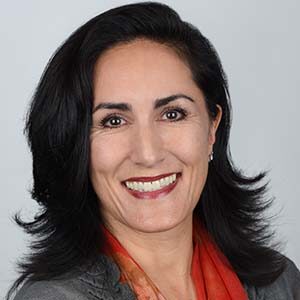
Lenne Goslin
Hyatt Regency Coconut Point Resort and Spa promoted Goslin to director of group sales. Over the past two decades, Goslin has garnered both sales and convention management experience. Most recently, Goslin spent the last 15 years as senior sales manager at the Coconut Point property. She has also previously held the role of senior convention service manager and director of destination services at The Ritz-Carlton Hotel Company, as well as senior convention services manager at her current property.
Tony Yousfi, CMP
Fontainebleau Las Vegas named Yousfi its senior vice president of sales, catering and conference services. A 15-year hospitality operations and management veteran, Yousfi was most recently chief growth officer at Carver Road Hospitality, as well as vice president of sales, services, catering, group dining and weddings at MGM Resorts International.
Keith Cestare
Cestare is general manager at Ambassador Chicago, a JDV by Hyatt. Cestare brings almost 20 years of hotel operations and management experience to his new role. Most recently, Cestare was general manager at First Hospitality, and he has also been general manager of The Porter Portland, Curio Collection by Hilton; director of operations at LondonHouse Chicago, Curio Collection by Hilton and many more.
Sybil Davis
Valley Forge Casino Resort appointed Davis director of sales. Davis is an experienced hospitality sales and diversity leader, having worked in senior sales roles at Gaylord Hotels, Marriott and Philadelphia Convention and Visitors Bureau, as well as consultant and project manager with Tourism Diversity Matters.
Ralph Scatena
JW Marriott Scottsdale Camelback Inn Resort & Spa welcomed Scatena as general manager and area general manager of Phoenix. With 40 years of hospitality leadership experience, Scatena has held similar management roles at several other JW Marriott properties and Marriott International.
James Wyndham
Sugar Beach, A Viceroy Resort appointed Wyndham managing director. Most recently, Wyndham was general manager of The Island House in Nassau, Bahamas. Wyndham has been a hospitality sales and hotel management leader for nearly 30 years, and he has worked with Jumeirah Hotels & Resorts, Atlantis Resorts, Luxury Lodges of Australia and others.
Shanda Cartwright
Cartwright is sales and events manager at Fort Worth Convention Center (FWCC). A seasoned sales professional, Cartwright has worked with the The Fort Worth Club; was senior account manager of group sales at Billy Bob’s Texas, a massive country music arena; Omni Hotels & Resorts and many more.
Jamie Gold
MC&A, the leading destination and event management specialist based in Honolulu, promoted Gold to vice president of sales and industry relations. Previously, Gold worked as director of sales for the company. Gold has been with the DMO company since 2003, when she joined as its special events manager and has since become a sales and events leader among those in her field.
Mark Catuogno, CGSP
Coiled, the software development firm, hired Catuogno as its director of event marketing. Catuogno was previously owner of MC Event Consulting and MC Travel Management in the greater New York City area. Experienced in events and tech, Catuogno has also worked for DJMARK Events, Propelify in New Jersey and Dream Factory of Brooklyn.
Ana Henriques
Dorado Beach, a Ritz-Carlton Reserve welcomed Henriques as its new general manager. With over a decade of Ritz-Carlton experience alone and another decade in food and beverage management, Henriques joined Penha Longa Resort in 2005 as its director of sales and marketing, later becoming hotel manager and general manager of the property.
Albert Bilotti
Bilotti joined Duck Key, Florida’s Hawks Cay Resort as director of food and beverage. Most recently, Bilotti was general manager of restaurant operations at Northwood Hospitality in Islamorada, Florida. With almost 20 years of experience in food and hospitality, Bilotti has been director of food and beverage at The Roosevelt New Orleans, A Waldorf Astoria Hotel; Resort at Squaw Creek by Destination Hotels and several more.
Rodrigo Formoso
Formoso is director of sales and marketing at The Ritz-Carlton, Cancun. Formoso was previously associate director of sales at Live Aqua Resorts by Grand Fiesta Americana hotels. Formoso boasts more than 30 years of hospitality sales experience and has become an international sales leader. He has also held the roles of area international sales manager at The Ritz-Carlton Hotel Company and associate director of sales at his current Ritz-Carlton property, where he first worked in the late ‘90s, and more.
Gina Gemberling Wibben, CDME
Little Rock Advertising and Promotion Commission promoted Wibben to president and CEO of Little Rock Convention & Visitors Bureau (LRCVB). Previously, Wibben was senior vice president of sales and marketing at the organization. In her three decades of tourism and destination management experience, Wibben worked with Springfield Convention & Visitors Bureau for 24 years, spending four of them as its executive director.
Christopher Shiel
Andaz Mayakoba Resort Riviera Maya by Hyatt Hotels welcomed Shiel as its director of sales and marketing. Previously, Shiel was director of sales and marketing at Hyatt’s Hotel 50 Bowery in New York City. A 15-year hospitality sales and marketing veteran, Shiel has held directorships and leadership roles at multiple Hyatt Hotels properties, Denihan Hospitality Group and more.
John Scanlon
Dorchester Collection’s The Beverly Hills Hotel named Scanlon its general manager. In tandem, Scanlon continues to hold the role of general manager of 45 Park Lane, a luxury hotel in London, as well as manager of Mayfair Park Residences. Scanlon has also previously worked at Dorchester Collection’s corporate office as global director of revenue.
Brands are the mark that organizations leave on their audiences, and when it comes to producing a compelling and impactful event, effective brand management is key.
Successfully keeping brand identity as the nucleus from which things like keynote speakers, color schemes, and even food and beverages flow, is about more than monogramming napkins, or strategically placing the company’s logo on PowerPoint slides.
These basics are a starting point for a deeper dive that includes paying close attention to subtle messaging, taking every step with an event’s end goal in mind, and prioritizing authentic emotional engagement with audiences.
A skilled event management team will be able to purposefully apply the following general points to create a winning branded experience that lasts far beyond the event dates.
Don’t Forget the Basics
Everything you thought you knew about event branding is true. This includes having consistent and cohesive brand elements, ensuring that attendees can see the relationship between everything.
The basic frameworks for websites, pamphlets or handouts, signage, social media graphics, fonts, or anything else associated with the event should be identical across different platforms. Your goal is to ensure that the dots connect, so that viewers, whether they are attending the event or not, instinctively associate those words and images with your company.
A unique slogan or tagline for the event is also powerful. When it comes to creating one, a helpful exercise for companies that do not feel as confident in their wordsmithing ability is to start by distilling the essence or purpose of the event into one or two sentences. Then, for as long as it takes, try cutting the sentences down, such as from two to one, or 10 words to five.
Your event should be easy enough to understand that, with action words and engaging phrases, it can be encapsulated into one short line.
Consider the Subtle Messages Your Branding Sends
Think about the last social gathering you attended—even if it was before the pandemic—and remember the subtle points, such as tablecloths, the wine selection or even the goodie bags. What judgments do you remember making about those points? Did it seem like your host had put a lot of thought into them—or perhaps not?
It’s important to keep in mind that at least some of your event attendees will be thinking about the same things, and this is a direct reflection of your company’s brand. In the same way that small design choices can make a big difference in a room, things like catering services, table placements, and even the choice of venue itself will all send subtle messages about who you are and who you think your audience is.
Finding an event company that is skilled at creating highly customized experiences, either in-house or with the help of their partners is an essential part of successful branding.
Attendees who have traveled long distances, for instance, would likely enjoy a taste of local specialties, perhaps accompanied by locally made wares. Even small, tastefully done souvenirs from the local area leave an impression that your company is a person-focused brand, thoughtful about customer needs.
You cannot control how people think and react to what you do. But it’s important to have a desired outcome for your event’s branding: specifically, what the one or two key takeaways will be.
How do you want people to feel about the event? Inspired, uplifted or educated? Or is the point of the gathering to simply facilitate networking and connections? These powerful considerations allow you to brainstorm the most effective activities, approaches and strategies, which also mirror your company’s image and personality.
Consider the Delivery
Last year, the Harvard Business Review considered what the “right” customer experience should be. Researchers noted that brands tended to fall along two lines: seamless, like McDonald’s or Uber Eats, prioritizing things like speed and convenience, or memorable, like the department store Nordstrom, which focuses on creating a lasting impact and enduring relationships.
Interestingly, the research found that there was no right or wrong customer experience between those two. The key to success was all about the type of business a brand had, with much of that depending in turn on the way customers interacted with the business.
This transfers easily to events. Particularly in the context of Covid-19, smaller, more intimate gatherings could be imagined in the framework of memorable experiences, like dinner parties. Larger ones, like conferences, could alternatively prioritize seamless and efficient. Neither has an impact on information retention. Indeed, it is all about prioritizing the most effective delivery.
Emphasize Authenticity
Authenticity has a direct relationship with an attendee’s ability to emotionally engage with your brand. Gallup research shows that emotional engagement with a brand leads to customers being three times more likely to recommend it to others, three times more likely to purchase products or services they sell, and notably less likely to consider your competitors.
Put another way, when your company crafts a winning event, it should still be itself–not, for example, creating a carbon copy of an event you saw in a magazine. Inspiration is everywhere. The best planners will help you connect all the dots of your proposal to create a single, fused vision.
Brand management can be thought of as the flavor of an event, or the unique elements that impart a distinct impression and memory for attendees. Branding matters. It ensures that one of the most central goals of any gathering—to retain existing audiences, attract new ones, and raise awareness and industry presence—remain at the center of all its moving parts.
Dusky Norsworthy is founder of Behind the Scenes, an event planning and production company based in Memphis, Tennessee, but delivering events on a global scale.
The global pandemic is a topic that persists and is consistent only in its inconsistency. The obstacles and opportunities have continued to evolve as have the roles of everyone in the business events industry.
This evolution has been arguably more intense in the past two years than in the collective past. As we come out on the other side, one thing is clear: business event strategists and destination organization partners really aren’t that different.
We Serve as Strategic Advisors
Business event professionals, much like the destination professionals they work with, are strategic advisors. With the ever-changing workforce, health and safety concerns, supply chain issues and a myriad of other challenges being thrown at the industry, partnership is important, and the power of information sharing is strong.
Working together to understand the complete business events strategy and each isolated event within that portfolio, will produce not only the opportunity to engage the community capital in that destination, but also uncover deeper partnership opportunities.
Value Extends Far Beyond an Event
A business event strategist is not merely hosting an event; they are an important revenue generator, and that value extends well beyond their own department. With a deeper desire to understand the economic impact of the travel and tourism industry comes more of an appetite for partnership. Working closely with a destination to leverage their tools to understand and report that impact, creates a cohesive message of value to stakeholders.
In addition to magnifying the message of value, leveraging the existing tools can often provide both the destination and the meeting professional with an opportunity to build the attendee profile by understanding their footprint in the city and, ultimately, maximize future visitor experience for both the host organization and the host destination.
We Are Brokers of Capital and Change Makers
Much like the destinations they are working with, business event strategists are community connectors, designing an experience for a wide range of audiences and brokering intellectual capital that will result in real world change.
They are not booking speakers; they are disseminating that capital and when they are working with their destination partners to leverage the existing relationships, they can produce growth not only for their own organization, but also for the destination in which they are meeting.
A shared understanding of the industry nuances in both the organization and the destination, creates a unique opportunity to leverage capital that both uplifts the mission of each and creates an intellectual experience that can only be experienced in that specific destination and at that specific event.
We Have a Desire for Partnership
Awareness of our industry’s value is higher than it’s ever been and the opportunities for collaboration are deep. With the tools and the desire for partnership in place, the industry has exited the pandemic with a new outlook and the relationship between the business events professional and the destination is no longer a transactional one, but rather one of high reciprocal value.
The days of the “copy and paste” RFP have passed, and the “RFP of the Future” is upon us. The concept of using a CVB for city-wide or convention center events has been exchanged for a partnership that shares thought leadership at all levels and meeting sizes and creates synergy between the assets of the destination and needs of the attendee.
With a focus on balancing sustainability with health and safety regulations; leaving a destination better than you found it by deeply incorporating equity, diversity and inclusion principles into legacy initiative actions; and exchanging intellectual capital for tangible ROI, one thing is clear: we are not “meeting planners,” “CVB salespeople” or “back/front of house staff.” We are strategic partners, and we are stronger together.
Some destinations rise to the top of meeting bucket lists because of their history. Others for their natural beauty, and still others for their dynamic business credentials. Louisville, Kentucky—birthplace of Muhammad Ali—on the banks of the Ohio River, checked all those boxes.
Smart Meetings brought top meeting professionals to The Galt House the same week Berkshire Hathaway hosted 5,000 real estate professionals at 300,000-square-foot Kentucky International Convention Center.
Louisville established itself as a meetings powerhouse before the Covid collapse. The city hosted 881 meetings and conventions in 2019. It brings 150,000 to town for The Run for the Roses, the Kentucky Derby. “We have fun, but also get business done,” explained Cleo Battle, president and CEO of Louisville Tourism.
Marin Bright, Smart Meetings CEO
While the lure of bourbon tasting at historic Evan Williams Bourbon Experience and photo ops with an oversized Louisville Slugger bat during the team building were a draw, being truly present with partners navigating the same “coronacoaster” of contingency planning was the reason for the stay.
To position the mini-meetings for maximum effectiveness, Smart Meetings CEO Marin Bright invited three experts to share insights on mindset, behavior management and navigating the state of the industry.
Sometimes, in order to move ahead, you have to take a brief pause so you can come back stronger. Joy Baldridge, author of “The Joy in Business: Innovative Ideas to Find Positivity (and Profit) in Your Daily Work Life,” shared resilience tricks to help manage the inevitable stress extreme change imposes on meeting professionals.
Her shorthand for when times get tough: AFA, Always Flexible and Adaptable. A mindset that can stretch when pulled almost to the breaking point is one that can live more in the “House of Glad.”
Set a Productive Soundtrack for Your Life
Speaker and coach Rich Bracken built on the lessons for managing mindset by sharing tricks to assuming the role of DJ of your own life. “Acknowledge how you are feeling,” he advised. “Honest self-awareness is where everything starts.”
The next step is self-management. Ask, “How am I reacting? Is it appropriate?” Take a deep breath and take the power back.
Social awareness requires us to be aware of how other people are feeling. “Respect their time, ideas and feelings by putting down phone and being present,” he suggested.
Finally, strive for relationship management. Ask, “How are we doing together and how can you build in buffers to set boundaries while meeting collective needs.”
Plan for More F2F
Smart Meetings Experience attendees seeing the sights
Mike Dominguez, president and CEO of ALHI, looked ahead at the challenges and opportunities of planning in a post-pandemic world. “We spent two years talking about how to meet,” Dominguez said, “Now we need to focus on why we meet.”
War, Covid hot spots, inflation, ongoing supply chain issues and “The Great Reshuffling,” which he believes is a more accurate representation of what is being called The Great Resignation, will continue to push meeting professionals to get creative about contracts, budgeting and delivering value. “This is a great time to think about models,” he said.
Digital hospitality platform WhyHotel has procured a $90 million investment, which they will use to acquire properties, as well as put toward the operating company.
The company, which began as a pop-up concept in 2017, is rebranding under the name Placemakr to “better reflect its business divisions of hotels and mixed-use apartment buildings,” reads a press release.
According to Jason Fudin, cofounder and CEO of Placemakr, the rebranded company plans to acquire $750 million of real estate in the next 18 to 24 months for the purpose of turning them into mixed-use units. Last year, the company acquired $250 million of real estate as “permanently flexible real estate under the Placemakr brand.”
The WhyHotel pop-up concept now accounts for 20% of the business. “Our second business line, which we’re now branding as ‘Placemakr’ is where we take a 300-unit building on a forever basis and run it as furnished or unfurnished, short- and long-term stay,” Fudin said. “That can be for six months, six weeks or one night. Today, more than 80% of our inventory is that permanently flexible set of assets.” The company will begin the venture with PlaceMakr Premier SoBro, in Nashville, Tennessee, in July.
The goal seems to be to steer mixed-use units as the dominant concept, rather than standard real estate. “Real estate is a pretty old-fashioned business,” Fudin said. “Everybody does it the way they have always done it. The idea that you could take a hotel or an apartment building and remix them together to this more profitable, more downside protected, more flexible asset was hard for people to wrap their arms around. Covid changed all that.”
Gen Z, those born in the late 90s and early 2000s, hasn’t yet grasped the benefits of hospitality jobs and business. “They need to be included in the conversation and engaged with the tourism industry to develop an understanding of the value of travel and tourism,” according to a recent Destinations International (DI) and Longwoods International survey, National Resident Sentiment Towards Tourism.
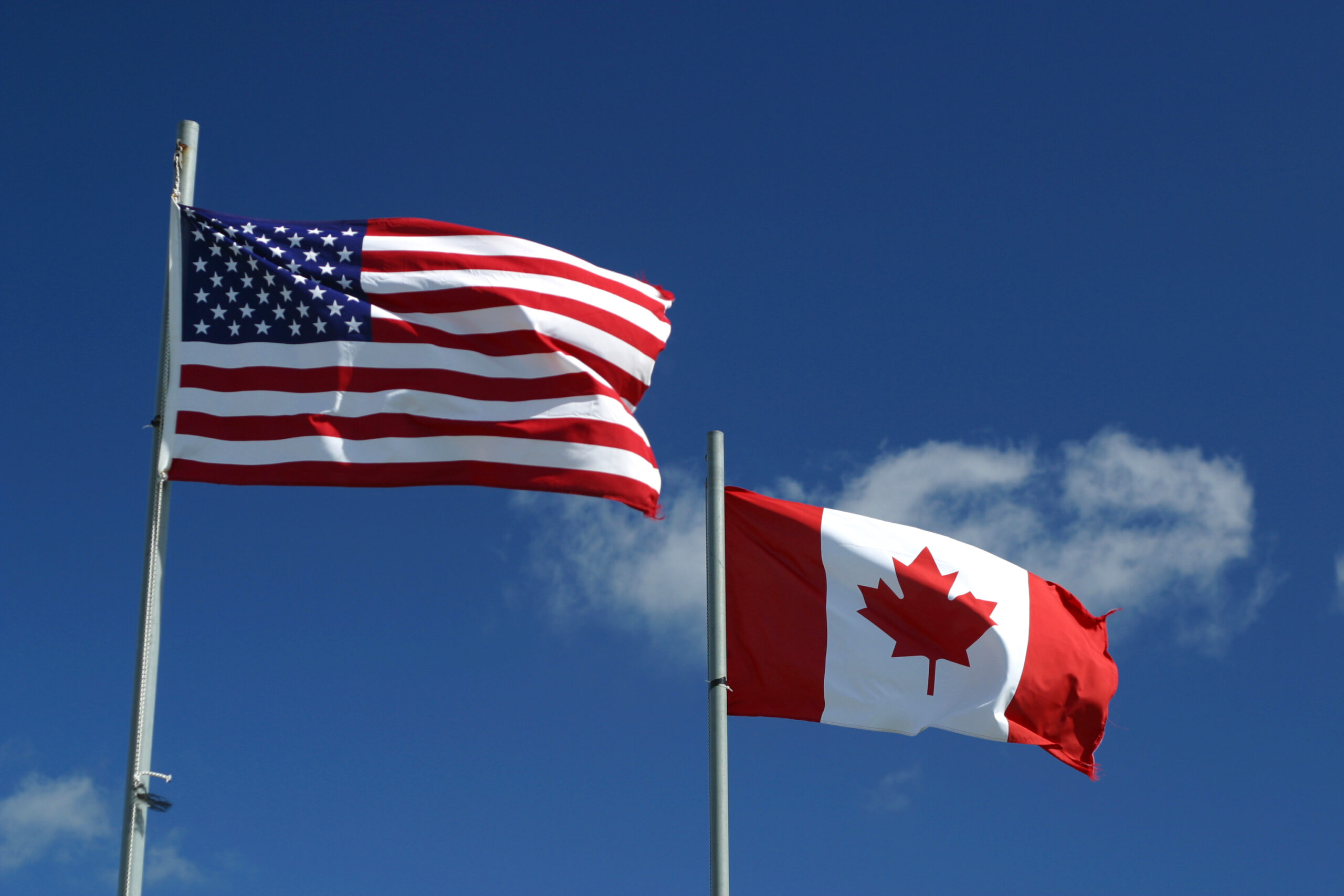
The study asked 4,000 Americans and Canadians how they felt about tourism in their state and community. In several categories, including quality of life, the growth in home-sharing accommodations and increased tourism, survey respondents showed favorable attitudes toward the tourist industry.
Although this is the study’s second year, this was the first time sentiment was segmented by generation. That was how Gen Z’s hesitancy was discovered about tourism’s potential as a career option and source of good pay, and its ability to bring new business in their area, compared to other generations.
Different Gen, Different Approach
“This is sort of a ‘canary in the coal mine’ situation,” said Andreas Weissenborn, vice president of research and advocacy for DI. “This is the first that we’ve seen research showcasing that divide or apathy of Gen Z.”
With one exception, the majority of respondents from each generation, from Millennials (54%) down to the Silent Generation, defined as those born between 1928 and 1945 (51%), believe there are jobs in the tourism industry with “desirable pay and benefits.” The least in agreement with this statement is Gen Z, at just 40%.
Gen Z respondents were similarly reticent about the question of whether tourism attracts new business to their local area; only 36% of them say this is true.
”The number one customer of a DMO [Destination Marketing Organization] is the community and its residents. Behind Millennials, the next generation with largest buying power, are Gen Zers. They have a role to play in our community. We’re really hoping the study illustrates that effect, saying that we have a role to play to change this, to get Gen Z to not only care about destination promotion but to take interest in it and value it.”
That will require a proactive conversation. “When a community and citizens are informed about tourism and feel part of the discussion, they value it, they understand it and why communities need to invest in destination promotion,” he said.
Weissenborn said it’s important to think about the time in which Gen Z was born. “Millennials were the generation that bridged the gap between a pre-internet world and the current world. That’s not the case with Gen Z.
“For most millennials, the truest form of freedom came when you turned 16 because that [came with] the freedom to drive and experience what you knew of the world at that time. Think about what that means for a Gen Zer, where they’ve already had the maturity of the smartphone at their fingertips. [They] just have a different view and, frankly, value of the world that other demographics have never experienced.”
This is why a different method will have to be used to appeal to the new generation. “Like every demographic, you can’t use anecdotal data from different generations to try to apply it to the next,” Weissenborn said.
Weissenborn suggested leveraging popular social media channels, including TikTok, the most visited website in 2021. “Destination organizations should take note of that and make sure they are on those channels as a starting point,” he said.
One creative example of taking the conversation to where Gen Z lives is Discover Long Island in New York. The destination posts job descriptions and talent retention through TikTok to attract prospective employees. “How they’ve used it for talent acquisition is pretty unique.”
What Should Destination Orgs Do Now?
For destinations wanting to make a change, Weissenborn stressed first recognizing that this generational discrepancy exists.
Next, differentiate segments of citizens and how marketing and advertising to them will need to be different. “Understand that residents of a community have different needs, based on demographics,” he said
“Messaging, materials and marketing used for one generation has a shelf life. The role of the destination organization is to continue that conversation, continue that brand work for every generation that will take upon your community.”
Millennials and, more so, Baby Boomers were taught that you lived where you worked, he said, for Gen Z, especially after the pandemic, that paradigm has been shattered.
“They no longer see the world as ‘where I live has to match where I work,’” he continued. “If I were a destination, that’s a huge opportunity where you can [go where there is a] a chunk of the world’s attention [e.g., TikTok] for talent acquisition; or maybe Gen Zers may have a certain value toward rural life or urban life but want a job that’s remote in New York.”
“There’s opportunity there that those Gen Zers will take advantage of because that’s all they know, where other demographics have had to be forced into it because a lot of us have had to live where we work. Gen Zers are going to approach the market different, they’re going to look at communities not solely wondering if there are good jobs but [base their decision] on their values.”
Three-quarters—3,000 respondents—of the survey were American. They were generally supportive of the tourism industry, with 64% of those surveyed believing tourism is good for their state, and 14% disagreeing with that statement.
While 42% noted that they aren’t consulted when major tourism development takes place in their area; many supported use of state and local government support to fund tourism efforts by 47% and 43%, respectively.
One of the greatest changes in 2021’s survey was the increased feeling of safety respondents experienced when dining and shopping. In 2020, only 34% of those surveyed felt safe shopping in stores, compared with 63% in 2021. Only 29% felt safe in restaurants in 2020; in 2021, it was 61%. Understandably so, as we’ve all gained a greater understanding of what works and what doesn’t when it comes to Covid safety.
How Do Canadians Feel?
Canadians’ attitude about the good effects of tourism for their province is slightly stronger than Americans’, at 75%.Only 7% disagree.
In fact, 60% of surveyed Canadians actually want more tourism, such as building new tourism facilities and hosting large events, in their area, while 15%oppose it. Much like Americans, a majority—54%—believe their government should financially support the promotion of Canadian tourism.
More than half of respondents—55% believe tourism attracts new businesses to their local area. And 51% agree there are jobs in the tourism industry with desirable pay and benefits. Almost half—49% percent say there are opportunities for career advancement in the industry.
The United States Senate voted 68-31 to pass the $1.5 trillion omnibus spending bill, which includes the Restoring Brand USA Act to provide $250 million in relief funding to the United States’ destination marketing organization.
“The inclusion of the Restoring Brand USA Act in the fiscal spending bill is a major win for the entire U.S. travel industry, which has suffered more than any other industry throughout the pandemic,” said Roger Dow, president and CEO of U.S. Travel Association. “As international travel spending remains 78% below prepandemic levels, the relief provided by the bill—which utilizes existing funds at no cost to American taxpayers—will help the international travel segment rebound more quickly and restore U.S. jobs.”
As destinations around the U.S., as well as other countries, including Italy, Saint Lucia and New Zealand, open, relax rules and introduce new protocols, it’s a great time for the U.S. to revitalize its destination promotion. According to the International Air Transport Association, traveler numbers are anticipated to reach 4 billion in 2024, a 103% increase from prepandemic levels.
“Brand USA has historically garnered strong bipartisan support due to its focus on promoting both urban and rural destinations, as well as its strong return on investment, which yields an average of $26 for each $1 spent on marketing activities,” Dow continued. “We are pleased that Congress has once again recognized the value this program holds for travel businesses and local economies in every pocket of the country.”
On April 7, U.S. Travel and Meetings Mean Business Coalition will be hosting the seventh annual celebration of Global Meetings Industry Day 2022. Like 2021, this year’s theme is Meet Safe, which will highlight the importance of in-person meetings and events.
Following U.S. Senate approval, the bill will now head to President Joe Biden for his signature.
Jason Megson
Freeman EMEA, the London-based global events leader, welcomed Megson as managing director of the company. Most recently, Megson was principal at Birdforth Consulting in York, England. Megson has spent more than two decades leading independent and global agencies throughout the U.K. A dedicated sustainability advocate, Megson also helped launch Isla, a sustainability-focused events organization, and was a leader on its Board of Directors.
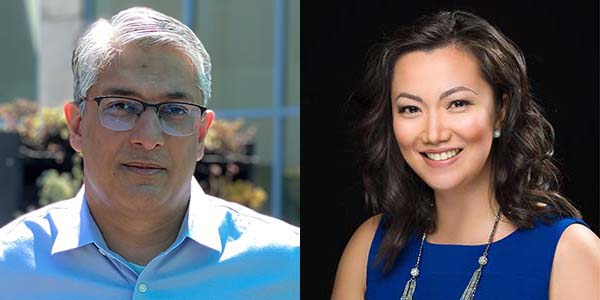
Jimmy Sarfraz and Catherine Hendricks
Signia by Hilton San Jose appointed Sarfraz general manager and promoted Hendricks to complex director of sales and marketing.
Sarfraz brings over 15 years of hospitality experience to the property, most recently working for Hilton San Jose and Juniper Hotel Cupertino, Curio Collection by Hilton as general manager of both. He has held roles in hotel management at several other Hilton properties, Conrad New York Downtown, Hampshire Hospitality Group and more.
Hendricks has been in northern California sales for more than 20 years. Most recently, Hendricks was director of sales, marketing and revenue management, having initially joined the company in a similar role in 2012. Hendricks has held leadership roles and directorships in sales and marketing at multiple Hilton properties, Biltmore Hotel & Suites, Holiday Inn and more.
Leonie Patrick
SF Travel promoted Patrick to vice president of convention sales. Patrick joined the company in 2002 as its senior director of convention sales. A 20-year hospitality veteran, Patrick started her career at Hyatt Hotels and managed the expansion of San Francisco’s Moscone Center and groups hosted by the convention complex.
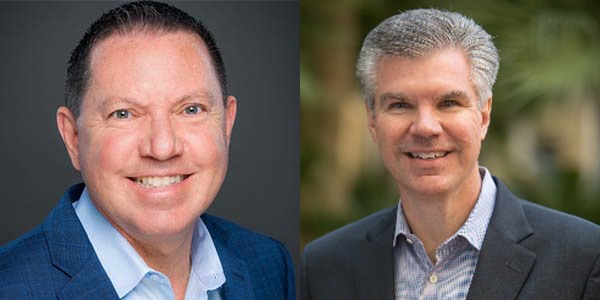
Jeff Smith and Gus Tejeda
Omni PGA Frisco Resort named Smith vice president and managing director and Tejeda director of sales and marketing.
Smith was previously general manager of Omni Frisco Hotel and area managing director for Omni properties. Smith has held many executive roles with Omni Hotels & Resorts since joining Omni in 1994. Over the past almost 30 years, Smith has worked at Omni corporate office, Omni Dallas Hotel and many more.
Tejeda brings over 20 years of experience in luxury hospitality sales and marketing. Most recently, Tejeda was director of marketing at Four Seasons Hotel Las Vegas. Tejeda has been vice president of group sales and group marketing at Atlantis Paradise Island, executive director of convention sales at Bellagio Las Vegas and has held multiple other, similar roles.
Olivia Morrow
Morrow is now assistant director of sales and marketing for Europe at Jamaica Inn in the Caribbean town of Ocho Rios. Morrow was previously senior PR and marketing executive at Luxury Marketing House, based in London. With over a decade of experience in hospitality and sales, Morrow has been a public relations, food and beverage and marketing leader at properties including Fairmont San Francisco, Trump International Hotel & Tower Chicago and more.
Katharine Degoma and Anna Jaszczyk
The Gwen, a Luxury Collection Hotel, Michigan Avenue Chicago welcomed Degoma as general manager and Jaszczyk as area director of sales and marketing.
Degoma has been in hospitality leadership and operations for more than 20 years. Most recently, she was general manager of Ambassador Chicago, a JDV by Hyatt Hotel. She has also held management and executive roles at Hyatt Hotels Corporation and several Hyatt properties in Illinois.
Jaszczyk most recently worked for The Ritz-Carlton Hotel Company in Chicago as director of group sales. She has been in senior sales management with Marriott’s Autograph Collection, was regional sales manager at Marriott International for several years and has held additional similar roles over the past decade.
Fabiola Sotomayor
Sotomayor is director of leisure sales at Turtle Bay Resort in Kahuku, Hawaii. She is a 16-year hospitality veteran, with experience in Pacific and western United States sales. Previously, Sotomayor was travel industry sales manager at Four Seasons Resort and Residences Napa Valley in Calistoga, California. She has also held leadership sales positions at Hidden Doorways, A KAA Travel Collection in Dana Point, and Montage Beverly Hills.
Tanner Austin
Austin joined Fairmont Dallas as director of catering and conference services. He was previously catering sales and conference services manager at Kimpton Harper Hotel in Fort Worth, Texas, spent two years as senior catering sales executive at The Worthington Renaissance Fort Worth Hotel and has been catering sales manager at Hilton in Austin, Texas.
Nigel Fisher
Banyan Tree Krabi welcomed Fisher as general manager of the Thailand property. Fisher brings 37 years of hotel management experience to his new role. Previously, he oversaw the opening of Angsana Teluk Bahang, Penang in northern Thailand. He spent 15 years at international Hyatt properties and also worked for Four Seasons Hotel Sydney and Hayman Island Resort, a neighbor to the Great Barrier Reef off Australia’s coast.
Claire Spencer
The City of London Corporation appointed Spencer the first-ever CEO of Barbican Centre, a major arts and exhibition complex in London that opened in 1982. Spencer has been in business and venue management for over 20 years. Most recently, she was CEO of Arts Centre Melbourne and has also been an arts leader at Sydney Opera House.
Michael Klein
A luxury boutique hotel in the Unbound Collection by Hyatt, The Eliza Jane welcomed Klein as general manager of the New Orleans property. He brings over two decades of hospitality management experience. Klein was most recently director of operations at Holston House Nashville. Klein has also been director of food and beverage at JW Marriott Nashville and has held multiple roles at hotel properties in Austin and San Antonio, Texas.
Nicolas Dubort
Mandarin Oriental, Washington D.C. promoted Dubort to general manager. Previously, he was hotel manager at the property. For more than 25 years, Dubort has served in hotel and food and beverage management. He has held leadership positions at Waldorf Astoria properties in the greater Atlanta area, Mandarin Oriental, New York, Hotel Bel-Air and many more.