Danielle Marelli

danielle marelli wearing white chef coat under grey apron

Marelli is executive pastry chef for Viceroy Chicago. Marelli most recently worked at The Gwen, A Luxury Collection Hotel in Chicago, where, as the property’s pastry chef, she established its first pastry program. She also worked at Chicago’s Langham Hotel as executive pastry chef. While there, she received the Employee of the Month award in 2016 and Employee of the Year award in 2017.

David Nowak

Hawaii’s Hilton Waikoloa Village named Nowak director of food and beverage. Nowak most recently worked as food and beverage specialist at Premier Hotels & Resorts in Guam. Before this, he worked as pre-opening general manager of Waterfront Manila Hotel & Casino in the Philippines. He has also worked in leadership positions in nine countries, including Taipei, China, Ukraine, Singapore, Japan, Indonesia and the Philippines.

Read MoreReconnect with the Spirit of Hawaii

Christopher Lee


Lee is vice president of culinary operations and restaurant development for Wynn Las Vegas. Lee comes from Accor Hotels, where he worked as culinary and F&B director for its North and Central America regions. He is the recipient of the James Beard Award for Rising Star Chef of the Year in 2005 and Best New Chef by Food & Wine in 2006.

Carol Roudillon and Manuel Ignacio Albo
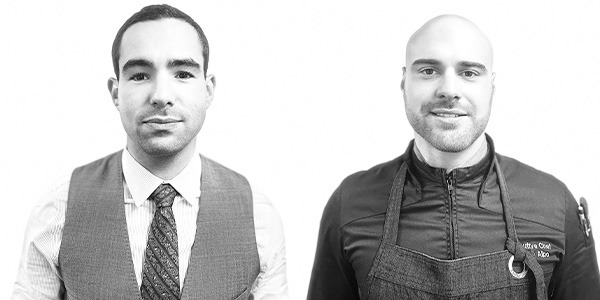
black and white images of carol Roudillon on left wearing vest, white dress shirt and tie; and manuel ignacio Albo wearing chef shirt
Carol Roudillon (left) and Manuel Ignacio Albo (right)

Roudillon has been promoted to director of food and beverage and Albo is executive chef for The Restaurant at Mr. C Beverly Hills in Los Angeles.

Roudillon previously joined Mr. C as a food and beverage manager trainee eight years ago and most recently worked as the property’s food and beverage manager. Before rejoining Mr. C in 2019, he was lounge manager for Hotel Lutetia in Paris, as well as restaurant manager for Cipriani in London.

Albo brings more than three years of experience working at New York City’s Cipriani Dolci to his new position.

Roxanne Galang
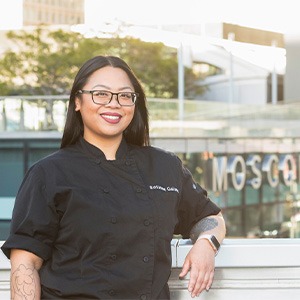
roxanne galang wearing black chef shirt
Credit: Steven Gregory Photography

Galang is director of culinary for San Francisco’s Moscone Center. She previously worked as Moscone Center’s chef de cuisine in 2017. Before her return, Galang worked as executive chef of premium catering for Bon Appetit at The Chase Center in San Francisco, her most recent position. Galang has also worked as chef and head of catering for The Sarap Shop and kitchen operations chef and food safety program director at Foxtail Catering & Events.

Samantha Cruz

samantha cruz wearing grey chef coat

Cruz is executive chef for Miami Beach Convention Center’s (MBCC) Rum Room and Venu, the property’s new restaurant and event space, set to open early 2023. Cruz joined Sodexo Live!—MBCC’s caterer—four years ago and has created menus for major events such as the Super Bowl LIV, Miami Open, Art Basel Miami Beach and Fort Lauderdale Orange Bowl Food & Wine Festival, among others. She has also worked as executive sous chef for 50 Eggs Hospitality Group and Grove Bay Group, and was chef de cuisine for Planta in Miami Beach.


A hotel is never just a hotel. During a time when leisure and business travelers are nearly spoiled by choice, the question to ponder is whether you’re simply looking for convenience and a place to stay, or a property that can offer an experience you’ll be thinking about for years to come.

Many independent hotels pride themselves on delivering the latter. Unfortunately, they have been decreasing in supply over the years. “In 1960, 50% percent of all hotels in the United States were independent,” according to Jeff Low, CEO of Stash Hotel Rewards, a loyalty program for independent hotels. “Now, just 20% are independent. And of the hotels currently in the pipeline of development, 90% of them are chain-affiliated.”

The Independent State of Affairs

Loyalty points are something most major hoteliers promote endlessly. Independent hotels, on the other end, don’t offer this perk as widely. This is the basis on which Low’s Stash Hotel Rewards began, connecting independent hotels around the world via loyalty points, so guests can experience one-off hotels that don’t exist anywhere else while also being incentivized.

Read MoreIndependent Hotels Decline Due to Mergers, Funding Problems

Low launched Stash Hotel Rewards 10 years ago with 80 hotels. Last year, more than 65 independent hotels and inns joined Stash; today, he is partnered with more than 220 independent properties—and has a collection of more than 1,000 that can be booked through the website—in North America, nearly all of which have a 4.5 or 5.0 TripAdvisor rating. “There isn’t a set of hotels that are more highly recommended [and] share a common major currency,” he says.

When booking direct at a Stash Hotel property—which the company encourages—guests receive their points like any other property, but its perks system differs in three major ways. “Our points never expire…there are no blackout dates,” Low says, “third, you can stay at independents and earn points that you can redeem at independents versus staying at another chain property.”

The Importance of Points

“Loyalty programs are really important,” Low says. “In part because if you’re a business traveler…you’re on the road all the time and [points] sort of become this measure of your life. You start to track how many miles or points you have and are dreaming of using those points to go on vacation. You may’ve missed your son’s soccer game or your daughter’s recital, but you’re going to be the hero because you’re going to take them on vacation.”

Points are a powerful driver, Low says. “A lot of business travelers have told us ‘I love that independent hotel in downtown Seattle but I can’t afford to stay there rather than stay at [a chain].’ It’s not the Marriott competing against with the Sorrento hotel, it’s the Sorrento hotel competing against the kids of that traveler—and they’re never going to win.” He added that it’ll never be the case that a business traveler will choose going to that independent when traveling over taking their kids on vacation.

What Stash tries to do is make it easier for that traveler to return to that independent hotel, by offering an incentive so that trade-off—”my type of stay or my kids”—is no longer necessary. “Once you level the playing field, the independents win,” Low says.

“When someone is considering where they should gather their sales team who haven’t  seen each other in two years or having their board of directors come together for an offsite, the meeting planner will put out different RFPs to different potential hosts of that event. With the chains, there’s often, if not always, an incentive provided to either member of that group or to that planner,” Low says. “That becomes a really important tool when these negotiations occur. Without a points program, the independent can’t compete in that bidding process.”

Low says his partners have seen success in guest visitation from individual business travelers, corporate groups and social groups, such as weddings. On-property software also allows Stash partners to learn about members before they arrive, allowing them to customize guest stays and better satisfy needs.

What’s Next?

While mass consolidation of hotel companies is ever increasing, Low says there’s also increasing interest in “interesting travel,” and  entrepreneurs and local business owners who have an interest in doing something different and creating an experience reflective of their community.

Something Low also sees growing in supply is restored roadside motels—what he aptly calls “motiques”—that modernize and still pay homage to what they once were, in the form of vintage furnishing, old signs and images of what the motel once was. “There’s a generation of travelers who really seek that out,” he says. “So now you can go along Route 66 and stay at hotels you may not have wanted to drive past before.”

Low went on to note that motels are  associated with places you wouldn’t want to bring your family to, and perhaps a bit creepy. But with the update these properties have received, he believes the experience has changed to the more interesting and fun.

As for the future, Low says Stash will expand beyond North America. “Currently, we have partners in the U.S., Canada, Mexico, Central America and the Caribbean,” he says. “Members have been asking for us to expand to Asia, the Pacific Islands, and Europe, and there are tens of thousands of independent hotels in need of a loyalty program in those regions.”

Following the events of George Floyd’s tragic death in 2020, meetings industry organizations have been actively seeking to engage in the Diversity, Equity and Inclusion (DEI) discussion. In doing so many businesses seek outside help to create an inclusive and diverse work environment.

Read More: How Events Can Embrace Diversity and Champion Inclusion. 

Smart Meetings quizzed Elevated Diversity’s founder Rhonda Moret, MPI Southern California Chapter (MPISCC) Director of Diversity, Inclusion and Belonging Khris Baizen and MPISCC Director of Education, Event Logistics Jennifer Minzey, to pinpoint how including DEI in the meeting planning process adds value and how diversity, equity and inclusion can not only improve an event, but the business itself.

1. Your Clients and Attendees Probably Like Diversity

rhonda monet wearing a black top and light brown jacket
Rhonda Monet

Knowing your clientele is important. If a client has strong feelings about DEI, meetings planners should too. “If I’m a meeting planner and I know DEI is important to my clients, then it needs to be important to me,” Monet said. “The onus is somewhat on my shoulders to start learning more.”

More importantly, those attending your event probably expect a certain level of diversity in their speakers. “If I go to an event and all the speakers are the same, they look the same, they sound the same, they all have very similar backgrounds. Their perspectives in all likelihood are going to be similar,” said Monet. “There’s richness that created when you have varied perspectives varied experiences varied life stories.” By including an element of diversity in speakers meeting planners are creating a rich, natural byproduct for all those involved.

Read MoreEducational Support Elevates DEI and Could Alleviate Staffing Issues

jennifer minzey wearing sleeveless black top
Jennifer Minzey

MPISCC have seen an increase in interest in seeking out speakers with different points of views, “If the series or speakers aren’t diverse, it is up to the planner to reach out to a more diverse set of speakers or highly encourage the client to do so,” Minzey, meeting planner for Kaiser Permanente, stated. “As planners, we are usually the ones able to convince our clients that it makes the most sense to have a diverse panel.”

In events, the attendee is king, Baizen, sales engineer for Encore Specialty Services Group, pointed out. “With the attendee experience at the forefront of our planning, intentionally optimizing speaker selection for diversity results in a richer, more engaging conversation and also makes our audiences feel included and welcome.”

2. Change Starts with Leadership

For an event or organization to truly start incorporating diversity and inclusive initiatives, change must occur at the very top. “A lot of the time, those ‘ah-ha moments’ start at the leadership level,” said Monet.
When leaders come to the revelation that their personal privilege has given them a different perspective in life, they want to do better. “Until you start going through the process of identifying what it looks like, what it feels like to be a member of an underrepresented group then it’s really hard for those in the majority—like a white male CEO—to really understand,” she explained.

“Once (meeting planners) have those different perspectives underneath their umbrella, they can be much more effective in making sure events they produce are addressing DEI topics.”

khris baizen wearing blue suit
Khris Baizen

For meeting planners with MPISCC, the process of working with leadership begins in the planning stages, “We review historical attendee counts, speaker selection and post event impact. Then we are able to work together to strategize ideas on how to infuse inclusion into the upcoming event series with the goal of making each and every attendee feel empowered to contribute,” Baizen said.

3. Gen Z Is All About Diversity, Equity and Inclusion

The next generation of employees and attendees has already set the tone for what is to come. “Millennials, Gen Zs. They’re saying, ‘hey, diversity and inclusion is important to us’, so those in leadership are hearing that from those other levels within the organization,” Monet said. By hearing from the younger rank-and-file, many CEOs are now proactively exploring DEI initiatives.

Read More: It’s Gen Z’s Way or the Highway

Baizen agreed that Gen Z sees DEI as a top initiative on their checklist, “If they feel they are unable to bring their authentic selves to an environment, they will simply not attend,” Baizen continued, “Gen Z and Millennials are able to sense if DEI initiatives are thoughtfully integrated in a program and when planners are just checking a box.”

4. Engage the Disabled Community, Be an Ally

DEI covers a wide cross-section of individuals but one group that event Monet admits doesn’t often get enough attention is the disabled community. “Quite often, it’s something people don’t want to talk about it. It makes them uncomfortable,” she said.

Monet stressed the importance of Fortune 500 companies being an ally to all groups under the DEI umbrella. She advocated for doing the work “to understand that segment of the population and find ways to use their influence and power to bring that to the forefront and identify where those issues are and where the shortcomings are and what do we need to fix it.”

United Airlines CEO Says Airline Chaos Will Continue

In a Q4 earnings call, United Airlines CEO Scott Kirby said that operational collapses like Southwest Airlines’ recent fall from grace will continue given the state of the industry after Covid.

“We believe that the industry’s capacity aspirations for 2023 and beyond are simply unachievable. The system can’t handle the volume today, much less anticipated growth,” he said on the call.

United is downscaling to 16.7% fewer flights than in 2019 and 0.9% fewer seats.

Kirby also said that outdated FAA air traffic control technology (the supposed recent cause of a massive systemwide shutdown) is slowing the airspace system in the U.S., which will force United to increase scheduled flight times.

“Our industry has been changed profoundly by the pandemic, and you can’t run the airline like it is 2019 or it will fail,” Kirby concluded.

We’ll Always Have Paris…Until Beijing Takes Over

A new study from the World Travel and Tourism Council (WTTC) shows Paris is the world’s most powerful “city destination” with almost $36 billion USD in 2022 in terms of direct GDP contribution to the city, but it also reveals that Paris will cede its place to up-and-coming Beijing by 2032.

The report, sponsored by Visa and researched in partnership with Oxford Economics, analyzed key indicators such as Travel & Tourism’s contribution to GDP, employment and traveler spend. The study pointed to Las Vegas as the only city in the top 10 list which holds its place, staying lodged at fifth largest. Last year, the Las Vegas travel and tourism sector was worth $23 billion and is predicted to grow to over $36 billion by 2032.

▪ The top ten cities with biggest international travelers spend in 2022 were:

  1. Dubai – $29.42BN
  2. Doha – $16.79BN
  3. London – $16.07BN
  4. Macau – $15.58BN
  5. Amsterdam – $13.59BN
  6. Istanbul – $13.13BN
  7. Barcelona – $12.73BN
  8. New York – $12.45BN
  9. Singapore – $10.97BN
  10. Paris – $9.76BN

▪ In 2032, WTTC predicts the top ten cities with biggest international traveler spend will change to be:

  1. Hong Kong – $52.06BN (up 38 places from 2022)
  2. Macau – $43.14BN (up two places from 2022)
  3. Dubai – $42.98BN (down two places from 2022)
  4. Singapore – $37.43BN (up five places from 2022)
  5. Bangkok – $33.45BN (up seven places from 2022)
  6. Doha – $31.63BN (down four places from 2022)
  7. Tokyo $25.44BN (up 30 places from 2022)
  8. New York $21.73BN (no change from 2022)
  9. Amsterdam $21.53BN (down four places from 2022)
  10. Shanghai – $21.3BN (up 11 places from 2022)

Over the next decade, says the study, travel and tourism is on track to become a key driver of economic growth once again, with faster GDP growth than other sectors, generating 126 million new jobs around the world.

Editor’s Note: Rhanee Palma, CDME, CEO of Rhanee Palma & Co., and Smart Women in Meetings Awards winner, speaks with Smart Meetings editor Morgan Saltz about her experience at Smart Woman Summit 2022 in Nashville, Tennessee. Palma discusses the speakers, her most important takeaways and the sense of community she has built through her association with Smart Meetings and Smart Woman Summit.

Q: What was your experience like at last year’s Smart Woman Summit 2022 in Nashville?

A: I really got a lot out of it, this last time especially. I think the speakers were incredible. For me, I’ve been in the industry for a while, but I started my own company last year. So, it came at this really interesting time in my own entrepreneurial journey where I just wanted to be open and see what I wanted to do but I also knew it was time to move to that next phase. So, I don’t know if it was timing, or whatever it was, but a lot of people I spoke with had a very similar experience.

One thing I learned, and it wasn’t just from the speakers, but from engaging with so many different women in different positions, or different owners and different levels of experience. It was a mix between the type of women that were there…the understanding that everyone that was there was there for a purpose and wanted a community.

Smart Women in Meetings Awards 2023

Nominate a Smart Woman for the Smart Women in Meetings Awards 2023 here!

Q: Was there anything you learned from the speakers that you embraced and applied?

A: My main take away was from Amilya Antonetti. It’s funny because while I was trying to figure out what my niche is for my company and trying to fit myself in whatever category, somehow her presentation really got me. Especially when she talked about how many weeks we had left. A person who is 45 on average has only 1,200 weeks left. I thought to myself “Oh my God! What does that mean?”

Q: How did you implement that realization?

A: The first thing I looked at was my calendar and I was like, “what really makes sense?” I really reevaluated how I was spending my time…something just clicked and it made it clear for me which path I needed to be on. When I looked at my time, I was able to reorganize my clients in my brain and now I’m growing each of my clients.

Q: Why is it important to you to be a part of a community like Smart Woman?

(Palma and I discovered our shared backgrounds of living in Oakland and attending UC Berkeley where we both pursued education in gender studies.)

“It was a mix between the type of women that were there…the understanding that everyone that was there was there for a purpose and wanted a community.”

A: I think it comes from my UC Berkeley and gender studies background, you have that too right? Right! A lot of people say “I don’t use my degree for anything.” I use my degree all the time! So, when I graduated from university, I was very determined to make my mark with this degree because it’s what shaped me as an adult.

Read More: Building a Community: My Experience at Smart Woman Summit

Q: What does mentorship mean to you and other attendees at Smart Woman Summit?

A: When you make it pretty far, as a woman in leadership, it gets pretty lonely up there. I’ve always been passionate about being a mentor to different people or helping other women find their path. I’m just grateful to be in a position where I can be helpful and learn from others as well.

Now I have a group of women leaders who are very motivated to mentor many other women so that they can join Smart Woman Summit. My growth is allowing other people’s growth…I’m excited to learn from folks while learning and growing and helping others to grow at the same time.

Q: What makes Smart Woman Summit with Smart Meetings unique?

A: There’s really something to be said about Smart Woman Summit and I really have a lot to take away from it. I like the community I’ve built. I know that because of the bond that we’ve developed during Smart Woman Summit, I can collaborate with others. I haven’t been in a space like that in a long time. I know that the people receiving these awards are of a certain caliber and they have a certain integrity and we’re like-minded people.

The way Smart Meetings structures their events is in a way that most women would want. I really enjoy my time there and I really feel like Smart Woman Summit is a very unique space that other people can’t create.

Smart Woman Summit 2022

All too often we attempt to glean some semblance of an explanation or understanding when confronted with an understaffed hotel or event venue and you have probably strategized about all the ways you would “fix” the situation if you were in charge. Smart Meetings dropped in on several industry professionals to see what methods and strategies they’ve implemented to adjust to the sudden return of travelers and deliver the service levels expected by attendees.

Charlestowne Hotels, for example, is taking a proactive approach by placing an emphasis on enhancing the depth of their human resources and company culture while providing attendees and other guests with a heightened experience. As part of the company’s strategy to carry out a new planned realignment, Charlestowne recently added nine new vice president and director roles to create greater oversight of department-wide strategy and management.

Read MoreThe Great Hospitality Restart

Our goal for 2022 was to reorganize our leadership structure to better handle portfolio growth and provide advancement opportunities for our team members,” says Kyle Hughey, CEO of Charlestowne Hotels. “We’ve been thoughtful with our internal promotions and new hires to make sure we placed the right people in the right roles to best position them, and our properties, for success. We feel confident that we’ve put a structure in place that will grow with us and leverage the diverse industry knowledge of our team in the best way possible.”

Stemming the Tide of Turnover

The churn of employees in the hospitality industry has been brusque for the last several years. Fingers are being pointed at the employer/employee relationship, engagement and employee satisfaction, among other factors—resulting in high demand and very low availability. A recent study by Incentive Research Foundation (IRF) and professors Haemoon Oh and Miyoung Jeong at the College of Hospitality, Retail, and Sport Management, University of South Carolina, and Hyejo Hailey Shin at the School of Hotel and Tourism Management, Hong Kong Polytechnic University, noted that in addition to tangible incentives, such as adequate pay and other fringe benefits or rewards, status, job security and working relationships are crucial elements in stifling fast-paced turnover rates.

The result is that availability of employees in the hospitality sector has hovered at less than 10% over the last five years while turnover has accelerated at a staggering pace of 165% from 2019 to 2020 before dipping to 85% in 2021 and lowering again to 70% as of December 2022, according to the report.

Charlestowne is confronting this issue by creating additional operational roles to “better provide hotel owners and staff with stronger and ongoing guidance directly at the property level.” The goal is to produce a more empowering environment for long-term careers, Hughey said.

Read MoreMike Dominguez’s Vision for Hospitality Restaffing

New roles include a corporate food and beverage department and hiring of two corporate F&B managers and two task force F&B managers who will provide property teams with dedicated, on-site assistance and elevate the overall hotel experience. A corporate guest service support manager will be “dedicated to training, directing and developing efficient management of on-property guest services,” and a corporate human resources manager will bolster recruiting efforts.

The move to bolster support for hotel staff and service providers coincides with the findings of the IRF study indicating that organizational investment in the categories of employee engagement and employee satisfaction was directly related to high turnover rates.

And the leisure and hospitality industry as a whole is responding to retention issues by incentivizing employees with increased pay. The U.S. Bureau of Labor Statistics released a report indicating that pay in the hospitality sector rose by 6.9% between September 2020 to September 2021. The data was provided by the Employment Cost Trends program and doesn’t reflect seasonal adjustments or changes in consumer prices.

However, the study also warns that overinvesting in these two factors can, over time, lead to a saturation point and further investment may lead to diminishing returns. The study suggests that companies watch the return-on-investment data carefully.

Leadership in Action

Those tasked with building a supportive company culture at Charlestowne Hotels are doing so from the inside out. The recent creation of new leadership roles was carried out by promoting from within the organization to better inform the organization with a keen understanding of why the company realignment is so important to the retention of employees that support meetings and events.

As meeting professionals begin to plan events for 2023, Mike Dominguez, president and CEO of Associated Luxury Hotels International (ALHI), joined Editorial Director JT Long for his annual Smart Chat Live! predictions conversation about the trends meeting profs need to prepare for in 2023.

You can relive the insights on-demand here, but we grabbed some of the action items below in case you are in a hurry to send that next RFP.

The New Normal Is Here

The world is far from having a 0% Covid infection rate, but meeting professionals have been adjusting back to a new normal. Dominguez noted that even though mega-conferences were absent last year, borders are now largely open and travel is back with a vengeance. Despite the missing Asian demographic, the number of attendees should offer an encouraging future forecast, “There’s no longer hesitation,” said Dominguez, “Right now, we’re normalized. We haven’t seen a drop-off.”

Revenge Meetings, New Meetings Are Driving Demand

Travel is back, in Dominguez’s eyes. For those who did some ‘revenge travel’ last year, Dominguez says ‘revenge meetings’ is the next thing. “People need to get together and they haven’t gotten together in years. Corporations are saying we need to get together. A lot of it is new meetings. There’s a need just to get people together. For a variety of reasons whether its culture driven, strategy driven, for strategic discussion. They’ve having to bring people together quickly.”

Compression Is Here for Awhile

Dominguez predicted 2023 will look a lot like 2021 in terms of compression and price increases. “We’re paying for more labor. Hotels are charging more, but profitability is the same as in 2019,” Dominguez said. “These costs are in there because they are necessary.” With interest rates 4-5% points higher, it has become harder to finance huge new hotel projects. However, Dominguez believes there will be inflation normalization by 2024.

Dominguez encouraged meeting professionals to explain to their stakeholders that when they see inflation decreasing, that doesn’t mean prices are going back to 2019 levels. “When we see a slowdown, it’s the rate of growth that decreasing; it doesn’t mean that the actual pricing is going backwards.”

F&B Prices Are Impacted by War in Ukraine

While Dominguez sees gas prices dropping, he also sees a slow down in growth around food and beverage prices.

“We haven’t seen the [impact of the] wheat shortage [in the United States] yet, which will be coming up sometime in 2023, and a lot of that has to do with Ukraine and Russia. That wheat shortage is going to put pressure on bread pricing. Corn is at an all-time high. We feed a lot of animals a lot of corn which increases prices across the board.”

No Recession for Meetings

Despite the recent layoffs and talk of a recession specifically in the tech sector, Dominguez is optimistic that the meetings industry won’t be impacted. “I think meetings and events isn’t going to behave normally in a recession because many companies haven’t gotten together in two years and there is a need to get together. It’s not optional now. There’s a need.”

International Plane Shortage Resulting in More Domestic Travel

Dominguez predicted that Europe will be back to 2019 meeting frequency levels in four or five months. He saw international air lift as a bottleneck constricting global events. “We need more planes,” he stated. While he sees Boeing poised to deliver, “It’s going to take us some time to get those flights back.”

Read MoreNavigating the Bus Driver Shortage

Because of the lack and expense of international flights, people are flying more domestically and locally. That is good news for the Caribbean and the Dominican Republic.

Ask Hotels About Pockets of Availability

While most meeting space rental is tied to guest room blocks, Dominguez advised meeting professionals with a need for relatively more breakout space than guest rooms to talk to hotels in places with big citywide events happening in town to see if they have orphaned meeting space that would be reasonably priced. Planners may have to be flexible about dates, but that is one way to get around the ratios.

Sustainability Is Relative

Even though some people believe staying home beats traveling to events for managing your carbon footprint, Dominguez argued that when everything is taken into consideration, including commuting when at home, energy-efficient features in hotel rooms and an increase in walking when exploring a destination, the two activities are more similar in output than they may appear. “I think, as an industry, we need to celebrate and highlight the sustainable aspects of travel.”

Read MoreSustainable Meetings Through Renewable Concepts


The shutting down of flights across the United States this week due to the Federal Aviation Administration’s (FAA) Notice to Air Missions (NOTAM) system malfunction raised more questions than there were provided answers.

The FAA said that a “corrupted file” created the shutdown which sent airlines all across the nation into a tailspin of cancellations and rebookings and a lot of waiting in airline terminals with no answers.

White House Press Secretary Karine Jean-Pierre said in a statement, “There is no evidence of a cyberattack at this point.”

President Biden ordered an investigation and Department of Transportation Secretary Pete Buttigieg echoed passenger incredulity by asking, “How is it possible for there to be this level of disruption?” to CNN’s Andrea Mitchell.

Questions and Calls for Funding

On Twitter, cyber analysts and security experts debated the possibility of a digital strike causing the shutdown, but they also stated that even if this wasn’t a deliberate attack, it showed potential cyber attackers exactly where we were vulnerable.

Admiral James Stavridis, USN, Ret. said on Twitter (@stavridisj): “The airline national stoppage may or may not be a cyber-attack, but even if it is not, it certainly shows us what one could look like. Good wake-up call.”

William J. McGee, senior fellow for aviation and travel at The American Economic Liberties Project in Washington, D.C., and a frequently quoted source for this column, released a statement on Twitter that read: “While the causes of this morning’s outage of the critical NOTAM system are still being determined, one thing has long been true: the FAA is chronically underfunded and does not have all the resources necessary to adequately support our national aviation system.

“That is a direct result of efforts by the airline industry and their allies in government to starve an essential agency. We look forward to the results of a thorough investigation to determine whether underfunding contributed to this morning’s latest crisis and to inform a long-overdue national conversation about the state of commercial aviation in the U.S.”

On Friday, Delta’s CEO, Ed Bastian, echoed the sentiments in an interview with CNBC’s “Swawk Box”: “I lay this on the fact that we are not giving them the resources, the funding, the staffing, the tools, the technology they need to modernize the technology system. Hopefully this will be the call to our political leaders in Washington that we need to do better,” he said. 

Hailey Claudiohailey claudio, wearing a light grey blazer and white shirt

Claudio is assistant director of rooms for The Windsor Court in New Orleans. Claudio joined the property in June 2021 as director of front office. Before moving to New Orleans, she worked with several Florida-based properties, including The Betsy Hotel in Miami, Miami Beach Edition and The Ritz-Carlton Beach Resort in Naples.

Read MoreNew Orleans: Cultural Collaboration in The Big Easy

Rachel Wilson

rachel wilson, wearing a white long sleeve dress shirt

Wilson is hotel general manager for The Source Hotel + Market Hall in Denver. She previously worked as hotel general manager for The Hotel Zags Portland in Oregon. Wilson has also worked in Oregon as general manager for Hotel Vintage Portland, where she was named the Pebby Awards Best Director of 2020. She has also held leading roles with Spanish Garden Inn Santa Barbara and Crown Plaza Ventura Beach, both in California.

Brett Mufson

brett mufson, wearing dark blue sport coat and light blue dress shirt

Mufson is president and CEO of the highly anticipated Fontainebleau Las Vegas. He is currently president of Fontainebleau Development, a real estate development group that specializes in hospitality, retail, residential and commercial sectors.

Aaron Bambling

aaron bambling, wearing glasses and wearing blue dress shirt

Koloa Landing Resort at Poipu in Honolulu named Bambling general manager. He comes from AC Hotel Phoenix Biltmore, where he worked as general manager and earned the hotel “Best in Class” status by Marriott Properties. Bambling has also worked with Pfister Hotel in Milwaukee and Sanctuary Beach Resort in Monterey, California.

Read MoreReconnect with the Spirit of Hawaii

Joseph Colina

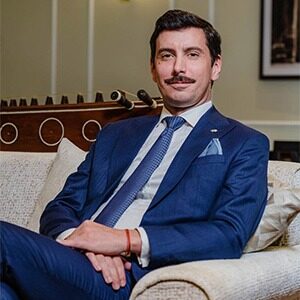
joseph colina, sitting down and crossing hands on lap, wearing a blue suit

Colina is general manager of Raffles Grand Hotel d’Angkor in Siem Reap, Cambodia. Colina, who has nearly two decades in hospitality, comes from MGallery Sapa in Lao Cai, Vietnam, where he worked as general manager. He also worked as hotel manager for Sofitel Legend Metropole Hanoi in Vietnam, director of operations for Sofitel Washington DC Lafayette Square, director of guest services for Sofitel Chicago Magnificent Mile, among other properties.

Taniesha Boursiquot

taniesha boursiquot, wearing black top

Boursiquot is director of spa and wellness for Waldorf Astoria Atlanta Buckhead. Most recently, Boursiquot worked as assistant spa director at Eden Roc Hotel in Miami Beach. She also worked assistant spa director at InterContinental Downtown Miami.

Tyler Stirrett

tyler stirrett, wearing a dark blue sport coat and light blue plaid dress shirt

Phoenix’s Royal Palms Resort and Spa named Stirrett general manager. Stirrett most recently worked as director of operations for Hyatt Regency Lake Tahoe Resort, Spa & Casino in Incline Village, Nevada. Before this, he worked with Hyatt properties in other capacities, such as outlets director, banquets director, director of food and beverage, and director of operations with Hyatt Regency Albuquerque in New Mexico; Hyatt Regency Tamaya Resort in Santa Ana Pueblo, New Mexico; and Grand Hyatt Kauai Resort & Spa in Poipu, Hawaii.

Tina Canderle

tina canderle, wearing white top and black coat

Mr. C Beverly Hills in Los Angeles named Canderle director of sales and marketing, following her most recent role as director of sales and marketing for Le Meridien Hotels and Resorts. She also had a six-year tenure working with Waldorf Astoria Hotels & Resorts, most recently as director of sales for its Beverly Hills property.

To chart a path forward, it helps to have some guiding lights. PCMA’s Convening Leaders gathered 3,300 meeting professionals in Columbus, Ohio, for three days of education, networking and some transformative ideas. PCMA CEO Sherrif Karamat explained the need to focus on the future this way: “Covid happened for us, not to us. Our industry has shown remarkable resilience. Sometimes things that seem so tragic give us inspiration for what is to come. This is not about looking back, it is about blazing a trail forward with and for all of us.”

Smart Meetings was there for a backstage view of what went into the production and brought back tips for planning even more intelligently in 2023.

Discomfort, Don’t Dos and Uncertainty

The advice coming from the colorful mainstage at Greater Columbus Convention Center was an indicator that reinventing the future is going to be challenging. Yes Theory founders Thomas Brad and Ammar Kandil suggested everyone move out of their comfort zones, that is where connections happen. Their meeting at a party in Montreal while in college morphed into a movement that included challenging strangers to skydive and getting Will Smith to bungee jump. “The energy you show up with is what will be mirrored back to you,” said Brag. “Be open to opportunities.”

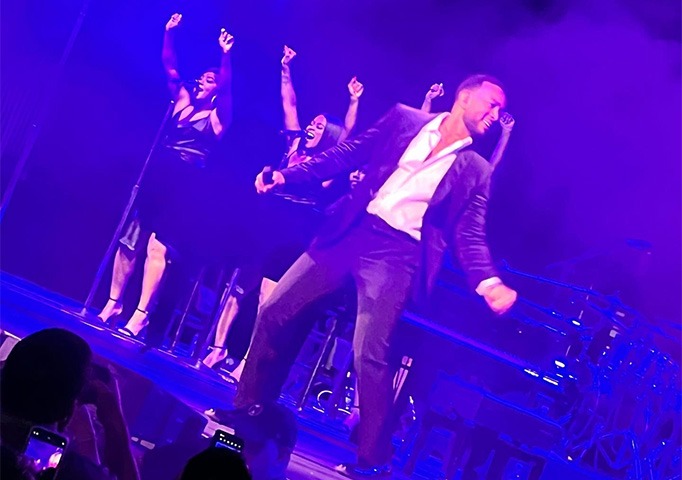
john legend dancing and singing on stage at pcma convening leaders
John Legend

The most awarded Olympic athlete in the world, Allyson Felix, suggested embracing uncertainty. She challenged everyone to move out of their comfort zones as she had to do when she shifted to an advocate role for women in sports. “The most challenging part is being consistent. To maintain, you have to have passion and vision and think about the long game to motivate yourself to bring it every day.”

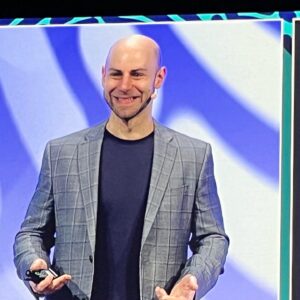
author adam grant on stage screen at pcma convening leaders
Author Adam Grant

Author and professor Adam Grant advocated for building a challenge network. “Look for people who will tell you the truth,” he said. That is how you get better. Author Daniel Pink celebrated the power of “to-don’t” lists. Stop adding things to solve problems and consider subtracting. Award-winning singer John Legend wowed at Nationwide Arena. The Smart Meetings team went backstage at Great Columbus Convention Center for a tour of what goes into a high-production value event and how many people are pushing buttons to make the magic.

Business travel is back, reported Chris Nassetta, president and CEO of Hilton, who explained that at its core, what people want now is not that much different than in 2019. “The core of what people want is a reliable, friendly experience.” He said the smart money is on focusing on wellness and doubling down on delivering fabulous F&B. As part of the same panel discussion, Encore Global CEO Ben Erwin called for investing in people assets. “That is a clear winning strategy.”

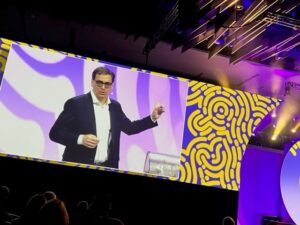
author daniel pink on stage screen at pcma convening leaders
Author Daniel Pink

“The Power of Regret” author Daniel Pink, who took the place of Viola Davis at the last minute delivered powerful action items. He celebrated the life-changing power of “To Don’t” lists. “Stop adding things to solve problems and consider subtracting,” he advised. He also championed progress rituals, focusing on why, scheduling active, social breaks and taking chances. Even if you regret it, you might regret not doing it more and you will learn from it.

Behind the Scenes

The main stage was all curved screens with bright graphics and laser lights (which allowed them to meet weight limits for the room compared to LEDs) to bring color and energy to the proceedings. Vibrant-colored organic designs reflected what meeting professionals experienced as they moved through and around obstacles by working with partners and communities to find solutions. There was no straight line to get us where we needed to go. Each day employed a different dominant color: purple, Columbus blue and yellow. None of background was printed, it was all projected light on muslin panels, so it’s reusable and sustainable.

Backstage, a team of 18 people managed the graphics and inputs from the seven cameras and the green rooms for presenters. The Encore Global team partnered with PCMA to create an intimate feel for 3,000 of their closest friends on risers, and in elevated VIP booths at Greater Columbus Convention Center.

A mezzanine acted as a secondary stage above the action with DJ Dana bringing a fun note that went beyond what a traditional Spotify station would deliver. Even the press conferences mixed up the approach with no long microphone-topped tables in sight. PCMA made their announcements (below) from the main stage and the press conference room stage was anchored with two comfy armchairs and a worn wood podium in the corner in case any of the presenters preferred that approach. In addition to all the mainstage action, the PCMA Foundation continued its work, raising $20,000 for Hospitality Open Hands and YMCA while Party with a Purpose raised funds for The Above and Beyond Foundation.  

News from PCMA

PCMA announced during the first day of its annual Convening Leaders conference in Columbus, Ohio, that it had forged a series of acquisitions, alliances and partnerships.

  • PCMA acquired Event Leadership Institute, a learning portal with an existing library of 260 videos. CEO Howard Givner will stay on as senior vice president of knowledge and innovation. Current PCMA members will have access to the library at no additional cost.
  • PCMA acquired Event Marketing Association-UK, a community of more than 800 corporate event marketing professionals from the United Kingdom.
  • PCMA implemented a strategic alliance with the National Coalition of Black Meeting Professionals, a co-locating partner of the 2023 Business Events Industry Week, Power of Purpose, which will convene March 7-9 at Gaylord National Resort & Convention Center, National Harbor, Maryland in collaboration with ASAE, AMC Institute, Events Industry Council and Destinations International. The event will move to Walter E. Washington Convention Center in Washington, D.C., April 9-11, 2024.
  • PCMA partnered with American Geophysical Union, a global earth and science publisher, to focus on active steps to address climate change.

Sherrif Karamat, president and CEO of PCMA and CEMA said, “Covid didn’t happen to us, it happened for us; sometimes things that seem so tragic give us inspiration for what is to come.” He continued, “As of today, we are only moving forward—blazing a trail forward with and for the global business events community.”